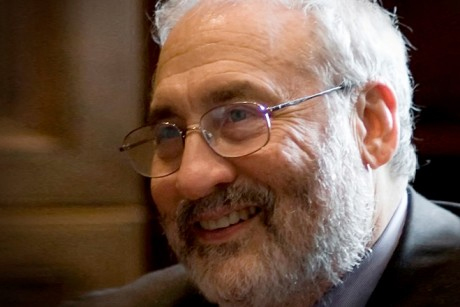
Joseph Stiglitz has a decent résumé. He won the Nobel Prize in economics and served as chairman of Bill Clinton’s Council of Economic Advisers before being named chief economist of the World Bank.
Since the election of Barack Obama, Stiglitz has also been something of a thorn in the side of the current administration, consistently critiquing the White House for falling short.
Stiglitz gave an interview to salon.com on his appraisal of the Romney economic plan. Here is a summary of that interview. It’s somewhat long but worth your time.
What’s at stake in this election for the U.S. economy?
Quite a lot. First, there’s what we call the macro-economy. The budget cuts that Romney/Ryan propose will certainly slow growth. If the European downturn continues that could tip us into a recession. The cuts certainly won’t provide the kind of stimulus that Obama’s jobs bill, for instance, pushes. Romney’s plan is based on magic: Just because he gets elected, the economy is supposed to take off. There is no evidence that anything like that would happen. Quite the contrary — I think the opposite would happen. The business community would see the cutbacks coming and that would itself cause a slowdown in the economy.
You’ve made the negative case for how the economy will suffer if Romney is elected. Is there a positive case to be made for Obama? You’ve been one of the people on the left most critical of Obama’s efforts on the economy. Why should progressives vote for him now?
I think the main reason, quite honestly, to vote for him is that if he loses there could be a major step backward in every aspect. Not the least important of which is the importance of the Supreme Court, which would affect inequality of political power, as with the Citizens United case. The Court will also rule on basic human rights, gender rights, discrimination, things I think progressives should care a lot about.
But in terms of the economy, while I’ve been critical, there still has been progress in an awful lot of areas. Less progress than there should have been, less progress than was promised, but progress all the same.
Where do you see that progress?
Healthcare. Access to healthcare for everybody is an important step.
I was about to ask, what have been your biggest disappointments?
Housing policy has been a big disappointment. But compared to Bush, who didn’t do anything, and the Republicans, who haven’t proposed anything — Romney has been totally silent on the issue — at least Obama did something. So I am disappointed …
Looking ahead, are there things Obama could do that would represent a real step forward, rather than just consolidate what has already been achieved, or simply prevent going backward?
There aren’t many magic bullets, but let me talk about a couple things. Obviously, more progressive taxation — getting rid of the distortionary provisions in corporate welfare, special treatment of capital gains, carried interest — would make our economy more efficient and less unequal.
One of the biggest areas of progressive disappointment with respect to Obama has to do with banking policy. Do you see any chance of improvement there?
We face a choice between someone who is viewed as being too close to the financial industry and somebody who is in the financial industry. Of the two I’d rather have someone who is close but not init. So to me, there’s just not much choice.
 Coast Contact