2017 Motor Trend Car of the Year
Chevrolet Bolt EV
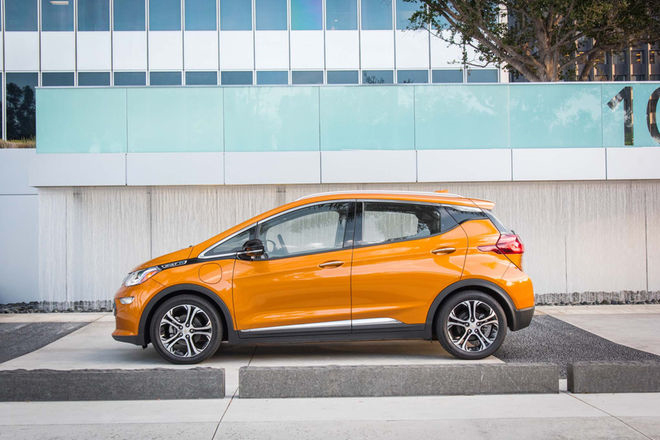 Would you buy this car? General Motors hopes you will ignore their reliability track record.
I have owned a Buick, Chevrolet, and Oldsmobile. The Buick was the best of the bunch but the interior finish was sloppy. The Oldsmobile engine turned off as I was driving down a freeway at 65 mph (that was frightening).
Motor Trend magazine has announced it choice for Car of the Year Award for 2017. Chevrolet Bolt EV.
This is not GM’s first all electric car. The General Motors EV1 was an electric car produced and leased by General Motors from 1996 to 1999. You could not buy that car. GM believed that electric cars occupied an unprofitable niche of the automobile market, and ended up crushing most of the cars, regardless of protesting customers.
The issue is should you buy a new car, even “Car of the Year”, in its first year of production?
Consumer Reports has a list of cautions in buying a new car including this. “Wait a Year or Two Before Buying a New or Redesigned Model. It’s true that a few brands, like Lexus and Toyota, have lines that are consistently reliable, but even they can launch a few clunkers. The redesigned Tacoma pickup was unreliable in its first year, and it took three years after being redesigned for the Ford Escape to improve to average reliability. It can take years for an automaker to work out the kinks. When a car model is brand new or “completely redesigned,” that can mean new parts, new systems—and new problems.”
Another thing to do is look at the history of Car of the Year selections.
2012 Volkswagen Passat
2007 Toyota Camry
2001 Chrysler PT Cruiser
1975 Chevrolet Monza 2+2
1971 Chevrolet Vega
1960 Chevrolet Corvair
Motor Trend’s criteria for its selections does not include reliability:
| Criteria | Note |
| Design Advancement | well-executed exterior and interior styling; innovative vehicle packaging; selection of materials |
| Engineering Excellence | vehicle concept and execution; clever solutions to packaging, manufacturing and dynamics issues; cost-effective technology that benefits the consumer |
| Efficiency | low fuel consumption and carbon footprint, relative to the vehicle’s competitive set |
| Safety | active: help the driver avoid a crash; secondary: protect occupants from harm during a crash |
| Value | competitive price and equipment levels, measured against vehicles in the same market segment |
| Performance of Intended Function | how well the vehicle does the job its planners, designers, and engineers intended |
 Coast Contact