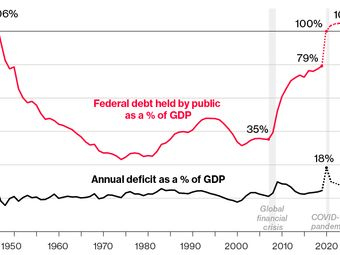
Let’s start with understanding the difference between U.S. Debt and U.S. Deficit.
In simple terms, a budget deficit is the difference between what the federal government spends (called outlays) and what it takes in (called revenue or receipts). The national debt, also known as the public debt, is the result of the federal government borrowing money to cover years and years of budget deficits.
—
Today this item was posted on Bloomberg News website.
U.S. Debt to Surge Past Wartime Record, Deficit to Quadruple
By Christopher Condon and Dave Merrill
April 21, 2020, 5:00 AM
The U.S. budget deficit may quadruple this year to almost $4 trillion. Projections from the Committee for a Responsible Federal Budget (CRFB) say that by 2023 U.S. debt held by the public will surpass records set in the post-World War II years. (1)
And these projections only include spending enacted so far—in a three-month-old crisis that has seen emergency Congressional appropriations top $2.3 trillion. Additional spending is almost certain as the coronavirus pandemic destroys millions of jobs and thousands of businesses while slashing tax revenues for local and state governments.
Even before the crisis, U.S. debt-to-GDP had more than doubled to 79% in 2019 from 35% in 2007. Deficit hawks, already hard to find, disappeared once the virus shut down whole swaths of the U.S. economy. The Coronavirus Aid, Relief, and Economic Security (CARES Act) legislation passed on a unanimous voice vote. Lawmakers understood that frugality made no sense in the face of impending economic collapse.
Will the candidates for president in the November election even touch this issue? Probably not.
 Coast Contact