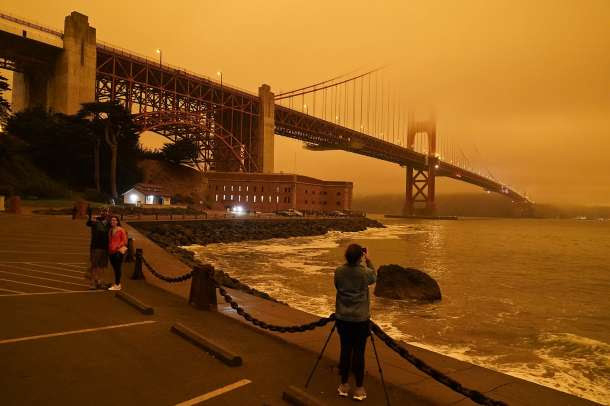
The above photo was shown on sfgate.com on September 9. The smoke from the fires has obliterated the sun for the past week in Los Angeles. My eyes sting. So what is the problem?
An Inconvenient Truth presents in film form an illustrated talk on climate by by former Vice President Al Gore, aimed at alerting the public to an increasing “planetary emergency” due to global warming. He may have had the dates wrong but we are having another once in a life time crises almost every year. Available on Amazon.
The temperature in Los Angeles suburb Woodland Hills set a new record on September 6, 2020. 121°F (49.444°C).
Consider an exchange that took place in California at an event focused on the fires. Wade Crowfoot, head of the state’s Natural Resources Agency, called on Trump to recognize the role of climate change in the historic conflagrations.
“We’ve had temperatures explode this summer,” Crowfoot said. “You may have learned that we broke a world record in the Death Valley: 130 degrees. But even in greater L.A., 120-plus degrees. And we’re seeing this warming trend make our summers warmer, but also our winters warmer as well.”
He acknowledged Trump’s that ground cover and fallen trees contribute to fires.
“But I think we want to work with you to really recognize the changing climate and what it means to our forest — and actually work together with that science,” he continued. “That science is going to be key, because if we ignore that science and sort of put our head in the sand and think it’s all about vegetation management, we’re not going to succeed together in protecting Californians.”
“It’ll start getting cooler,” Trump replied. “You just — you just watch.”
“I wish science agreed with you,” Crowfoot said.
“I don’t think science knows, actually,” Trump responded.
As it turns out, science knows quite well. For more than 100 years, it’s been speculated that burning fossil fuels (in particular coal) emits gas that can trap heat in the Earth’s atmosphere. By now, that effect is well documented and obviously manifested, with atmospheric carbon dioxide hitting levels never before measured and the effects of that saturation felt everywhere from increased droughts to increased severe precipitation events (since warmer air can hold more moisture) to higher temperatures to things such as dissolving shells on marine life.
 Coast Contact