Obfuscate

To obscure, muddy, cloud, and conceal.  Those were the objectives of two guests on ‘This Week with George  Stephanopoulos.”  US National Security Advisor H. R. McMaster and Newsmax Media CEO Christopher Ruddy who is now as an ABC News contributor.

I have put in bold what I think are some of the most interesting parts of this interview program.

RUDDY: So many stories, fake news stories, are becoming fact here. Where in the Russia investigation has there ever been an allegation that the president had done anything wrong with the Russians? Where is there any evidence?

Or in other words the New York Times and The Washington Post are creating fake news.

The real thing to read is the transcript of  Stephanopoulos talking to McMaster today, May 21, 2017 his Sunday morning talk show.

STEPHANOPOULOS: General McMaster, thanks for joining us today. I want to get to the trip, but first some questions about that meeting you all had with the Russian foreign minister. “New York Times”, as you know, reporting that here’s what the president said in the meeting. “I just fired the head of the FBI. He was crazy, a real nut job. I faced great pressure because of Russia. That’s take off.”

Is that what the president said?

H.R. MCMASTER, NATIONAL SECURITY ADVISER: Well I don’t remember exactly what the president said. And the notes that there apparently have I do not think are a direct transcript. But the gist of the conversation was that the president feels as if he is hamstrung in his ability to work with Russia to find areas of cooperation because this has been obviously so much in the news. And that was the intention of that portion of that conversation.

STEPHANOPOULOS: Did you know he was going to report that to the Russians? And what did you think when you heard it?

MCMASTER: Report what, George?

STEPHANOPOULOS: The — what you he said about James Comey. That he fired him and why.

MCMASTER: Well, the firing had been in the news. But I didn’t know in advance that the president was going to raise it, but as I mentioned he raised it in the context of explaining that that he has been — feels as if he’s been unable to find areas of cooperation with Russia, even as he confronts them in key areas where they’re being disruptive, like Syria for example, and the subversive activities across Europe. Their support for the — not only the Assad regime but for Iran and its activities across the Middle East.

STEPHANOPOULOS: Did you understand how this might look though to an average American right no? You have the President of the United States telling the Russian foreign minister, in their first meeting, that that the pressure is off because he’s fired the FBI director investigating Russian interference in the campaign. Does that seem appropriate to you?

MCMASTER: As you know, it’s very difficult to take a few lines, to take a paragraph out of what are — what appear to be notes of that meeting. And to be able to see the full context of the conversation.

As I mentioned last week, the really purpose of the conversation was to confront Russia on areas, as I mentioned, like Ukraine and Syria, their support for Assad and their support for the Iranians.

We’re trying to find areas of cooperation in the area of counterterrorism and the campaign against ISIS.

And so that was the intent of that conversation was to say what I’d like to do is move beyond all of the Russia news so that we can find areas of cooperation.

STEPHANOPOULOS: So, did the president confront them on their interference in our election? This was their first meeting?

MCMASTER: Well, there already was too much that’s been leaked from those meetings. And one of the things that I’m most concerned about is the confidence, the confidentiality of those kind of meetings, as you know, are extremely important. And so, I am really concerned about these kind of leaks, because it undermines everybody’s trust in that kind of an environment where you can have frank, candid, and often times unconventional conversations to try to protect American interests and secure the American people.

STEPHANOPOULOS: I understand your concern about leaks, but I could an see the — the feeling of perhaps someone likely on your staff or in your community who leaked this thinking they had a duty to leak it because you have this apparent contradiction.

The president disparaging the person who was investigating the Russians, but not confronting the Russians who interfered in our election.

MCMASTER: Well, as you know, the initial leak that came out was a leak about concerns about revealing intelligence source and methods, information that’s not even part of the president’s briefing. And so in a concern about divulging intelligence, they leaked actually not just the information from the meeting, but also indicated the sources and methods to a newspaper? I mean, it doesn’t make sense, George.

STEPHANOPOULOS: I take your point on that, although there’s also the question of whether or not it was right for the president to give that information to the Russians. But I just asked a direct question. Did the president confront the Russians on their interference in our election?

MCMASTER: Well, I’m not going to divulge more of that meeting. Those meetings, as you know, are supposed to be privileged. They’re supposed to be confidential. They’re supposed to allow the president and other leaders to have frank exchanges.

STEPHANOPOULOS: Well, let me ask just one final question, then, on that meeting. Sean Spicer has spoken out, the president’s press secretary. He said by grandstanding and politicizing the investigation into Russian’s actions, James Comey created unnecessary pressure on our ability to engage and negotiate with Russia.

You’re the president’s national security adviser, do you agree that the former FBI’s director grandstanding and politicizing, those are Sean Spicer’s words, hurt our ability to deal with Russia?

MCMASTER: I think what’s been hurting our ability to deal with Russia more than any other factor, has been Russia’s behavior. But since President Trump has taken action in Syria, we think that there may be opportunities to find areas of cooperation in places like Ukraine, places like Syria in particular.

STEPHANOPOULOS: After your first press conference on that meeting, your friend and former colleague, retired Colonel John Neagle told NPR that you’re in an impossible situation, because the president expects you to defend the indefensible. What’s your reaction to that?

MCMASTER: I don’t think I’m in an impossible situation. I think what the president expects and what is my duty to do as national security adviser and as an officer in our army is to give my best advice, to give my best, candid advice. Nobody elected me to make policy. What my job is, is to give the president options, to integrate the efforts across all of our agencies and departments. And then once the president makes decisions, to help him execute those decisions to protect and advance the interests of the American people.

So, I find no difficulty at all serving our nation and serving the president in my current capacity.

STEPHANOPOULOS: But if the president did put you in that position as you wrote about with President Johnson and Vietnam, would you resign? Would you push back?

MCMASTER: Well, you know there was middle ground there during the Vietnam period. What occurred in that period is many of the president’s senior advisers, civilian, and military, didn’t give their best advice, because they concluded that what would be appropriate for them to do given what Johnson expected, President Johnson expected, was to tell him the advice he wanted to hear. I don’t think the president expects that from me, and certainly I don’t think I’d be fulfilling my duties and responsibilities unless I gave him not just my candid advice, that’s really not my job either — is to integrate and coordinate across the departments and agencies to give him the best advice from across our government and with our key multinational partners.

STEPHANOPOULOS: But it sounds like one of the difficulties of this meeting –and I do want to get on to the trip — is that when the president disparaged James Comey, when he gave that information to the Russians who had interfered in our campaign, when he apparently did not confront the Russians over this, he didn’t even ask your advice.

MCMASTER: Well, George, what I’d like to talk about is where I am right now, in Saudi Arabia. I mean I think I answered the questions concerning the media and I’d like to move on while we still have time.

STEPHANOPOULOS: We definitely will have time. So, you — did the president ask your advice about this before he talked about James Comey?

MCMASTER: The president always asks for advice before these sorts of sessions, but the subject of the FBI investigation to my recollection didn’t come up. But really, that conversation, although I don’t want to talk about any more of the specifics from within it, covered a broad range of subjects, most of which had to do with areas in which we think Russia’s behavior’s been unacceptable and is increasing risk to international security, is supporting those who are helping to create a humanitarian crisis in Syria and across the region. That would be the Assad regime and Iran. But then also look for areas where we can cooperate and begin to move toward a resolution of conflicts in Ukraine, in Syria, and then to be able to cooperate more effectively in our counter terrorism campaigns.

STEPHANOPOULOS: Let’s talk broadly about the goal of this trip. The president said you had a very good start. What exactly do you want to accomplish?

MCMASTER: Well, really three main things. The first is to advance the security of the American people. And to recognize that to do that, America needs allies and partners to deal with the very complex problems that we are dealing with. And of course in this region, those are two main and interconnected problems, the problem of transnational terrorist organizations, some of which now, like ISIS, control territory and populations and resources. But then how that problem is connected more broadly to the problem of Islamist extremism and the brainwashing of youths with really an irreligious ideology that is meant to foment hatred and justify violence against innocents.

And the second problem of Iran and Iran’s actions across the region, which we believe are aimed at keeping the Arab world perpetually weak and mired in a very destructive civil war. And you see that in Syria, obviously, a great human cost, but you see it in Yemen as well. You see it to a certain extent in Iraq.

And so security, cooperation, counterterrorism, but also counter-extremism is a big part of it.

STEPHANOPOULOS: As you know, the Saudis…

MCMASTER: The second part of it…

STEPHANOPOULOS: Go ahead

MCMASTER: The second part of it is economic cooperation, being able to get better access to markets, develop trade relationships, to create American jobs. There are a lot of important signings that happen in that connection.

And the third is to foster — this is just for this leg of the trip — better defense cooperation in the region and to encourage additional burden-sharing, responsibility-sharing with allies and partners so Americans don’t foot the full bill for security in this region and globally as well.

STEPHANOPOULOS: The Saudis have been in the past consistent backers of extremists around the world, around the region and around the world. Are you convinced that they’re truly ready to change?

MCMASTER: Well, we’re going to ask them to convince us. And so there’s some very good first steps being taken with the establishment of the center for combating global extremism, or terrorist extremism. We’ll have to see what the results are.

But I think the willingness to talk about it is somewhat different than it has been in the past. And as you know ,the record is poor going back to the ’60s and ’70s and beyond. And even today. And so what we need is we need to convene leaders across all religions, and that is a big theme of this trip, is to promote tolerance and cooperation across our religions to identify these terrorists for who they are — the enemies of all civilized people, irreligious criminals who use a perverted interpretation of religion to advance their criminal and political agendas.

And that’s the tone and tenor of the conversations that occurred today, which I think that is encouraging. Now I think there have to be concrete steps taken. Funding has to be cut off to these madrassas and mosques that are fomenting hatred and intolerance. Funding has to be cut off to terrorist organizations through effective threat finance measures, and that’s a big part of the initiative as well.

And so we’ll see. I mean, I think the expectation is that there — results — that we deliver results together. That’s what we’ve said that we expect of each other, and that will be a big part of the conversation tomorrow when the group of leaders expands dramatically to include not only the Gulf Cooperation Council but also about 50 nations of predominately Muslim and Islamic populations.

STEPHANOPOULOS: General McMaster, thanks for your time this morning.

MCMASTER: Thank you, George.

(END VIDEOTAPE)

Don’t Need A Will? Think Again!


by Jane Bryant Quinn in the May 2017 AARP Bulletin

Just do it. Your heirs will thank you.

Does everybody need a Will? The straight answer is yes. That’s true even for people who think they don’t have a dime to leave to anyone. What if you were in an accident and died later of injuries, and your estate won a $l million settlement? Who gets the money?

Admittedly, that’s a little far out. You might get away without having a will if, say, you’re a renter living on Social Security with no savings. If you have savings, a pay-on-death account will pass that money to named beneficiaries when you die.
But there are hitches to any no-will scheme, says attorney Patrick Lamon of Bilzin Sumberg in Miami. To begin with, a random financ.al asset almost always turns up. Examples might be a rental deposit that’s returned or a medical reimbursement. Those checks will be made out to the deceased. How do your heirs get them cashed?

If you had a will, you’d have named an executor to cash checks, pay off creditors and distribute any money or property to your beneficiaries. Without one, your heirs will have to ask a court to appoint a personal administrator. Usually, it will appoint your surviving spouse or a child. But you risk a family fight over who should be in charge.

Some couples try to go will- free by putting everything into joint names. Joint assets pass to the other owner automatically. So do assets with beneficiary forms, such as individual retirement accounts. But something is inevitably left out typically, a car, Lannon says. Heirs would need an administrator to transfer title. Even if the joint-asset strategy works for the first death, what happens when the other spouse dies? He or she should make a will, which you both could have done from the start.

When there’s no will, state law dictates who gets the house, car, savings and other assets. Those laws vary widely. A surviving spouse might get everything in one state but only one-third in another, with the rest going to your children. If you have no children, half might go to a spouse and half to your parents.

Lawyers are the best source for reliable wills. Your lawyer will also remind you that you need a durable power of attorney and a health care proxy, so someone can manage your finances and make medical choices if you’re unable to do so yourself.

If you’re allergic to lawyers, you can find free, state-specific will forms online. In most states (not all), handwritten wills are also accepted, provided that they were witnessed properly. DIY should be better than nothing. But be careful.

Jane Bryant Quinn is a personal finance expert and the author of “How to Make Your Money Last” She writes regularly for the AARP Bulletin.

James Comey and the Russia Trump Connection

The firing of James Comey explanation is simply not creditable.

Donald Trump did not even have the decency to face James Comey when he fired him. Unlike his Apprentice program where he fired the contestants, in real life Mr. Trump lacked the courage of his convictions. Perhaps that is because Trump knows that Comey is closing in on the Trump Russia connection. Is there any other reasonable explanation? Politico and The New York Times seem concur with my explanation that I reached within minutes of the announced firing.

 [Trump] had grown enraged by the Russia investigation, two advisers said, frustrated by his inability to control the mushrooming narrative around Russia. He repeatedly asked aides why the Russia investigation wouldn’t disappear and demanded they speak out for him. He would sometimes scream at television clips about the probe, one adviser said. [Politico]

 Mr. Trump explained the firing by citing Mr. Comey’s handling of the investigation into Hillary Clinton’s use of a private email server, even though the president was widely seen to have benefited politically from that inquiry and had once praised Mr. Comey for his “guts” in his pursuit of Mrs. Clinton during the campaign.
But in his letter to Mr. Comey, released to reporters by the White House, the president betrayed his focus on the continuing inquiry into Russia and his aides. [New York Times]

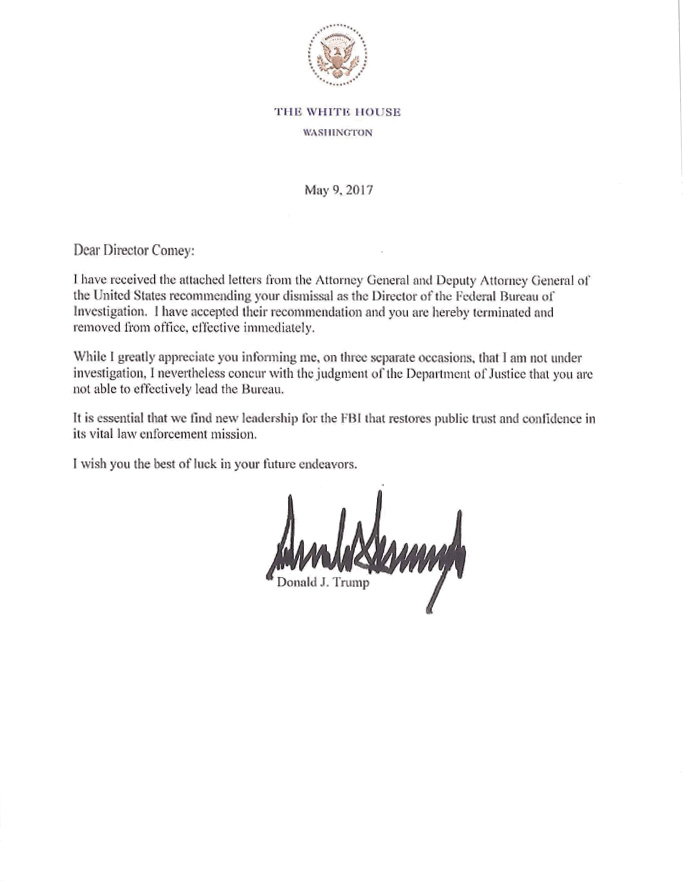
James Comey was the Director of the FBI since September 4, 2013.  Mr. Comey learned of his dismissal while in Los Angeles. Here is the letter that informed Comey of his immediate dismissal.

Crown Prince Frederick Hoepnick Laugh Montage Meets Donald Trump

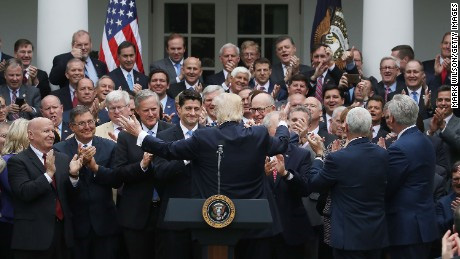
Watching Donald Trump coaxing his followers to cheer his success in passing the AHCA (American Health Care Act) was in my mind really funny. That’s what they do when a television show has a live audience. An applause sign flashes to motivate that audience. Likewise there is a sign that tells audience members to laugh.

The entire spectacle reminded me of the movie “The Great Race.” Jack Lemon plays two parts in that movie. One as Crown Prince Frederick Hoepnick of the tiny kingdom of Pottsdorf.  In the first part of this movie clip the crown prince wants his court to applaud at his every move.  Donald Trump reminded me of that crown prince.

It’s called entertainment.

  That’s all folks!  


GOP Healthcare

Los Angeles Times Editorial

By The Times Editorial Board

May 4, 2017

The GOP insists its healthcare bill will protect people with    pre-existing conditions. It won’t.

About half of American adults under age 65 have at least one pre-existing medical condition, by the federal government’s count. According to a Kaiser Family Foundation analysis, more than half of those adults could have been denied coverage by health insurers in the days before Obamacare if they weren’t included in a large employer’s plan.

That’s why one of the most popular and humane features of the 2010 Affordable Care Act is the provision barring insurers from discriminating against Americans with pre-existing conditions. This provision not only saved many Americans from being bankrupted by medical bills, it relieved the anxiety that trapped people in jobs they would not leave for fear of losing coverage.

But now, House Republicans are proposing to let states punch a gaping hole in that safeguard as part of a bill to partially repeal and replace the ACA.

GOP leaders insist that their bill would continue to bar insurers from denying coverage to anyone, and that it would prevent them from jacking up the premiums for anyone who’d maintained continuous coverage even in states that waived the ACA’s protections for those with pre-existing conditions. Consumers using those states’ insurance exchanges who did not maintain coverage would be eligible for subsidized state “high risk pools,” where high premiums would be offset by billions of dollars in federal aid.

But far more people would be likely to face huge premium increases than the bill’s supporters acknowledge. Millions of people enter and leave the state insurance exchanges annually — the turnover at Covered California is 40% to 50% — which means there may be millions of people going briefly uninsured and then facing enormous premium surcharges, if enough states dumped the ACA’s protection for pre-existing conditions. According to one estimate, those surcharges could range from $4,000 per year for asthmatics to $17,000 for women seeking maternity coverage to $143,000 for those with a history of metastatic cancer.

The bill’s sponsors ponied up more aid Wednesday in an effort to make insurance affordable for all those Americans, but the measure’s funding would fall far short of the amount needed to do so — almost $200 billion short over 10 years, even if only 5% of those in the state exchanges fell into the high risk pool, the Center for American Progress has projected. No surprise there — exorbitant costs sunk the high-risk pools that states used before the ACA, even though they excluded many applicants and denied coverage for some costly conditions.

This is the history that we left behind when the ACA was adopted, and rightly so. It would be foolish to go back now.

25 Years after the April 1992 Los Angeles Riots

The riots were a consequence of the Rodney King police beating and a frustration of Blacks in South Central Los Angeles over their lack of opportunities for decent education, decent jobs, and decent housing.

We were living in the West San Fernando Valley when the riot occurred.  Neither I nor my neighbors were impacted by what happened.

I was shocked by the verdict as many others were shocked.

Los Angeles Mayor Tom Bradley went on television with an inflammatory condemnation of the verdict: “I was stunned. I was shocked. | was outraged when I heard that verdict,” he exclaimed with vehemence. “No, our eyes did not deceive us. We saw what we saw. What we saw was a crime. No, we will not tolerate the savage beating of our citizens by a few renegade cops …. The jury’s verdict will never outlive the images of the savage beating seared forever into our minds and our souls.”

I saw that comment made by Tom Bradley and immediately said that his statement was an invitation to Blacks to riot.  Of course the following day he denied that his words inspired the rioters.  The words “No, we will not tolerate the savage beating of our citizens” sent the message that it is OK to riot.

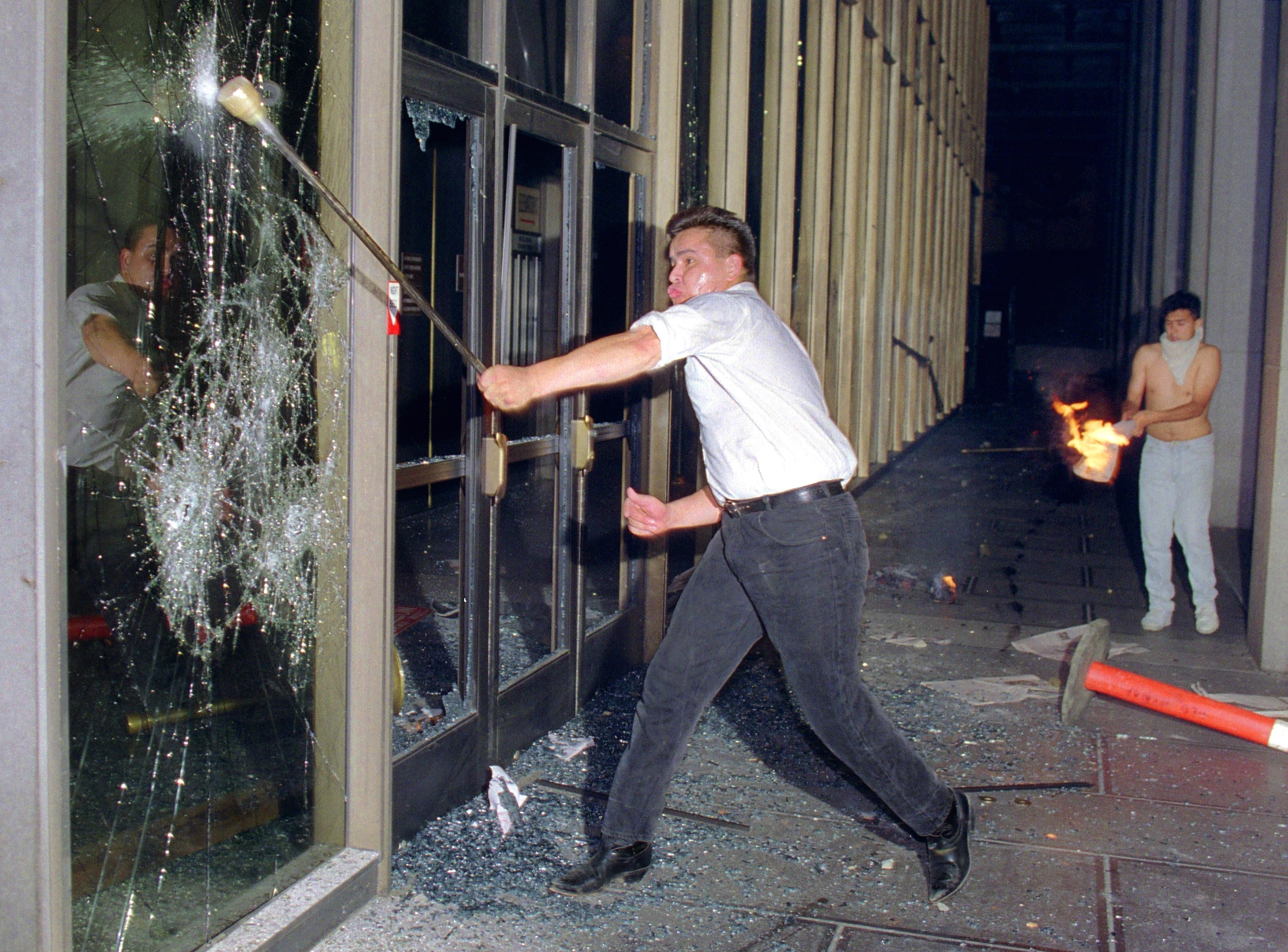
LOS ANGELES, CA – APRIL 29: A rioter breaks a glass door of the Criminal Courts building, downtown Los Angeles, 29 April 1992, after a jury acquitted four police officers accused of beating a black youth, Rodney King, in 1991. Riots broke out throughout Los Angeles hours after the verdict was announced. (Photo credit should read HAL GARB/AFP/Getty Images)

Today’s Black Lives Matter movement is an outgrowth of the continuing mistreatment of Black Americans.

First Air Conditioning in a Car

The Goldberg Brothers – The Inventors of the Automobile Air Conditioner.

Here’s a little fact for automotive buffs, or just to dazzle your friends.

The four Goldberg brothers, Lowell, Norman, Hiram, and Maxwell, invented and developed the first automobile air-conditioner. On July 17, 1946 , the temperature in Detroit was 97 F degrees.

The four brothers walked into old man Henry Ford’s office and sweet-talked his secretary into telling him that four gentlemen were there with the most exciting innovation in the auto industry since the electric starter.

Henry was curious and invited them into his office.

They refused and instead asked that he come out to the parking lot to their car.

They persuaded him to get into the car, which was about 130 F degrees inside, turned on the air conditioner, and cooled the car off almost immediately.

The old man got very excited and invited them back to the office, where he offered them $3 million for the patent.

The brothers refused, saying they would settle for $2 million, but they wanted the recognition by having a label, ‘The Goldberg Air-Conditioner,’ on the dashboard of each car in which it was installed.

There was no way that Oldman Ford was going to put the Goldberg’s name on two million Fords.

They haggled back and forth for about two hours and finally agreed on $4 million and that just their first names would be shown.

And so to this day, all Ford air conditioners show —

Lo, Norm, Hi, and Max — on the controls.

The Trump 100 Day Legislative Disaster

Mexico is not paying for the wall. The Trump travel ban has twice been blocked by the courts. Trump has failed to mobilize a Republican monopoly on power in Washington and his big legislative goal — repealing Obamacare — crashed.

Not one single major piece of legislation has been passed by congress and signed into law.

Most of what Trump has accomplished has been through executive order.

Donald Trump’s Contract with the American Voter was his 100 day action plan.  The plan was announced on October 26, 2016.

How did he do?

Six measures to clean up the corruption and special interest collusion in Washington, DC:

★ FIRST, propose a constitutional amendment to impose term limits on all members of Congress.  NOT DONE.

★ SECOND, a hiring freeze on all federal employees to reduce the federal workforce through attrition (exempting military, public safety, and public health). THE FEDERAL HIRING FREEZE WAS IMPOSED IN JANUARY.  IT WAS LIFTED ON APRIL 14.

★ THIRD, a requirement that for every new federal regulation, two existing regulations must be eliminated. DONE.

★ FOURTH, a five-year ban on White House and Congressional officials becoming lobbyists after they leave government service. DONE.

★ FIFTH, a lifetime ban on White House officials lobbying on behalf of a foreign government. DONE.

★ SIXTH, a complete ban on foreign lobbyists raising money for American elections. DONE.


Seven actions to protect American workers:

★ FIRST, I will announce my intention to renegotiate NAFTA or withdraw from the deal under Article 2205. DONE. HE WILL RENEGOTIATE.

★ SECOND, I will announce our withdrawal from the Trans-Pacific Partnership. DONE.  

★ THIRD, I will direct the Secretary of the Treasury to label China a currency manipulator. NOT DONE. REVERSED OPINION.

★ FOURTH, I will direct the Secretary of Commerce and U.S. Trade Representative to identify all foreign trading abuses that unfairly impact American workers and direct them to use every tool under American and international law to end those abuses immediately. NOT DONE.

★ FIFTH, I will lift the restrictions on the production of $50 trillion dollars’ worth of job-producing American energy reserves, including shale, oil, natural gas and clean coal. DONE.

★ SIXTH, lift the Obama-Clinton roadblocks and allow vital energy infrastructure projects, like the Keystone Pipeline, to move forward. DONE.

★ SEVENTH, cancel billions in payments to U.N. climate change programs and use the money to fix America’s water and environmental infrastructure. DONE. EXCEPT NO WATER AND INFRASTRUCTURE PROJECTS HAVE BEEN BUDGETED.


Five actions to restore security and the constitutional rule of law:

★ FIRST, cancel every unconstitutional executive action, memorandum and order issued by President Obama. NOT DONE.

★ SECOND, begin the process of selecting a replacement for Justice Scalia from one of the 20 judges on my list, who will uphold and defend the U.S. Constitution. DONE. MAJOR ACCOMPLISHMENT.

★ THIRD, cancel all federal funding to sanctuary cities. NOT DONE.

★ FOURTH, begin removing the more than two million criminal illegal immigrants from the country and cancel visas to foreign countries that won’t take them back. DONE.

★ FIFTH, suspend immigration from terror-prone regions where vetting cannot safely occur. All vetting of people coming into our country will be considered “extreme vetting.” NOT DONE.

Here’s How This Will End for Trump

While Keith Olbermann has been “over the top” in giving us all the reasons for his left wing view of the world, his description of how the Trump presidency could end is a reasonable theory.  I have been saying that Trump’s presidency will end with either impeachment or resignation within four years.  I prefer the latter because impeachment is a very messy process.