A voter guide to California’s boring but important ballot propositions

Someone I respect.

George Skelton

Los Angeles Times

Six state propositions are on the ballot and none are sexy. All are snoozers. But each is significant.

Some, in fact, are game-changers.

Why else would the medical profession and insurance companies be spending well over $100 million to beat back Propositions 45 and 46?

Prop. 47 would punish handgun thieves with a figurative slap on the wrist.

Prop. 48 would set a precedent by allowing an Indian tribe to build a Vegas-style casino off the reservation in an urban area.

Props. 1 and 2 have nothing in common except a simple word: “save.” One measure is about saving water, the other tax money. And the weak link is saving Gov. Jerry Brown from having to talk about the fourth term he is seeking while conveniently stumping instead for these props as if they were twins.

Here’s my voter guide:

  • Prop. 1 would authorize $7.5 billion in bonds for badly needed water projects. It wouldn’t help during the current drought, but would prepare for future dry spells.

The money would be spent for the kinds of community projects that California should have been heavily engaged in long ago, rather than relying on massive, super-expensive facilities to transfer water from one region to another. Call it stealing.

There would be state matching money for capturing storm water, recharging aquifers, decontaminating groundwater and recycling wastewater.

More controversial is $2.7 billion for dam building. But critics ignore the fact that dams also provide flood control and recreation.

Prop. 1 is an easy yes.

  • Prop. 2 would force Sacramento politicians to save tax money for an economic rainy day.

To be precise, 1.5% of general fund revenue and all capital gains receipts exceeding 8% of the general fund would be salted away.

The purpose is to reduce the roller-coaster effect of revenue flow during booms and busts. A more effective solution would be to reform California’s tax system. But that would require too much courage for these timid politicians.

Meanwhile, Prop. 2 is another no-brainer yes.

Prop. 45 would allow the state insurance commissioner to regulate premium rates for certain medical plans: those covering individuals and companies with fewer than 50 employees.

Since 1988, the commissioner has been approving home and auto insurance rates. And that has worked out well for consumers.

Opponents have raised more than $56 million, mainly from four big insurance companies. Their TV pitch is that Prop. 45 entrusts too much power in one politician. But at least he is elected and accountable to voters. The insurance companies are accountable mainly to their bottom lines.

Also opposed are unelected government appointees who administer Obamacare in California and worry that the commissioner would interfere in their negotiations with insurers.

But if an elected official can control rising premium rates, he should be allowed to. A close call, but a yes.

Prop. 46 would return the limit on medical malpractice pain-and-suffering payouts to the same dollar value it was in 1975. Inflation has greatly eroded it.

Doctors, hospitals and insurers have raised more than $55 million to kill the measure. They claim it would cause healthcare costs to skyrocket. The nonpartisan Legislative Analyst’s Office, however, calculates the increased cost as practically infinitesimal: less than 0.5%.

Back in 1975, then-Gov. Brown and the Legislature set the cap on noneconomic damage awards at $250,000. If that had been adjusted annually for inflation, it would be $1.1 million today. That’s where Prop. 46 would reset it.

Opposition ads are demonizing trial lawyers, contending Prop. 46 is all about enriching them. But it’s really about securing justice for malpractice victims, who now have difficulty hiring lawyers because the potential awards are so low.

The measure also does two other things. It would require drug and alcohol testing of hospital doctors. And to fight pain pill addiction, it would force doctors to use a state database that tracks patients’ prescription histories.

It’s long past time to bring the medical malpractice cap into the 21st century. And there’s nothing wrong with requiring hospital doctors to undergo drug testing, as pilots and bus drivers do. Controlling pain pill addiction through modern technology also makes sense.

Prop. 47 would reduce the penalty for personal use of most hard drugs — like cocaine and heroin — from a possible felony to always a misdemeanor. OK, perhaps.

More significantly, however, the measure would lower to a misdemeanor other crimes deemed nonviolent and nonserious, such as petty theft, shoplifting, receiving stolen property, writing bad checks and forgery. If the value were less than $950, it would always be a misdemeanor.

Any savings from less incarceration would be earmarked for improved mental health and drug treatment programs.

But most handguns are worth less than $950. Steal one and it’s only a hand slap? That’s too big a flaw. No way on this Prop.

Prop. 48 would ratify a compact negotiated by Brown allowing the North Fork tribe in the Sierra foothills to build a casino down in the San Joaquin Valley on busy Highway 99 near Madera.

When Californians voted to allow Indian casinos 14 years ago, we were promised the gambling halls would be kept on reservations.

If Vegas-type casinos are now going to be permitted in California cities, we should take away the Indians’ monopoly and allow all interests and ethnicities to own them.

Prop. 48 would set a bad precedent.

Victoria’s Secret ‘Perfect Body’ ads draw criticism

What does “The Perfect ‘Body” look like? If you believed Victoria’s Secret’s newest ad campaign, it resembles a tall, busty and very slender 20-something model, gorgeous enough to walk down a New York catwalk in nothing but her skivvies.

Personally, I like looking at pretty young women in their underwear.

The ads with the tagline “The Perfect ‘Body,’” which appear in U.K. stores and on the American website, don’t sit well with many who say the company is promoting unhealthy body image standards for women, as well as once again using thin models to set the standard of what a beautiful body looks like or should look like.
 Victoria's Secret Website
(Victoria’s Secret website)

To come to the company’s defense, the slogan is a play on words for their bra line in their “Body” collection (this is why the word is in quotes in the tagline), but it doesn’t make this ad gone very wrong – a right.

It’s true that Victoria’s Secret shows the same thin models in their TV ads, during their highly anticipated annual fashion show and really, everywhere the brand has a presence – so why the uproar now?

It may be that in those instances, this notion of body perfection is only implied, yet in the ads, it’s in our faces. The writing is on the wall, literally.

While the majority of social media users have expressed their disappointment a few have come to the lingerie brand’s defense.

This article from the Toronto Sun and written by – October 30th, 2014 .

The Next President of the United States

The biggest issue for me in the next presidential election is the economy. I do not expect the results of the November 4 election to change the course of the country during the next two years.

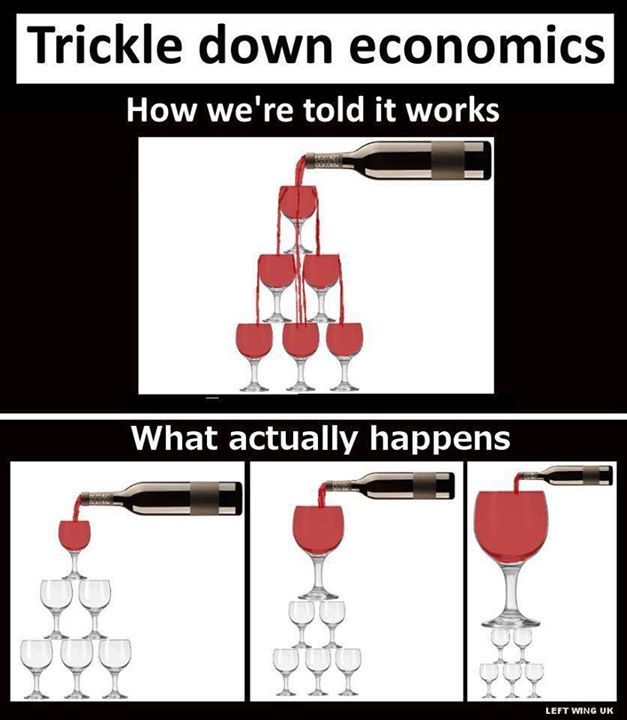
The middle class is shrinking thanks to technology and foreign competition. From the 2000 to the 2012, real U.S. median household income decreased 6.6 percent. That is a decrease from $55,030 in 2000 to $51,371 in 2012 according to The U.S. Census Bureau. In the meantime the wealthiest in our country became even richer. It is, by now, well-known that income inequality has increased in the United States. The top 10 percent of earners took more than half of the country’s overall income in 2012, the highest proportion recorded in a century of government record keeping.

Where are the ideas that will enable this country, the United States, to thrive in this century? By 2016 we will already be well into the 21st century. Things happening on the other side of the world do effect what happens here. Our economy is struggling to find a new direction. Our leaders are silent on their ideas about where we as a nation should be going.

Others may say it is too early to expect any ideas from the 2016 candidates but I do not agree with that view. I want to hear new ideas. I want to hear what the candidates will do to lead this country.

Obama’s 2008 campaign used the slogan “Change we can believe in” and the chant “Yes We Can”. John McCain’s 2008 campaign used the slogan “Country First.” Can anyone explain the meaning of those slogans? Neither told us what those candidates would do as president. We all know how that turned out. We chose change but obtained grid lock and a lack of leadership skills.

I am not interested in their political party as much as I am interested in their plans. Candidates should fill in the remainder of this statement. “If I am elected president I will ______.”

It is unlikely there will be a candidate that will make this statement. We will be inundated with new slogans and words telling us how bad the opponent is for the country.

How many of us will ride above the political party line and vote for the best man? Or is it the best woman? Hmm. The gender, sexual orientation, or religion of the candidates might be the big issue. And once again we won’t be focusing on the real question. Where will you take this country?

Is the U.S. Constitution equivalent to the Bible?

It remains inexplicable that the most advanced country in the world honors a document written in 1789 as if it was handed down from God like the Ten Commandments.

Those wise men that wrote the United States Constitution recognized that the basic law they created might need to be amended as the world evolved. They provided for that situation in Article V. Despite that ability the conservatives on the Supreme Court and elsewhere in our nation defend the idea “that the meaning of the constitution does not change or evolve over time, but rather that the meaning of the text is both fixed and knowable.  An originalist believes that the fixed meaning of the text should be the sole guide for a judge when applying or interpreting a constitutional provision.” Source of quotation

Thus we are all bound to the idea that our right to bear arms has no limits. Anyone can buy and own a gun. The NRA strongly advocates this belief in spite of the continuing loss of life caused by the deranged. They oppose all forms of weapons registration and the names of people who own them.

Thus on this fall day a high school student in Washington State killed one classmate and seriously injured three others before taking his own life. Meanwhile two Northern California deputies are dead another officer and a civilian were injured by another mad man.

I am quite sure there were other shootings today.

We all just change the television channel or block it out of our mind. Most people just say that is the way it is in America.

If it happens to someone in our family we cry, pray, and try to forget.

MOST OF US DO NOT HAVE THE COURAGE TO SAY “ENOUGH.” CERTAINLY NOT OUR ELECTED OFFICALS. THEY TOO ARE AFRAID OF THE NRA.

The Difference Between a Progressive and a Liberal

February 5, 2016

This posting was originally made on Oct 22, 2014.  I believe both Hillary Clinton and Bernie Sanders meet the Teddy Roosevelt definition of a progressive.  The difference between them is that Senator Sanders favors greater change at a rapid pace that he calls a “revolution.”  Mrs. Clinton wants those changes at a slower pace that she calls “evolution.”

Watching The Roosevelts on PBS has helped me to identify my political and economic position. I am a Progressive as was Teddy Roosevelt.

  • Progressives want laws that improve society.
  • Progressives emphasize doing the most for the most – which is how we got socio-economic programs such as Sherman Anti-trust Act, Social Security, Medicare, Obama Care, the 40 hour work week, and a minimum wage.
  • Progressives want businesses to thrive but do not want monopolies or near monopolies.
  • Progressives pursue issues; liberals support candidates; so do conservatives.
  • Progressives have new ideas.

David Sirota, Newspaper columnist and radio host in 1969, wrote this on the Huffington Post:

To put it in more concrete terms – a liberal solution to some of our current problems with high energy costs would be to increase funding for programs like the Low Income Home Energy Assistance Program (LIHEAP). A more “progressive” solution would be to increase LIHEAP but also crack down on price gouging and pass laws better-regulating the oil industry’s profiteering and market manipulation tactics. A liberal policy towards prescription drugs is one that would throw a lot of taxpayer cash at the pharmaceutical industry to get them to provide medicine to the poor; A progressive prescription drug policy would be one that centered around price regulations and bulk purchasing in order to force down the actual cost of medicine in America (much of which was originally developed with taxpayer R&D money).

Conservatives stand for no change. They want to maintain the status quo. They would turn the clock back if they could. That is the way of the religious members of society. The orthodox religious people want no changes to their practice. Look at those who oppose gay marriage and abortion. They usually hold orthodox religious views. They are part of the conservatives.

Progressives don’t simply support laws that bring about change. It’s just that progressives are willing to consider making changes that will improve life for everyone.

Fareed Zakaria: Obama needs to dial back his Syria strategy

Opinion writer October 16, 2014 in The Washington Post

From the start, President Obama’s Syria policy has foundered because of a gap between words and deeds. And he’s done it again. Having declared that the aim of U.S. policy is to “degrade and ultimately destroy” the Islamic State, Obama now finds himself pressured to escalate military action in Syria. This is a path destined for failure. In fact, the administration should abandon its lofty rhetoric and make clear that it is focused on a strategy against the Islamic State that is actually achievable: containment.

Escalation in Syria cannot meet American objectives and is almost certain to produce chaos and unintended consequences. The central reality is that Washington has no serious local partners on the ground. It is important to understand that the Free Syrian Army doesn’t actually exist. A Congressional Research Service report points out that the name does not refer to any “organized command and control structure with national reach.” The director of national intelligence has testified that the opposition to the Bashar al-Assad regime is composed of 1,500 separate militias. We call a bunch of these militias — which are anti-Assad and also anti-Islamist (we hope) — the Free Syrian Army.

Scholar Joshua Landis — whose blog Syria Comment is an essential source — estimates that the Assad regime controls about half of Syrian territory, though much more of the population. The Islamic State controls about one-third of the country, and the other militias control a little less than 20 percent. But the largest and most effective of these non-Islamic State groups are al-Qaeda-affiliated and also deadly enemies of the United States. The non-jihadi groups collectively control less than 5 percent of Syria. Landis writes that, according to opposition leaders, Washington is supporting about 75 of these groups.

A U.S. strategy of escalating airstrikes in Syria — even if coupled with ground forces — would wish that the weakest and most disorganized forces in the country somehow become the strongest, first defeating the Islamic State, then the Assad regime, all while fighting off Jabhat al-Nusra and Khorasan. The chance that all this will happen is remote. Far more likely, heavy bombings in Syria will produce chaos and instability on the ground, further destroying Syria and promoting the free-for-all in which jihadi groups thrive.

Critics are sure this policy would have been easy three years ago, when the opposition to Assad was more secular and democratic. This is a fantasy. It’s true that the demonstrations against the Assad regime in the initial months seemed to be carried out by more secular and liberal people. This was also true in Libya and Egypt. But over time, more organized, passionate and religious forces triumphed. This is a familiar pattern in revolutions — including the French, Russian and Iranian. They are begun by liberals and taken over by radicals.

For any strategy to work in Syria, it needs both a military and a political component. The military element is weak. The political one is nonexistent.

The crucial, underlying reason for the violence in Iraq and Syria is a Sunni revolt against governments in Baghdad and Damascus that they view as hostile, apostate regimes. That revolt, in turn, has been fueled by Saudi Arabia, the United Arab Emirates and Qatar, each supporting its own favorite Sunni groups, which has only added to the complexity. On the other side, Iran has supported the Shiite and Alawite regimes, ensuring that this sectarian struggle is also regional.

The political solution, presumably, is some kind of power-sharing arrangement in those two capitals. But this is not something that the United States can engineer in Syria. It tried in Iraq, but despite 170,000 troops, tens of billions of dollars and David Petraeus’s skillful leadership, the deals Petraeus brokered started unraveling within months of his departure, well before American troops had left. This is not a part of the world where power-sharing and pluralism have worked — with the exception of Lebanon, and that happened after a bloody 15-year civil war in which one out of every 20 people in the country was slaughtered.

The only strategy against the Islamic State that has any chance of working is containment — bolstering the neighbors (who are threatened far more than the United States) that are willing to fight militarily and politically. They include, most importantly, Iraq, Jordan, Lebanon, Turkey and the Gulf states. The greatest challenge is to get the Iraqi government to make serious concessions to Sunnis so that they are recruited into the fight, something that has not happened so far. All of this should be coupled with counterterrorism, which means strikes at key Islamic State targets, as well as measures to track foreign fighters, stop their movements, intercept their funds, and protect the neighbors and the West from a jihadi infiltration spilling over.

The Obama administration is pursuing many elements of this strategy. It should be forthright about its objectives and abandon its grander rhetoric, which is setting itself up for escalation and failure.

Cancer Research, Cures, and Making Money

AbigailNabbyAdams Smith (July 14, 1765 – August 15, 1813) was the firstborn of Abigail and John Adams, founding father and second President of the United States.

In 1810, Nabby was diagnosed with breast cancer, followed by a mastectomy in 1811. … The cancer continued to spread throughout her body, and she died, aged 48. That was 200 years ago.

ABCNews.com says that $415 Million is spent annually by Medicare for the treatment of breast cancer.

Total average Medicare spending per patient for initial phase care of breast cancer (2 months prediagnosis–365 days postdiagnosis) was $21,000 (2002 US$) in 2002 (Figure 2).4 Surgery and radiation cost little on a per-patient basis: $5700 and $4500 (2002 US$), respectively, and were used in 91% and 51% of patients, respectively. In contrast, chemotherapy and other inpatient services were used in about 25% of patients, but at a higher per patient cost ($12,800 [2002 US$]). If the data used for this analysis were expanded to include continuing care and end-of-life care, there would be a marked difference in spending patterns. The United States spent an estimated $62,900 to $94,300 per person for end-of-life breast cancer care during 2010 – See more at: http://www.ajmc.com/publications/evidence-based-oncology/2012/2012-2-vol18-n1/the-economics-of-cancer-care-in-the-united-states-how-much-do-we-spend-and-how-can-we-spend-it-better#sthash.BSrLsaip.dpuf.

So millions of dollars are spent treating people with this horrible disease. Billions more are spent on research for a cure. The National Cancer Institute’s (NCI) budget for FY 2013 was approximately $4.8 billion. Overall, NCI’s budget has been relatively flat in recent years. During the period from 2005 through 2013, the NCI budget averaged $4.9 billion per year.

Lots of people making lots of money.   

How dare I suggest this thought? Isn’t cancer cures and cancer research an industry that makes large amounts of money? Lesley Stahl on 60 Minutes discovers the shock and anxiety of a cancer diagnosis can be followed by a second jolt: the astronomical price of cancer drugs.


If you had a cure for just one of those cancers, breast cancer, how many people would need to find another job?  How many companies would be earning less money?