Companies that Benefit from War

A Review of an Aug 28, 2013 post. Look at all the money those war material manufacturers will be making. Is this Obama’s job stimulus program? Green is for m-o-n-e-y.


It was no surprise that the stock market dropped yesterday.  A 1.59% drop in one day on the S&P 500.  After all the threat of the United States at war in Syria could have an additional impact on our country.  Most likely it will impact every country as the cost of oil and other commodities increases.

Then today the stock markets in the United   States have risen by .3%.  How can that be? Why would the stock market rise when the threat of war is still so prominent?

MSN Money seems to have the answer. “Sales for the world’s 100 largest arms producers amounted to $411 billion in 2010, according to the Stockholm International Peace Research Institute. That was up 1% from the year before, a modest rise that was held in check by the drawdown of foreign forces in Iraq.”

The top ten listed below.

United Technologies

  • Arms sales in 2010 $11.4 billion

L-3 Communication

  • Arms sales in 2010 $13.1 billion

Finmeccanica

  •  Arms sales in 2010 $14.4 billion

EADS

  •  Arms sales in 2010 $16.4 billion

Raytheon
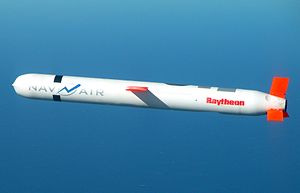
Tomahawk_300px_Block_IV_cruise_missile_-crop

Arms sales in 2010 $23 billion.

  • Raytheon’s web site says, “The combat-proven Tomahawk is the world’s  most capable cruise missile and is ideally suited for critical long-range, precision-strike missions against high-value with minimal collateral damage.”
  • Arms sales as percent of total revenue: 91%.
  • Total Number of Employees: 72,400.

 General Dynamics

  • Arms sales in 2010 $23.9 billion

Northrop Grumman

  • Arms sales in 2010 $28.2 billion

Boeing

  • Arms sales in 2010 $31.4 billion

BAE Systems

  • Arms sales in 2010 $32.9 billion

Lockheed Martin

  • Arms sales in 2010 $35.7 billion
  • Among Lockheed’s major products are the Trident missile and the F-16 and F-22 fighter jets.
  • Arms sales as percent of total revenue: 78%

Is this the impact of the Military–industrial complex?
Syria – Feel Good War Efforts Are a Waste of Life and Wealth

It is not just President Obama that is facing a dilemma about what actions to take in Syria.  Almost every leading congressman and senator has mixed feelings over what actions to take.

The reason is that a win by the Assad regime or the rebels result in equally troubling consequences.

As a benevolent dictator Assad has kept a lid on sectarian hatred that has enabled Syrian minorities to live in relative peace.  Assad has not been continuously at war with Israel but at the same time has provided the sanctuary to the leader of Hamas.  He has permitted the transfer of weapons across his country from Iran to Hezbollah in Lebanon.  In an Arab war or war with the United States, he would be allied with Iran.

The rebels are dominated by Muslim extremists (Muslim Brotherhood supported by Iran and al-Qaeda that are supported by contributions from around the world).  They appear to be in agreement that Israel must be obliterated and continuing attacks on Western Europe and America by any means.

Today’s Los Angeles Times has a front page article, More harm than good in strikes?, about the success of air attacks on nations that have defied American will or wishes.  The resulting consequences of those attacks have been mediocre at best.  The article’s words are “The type of campaign expected in Syria has a poor track record.”  Sited are the two major bomb and cruise missile episodes against Osama bin Laden and Saddam Hussein’s Iraqi government and the 1986 bombing of Muammar Gaddafi’s Lybia.  While all the attack weapons hit their targets, those events had achieved little.  Even the invasion and removal of Saddam Hussein from Iraq is in dispute (there are almost daily reports of bombings in that country).

Barack Obama’s mistake was drawing a “red line.”  Americans are tired of war.  We do not have the man power or the persuasive skills to change the behavior of any society.  Just yesterday I read of Buddhists setting fire to the homes of Muslims in Myanmar (Burma).  Should America march into that country?  Of course our military-industrial complex will say, Yes.

As sad as the gassing of innocent people is to most of us, there is little we can do to stop the carnage unless we send troops into Syria.  Then a few years later we will withdraw and the carnage will resume.

Microsoft Beyond the PC

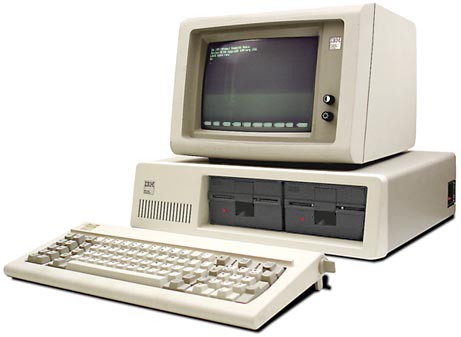
IBM PC I have had a Microsoft based computer since the first clones were being built.  I had a 5 ¼” two floppy disk machine using the first MS operating system MS-DOS 1.1

In the 1980s and 1990s Microsoft overwhelmed all competitors in computer technology.  Between their operating system and Office products there were none that could compare.  By focusing on software only they enrolled hardware manufacturers to adopt their vision.  Thus, hardware company after company joined in to a vision of spreading the use of computers to both home users and businesses.  They succeeded.  From banks to law offices to manufacturing everyone converted their systems from manual to computers.

Then Google came along in 1996 and the domain google.com was registered on September 15, 1997. They formally incorporated their company, Google Inc., on September 4, 1998 at a friend’s garage.  Search engines existed before founders Larry Page and Sergey Brin had hit upon a name that was an instant success.  Their Algorithms made them the dominate force.  I remember being told to use Google in the year 2000 for answers to my questions.  Early companies such as Lycos, Altavista, and WebCrawler were lost in the dust.

Google went on to acquire YouTube and develop the Android operating system for smart phones that is now used in more phones than any other.

Where was Microsoft while the world was changing?  Nowhere to be seen.

Bing, Microsoft’s search engine, did not appear until 2009.  Microsoft’s touch panel operating system for smartphones, dubbed Windows 8, was released to manufacturing on August 1, 2012, and was released for general availability on October 26, 2012.  Neither of these systems has been a hit.  In fact tech radio host Leo Laporte has advised his listeners to find PCs with Windows 7 operating systems if you are in the market for a new computer.

So is it any wonder that Steve Balmer, CEO of Microsoft, will be leaving the company within the next 12 months?  At 57 years old, he is not ready to retire.  Although not said publicly, it is a sure bet that the Microsoft board has asked for his resignation.

Given the lead that Apple and Google have in the smart phone arena it is hard to imagine how Microsoft can regain its lead.

10 Common Spending Regrets

Get rich quick schemes. 10 spending regrets.This information was posted on the AARP newsletter but the regrets are applicable to everyone.

Time-shares

The times share industry, known for its seductive sales pitch of owning a property and swapping for others for a few weeks a year.  Maintenance fees turn those properties into financial nightmares.  Worse is that selling a time share is nearly impossible to sell.

First Generation Technology

New consumer electronics devises tend to be difficult to use and are expensive. By the third or fourth version the prices have dropped and the gadget works easily.

“As Seen on TV” Products

From kitchen knives that will cut through steel bars to other miracle products many fall short of their promised performance.  Of course they are offered at an “unbelievable low price.”  Try getting your money back.

Elaborate Weddings

The average American wedding now costs $28,000.  My daughter is in for a big disappointment.  With half of all wedding ending in divorce is it any wonder that there are big regrets.

Extended Warranties

Device failures usually occur in the first year of use.  Most products come with warranties of a year or more.  Consumers Reports advises that the only benefit is to the seller.  AARP says these warranties are a great deal for the party selling them.

Trendy Fashions

Buying quality apparel and classic designs will save money in the long run.

Get Rich Schemes

From buying homes in foreclosure to “collectibles” if it seems too good to be true it probably is.  These ideas are making the hawkers rich.

Gym Membership/Exercise Equipment

It is estimated that gym memberships go unused after the first two or three visits.  Exercise equipment advertised on television looks easy to use but most of us lose interest after just few weeks.

Pet Toys and Novelties

Animals may be cute but the care is an ongoing responsibility.  Novelty toys sold in malls are fascinating for an hour or two.

We now have two “cute” dogs that now require walking, feeding, grooming, and medical care.

Prepaid Funeral Plans

These plans are costly and do not deliver as promised.

My mother told me everything was pre-paid for her funeral.  When she died I had no proof of the pre-paid plan.  The cemetery did acknowledge the plots had been purchased but that most people do not understand the plans.  The casket cost an additional $6,500.  Flowers were not part of the pre-paid plan.

Objections to Keystone XL Pipeline

11-18-2014: The number one issue in America is a growing economy. That means more good jobs. The president is WRONG on this issue. Perhaps today’s vote in the Senate will change his opinion.

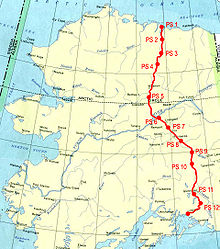
Oil Pipeline GraphicA quick review.  This is the proposed oil pipeline from Hardisty, Alberta, Canada to Houston, Texas and Port Arthur, Texas.

It now appears that the U.S. State Department sees no objection to approving the project.  However, the U.S. Interior Department warns of possible harm to wildlife.  Activists are primarily concerned with the possibility of oil spills.

Interestingly there is already a pipeline from Hardisty, Alberta to Cushing, Oklahoma.  While the reports of oil spills from that pipeline are rare there has been little in the news that confirms that fact.

Furthermore the Trans-Alaska oil pipeline, 800 miles long, had its largest oil spill involving the main pipeline on February 15, 1978, when an unknown individual blew a 1-inch (2.54-centimeter) hole in it at Steele Creek, just east of Fairbanks.  Approximately 16,000 barrels of oil leaked out of the hole before the pipeline was shut down.  Criminal mischief has been the primary cause of leaks.  There are no reports of impact on wildlife.

Trans_alaska_pipelineThe oil companies injected billions of dollars into the Alaska economy during the construction effort and the years afterward.

Of course environmentalists don’t want to hear the facts.

We are spying on You

The price of modern technology.

Try researching for a new car, a television, a camera, or a new home theater system.  The result is that within hours there will be advertising popping up on your smartphone or computer  for that very same product.

Just yesterday I was researching for a new home theater system.  Today I saw multiple ads for those systems across the top of my screen and just below the Google search window.  Six months ago I was searching for a new camera bag.  There were multiple offers for bags from different retailers.

Adam Levin blogs on Huffington Post that there are 9 Household Items That Could Be Spying on You.

Which of these do you have in your house?

  • Your television (thanks to the internet)
  • Your Cable Box (your provider knows what you ar watching)
  • Your Dishwasher, Clothes Dryer, Toaster, Clock Radio and Remote Control (thanks to smartphone interface)
  • Your Lights (thanks to the power  company’s new monitoring system)
  • Your Heat an A/C (thanks to The Nest thermostat that tracks homeowners’ heat and air-conditioning habits)
  •  Security alarms (those services know when you’re not at home)
  • Insulin Pumps and Pacemakers (White Hat hacker Barnaby Jack proved he could kill a diabetic person from 300 feet away by ordering an insulin pump to deliver fatal doses of insulin. This summer he announced he could hack pacemakers and implanted defibrillators)
  • Smartphones (that same technology that provides mapping directions also tells those with access where you are)

The Value of Blockerbuster Mergers

There is a value to mergers.  They make companies larger and more powerful.  The likely outcome is more revenue and higher net income.  It is a share holders dream.

Historically the United States has taken the position that large mega companies that control an industry are not in the best interest of America.  The Sherman Antitrust Act was passed into law July 2, 1890.  The purpose was to prohibit monopolies.  The most infamous of the trusts was the Standard Oil Trust, which was formed in January, 1882. At that time, Standard Oil and its affiliates controlled more than 90 percent of the oil refining capacity and most of the oil marketing facilities in the U.S.  The trusts came to dominate a number of major industries, and were, in effect, monopolies.

This ground breaking piece of legislation was the result of intense public opposition to the concentration of economic power in large corporations and in combinations of business concerns (i.e., trusts) that had been taking place in the U.S. in the decades following the Civil War. Opposition to the trusts was particularly strong among farmers, who protested the high charges for transporting their products to the cities by railroad.

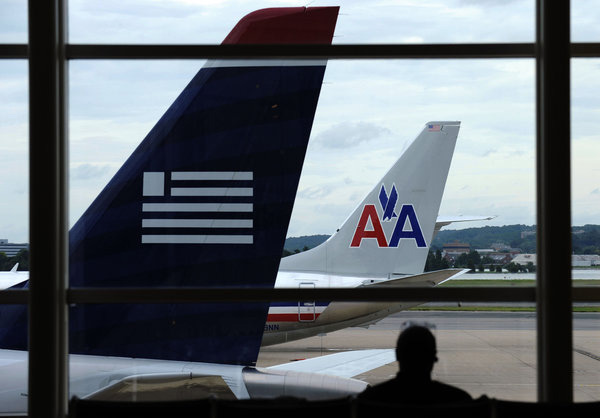
American Airlines & US Airways planes at Washington's Ronald Reagan National Airport
american airlines-us-airways-planes-at-washington’s-ronald-reagan-national-airport

So what do you suppose would happen if most of the airlines were consolidated into one carrier?  There would be no reason to control the charges that the airline could impose.  Even now the number of airlines has declined in the United States. There were nine major national airlines as recently as 2005, but only five remain today. American Airlines has acquired four other air carriers since 1971.  The largest was TWA in 2001.

Continental Airlines merged with United Airlines 2010 to 2012.  They retained the United Airlines name.

Between 2008 and 2010 Delta Airlines absorbed Northwest Airlines.

See a more complete list here.

What has happened to the cost of flying?  The airlines have added numerous fees to hide the increased cost of air travel.  Now there is a fee to check a bag.  A fee for food (even chips or soft drink).  Want to watch a movie?  There is a fee.  Some airlines are even charging extra for aisle seats.

 So what do you expect the fares to be once this merger is completed? The average cost of a roundtrip domestic ticket — including baggage and reservation change fees — grew to $378.62 last year, up from $351.48 in 2008, when adjusted for inflation according to a report from the Associated Press.

Just imagine the cost of other items if there was little or no competition.  Bank fees have increased simply because there is less competition.  AT&T and Verizon dominate the telecommunications industry just as Time Warner and Comcast dominate the television service industry.

The justice department is finally stepping forward to protect consumers.  Let’s hope this is the first of many more actions to protect consumer interests.

Mexico – Becoming the Failed State

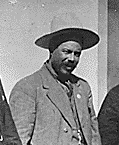
Pancho Villa (Circa 1913)

Pancho Villa was responsible for a raid on Columbus, New Mexico in 1916, which was the first attack on U.S. soil since 1812.  The U.S. sent several thousand soldiers across the border to hunt for Pancho Villa. Though they spent over a year searching, they never caught him.  Villa retired from revolutionary life in 1920 but had only a short retirement for he was gunned down in his car on July 20, 1923.

The story of Villa was not well reported in the United States. Once again our news media has failed to provide adequate reporting about happenings in our neighbouring country.                                                                                            

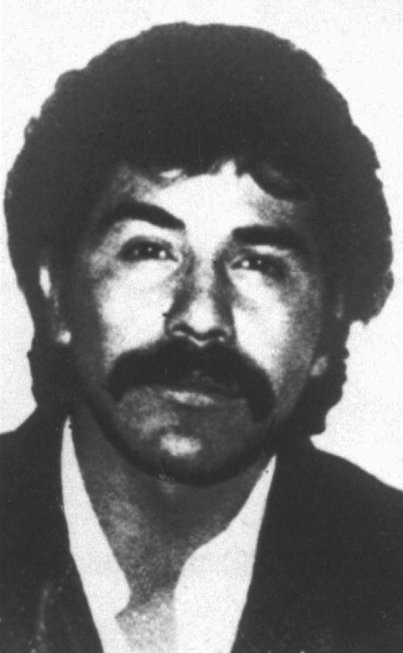
Rafael Caro Quintero

Infamous drug lord Rafael Caro Quintero walked free Friday after 28 years in prison when a court overturned his 40-year sentence for the 1985 kidnapping and killing of a U.S. Drug Enforcement Administration agent.

Caro Quintero helped establish a powerful cartel based in the northwestern Mexican state of Sinaloa that later split into some of Mexico’s largest cartels, including the Sinaloa and Juarez cartels.

Defense attorneys believe freedom is imminent for a second member of the trio of Mexican drug kingpins, Ernesto Fonseca Carrillo, responsible for the murder.

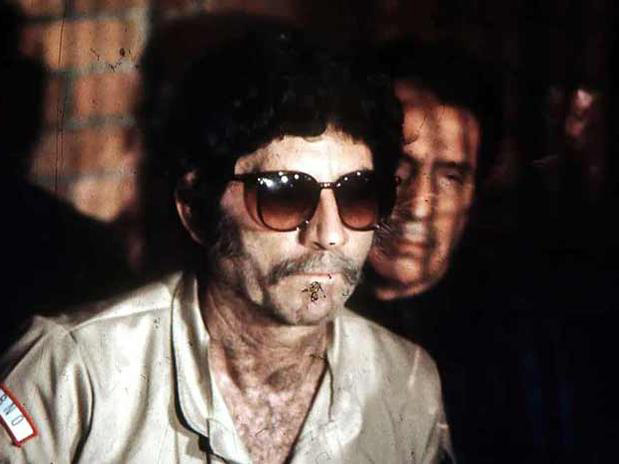
Ernesto Fonseca Carrillo (Don Neto)

So here we have a nation next door to the United States where corruption is rampant and drug cartels have the money to bribe and the power to threaten, releasing drug king pins from prison on technicalities that were obviously concocted.

This was reported in the Texarkana Gazette, Los Angeles Daily News and the Herald Times of Bloomington, Indiana.  Anything in the Los Angeles Times? No. In the Washington Post? Yes, but not on the front page. In the New York Times? Nope.

Little or nothing from the White House because they do not want to alienate Mexico.  They are concerned about the Hispanic vote.

The media?  Where are they?