People Kill People – Not Guns

Student charged in Va. mall shootings; 2 wounded; Gunman fires at father, 6-year-old son in Costa Mesa; What do these two incidents have in common?  The answer: people killing people.  The NRA and other gun rights advocates have told us repeatedly that “guns don’t kill people, people kill people.”

If we agree with those rights groups then the issue is dangerous people.  Some of those people are felons who are not allowed own guns and some of those people are mentally imbalanced in some way that should result in them being denied the right to own a weapon.

Why would reasonable mentally competent people want to see guns fall into the hands of felons or the mentally incompetent?

A partial solution to this problem is background checks on all gun buyers.  That kind of law would not have stopped Adam Lanza in Newtown, Connecticut.  It might have stopped the killing in Aurora, Colorado and Tucson, Arizona.

Even in nations with stricter gun regulations killing does happen.  Shouldn’t our laws work to prevent those horrible tragedies?

I am asking for sensible regulation that will keep weapons out of the hands of dangerous people.

Lunch With The Girls … Over Time

A group of 15-year-old girlfriends discussed where to meet for dinner. Finally, they agreed to meet at the Dairy Queen, next door to the Ocean View restaurant, because they had only $6.00 among them and Brad Johnson, the cute boy in Social Studies, lived on that street.

10 years later, the group of 25-year-old girlfriends discussed where to meet for dinner. Finally, they agreed to meet at the Ocean View restaurant, because the beer was cheap, the restaurant offered free snacks, the band was good, there was no cover charge, and there were lots of cute guys.

10 years later, the group of 35-year-old girlfriends discussed where to meet for dinner. Finally, they agreed to meet at the Ocean View restaurant, because the cosmos were good, it was right near the gym and, if they went late enough, there wouldn’t be too many whiny little kids.

10 years later, the group of 45-year-old girlfriends discussed where to meet for dinner. Finally, they agreed to meet at the Ocean View restaurant, because the martinis were big, and the waiters wore tight pants and had nice buns.

10 years later, the group of 55-year-old girlfriends discussed where to meet for dinner. Finally, they agreed to meet at the Ocean View restaurant, because the prices were reasonable, the wine list was good, the restaurant had windows that opened (in case of hot flashes), and they served fish which is good for your cholesterol.

10 years later, the group of 65-year-old girlfriends discussed where to meet for dinner. Finally, they agreed to meet at the Ocean View restaurant, because the lighting was good, and the restaurant had a senior citizen discounts.

10 years later, the group of 75-year-old girlfriends discussed where to meet for dinner. Finally, they agreed to meet at the Ocean View restaurant, because the food was not too spicy, and the restaurant was handicapped-accessible.

10 years later, the group of 85-year-old girlfriends discussed where to meet for dinner. Finally, they agreed to meet at the Ocean View restaurant, because they had never
been there before.

Social Security is a Promise that will be Hard to Keep

Chained CPI is only the beginning of many other factors that will limit future payout.

Here is an unpleasant fact about Social Security.  The system was designed in the 1930s. Life expectancy at birth in 1930 was indeed only 58 for men and 62 for women, and the retirement age was 65.  Reported in USA Today, Social Security’s original retirement age of 65 was set in 1935 when life expectancy was 63. Today, life expectancy is 77 — and, for those who live to 65, life expectancy is 83. The system used to benefit financially from people who paid Social Security taxes but died before collecting any benefits.

When Social Security  was implemented almost 54% of men could expect to live to age 65 if they survived to age 21, and those who attained age 65 could expect to collect Social Security benefits for almost 13 years (and the numbers are even higher for women).  Men attaining 65 in 1990 can expect to live for 15.3 years compared to 12.7 years for men attaining 65 back in 1940.  This is data supplied by the Social Security Administration.

Some of the data is murky and can be interpreted to support your particular views.

I entered all of my Social Security contributions for my entire working years. I then calculated their future value in an Excel spreadsheet.   The calculation included the employer contributions.  I compounded the interest at 5% (Future Value Calculator for Single Payment-the annual contribution).  The results were enough money contributed to last 13 years.  But that calculation was made the year after I retired.  Since then my monthly SS income has increased.  As the increases continue my contributions may be consumed in ten years.

With growing numbers of people living into their 80s and 90s where will the money come from to pay their SS checks?  My guess is it will come from the general revenue of the United States.  That is the reason that chained CPI is inevitable as is a later retirement age.

Calling Criminals What They Are

Remember this from when you were a child: Sticks and stones my break my bones but names will never hurt me.  

The Associated Press has a style book that tells its reporters what words to use in specified situations.  It appears that the “word usage department” has determined the desire to not hurt anyone’s feelings has taken priority over reality.

Thus AP has decided the words “illegal immigrant” might be offensive to some people.  Therefore “undocumented workers” must be substituted for “illegal workers” arguing that the word “illegal” is dehumanizing and lumps border crossers with serious criminals. Some people even view the words “illegal immigrant” a form of hate speech.  They refuse to utter those words, referring only to the “I-word.”

 I must counter with the question, what do you call a petty thief?  After all he is a thief.  The answer is shop lifter, pick pocket, larcenist, pilferer, stick up artist, etc.  Sorry to say but at the end of the day a thief is a thief.

An illegal immigrant is someone who crossed the border without permission.  He has broken the laws regarding entry into the country.  It’s not just the United States.  Whether you drive into Canada or fly into Canada, the Canadian authorities ask where you are from, where you are going, and how long do you intend to stay in their country.

What should we call a murderer?  What should we call someone who has been unfaithful to their spouse?  Whatever we call them we won’t want to use a word that would hurt their feelings.  After all, words do matter.

Be Rich, Be Smart, Live Longer

Peter R. Orszag, the former director of the Congressional Budget Office, has written a column for Bloomberg.com that tells us nothing we did not already know.  Better educated Americans live longer than the rest of us and children of those rich people are getting more education than those that are poorer.  This is hardly news.  I would only disagree with one part of this article.  You will most likely live longer if you are better educated no matter how rich you are.  The riches enable you to buy the best health care and that will most likely extend your life.

Life among the wealthy is extended simply because they are wealthy.  An example of extended life is the still alive Zsa Zsa Gabor who turned 96 this past February.  Her health has seriously deteriorated in recent years but thanks to her wealth she is still alive.

I would have preferred that Mr. Orszag had discussed the primary benefit of ACA (the Affordable Care Act/Obama Health Care).  That would be more productive years of life for more people.

Thus Mr. Orszag ought to be promoting the benefits of ACA.  Similarly the President ought to be promoting the benefit of longer life thanks to the availability of health care.

Publishing World Helps Itself Into Its Grave

Magazines and newspapers are shrinking faster than anyone had anticipated.  Their survival is based upon advertising revenue.  That revenue is rapidly moving to the internet.  Thus Newsweek is now only on the internet.  U.S. News only publishes an occasional special edition.  Time Inc. with its multiple magazines has had two layoffs of 5% of its staff each time in the past two years.

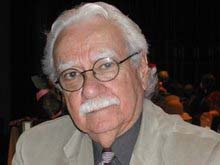
My local paper, Los Angeles Daily News, is now in another of its never ending efforts to consolidate and reduce pages published in each edition.  Thus Al Martinez, an old guy who fought in the Korean War, has now been eliminated from that paper.  He worked for the Oakland Tribune of 16 years, the Los Angeles Times for 38 years, and the last three years for the Los Angeles Daily News where he has had a weekly column.

al_martinezMr. Martinez is a Pulitzer Prize–winning journalist.  He was named Bard of L.A. by the Huntington Museum.  So the Daily News had decided that his talent in no longer needed.  So as Newsweek gave notice to its best writers, reporters, and commentators, the Daily News has decided to follow in that magazine’s example.

Al Martinez has a WordPress blog.  I am proud to add a link.  Top right.

April 3, 2013

The subscription has been canceled.

North Korea

A Congressional Research Service report dated April 12, 2012 offered this startling summary of food aid to North Korea.Between 1995 and 2008, the United States provided North Korea with over $1.3 billion in assistance: just over 50% for food aid and about 40% for energy assistance. Since early 2009, the United States has provided virtually no aid to North Korea. On February 29, 2012, after bilateral talks with the United States, North Korea announced a moratorium on long-range missile launches, nuclear tests, and nuclear activities (including uranium enrichment) at its Yongbyon nuclear facilities. It also said it would allow international nuclear inspectors to return to North Korea. The United States announced it would provide North Korea with 240,000 metric tons (MT) of food aid. However, the so-called “Leap Day deal” unraveled after North Korea on April 13, 2012, launched, in defiance of United Nations resolutions, a rocket to place an “earth observation satellite” into orbit. U.S. officials say that during bilateral negotiations they warned their counterparts that any rocket launch using ballistic missile technology would jeopardize the agreement.”

If North Korean dictator Kim Jong Un’s threats to start a nuclear war are an attempt to get the world’s attention, he’s succeeded.  Will the United States offer more food aid and other assistance to bring his threats to a halt?  It is time we said “No” to his threats.  The consequences of the use of a nuclear weapon are horrifying but when do we stand up to a bully?  The time has come.

The wisest thing we can do right now is not be goaded by the bully.

Equality is something for Everyone!

Some of the people in my family are devoutly religious.  None are in my immediate family.  I am quite certain that they believe marriage is between a man and a woman.  They believe it cannot be any other way.  Homosexuality is, in their view, something to be hidden and something to be ashamed of.  It must have been VERY difficult for Senator Rob Portman, who had taken a strong stand against gay marriage to learn that his 21 year old son is gay.

I personally find sexual relations between two people of the same sex to be revolting.  Especially sex between two men.  There was nothing funny about “I Love You Phillip Morris” starring Jim Carrey.  To me it was horrifying.

Despite my feelings, I recognize that there are people in this world who are attracted to others of the same sex.  They have the right to live their lives as happily as does the rest of society.  Homosexual marriages will not impact my marriage in any way.  The religious may believe that homosexual marriage will demean the basic principles of marriage.  Those that have that belief probably also find all deviations from orthodox religion as unacceptable behavior too.

No one makes you associate with those you find an anathema to your views or beliefs.  You are not required to associate with people of another religion, race, political party, etc. that you consider unacceptable.

Modern Family” really is a profile on the early 21st century as “The Jeffersons” were in the last part of the 20th century.

I have no idea how the Supreme Court will rule on California’s Proposition 8 or DOMA.  I would recommend the justices re-read the American Declaration of Independence and the preamble to the Constitution.

Equality is something for Everyone!  No law should limit that right!

The 1% aren’t like the rest of us

This Op-Ed from the Los Angeles Times is really worth the read.   I admit to being part of the 47% that Mitt Romney mocked.  The findings of this survey confirm what I always knew.

Monopoly Game Box

The ultra-rich share few of the priorities of most Americans, but their access to policymakers is greater, a study finds.

By Benjamin I. Page and Larry M. Bartels

March 22, 2013

Over the last two years, President Obama and Congress have put the country on track to reduce projected federal budget deficits by nearly $4 trillion. Yet when that process began, in early 2011, only about 12% of Americans in Gallup polls cited federal debt as the nation’s most important problem. Two to three times as many cited unemployment and jobs as the biggest challenge facing the country.

So why did policymakers focus so intently on the deficit issue? One reason may be that the small minority that saw the deficit as the nation’s priority had more clout than the majority that didn’t.

We recently conducted a survey of top wealth-holders (with an average net worth of $14 million) in the Chicago area, one of the first studies to systematically examine the political attitudes of wealthy Americans. Our research found that the biggest concern of this top 1% of wealth-holders was curbing budget deficits and government spending. When surveyed, they ranked those things as priorities three times as often as they did unemployment — and far more often than any other issue.

If the concerns of the wealthy carry special weight in government — as an increasing body of social scientific evidence suggests — such extreme differences between their views and those of other Americans could significantly skew policy away from what a majority of the country would prefer. Our Survey of Economically Successful Americans was an attempt to begin to shed light on both the viewpoints and the political reach of the very wealthy.

While we had no way to measure directly the political influence of those surveyed, they did report themselves to be highly active politically.

Two-thirds of the respondents had contributed money (averaging $4,633) in the most recent presidential election, and fully one-fifth of them “bundled” contributions from others. About half recently initiated contact with a U.S. senator or representative, and nearly half (44%) of those contacts concerned matters of relatively narrow economic self-interest rather than broader national concerns. This kind of access to elected officials suggests an outsized influence in Washington.

On policy, it wasn’t just their ranking of budget deficits as the biggest concern that put wealthy respondents out of step with other Americans. They were also much less likely to favor raising taxes on high-income people, instead advocating that entitlement programs like Social Security and healthcare be cut to balance the budget. Large majorities of ordinary Americans oppose any substantial cuts to those programs.

While the wealthy favored more government spending on infrastructure, scientific research and aid to education, they leaned toward cutting nearly everything else. Even with education, they opposed things that most Americans favor, including spending to ensure that all children have access to good-quality public schools, expanding government programs to ensure that everyone who wants to go to college can do so, and investing more in worker retraining and education.

The wealthy opposed — while most Americans favor — instituting a system of national health insurance, raising the minimum wage to above poverty levels, increasing the Earned Income Tax Credit and providing a “decent standard of living” for the unemployed. They were also against the federal government helping with or providing jobs for those who cannot find private employment.

Unlike most Americans, wealthy respondents opposed increased regulation of large corporations and raising the “cap” that exempts income above $113,700 from the FICA payroll tax. And unlike most Americans, they oppose relying heavily on corporate taxes to raise revenue and oppose taxing the rich to redistribute wealth.

Some of the differences between the political views of the wealthy and other Americans may be explained by differences in the two groups’ economic experiences and self-interest. The wealthy are likely to have better information about the costs of government programs (for which they pay a lot of taxes) than about the benefits of those programs. They don’t usually have to rely on Social Security, for example, let alone food stamps or unemployment insurance.

Another possibility is that the wealthy — who tend to be highly educated, well informed and committed to charitable giving — seek the common good as they see it, and in fact know better than average Americans what sorts of policies would benefit us all. On the issue of federal deficits, for example, the public has come to see government debt as an increasingly important problem over the last two years, reducing the gulf between their views and those of the wealthy. Is that because the wealthy were ahead of the curve, or because their concern helped stimulate a steady drumbeat of deficit alarmism in the media and in Washington?

Our pilot study included a relatively small number of wealthy citizens, and they were all from a single metropolitan area. A larger-scale national study is needed to pin down more precisely the views of wealthy Americans about public policy. We need to understand how they formed the preferences they have, and how wealthy people from different regions, industries, and social backgrounds differ in their political views and behavior. We also need to understand more about their political clout.

Our initial results suggest the wealthy have very different ideas than other Americans on a variety of policy issues. If their influence is far greater than that of ordinary people, what does that mean for American democracy?

Benjamin I. Page is a political science professor at Northwestern University and co-author of “Class War? What Americans Really Think About Economic Inequality.” Larry M. Bartels is a political science professor at Vanderbilt University and author of “Unequal Democracy: The Political Economy of the New Gilded Age.”

// Copyright © 2013, Los Angeles Times
Is America Finally Understanding the World?

The answer to the question is “maybe not.”

Almost 4,500 American solders lost their lives in Iraq.  Thousands more were seriously injured.  Was it worth the harm?  I do not see sufficient benefits to justify the investment.

President George W. Bush really believed that the invasion of Iraq and Afghanistan was the right thing to do.

 You could argue that the information about WMD was faulty and that should have been enough to deter the invasion of Iraq. We really do not know what was in Mr. Bush’s mind nor what he was really told.

The invasion of Afghanistan was easier to justify.  The Taliban refused to extradite al-Qaeda leaders to the United   States.  al-Qaeda was the group that carried out the World Trade Center attack.

Mr. Bush argued that part of our mission was to spread democracy to Islamic nations that had lived under tyranny for hundreds of years.  The idea of spreading democracy is a wonderful theory that looks good on paper.  The problem is that most of the people in those countries do not understand the ideas of Western Democracy.  Those that do, do not accept the basic premises of western freedom and democracy.  It’s those words in the American Declaration of Independence that best express the idea of our system of society and government.  Let’s be honest, it took America 89 years to actually implement our own ideals.  That’s the time from the American Declaration of Independence to the end of the American Civil War.

So how can we expect Iraq, Afghanistan, or other Middle Eastern Islamic nations to become Western democracies in just a year or two?  We Can’t!

Thus the United States needs to be concerned with its own survival in a world where many of the players have alternate ideas of how government and society should function.  I believe that President Obama has not yet fully understood this reality.  Why?  1) Our lack of preparation for an attack at Benghazi.  2) The mild response to North Korea’s stated intention to shoot a nuclear weaponized rocket at the United States.  3) The lack of progress in talks with Iran.

North Korea and Iran have stated repeatedly that they consider the United States their enemy.  They have stated their hatred on numerous occasions.  North Korea has stated it is preparing a nuclear armed missile that will target the U.S.A.   Iran had states that their first target is Israel followed by the United States.

We should be concerned and we should be prepared.  Neither North Korea nor Iran has participated in real talks to end the ongoing diplomatic conflicts.  There is nothing that has been reported that indicates that there will be a reduction in the disagreements we have with these two countries.

Unless a new approach to the two America haters is developed I predict there will be a war with both of them.  I hope President Obama has made adequate preparations.