Moving Into the City

For the first time in a century, most of America’s largest cities are growing at a faster rate than their surrounding suburbs.  Just Google “relocating from the suburbs to the inner city” and you will find multiple articles including this Hartford Courant news item with the headline:  Great Reversion: Boomers and millennials are coming back to urban America. There is this headline on nbc.com: Cities grow more than suburbs, first time in 100 years.

 What is going on is a realization by people of all ages that central areas of cities have more things to do and see (art galleries, theaters, shopping), easier cheaper transportation, faster access to health care, educational opportunities, and some intriguing homes.  On top all this there are no more hour long commutes.

Even Los Angeles has seen a resurgence in central city population growth.  Old and mostly abandoned department stores in the Downtown and Hollywood area still have the same exteriors but have been remodeled into apartments and lofts.  Apartment house developments are along major boulevards and adjoining streets throughout the west side all the way to Venice Beach and Santa   Monica.  Central Long Beach has become a major redevelopment area on the southern perimeter of the city.

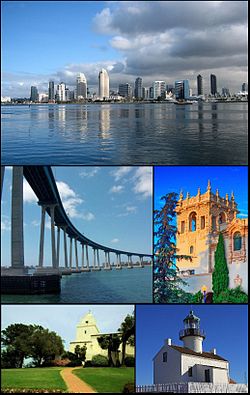
San Diego Montage
San Diego Montage

San Diego, my favorite city, has seen a rebuilt central city dominated by high rise condo and apartment developments.  Plenty of night life in the Gas Lamp district, a world class zoo, sports stadiums, and museums that are second to none.  Their light rail and bus system is outstanding.  Don’t send your children to their universities – they won’t return home; even back to Los Angeles.

Businessweek.com evaluated 100 of the country’s largest cities based on 16 criteria, which include: the number of restaurants, bars, and museums per capita; the number of colleges, libraries, and professional sports teams.  Those are some of the reasons living in major metropolitan areas outweighs the congestion and noise that is prevalent.  While you may not agree with their rankings (I don’t) the descriptions tell you the reasons that the suburbs are no longer the place to live.

Twelve States Will Determine the Next President of the U.S.A.

While twelve states determine the winner of the presidency, the choice of the majority can and has been overruled by a silly, stupid election system.

As we all know there is no national direct election for president of the United   States.  Instead the constitution requires electors to vote for the president.  The system has evolved into a popular vote in each state. The winner of each state determines that the state’s total electors vote for the winning candidate.   Thus, if a majority of California voters select Obama in the next election then the total number of electors (the sum equals the congressman and senators) are given entirely to Obama.  Whichever candidate wins 270 electors is the winner. The winner of the most electors can lose the popular vote as George W. Bush did in the 2000 election.

Since pollsters can tell the candidates what the likely outcome is for each state, the candidates will focus their campaigning on those states that they are narrowly losing.

Thus there are just 12 states that will most likely determine who will win the November election.  Most polls indicate that the determining states are North   Carolina (15), Pennsylvania (20), Michigan (16), Minnesota (10), Nevada (6), Virginia (13), Florida (29), Iowa (6), Wisconsin (10), New   Hampshire (4), and Colorado (9).

The election process is inequitable to the majority of the people since the four largest population centers in the nation are not in any of those states.

Manufacturing in the U.S.A.

Can manufacturing thrive in the United   States? Consider the cost of labor in China, Mexico, Indonesia, and Vietnam.  Hourly rates are 50 cents USD to $1.00 USD.  My contention is that even with lowered income taxes those other countries will continue to provide products that cannot be put together in the USA at competitive costs.

However, PC World has run this article that indicated there is a possibility the USA can still compete.

By Karen Haslam, Macworld-U.K.    Jun 30, 2012  1:15 pm

Apple’s been criticized in the past for not manufacturing its products in the U.S., and has given a number of excuses when pressed on the matter. However, Google has now proven that high-tech goods can be produced in the U.S., the company’s new Nexus Q is “Designed and Manufactured in the USA” according to the inscription on the device.

There are a number of reasons why Apple manufacturers products in factories in China and other Far East countries, not only are workers cheaper, but overseas factories offer more flexibility, diligence and industrial skills. A report has also claimed that Apple has to manufacturer the iPad in China in order to get access to rare earth materials.

When asked why Apple isn’t manufacturing the iPhone in the US, Apple’s late-CEO Steve Jobs told U.S. President Barack Obama in February 2011: “Those jobs aren’t coming back,” complaining that there is a massive skills shortage in the US prohibiting the manufacturer of such goods there.

Google’s Andy Rubin said that the company had made a conscious effort to test the possibility of manufacturing in the U.S. with this product: “We’ve been absent for so long,” he said, referring to manufacturing not happening in the U.S., and added: “We decided, ‘Why don’t we try it and see what happens?'”

The report in the New York Times notes that consumer electronics manufacturers will be closely watching this case, to see if it disproves the accepted wisdom that consumer electronics products can no longer be made in the United States.

However, Google’s device has a high price than similar devices manufactured outside of the country, notes the report. The report also notes that Google is not disclosing details about where components of the device were manufactured.

Reduce the Risk of Becoming a Victim of Financial Elder Abuse

Advise sent to me from a law office.

  Five Tips to Help you Reduce the Risk of Becoming a Victim of Financial Elder Abuse

1. Choose a Caregiver with Caution

Do not assume that by hiring a caregiver through a bonded agency you are guaranteed to get someone who has been checked. There is no current law requiring mandatory background checks for in-home caregivers in California

2. Keep an Inventory of All Jewelry

Jewelry is the number one item that is stolen from homes occupied by elders. Not only should your jewelry be kept in a locked drawer, you should have photographs of rare, valuable, or sentimental items in a separate location. In the event of theft, such photographic evidence will be useful in tracking down the missing jewelry at a pawn shop.

3. Every Home Should Have a Shredder

Every piece of mail containing your name, address and any other identifying information should be shredded before being discarded. The most effective type of shredder is the crisscross cut shredder. Even envelopes with your name and address should be shredded. Never throw away old checkbooks from closed accounts or bank credit card application forms. There is no danger in over shredding.

4. Protect Your Incoming and Outgoing Mail

Never allow incoming mail to sit in an unsecured mailbox where the public has access. Mailbox theft is rampant. Similarly, never leave outgoing mail in an unsecured mailbox with the red flag raised as this simply provides as easy alert to the thief who is “cruising” the streets. Consider either purchasing a locked mailbox or renting a post office box from your local post office.

5. Obtain a Credit Search on Yourself at Least Two or Three Times a Year

Identity theft is rampant. The only way to have peace of mind is to obtain a credit search on yourself periodically from one of the three major credit bureaus – Experian, Equifax and TransUnion. This will enable you to discover whether someone has applied for, or obtained, a credit card in your name.

Patriot

What is a patriot? Microsoft Word offers the following synonyms: loyalist, nationalist, flag-waver, partisan, compatriot or fellow-citizen, and jingoist.

Germans fought for their nation during WWII.  They were probably not all Nazis but they were loyal to their nation and wanted to see their nation win the war. Those loyalists were patriots.  So a patriot is someone who feels a strong support for his or her country.  Apparently it is a blind allegiance.

Strangely Ron Paul, while campaigning for the presidency, said that while Army soldier Bradley Manning’s may have “technically” broken the law against releasing classified information to WikiLeaks, he did so for the purpose of exposing the “horrible things” being carried out by the U.S. Government. Referring to Manning’s detention before trial, Paul said, “Should he be locked up and imprisoned?” Manning should be seen as a “political hero” and “true patriot who reveals what’s going on,” Paul said.

Using the Ron Paul logic; Daniel Ellsberg, an employee of the Rand Corporation would also be a patriot.  Ellsberg precipitated a national political controversy in 1971 when he released the Pentagon Papers, a top-secret Pentagon study of U.S. government decision-making in relation to the Vietnam War, to The New York Times and other newspapers. He was awarded the Right Livelihood Award in 2006.

Most definitely our volunteer army is made up of patriots.

Dictionary.com provided these two definitions

1. a person who loves, supports, and defends his or her country and its interests with devotion.

2. a person who regards himself or herself as a defender, especially of individual rights, against presumed interference by the federal government.

My definition is a person who fights in every way he can to make his country the very best.

Mormons in Israel

For those of you who do not read the Los Angeles Times this article will be of interest.  I do not trust Mitt Romney because he has been a serial flip-flopper.  There is hardly a position he took as governor of Massachusetts that he has not changed. If you can believe him, Romney says he would never criticize Israel and would be a steadfast ally to the Jewish state. You could call it politics but there does not appear to be any issue that is core to his beliefs.  Still this article may give you pause to at least listen to his campaign.

Mormons in Israel

By Rafael Medoff

Mitt Romney’s trail to the Holy Land was blazed by a Utah missionary a century ago.

Mitt Romney at the Western (Wailing) Wall in JerusalemMITT ROMNEY’S visit to Israel will gener­ate much specula­tion on the role Jew­ish voters will play in the U.S. presidential election. His visit may also spark discussion about Mormon-Jewish relations in the wake of the recent controversy over a Mormon temple that con­ducted posthumous baptism cere­monies for some Holocaust vic­tims.

But another Mormon’s visit to Jerusalem, 99 years ago, deserves some of the spotlight too. Because that little-known visit ultimately had a decisive impact on Jewish history and America’s response to the Holocaust.

In 1913, 29-year-old Elbert Thomas and his wife, Edna, wrapped up their five-year stint in charge of a Mormon mission in J a­pan and prepared to return to their native utah. They decided to pay a short visit to Turkish-occupied Palestine on the way home.

The Holy Land figures promi­nently in Mormon theological tracts. Thomas was keenly aware of Mormon prophecies about an in- . gathering of the Jewish exiles and the rebirth of the Jewish home­land.

“We sat one evening on the Mount of Olives and overlooked Je­rusalem,” he later recalled. “We read the poetry and the prophecy, the forebodings and the prayers, with hearts that reached up to God.” Under “stars the likes of which you see nowhere else in the world but on our own American desert, out where I grew up,” Thomas read the lengthy “Prayer of Dedication on the Mount of Ol­ives” by Orson Hyde, an early Mor­mon leader and fervent Christian Zionist.

“Consecrate this land … for the gathering together of Judah’s scat­tered remnants … for the building up of Jerusalem again after it has been trodden down by the Gentiles so long,” Hyde had written in 1841. “Restore the kingdom unto Israel, raise up Jerusalem as its capital…. Let that nation or people who shall take an active part in behalf of Abraham’s children, and in the raising of Jerusalem, find favor in Thy sight. Let not their enemies prevail against them … but let the glory oflsrael overshadow them.”

The moment, the mood and the words moved Thomas to feel a deep spiritual connection to the Jewish people and to commit him­self to becoming one of those who would “take an active part in behalf of Abraham’s children.” And three decades later, he was presented with an opportunity to do so.

In the 1940s, as a U.S. senator from utah, Thomas became deeply concerned about the plight of the Jews in Nazi Europe. He joined the Emergency Committee to Save the Jewish People of Europe, a lobby­ing group led by Jewish activist Pe­ter Bergson. Thomas signed on to its full-page newspaper ads criti­cizing the Allies for abandoning European Jewry. He also co­chaired Bergson’s 1943 conference on the rescue of Jews, which chal­lenged the Roosevelt administra­tion’s claim that nothing could be done to help the Jews except win­ning the war. Although a loyal Democrat and New Dealer, the Utah senator boldly broke ranks with President Franklin D. Roose­velt over the refugee issue.

Thomas played a key role in ad­vancing a Bergson-initiated con­gressional resolution calling for creation of a government agency to rescue Jews from the Nazis. Sen. Tom Connally CD-Texas), chair­man of the Senate Foreign Rela­tions Committee, initially blocked consideration of the resolution. But when Connally took ill one day, Thomas, as acting chair, quickly in­troduced the measure. It passed unanimously.

Meanwhile, senior aides to Treasury Secretary Henry Mor­genthau Jr. had discovered that State Department officials had
been obstructing opportunities to rescue Jewish refugees. Morgen­thau realized, as he told his staff, that the time had come to say to the president, “You have either got to move very fast, or the Congress of the United States will do it for you.” Armed with a devastating re­port prepared by his staff, and with congressional pressure mounting, Morgenthau went to FDR in Janu­aryI944.

Roosevelt could read the writ­ing on the wall. With just days to go before the full Senate would act on the resolution, Roosevelt pre­empted Thomas and the other congressional advocates of rescue by imilaterally creating the agency they were demanding: the War Refugee Board.

Although understaffed and underfunded, the board played a major role in saving more than 200,000 Jews during the final 15 months of the war. Among other things, the board’s agents per­suaded a young Swede, Raoul Wal­lenberg, to go to German-occupied Budapest in 1944. There, with the board’s financial backing, he undertook his now-famous rescue mission. Thomas’ action in the Senate was an indispensable part of the chain of events that led to Wallenberg’s mission.

The Swedish government, to­gether with Holocaust institutions and Jewish communities around the world, recently launched a yearlong series of events com­memorating this summer’s 100th anniversary of Wallenberg’s birth. One hopes these celebrations will include appropriate mention ofthe role played by Americans such as Thomas in making Wallenberg’s work possible.

And as Romney retraces some of Thomas’ steps in Jerusalem, he will have special reason to feel proud of the role played by a fellow Mormon in helping to save Jewish lives.

RAFAEL MEDOFF is director of the David S. Wyman Institute for Holocaust Studies and the coauthor with Sonja Schoepf Wentling of the new book “Herbert Hoover and the Jews: The Origins of the ‘Jewish Vote’ and Bipartisan Support for Israel.”
Senseless Penalty of Penn State

At the outset let me say that I left Pennsylvania at the age of 10.  I rarely watch any football games.  The penalties against Penn State will not effect me one tiny bit. 

 The NCAA “erased 14 years of victories, wiping out 111 of Paterno’s wins and stripping him of his standing as the most successful coach in the history of big-time college football.” This was part of an Associated Press report today.

It makes no sense.  I am not defending the behavior of Jerry Sandusky, Joe Paterno or anyone else at Penn State.  I am defending the players on the Penn State football squad.  There is no evidence that Few of those players were involved or even knew about the child abuse.  Those players were on football fields and they won the games fairly.  No one disputes this fact.  The $60 million fines are debatable.  The four-year ban from postseason play will send a message to all universities.  Removing the success records of the 111 wins is a penalty against the players not the school.

Unfortunately the NCAA wants to show that it has the power to manage the behavior of everyone associated with amateur sports.  If only the NCAA was as concerned about on field football injuries.

‘The Girl from Ipanema’ turns 50

Remember the words from the song: “Tall and tan and young and lovely…”  The story is that the composer was inspired by the sight of Heloisa “Helo” Pinheiro.  Perhaps she was too in love with the sea.  I remember the couple next door to my parent’s home.   They went water skiing every weekend for years with their children.  She was a tall good looking woman of Scandinavian decent.  Yes a very attractive blond.

They were much younger than my parents.  I grew up and moved away.  One day at a visit I saw Jill.  At the age of 50 her skin looked like leather.

Do you see the similarities in this photo?