Five Dying Industries: Ways to Get Out and Move On

As someone who worked his entire life in the manufacturing industry I am sympathetic to the plight of those who are now facing the loss of their livelihood.  The reality is that in the foreseeable future manufacturing will not play a significant role in the American economy.  In the late 40’s and early 50’s 42% of our GDP was generated by manufacturing.  Today that number is 9%.  For those of us who are older the transition to an entirely new career is probably unrealistic.  Other functions are also becoming obsolete.  This article that appeared on AOL.COM offers some worthwhile observations and valuable suggestions.

By Lydia Dishman, Posted Jun 6th 2011 @ 10:00AM

If you’re knocking on doors looking for work, there are some doors you may want to skip. The economy continues to show signs of rebounding, with increases in consumer spending and a jobless rate that has declined to 9 percent. But, be careful.

While career opportunities are predicted to grow in thriving industries like health care and technology, the flip side is that some industries have a lot of occupations that are becoming obsolete.

The majority of these dead-end positions are in manufacturing, production and administrative support, all of which are affected by automation technologies and lean business practices, which reduce the need for workers in plants, factories and traditional office environments, according to the Bureau of Labor Statistics (BLS). The limited job openings expected in these sectors won’t necessarily come from job growth, but from the need to replace employees who will transfer to other industries or retire.

So how can you tell if you are in a dead end job? Here are five of the sectors that are expected to decline between now and 2018, according to the BLS. We asked career experts to discuss how to take the skills you may have acquired in these industries, and leverage them to make the leap to a more sustainable position.

1. Manufacturing

Sewing machine operators, textile winding machine setters, and cut-and-sew apparel makers will experience the sharpest declines in employment opportunitiesin the next decade, with as much as a 40 percent drop in number of those employed, according to the BLS.

Dorothy Tannahill Moran, an Oregon-based career coach, says textile industry jobs often have the same or similar counterparts in many manufacturing companies. A person moving from the declining textile industry should spend time researching job requirements in other industries to find companies needing comparable skills, such as those in automotive manufacturing.

The automotive industry is now experiencing some growth thanks to the introduction of alternative fuels and increased investment by foreign automakers in U.S. facilities. Assembly workers can expect to make over $16 per hour, according to online salary database PayScale.com.

2. Sales

Door-to-door salespeople and telemarketers may soon go the way of the milkman, with declines of 14 and 11 percent respectively for each occupation. The good news is that communication and people skills transfer very well to other industries, such as retail, which is expected to grow by 8 percent over the next 10 years. Sales associates in the retail industrycan earn between $7 and $12 per hour, not including performance bonuses, according to PayScale.

Larry Stybel, executive-in-residence at the Sawyer Business School, at Suffolk University in Boston, says that when you’re leaving a dying industry, it’s best to keep the focus on you when talking to a prospective employer. “Your mission is not to change other people’s views about your old company or industry. Your mission is to differentiate yourself from the public perception of that company or industry. Talk about what you accomplished and how you were different.”

3. Office Support

File, mail and information clerks and other administrative support staff can expect double-digit declines in employment by 2018. Fortunately, the BLS predicts that executive assistants, receptionists and bookkeeping clerks will still be in demand, especially in the health care industry, where medical records clerks can earn over $11 per hour, not including bonuses.

Angela Martin, owner of Defining Success Coaching, advises job seekers to highlight universal skills, such as time management, attention to detail, and effective communication that will translate from office to office.

4. Computer Technology

Data processors and computer operators, who manually maintain a log of computer system errors, aren’t safe, as the latter occupation is expected to shrink by more than 18 percent by 2018. On a positive note, computer skills are a good jumping off point for moving up in the information technology industry, where the field of computer software engineeringis headed for growth. An associate’s degree may be the only thing standing between you and earning $57,800 per year.

Before making the leap to a new career, Stacey Hawley, principal and owner of Credo, a career counseling and leadership development firm, recommends developing your resume using an executive summary that highlights your key competencies and areas of expertise, honors, awards and accomplishments.

5. Management

First-line supervisors or production managers and workers can expect to be phased out with lean manufacturing practices, but success in those jobs depends on a capacity for leadership and inspiring teamwork. You can take that job title and move from the factory floor to an office environment where office managers can expect 11 percent growth and a median annual wage of $37,200 per year.

Additionally, career coach Paula Gregorowicz reminds those looking to switch industries that if you are a diligent employee, learn quickly and have strong management know-how (abilities she considers innate and “not teachable the way that skills are”), you’ll be valuable in nearly any job.

Andy Rooney


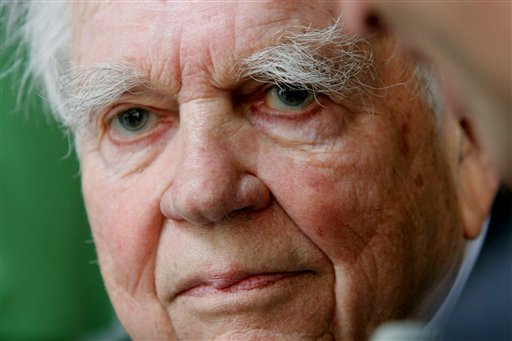
I never really liked Andy Rooney.  His constant complaining may have been entertaining to some people but I found his dialogues irritating.  I guess I was in the minority but not alone.  One news report called his commentaries acerbic (synonym for bitter, caustic, prickly, etc.).  Still I wish everyone a long life and he had one since he died at 92.  He died only a month after delivering his 1,097th and final televised commentary.  “I wish I could do this forever. I can’t, though,” he said.  So he knew the end had come.

Just one question.  If Andy could report from heaven would he be
sending us a list of complaints?  My guess is YES!

May he rest in peace.

An Un-elected big-mouth – Grover Norquist

How can one man, un-elected to any office, affect the behavior of a leading political party?  That has been the accomplishment of anti-tax activist Grover Norquist.  Norquist grew up in Massachusetts in a very wealthy family.  His father was a vice president at Polaroid Corporation.  He went to Harvard for both undergraduate and graduate degrees. Norquist has never held a realjob. In his entire adult life he has only been working in political organizations since his time at Harvard.

Finally, today, House Speaker John Boehner has referred to Norquist as “some random person in America” when asked whether anti-tax activist Grover Norquist is a positive influence on Republican lawmakers.

Why has the GOP signed on to the Norquist pledge? It appears to be in line with the general philosophy of Republicans.  His “no new taxes” pledge is almost like a religious tenet.

As for Norquist I can only ask: Isn’t nice to be so rich that you do not have to work for a living?

California High Speed Rail Boondoggle


The idea of a high speed train from San Diego to San Francisco has great appeal to a majority of Californians. We were so enthused with the idea that we voted in 2008 for bonds to pay $9 billion of the construction costs.  The estimated cost was $43 billion. Unfortunately the latest cost estimate has more than doubled to $98.5 billion.

Jon Coupal, president of the Howard Jarvis Taxpayers Association (the group that created Proposition 13 tax relief). predicted that fares would have to be about “$300 a ticket and assume ridership levels that aren’t going to exist to assume a break-even level.”  Coupal predicted the total cost would rise to $90 billion.

If they are predicting $98.5 billion now, what do you suppose the final bill will be?

What ever the final number is, the cost will be somewhere north of $100 billion.  There are claims that the building program would generate about 1 million jobs.

The problem with all the claims about this project is that all the claims of costs and job creation are the product of a group of people who strongly support the idea of a fast train linking the cities of California.  Our history in building anything of consequence in this state is that cost overruns of three to four times the original estimates are the rule.

The idea is good but the cost makes this a no-go!

A prominent Skeptic now agrees Global Warming is Real!

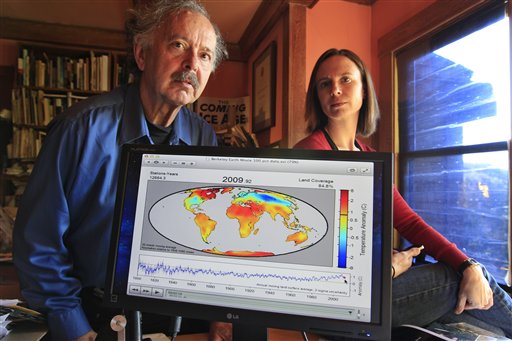
It is difficult to convince anyone that their opinion is wrong no matter what the topic. Politics and global warning are the two most controversial topics in the world. So when Richard Muller, a prominent physicist and skeptic of global warming changes his mind that is something to broadcast to everyone.

His conclusions were the result of a two year study funded by the Charles Koch Foundation, whose founder is a major supporter of skeptic groups and the conservative tea party movement. The Koch brothers, Charles and David, run a large privately held company involved in oil and other industries, producing sizable greenhouse gas emissions.

No one is saying that the earth will experience all warming and no other effects. Predictors are forecasting unusual changes in weather patterns. We have experienced some usual change this year in the United States. Some very hot humid summer weather was followed by a 10 inch snow storm before Halloween.

Of course businesses that create greenhouse gases don’t want to believe they are contributing to the problem. Perhaps Richard Muller can lead a new wave of understanding.

In this Friday, Oct. 28, 2011 photo, Richard Muller, left, and his daughter, Elizabeth Muller, right, pose with a map from their study on climate at their home in Berkeley, Calif. A new study of Earth’s temperatures going back more than 200 years finds the same old story: It’s gotten hotter in the last 60 years. What’s different is the scientist behind the latest study, Richard Muller. The California physicist was doubtful of what climate scientists have been saying – until he did his own research, partly funded by climate change skeptics. Elizabeth Muller, co-founder and executive director of the Berkeley Earth Surface Temperature Study, ran the study. (AP Photo – Paul Sakuma)

How To Regain Your Self-Confidence

From ThirdAge Health & Wellness but you don’t have to a senior citizen to realize these suggestions apply to everyone.

Negative experiences — going through a divorce, losing a job — can profoundly alter the way we see ourselves and deal with the world around us. You may find yourself feeling like you can’t control your life, or that you’re not good enough. And that can lead to more serious problems like depression. But there some smart steps you can take to help yourself bounce back.

Focus On Your Strengths

In order to get past nonstop negative thoughts about yourself, begin refocusing your attention on what you’re good at. Perhaps you’re a great listener, a whiz at math, or an excellent cook. Make a list of all of your strengths. Yes, this may seem like an exercise you haven’t done since the fourth grade, but it will help get you into the mindset of believing you are a strong, talented person who is ready to conquer the world.

Start A Creative Project

Perhaps you’ve always wanted to learn how to knit, sew or paint. But a hectic life can make many people forget about these hopes. After you experience a huge letdown, you’re likely to benefit from revisiting your creative desires. What have you been meaning to do for years, but have never actually tried? Singing? Pottery? Photography? Again, make a list, and commit to making one of your creative projects a reality. It will take your mind off what recently happened – and give you something positive to focus on.

Smile

According to several studies, smiling is good for your health and can even make you feel more confident. When you smile – even if you don’t feel happy – you’re sending signals to your brain that can actually cause you to feel happier. Additionally, smiling helps lower your blood pressure,
release endorphins, and lower stress. It’s a good habit to get into!

Surround Yourself With The Right People

Spend time with friends and family members who are sources of positive energy. Ditch that friend who subtly makes you feel bad about yourself. Spend more time with the one who puts wind in your sails and makes you feel empowered. When you surround yourself with people who accept you and appreciate your strengths, you will begin to internalize those sentiments and end up feeling better about yourself.

Exercise

Regular exercise does more than improve your energy levels and physiological health – it also releases neurotransmitters and feel-good endorphins, which can make you feel more happier, calmer, and more centered.  That goes a long way towards improving your self-confidence.

Take A Risk

We’re not talking about something extreme, like taking a huge financial gamble or climbing Mt. Everest. But facing one of your fears can make you feel powerful and in control. It’s not easy to do, but the benefit can be significant. What’s something you’ve been afraid to do? It could be something as simple as karaoke, or it could be a bigger commitment, like
learning to surf. By doing something that scares you, you will know that you can do it, and you’ll have a newfound sense of self-confidence.

Be Grateful

When you feel insecure and down, it’s easy to get stuck in the trap of focusing on what you don’t have. That only makes you feel worse and less likely to obtain the things you want, whether it’s emotional validation or money. By appreciating what you already have, you can retrain your brain to be thankful instead of resentful. Set aside some time to write down three things per day that you are grateful for. These could be skills you have, relationships you value, or work that you find meaningful. Do this every day for at least one week, and you will start to feel the habitual gratitude that leads to self-confidence, because you know your life is good.

Consumer Reports Confirms Our Worst Fears

American auto manufacturers can’t build high quality cars.

The federal government’s aid to the American auto industry saved thousands of jobs.  That is a good thing.  Unfortunately the government has done a poor job of picking winners in the private industry arena.  Solyndra is the best example of a failed investment.  That project cost us $500 million.  The US government is also helping Tesla, the car company building an all electric car that costs over $100,000 each.

So it is no surprise that the American auto industry is failing to bring quality products to market.  It’s not news!  The best of the bunch is Ford that managed to get into the top 10 according to a Consumer Report subscriber survey.  That was last year’s survey.  This year Ford fell to 20th place.  The summary of results was printed in the Los Angeles Times.  These findings are based on responses on 1.3 million vehicles owned or leased by subscribers to Consumer Reports.

The top 10
1. Lexus CT200h
2. Honda CR-Z
3. Infiniti QX56
4. Scion xD
5. Toyota Highlander (4-cyl.)
6. Lexus ES
7. Nissan Titan
8. Honda Fit
9.Toyota Prius
10. Toyota RAV4 (4-cyl.)
The bottom 10
1. Jaguar XF
2. Jaguar XJ
3. Audi Q5 (V6)
4. Chevrolet Silverado 2500
5. GMC Sierra 2500
6. Nissan Z
7. Volkswagen Routan
8. Ford Edge (AWD)
9. Mini Cooper Clubman S
10.Lincoln MKX (FWD)

1 percent of earners more than doubled their share of the nation’s income

Is it any wonder that Occupy Wall Street is a growing movement?  This is not news to me.  Professor G. William Domhoff of the University of California at Santa Cruz has had a web site that provides the same data.  His original information was posted in 2005.  I am more than happy to learn that the New York Times has finally caught up with the reality that the rich really do control the nation and really do earn most of the money.
  

By ROBERT PEAR

Published: October 25, 2011 WASHINGTON — The top 1 percent of earners more than doubled their share of the nation’s income over the last three decades, the Congressional Budget Office said Tuesday, in a new report likely to figure the economy, prominently in the escalating political fight over how to revive reate jobs and lower the federal debt.

In addition, the report said, government policy has become less redistributive since the late 1970s, doing less to reduce the concentration of income.

“The equalizing effect of federal taxes was smaller” in 2007 than in 1979, as “the composition of federal revenues shifted away from progressive income taxes to less-progressive payroll taxes,” the budget office said.

Also, it said, federal benefit payments are doing less to even out the distribution of income, as a growing share of benefits, like Social Security, goes to older Americans, regardless of their income.

The report, requested several years ago, was issued as lawmakers tussle over how to reduce unemployment, a joint committee of Congress weighs changes in the tax code and protesters around the country rail against disparities in income between rich and poor.

In its report, the budget office found that from 1979 to 2007, average inflation-adjusted after-tax income grew by 275 percent for the 1 percent of the population with the highest income. For others in the top 20 percent of the population, average real after-tax household income grew by 65 percent.

By contrast, the budget office said, for the poorest fifth of the population, average real after-tax household income rose 18 percent.

And for the three-fifths of people in the middle of the income scale, the growth in such household income was just under 40 percent.

The findings, based on a rigorous analysis of data from the Internal Revenue Service and the Census Bureau, are generally consistent with studies by some private researchers and academic economists. But because they carry the imprimatur of the nonpartisan budget office, they are likely to have a major impact on the debate in Congress over the fairness of federal tax and spending policies.

Also cited as factors contributing to the rapid growth of income at the top were the structure of executive compensation; high salaries for some “superstars” in sports and the arts; the increasing size of the financial services industry; and the growing role of capital gains, which go disproportionately to higher-income households.

The report found that higher-income households got a larger share of the pie, while other households got smaller shares.

Specifically the report made these points:

¶ The share of after-tax household income for the top 1 percent of the
population more than doubled, climbing to 17 percent in 2007 from nearly 8
percent in 1979.

¶ The most affluent fifth of the population received 53 percent of after-tax
household income in 2007, up from 43 percent in 1979. In other words, the
after-tax income of the most affluent fifth exceeded the income of the other
four-fifths of the population.

¶ People in the lowest fifth of the population received about 5 percent of after-tax household income in 2007, down from 7 percent in 1979.

¶ People in the middle three-fifths of the population saw their shares of
after-tax income decline by 2 to 3 percentage points from 1979 to 2007.

The study was requested by Senators Max Baucus, Democrat of Montana and chairman of the Finance Committee, and Charles E. Grassley of Iowa, when he was the senior Republican on the panel.

Representative Sander M. Levin of Michigan, the senior Democrat on the Ways and Means Committee, said the report was “the latest evidence of the alarming rise in income inequality.”

House Republicans pushed back Tuesday against President Obama’s complaint that they were blocking bills to create jobs. Speaker John A. Boehner said he agreed with Mr. Obama’s new slogan, “we can’t wait,” and he said that 15 House-passed bills were “sitting over in the Senate, waiting for action.”

On Tuesday, the White House endorsed another bill, which is likely to be passed by the House this week with bipartisan support. The bill would repeal a requirement for federal, state and local government agencies to withhold 3 percent of certain payments to suppliers of goods and services and to deposit the money with the Internal Revenue Service.

This requirement was originally adopted as a tax-compliance measure, and the Congressional Budget Office said its repeal would reduce federal revenues by $11 billion over 10 years.

House Republicans would offset the cost with a bill that reduces federal spending on Medicaid under the 2010 health care law.  The White House said it supported the bill, intended to fix an apparent error in the law, under which hundreds of thousands of middle-income early retirees can get Medicaid coverage meant for the poor.

The joint Congressional committee on deficit reduction is considering changes in a wide range of benefit programs.

Representative Steny H. Hoyer of Maryland, the No. 2 House Democrat, said Tuesday that he was hopeful but not entirely confident that the panel would succeed in reaching a bipartisan agreement to reduce federal deficits by $1.2 trillion over 10 years.

“Hopeful is not confident,” Mr. Hoyer said.”

Arab Spring Will Not Bring Democracy

   Look for new dictators!

Americans have based their Middle East involvement on the idea that we could change those countries into western democracies if we would just stick to that goal.  The argument is that once they are democracies they will be less likely to provide sanctuary to terrorist. In the end we would see the change that would bring peace and stability to that region.  It was George Bush’s Freedom Agenda. While the objective is worthy, the likelihood of it occurring is remote.  With the exception of Turkey there are no Islamic democracies.

 It was the United States that supported the idea of free elections in Gaza.  The consequence of that election is Hamas, a terrorist group according the United States, that won 75 out of the 118 seats, with Fatah, the alternate party winning 39 seats.  No elections have occurred since the Hamas gained power on 2006.

 In Egypt we saw the Arab Spring, at it finest hour, drive Hosni Mubarack from power.  There were promises of a new democracy with elections by November.  What we have seen is a military crack down and no lifting of “emergency powers.”  There is no indication of any elections at any time.

Iraq was freed from the dictatorial Saddam Hussein within three weeks of our invasion.  Today the country is split among its three primary religious/ethnic groups and the government barely functions.

In Tunisia there is an election scheduled for October 23 but there is a concern that the turnout will be small.  This is the country most likely to have a successful democracy.

 Libya has the financial resources to become a democracy but it is a tribal nation.  The tribes wanted Moammar Gadhafi out of power.  There is little to indicate that a democracy can become a reality.

 Turkey is the one nation that can help develop democracies within the Arab world.  The United States needs to enlist the participation in an effort to bring good government to the Arabs.  Notice I say “good government” not democracy.  Arab people do not have any experience with this form of government.  There is little in the news to indicate they will adopt a western system.

Moammar Gadhafi – An Evil Man is Dead

Moammar Gadhafi played his role well as the dictator of Libya He had total control over that nation.  If you disagreed with him your were tortured and more than likely put to death.  He was a partner, and probably the planner, with those who successfully killed Americans in many places around the world. His most notorious act was his participation in the downing of Pan Am Flight 103 over Lockerbie, Scotland in 1988.

His death at the hands of his countrymen is a just ending to a man who was truly evil.