Evasion is No Solution to California’s Budget Challenge

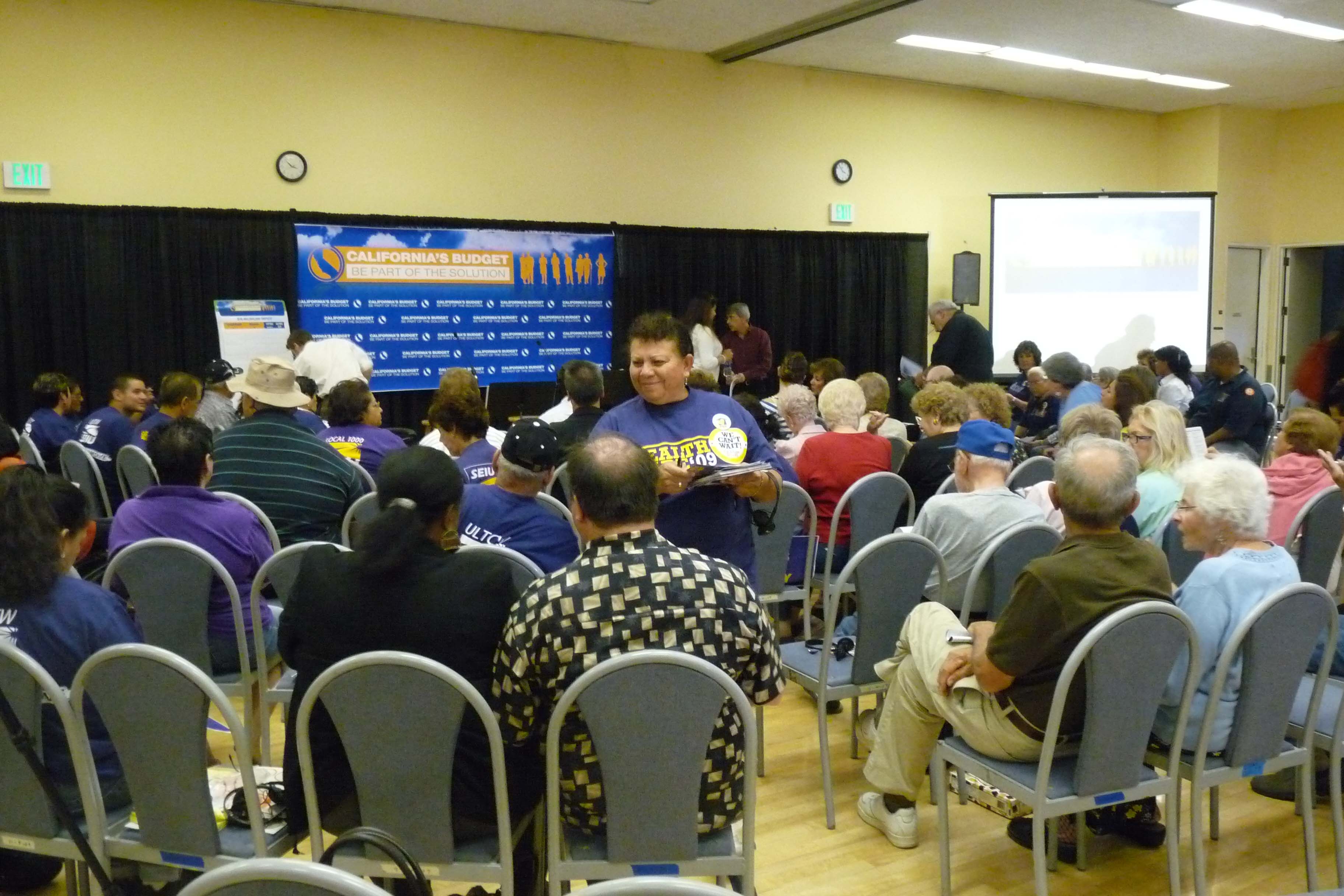
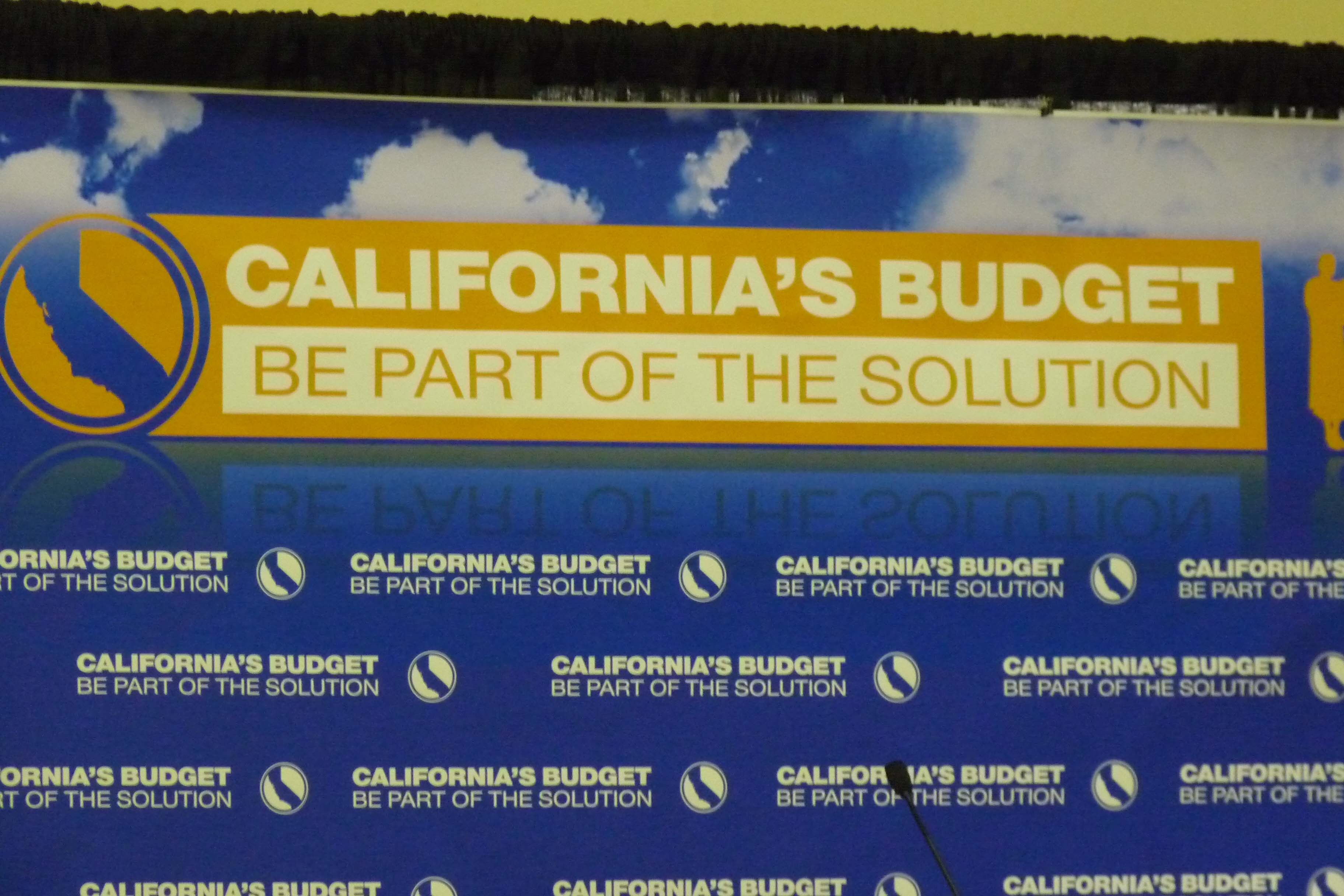
Bob Blumenfield is the Assemblyman representing my California district in Sacramento.  Mr. Blumenfield represents a large portion of the west and north communities of the San Fernando Valley.  As chair of the Assembly Budget Committee he has taken his “California Budget: Be part of the Solution” program on the road.  He held a “Community Forum on State Budget Priorities” at a major senior center in the center of the Valley.

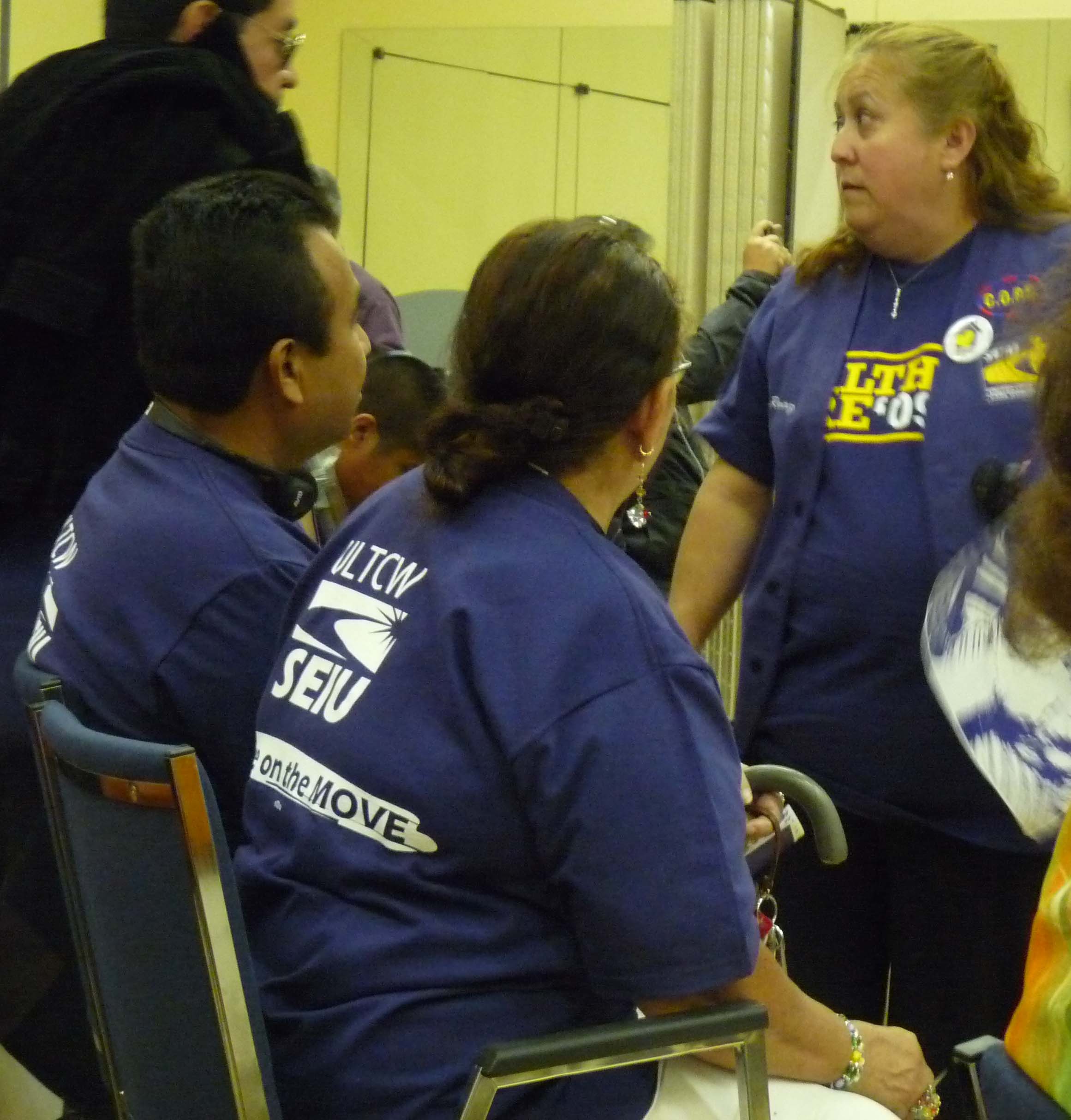
To my surprise the auditorium was filled with members of the SEIU.  Most were wearing T shirts to advertise that fact.  What had I walked into?  The lady sitting next to me works downtown for the DMV.  Although the senior center had publicized this event, there were no more than 10% seniors (based upon appearance).  600 people were expected to attend.  There were at least 400 there.

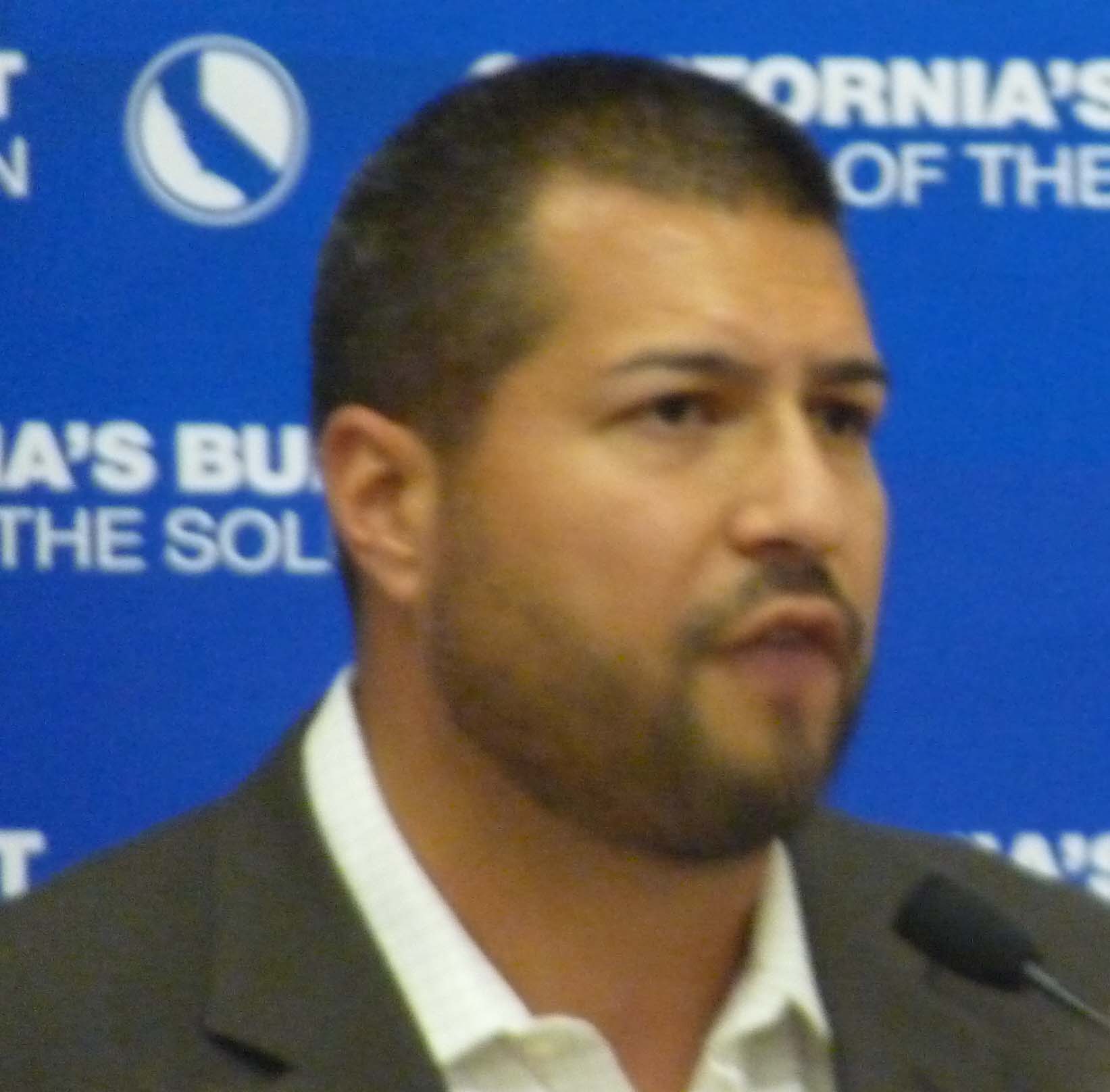
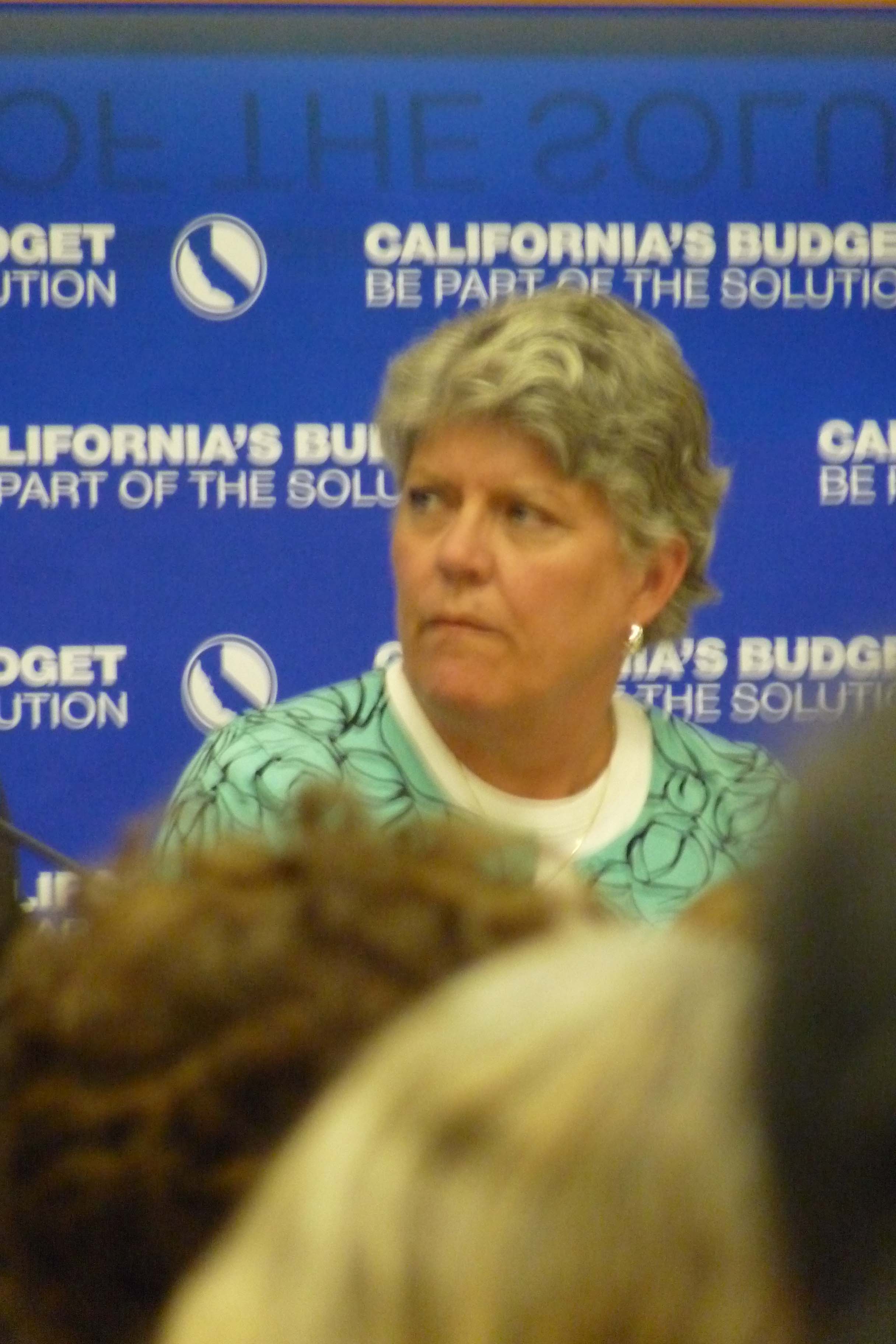
In addition to Mr. Blumenfield the other assembly members included in the panel were Fiona Ma (D-San Francisco), Julia Brownley, 41st Assembly (D-Portions of the San Fernando Valley and adjoining areas), and Felipe Fuentes – Chairman of the Appropriations Committee (D-North East San Fernando Valley).  Ms. Ma’s photo is from her web site.  The other three photo were taken by me.


Questions were asked and audience participation provided answers using wireless communicators regarding services to be provided and ways to raise money to pay for those desired services.  There was never any discussion about the fact that the budget is already projected to have a short fall of $24.3 Billion.  There was never any discussion of the high cost of pensions or services provided to illegal aliens.

Mr. Blumenfield is a hard worker at spreading his face and name as demonstrated by the photo album on his assembly web site.  Based on my attempt to ask questions after the meeting, he is not willing to discuss the real budget issues.  He answered my questions with evasion.

How to Defeat Democracy

2/3 Requirement Makes a Mockery of Majority Rules

The words of Thomas Jefferson: “The only way a republican government can function, and the only way a people’s voice can be expressed to affect a practicable control of government, is through a process in which decisions are made by the majority. This is not a perfect way of controlling government, but the alternatives–decisions made by a minority, or by one person–are even worse and are the source of great evil. To be just, majority decisions must be in the best interest of all the people, not just one faction.”

Despite repeated similar statements by Jefferson and other great American leaders we have continuing efforts to abridge the process by asking voters and assemblies to approve laws that require 67% or two thirds (2/3) vote to pass laws.  Proposition 16 on the June 2010 California ballot is another example of that kind of law.  Californians has voted that restriction into law repeatedly. The result is that one third of the population (or assembly) determines if the state will pass a budget or if a school district can sell bonds.  Or in other words the 2/3 vote Pacific Gas and Electric is proposing means that if  the Proposition is passed that it will then take a 2/3 majority to enable any municipality to create a publicly owned utility.

The U.S. Senate requirement of 60% to pass laws is equally abhorrent.

A Graham Tradition of Hate

The Associated Press reported today, “Evangelist Franklin Graham prayed on a sidewalk outside the Pentagon Thursday after his invitation to a prayer service inside was withdrawn because of comments that insulted Muslims.”

He said he doesn’t believe “all religions are equal” and that there is only “one way to God” – and that is through Jesus.

Graham said many American Christians “feel we are losing our freedoms while people of other faiths are gaining their freedom. It’s a perception, whether it’s right or wrong.”

Franklin Graham is the son of Billy Graham. The father is a known anti-Semite.  This reported in the newser.com.

(Newser) – Billy Graham blamed Jews from the “Synagogue of Satan” for pornography in a newly released 1973 conversation with Richard Nixon, USA Today reports. The men, in a discussion about anti-Semitism and Jewish opposition to Christian evangelical efforts, agreed that Jews needed to “behave themselves” to avoid unleashing a tide of anti-Semitism.

“It happened in Germany,” Nixon told Graham. “Now it’s going to happen in America if these people don’t start behaving. It may be they have a death wish. You know that’s been the problem with our Jewish friends for centuries.” The director of the Anti-Defamation League blasted both men for spouting “age-old classical anti-Semitic canards.”

Can I slam the door in the face of another Christian trying to convert me?

Wall Street Reform Now!

The banks love fine print and loopholes. We need to make sure the loopholes are closed and taxpayers, investors and consumer are protected by Wall Street reform. The Senate is preparing to vote on oversight of the banks and Wall Street. I just sent my Senators a quick, strong message and I hope you will to. Just go to www.DefendYourDollars.org.

This is the letter that Defend Your Dollar suggests you send to your U.S. Senators.

End “too big to fail”: In 1995, the assets of the six largest banks were equivalent to 17 percent of the US economy (GDP); now they amount to 63 percent of GDP. No wonder the mega-banks can shakedown the taxpayer with threats of economic collapse! The Brown/Kaufman amendment would finally limit the size of the biggest financial institutions so we never again have to worry that if one of them fails it will bring down the economy. Vote YES for Brown/Kaufman.
 
No loopholes for auto loans: Auto dealers who make car loans should be held to the same standards of fairness and transparency as banks. When I buy a car and the dealer helps me get a loan, I should get exactly the loan I bargained for, with no unexpected “extras” or surprise conditions.
 
 Strongly protect consumers: An independent pro-consumer watchdog must be created so when new problems with deceptive financial products are spotted, they can act quickly to stop them. Vote YES for the strongest, most independent consumer watchdog you can.
 
End “keep the fee, pass the risk”: Making bad loans was good for brokers, lenders, and Wall Street because everyone got a fee on the deal while passing the risk of nonpayment on to the next person in the chain. The Senate bill requires that every entity that securitizes loans keep a material portion of the risk. That means everyone will think twice before making a bad loan–and taxpayers won’t be cleaning up the mess.
 
If it’s not a bank, it can still tank the economy: Some of the biggest firms that threatened our economy were not banks, but other kinds of financial companies held to lower standards. This bill allows a panel of bankruptcy judges to appoint the FDIC as the receiver of important non-bank financial companies or bank holding companies when they are at risk of failing.  The FDIC can fire management, and creditors and shareholders of the failed company will bear the losses not taxpayers. 
 
End the hidden gambling: Require hedge funds to register and to disclose their trading activities, bring sunshine and oversight to the largely secretive derivatives market, and stop banks from gambling on derivatives.
 
Let states protect us: States should have the right to do more than what the Federal government says to protect residents from emerging financial schemes.

How close are you to the financial edge? Take this quiz

Thanks  to the Los Angeles Times Business section writer Kathy M. Kristof.  My score is 15 so I can gloat.

How close are you to the financial edge? To help you find out, here’s a 10-question multiple-choice quiz, developed with some guidance from the National Foundation for Consumer Credit and Clearpoint Financial Solutions.

1. The amount I have socked away in savings to handle emergencies could pay all of my living expenses for up to:

A) three months;

B) six months;

C) 8 months or more;

D) about an hour and a half, if I cut back.

2. My spouse and I fight about money:

A) frequently;

B) sometimes;

C) never;

D) through court-appointed lawyers.

3. Payments on my consumer debts — auto loans, student loans, credit cards and home equity lines of credit — amount to less than:

A) about 20% of take-home pay;

B) 15% of take-home pay;

C) 10% or less of take-home pay;

D) considerably more than 20% of my monthly paychecks.

4. When it comes to saving for retirement, I’m socking away:

A) 6% or a little less of income to get the company match;

B) 10% of my income;

C) the maximum allowed by the company plan;

D) whatever’s in the couch cushions. Seriously, who can afford to save for retirement?

5. My housing costs, including property tax (when applicable) and insurance, amount to less than:

A) 30% of my take-home pay;

B) 25% of take-home pay;

C) 20% or less of take-home pay;

D) more than 30% of take-home pay.

6. I make more than the minimum required payments on my credit cards:

A) sometimes;   

B) most of the time;

C) always — I pay off the full balance each month;

D) never. If they demand $29.37, that’s what I’m paying and not a penny more.

7. I spend less than I make:

A) unless there’s a sale;

B) except in cases when I’m investing in something long-term, like education or a car that gets me to work;

C) always;

D) when I manage to work enough overtime.

8. My finances:

A) are an occasional source of concern;

B) are largely in control;

C) are never a cause of worry;

D) give me cold sweats.

9. I have enough insurance to cover medical costs:

A) as long as they’re not catastrophic;

B) for both me and my family;

C) and I have money set aside to cover co-payments and deductibles;

D) only if I never get sick.

10. I know my net worth and:

A) though it’s not what I want it to be, I’m working on it;

B) it’s good and growing;

C) I’m the typical millionaire next door;

D) it tells me I’m insolvent.

Scoring: Give yourself 5 points for each A answer; 2 points for each B; 1 point for each C; and 10 points for each D answer. Total your points and assess your score.

76-100: Danger zone: You are in the economic red zone. Get yourself to a credit counselor pronto. If you need help finding one, go to http://www.nfcc.org or http://www.aiccca.org. Both are national credit counseling associations that allow you to find a counselor in your neighborhood by hitting the “find a counselor” buttons on their home pages.

51-75: Teetering: You may be making your payments now, but you’re on the razor’s edge of trouble. It’s time to get serious about budgeting and saving. If you can’t do it alone, get help.

26-50: Healthy and happy: You’ve got adequate savings and good habits. Keep it up and you’ll be comfortably rich in no time, if you’re not already.

0-25: Go ahead and gloat: You are in an enviable spot, likely to be able to handle any economic emergency that comes your way. But you already knew that, didn’t you?

business@latimes.com

We Speak English

These days the words “bigot” and “hate monger” are used frequently to protect the “rights” of illegal immigrants.  There are very few public figures who are concerned with the rights of those who have assimilated into America.  Construction business owner and Alabama gubernatorial candidate Tim James is an exception.  He is quoted as saying “This is Alabama. We speak English. If you want to live here, learn it.”  I agree with him.

My primary reason for supporting this opinion is that the nation cannot function in unison when we are not communicating to each other in one language.  There is a group named ProEnglish that is promoting the idea of making English the official language of the United States.  The group does not call for the banning of other languages being used but does want English to be the only language used in naturalization ceremonies, including the Oath of Citizenship.

The ProEnglish guiding principles are:

  • In a pluralistic nation such as ours, the function of government should be to foster and support the similarities that unite us, rather than institutionalize the differences that divide us.
  • Our nation’s public schools have the clear responsibility to help students who don’t know English to learn that language as quickly as possible. To do otherwise is to sentence the child to a lifetime of political and economic isolation. Quality teaching of English and America’s civic culture should be a part of every student’s curriculum. The study of foreign languages, as an academic discipline, should be strongly encouraged.
  • All candidates for U.S. citizenship should be required to demonstrate knowledge of English and an understanding of our system of government, at a level sufficient to vote in the language of our country English.
  • Naturalization ceremonies, including the Oath of Citizenship, must be conducted in English.
  • The right to use other languages must be respected.
  • I wrote about my views on October 14, 2007.  I have not read anything or heard anything that has changed my opinion.

    Wall Street Won’t Change

    The set of characters who are publicly promoting or opposing bank reform are not really interested in any financial reforms no matter what they say.  The reason is simple.  There is a significant amount of money to be made keeping things exactly the way they are today.  All of these participants have developed perfect “poker faces.”  None become emotional even when they are caught in a lie or when defending their carefully determined strategy.

    Senators Thomas Dodd (D) and Richard Shelby (R) were on last week’s Meet the Press.  Both acting very professional and directing there responses to host David Gregory, neither confronted the other even though it was apparent from their words that they have significant disagreements on what financial reform should look like.  Dodd is not running for re-election because of one major reason.  He has taken contributions from Wall Street and was the beneficiary of a specially designed loan from Country Wide Mortgage.  The progressive issue-advocacy group Americans United for Change (AUC) reports Shelby had received $5.3 million in contributions from the financial industry since 1998.  Of course both men deny these allegations.

    Henry Paulson, Secretary of the Treasury in the Bush administration is a former CEO of Goldman Sachs.  He saw that his ex employer was protected but Lehman Brothers, a Goldman Sachs competitor, was allowed to go bankrupt.  Coincidence?  Not likely!

    Alan Greenspan, the most famous chairman of the Federal Reserve, previously served as a corporate director for Aluminum Company of America (Alcoa); Automatic Data Processing, Inc.; Capital Cities/ABC, Inc.; General Foods, Inc.; J.P. Morgan & Co., Inc.; Morgan Guaranty Trust Company of New York; Mobil Corporation; and The Pittston Company.  He was appointed to that most important job by President Ronald Reagan.  In mid-January 2008, hedge fund Paulson & Co. hired Greenspan as an adviser on economic issues and monetary policy.  Paulson & Co. is the company that has been implicated in the Goldman Sachs case of allegations related to bets against mortgage derivatives which earned the firm billions of dollars last year and is now front page news.

    John Paulson (founder and head of Paulson & Co.), age 54, a Harvard MBA whose personal wealth is estimated at $12 billion by Forbes magazine, is at the heart of the government’s fraud case against Goldman, Sachs & Co.  Newsweek magazine describes how he went from obscurity to “place alongside George Soros and Warren Buffett as an oracle of investing.”    

    Ben Bernanke appears to be one of the few in government that has not been tainted by Wall Street.  However, his behavior is unchanged from that of Alan Greenspan.  Perhaps he has been infected too.

    If you believe this cast of players will change their ways or the way Wall Street functions then you are in a dream world.

    The president wins on the appearance front.  Nothing will really change.

    A Plan to Stop the Employment of Illegal Aliens

    Actually this plan might be considered an invasion of privacy by some people but unless there is a better idea it will have to be implemented.  My wife and I both have passports.  To obtain those documents we supplied her birth certificate and my naturalization certificate.  Our pictures and birth dates appear on the documents.  Our Drivers licenses also have our thumb prints.  I do not consider this an invasion of privacy.   Securing the Mexican border is not a doable action.  The border is too long to guard and tunnels can be dug beneath.  Tunneling has already been discovered near San Ysidro (southern end of San Diego).  This article explaining the process appeared in the Wall Street Journal.

    March 27, 2010

    Lawmakers working to craft a new comprehensive immigration bill are proposing a new national biometric ID card that would be required of all U.S. workers. WSJ’s Laura Meckler explains the proposal and the objections from privacy advocates.

    Under the potentially controversial plan still taking shape in the Senate, all legal U.S. workers, including citizens and immigrants, would be issued an ID card with embedded information, such as fingerprints, to tie the card to the worker.

    The ID card plan is one of several steps advocates of an immigration overhaul are taking to address concerns that have defeated similar bills in the past.

    The uphill effort to pass a bill is being led by Sens. Chuck Schumer (D., N.Y.) and Lindsey Graham (R., S.C.), who plan to meet with President Barack Obama as soon as this week to update him on their work. An administration official said the White House had no position on the biometric card.

    “It’s the nub of solving the immigration dilemma politically speaking,” Mr. Schumer said in an interview. The card, he said, would directly answer concerns that after legislation is signed, another wave of illegal immigrants would arrive. “If you say they can’t get a job when they come here, you’ll stop it.”

    The biggest objections to the biometric cards may come from privacy advocates, who fear they would become de facto national ID cards that enable the government to track citizens.

    “It is fundamentally a massive invasion of people’s privacy,” said Chris Calabrese, legislative counsel for the American Civil Liberties Union. “We’re not only talking about fingerprinting every American, treating ordinary Americans like criminals in order to work. We’re also talking about a card that would quickly spread from work to voting to travel to pretty much every aspect of American life that requires identification.”

    Mr. Graham says he respects those concerns but disagrees. “We’ve all got Social Security cards,” he said. “They’re just easily tampered with. Make them tamper-proof. That’s all I’m saying.”

    U.S. employers now have the option of using an online system called E-Verify to check whether potential employees are in the U.S. legally. Many Republicans have pressed to make the system mandatory. But others, including Mr. Schumer, complain that the existing system is ineffective.

    Last year, White House aides said they expected to push immigration legislation in 2010. But with health care and unemployment dominating his attention, the president has given little indication the issue is a priority.

    Rather, Mr. Obama has said he wanted to see bipartisan support in Congress first. So far, Mr. Graham is the only Republican to voice interest publicly, and he wants at least one other GOP co-sponsor to launch the effort.

    An immigration overhaul has long proven a complicated political task. The Latino community is pressing for action and will be angry if it is put off again. But many Americans oppose any measure that resembles amnesty for people who came here illegally.

    Under the legislation envisioned by Messrs. Graham and Schumer, the estimated 10.8 million people living illegally in the U.S. would be offered a path to citizenship, though they would have to register, pay taxes, pay a fine and wait in line. A guest-worker program would let a set number of new foreigners come to the U.S. legally to work.

    Most European countries require citizens and foreigners to carry ID cards. The U.K. had been a holdout, but in the early 2000s it considered national cards as a way to stop identify fraud, protect against terrorism and help stop illegal foreign workers. Amid worries about the cost and complaints that the cards infringe on personal privacy, the government said it would make them voluntary for British citizens. They are required for foreign workers and students, and so far about 130,000 cards have been issued.

    Mr. Schumer first suggested a biometric-based employer-verification system last summer. Since then, the idea has gained currency and is now a centerpiece of the legislation being developed, aides said.

    A person familiar with the legislative planning said the biometric data would likely be either fingerprints or a scan of the veins in the top of the hand. It would be required of all workers, including teenagers, but would be phased in, with current workers needing to obtain the card only when they next changed jobs, the person said.

    The card requirement also would be phased in among employers, beginning with industries that typically rely on illegal-immigrant labor.

    The U.S. Chamber of Commerce doesn’t have a position on the proposal, but it is concerned that employers would find it expensive and complicated to properly check the biometrics.

    Mr. Schumer said employers would be able to buy a scanner to check the IDs for as much as $800. Small employers, he said, could take their applicants to a government office to like the Department of Motor Vehicles and have their hands scanned there.

    —Alistair MacDonald contributed to this article.

    Write to Laura Meckler at laura.meckler@wsj.com
    Sending Illegal Aliens Home

    The Arizona legislature sent the Republican governor, Jan Brewer, legislation making it a crime under state law to be in the country illegally.  She signed the law today.  It also requires local police officers to question people about their immigration status if there is reason to suspect they are illegal immigrants; allows lawsuits against government agencies that hinder enforcement of immigration laws; and makes it illegal to hire illegal immigrants for day labor or knowingly transport them.  Sanctuary cities are outlawed in the legislation.

    Three problems immediately come to mind.

    1. Illegal aliens living in Arizona will not call the police after a burglary or other criminal offense because they will fear being arrested.  Special Order 40 in Los Angeles was issued specifically to stop police from arresting suspected illegal aliens when dealing with crime issues.

    2. This law could result in everyone wearing an arm band to identify their status similar to Nazi Germany banding Jews and other “undesirables”.

    3. There will be racial profiling.  Anyone with a Hispanic/Latino surname, physical characteristics common to Mexicans, or an accent will be stopped and questioned.

    I have to respect those Arizonans for having the courage of their convictions.  Has anyone seen this data regarding crime in Arizona that was compiled by someone in Michigan?  When the car washes have no employees and the care givers have all left will they still demand the imposition of this law?  If the law conforms to all Federal law it will not be overturned.

    Despite the down sides, forcing illegal aliens back to their home countries is a good thing.  Most illegal aliens probably won’t go back to their native countries.  My question is how do you identify illegal aliens from Canada, eh? 

    The Republican Party will pay a price for this law.

    Here are two links that are worthy of considering from the Arizona Republic and from Freewheel Burning.