
Stand up to Anti-Semitism
We are now in the period of madness.
The Republican gubernatorial nominee in Michigan invoked a conspiracy that the Covid-19 pandemic and protests in the summer of 2020 after the killing of George Floyd were part of a decades-long plan by the Democratic Party to “topple” the United States as retaliation for losing the US Civil War, adding that the party wanted to enslave people “again.”
In a six-minute monologue at the beginning of the show, Tudor Dixon said that after the “attempted creation of the Black House Autonomous Zone outside of the White House,” referring to a cordoned off area near the White House erected by activists, that Democrats were using this moment to “topple” the US.
During the Civil War, the Democratic Party itself was divided on the issue of slavery as some Democrats wanted to expand slavery in the West while others wanted to leave it up to referenda in the new territories. It was that divide that led to President Abraham Lincoln’s victory in the 1860 election.
More than 100 years later, however, after the passage of the Civil Rights Act of 1964 while Democrat Lyndon Johnson was president, the Democratic Party lost more and more southern White voters to Republicans, who adopted the mantra of state’s rights and the “Southern strategy” to appeal to conservative White voters. Ever since the 1960s the Democratic Party has been the advocate for minority rights.
It wasn’t Kristallnacht or the Night of Broken Glass but in a city with the second largest Jewish population in the United States it was a shock. This photo of haters hanging banners over the 405 Freeway. Nazi salutes tells me that nothing has changed since Nov 9, 1938. Picture partially blurred by CNN because a banner included a reference to a website with antisemitic content.

Like
Comment
Share
Karen Bass is running against Rick Caruso for mayor of Los Angeles. Her problem is she has hitched her wagon to President Joe Biden’s pitch about protecting abortion rights. On her website, abortion is highlighted. “Women’s reproductive rights are under attack,” it says. “Join Karen’s fight to defend legal abortion in L.A.”
Bass isn’t alone in highlighting abortion rights. Bob Hertzberg is running for Los Angeles County 3rd district supervisor. His flyer says Working to expand women’s reproductive freedom.
Abortion rights is a national issue and a state issue. California’s ballot has the issue covered in its Measure 1 that amend the state’s constitution as a right.
The right to an abortion is not among the primary issues confronting Los Angeles. For all the problems the next mayor of Los Angeles will face — discrimination, homelessness, affordable housing, violent crime, corruption, jobs, and potholes to name just a few are the issues that need attention.
Where is Bass’s solution to those problems? They are not on her campaign flyers. They are on her web site. You have to hunt for her answers. Her answer for homelessness is too vague for me. From her campaign site: Karen Bass will bring leadership, accountability and action to dramatically reduce homelessness and end street encampments in Los Angeles. Here is the home page. https://karenbass.com/
If this is the best Bass and Hertzberg can offer they will not get my vote and I am telling everyone I know that we need a mayor and a supervisor that will attack the problems in this city and county.
When is merger of two large competing businesses a restraint of trade? I say that this merger will impact the grocery business in a negative way. Finally I am not alone.
The proposed $25 billion Kroger-Albertsons grocery giant merger is already running into significant opposition from progressive lawmakers and others. It’s no wonder. Most of the grocery stores in Los Angeles are owned by Kroger and Albertsons.
Sen. Elizabeth Warren of Massachusetts on Wednesday called on the Federal Trade Commission to block the deal. “More mergers and less competition would mean even higher prices—and layoffs for employees,” Warren said on Twitter.
Sen. Bernie Sanders of Vermont has also urged the regulators to reject the deal. And the Senate Judiciary’s antitrust subcommittee announced Tuesday that it will hold a hearing next month to scrutinize the merger.
“We have serious concerns about the proposed transaction between Kroger and Albertsons,” Senators Amy Klobuchar of Minnesota and Mike Lee of Utah said in a joint statement. “We will hold a hearing focused on this proposed merger and the consequences consumers may face if this deal moves forward.”
Senators Klobuchar, Richard Blumenthal of Connecticut and Cory Booker of New Jersey urged FTC chair Lina Khan Tuesday to investigate the merger, saying it “raises considerable antitrust concerns.”
The proposed merger, which the companies expect to complete in 2024, would combine two of the largest grocers in the United States. Kroger currently owns nearly two-dozen chains, including Ralphs, Dillons, Food 4 Less, Fred Meyer, Mariano’s and QFC. Albertsons, meanwhile, owns 24, such as Safeway, Vons, Jewel-Osco, Shaw’s and Acme.
The companies contend a combination would help them compete with Walmart (WMT), Amazon (AMZN), Costco (COST) and other giants. The grocers are also facing increased pressure from Aldi, the fast-growing German discount supermarket chain.
The companies said the merger will benefit shoppers, workers and local communities and make the US food system more equitable.
With grocery prices already a concern for many shoppers, the companies said that they would be able to use $500 million in cost savings from the deal to reduce prices for shoppers and tailor promotions and savings. They also said they will invest $1.3 billion in Albertsons, which would include lowering prices.
But the new grocery empire would worsen the problem of grocery access, particularly in low-income areas in cities and rural towns, say some competition experts, small business advocates and researchers.
They believe the merger would drive out rival smaller grocers and independent stores, squeeze suppliers, and set off a vicious cycle of consolidation among supermarkets and suppliers, further entrenching the problem.
To satisfy regulators, Kroger and Albertsons have said they will divest hundreds of stores in areas where they overlap.
But FTC chair Khan has been critical of such divestitures in the past as a remedy for antitrust concerns, saying they were an ineffective remedy to preserve competition., and she has has pointed to Albertsons itself as a prime example.
In 2015, Albertsons merged with Safeway and sold off 146 stores to Haggen, a smaller chain, to appease regulators.
But Haggen struggled to integrate the Safeway stores and soon spiraled into bankruptcy. Albertsons then bought back dozens of the same stores it had previously sold to Haggen in bankruptcy court.
Khan, in a 2017 law review article, called it a “spectacular” failure and said the remedy was “[hard] to fathom.”
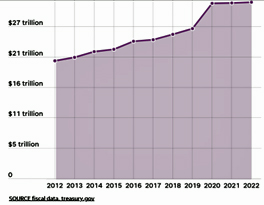
$31 trillion is the debt limit set by congress. Today the debt is at $30.93 trillion. As you can see in this U.S. treasury graph the growth has increased at a horrifying rate. That debt is bonds sold by the government. That debt exists because the government spends more than is taken in through taxes. With higher interest rates any new bonds will cost more.
If this was your household would you continue borrowing or would you say NO to more spending? What would you cut out of the federal budget?
$30.93 trillion
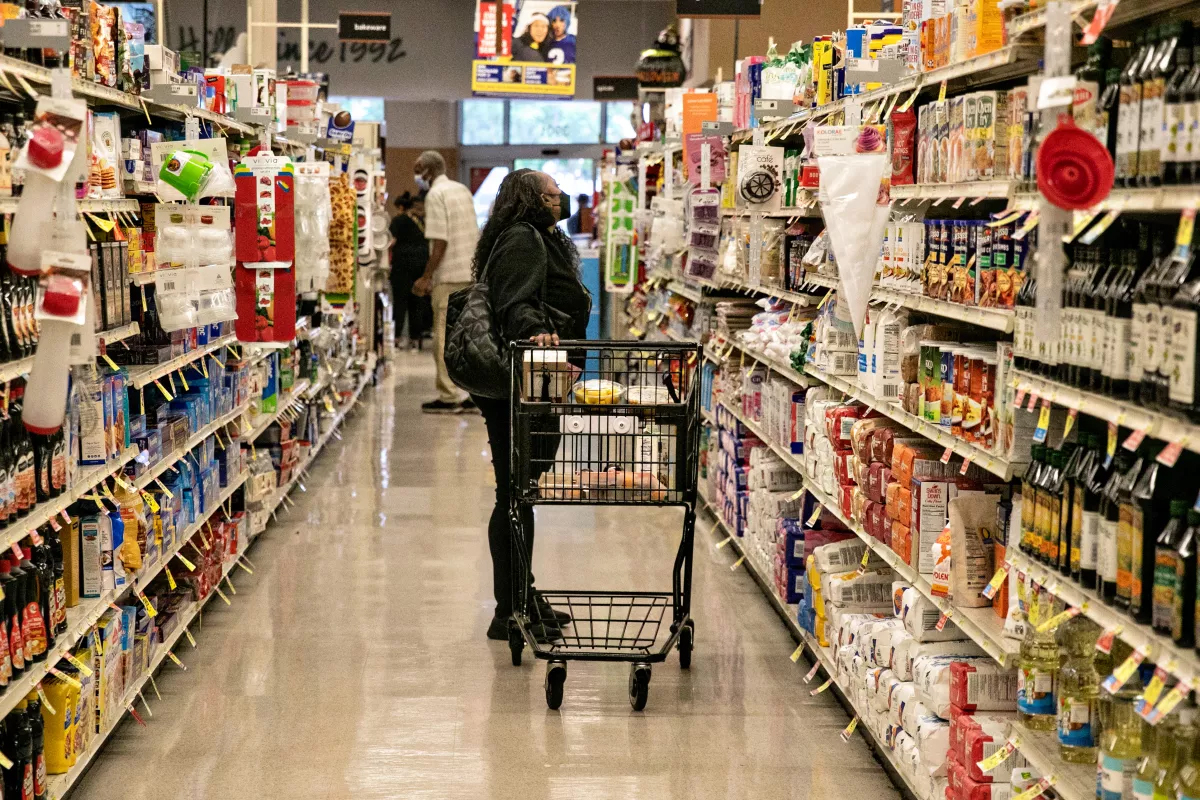
Get ready for higher food prices at your local supermarket!
Kroger Co. said it is buying rival Albertsons Cos Inc. in a deal that values the company at $24.6 billion, one of the biggest deals in the history of the grocery industry in the U.S.
That means that other than Walmart, Costco, and Trader Joe’s almost every food market in Los Angeles will be owned by Kroger. Smaller food chains are usually specialty stores that do not offer a complete choice of foods.
The effect is obvious. Less competition means higher prices. Jamie Court, president of Consumer Watchdog, a Santa Monica-based consumer advocacy group, called the proposed merger “a terrible idea. This would give too much market power to one big giant, especially in California,” Court said. “We would urge the administration to reject this merger.”
To overcome anticipated political and regulatory hurdles, Kroger and Albertsons said they would get rid of stores in markets where they overlap. The companies said they would spin off up to 375 Albertsons stores in a stand-alone public company or just close them. Or in other words less stores means less competition.
Racism is alive and well in America. That includes “liberal” California.
A high school ended its football season after a racist posting “Kill the Blacks” was found on a chat site by administrators at Amador High School in Sutter Creek. That is a community in the Sierra foothills not far from Sacramento. Last week, the football team of another high school near Sacramento, River Valley in Yuba City, forfeited its season after a video showed several players staging a reenactment of a “slave auction.” And last spring at another Sacramento-area high school, Oak Ridge, a football player reportedly taunted a Black soccer player with “ape sounds” during a match.
In Los Angeles three Latino members of the Los Angeles City Council and a top county labor official held a conversation last fall that included racist remarks, derisive statements about their colleagues and council President Nury Martinez saying a white councilman handled his young Black son as though he were an “accessory,” according to a recording of the meeting reviewed by the Los Angeles Times and reported on local television news programs. There are calls for Martinez to resign.
I have no solution. Hate of others will not end no matter how so many of us try to stop those that are taught to hate.
Is the world on the verge of an “Armageddon?” It appears that President believes we are or at least fears that it could happen. And it is on his mind. No one in the Whitehouse or in his administration has contradicted his words.
President Joe Biden’s stark warning Thursday night that the world faces the highest prospect of nuclear war in 60 years was not based on any new intelligence about Russian President Vladimir Putin’s intentions or changes in Russia’s nuclear posture, multiple US officials told CNN.
One senior administration official said Biden was speaking “frankly” in his remarks at a Democratic fundraiser in New York, reflecting heightened concern based on Putin’s recent nuclear threats.
Biden’s nuclear warning not based on new intelligence but opens a window into real worries inside the White House.
The situation today is reminiscent of the 13-day showdown in 1962 that followed the U.S. discovery of the Soviet Union’s secret deployment of nuclear weapons to Cuba is regarded by experts as the closest the world has ever come to nuclear annihilation.
What is needed is a mediator that both Ukraine and Russia respects. Both countries will have to find a compromise. Is that likely?
In Hiroshima, the black rain started to fall 20 minutes after the bomb exploded. It covered an area about 20 kilometers (12 mi) across around ground zero, covering the countryside with a thick liquid that could douse anyone it touched with up to 100 times more radiation than stepping into the blast center.
The city around the survivors was burning and tearing up the oxygen around them, and they were already dying of thirst. Struggling through the flames, they’d become so desperate for water that many opened up their mouths and tried to drink the strange liquid falling from the sky.
There was enough radiation in that liquid, though, to make changes in a person’s blood. It was strong enough that the aftereffects of the rain can still linger today in the places it landed back then. We have every reason to believe that it’ll happen again if another bomb falls.

This is a money maker. King Charles III of the UK is expected to be crowned on June 3 next year in a ceremony at Westminster Abbey.
Speaking on condition of anonymity before a public announcement, the government officials said plans are converging on that Saturday near the start of the summer although discussions over which other days will become official holidays are still going on. Buckingham Palace declined to comment.
This event is scheduled at the beginning of the summer season so that it will draw larger crowds of visitors. According to its annual report of 2019-20, a record 3,285,000 people visited the official residences, generating approximately £49,859,000. From a retail perspective, gift shop sales of the royal collection made £19,983,646 in a single year, making its total income of the year to be £71,526,000.
 Coast Contact