I hate Israeli Prime Minister Benjamin Netenyahu

I am Jewish but not a Zionist. I grew up in Philadelphia. During the Vietnam War I was stationed in Thailand. I was in the Air Force working in a supply station. My father and his brother both fought in World War II. So our family is loyal to this country. As best as I can determine everyone in my family is a Democrat.

The State of Israel was recognized by Democratic President Harry Truman in 1948. Democratic President John F. Kennedy in 1962 sold Israel a major weapon system, the Hawk anti-aircraft missile.

Tropes questioning the loyalty of Jews has been a historic reality. It wasn’t just Hitler and the Nazis. Jews in the Jewish Diaspora were accused of dual loyalty by the Romans in the 1st century.

Donald Trump’s accusations against American Jews is just another example of the same anti-Semitic words of others who hate Jews for no other reason than they need a foil or fear of everyone who is not a white Christian.

Benjamin Netenyahu played into Donald Trump’s hands for political reasons. His decision to bar two congresswomen from Israel will harm American Jews. For me, Israel is no friend to American Jews or Jews anywhere else in the world. The crowd that chanted “Jews will not replace us” at a neo-Nazis rallying in Charlottesville, Virginia now have one more reason to parade and attack Jews.

David Bancroft

Jewish Boycott and the Muslims

Grand Ayatollah Ali Khamenei

A while ago, Iran’s Supreme Leader Grand Ayatollah Ali Khamenei urged the Muslim World to boycott anything and everything that originates with the Jewish people.

In response, Meyer M. Treinkman, a Jewish pharmacist, out of the kindness of his heart, offered to assist them in their boycott as follows:

“Any Muslim who has Syphilis must not be cured by Salvarsan discovered by a Jew, Dr. Ehrlich. He should not even try to find out whether he has Syphilis, because the Wasserman Test is the discovery of a Jew. If a Muslim suspects that he has Gonorrhoea, he must not seek diagnosis, because he will be using the method of a Jew named Neissner.

“A Muslim who has heart disease must not use Digitalis, a discovery by a Jew, Ludwig Traube.

Should he suffer with a toothache, he must not use Novocaine, a discovery of the Jews, Widal and Weil.

If a Muslim has Diabetes, he must not use Insulin, the result of research by Minkowsky, a Jew.

If one has a headache, he must shun Pyramidon and Antypyrin, due to the Jews, Spiro and Ellege.

Muslims with convulsions must put up with them because it was a Jew, Oscar Leibreich, who proposed the use of Chloral Hydrate. Arabs must do likewise with their psychic ailments because Freud, father of psychoanalysis, was a Jew.

Should a Muslim child get Diphtheria, he must refrain from the “Schick” reaction which was invented by the Jew, Bella Schick.

“Muslims should be ready to die in great numbers and must not permit treatment of ear and brain damage, work of Nobel Prize winner, Robert Baram.

They should continue to die or remain crippled by Infantile Paralysis because the discoverer of the anti-polio vaccine is a Jew, Jonas Salk.

“Muslims must refuse to use Streptomycin and continue to die of Tuberculosis because a Jew, Zalman Waxman, invented the wonder drug against this killing disease.

Muslim doctors must discard all discoveries and improvements by dermatologist Judas Sehn Benedict, or the lung specialist, Frawnkel, and of many other world renowned Jewish scientists and medical experts.

“In short, good and loyal Muslims properly and fittingly should remain afflicted with Syphilis, Gonorrhoea, Heart Disease, Headaches, Typhus, Diabetes, Mental Disorders, Polio, Convulsions and Tuberculosis and be proud to obey the Islamic boycott.”

What medical contributions to the world have the Muslims made?

David Bancroft

I was the Shabbes Goy of Sterling Place and Utica Ave.

by Joe Velarde

(Joe Velarde became the fencing coach of Columbia University in the 1940’s-50s and was an early advocate of civil rights in sports, eventually retiring to California.)

Snow came early in the winter of 1933 when our extended Cuban family moved into the Williamsburg section of Brooklyn . I was ten years old. We were the first Spanish speakers to arrive, yet we fit more or less easily into that crowded, multicultural neighborhood. Soon we began learning a little Italian, a few Greek and Polish words, lots of Yiddish and some heavily accented English.

I first heard the expression ‘Shabbes is falling’ when Mr. Rosenthal refused to open the door of his dry goods store on Bedford Avenue . My mother had sent me with a dime to buy a pair of black socks for my father. In those days, men wore mostly black and Navy blue. Brown and gray were somehow special and cost more. Mr. Rosenthal stood inside the locked door, arms folded, glaring at me through the thick glass while a heavy snow and darkness began to fall on a Friday evening. “We’re closed, already”, Mr.Rosenthal had said, shaking his head, “can’t you see that Shabbes is falling? Don’t be a nudnik! Go home.” I could feel the cold wetness covering my head and thought that Shabbes was the Jewish word for snow.

My misperception of Shabbes didn’t last long, however, as the area’s dominant culture soon became apparent; Gentiles were the minority. From then on, as Shabbes fell with its immutable regularity and Jewish lore took over the life of the neighborhood, I came to realize that so many human activities, ordinarily mundane at any other time, ceased, and a palpable silence, a pleasant tranquility, fell over all of us. It was then that a family with an urgent need would dispatch a youngster to “get the Spanish boy, and hurry.”

That was me. In time, I stopped being nameless and became Yussel, sometimes Yuss or Yusseleh. And so began my life as a Shabbes Goy, voluntarily doing chores for my neighbors on Friday nights and Saturdays: lighting stoves, running errands, getting a prescription for an old tante, stoking coal furnaces, putting lights on or out, clearing snow and ice from slippery sidewalks and stoops. Doing just about anything that was forbidden to the devout by their religious code.

Friday afternoons were special. I’d walk home from school assailed by the rich aroma emanating from Jewish kitchens preparing that evening’s special menu. By now, I had developed a list of steady “clients,” Jewish families who depended on me. Furnaces, in particular, demanded frequent tending during Brooklyn ‘s many freezing winters. I shudder remembering brutally cold winds blowing off the East River . Anticipation ran high as I thought of the warm home-baked treats I’d bring home that night after my Shabbes rounds were over. Thanks to me, my entire family had become Jewish pastry junkies. Moi? I’m still addicted to checkerboard cake, halvah and Egg Creams (made only with Fox’s Ubet chocolate syrup).

I remember as if it were yesterday how I discovered that Jews were the smartest people in the world. You see, in our Cuban household we all loved the ends of bread loaves and, to keep peace, my father always decided who would get them. One harsh winter night I was rewarded for my Shabbes ministrations with a loaf of warm challah (we pronounced it “holly”) and I knew I was witnessing genius! Who else could have invented a bread that had wonderfully crusted ends all over it — enough for everyone in a large family?

There was an “International” aspect to my teen years in Williamsburg . The Sternberg family had two sons who had fought with the Abraham Lincoln Brigade in Spain . Whenever we kids could get their attention, they’d spellbind us with tales also introduced us to a novel way of thinking, one that embraced such humane ideas as ‘From each according to his means and to each according to his needs’. In retrospect, this innocent exposure to a different philosophy was the starting point of a journey that would also incorporate the concept of Tzedakah in my personal guide to the world.

In what historians would later call The Great Depression, a nickel was a lot of mazuma and its economic power could buy a brand new Spaldeen, our local name for the pink-colored rubber ball then produced by the Spalding Company. The famous Spaldeen was central to our endless street games: stickball and punchball or the simpler stoop ball. On balmy summer evenings our youthful fantasies converted South Tenth Street into Ebbets Field with the Dodgers’ Dolph Camilli swinging a broom handle at a viciously curving Spaldeen thrown by the Giants’ great lefty, Carl Hubbell. We really thought it curved, I swear.

Our neighbors, magically transformed into spectators kibitzing from their brownstone stoops and windows, were treated to a unique version of major league baseball. My tenure as the resident Shabbes Goy came to an abrupt end after Pearl Harbor Day, December 7, 1941. I withdrew from Brooklyn College the following day and joined the U.S. Army. In June of 1944, the Army Air Corps shipped me home after flying sixty combat missions over Italy and the Balkans. I was overwhelmed to find that several of my Jewish friends and neighbors had set a place for me at their supper tables every Shabbes throughout my absence, including me in their prayers. What mitzvoth! My homecoming was highlighted by wonderful invitations to dinner. Can you imagine the effect after twenty-two months of Army field rations?

As my post-World War II life developed, the nature of the association I’d had with Jewish families during my formative years became clearer. I had learned the meaning of friendship, of loyalty, and of honor and respect. I discovered obedience without subservience. And caring about all living things had become as natural as breathing. The worth of a strong work ethic and of purposeful dedication was manifest. Love of learning blossomed and I began to set higher standards for my developing skills, and loftier goals for future activities and dreams. Mind, none of this was the result of any sort of formal instruction; my yeshiva had been the neighborhood. I learned these things, absorbed them actually says it better, by association and role modeling, by pursuing curious inquiry, and by what educators called “incidental learning” in the crucible that was pre-World War II Williamsburg. It seems many of life’s most elemental lessons are learned this way.

While my parents’ Cuban home sheltered me with warm, intimate affection and provided for my well-being and self esteem, the group of Jewish families I came to know and help in the Williamsburg of the 1930s was a surrogate tribe that abetted my teenage rite of passage to adulthood. One might even say we had experienced a special kind of Bar Mitzvah. I couldn’t explain then the concept of tikkun olam, but I realized as I matured how well I had been oriented by the Jewish experience to live it and to apply it. What a truly uplifting outlook on life it is to be genuinely motivated “to repair the world.”

In these twilight years when my good wife is occasionally told, “Your husband is a funny man,” I’m aware that my humor has its roots in the shticks of Second Avenue Yiddish Theater, entertainers at Catskill summer resorts, and their many imitators. And, when I argue issues of human or civil rights and am cautioned about showing too much zeal, I recall how chutzpah first flourished on Williamsburg sidewalks, competing for filberts (hazelnuts) with tough kids wearing payess and yarmulkes. Along the way I played chess and one-wall handball, learned to fence, listened to Rimsky-Korsakov, ate roasted chestnuts, and read Maimonides .

I am ever grateful for having had the opportunity to be a Shabbes Goy.


Mario Cuomo, Colin Powell & Pete Hamill were also shabbos goyim


You will be Happier without Jewish Food

If you are not Jewish all this may be meaningless to you. All the Jewish people I know only eat these delicacies on special occasions. Jewish people eat at BJ’s, McDonald’s, KFC, and all the places you know. The exception being the Bagels.

Latkes A pancake-like structure, not to be confused with anything a first-class health restaurant would put out. In a latke the oil remains inside the pancake. It is made with potatoes, onions, eggs and matzo meal. Latkes can be eaten with applesauce but COULD also be used to comb your hair, shine your shoes or lubricate your automobile. There is a rumor that in the time of the Maccabees, they lit a latke by mistake and it burned for eight days. What is certain is that you will have heartburn for the same amount of time. It tastes GREAT but will stop your heart if the grease gets cold.

Note: Eggs are not necessary since the potatoes will bind the pancake when they cook. Also it is not necessary to fry it in much oil. Use Pam or the like or a Teflon pan.

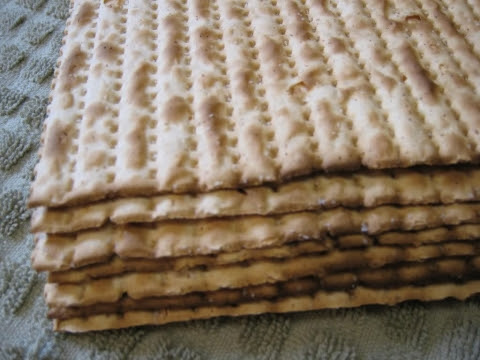
Matzoh Israel ‘s punishment for escaping slavery. It consists of a simple mix of flour and water – no eggs or flavor at all. When made especially well, it could actually taste like a cardboard box recycled from the Tel Aviv city dump. Its redeeming value is that it does fill you up and stays with you for a long time–sometimes far too long–and you are advised to eat lots of prunes with it. If the prunes do not work, try castor oil, or even gun powder as a last resort before a surgeon has to mine it out.

For eight days every year religious Jews must eat matzoh.  No bread. It is part of the Passover tradition that will start on the evening of April 10, 2017.

Eggs are not necessary and the constipation can be avoided by eating whole wheat matzos.


Kasha Varnishkes  One of the little-known “delicacies” that is even more difficult to pronounce than it is to cook. It has nothing to do with varnish, but is basically a mixture of buckwheat and bowtie noodles (not macaroni). Why bowties? Many sages in the Old Testament discussed this and agreed that an ancient Jewish mother must have decided, ‘Son, you can’t come to the table without a tie or, god forbid, place your elbow on the table.” If Mamma said ‘bowties,’ you better believe that’s what the family used, even if they had to invent them on the spot.


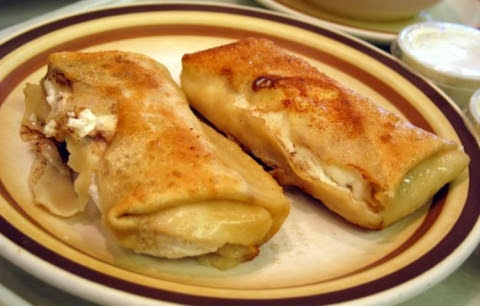
Blintzes  Not to be confused with the German war machine’s ‘blintzkreig.’ Can you imagine the Jerusalem Post in ’39 with huge headlines announcing: ‘Germans drop tons of cheese and blueberry blintzes on Poland. Shortage of sour cream expected’? Basically, this is the Jewish answer to Crepe Suzettes. They are actually offered on the menu at the local International House of Pancakes, but no one there knows what the hell they are. In ignorant bliss, they often serve them frozen from the blintz factory. No modern woman will take time to make them if she can find a grocery store selling frozen ones (assuming she can find someone in that store who knows where they are kept). 


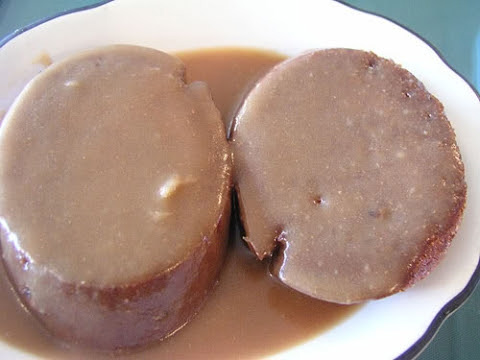
Kishke You know from Scottish Haggis? Well, this it ain’t. Remember what I say if you should go to the Highlands . You do not want to eat Haggis, no matter how much Scotch you’ve downed. In the old days they would take an intestine and stuff it to make kishkewe use parchment paper or plastic (made in China). And what do you stuff it with? Carrots, celery, onions, flour, and spices. The skill is not to cook it alone, but to add it to the cholent (see below) and let it simmer for 24 hours until there is no chance whatsoever that there is any nutritional value left. The gravy can be purchased in bulk at any southern Bisquitville drive-thru.


Kreplach They sound worse than they taste. There is a rabbinical debate on their origins. One Rabbi claims they began when a Chinese fortune cookie fell into the chicken soup. Another claims they started in an Italian restaurant, where the owner yelled at the chef, ‘Disa pasta tastes like-a krep!’ Either way it can be soft, hard, or soggy, and the amount of meat inside depends on whether it is your mother or your mother-in-law who cooked it. Tastes best if made in a Manhatten deli where they serve the soup by the barrel-load.


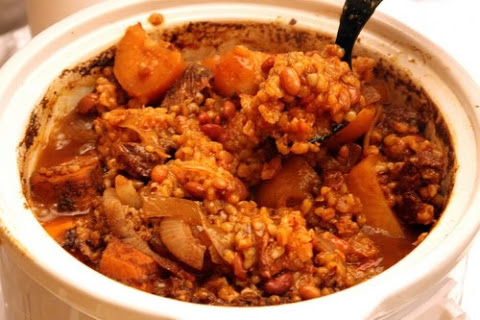
Cholent This combination of noxious gases had been the secret weapon of Jews for centuries. The unique combination of beans, barley, potatoes, and bones or meat is meant to stick to your ribs and anything else it comes into contact with. Precursor of Superglue. At a fancy Mexican restaurant (kosher, of course) I once heard this comment from a youngster who had just had his first taste of Mexican refried beans: ‘What, they serve leftover cholent here too?” A Jewish American Princess once came up with something original for her guests (her first and probably last cooking attempt at the age of 25). She made cholent burgers for night supper. The guests never came back. The dogs ate the burgers but later threw up and had to be taken by ambulance to the pet emergency room.


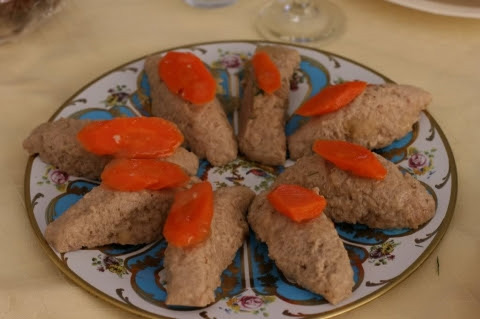
Gefilte Fish A few years ago, an Israeli politician had problems with the filter in his fish pond and a few of his fish got rather stuck and mangled. His son (5 years old at the time) looked at them and asked, “Is that why we call it ‘ge-filtered fish?” Originally it was a carp stuffed with a minced fish and vegetable mixture. it usually is comprised of small fish balls eaten with horseradish (pronounced ‘chrain’ to rhyme with ‘insane,’ which you have to be to inflict it on your innards) and is judged on its relative strength in bringing tears to your eyes at 100 paces. The VERY NAME OF THIS DISH FRIGHTENS FULLY GROWN AND SOPHISTICATED GENTILES and they actually run when it is merely mentioned.


Bagels How can we finish without the quintessential Jewish defense weapon, the bagel? Like most foods there are legends surrounding the bagel, although I don’t know any other than it was first discovered when unsugared donuts accidentally petrified. There have been persistent rumors that the inventors of the bagel were the Norwegians who couldn’t get anyone to buy smoked salmon (Lox). Think about it: Can you picture yourself eating smoked salmon or trout on white bread? Rye? A cracker? Naaa! The Israel Defense Forces research lab looked for something hard and almost indigestible which could take the spread of cream cheese and which doesn’t take up too much room in desert-maneuvers ration kits. And why the hole? The truth is that many philosophers believe the hole is the essence and the dough is only there to indicate where the hole is placed.

Some say the wheat bagel is less constipating.  I love onion bagels.  I am especially fond of the bagels from Western Bagel.

David Bancroft

Why there is No Peace between Israelis and Palestinians

This posting is motivated by the United Nations Security Council condemnation of Israel’s decision to build new housing in Israel occupied West Bank.

The story is old but people reading this blog need to understand how Israelis and Palestinians have come to this sorry place in history.  This is not a complete history of all the wars fought between Arabs and Israel. Nor is there any reference to Hamas and Hezbollah in this discussion, who are both sworn enemies of Israel.

  • When the state of Israel was created by an action of the United Nations in 1948 the Arab population in that area refused to recognize the creation of a Jewish state. Immediately after Israel declared itself a state the surrounding nations attacked.  Arabs lost that war.
  • In 1967 the Arab nations surrounding Israel gathered armies on the borders of Israel in preparation to invade. Those countries were Syria, Jordan, and Egypt.  The Israelis actually started the war before the Arab countries attacked.  Israel won that war driving the Syrians out of the immediately adjoining area, pushing the Jordanians to the east of the Jordan River and taking all of the Sinai Peninsula from Egypt and occupying all the land of Egypt to the Suez Canal.  In the process Israel also occupied parts of southern Lebanon.
  • Israel reached an agreement with Egypt to withdraw from all of the land they had won in the 1967 War in exchange for Egyptian recognition of the State of Israel. The EgyptIsrael Peace Treaty was signed in Washington, D.C., United States on 26 March 1979, following the 1978 Camp David Accords.
  • The Jordan-Israel Peace Treaty was signed on October 26, 1994, at the southern border crossing of Wadi ‘Araba. The treaty guaranteed Jordan the restoration of its occupied land (approximately 380 square kilometers), as well as an equitable share of water from the Yarmouk and Jordan rivers. Moreover, the treaty defined Jordan’s western borders clearly and conclusively for the first time.
  • Israel remains in control of what was part of Jordan, the area west of the Jordan River, and Gaza, a small strip of land along the Mediterranean Sea that had previously been controlled by Egypt, and the Golan Heights that were previously part of Syria.
  • Israel withdrew its settlements in Gaza in 2005. That amounted to about 8,500 people being relocated in the hopes of bringing some peace to that area. Repeated missile attacks from Gaza into Israel’s pre-1967 territory has resulted in repeated bombing of the area by the Israeli Defense forces.  The most recent bombing occurred in 2014.
  • Efforts to create a two state solution between Israel and the occupied Arab territories have been unsuccessful primarily because the leadership of the Palestinians refuse to recognize Israel’s right to exist.
  • Israelis take the position that the spoils of war is they get to decide what happens in the areas they occupy. Thus building Jewish communities in areas that are primarily Palestinians is a fair consequence of the wars they have won.  The rest of the world through the United Nations disagrees.
  • Neither Israelis nor Palestinians trust their opponents to honor their words.

Hatred makes a peace agreement an unlikely outcome in the next few years.  New leadership for both Israel and the Palestinians is the only hope for a settlement and permanent peace.

Happy New Year

David Bancroft

Three True Short Stories about Jews of Europe

These three stories are woven with shared mystical threads.

Translated from Russian by Chaim Zehavi.All the details are claimed to be absolutely true. However, there are those who say these three stories are entirely fiction.  The endings might make you believe there could be some truth in them.  

First Story

At the beginning of WWII, when the truth about the fate of the Jewish people was discovered, and when there were still ways to save them, a few hundred rich Jews bought a ship in order to get their families on board and escape to America.

But they needed visas, so they approached the American Ambassador in London. It was not difficult for him, but he utterly refused. The Jews, in order to save their families, went without the visas.

When the Ambassador found out about it, he contacted Washington, advising them that a ship with illegal immigrants is approaching
America. The Jews managed to overcome the horrors of war and reach America, but were not permitted into America. These unlucky people were ordered to turn around and return to burning Europe. And all burnt in the camps. When the tragedy was revealed, the Rabbi of London came to the American Ambassador and said: “Your deeds do not befit not only your post, but you are not fit to be called ‘a human’. And now, since you caused hundreds of people’s death, YOU AND ALL YOUR DESCENDANTS generations down from now on will be cursed!”

The name of the American Ambassador was KENNEDY. Joseph Kennedy was father of President John Kennedy and Attorney General Robert Kennedy both assassinated.

Second Story

Again, WWII. Lithuania.

The Japanese Ambassador, who was a compassionate and noble person, disagreed with the Nazi crimes, and was concerned with the future of the European Jewry. He used his status and provided them with visas to Japan.

From Japan they immigrated to the United States of America. Thus he saved the lives of thousands of Jews. When the Germans found out they demanded that the Ambassador be removed. The Japanese, allies of the Nazis, followed the request. But he still had 2 weeks until his return, and he used these 2 weeks, and worked around the clock, day and night; he recruited people to help him issue more visas. The lives of many more Jews were saved this way.

This was a very dangerous act, deserving of admiration. Prior to his leaving a mission of Jews from the Vilna Synagogue came to thank him. “What you have done for the Jewish People will never be forgotten, and we will pray to God to bless you and your descendants.”

This wonderful person returned to Japan, and miraculously all his punishment was that he was fired and lost his pension. In order to help his family he started a small workshop. His name was Mitsubishi. Mitsubishi became one of the greatest manufacturers of cars in the world.

Third Story

In the center of the city of Kiev there’s a statue in memory of the all-powerful leader of the Ukraine, Bogan Khmelnitsky. He is sitting on the back of a beautiful horse, his right hand holding a sword and pointing up, towards the sky. He is the epitome of Ukraine’s independence. Khmelnitsky is the pride of the Ukrainians, and all visitors are impressed by the beauty of the statue of the great leader. But not many know that Khmelnitsky was a beastly anti-Semite. On his conscience many pogroms against the Jews, burning down of towns and villages, and the blood of many innocent Jews. How many future-geniuses, who could have been great achievers, were lost to the world. His ruthless thugs had no mercy for women or children.

These are historical facts. A lot sorrow was brought by the accursed Khmelnitsky to the land of Ukraine. But in one town, the pogrom was especially horrible. Khmelnitsky and his thugs, drunken on Jewish blood, robbed and destroyed all the homes of the Jews. The boys and the girls were taken to the Synagogue and were all burnt without mercy. All that was left of this town was its name, and not one living Jew.

But centuries later the punishment came! The name of this town is Chernobyl, and in the exact place that the Synagogue used to be, was the Nuclear Plant #4 of the infamous power plant known in the tragedy that occurred in this town. The town is still off limits because of the lethal radiation omnipresent to this day.

Five myths about Hanukkah

I found this article on line.  Written by Jennifer Bleyer

At nightfall on Sunday, Jews everywhere began the eight-day observance of Hanukkah by lighting candles, singing songs, showering their children with gifts and stuffing themselves with potato latkes. What’s not to love about a happy, home-based festivity involving fried food? It’s no wonder that Hanukkah is the most widely celebrated holiday among American Jews: According to the last National Jewish Population Survey, in 2001, 72 percent of Jews in the United States light Hanukkah candles — more than partake of any other Jewish rite, including attending a Passover seder or fasting on Yom Kippur. Yet a lot is commonly misunderstood about the holiday’s significance, both now and historically. Let’s consider some of the biggest misconceptions about the festival of lights.


1. Hanukkah is an important Jewish holiday.

It’s easy to get the impression that Hanukkah is a marquee event of the Jewish year, falling as it coincidentally does right around the time of that other blockbuster December occasion and likewise seeming to revolve around presents, parties and recollections of a miracle long ago. The sense of Hanukkah’s importance is further stoked by lively decorations, beautiful menorahs, delectable feasts and even, nowadays, kitschy sweaters and tongue-in-cheek competitions.

But as any rabbi would be quick to explain, Hanukkah is one of the least important occasions on the Hebrew calendar. Unlike major holidays such as Passover, Sukkot and the weekly Sabbath — all of which include extensive ritual requirements as well as prohibitions against work — Hanukkah is categorized as a minor festival whose only real decree is to light candles for eight nights. Everything else is custom or adaptation.

That’s not to say, however, that all the hubbub around Hanukkah is accidental. Its elevation to its current status in the United States goes back to the 19th century, when rabbis concerned about Jewish children feeling envious of their Christian neighbors realized that Hanukkah could let kids indulge in a joyous occasion around the same time of year. As Jewish historian Dianne Ashton recounts in her book “Hanukkah in America,” the holiday’s “timing in the midst of the Christmas season offered a way [for people] to perform their Jewish commitment through the holiday’s rite and, for a moment, to resolve the ambiguity of being an American Jew.”

2. Hanukkah celebrates a fight for religious freedom.

The story of Hanukkah commemorates events in the 2nd century B.C., when the Syrian king Antiochus, whose Greek-influenced Seleucid empire ruled over ancient Judea, issued decrees outlawing traditional Jewish practices, which provoked the uprising of a family of country priests called the Maccabees. They ultimately triumphed, regained control of the Jewish Temple in Jerusalem and rededicated it according to their beliefs. As Rabbi Joshua Sherwin expounded at the White House Hanukkah party in 2013, the “true meaning” of the holiday is to celebrate “strengthening religious freedom in our days, just as the Maccabees did in ancient ones.”

But the idea that theirs was a fight for religious freedom is a myth, as is the notion that their revolt was exclusively against their Gentile oppressors. At the time, many Jews readily welcomed aspects of the dominant Greek culture, with its emphasis on reason, wisdom and art. These Hellenistic Jews advocated for the reformation of their own primitive belief system according to Greek values — the modernization of a faith founded in the Bronze Age. The Maccabees opposed their Hellenized counterparts, and according to some scholars, their revolt really began as a bitter internal fight between religious fundamentalists and reformers.

“The Maccabees were fighting for the ability to observe their own laws and the ability to coerce other Jews to observe their laws,” says Albert Baumgarten, an emeritus professor of Jewish history at Bar-Ilan University in Israel. “It meant a very strong fight against the Hellenistic Jews and the establishment of what we would today call a theocratic state.” Some contemporary commentators have even deigned to call the Maccabees fanatics and zealots.


3. The Jews’ victory in the Hanukkah story halted assimilation.

Today, the Maccabees are extolled for having put a hard stop, after their recapture of Jerusalem in 164 B.C., to Hellenism’s threat to swallow traditional Judaism. “Hanukkah celebrates the rescue of Judaism itself from the clutches of cultural assimilation,” Ron Wolfson, an education professor at the American Jewish University in Los Angeles, writes in “Hanukkah: The Family Guide to Spiritual Celebration,” nodding to why this story speaks so deeply to modern diaspora Jews. “In our own day,” he writes, “living in a completely open society, we too must battle the forces of cultural assimilation to retain our Jewish identities.”

But as rulers who subsequently established the Hasmonean dynasty, these rebels quickly realized that their survival involved playing the game of regional politics — and the way to do that was by none other than adopting Hellenism. “It was a kind of necessity,” Baumgarten says. “The Seleucid dynasty to which Antiochus and his successors belonged was split between two rival families that were fighting each other over generations, and the Maccabees had to play one branch off each other. If you backed the wrong horse in this ongoing civil war, you could end up losing your status and your head. . . . So although the Maccabees started as opponents of Hellenism, they soon become among its most enthusiastic admirers and adopters.”

 This meant, for instance, aping Greek models of government and negotiation, and establishing an assembly to vote a ruler into power — a practice with no precedent in Jewish tradition. Their realpolitik also helped them learn to “negotiate the different tensions between being part of the Jewish world and the larger world,” Baumgarten says, which was critical to Jewish survival.


4. The oil burned for eight days and eight nights.

The ritual lighting of Hanukkah candles is traced to what’s known as the miracle of the oil: After the Maccabees reclaimed the Temple, the story goes, they found a small amount of oil permissible for lighting the sacred sanctuary lamp — enough for just one day. Miraculously, it lasted eight. Jews thus light candles on eight successive nights to recall this great miracle.

Yet whether the miracle really happened is questionable, and not just because of the empirically proven limits of combustible liquid. As scholars have long noted, there’s no reference to the miracle in early sources based on firsthand accounts, including the first book of Maccabees, an insider history written to glorify the new dynasty and its achievements, nor the second book of Maccabees, also a historical account written close to the time of the revolt, although from the diaspora.

The miraculous-oil story seems to be a rabbinic invention transmitted hundreds of years after it allegedly occurred. After the Romans destroyed Jerusalem in 70 A.D., the Jews were expelled, and religious authority was transferred from Temple priests to diaspora rabbis, who came to codify the Babylonian Talmud as a central text of Jewish law, ethics and customs. In the middle of the Talmudic tractate discussing the proper way to light candles on the Sabbath, as a footnote that seems almost an afterthought, the rabbis included a discussion of Hanukkah candle-lighting along with a telling of the miracle of the oil. It’s this written account that made the story last.


5. Latkes are the traditional Hanukkah food.

Latkes, or potato pancakes, are the much-salivated-over centerpiece of most Hanukkah celebrations in America. Consisting of grated potatoes mixed with matzo meal and eggs, and fried in oil to a golden crisp, they are the holiday’s iconic food, fueling vociferous debates about which topping is superior — sour cream or applesauce — and enabling the endless creativity of modern cooks, who include ingredients their ancestors probably never heard of, from Swiss chard to zucchini, from chipotle to feta cheese and artichokes.

But latkes originated in Eastern Europe, not ancient Israel. And they were first made with curd cheese rather than potatoes, Gil Marks writes in the “Encyclopedia of Jewish Food.” Although they are certainly a traditional holiday food, they are by no means the traditional holiday food. For centuries, as Marks details, Jewish communities around the world have celebrated with other delicacies that acknowledge the role of oil in the Hanukkah story. Greek Jews eat fried fish with ajada, an adaptation of an ancient Mediterranean sauce akin to garlic mayonnaise; they also serve fried apple rings and apple fritters. The Cochin Jews of India enjoy neyyappam, a kind of fried sweet cake containing semolina, almonds, cashews, dates, apricots and cardamom, as well as bonda, fried potato fritters coated in chickpea flour and served with chutney. Syrian and Lebanese Jews celebrate with atayef, cheese-filled pancakes deep-fried and topped with sugary syrup or thick cream, while Sephardic Jews have traditionally feasted on ojaldre, an ancient Spanish form of puff pastry also stuffed with cheese. The Jews of Italy, meanwhile, nibble on frittelle di Chanukah, yeast fritters flavored with anise.

Hungry yet?

Twitter: @jennypencil

America Has Not Been and is Not Now Friendly to Immigrants

The reality is that the United States has not been the welcoming nation that is portrayed by many of America’s leaders. The verse on the Statue of Liberty was more likely a wish than a fact.

The reality is immigrants have been welcomed in the United States when there has been a labor need. The outstanding situations were building the railroads that brought thousands of Chinese in the 1800s, the flourishing factories of the early 20th century, and today the need for farm workers, gardeners, hotel workers, and restaurant workers-the jobs Americans don’t want to do.

Look at America’s history starting with the second administration of the United States. John Adams, our second president signed four bills into law referred to as The Alien and Sedition Acts. The Alien Friends Act allowed the president to imprison or deport aliens considered “dangerous to the peace and safety of the United States” at any time, while the Alien Enemies Act authorized the president to do the same to any male citizen of a hostile nation, above the age of 14, during times of war. Clearly, the Federalists saw foreigners as a deep threat to American security. As one Federalist in Congress declared, there was no need to “invite hordes of Wild Irishmen, nor the turbulent and disorderly of all the world, to come here with a basic view to distract our tranquillity.” Not coincidentally, non-English ethnic groups had been among the core supporters of the Democratic-Republicans in 1796. Those Democratic-Republicans were the party opposing the Federalists.

Then in 1875 came the Page Act. The law was named after its sponsor, Representative Horace F. Page, a Republican who introduced it to “end the danger of cheap Chinese labor and immoral Chinese women.” It was the first federal immigration law and prohibited the entry of immigrants considered as “undesirable.” The law classified as “undesirable” any individual from Asia who was coming to America to be a contract laborer.

In 1882 the Chinese Exclusion Act restricted immigration of Chinese laborers for 10 years and prohibited Chinese naturalization.

Then in 1891 the First comprehensive immigration laws for the US. The Immigration Bureau, created by the law, was directed to deport unlawful aliens.

The 1898 the Supreme Court case United States v. Wong Kim Ark, the decision resulted in the recognition of the 14th amendment as taking priority and the ruling that all Chinese children born in the United States are citizens of the United States.

The Emergency Quota Act of 1921 limited the number of immigrants from any country to 3% of those already in the US from that country as per the 1910 census.

The 1924 Immigration Act imposed first permanent numerical limit on immigration and thus began a national-origin quota system.

In 1954 under the direction of President Eisenhower, Operation Wet Back sent about 1 million Mexicans back to Mexico. Many of the deportations probably included many legal residents of the United States.

I have not covered all of the history of immigration into the United States but you certainly get the message that this country has not been friendly to immigrants. They have been used when there was a labor shortage of people willing to do the work that most Americans won’t do.

So why would the United States be willing to grant entry to Syrians, Iraqis, and other Middle Easterners? It’s not likely. There is no current need for more people in the United States. There is little evidence of sympathy. Read this article in the Washington Post on American opinion about permitting the migration of Jews in the late 1930s. The article shows a Gallup poll that indicated 61% of Americans at that time opposed allowing 10,000 Jewish refugee children into the United States.

Unless you bring a technical skill or money that will create jobs we really don’t want you to immigrate to our country. Those people from the Middle East don’t follow our religion, don’t understand our culture, and don’t speak our language. We really don’t want you!

David Bancroft

Priest blessing the people at the Kotel on Sukkot

The Priestly Blessing of Sukkot at the Western Wall


Western Wall during Sukkot Priestly Blessing

Western Wall

35,000 Jewish people reportedly gathered at the Western Wall on the day of the priestly blessing during Sukkot this year.  The priestly blessing is the time, twice a year, when those of Aaronic lineage stand at the base of the Western Wall and bless the Israelites.

The Four Species

Moses said concerning the feast of Sukkot, “On the first day you shall take the product of hadar trees, branches of palm trees, boughs of leafy trees, and willows of the brook, and you shall rejoice before the Lord your God seven days” (Lev 23:40; JPS).


Man with four species of Sukkot

Man during prayers of Sukkot

The Prayers

The Jewish people have interpreted these four species to be the etrog (citron) – yellow fruit, the lulav (palm branch), hadas (avot tree branch), and aravah (willows of the brook).  They carry these with them throughout the week to their prayers in the synagogue.

Time of Rejoicing

As the verse above says, this is a week of joy, and the Israelites were literally commanded to rejoice all week!  Part of the joy would have been over God’s provision – this festival takes place “after you have gathered the crops of the land” (Lev 23:39).

Sukkot Priestly blessing prayers

Man with gun during Sukkot prayers

Security

As noted many times in the biblical narrative, the harvest was not necessarily a time of security (see the Book of Judges, for instance).  Israel today experiences uncertain times.  It doesn’t mean that you don’t rejoice, but neither does it mean you don’t carry a gun.

The Torah

The center of Jewish life was and is the Torah – the five books of Moses.  During a part of the prayer ceremony on this day, the Torah was brought out by each group represented and became the focus of attention.

The Torah Scroll by the Western Wall

Man reading prayer book

The Prayer Book

The prayer book contains the liturgy for the various feasts and prayer times.  This one makes a good picture because it’s the “large-print” edition.  The prayers of course are in Hebrew, as they always have been.

YOU Said Nothing!

When we were led into the gas chamber, YOU said nothing.

When we were forcibly converted, YOU said nothing.

When we were thrown out of a country just for being Jews, YOU said nothing.

When we now defend ourselves all of a sudden, YOU have something to say.

How did we take our revenge on the Germans for their Final Solution?

How did we take revenge on the Spanish for their Inquisition?

How did we take revenge on Islam for being Dhimmi?

How did we take revenge on the lies of the Protocols of Zion?

We studied our Torah.

We innovated in medicine.

We innovated in defense systems.

We innovated in technology.

We innovated in agriculture.

We made music.

We wrote poetry.

We made the desert bloom.

We won Noble prizes.

We founded the movie industry.

We financed democracy.

We fulfilled the word of Hashem by becoming a light unto the Nations of the Earth.

So World when you criticise us for defending our heritage and our ancestral homeland we the Jew’s of the World do exactly what you did, we ignore you.

You have proven to us for the last 2,000 years that when the chips are down you don’t care.

Now leave us alone and go sort out you own back yard whilst we continue our 5775-year old mission, enhancing the World we share.

Author unknown