Category: Art and Entertainment
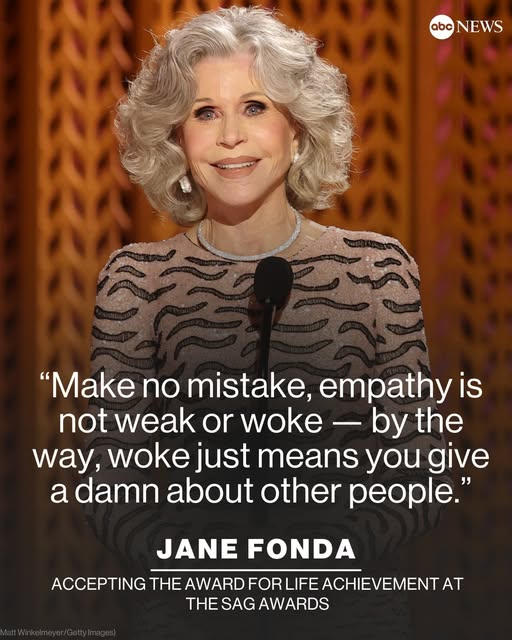
Jane Fonda
In her acceptance speech for Lifetime Achievement at the SAG Awards on Sunday night, Jane Fonda spoke about the current political state.
“What we actors create is empathy,” she said. “Our job is to understand another human being so profoundly that we can touch their souls. And make no mistake, empathy is not weak or woke — by the way, woke just means you give a damn about other people.”
Read more: https://abcnews.visitlink.me/LoZxf3

Can We Join Canada?
It’s Election Day, Charlie Brown
by Ruben Bolling

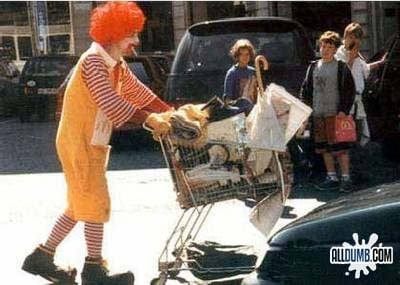
What happened to Ronald McDonald?

What happened to Ronald McDonald? It’s very sad. Well, this was supposed to remain a secret, but yes. You see, Ronald had an affair with the Dairy Queen and Wendy was born. The Burger King was very displeased. I saw him walking near my local McDonald’s and this is what he looked like. Homeless near Roscoe and Topanga in the San Fernando Valley.
Olympics: Lots of medals. Lots of skin colors. See the connection?
Diversity shows its value in the makeup of Team USA
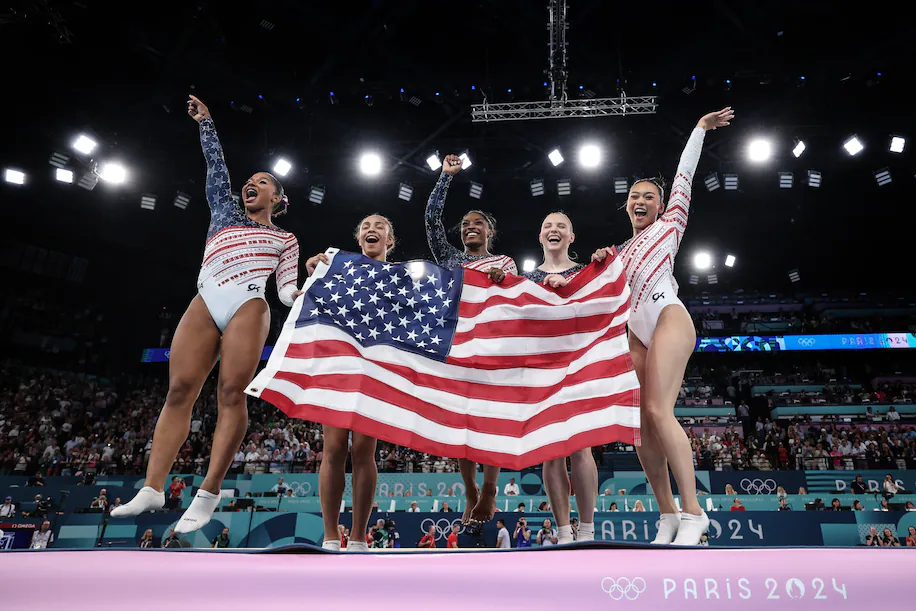
By Michele Norris, Washington Post
August 10, 2024 at 1:24 p.m. EDT
Right-wing warriors can rail against diversity, equity and inclusion all they want. But the same so-called patriots who aggressively wrap themselves in the flag and claim America as their country cannot be blind to what is on display for all the world to see at the Paris Olympics.
Diversity is now a core part of America’s brand. In gymnastics and swimming. In fencing and rugby. In skateboarding, tennis, boxing, basketball and so much more. In commentary from Snoop Dogg and Flavor Flav. In the massive billboards all over Paris from U.S.-based companies like Nike and Ralph Lauren that feature brown-skinned models. And let’s not forget the music that’s played to pump upthe audience at all the events — whether or not Americans are competing. I was at the Paris Olympics for a few days,and at every venue I visited, American music with a funky beat was the go-to choice to fire upcrowds and athletes from all over the world. As we watch Americans rack up medals, that retrograde Trumpian Make America Great Again message seems silly; America is clearly pretty great right now.
You cannot cheer for the United States in this moment without also cheering on the diversity born of merit. And that is an important point because the ammunition used to instill fears about diversity in a changing America are based on the false notion that Black and Brown people are getting something they don’t deserve.
That is the fib at the heart of the orchestrated effort to dismantle diversity programs. It assumes that the only way to achieve diversity is by bringing on people of color who have lesser skills or qualifications than White candidates. This is what feeds the idea —no, make that the lie — that under credentialed people of color are pushing White candidates out of their rightful place.
Diversity is not about lowering standards. It’s about widening the aperture to make sure an organization can find the best talent available. It’s about reaching beyond one’s comfort zone or personal network to look for talent and potential in areas that might be unfamiliar. So often, access to opportunity is based on something sociologists call “homosociality” – friendship, mentoring, social circles and cliques based on commonality and comfort. It’s the jolt of reassurance or even relief at finding someone who appears to be the right fit because they have the right background and the right skin color, they went to the right school, they engage in the right sports (golf or sport fishing, for instance), or they speak in the right vernacular. People drift to the familiar. It’s human nature.
This is why the world of sports provides a useful antidote. While sports teams and athletic organizations may have limited their scope of recruitment in the past — based on tradition, bias or the belief that certain kinds of people lacked certain innate characteristics — that line of thinking has eroded faster in sport than other sectors. Remember: It wasn’t that long ago that Black men were not considered quarterback material.
Coaches and recruiters will go where the talent is and cast an ever-widening net to find it. Why? Because they know that talent is equally distributed but opportunity is not. They know that the potential for greatness percolates in all kinds of places, and if they spot it early, they can nurture it toward victory without lowering standards. And they know that staying in their personal socio-economic comfort zonescould keep them from winning.
The Olympic Games are about winning — and so much more. I’ve always loved watching the Games on TV with my family in part because of the learning experience it provides: calmness under pressure. Grace in defeat. People from all over the world coming together to chase their dreams. After a year of pugilistic politics and attacks on diversity programs, the Olympics once again deliver an avalanche of life lessons.
At a time when members of one political party will not commit to accepting the outcome of the upcoming election, it is heartening to watch top athletes shake hands with the competitors who beat them and step aside so the victors can bask in their earned glory. And the mosaic of diverse athletes — often in sports that until recently did not include many people of color — is also a reflection of American values and the cultural diversity at the core of this multiethnic country.
You can’t have it both ways. You can’t cheer on Team USA without cheering on the diversity that makes Team USA great.
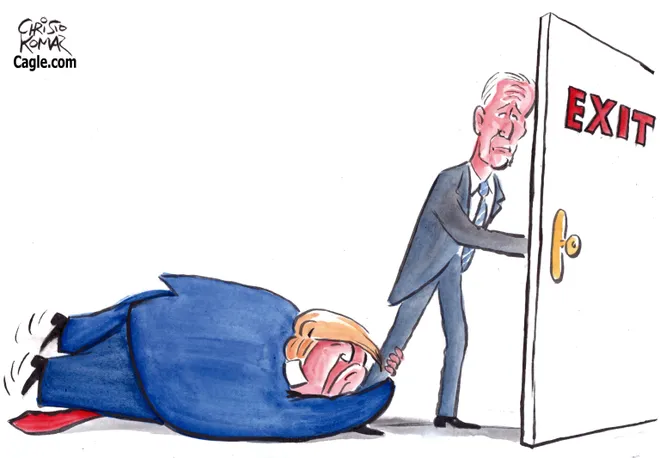
Please Don’t Go!
Norman Lear
An amazing man who has had a huge impact on our culture with all his creative work and the iconic shows he produced and created. Archie Bunker, Maude Findlay and George Jefferson were among the characters he brought to America’s living rooms.
There will never be another like him. Here is a list of the programs he created.
ALL IN THE FAMILY
THE JEFFERSONS
MAUDE
SANFORD AND SON
GOOD TIMES
ONE DAY AT A TIME
MARY HARTMAN, MARY HARTMAN
The Jewish High Holydays
As we are celebrating another Rosh Hashana, the Jewish New Year, it is a good time to talk about the singularly most important play/musical about Judaism. Fiddler on the Roof.
No creative work by or about Jews has ever won the hearts and imaginations of Americans so thoroughly as the musical Fiddler on the Roof.
Everyone enjoys this show, whose musical numbers—“Tradition,” “Sunrise, Sunset,” “If I Were a Rich Man,” “To Life,” “Matchmaker,” and others—not only enliven Jewish weddings but are commonly understood to represent something essential about Jews and Jewishness. Jeremy Dauber opens his new biography of Sholem Aleichem with Fiddler because Fiddler is how the beloved Yiddish author is known—if he is known at all—to English readers. “Forget Sholem Aleichem,” writes Dauber, “there’s no talking about Yiddish, his language of art, without talking about Fiddler on the Roof. There’s no talking about Jews without talking about Fiddler.” And Dauber ends the book by tracing the stages through which Sholem Aleichem’s stories of Tevye the Dairyman and his daughters were transformed by successive translators and directors into what, by the time the movie version of Fiddler was released in 1971, the New Yorker’s normally severe critic Pauline Kael would call “the most powerful movie musical ever made.”
My grandfather was a dairyman in Ukraine too. He brought his family to America around the year 1905. That was the year fictional Tevye brought his family to America.
Warner Bros.: Part 2: The Quarrelsome Quartet
This article was written by Martin Cooper, President of Cooper Communications, supervised public relations for the Academy of Motion Picture Arts & Sciences for 10 years. It was published in the Warner Center News in Woodland Hills, California.
Sadly, the four brothers who left Poland for America and went from being penniless immigrants to owning one of the largest and most successful motion picture studios in the world, ended their lives in disharmony.
Many fairy tales feature a good sibling and a bad one. In the fairy tale of the Warner brothers, it was no different, except their story features four brothers: Harry, Albert, Sam, and Jack.
Looking back on the 100 years of Warner Bros., one can’t help but marvel at the incredible legacy left behind by these four brothers. Founding their eponymous studio in 1923, they faced numerous challenges throughout their reign, including navigating the censorship era, managing talent relations, and embracing technological innovation.
Harry (1881-1958), the eldest and company president, took on the role of protector, ensuring the family business stayed on solid ground. Albert (1884-1967) was Warner Bros.’ treasurer and head of sales and distribution, steering the company through acquisitions and ensuring its survival during the Great Depression. Sam (1888-1927) was the technological genius, responsible for the introduction of sound to film, forever changing the way movies were made and consumed. Ironically, Sam died in 1927, the day before The Jazz Singer, which he had nurtured, premiered.
The youngest, Jack (1892-1978), was the charismatic showman, the driving force behind the studio’s creative endeavors, was instrumental in launching the careers of stars like James Cagney and Bette Davis, and is the villain in the Warner’s fairy tale.
Harry Warner’s granddaughter, Cass Warner Sperling, penned a quasi-tell-all book about her family, Hollywood Be Thy Name. One chapter begins: “‘I’ll get you for this, you son-ofa-bitch!’ Harry Warner, raising a three-foot lead pipe
threateningly over his head, chased his younger brother down the streets of the Warners studio lot.”
In the same book, producer and screenwriter Milton Sperling recalls, “Boy did Harry and Jack fight. I spent most of my
time on the Warner lot carrying truce flags back and forth between them, just to keep them from tearing the studio apart.”
Jack was a tough and ruthless businessman. He was notorious for his abrasive and domineering personality, and was known to be difficult to work with. He was also accused of mistreating his employees and engaging in unethical business practices, such as double-dealing and price-fixing.
Additionally, he was often at odds with other Hollywood executives, and was involved in several high-profile legal disputes and controversies. All of these factors contributed to his reputation as a disliked and controversial figure in the film industry.
And the fact that he “named names” during the House Un-American Activities Committee hearings that resulted in the Blacklist, gained him no fans in Hollywood.
But the ultimate perfidy was how Jack Warner became president of the studio.
More than in most industries, motion picture studios’ balance sheets vary widely year to year. Warner Bros. was no different; by 1956, the studio was losing money, declining from a net profit of between $2.9 million and $4 million each of the previous three years.
In May 1956, the brothers announced they were putting Warner Bros. up for sale. Jack secretly organized a syndicate, headed by Boston banker Serge Semenenko, which purchased 90 percent of the stock. After the studio was sold, Jack, without informing his brothers, joined Semenenko’s syndicate and bought back all his stock. Shortly after the deal was consummated, Jack, now the company’s largest single stockholder, appointed himself its new president.
According to Lou Lumenick, film critic for the New York Post: “Harry suffered a debilitating stroke shortly
afterward, and a furious Albert never spoke to his younger brother again.”
“Jack Warner Jr. reports that when his jovial father visited Harry for the last time at his 50th wedding anniversary party, the ailing old man simply shut his tear-filled eyes to avoid his betrayer.”
“Jack Sr. did not even return to Hollywood for his eldest brother’s funeral, remaining on the French Riviera.”
The family rupture never healed.
Lawsuits and contentious relationships between Jack Warner and his stars were also not uncommon. In 1935, James Cagney sued him for breach of contract; in 1943, Olivia de Havilland brought suit against him for the same thing. In 1948, Bette Davis, Warners’ leading actress, angry with Jack, left the studio, along with others, after completing Beyond the Forest.
Humphrey Bogart and Davis were constantly being put on paid suspension for refusing to appear in what they considered to be low quality movies that the studio wanted to legitimize with their star power.
Sadly, the four brothers who left Poland for America and went from being penniless immigrants to owning one of
the largest and most successful motion picture studios in the world, ended their lives in disharmony. One died the day before his biggest triumph while two others become embittered over betrayal by their youngest sibling.
In the Warner Bros. fairy tale, few remember Harry, Albert and Sam; the black knight emerged triumphant.