As we are celebrating another Rosh Hashana, the Jewish New Year, it is a good time to talk about the singularly most important play/musical about Judaism. Fiddler on the Roof.
No creative work by or about Jews has ever won the hearts and imaginations of Americans so thoroughly as the musical Fiddler on the Roof.
Everyone enjoys this show, whose musical numbers—“Tradition,” “Sunrise, Sunset,” “If I Were a Rich Man,” “To Life,” “Matchmaker,” and others—not only enliven Jewish weddings but are commonly understood to represent something essential about Jews and Jewishness. Jeremy Dauber opens his new biography of Sholem Aleichem with Fiddler because Fiddler is how the beloved Yiddish author is known—if he is known at all—to English readers. “Forget Sholem Aleichem,” writes Dauber, “there’s no talking about Yiddish, his language of art, without talking about Fiddler on the Roof. There’s no talking about Jews without talking about Fiddler.” And Dauber ends the book by tracing the stages through which Sholem Aleichem’s stories of Tevye the Dairyman and his daughters were transformed by successive translators and directors into what, by the time the movie version of Fiddler was released in 1971, the New Yorker’s normally severe critic Pauline Kael would call “the most powerful movie musical ever made.”
My grandfather was a dairyman in Ukraine too. He brought his family to America around the year 1905. That was the year fictional Tevye brought his family to America.
This article was written by Martin Cooper, President of Cooper Communications, supervised public relations for the Academy of Motion Picture Arts & Sciences for 10 years. It was published in the Warner Center News in Woodland Hills, California.
Sadly, the four brothers who left Poland for America and went from being penniless immigrants to owning one of the largest and most successful motion picture studios in the world, ended their lives in disharmony.
Many fairy tales feature a good sibling and a bad one. In the fairy tale of the Warner brothers, it was no different, except their story features four brothers: Harry, Albert, Sam, and Jack.
Looking back on the 100 years of Warner Bros., one can’t help but marvel at the incredible legacy left behind by these four brothers. Founding their eponymous studio in 1923, they faced numerous challenges throughout their reign, including navigating the censorship era, managing talent relations, and embracing technological innovation.
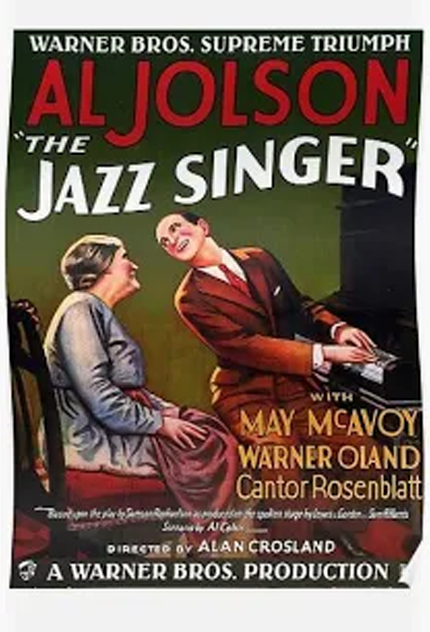
Harry (1881-1958), the eldest and company president, took on the role of protector, ensuring the family business stayed on solid ground. Albert (1884-1967) was Warner Bros.’ treasurer and head of sales and distribution, steering the company through acquisitions and ensuring its survival during the Great Depression. Sam (1888-1927) was the technological genius, responsible for the introduction of sound to film, forever changing the way movies were made and consumed. Ironically, Sam died in 1927, the day before The Jazz Singer, which he had nurtured, premiered.
The youngest, Jack (1892-1978), was the charismatic showman, the driving force behind the studio’s creative endeavors, was instrumental in launching the careers of stars like James Cagney and Bette Davis, and is the villain in the Warner’s fairy tale.
Harry Warner’s granddaughter, Cass Warner Sperling, penned a quasi-tell-all book about her family, Hollywood Be Thy Name. One chapter begins: “‘I’ll get you for this, you son-ofa-bitch!’ Harry Warner, raising a three-foot lead pipe threateningly over his head, chased his younger brother down the streets of the Warners studio lot.”
In the same book, producer and screenwriter Milton Sperling recalls, “Boy did Harry and Jack fight. I spent most of my time on the Warner lot carrying truce flags back and forth between them, just to keep them from tearing the studio apart.”
Jack was a tough and ruthless businessman. He was notorious for his abrasive and domineering personality, and was known to be difficult to work with. He was also accused of mistreating his employees and engaging in unethical business practices, such as double-dealing and price-fixing.
Additionally, he was often at odds with other Hollywood executives, and was involved in several high-profile legal disputes and controversies. All of these factors contributed to his reputation as a disliked and controversial figure in the film industry.
And the fact that he “named names” during the House Un-American Activities Committee hearings that resulted in the Blacklist, gained him no fans in Hollywood.
But the ultimate perfidy was how Jack Warner became president of the studio.
More than in most industries, motion picture studios’ balance sheets vary widely year to year. Warner Bros. was no different; by 1956, the studio was losing money, declining from a net profit of between $2.9 million and $4 million each of the previous three years.
In May 1956, the brothers announced they were putting Warner Bros. up for sale. Jack secretly organized a syndicate, headed by Boston banker Serge Semenenko, which purchased 90 percent of the stock. After the studio was sold, Jack, without informing his brothers, joined Semenenko’s syndicate and bought back all his stock. Shortly after the deal was consummated, Jack, now the company’s largest single stockholder, appointed himself its new president.
According to Lou Lumenick, film critic for the New York Post: “Harry suffered a debilitating stroke shortly afterward, and a furious Albert never spoke to his younger brother again.”
“Jack Warner Jr. reports that when his jovial father visited Harry for the last time at his 50th wedding anniversary party, the ailing old man simply shut his tear-filled eyes to avoid his betrayer.”
“Jack Sr. did not even return to Hollywood for his eldest brother’s funeral, remaining on the French Riviera.”
The family rupture never healed.
Lawsuits and contentious relationships between Jack Warner and his stars were also not uncommon. In 1935, James Cagney sued him for breach of contract; in 1943, Olivia de Havilland brought suit against him for the same thing. In 1948, Bette Davis, Warners’ leading actress, angry with Jack, left the studio, along with others, after completing Beyond the Forest.
Humphrey Bogart and Davis were constantly being put on paid suspension for refusing to appear in what they considered to be low quality movies that the studio wanted to legitimize with their star power.
Sadly, the four brothers who left Poland for America and went from being penniless immigrants to owning one of the largest and most successful motion picture studios in the world, ended their lives in disharmony. One died the day before his biggest triumph while two others become embittered over betrayal by their youngest sibling.
In the Warner Bros. fairy tale, few remember Harry, Albert and Sam; the black knight emerged triumphant.
The four Warner brothers, who created the studio celebrating its centennial this month. The Jazz Singer, the first popular talking film, single-handedly changed motion pictures forever. My Four Years in Germany was a post World War I film that foreshadowed World War II Germany.
This article was written by Martin Cooper, President of Cooper Communications, supervised public relations for the Academy of Motion Picture Arts & Sciences for 10 years. It was published in the Warner Center News in Woodland Hills, California.
It started like most fairy tales…
Once upon a time, there were four Wonsal brothers, Hirsz Mojżesz, Aron, Shmul and Izaak. The first three were born in Krasnosielc, a largely Jewish village north of Warsaw; the youngest was born in Canada.
Their father, Benjamin, fleeing anti-Semitism and economic privation, left Poland in 1888 for Baltimore, changing his name to Warner. The four brothers changed their first names to Harry, Albert, Sam and Jack.
That is just the beginning of the fairy tale of the four Warner Bros.
Sam found a job as a projection operator at an amusement park in Ohio; he soon saw the possibilities of motion pictures. Purchasing a projector and a portable screen, the brothers traveled around Ohio and Pennsylvania, presenting screenings of The Great Train Robbery and other films.
In 1903, they opened their own moving picture theatre, the Bijou (some histories said the theater name was the Cascade), in New Castle, Pennsylvania, and, a few years later, began producing their own films. Like so many others, the lure of Southern California’s weather and its distance from Thomas Edison’s license fee demands that his company be paid a royalty on every film screened, was irresistible.
In 1918, from their new Culver City production facility, they released their first full-length motion picture, My Four Years in Germany; it was the precursor to anti-German and socially conscious films for which Warner Bros. became known during World War II.
The semi-documentary is based on the experiences of the American a m b a s s a d o r to Germany from 1913 to 1917, James W. Gerard. The opening shot sets the tone: A Prussian officer in full regalia sits in his office and looks up at a framed slogan on his wall that reads “Nothing can confer honors and fame upon a Prince except the Sword.”
In a prescient c o m m e n t foretelling the Blitzkrieg of World War II, the German Foreign Minister explains why his country cannot negotiate: “We cannot surrender our greatest asset, sudden and overwhelming assault.”
While the nearly two[1]hour silent film is dated by today’s standards, the Los Angeles Daily Times review of May 21, 1918, included: “My Four Years in Germany is the motion picture of the hour, of the century. It is momentous history, with almost the power and grip of life itself. It will be treasured in our archives. It will mold millions of Americans into heroic stature…”
Made for $50,000, this film grossed a surprising $1.5 million; it was the first hit for the brothers Warner. Its success encouraged them to concentrate on film production rather than distribution and provided the funds for them to purchase a studio in Hollywood.
And so, on April 4, 1923, Warner Brothers Pictures, Inc., was formally established, 100 years ago this month. (Happy centennial birthday, Warner Bros.!)
In 1927, Warner Bros.’ enjoyed a financial windfall from the first talkies: The Jazz Singer, followed by The Singing Fool. If one film can be said to have changed motion pictures more than any other, it would be The Jazz Singer. It cost $422,000 to make and grossed $2.6 million… and put Warner Bros. on the map.
Both films starred Encino resident Al Jolson and provided the studio the funds to buy a majority of First National Pictures.
The year before The Jazz Singer premiered, in 1926, First National purchased 62 acres of farmland in Burbank and built its own studio. As part of its acquisition of First National, Warner Bros. decamped from Hollywood to the First National studio lot, and the San Fernando Valley has been its home ever since.
Under the agreement, Warner Bros. gained access to First National’s chain of affiliated theaters, while First National acquired the rights to use Warner Bros.’ Vitaphone sound system. A number of Warner Bros. films were branded First National Pictures until July 1936, when First National Pictures, Inc., was dissolved. In the decade 1930-1939, Warner Bros. produced more than 575 pictures…a staggering record: many classic hits, many so-so features, and more than a few duds. The studio didn’t shy away from near-salacious titles during this decade: Playing Around, Loose Ankles, She Couldn’t Say No, and The Flirting Widow (1930); The Naughty Flirt, Other Men’s Women, Misbehaving Ladies, The Hot Heiress, and Compromised, (1931); and, in 1932, Street of Women, Ladies They Talk About, and Beauty and the Boss, to name but a few.
Perhaps it’s better to focus on the truly wonderful cinematic offerings the Burbank studio brought forth during the decade, one film per year: The Dawn Patrol (1930); Little Caesar (1931); I Am a Fugitive from a Chain Gang (1932); Lady Killer (1933); Here Comes the Navy (1934); Captain Blood (1935); The Story of Louis Pasteur (1936); The Life of Emile Zola (1937); Jezebel (1938); and Dark Victory (1939).
The fairy tale of the four Warner brothers continued into the following decade.
…And they lived happily ever after (except they didn’t, as we’ll see next month).
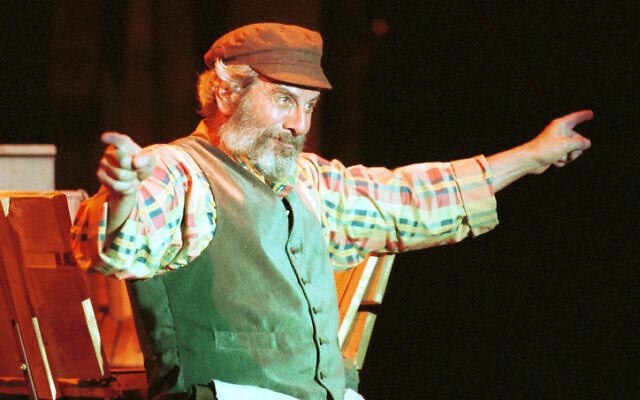
Israeli actor Chaim Topol, known for his iconic role of Tevye in the film “Fiddler on the Roof,” has died at the age of 87.
A cause of death was not revealed, however his son told the Israeli press last year that his father was suffering from Alzheimer’s disease.
Raised in Tel Aviv and revered as a top actor in his native land, Topol appeared in over 30 movies across Israel and the United States. He earned two Golden Globe Awards, one for the role of Tevye in the 1971 film production of “Fiddler on the Roof” – he originated the role on London’s West End in 1967. He was additionally nominated for a Tony Award when he revisited the part in the 1991 Broadway revival.
In 2015, Israel celebrated 67 years of independence, honoring Topol with the Israel Prize for his lifetime achievements.
One year earlier, the University of Haifa gave Topol an honorary degree, recognizing his cultural impact for more than 50 years.
Topol was also a musician, recording several singles and albums. He was featured on the “Fiddler on the Roof” movie album, as well as the London cast album from 1967. One of the songs his character Tevye sings is the notable “If I Was A Rich Man.”
Countless Israeli leaders shared their sorrow for the loss of Topol, acknowledging the legacy he left behind.
Israeli Prime Minister Benjamin Netanyahu said Topol’s “contribution to Israeli culture will continue to exist for generations.” .
Israel’s ceremonial president, Isaac Herzog, said Topol was “one of the most outstanding Israeli actors,” who “filled the movie screens with his presence and above all entered deep into our hearts.”
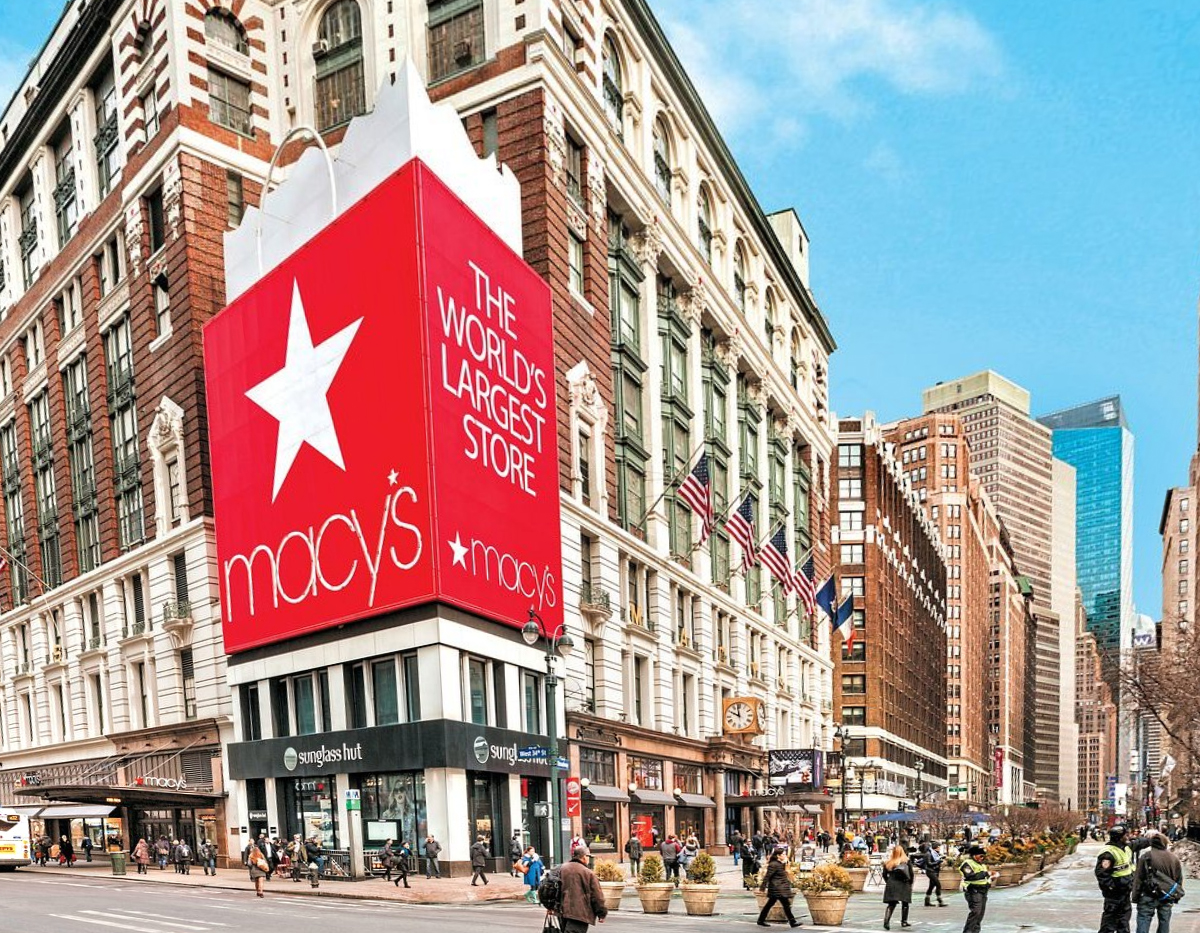
Macy’s has appeared in more than 50 movies and television shows. The store’s debut was in 1906 in the film The Kleptomaniac.Since then, it has appeared in many movies likeAuntie Mame (1958), Thoroughly Modern Millie (1967), Sweet Charity (1969), and more recently Ocean’s Eleven (2001), Shark Tale (2004) and King Kong (2005). Finally, it is probably most famous for its role in the holiday classic, Miracle on 34th Street (1947).
Macy’s Harold Square has achieved fame in the TV world as well. Well known shows like The Wonder Years, Who’s the Boss, Seinfeld, Friends, Desperate Housewives, Ugly Betty, The Biggest Loser, and Project Runway.
Macy’s is also featured in Kanye West’s US version of his music video for the song “Heard ‘Em Say.” Nearly the entire video was filmed inside Macy’s Herald Square. It features West and three children playing inside a closed Macy’s at night.
More than just a retail store, Macy’s has truly become an icon of Manhattan, and even of the United States. This is one shopping spot that cannot be missed during your visit to New York City.
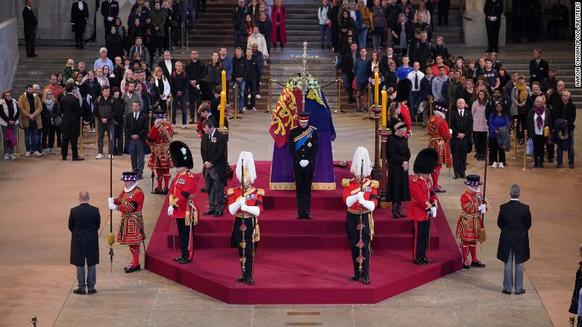
Prince William, Prince Harry and Queen Elizabeth II’s other grandchildren held a vigil at her lying in state on Saturday, as the royal family prepares to bid farewell to the late monarch at her state funeral.
The brothers stood watch for 15 minutes over the Queen’s coffin in Westminster Hall, where it has been displayed to the public since Wednesday.
They were joined by Princess Anne’s children Zara Tindall and Peter Phillips, Prince Andrew’s daughters Princesses Beatrice and Eugenie, and Lady Louise and Viscount Severn, who are the children of Prince Edward. The Earl and Countess of Wessex were present to support their children as Louise and James are comparatively younger than their cousins, a royal source told CNN.
Queen Elizabeth was crowned when Great Britain was a world power. Today the UK is no longer considered a consequential power in the world. What did the queen do to stop the end of GB’s declining power? Nothing. What did the queen stand for in all her years? Nothing. MARY MCNAMARA is correct. This is a soap opera.
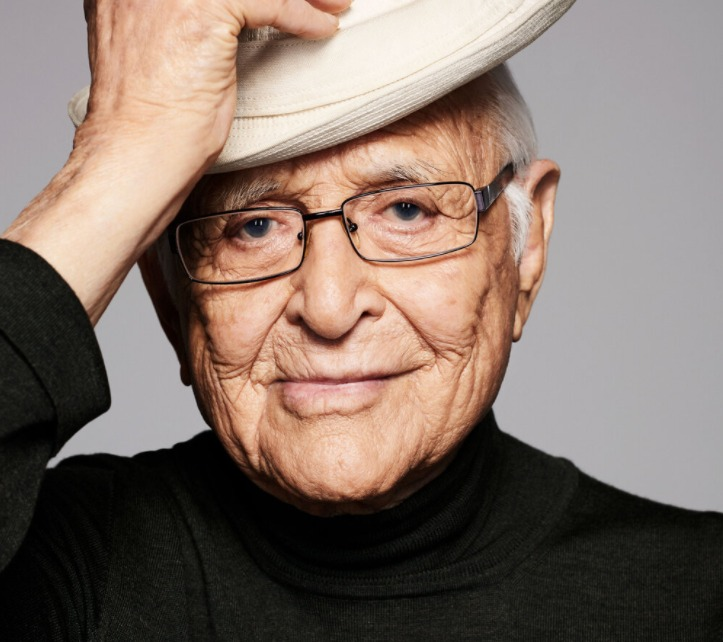
The Legendary Norman Lear Celebrates 100-Years of Life Today!
Norman Lear contributed to our society in a funny entertaining way that is part of American cultural. “All in the Family” is now in repeats on my television.
Born in 1922 in New Haven, Connecticut, Lear attended Emerson College before flying 52 combat missions over Europe during World War II. Upon his return, Norman began a successful career writing and producing programs like The Colgate Comedy Hour, and The Martha Raye Show — ultimately leading to Lear captivating 120 million viewers per week with his iconic shows of the 1970s and ‘80s —
All in the Family, Maude, Sanford and Son, Good Times, The Jeffersons,Mary Hartman, Mary Hartman, One Day at a Time, and The Nancy Walker Show.
As Lear began witnessing the rise of the radical religious right, he put his television career on hold in 1980 to found People For The American Way. Today, the organization is over one million members and activists strong and continues to fight right-wing extremism while defending constitutional values like free expression, religious liberty, equal justice under the law, and the right to meaningfully participate in our democracy.
In 2000, the Norman Lear Center was dedicated at the USC Annenberg School for Communication for the study of entertainment, media and society.
One of the few surviving original copies of the Declaration of Independence was purchased by Lyn and Norman Lear in 2001, and during the decade that followed, they shared it with the American people by touring it to all 50 states through their Declaration of Independence Road Trip. Lear launched Declare Yourself, a nonpartisan youth voter initiative that registered over four million new, young voters in the 2004, 2006, and 2008 elections.
Lear is a 2017 Kennedy Center Honoree; a recipient of the National Medal of Arts in 1999, the Peabody Lifetime Achievement Award in 2016; and a proud member of the inaugural group of inductees to the Television Academy Hall of Fame in 1984. He has won six Primetime Emmys and a Golden Globe. In 2021 the Hollywood Foreign Press Association awarded him the Carol Burnett Award for Achievement in Television. When President Clinton bestowed the National Medal of Arts on Lear in 1999, he noted that “Norman Lear has held up a mirror to American society and changed the way we look at it.”
Norman Lear is married to Lyn Davis Lear, and is the father to six and the grandfather to four.

 Coast Contact