High Fashion Comes to Los Angeles

Actually there are currently 24 Louis Vuitton stores in California.

The “Louis Vuitton Series 2 — Past, Present and Future” exhibition is in Los Angeles from Feb. 6-22. The event showcases a “untraditional interpretation” of Louis Vuitton‘s spring 2015 womenswear collection, according to WWD.  The exhibition is in a reconditioned building in what is called the new gallery center of Hollywood.  There was no cost to see the exhibit.  So my wife and I drove down to see the event.  We parked on Fountain Avenue just a few blocks south of Sunset Boulevard.  It was just two short blocks to the display.

Lead photo

We found what I call the reasoning behind fashion.  It’ all about illusion.  Isn’t that what makeup, and apparel, and how you walk and talk are really all about?  We entered into a dark hall that opened into a mirrored hall that reminded me of a “fun house.”  there were no distortion mirrors but the walls were covered with mirrors from floor to ceiling.  I could not tell whether I was walking into a mirror or down the hall. Then a short well light corridor lead to a second mirrored hall.  The mirrors not only display my likeness but also displayed models on a runway.  Beyond this startling part of the exhibit were room showing how their goods are made, a sample backstage room, and a display of their finest shoes, purses(bags), and jewelry.


Backstage RoomBackstage Room

More Fantasy

More Illusion

Radio Shack and the ever Changing Retail World

Even before the internet became the 21st century shopping mall major store chains saw their demise. The one thing that they all had in common was their inability to remain relevant at the time of their failure. There is no doubt that Amazon, E-bay and other internet sales companies have impacted the retail world but they only hastened those chain store closings. I believe there is more to the story than that.

A July 18, 1997 article in the New York Times offered this explanation for the closing of Woolworth’s 400 remaining five-and-dime stores. “Among discount stores, Woolworth is only the last, if the most prominent, victim of larger and stronger competitors like Wal-Mart and Target, which offer more selection, quicker checkout and often lower prices.”

Sol and Robert Price raise $2.5 million from friends and family to open Price Club on July 12th 1976. That was the start of a new wave of warehouse stores that offer limited selection but dramatically lower prices. Part of their success was their ability to negotiate long terms for payment of the merchandise that enabled them to obtain the money to re-pay manufacturers after the goods were sold to their member consumers. Costco’s year to date total return is already 8.43%. Last year’s total return was over 35%. That company has a web site but drop by their stores on a weekend and finding a parking space is a chore.

The latest big chain to enter bankruptcy is Radio Shack. I remember when the chain was known as Allied Radio Shack and its primary goal was serving electronic hobbyists. The chain expanded far beyond that formula and that was its mistake. The chain did not adopt a new formula. Their prices are high and their mix of goods is unimpressive. I am amazed they have survived. “Two brothers open the first “Radio Shack” in Boston, a small retail and mail-order business supplying ship radio equipment and “ham” radios” according to a Radio Shack website.

Sadly Sears will probably follow Montgomery-Ward into a fond memory. The just don’t appeal to the current expectations of retail consumers.

Technology is Impacting our Buying Habits

Say Goodbye to Shopping Malls

America, no the entire world, is experiencing a dramatic change in the retail industry. It is very apparent in the United States. Americans are not shopping at malls as much as they have in past years. Macy’s department stores is planning to close 14 of their 800 locations in 2015. That is a company that has been a success. JC Penney plans another 40 closings in 2015. Wet Seal has announced it is closing 2/3 of their stores in 2015.

BloombergBusinessweek says “While malls stumble, mobile shopping is expected to grow 800% through 2015.”

In 2014 a long list of stores were closed. That includes 339 Sears, 170 Staples, 150 Office Depot, and 33 JC Penney. Not the only reason but a major cause has been on line sales. Many of the stores themselves have opened sales web sites.

Amazon has played a prominent role in the structural shift away from brick-and-mortar retail, and it may lay waste to several other retailers in the years to come. Without the cost burden of physical stores, Amazon can price below traditional rivals and drive recurring traffic online. But it is not the only on line business that has changed the retail climate. eBay, Etsy, are just the two other on-line businesses that I know. Want to buy anything from Hewlett Packard? They sell all of their computers, printers, and supplies on line. Meanwhile Alibaba (the Amazon knockoff) is booming in China.

While I still shop at Costco and they have seen their sales increase, they too sell many of their products on line.

Sorry old timers, this is all part of the 21st century.

2015

Happy Face 

Happy New Year!!

The New Year could be one of the best for Americans. There are many indicators to support this forecast. That would not include Nouriel Roubini. He has a history of negative forecasts so I wouldn’t pay attention to him.

Beaconomics forecasts Incomes, Consumer Spending on the Rise: As job growth continues, worker incomes are expected to expand in 2015, something that will keep consumer spending growing and encourage those who have dropped out of the workforce to re-enter.

The GDP for the third quarter of 2014 initially reported growth of 3.5% and subsequently has raised that number to 5%. Unemployment is now reported at 5.8% which is not great but is definitely going in the right direction. The stock market has set new records this year and is now at a new high that won’t help everyone but will motivate people to spend and perhaps hire more people.  Gasoline is at unbelieveably low prices.

Goldman Sachs’s chief economist Jan Hatzius just published answers to what he believes are the eight top questions for next year.

Here’s a list of the questions asked by Business Insider and a quick summaries of his thoughts:

  1. Will the US economy continue to grow above trend? Yes. Domestic strength should offset weakness from other economies.
  2. Will the dollar appreciation weigh on growth? Yes, but it’s manageable in the short term because of lower oil prices.
  3. Will the housing recovery accelerate? Yes, especially in the single-family sector. Household formation should improve as young adults move out of their parents’ homes.
  4. Will consumer spending growth accelerate? Yes, as real disposable income increases because of lower oil prices.
  5. Will capital spending growth accelerate further? No. Business capital spending does not look depressed relative to the long-term fundamentals and the decline in oil prices is likely to take a toll on energy sector.
  6. Will wage growth move into the 3%-4% range identified by Chair Yellen as “normal”? No. There’s still slack in the labor market as measured by the U6 underemployment rate.
  7. Will core inflation rise toward the Fed’s 2% target?No. The dollar is strong, wage growth is low, and depressed oil prices should have a negative impact.
  8. Will the Fed hike rates by the June FOMC meeting? No, because inflation probably won’t hit the 2% target. “Based on our below-consensus forecasts for wage and price inflation we expect the first funds rate hike to occur after June 2015; our base case is September,” Hatzius said.

So in summary, the US economy will grow together with the dollar, faster than its global peers. But inflation below the Fed’s target will push its rate hike back to at least September, and the impact of lower oil prices will continue to be felt throughout the economy.

Read more: http://www.businessinsider.com/jan-hatzius-top-questions-for-2015-2014-12#ixzz3NFdpC9as

California Bullet Train is a Path to the Future

Driving from San Francisco to Los Angeles is a dreary six hour experience. Most people travel inland to use Interstate 5. It is a straight and boring ride. In the summer the heat in the Central Valley and the drive to the top of the Tehachapi Mountains (called the Grape Vine) causes many cars to overheat. The drive from Los Angeles does not include the steep climb but isn’t any fun either.

Today the flight from Los Angeles International Airport (LAX) to San Francisco International Airport takes about 1½ hours.  Airplane seats are narrow, poorly padded, and there is no leg room.  The time for check in and clearance through security is about 1½ hours. American Airlines recommends check in “At least 90 minutes prior to departure when checking bags.” Travel to LAX is about 1½ hours. Thus a 1½ hour flight requires 4½ hours. The flight costs $124.00 round trip. Currently the travel time by rail is about 12 3/4 hours.   Obviously train travel is not acceptable to most people as the train does not actually go into San Francisco. The last leg of the trip is a bus ride from Emeryville across San Francisco Bay.

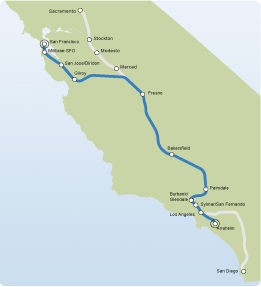
The Bullet Train project plans that by 2029 the system will run from San Francisco to the Los Angeles basin in under three hours at speeds capable of over 200 miles per hour. If the train cost is competitive with air travel we will see a new era for travel. We will be able to reach the center of each city without a special effort. The airlines will cut their fares to continue drawing patrons.

Despite the naysayers, I believe Governor Jerry Brown is correct in perusing this project.

CA Bullet Train Map

The United States is Home to Millionaires

This is one topic that will not be discussed in the campaign for president in 2016. The U.S.A. is a home for millionaires. There are more in this country than any other nation in the world. The opportunity to become a millionaire is the reason so many people look for every way to enter this nation.

The Boston Consulting Group (BCG) posted this interesting article about wealth in the world this past June titled “Global Wealth 2014: Riding a Wave of Growth.”

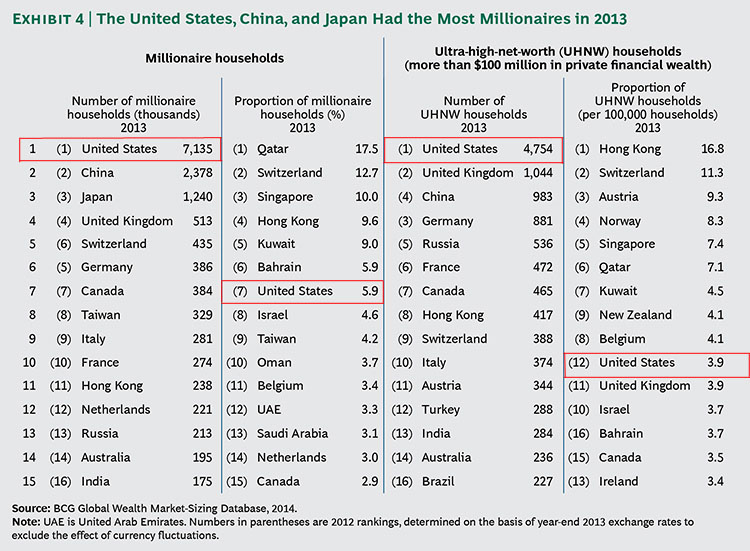
Even as the income discrepancy between the average American and the top income earners has become more extreme the number of millionaires around the world has risen to new heights the numbers of millionaires in the United States has grown even more. BCG states: “As the debate over the global polarization of wealth rages on, one thing is certain: more people are becoming wealthy. The total number of millionaire households (in U.S. dollar terms) reached 16.3 million in 2013, up strongly from 13.7 million in 2012 and representing 1.1 percent of all households globally.”

MIllionaires Chart

The number of millionaires in the United States exceeds the total of the next 13 nations combined with 7,135. Among the ultra-rich (families with $100 million in wealth) shown in the third column above, once again the United States has more than four times as many as the next nation (United Kingdom).

The inflow of immigrants to the United States isn’t just the poor. The wealthy are doing their very best to grab a piece of the American pie. Businessweek had an article in the October 20-26 issue about Arcadia, California – a suburban community of Los Angeles that has been inundated with wealthy Chinese buying homes and building mansions there.

Arcadia CA

There is a possibility that you can be a millionaire in the United States. It’s easier than almost any other country in the world. So that’s why we won’t be changing the laws pertaining to millionaires. We won’t penalize you for becoming one too! It is what makes America great. It’s everyone’s goal. You don’t have to know anyone to make it happen. Anyone can be the next Steve Jobs, Bill Gates, or Sara Blakley.

The Gap Between the Wealthy and the Middle Class

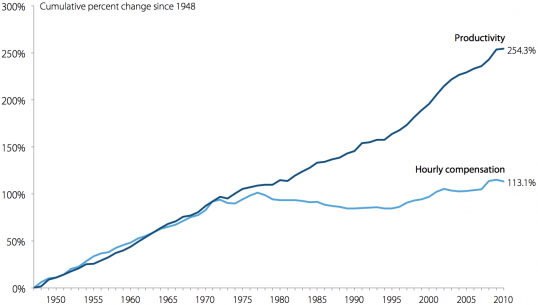
The political parties have missed the primary message of the November 4 election. There was a poor turnout because neither party addressed the issue that most Americans care about. My opinion: A growing economy ought to be the primary target for both parties.   The graph below developed by the Economic Policy Institute shows increased productivity without increased remuneration but the EPI discussion does not offer any evaluation as to cause. They leave the evaluation to others. Those others are the commentators and economists who just might have a political agenda.

Real Hourly Growth

My take: Higher productivity is not the outcome of employees working harder or smarter. It is the result of new technologies. Those technologies are the consequence of new tools and new software. Those technologies lower the needed manpower. A good example is the elimination of ticket takers/payment clerks as you leave a parking structure. They are now being replaced with automated systems. Those same systems will eliminate order takers at McDonald’s, etc. Those technologies enable machine shops to complete projects faster with less scrap and higher quality.

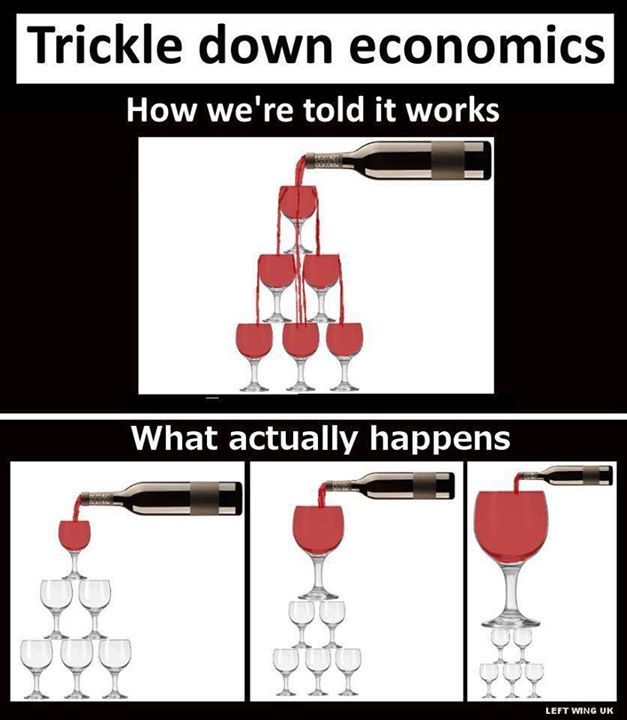
What will we do with all the people who no longer have jobs? That is the question that politicians can’t answer. Those illegal aliens? Their jobs are on the line too. Capitalism in a free enterprise society translates to hiring the least expensive labor. Of course politicians don’t want to talk to the electorate about this issue.

Is the solution more subsidies and aid for the “middle class”? That appears to be the only solution today. Neither political party wants to admit we have a problem with no apparent solution.

Do not expect anyone running for president in 2016 to say anything about this issue. You will hear discussion on illegal immigration, Russian threats to Eastern Europe, the challenges in Middle Eastern Islamic nations (no boots on the ground), and of course Obama Care. No one will be talking about the gap between the wealthy and the middle class. I hope I am wrong.

Cancer Research, Cures, and Making Money

AbigailNabbyAdams Smith (July 14, 1765 – August 15, 1813) was the firstborn of Abigail and John Adams, founding father and second President of the United States.

In 1810, Nabby was diagnosed with breast cancer, followed by a mastectomy in 1811. … The cancer continued to spread throughout her body, and she died, aged 48. That was 200 years ago.

ABCNews.com says that $415 Million is spent annually by Medicare for the treatment of breast cancer.

Total average Medicare spending per patient for initial phase care of breast cancer (2 months prediagnosis–365 days postdiagnosis) was $21,000 (2002 US$) in 2002 (Figure 2).4 Surgery and radiation cost little on a per-patient basis: $5700 and $4500 (2002 US$), respectively, and were used in 91% and 51% of patients, respectively. In contrast, chemotherapy and other inpatient services were used in about 25% of patients, but at a higher per patient cost ($12,800 [2002 US$]). If the data used for this analysis were expanded to include continuing care and end-of-life care, there would be a marked difference in spending patterns. The United States spent an estimated $62,900 to $94,300 per person for end-of-life breast cancer care during 2010 – See more at: http://www.ajmc.com/publications/evidence-based-oncology/2012/2012-2-vol18-n1/the-economics-of-cancer-care-in-the-united-states-how-much-do-we-spend-and-how-can-we-spend-it-better#sthash.BSrLsaip.dpuf.

So millions of dollars are spent treating people with this horrible disease. Billions more are spent on research for a cure. The National Cancer Institute’s (NCI) budget for FY 2013 was approximately $4.8 billion. Overall, NCI’s budget has been relatively flat in recent years. During the period from 2005 through 2013, the NCI budget averaged $4.9 billion per year.

Lots of people making lots of money.   

How dare I suggest this thought? Isn’t cancer cures and cancer research an industry that makes large amounts of money? Lesley Stahl on 60 Minutes discovers the shock and anxiety of a cancer diagnosis can be followed by a second jolt: the astronomical price of cancer drugs.


If you had a cure for just one of those cancers, breast cancer, how many people would need to find another job?  How many companies would be earning less money?

Women Shouldn’t Ask for Raises?

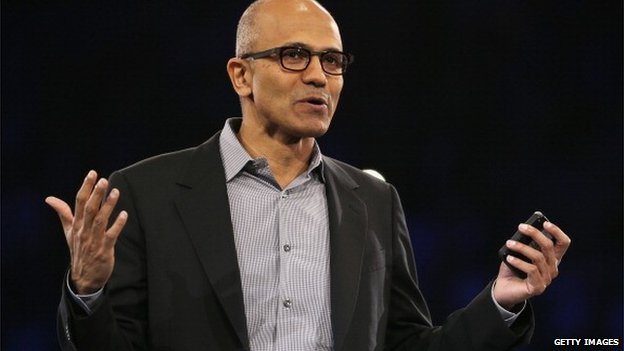
Satya Nadella, CEO of Microsoft

The boss of Microsoft, Satya Nadella, has apologised for remarks he made advising women not to ask for a pay rise but to have “faith in the system”.

Could you imagine Bill Gates, founder of Microsoft, saying these things?

Microsoft Chief Executive Satya Nadella issued an apology Thursday evening to all company employees following the backlash he received for comments he made about women asking for raises.

Nadella was a featured speaker at a Phoenix conference for thousands of women professionals in computing when he was asked what advice he would give to women who aren’t comfortable asking for a raise.

“It’s not really about asking for the raise, but knowing and having faith that this system will actually give you the right raises as you go along,” Nadella told the moderator, Maria Klawe, in front of the gathering of women engineers. Nadella went on to say that women who don’t ask for raises have an “additional superpower … because that’s good karma, it’ll come back.”

Klawe, a computer scientist and Microsoft board member, immediately shot back, “This is one of the very few things I disagree with you on,” and was applauded by audience members.

The CEO’s response received blowback almost immediately. “Does this mean Microsoft is developing karma currency to pay your bills?” Twitter user Jame Ervin wrote. “Waiting for karma to solve wage gap.”

“I sort of doubt that Satya Nadella got to be CEO by trusting in karmic ‘super powers,’” Twitter user Scott Starr wrote.

Shortly after his speech, Nadella tweeted that he “was inarticulate” about how women should ask for raises. He added that the tech industry needs to close the gender pay gap “so a raise is not needed because of bias.”

Thursday night, he issued a formal apology via email: “I answered that question completely wrong,” Nadella wrote. “I believe men and women should get equal pay for equal work. And when it comes to career advice on getting a raise when you think it’s deserved, Maria’s advice was the right advice. If you think you deserve a raise, you should just ask.”

Copyright © 2014, Los Angeles Times

Erin Burnett on her CCN Out Front program interviewed Susie Orman about the outspoken Nadella.  Obviously Orman condemned the Nadella statement.  Others that could be interviewed would be Meg Whitman, Sarah Palin, and Hillary Clinton.  Do you suppose any of them would be talking about karma ‘super powers?’

Nadella seemed to recognize his mistake, later walking back his comments through Twitter:

Satya Nadella         @satyanadella

Was inarticulate re how women should ask for raise. Our industry must close gender pay gap so a raise is not needed because of a bias


What can you expect from a man who comes from a country where rape is common place and mistreatment of women is the norm?