Saying Goodbye to the Middle Class

In 1914, Henry Ford started an industrial revolution by more than doubling wages to $5 a day—a move that helped build the U.S. middle class and the modern economy. After World War II the return of the GIs and the benefits they received prompted an educated society that wanted homes and cars.   Union jobs with good benefits along with little competition from other nations made the United States into an industrial power house that lasted for decades.

Then big business realized that there was an opportunity to save money by outsourcing the manufacture of the things we buy.  The government accommodated those businesses by negotiating free trade agreements with many nations.  Communications with the entire world became easier and cheaper.

People in the poorest nations of the world could be trained to operate the machines that made things Americans want to buy.  They would work for one fourth the rate of pay or less than American workers.

Today my computer, television, home theater, camera, and my clothes are all made in another country.  The people who used to make those things are now either unemployed or working in low paid service jobs (tourism, retail, fast food, and other jobs that pay less than $15 an hour).  The middle management jobs are now part of those outsourced functions.  Call the help line for Earthlink or Hewlett-Packard and you will be speaking to someone in India or the Philippines.

“A middle-age middle manager who was laid off is not going to be miraculously rehired in that position or anything like it. Same with the factory worker and the receptionist and the copy editor. They’re finished. Many of the people who held those positions have already pulled out of the workforce and others are moving into different jobs (often at lower pay levels)” writes Mark Lacter on LA Observed.

Do not look for Congress or any government agency to solve this problem.  They have no solutions.

Those desperate people who have taken jobs that pay half of what they previously earned are no longer part of the middle class.  Those that have not obtained any job at this point are living on their accumulated wealth.  Neither of those groups will be spending money as they had in the past.  Thus the bifurcated economy of the wealthy and the poor.  This means the end of the middle class in America.  That is the big picture.
Companies that Benefit from War

A Review of an Aug 28, 2013 post. Look at all the money those war material manufacturers will be making. Is this Obama’s job stimulus program? Green is for m-o-n-e-y.


It was no surprise that the stock market dropped yesterday.  A 1.59% drop in one day on the S&P 500.  After all the threat of the United States at war in Syria could have an additional impact on our country.  Most likely it will impact every country as the cost of oil and other commodities increases.

Then today the stock markets in the United   States have risen by .3%.  How can that be? Why would the stock market rise when the threat of war is still so prominent?

MSN Money seems to have the answer. “Sales for the world’s 100 largest arms producers amounted to $411 billion in 2010, according to the Stockholm International Peace Research Institute. That was up 1% from the year before, a modest rise that was held in check by the drawdown of foreign forces in Iraq.”

The top ten listed below.

United Technologies

  • Arms sales in 2010 $11.4 billion

L-3 Communication

  • Arms sales in 2010 $13.1 billion

Finmeccanica

  •  Arms sales in 2010 $14.4 billion

EADS

  •  Arms sales in 2010 $16.4 billion

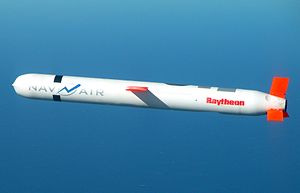
Raytheon

Tomahawk_300px_Block_IV_cruise_missile_-crop

Arms sales in 2010 $23 billion.

  • Raytheon’s web site says, “The combat-proven Tomahawk is the world’s  most capable cruise missile and is ideally suited for critical long-range, precision-strike missions against high-value with minimal collateral damage.”
  • Arms sales as percent of total revenue: 91%.
  • Total Number of Employees: 72,400.

 General Dynamics

  • Arms sales in 2010 $23.9 billion

Northrop Grumman

  • Arms sales in 2010 $28.2 billion

Boeing

  • Arms sales in 2010 $31.4 billion

BAE Systems

  • Arms sales in 2010 $32.9 billion

Lockheed Martin

  • Arms sales in 2010 $35.7 billion
  • Among Lockheed’s major products are the Trident missile and the F-16 and F-22 fighter jets.
  • Arms sales as percent of total revenue: 78%

Is this the impact of the Military–industrial complex?

Microsoft Beyond the PC

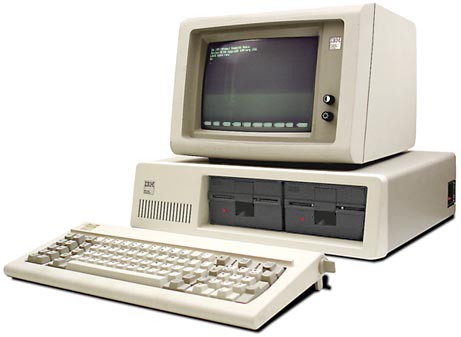
IBM PC I have had a Microsoft based computer since the first clones were being built.  I had a 5 ¼” two floppy disk machine using the first MS operating system MS-DOS 1.1

In the 1980s and 1990s Microsoft overwhelmed all competitors in computer technology.  Between their operating system and Office products there were none that could compare.  By focusing on software only they enrolled hardware manufacturers to adopt their vision.  Thus, hardware company after company joined in to a vision of spreading the use of computers to both home users and businesses.  They succeeded.  From banks to law offices to manufacturing everyone converted their systems from manual to computers.

Then Google came along in 1996 and the domain google.com was registered on September 15, 1997. They formally incorporated their company, Google Inc., on September 4, 1998 at a friend’s garage.  Search engines existed before founders Larry Page and Sergey Brin had hit upon a name that was an instant success.  Their Algorithms made them the dominate force.  I remember being told to use Google in the year 2000 for answers to my questions.  Early companies such as Lycos, Altavista, and WebCrawler were lost in the dust.

Google went on to acquire YouTube and develop the Android operating system for smart phones that is now used in more phones than any other.

Where was Microsoft while the world was changing?  Nowhere to be seen.

Bing, Microsoft’s search engine, did not appear until 2009.  Microsoft’s touch panel operating system for smartphones, dubbed Windows 8, was released to manufacturing on August 1, 2012, and was released for general availability on October 26, 2012.  Neither of these systems has been a hit.  In fact tech radio host Leo Laporte has advised his listeners to find PCs with Windows 7 operating systems if you are in the market for a new computer.

So is it any wonder that Steve Balmer, CEO of Microsoft, will be leaving the company within the next 12 months?  At 57 years old, he is not ready to retire.  Although not said publicly, it is a sure bet that the Microsoft board has asked for his resignation.

Given the lead that Apple and Google have in the smart phone arena it is hard to imagine how Microsoft can regain its lead.

Objections to Keystone XL Pipeline

11-18-2014: The number one issue in America is a growing economy. That means more good jobs. The president is WRONG on this issue. Perhaps today’s vote in the Senate will change his opinion.

Oil Pipeline GraphicA quick review.  This is the proposed oil pipeline from Hardisty, Alberta, Canada to Houston, Texas and Port Arthur, Texas.

It now appears that the U.S. State Department sees no objection to approving the project.  However, the U.S. Interior Department warns of possible harm to wildlife.  Activists are primarily concerned with the possibility of oil spills.

Interestingly there is already a pipeline from Hardisty, Alberta to Cushing, Oklahoma.  While the reports of oil spills from that pipeline are rare there has been little in the news that confirms that fact.

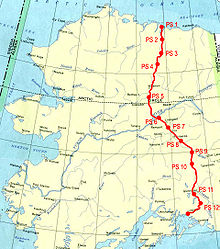
Furthermore the Trans-Alaska oil pipeline, 800 miles long, had its largest oil spill involving the main pipeline on February 15, 1978, when an unknown individual blew a 1-inch (2.54-centimeter) hole in it at Steele Creek, just east of Fairbanks.  Approximately 16,000 barrels of oil leaked out of the hole before the pipeline was shut down.  Criminal mischief has been the primary cause of leaks.  There are no reports of impact on wildlife.

Trans_alaska_pipelineThe oil companies injected billions of dollars into the Alaska economy during the construction effort and the years afterward.

Of course environmentalists don’t want to hear the facts.

We are spying on You

The price of modern technology.

Try researching for a new car, a television, a camera, or a new home theater system.  The result is that within hours there will be advertising popping up on your smartphone or computer  for that very same product.

Just yesterday I was researching for a new home theater system.  Today I saw multiple ads for those systems across the top of my screen and just below the Google search window.  Six months ago I was searching for a new camera bag.  There were multiple offers for bags from different retailers.

Adam Levin blogs on Huffington Post that there are 9 Household Items That Could Be Spying on You.

Which of these do you have in your house?

  • Your television (thanks to the internet)
  • Your Cable Box (your provider knows what you ar watching)
  • Your Dishwasher, Clothes Dryer, Toaster, Clock Radio and Remote Control (thanks to smartphone interface)
  • Your Lights (thanks to the power  company’s new monitoring system)
  • Your Heat an A/C (thanks to The Nest thermostat that tracks homeowners’ heat and air-conditioning habits)
  •  Security alarms (those services know when you’re not at home)
  • Insulin Pumps and Pacemakers (White Hat hacker Barnaby Jack proved he could kill a diabetic person from 300 feet away by ordering an insulin pump to deliver fatal doses of insulin. This summer he announced he could hack pacemakers and implanted defibrillators)
  • Smartphones (that same technology that provides mapping directions also tells those with access where you are)

The Value of Blockerbuster Mergers

There is a value to mergers.  They make companies larger and more powerful.  The likely outcome is more revenue and higher net income.  It is a share holders dream.

Historically the United States has taken the position that large mega companies that control an industry are not in the best interest of America.  The Sherman Antitrust Act was passed into law July 2, 1890.  The purpose was to prohibit monopolies.  The most infamous of the trusts was the Standard Oil Trust, which was formed in January, 1882. At that time, Standard Oil and its affiliates controlled more than 90 percent of the oil refining capacity and most of the oil marketing facilities in the U.S.  The trusts came to dominate a number of major industries, and were, in effect, monopolies.

This ground breaking piece of legislation was the result of intense public opposition to the concentration of economic power in large corporations and in combinations of business concerns (i.e., trusts) that had been taking place in the U.S. in the decades following the Civil War. Opposition to the trusts was particularly strong among farmers, who protested the high charges for transporting their products to the cities by railroad.

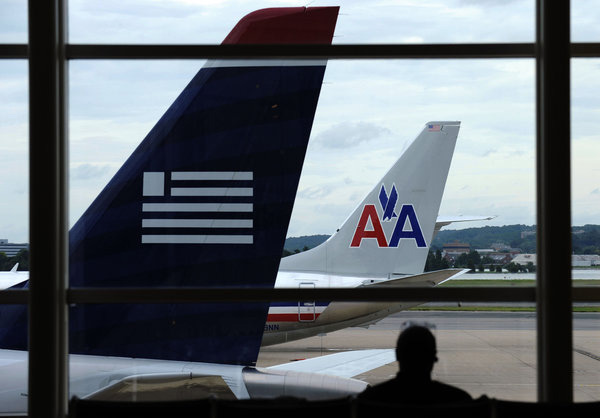
American Airlines & US Airways planes at Washington's Ronald Reagan National Airport
american airlines-us-airways-planes-at-washington’s-ronald-reagan-national-airport

So what do you suppose would happen if most of the airlines were consolidated into one carrier?  There would be no reason to control the charges that the airline could impose.  Even now the number of airlines has declined in the United States. There were nine major national airlines as recently as 2005, but only five remain today. American Airlines has acquired four other air carriers since 1971.  The largest was TWA in 2001.

Continental Airlines merged with United Airlines 2010 to 2012.  They retained the United Airlines name.

Between 2008 and 2010 Delta Airlines absorbed Northwest Airlines.

See a more complete list here.

What has happened to the cost of flying?  The airlines have added numerous fees to hide the increased cost of air travel.  Now there is a fee to check a bag.  A fee for food (even chips or soft drink).  Want to watch a movie?  There is a fee.  Some airlines are even charging extra for aisle seats.

 So what do you expect the fares to be once this merger is completed? The average cost of a roundtrip domestic ticket — including baggage and reservation change fees — grew to $378.62 last year, up from $351.48 in 2008, when adjusted for inflation according to a report from the Associated Press.

Just imagine the cost of other items if there was little or no competition.  Bank fees have increased simply because there is less competition.  AT&T and Verizon dominate the telecommunications industry just as Time Warner and Comcast dominate the television service industry.

The justice department is finally stepping forward to protect consumers.  Let’s hope this is the first of many more actions to protect consumer interests.

Alex Rodriguez and the Sports Drug Culture

Alex RodriguezBarry Bonds was a sports hero but he has not played baseball since 2007.  He holds many baseball records.  He was charged with using performance enhancing steroids.  He has been accused of using those steroids as early as 2000.

Bonds is not the only sports figure accused of using performance drugs. Lance Armstrong, winner of the Tour de France seven times.  He does not deny using drugs.

There is little point in listing all of the sports personalities who have been accused of using drugs.  The issue is winning and making big money.

Money is the driving force.  Owners of professional teams are aware that there is the use of drugs.  It is not a new occurrence.  This has been happening for many years.

So what is new about the Alex Rodriquez suspension?  He is quoted as saying, “I am disappointed with the penalty and intend to appeal and fight this through the process.”  No denial!  The Yankees?  They are permitting him to play tonight.

You want me to attend baseball games?  You want me to support drug use?

Shame on the players.  Shame on the owners.

Multi Level Marketing – The Big Scam

Pyramid of People

Those involved or in the know call these businesses MLM.  Three of the best known companies are Amway, Herbal Life and Mary Kay Cosmetics.

It’s all based on hope!  The people at the top do make a lot of money.  Despite what the Federal Trade Commission says MLMs are pyramid schemes where the people at the bottom make little or nothing.  MLMs grow primarily through recruitment of new sales people.

Multilevel marketing (MLM) companies employ a network of independent salespeople who sell products directly to people in their community. These salespeople earn income based on their personal sales, as well as the sales of people they recruit to work for the company.  The Federal Trade Commission says that a company only qualifies as a pyramid scheme if its salespeople are paid primarily on the basis of recruitment, as opposed to the sale of a retail product or service.

In 2011, about 25% of Herbalife’s salespeople achieved so-called “leader status,” qualifying them for commission checks. Of these top sellers, active leaders received a median annual income of $637. Meanwhile, the top 0.6% had a median compensation of $336,901, according to company filings.

Primerica Life, a life insurance company, has used a different twist to the MLM business plan.  Each year about 200,000 people pay $99 to be a Primerica agent.  The promise is that you can earn $100,000 per year.  About four people per month have achieved that goal out of the 15,000 who pay the membership fee each month.  The catch is that fewer than 20% pass the licensing exam.  They do not receive a refund of the $99.

Sources for this piece are Businessweek June 30, 2013 and http://money.cnn.com/2013/01/09/pf/multilevel-marketing-industry/index.html

LA Observed

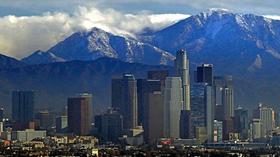
Los Angeles, California #2Los Angeles is a busy city.  Not only does 40 % of all imports to the USA enter the country through the Los Angeles-Long Beach ports but this is the city that brings entertainment to the world.  This is the place where all the stars shine.  LA Observed offers links and information in a concise package.  The link is on the right.  For now just click here.

U.S. Companies with Foreign Ownership

Do you really care?

This item all started when Tesco PLC, a British company, announced it is planning to close its Fresh and Easy convenience markets located in many cities throughout the United   States.  One of the potential buyers is Trader Joe’s.  As it happens Trader Joe’s is owned by another foreign company, ALDI Einkauf GmbH & Co. oHG, a German company.

Everyone wants a piece of the American pie.  Bayer Aspirin is German.  Nestle is a Swiss company selling chocolate to water.  Royal Dutch Shell is the owner of Shell Oil, Philips Lighting (various light bulbs found in Lowe’s and Home Depot) is owned by Koninklijke Philips NV, a Dutch company, and Westfield shopping malls are owned by The Westfield Group an Australian conglomoerate.

Henan Shuanghui Investment & Development Co., China’s largest meat processing enterprise, will now be the parent company of brands like Armour, Farmland and Healthy Ones all thanks to the purchase of Smithfield Ham.

Others:

BEN & JERRY’S Unilever, the British/Dutch   company
GERBER Novartis, Swiss pharmaceutical   company
PURINA Nestle, a Swiss company
ALKA-SELTZER Bayer, a German pharmaceutical   company
JOHN HANCOCK LIFE INSURANCE Manulife Financial, a Canadian   insurance company
IBM THINKPAD Lenovo, a Chinese company
TD AMERITRADE Toronto Dominion Bank, a   Canadian company
BUDWEISER InBev, a   Belgian company


Learn more by reading the packages of the products you buy!