This is wonderful! Watch this YouTube video to learn some astonishing facts about this country that only has 7 million residents!
Happy New Year!
David Bancroft
This is wonderful! Watch this YouTube video to learn some astonishing facts about this country that only has 7 million residents!
Happy New Year!
David Bancroft
Work resumed today, Wednesday, at the nation’s busiest port complex after a crippling strike was settled, ending an eight-day walk-off that affected thousands of jobs and billions of dollars in cargo.
Is everybody Happy? Today the answer is YES but the future is looking bleak for these import facilities. This is a serious situation for the 10,000 dock workers.
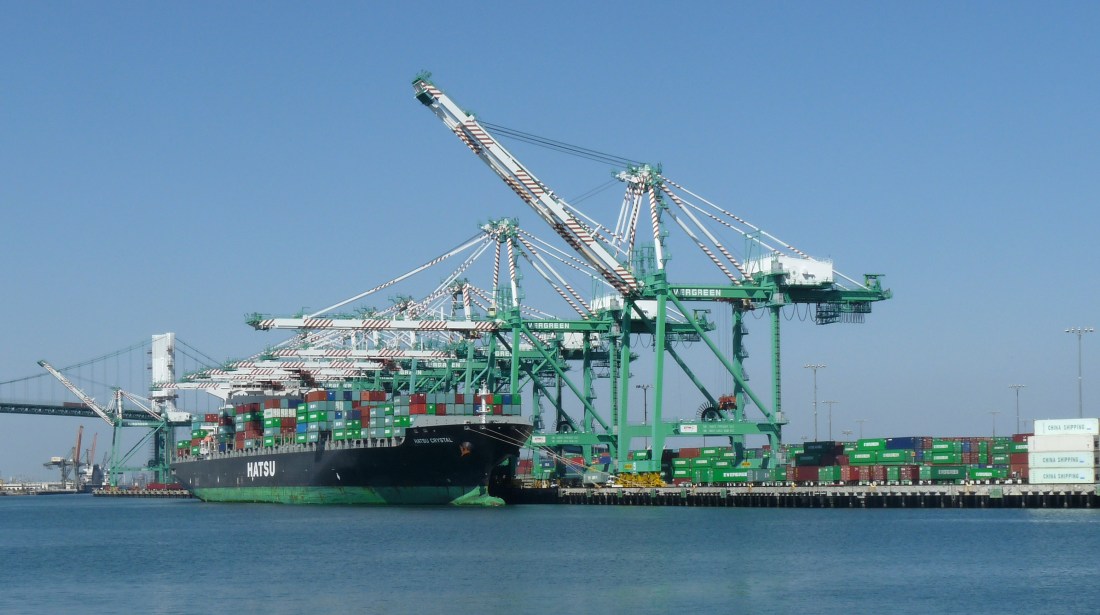
Los Angles cargo terminal, photo taken on April 29, 2011 at 2:30PM . 1/50 second at f7.1 using Panasonic DMC FZ28 camera. The sky was that blue and cloud free. The sea was that blue. Hey, It’s Los Angeles!
The immediate effect was the redirection of ships to other ports. One of those ports is Ensenada, Mexico. Ensenada is in Baja California lying 125 kilometers (78 mi) south of San Diego on the Baja California Peninsula. With a population of more than 279,000 people a major part of its economy depends upon tourism. It also has a deep water port for commercial shipping that received more than 3 million metric tons of freight in 2010. When cargo is unloaded in Ensenada it is not done using unionized workers. Truckers are not unionized. When the goods are transported into the USA there are no tariffs thanks to NAFTA. So why won’t some shipping companies continue to use Ensenada rather than the Los Angeles area ports now that the ships have been diverted?
Currently Hyundai makes shipboard cargo containers and truck trailers at its nearby Tijuana plant, and two other Korean conglomerates–Samsung and Daewoo–make TVs and other electronic products at plants in Tijuana and San Luis Rio Colorado near Yuma, Arizona. Daewoo and Samsung have announced plans to expand their manufacturing operations in Baja California, and Hyundai has told the Mexican delegation that it is mulling the possibility of building a steel plant in Mexico.
I am guessing that ever more business will not be returning to the California ports.
There is another more serious threat to the Los Angeles-Long Beach port facilities. The Panama Canal Overhaul. When completed some of the largest ships in the world will be able to traverse the canal. The canal’s new set of locks will allow a ship with a 160-foot beam to pass with ease. The current canal can accommodate only ships that are no more than 106 feet wide and 965 fee long. Some of the largest ships in this category, with containers stacked seven-deep on their decks, look like they’re barely able to squeeze through today’s locks. Currently vessels traversing the canal can carry a maximum of 5,000 20-foot containers. With the new locks completed the canal will be able to handle ships three football fields long that hold 13,000 containers.
The result of the enlarged canal locks will mean ships from China, Japan and other Asian nations can more easily set their destination on the Atlantic and Gulf costs of the United States. When those Panama Canal improvements have been completed who will be shipping their cargo to California?
You don’t have to be Jewish to appreciate this video but it helps. There are great Jewish delicatessens wherever there is a large Jewish population. So it’s not just NYC. Think Chicago, Philadelphia, Seattle, Los Angeles, Vancouver, Winnipeg, Toronto, and Montreal.
Here in Los Angeles we have Langer’s, Canter’s, Jerry’s Famous, Brent’s, Junior’s, Factor’s, etc. etc. etc. My favorite is Brent’s.
You don’t have to be Jewish to love the food!
Deli Man Trailer from Erik Anjou on Vimeo.

Why is this man smiling? He is the richest person in the world. Carlos Slim.
Details are on bloomberg.com. Here is the summary list of the top 30 and few other well-known people and number 200.
Net worth: $77.5 billion
YTD change: + $15.6 billion / + 25.3%
Source of wealth: America Movil
Industry: Telecommunications
Citizenship: Mexico
Age: 72
Net worth: $64.4 billion
YTD change: + $8.7 billion / + 15.7%
Source of wealth: Microsoft
Industry: Technology
Citizenship: U.S.
Age: 57
Net worth: $53.6 billion
YTD change: + $18.4 billion / + 52.1%
Source of wealth: Inditex
Industry: Retail
Citizenship: Spain
Age: 76
Net worth: $48.4 billion
YTD change: + $5.7 billion / + 13.2%
Source of wealth: Berkshire Hathaway
Industry: Finance
Citizenship: U.S.
Age: 82
Net worth: $41.8 billion
YTD change: + $5.0 billion / + 13.7%
Source of wealth: IKEA
Industry: Retail
Citizenship: Sweden
Age: 86
Net worth: $38.6 billion
YTD change: + $4.8 billion / + 14.1%
Source of wealth: Koch Industries
Industry: Diversified
Citizenship: U.S.
Age: 77
Net worth: $38.6 billion
YTD change: + $4.8 billion / + 14.1%
Source of wealth: Koch Industries
Industry: Diversified
Citizenship: U.S.
Age: 72
Net worth: $37.2 billion
YTD change: $4.2 billion / + 12.8%
Source of wealth: Oracle
Industry: Technology
Citizenship: U.S.
Age: 68
Net worth: $30.5 billion
YTD change: + $5.4 billion / + 21.4%
Source of wealth: Wal-Mart Stores
Industry: Retail
Citizenship: U.S.
Age: 57
Net worth: $29.3 billion
YTD change: + $5.8 billion / + 24.7%
Source of wealth: Wal-Mart Stores
Industry: Retail
Citizenship: U.S.
Age: 64
Net worth: $28.7 billion
YTD change: + $5.7 billion / + 24.7%
Source of wealth: Wal-Mart Stores
Industry: Retail
Citizenship: U.S.
Age: 68
Net worth: $28.2 billion
YTD change: + $5.6 billion / + 25.0%
Source of wealth: Wal-Mart Stores
Industry: Retail
Citizenship: U.S.
Age: 63
Net worth: $27.0 billion
YTD change: + $4.8 billion / + 21.8%
Source of wealth: Cheung Kong Holdings
Industry: Diversified
Citizenship: Hong Kong
Age: 84
Net worth: $26.0 billion
YTD change: + $4.7 billion / + 21.8%
Source of wealth: Reliance Industries
Industry: Energy
Citizenship: India
Age: 55
Net worth: $24.7 billion
YTD change: + $4.5 billion / + 22.1%
Source of wealth: L’Oreal
Industry: Manufacturing
Citizenship: France
Age: 90
Net worth: $24.7 billion
YTD change: + $2.9 billion / + 13.1%
Source of wealth: Hennes & Mauritz
Industry: Retail
Citizenship: Sweden
Age: 65
Net worth: $24.2 billion
YTD change: + $7.6 / + 45.5%
Source of wealth: Amazon.com
Industry: Technology
Citizenship: U.S.
Age: 48
Net worth: $24.1 billion
YTD change: + $3.4 billion / + 16.4%
Source of wealth: LVMH Moet Hennessy Louis Vuitton
Industry: Retail
Citizenship: France
Age: 63
Net worth: $23.0 billion
YTD change: + $3.1 billion / + 15.9%
Source of wealth: Google
Industry: Technology
Citizenship: U.S.
Age: 39
20. Alwaleed bin Talal Al Saud
Net worth: $22.9 billion
YTD change: + $5.6 billion / + 32.0%
Source of wealth: Kingdom Holding
Industry: Diversified
Citizenship: Saudi Arabia
Age: 57
Net worth: $22.9 billion
YTD change: + $1.3 billion / + 5.8%
Source of wealth: Thomson Reuters
Industry: Media
Citizenship: Canada
Age: 55
Net worth: $22.8 billion
YTD change: + $3.1 / + 15.7%
Source of wealth: Google
Industry: Technology
Citizenship: U.S.
Age: 39
Net worth: $22.7 billion
YTD change: + $6.1 billion / + 36.7%
Source of wealth: Henderson Land Development
Industry: Real Estate
Citizenship: Hong Kong
Age: 84
Net worth: $22.7 billion
YTD change: – $0.20 billion / – 0.9%
Source of wealth: Aldi
Industry: Retail
Citizenship: Germany
Age: 92
Net worth: $22.5 billion
YTD change: + $1.4 billion / + 6.4%
Source of wealth: Ferrero
Industry: Food and Beverage
Citizenship: Italy
Age: 87
Net worth: $21.9 billion
YTD change: + $0.64 billion / + 3.0%
Source of wealth: Soros Fund Management
Industry: Finance
Citizenship: U.S.
Age: 82
Net worth: $21.3 billion
YTD change: + $1.4 billion / + 6.9%
Source of wealth: Las Vegas Sands
Industry: Service
Citizenship: U.S.
Age: 79
Net worth: $20.4 billion
YTD change: – $2.1 billion / – 9.3%
Source of wealth: OGX Petroleo & Gas Participacoes
Industry: Energy
Citizenship: Brazil
Age: 56
Net worth: $20.2 billion
YTD change: + $2.7 billion / + 15.8%
Source of wealth: Antofagasta
Industry: Metals and Mining
Citizenship: Chile
Age: n/a
Net worth: $20.1 billion
YTD change: + $0.90 billion / + 4.7%
Source of wealth: Hangzhou Wahaha Group
Industry: Food and Beverage
Citizenship: China
Age: 67
46. Carl Icahn
Net worth: $15.8 billion
YTD change: – $0.36 billion / – 2.2%
Source of wealth: Icahn Enterprises
Industry: Finance
Citizenship: U.S.
Age: 76
49. Steve Ballmer
Net worth: $15.0 billion
YTD change: + $1.6 billion / 11.6%
Source of wealth: Microsoft
Industry: Technology
Citizenship: U.S.
Age: 56
52. Paul Allen
Net worth: $14.6 billion
YTD change: + $0.40 billion / + 2.8%
Source of wealth: Microsoft
Industry: Technology
Citizenship: U.S.
Age: 59
70. Michael Dell
Net worth: $12.9 billion
YTD change: – $0.38 billion / – 2.9%
Source of wealth: Dell
Industry: Technology
Citizenship: U.S.
Age: 47
77. John Paulson
Net worth: $11.8 billion
YTD change: – $6.5 billion / – 35.5%
Source of wealth: Paulson & Co.
Industry: Finance
Citizenship: U.S.
Age: 56
88. Mark Zuckerberg
Net worth: $10.7 billion
YTD change: – $6.8 billion / – 39.0%
Source of wealth: Facebook
Industry: Technology
Citizenship: U.S.
Age: 28
92. Rupert Murdoch
Net worth: $10.4 billion
YTD change: + $2.6 billion / + 33.6%
Source of wealth: News Corp.
Industry: Media
Citizenship: U.S.
Age: 81
143. Giorgio Armani
Net worth: $7.8 billion
YTD change: + $1.6 billion / + 26.7%
Source of wealth: Giorgio Armani
Industry: Retail
Citizenship: Italy
Age: 78
176. Eli Broad
Net worth: $6.6 billion
YTD change: + $0.55 billion / + 9.1%
Source of wealth: Kaufman & Broad Home
Industry: Finance
Citizenship: U.S.
Age: 79
200. John Sall
Net worth: $5.8 billion
YTD change: + $1.1 billion / + 24.1%
Source of wealth: SAS Institute
Industry: Technology
Citizenship: U.S.
Age: 64
Bloomberg Businessweek sells advertising that looks like its columns. Companies and countries use this methodology to promote their business friendly atmosphere. The sections are clearly marked as “advertising section.” In one edition the United Arab Emirates bought pages that promoted the business opportunities in those nations. The information was presented in a format that leads readers to believe the articles were being presented by the magazine. The font sizes and the presentations give the appearance that they are indeed being presented by the magazine publisher.
In the October 22, 2012 edition there was a 13 page presentation that was sponsored by Japanese companies. It is impressive and informative. It makes me realize how far other counties have developed compared to the United States. The article is long but is worth your time. I was especially impressed by the fact that a Japanese company is updating the British railway system. Another has developed quick set up homes for people who have been displaced by natural disasters (think the homes damaged by Hurricane Sandy).
Following is very abridged version of the article with significant statements in bold text.
A new market for Japanese rail technology is the U.K., the original home of railways. Hitachi Ltd. has formed a consortium with a British company to supply a total of nearly 600 high-speed rail carriages, and the supporting maintenance infrastructure, starting delivery in 2017. The Hitachi Super Express trains will be manufactured in a newly built factory in the north of England. The total value of the project. including the maintenance and repair centers to be constructed throughout the U.K., is estimated at between ¥400-¥500 billion ($5.1-$6.3 billion).
These new trains will replace the U.K.’s aging Intercity fleet on the East Coast Main Lines and the Great Western Main Lines. The lightweight construction of the trains (between 15 and 40 percent weight reduction per seat) lowers energy consumption of the bimode units, and this light weight also helps reduce the travel time for the growing number of passengers on the routes where these trains will be operated.
High-speed shelters
Following the Great East Japan Earthquake, over 340,000 people were displaced, with most taking refuge in emergency shelters, such as school gymnasiums, until more permanent housing could be arrangec for them. The lack of privacy for extended periods (blankets or temporary cardboard partitions were often the only divisions between family groups) caused severe additional emotional stress to many survivors.

Photo was scanned from Businessweek
Accordingly, a need was perceived for lightweight flexible structures that can be quickly transported and erected to provide such spaces. Enter the QS72 from Daiichikensetsu Ltd., with “QS” standing for “Quick Space” and “72” representing the number of hours within which such components can be deployed to provide floors, walls and roofs for meeting rooms, emergency clinics, toilets and other areas, in the time when disaster survivors are at their most vulnerable psychologically.
Constructed of polypropylene, the system requires only a few people and no tools to assemble. Using a lightweight construction method providing thermal insulation, the units can be linked together in a variety of ways to serve various needs of a displaced community. The basic construction recalls the principles of origami in the way the different parts fold and unfold to create the spaces. A single unit can temporarily accommodate a small family until more permanent accommodations can be arranged and constructed. Following this, the unit can be combined with others and reused as a community space, for example, or a store or medical center. Indeed, following the March 2011 quake, 100 units were donated to the Japanese Red Cross, and used as general purpose structures in lshinomaki, supplementing the existing hospital facilities.
Keeping in touch during disasters
A key issue following a disaster is the effective dissemination of information. Making use of one of the best IT infrastructures in the world, the Japanese government has developed Disaster Guidelines and Action Plan for IT, with a two–pronged emphasis on the preservation of life and the well-being of the survivors.
First, the safety of inhabitants of the affected area, and the status of emergency services, is confirmed. Following this immediate response, the system changes to provide information to survivors about vital infrastructure elements (utilities, communications and transportation). The rapid growth of smartphone use in Japan allows for rapid and easy sharing of information. Already, earthquake early-warning systems are incorporated into the cellular network, and internet sites designed for smartphones are planned that will allow parents to check on the safety of their children at school, as well as to use the newly developed J-anpi system to check on others’ safety and reassure friends and family of their own.
Lessons learned from the March 11 disaster that have been incorporated into the plan include the use of alternative channels (websites, email and social network services) beyond the usual emergency number. These channels can also disseminate information, using cloud services to ensure continuity of service, and supplement radio and TV broadcasts. The Prime Minister’s Office also operates a Twitter account, allowing the government to “push” up-to-the-minute information to millions of smartphone users.
In the event of future disasters, Japan hopes to save lives, and to improve the lives of survivors through such implementations of technology, and to share these techniques and technologies with other nations. – H.A.
The elevation of Manhattan ranges from 1 to 80 meters (3.3 to 265.5 feet). The highest Natural Point of Elevation on the island of Manhattan – 265.5 feet according to USGS.
An urban planner recently told the Vancouver Sun that the city will need to take steps to protect many of its landmarks. Andrew Yan “estimates the city will have to spend upwards of $510 million to build and upgrade the dikes and seawalls – plus billions more to buy the land to put them on – over the next century.
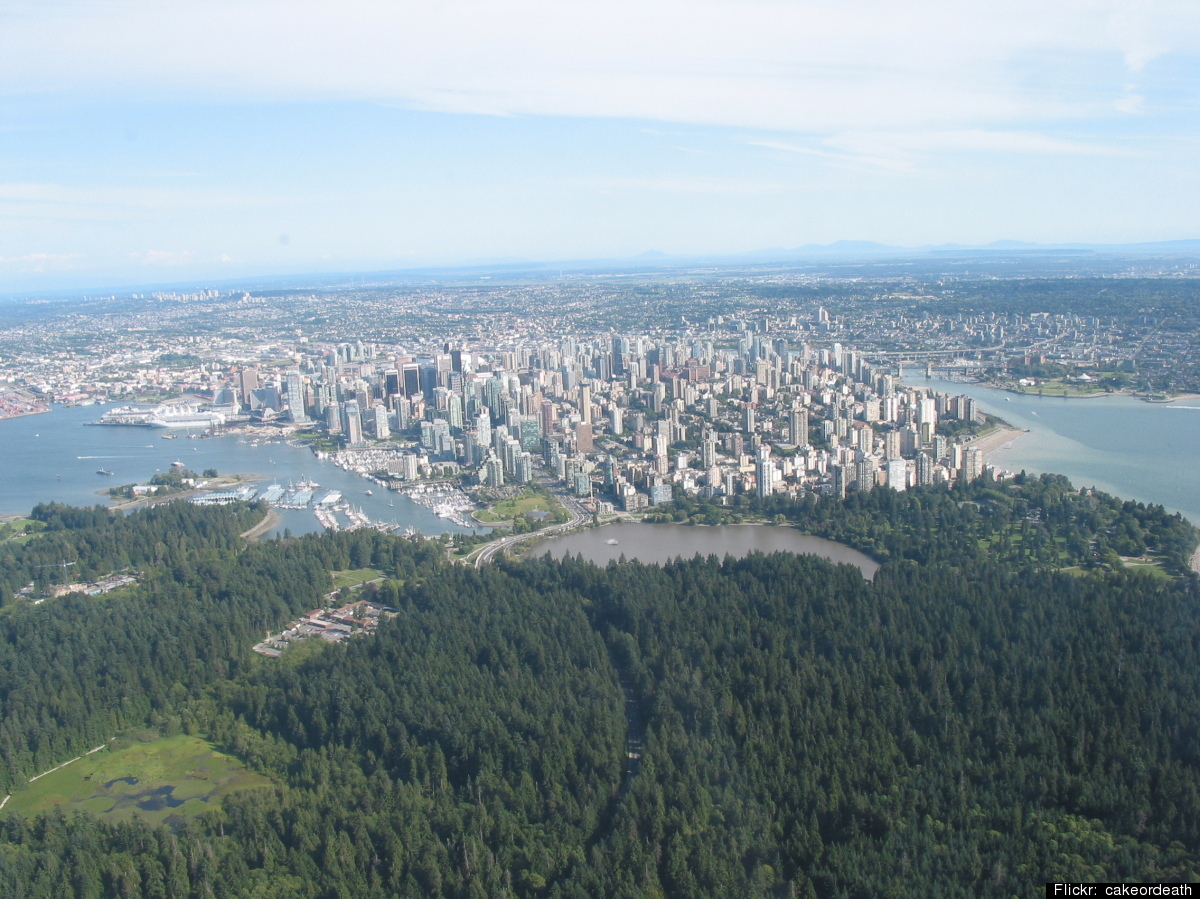
Look at these pictures of Miami and New York. With such low elevations it should be obvious that any serious storm will mean devastation.
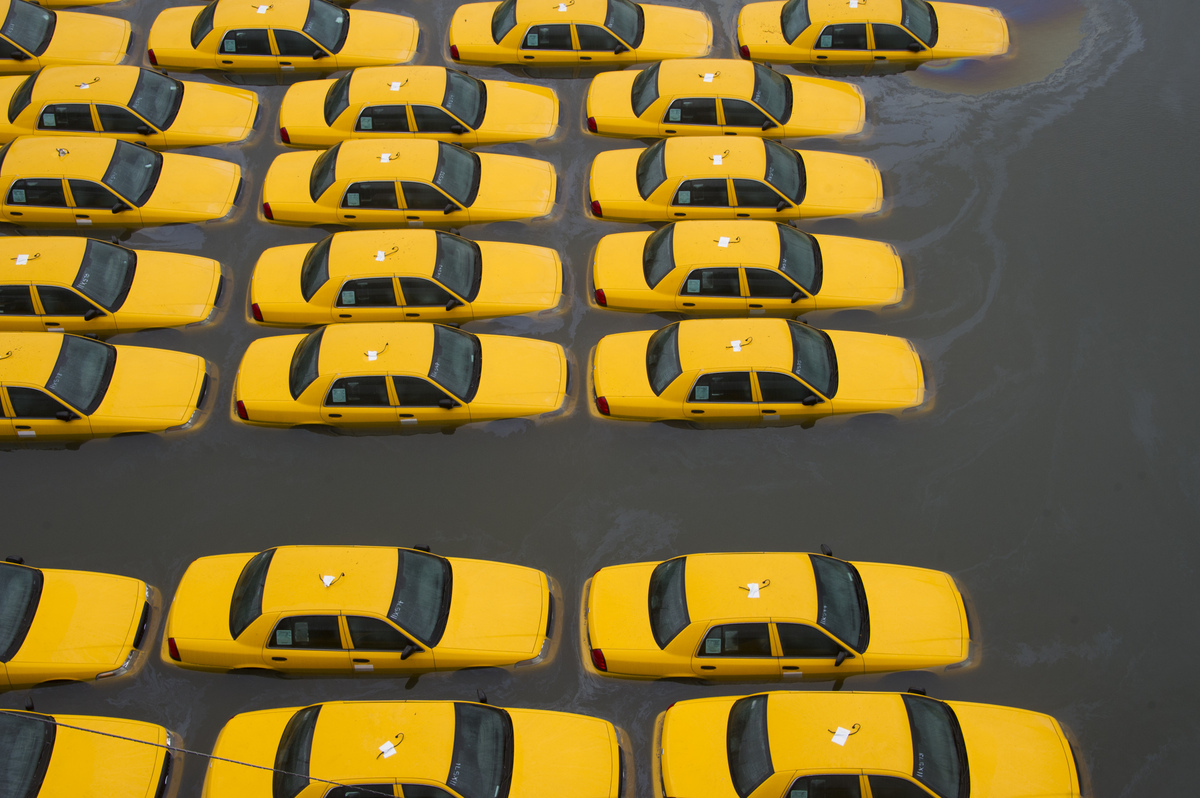
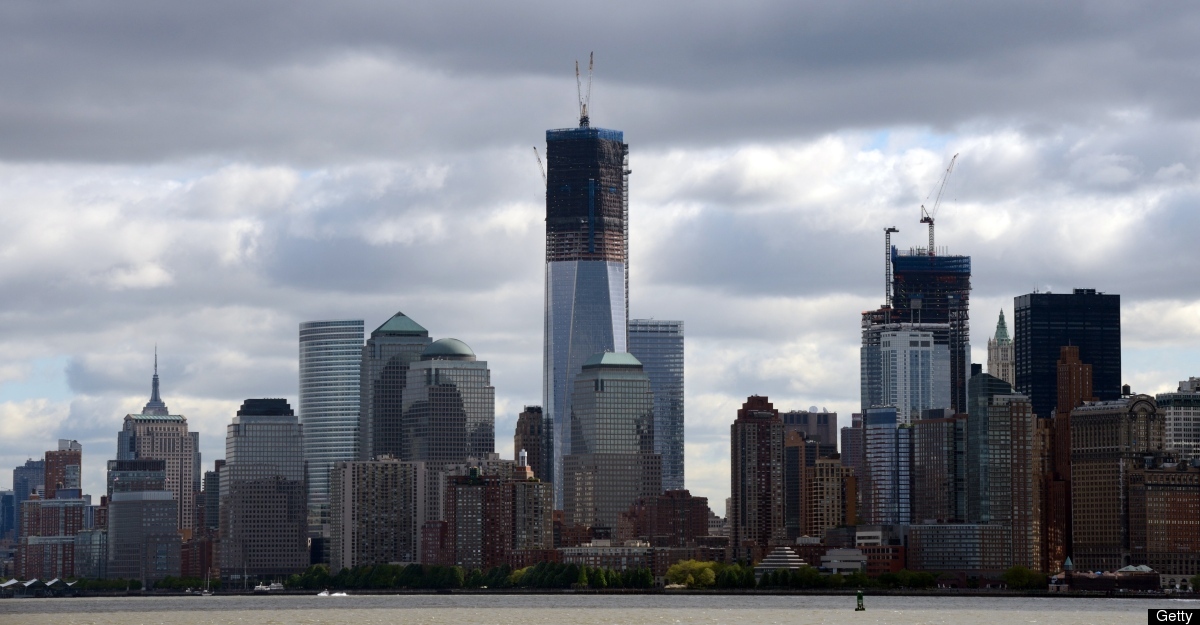
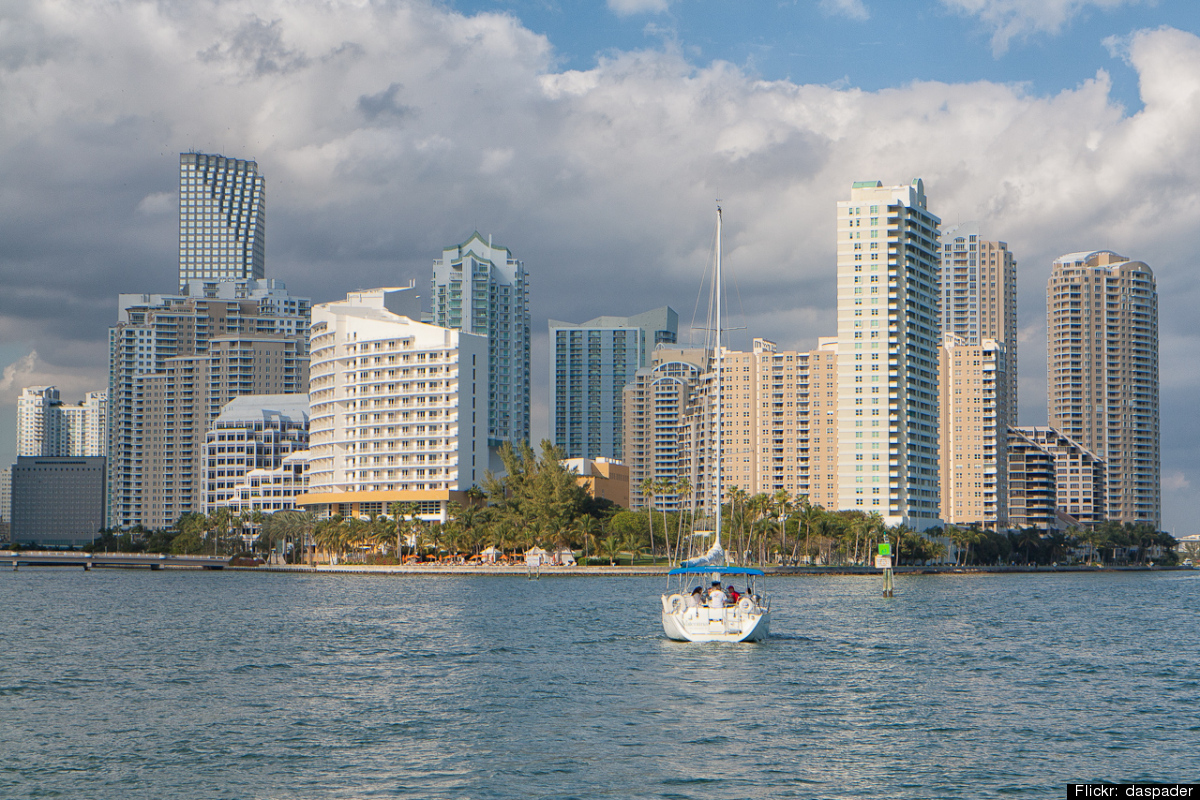
We can all argue about man causing global warming but we cannot argue that it is not happening. CBC, the Canadian Broadcasting Company, posted “Arctic thaw heats up Northwest Passage dreams” on its web site. Polar Cruises is now offering tours into the Northwest passage.
Based on projections that sea levels will rise about 1 meter by the end of the century, the analysis suggests the southern Atlantic and Gulf coasts could be particularly hard hit…
Miami, New Orleans, Tampa, Fla., and Virginia Beach, Va. could lose more than 10 percent of their land area by 2100.
The impact of this global warming has been predicted to be unusual weather conditions throughout the world. Is Sandy and Irene just the beginning? I am not a scientist but the frequency of these kinds of storms would support that contention.
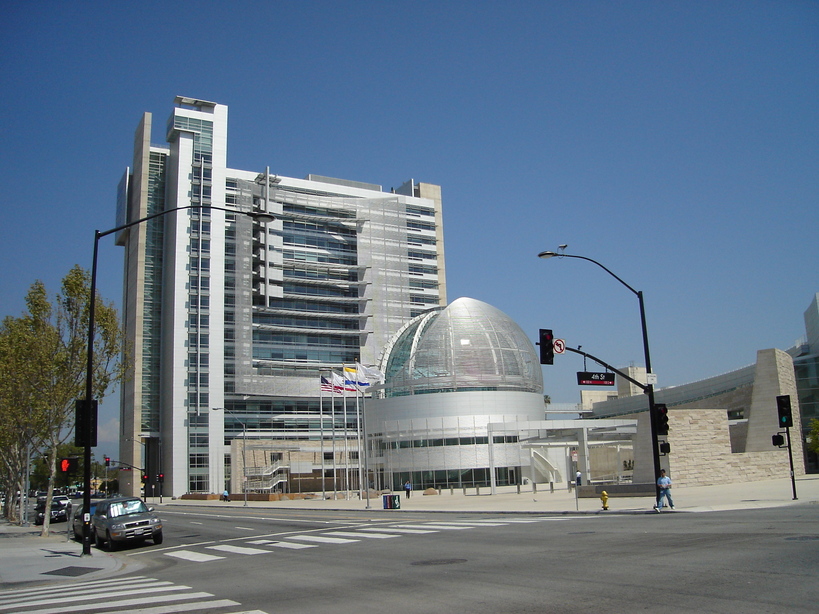
The following data was extracted from a MarketWatch news item and modified to indicate city population. Detroit at the bottom of the list was no surprise but Philadelphia and Memphis coming in at 23rd and 24th place is a surprise. The vlaue of this information is the indicator of where you don’t want to live. You might not be able to live in San Francisco or San Jose but living nearby will provide the benefits that come with a wealthier community such as hopitals, doctors, arts, and entertainment.
I personally know there are lower cost housing opportunities in San Jose as well as Los Angeles.
| CITY | INCOME | 2011 Estimated Population | |
| (IN $) | |||
| 1 | San Jose | 76,593 |
967,487
|
| 2 | San Francisco | 69,894 |
812,826
|
| 3 | District of Columbia | 63,124 |
617,996
|
| 4 | Seattle | 61,037 |
620,778
|
| 5 | San Diego | 60, 797 |
1,326,179
|
| 6 | Charlotte | 50, 177 |
751,087
|
| 7 | Austin | 49,987 |
820,611
|
| 8 | New York City | 49,461 |
8,244,910
|
| 9 | Boston | 49,081 |
625,087
|
| 10 | Fort Worth | 47,399 |
758,738
|
| 11 | Denver | 47,371 |
619,968
|
| 12 | Los Angeles | 46,148 |
3,819,702
|
| 13 | Jacksonville | 44,802 |
827,908
|
| 14 | Phoenix | 43,960 |
1,469,471
|
| 15 | Chicago | 43,628 |
2,707,120
|
| 16 | Houston | 42,877 |
2,145,146
|
| 17 | San Antonio | 42,613 |
1,359,758
|
| 18 | El Paso | 40,702 |
665,568
|
| 19 | Dallas | 40,585 |
1,223,229
|
| 20 | Columbus | 40,463 |
797,434
|
| 21 | Indianapolis | 39,015 |
827,609
|
| 22 | Baltimore | 38,721 |
619,493
|
| 23 | Memphis | 34,960 |
652,050
|
| 24 | Philadelphia | 34,207 |
1,536,471
|
| 25 | Detroit | 25,193 |
706,585
|
| Source: Census Bureau | |||
Newsweek to cease print edition after 80 years
I don’t remember precisely when I started reading Newsweek but I do have the July 28, 1969 edition with a transmitted photo of the walk on the Moon. I considered the magazine the alternate to the too conservative Time. The magazine has provided worthwhile insight to the world’s problems.

Just a few years ago a commentator in BusinessWeek forecasted the end of much of the print media. That was just before McGraw-Hill sold that money losing weekly to Bloomberg. So none of this is a surprise.
I myself have been evaluating the myriad of tablet computers this past week.
Goodbye old friend!!
Cesar Chavez was the leader of the United Farm Workers (UFW). He led the famous Delano Grape Workers Strike that lasted five years. Many Latinos admire him for his organizing skills. He died in 1966. However he was not very successful in his endeavors.
His supporters say his work led to numerous improvements for union laborers. His birthday, March 31, has become César Chávez Day, a state holiday in three US states. Many parks, cultural centers, libraries, schools, and streets have been named in his honor in cities across the United States.
The truth is that farm worker are still woefully underpaid. It is well-known that many are illegal aliens because the United States does not have a program for allowing Mexicans into the country for picking food.
A UC Davis report on harvesting strawberries says, “Harvesters in 1996-97 were reportedly paid $4.50 to $4.70 an hour in the Watsonville-Salinas area, plus $0.65 to $0.75 a tray.” While choices.org includes this paragraph in their article about strawberry harvesting.
“Core tasks of picking and plant cleaning must be performed while bending, kneeling (usually with one knee on the raised bed), or crouching. Workers use both hands to gently grab, twist, and snap off the berries they select. Although they shift from one side of the row to the other, occasionally stand up for a breather, and often change positions in other ways, most of their picking time is spent in postures that are widely seen as physically demanding. Union leaders and other worker advocates have expressed great concern about long-term effects of these postures and workers’ repetitive task motions on their bodies, especially backs. Bills that they have sponsored in the California legislature would prohibit “weeding, thinning, and hot-capping in a stooped, kneeling, or squatting position” (i.e., by hand), except in narrowly defined circumstances. A petition to similarly restrict these activities through administrative regulation is under consideration by a Cal/OSHA advisory committee.”
The legal Latino population is a primary group supporting Barack Obama. To further seal that group to the Democratic Party the president visited the Cesar Chavez home and declared it a national monument.
Walter P. Reuther was one of America’s great labor leaders. Reuther was president the United Automobile Workers union (UAW) between 1946 and 1970. Under his leadership played the union played a major role in the liberal wing of the Democratic party, including the civil rights and anti-Communist movements. The UAW was especially known for gaining high wages and pensions for the auto workers. As a prominent figure in the anti-Communist left, he was a founder of the Americans for Democratic Action in 1947. He became president of the CIO in 1952, and negotiated a merger with George Meany and the American Federation of Labor immediately after, which took effect in 1955. In 1949 he led the CIO delegation to the London conference that set up the International Confederation of Free Trade Unions in opposition to the Communist-dominated World Federation of Trade Unions. He had left the Socialist party in 1939, and throughout the 1950s and 1960s was a leading spokesman for liberal interests in the CIO and in the Democratic party. Walter Reuther appears in Time magazine’s list of the 100 most influential people of the 20th century. There is no national monument honoring this man!
Groveling for votes. Can Barack Obama sink any lower?
Try Crunching these numbers!
President Obama received some good news last night. The unemployment rate has dropped to 7.8%. As Chris Mathews and others have said repeatedly, no president has been re-elected when the rate was over 8% since FDR. Market Watch has questioned whether the books have been cooked. I prefer to believe the data is accurate. After all, the government could have provided false data over the past year and apparently did not. How could the unemployment rate decline? More people stopped looking for jobs than those obtaining new jobs.
The problem is the focus of the data. The BLS trumpets the unemployment rate rather than the number of unemployed. It’s only after extensive reading did I learn about another piece of data that tells the real story. Table A-15 (Alternative measures of labor underutilization) of the BLS monthly report on Line U-6 provides a more accurate reflection of the true unemployment situation. That line provides “Total unemployed, plus all persons marginally attached to the labor force, plus total employed part time for economic reasons, as a percent of the civilian labor force plus all persons marginally attached to the labor force.”
That number is 14.7% for this past month. At its peak in December 2010 the percentage had reached 16.6%.
The president is silent on his plans and Mitt Romney has said he will create 12 million jobs in four years. There are no details on the plans. No wonder! No one employs more help without demand. Lower taxes are wonderful for the pocket book but will that make a difference in hiring?
I don’t think so!
 Coast Contact