A Perfect Example of Economic Darwinism

Do you remember the Helms Bakery delivery trucks in Los Angeles?  Almost everyone had started going to super  markets.  That change in behavior ended one of the largest bakery businesses in the country.


From The Wall Street Journal

Eastman Kodak Co.’s effort to draw interest in the sale of its digital patent portfolio is flagging, people familiar with the matter said, complicating the 132-year-old photography pioneer’s chances of emerging from bankruptcy court.

The people said the company hasn’t been able to attract what’s known as a stalking-horse bidder, one who agrees ahead of time to purchase the assets for a certain price, a tactic that can push prices higher. As a result, those people said, Kodak is preparing to hold a “naked” auction for the patents, one in which no suitor makes an opening bid before the auction begins.  More of this article here.

It is truly sad to watch a once proud vibrant company collapse. This is not the first American company to dissolve before our eyes.  I can think of a few others without any research. MGM(Metro Goldwyn Mayer), Bethlehem Steel, United States Steel, Douglas Aircraft, and Zenith Electronics are the ones I remember.  The list is much longer than this.  Remember Polaroid Camera?  How about Nash and Hudson that morphed into American Motors?

No one can change this reality.  No president, no congress, and no buy out specialist.

Kodak simply doesn’t have a product that substitutes for the income stream provided by the sale of millions of rolls of film.

The milk man is part of our past and so is Good Humor Ice Cream and Helms Bakery.

American Exceptionalism and the Reality of a Competitive World Economy

American exceptionalism is the theory that the United States is different from other countries.

Working class Americans (that is most of us) are in a perpetual struggle to live a comfortable life.  However, we are on the brink of a new reality.  We must compete with every other country in the world.  Will American exceptionalism prevail?

The Washington Post reports that American median income fell nearly 8 percent, to $45,800, in 2010. This is no surprise.  It is simply a validation of what we already knew.  It is not going to get better any time soon.  In that same article the Post said our wealth has declined by 40%.  That too is no surprise since home have values have dropped by 40% to 50% in most areas of the country.

Many will try to blame one of the two political parties.  That would be a mistake.  If you look at the laws passed and the trends of American business you will quickly realize that this state of affairs has been going on for decades but was accelerated by the Great Recession.

The painful reality is that Americans must become more ingenious in their struggle to earn the kinds of livings that has become part of the culture.  Our politicians keep telling us that Americans are unique, creative, and exceptional.


Today that all seem like a lot of baloney.

Self Annihilation

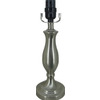
We visited a Loew’s Home Improvement store to check their table lamp selection.  My wife’s idea.  She found precisely what she wanted.  The price for each lamp was $14.97 and included a light bulb.  The shades cost about the same price.  The lamps and shades are made in China.  It is an astonishingly low price.  I would have been willing to pay twice that amount.

Can you imagine the pay rate for those working in the factory that manufactures those lamps and shades?  Probably on the order of 50 cents an hour.  That is the pay rate in Mexico.

So we Americans buy low cost products manufactured in China and that makes us feel good.  Think about this.  Those lamps and shades were formerly made in the U.S.A.  We get bargains that put our neighbors out of work.

What is the American policy (or for that matter the policy in any other country) regarding the export of our jobs?

Personally I would gladly pay more for the lamps if I knew that Americans have the income that takes them off the unemployment rolls and welfare rolls.  Am I wrong?

Capitalism is the Dominant force in the U.S.A.

Why Barack Obama Cannot Re-Make America

The American system of free enterprise is designed for people to make money.  Those that are smartest find every way to earn money, as long as it is legal, no matter who it hurts.

Bain Capital is an asset management and financial services company that provides venture money for new and struggling companies.  Like any privately held company it is in business to earn the highest possible return for its investors.  There are many other companies like Bain Capital.  The Blackstone Group and the Carlyle Group to name just another two.  Sam Zell, a wealthy real estate investor in Chicago, bought the Tribune Company without investing a single dime of his own money (thanks to some ingenious financing) but the company is now bankrupt (you thought he bought it to prop up that company?).

John_Hancock
John_Hancock

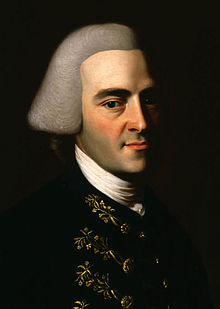
The system has always functioned that way.  The founding of the nation was all about free enterprise.  Those leaders in Philadelphia were mostly rich men who objected to taxation by the crown.  They invented the expression “taxation without representation” to rally the general public.  The best example is John Hancock.  Before the American Revolution, Hancock was one of the wealthiest men in the Thirteen Colonies, having inherited a profitable shipping business from his uncle.  John Adams was a well to do lawyer living in the Boston area.  Thomas Jefferson and George Washington were both wealthy land owners in Virginia.

If you do not agree with this form of economics you will have to live elsewhere.  You will not be successful in changing 200 plus years of a system that has built the wealthiest nation in the world.

Alternative countries that you ought to consider are Italy, France, Germany, Canada, UK, Australia, and New   Zealand.  You might notice that many of these countries are part of the British Commonwealth that Americans hated in 1776.  They do have capitalism but also make a greater effort at providing more social programs.

The choice is yours.  Just stop complaining about our system.  It is what it is!

Facebook Folly

How many website do you subscribe to?

The say 800 million people have Facebook accounts. Those accounts are free. I am one of those subscribers and most likely so are you. I have never purchased anything as a result of having that account. I only go onto the account when I am bombarded by e-mail messages telling me that I have messages that require my response. Usually the messages are from people I do not know but want to be my friend. These are people who “maybe” did meet me somewhere but I can’t remember where and their faces are not familiar to me.

 I must agree with Betty White when she presented her monologue on SNL. “I really have to thank Facebook … I didn’t know what Facebook was, and now that I do know what it is, I have to say, it sounds like a huge waste of time. I would never say the people on it are losers, but that’s only because I’m polite. People say ‘But Betty, Facebook is a great way to connect with old friends.’ Well at my age, if I wanna connect with old friends, I need a Ouija Board. Needless to say, we didn’t have Facebook when I was growing up. We had phonebook, but you wouldn’t waste an afternoon with it.”

Betty White Monologue

Apparently Mark Zuckerberg convinced himself and millions of others that his free social media site could be a marketing tool. Betty White is correct. He is trying to sell access to the telephone book.

Buy a share of Facebook? Why? How many people will reach their purchasing decision based upon the things they see on that site. Facebook’s number three advertiser, General Motors, has discontinued their advertising on the site.

Creative Destruction

The capitalist system is also the system of Creative Destruction.  It is industrial evolution driven by the rise of new innovations and the downfall of old technologies.  Kodak’s demise is a perfect example.  Kodak developed the first digital camera and then buried the development to protect its very existence.

Excerpt from Why Nations Fail by Daron Acemoglu and James Robinson

in 1589 William Lee, an Englishman, had perfected a knitting machine and presented it to Queen Elizabeth for a patent.  She refused to grant Lee a patent, instead observing, “Thou aimest high, Master Lee. Consider thou what the invention could do to my poor subjects. It would assuredly bring to them ruin by depriving them of employment, thus making them beggars.” Crushed, Lee moved to France to try his luck there; when he failed there, too, he returned to England, where he asked James I (1603-1625), Elizabeth’s successor, for a patent. James I also refused, on the same grounds as Elizabeth.

Both feared that the mechanization of stocking production would be politically destabilizing. It would throw people out of work, create unemployment and political instability, and threaten royal power. The stocking frame was an innovation that promised huge productivity increases, but it also promised Creative Destruction.

I don’t know the solution.  I do know that there aren’t many blacksmiths or candle makers anymore.

‘all robot’ Manufacturing

May 13, 2012 – LOS ANGELES (MarketWatch) — Japan’s Canon Inc. (JP:7751)(US:CAJ) plans to fully automate its digital-camera production by 2015, becoming the first camera maker to swap out all its workers in favor of robots, the Nikkei business daily reported Monday without citing sources. Canon, the world’s No. 1 digital-camera maker by virtue of an approximately 20% global market share, plans to keep employees displaced by the robots by engaging them in production-control jobs or at “new divisions in growth fields,” the report said. The plants involved in the first phase of the move are located within Japan, but if the fully automated lines are successful, Canon will duplicate the move at three overseas facilities, the report said.

This topic brings up the question of employing the world in an era of automation.  Automobiles were welded by hand held machines but today they are fully automated.


Cisco’s commercial on CNN shows a fully automated factory.  There are no humans to be seen.  One robot breaks down and another says “I can fix that.”  It does and all the machines resume functioning.

So what will people be doing in this new high tech world?  I have not read a solution to that question.

Moet Hennessy Louis Vuitton – LVMH


LVMH is a French multinational luxury goods conglomerate headquartered in Paris.  Unknown to most people this giant company is the owner of many well known brands throughout the world.  The company came to my attention after an article about Hermes, a competitor, appeared in Businessweek recently.

Hoover’s Company Profiles says “LVMH Moët Hennessy Louis Vuitton is the world’s largest luxury goods company,  with brands that are bywords for the good life and everything showy.”
Read more: http://www.answers.com/topic/lvmh-mo-t-hennessy-louis-vuitton-sa#ixzz1v3LJCxUc

The company operates six segments: fashion and leather goods, its largest and oldest; watches and jewelry; wines and spirits; perfumes & cosmetics; selective retailing (including Sephora and airport duty-free retailer DFS); and other (including publishing). Higher-profile brands include Louis Vuitton, Fendi, Givenchy, Tag Heuer, Hennessy, Moet & Chandon, Glenmorangie, and Benefit.

From their own web site the range of products includes

Wines include

  • Champagne Moët & Chandon
  • Dom Pérignon
  • A Total of 22 brands

Fashion and Leather Goods include

  • Louis Vuitton
  • Givenchy
  • A Total of 12 brands

Perfumes and Cosmetics include

  • Christian Dior
  • A Total of 11 brands

Watches and Jewelry include

  • Bulgari
  • De Beers Diamond Jewellers
  • A Total of 8 brands

Selective Retailing include

  • DFS
  • Sephora
  • A Total of 5 brands

Listed on an American stock exchange.  The company has a P/E ratio of 19.4 and last year’s sales of over $23 Billion.

It proves there are lots of very wealthy people in this world.

Should You Invest in Facebook on Day 1?

General Motors has announced that it will stop advertising on Facebook after determining that the ads on the social-media site are ineffective.

The hype over Facebook’s IPO really is extraordinary. While many younger people are fans of the social media giant, there really is no indication of the actual earning power of the company. I saw Your Money on CNN this past weekend and two of the three guests were totally positive that making an investment in this company would be a wise move. The third, Ned Riley (Riley Asset Management) said the shares will likely start at about $60 a share and go lower by this time next year.

Apple struggled for years before finding its strength. Google just kept building its strength from the start. Other social media web sites have struggled. Which retail web site comes in third place behind Amazon and E-Bay? I don’t know the answer.

For those people who are willing to gamble the investment is a wonderful opportunity. For those of us who want some real performance numbers this investment seems very suspect.

Citigroup Stock Holders had Their Say

At Citigroup’s annual meeting, owners of the stock voted 55 to 45 against a $50 million executive pay package, including $15 million for CEO Vikram Pandit.

This is all thanks to the Dodd-Frank financial overhaul law.

Buried in its 2,300 pages is a requirement for public companies to hold “say on pay” votes for executive compensation.

Unfortunately the vote is non-binding (Democrats wanted it to be binding), but the chairman of Citigroup Dick Parsons said he took it seriously, and promised the board would consider it carefully.

Shareholders have every right to be upset with Vikram.

Over the last decade, Citigroup has had the worst stock price performance of the big banks, but consistently had some of the highest executive compensation.

Citi shares are down more than 80% since the financial crisis hit.
They’re down 93% from 2006.

Last year, Pandit got a $1.7 million salary, plus a $5.3 million cash bonus, and he got a $40 million retention package that pays out through 2015.

Getting a bonus should be a piece of cake for these execs, too, since the standard for the payout is an earnings track record half of what it was in 2009 and 2010 when the economy was in the tank.

Whoa! Don’t get too ambitious!

Look, to be fair to Pandit, for 2009 and 2010, he accepted just a buck in salary.

But to be fair to shareholders, Citi’s quarterly dividend is one penny.
Citigroup has announced its first-quarter profit had fallen two percent from a year earlier on a paltry one percent rise in revenue.

The Federal Reserve turned the company down on its request for a share buyback or dividend after Citi flunked the central bank’s stress test in March. And don’t forget the bank was one of many bailed out during the financial crisis.

Some people bridle at anyone earning millions of dollars a year. I am one of them.

If you can grow sales, boost the bottom line, raise the share price, then by all means you’ve earned a fat paycheck.

But what we can’t do is reward mediocrity and failure.

Last year shareholders voted down just two percent of executive pay plans. Maybe this is the start of a new trend.

Read more: http://www.foxbusiness.com/on-air/willis-report/blog/2012/04/18/shareholders-strike-back?link=mktw#ixzz1sXtwnCTx