Choosing the Safest Aircraft

AOL News reports Inspectors find damage in 3 more Southwest jets after one was forced to make a harrowing emergency landing.

In the last two summers we flew to Toronto, Ontario, Canada from Los Angeles, California non-stop on American Airlines.  The plane is a Boeing 738 (also called a 737-800).  The Southwest Airlines plane that developed a 1’ by 5’ hole in the ceiling is a 737 (older 737-300 model).  So the question is: How safe are these planes?  The answer is there are over 6,000 Boeing 737 aircraft around the world and they are still delivering more.  I found one aircraft web site that contends a 737 is taking off somewhere every 2.2 seconds.  That claim seems rather unreasonable but the planes are certainly well used with few complaints.

According to Wikipedia 737s take of every 5 seconds. The 737 is operated by more than 500 airlines, flying to 1,200 destinations in 190 countries. With over 8,000 aircraft ordered, over 6,000 delivered, and over 4,500 still in service, at any given time there are on average 1,250 airborne worldwide at any one time.  There have been 4097 fatalities as of May 2010.

The Airbus A320 family is the European competitor to the 737.  It was not introduced until 20 years after the first 737.  Total fatalities are 795 as of July 2010.  That is something to think about!
4G Wireless – We Are Not There Yet

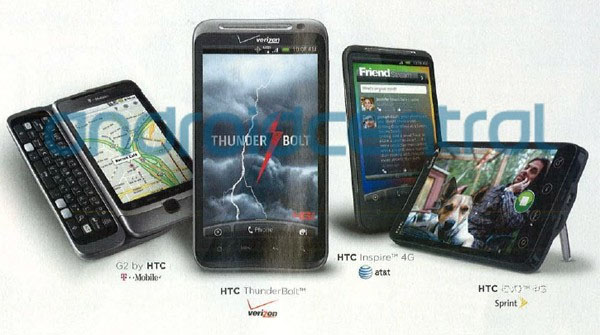
The ads on television are daily and almost non-stop. AT&T and Verizon Wireless have been bombarding everyone about their new 4G networks that you need and they can supply.

The questions are what the heck is 4G and do I really need this?

Ezinemark.com offers this explanation posted Jan 31, 2011
This label which, in a simple explanation, stands for the ‘fourth generation’ of mobile technology has a multitude of definitions behind it. Having no singular predetermined industry standard has made it hard to put numbers and labels on exactly how much faster different plans will be. Each provider might be using a different method or source for the network (such as LTE or WiMax) but the basic idea is that the speed is far faster than old 3g networks. As many will remember 3g wireless networks took people from being able to access basic internet and basic information to being able to use images, videos and other media right from their phones. The 3g wireless networks are what allowed people to access basic internet, social networking websites, email and more from their mobile phones or mobile internet devices. Now, 4g wireless internet will allow them to use not only their mobile phones but their notebook or laptop computers to use the full range of internet functions they would on a home, school or office full terrestrial broadband connection only while on the go!

This was posted by money.cnn on Feb 23, 2010
Despite claims from mobile phone carriers, the next generation of mobile technology, or 4G, will only be slightly faster than current 3G speeds, at least initially.
 

Massive costs, soaring consumer demand for data and the logistical nightmare of setting up tens of thousands of new cell sites will prevent 4G technology from reaching its promised speeds for years, according to carriers and wireless experts.

True 4G must generate speeds of at least 100 megabits per second, according to the International Telecommunication Union. Current 3G technology offers speeds of up to 2 megabits per second and broadband delivers 5 megabits per second to the average U.S. household.

Only 74 Miles Of Pipeline needed !!! THE MEDIA DIDN’T TELL US THIS …

This icon is definitely a real eye opener – Representative Don Young-Alaska is talking about the oil in Alaska.  He has a bill #6107
up for vote…………and as usual Congress will probably sleep right through it.  Of course the environmentalists oppose additional drilling in Alaska even though it has been accomplished without harming anything.  Please watch this.

Windfall for America

From Industry Week

The tragic events in Japan could trigger some short-term changes in automotive market share over the next few months — potentially opening doors for the likes of Ford and GM.

That’s the view of Craig Giffi, vice chairman and U.S. automotive practice leader for Deloitte LLP, who believes supply chain disruptions caused by the disaster could cause a “blip” in the availability of “popular high-mileage vehicles” produced by Japanese automakers such as Toyota.

If that turns out to be the case, and gasoline prices continue to rise, American consumers who favor Toyota and other Japanese brands for fuel-efficient vehicles might turn to domestic brands such as the Ford Focus and Chevy Cruze, Giffi says.

“American consumers have proven over and over again to be amazingly fickle in their car choices,” Giffi asserts. “Gasoline prices go up, they stop buying trucks. Gasoline prices drop a little bit, they start buying trucks. And it turns on a dime.”

Consider the other products manufactured in Japan. Canon Camera makes its products in Japan, China and Singapore, depending on the part or model. Sony has a chip manufacturing plant in Nagasaki, Japan. Panasonic makes some of its products and components in Japan including LCD televisions and some of its laptop computers. Bio Ionic, the professional hair care products company imports its ReTex system product in bulk from Japan.

The outcome is likely to be at least a temporary resurgence in American manufacturing. This could result in some long term benefits to U.S. manufacturers.

America’s Jobs – Part 1

The Great Recession resulted in the loss of 8 million jobs in the United States.  Since the recovery started 1 million jobs have been added to the national payrolls. Neither the Republicans nor Democrats have enacted a single piece of legislation that is likely to bring back those lost jobs.

Why aren’t U.S. corporations hiring?

Actually, many of them are.  They’re just not hiring Americans.  The reason is that most Americans corporations have become global in their operations.  U.S. corporations have slashed their American payrolls by 500,000 jobs since the start of the Great Recession.  At the same time they have hired over 700,000 workers overseas.  Those new hires are not just in Asia.  They are in Mexico and other Latin American nations too.  Technicolor’s DVD/CD production facilities were in three locations in the United States but are now in Monterey, Mexico.  That one company alone employed more than 3,000 Americans before the move.  In 1992 53% of Ford Motor Company employees were in the United States and Canada but today that number has declined to 37%.

The reason is very simple.  The cost of labor in Mexico is one fifth the cost in United States and Canada.  Chinese workers assembling computers, iPads and other electronic devices are earning less than $400.00 per month (Foxconn, a Taiwanese company is the primary supplier for both H-P and Dell as well as Apple).  Foxconn is expanding to other countries.  Just today there are reports that the company will be opening an assembly facility in Brazil.

Unless there are tariffs put in place this situation will not change.

Less Competition is Great for Business


The stock market shot up early on Monday March 21. Trading up by 1.5%.  The reason?  AT&T is buying T-Mobile.  The consequence of this planned purchase is that there will now be just three national cell phone carriers.  It’s a great benefit for the carriers.  With less competition the cost of services will most assuredly increase.  That means more profit for AT&T Sprint, and Verizon.  The consolidation must be approved by the Department of Justice (DOJ) and Federal Communications Commission (FCC).  Who doubts this won’t be approved?  The losers will be the public.

There is no justification for this proposed buy-out.  Both AT&T and T-Mobile are profitable companies.  The fact that AT&T service is poor is not a societal concern.  What ought to be a concern is the likely impact of reduced competition.

 David Lazarus of the Los Angeles Times wrote about this same issue in the March 21, 2011 edition.

This is not the first time there has been an attack on competition.  Compared to just ten years ago there are fewer banks, department stores, drug stores, and supermarkets now then existed then.  Here in Los Angeles there are just four major banks to serve a population of 10 million people.  They are Bank of America, Wells Fargo, Chase, and Citibank.  Other banking companies in the city are significantly smaller.

There is no Teddy Roosevelt alive today.  This trend will not change if the public remains quiet.

Will H-P Dump Its PC Business?

There is a rumor going around that Hewlett-Packard Company is planning to sell or simply close its PC computer business.  The rumor was consequential enough for HP to issue a denial.

“Irresponsible reporting by Taiwan’s Commercial Times, suggesting that HP might sell its PC business, should be dismissed as market rumor and speculation. HP runs the world’s largest PC business and it is core to HP’s strategy for the connected world.”

A Morningstar contributor wrote “HP ships more PCs than anyone, but we still dislike the deteriorating economics of this business.”

Steve Wildstrom on Tech (former tech editor for BusinessWeek) just sent me his take on the situation with these words in the subject line: “Ditch That Remote: Tablets and Smartphones Are Taking Over.”

H-P doesn’t have Tablets and Smartphones.

I have an HP desktop computer and a Dell laptop.  When they fail and finally they will, I am not likely to buy another laptop or desktop.

Perhaps HP sees the light.

Project Management

In my working life my favorite function was (and still is) project management.  As a material manager at a computer game company I took the reins in developing a project management process to ensure all new games were launched in accordance with management’s goals.  Today that skill is still highly desired both in the public and private sectors.

New mixed use shopping and residential projects being built in the San Fernando Valley and elsewhere will be using project management to ensure on time completion.  Los Angeles MTA has a few new additions to its growing public transportation system.  Those construction projects have time lines and project management will be used to ensure on time completion.

Projects@Work has been sending me their information for years.  Now that our economy is starting to grow again this might be a good resource for education and jobs.

Buy American!

ABC’s World News with Diane Sawyer has been running a series titled “Made in America.”  Buying American made products is a wonderful idea that every American certainly wants to support.

Jon and Anna Usry and their two kids opened the doors of their house, in Dallas Texas, to World News with Diane Sawyer’s David Muir and Sharyn Alfonsi, who promptly backed up the moving truck and emptied their house of everything not made in America.  There was nothing left except the kitchen sink.

World News went on to find that even the gift shops in the Smithsonian Institute are stocked with most things made in China.  They do not stock American made products because the cost is high.

The replacement products in that house with American made items for the most part were about the same price with the exception of the really expensive items like television, and kitchen appliances.  Televisions aren’t made in America and the Viking and Wolf kitchen appliances are both expensive compared to imported brands.

Coffee makers, like televisions, are no longer made in the United States.

Consumer Reports just issued their annual Cars report.  Overall ratings by manufacturer are as follows:

#1 Honda

#2 Subaru

#3 Toyota

#5 Ford

# 12 General Motors (next to last place)

#13 Chrysler (last place)

Can we afford American made products that are difficult to find, relatively expensive,  and in some instances poorly made?

“America’s best days lie ahead”

Warren Buffett is Investing in America

Warren Buffett’s annual letter to his company’s (Berkshire Hathaway)  shareholders.

“…for the purpose of estimating our current earning power, we are envisioning a year free of a mega-catastrophe in insurance and possessing a general business climate somewhat better than that of 2010 but weaker than that of 2005 or 2006…

Last year – in the face of widespread pessimism about our economy – we demonstrated our enthusiasm for capital investment at Berkshire by spending $6 billion on property and equipment. Of this amount, $5.4 billion – or 90% of the total – was spent in the United States. Certainly our businesses will expand abroad in the future, but an overwhelming part of their future investments will be at home. In 2011, we will set a new record for capital spending – $8 billion – and spend all of the $2 billion increase in the United States.

Money will always flow toward opportunity, and there is an abundance of that in America. Commentators today often talk of “great uncertainty.” But think back, for example, to December 6, 1941, October 18, 1987 and September 10, 2001. No matter how serene today may be, tomorrow is always uncertain.

Don’t let that reality spook you. Throughout my lifetime, politicians and pundits have constantly moaned about terrifying problems facing America. Yet our citizens now live an astonishing six times better than when I was born. The prophets of doom have overlooked the all-important factor that is certain: Human potential is far from exhausted, and the American system for unleashing that potential – a system that has worked wonders for over two centuries despite frequent interruptions for recessions and even a Civil War – remains alive and effective.

We are not natively smarter than we were when our country was founded nor do we work harder. But look around you and see a world beyond the dreams of any colonial citizen. Now, as in 1776, 1861, 1932 and 1941, America’s best days lie ahead.”