War Means Jobs and Profit

Daddy Warbucks couldn’t be happier.  800 people are working at a factory in Lima, Ohio that rebuilds Abrams tanks and “is building 15 to 20 armored vehicles per month, including tanks, it can easily boost that to 33 a month and could add another shift of workers to build more if needed.” Those numbers are reported in an AP article appearing in the LA Times.

I know we need to support Ukraine with military hardware but is that number 15 to 20 vehicles?  Why?  I understand providing munitions but this article was about hardware.

“Part of it is figuring out … what’s the best one that can allow us to get the Ukrainians tanks in as timely a fashion as we can” without disrupting foreign military sales, said Secretary of the Army Christine Wormuth.

Sales to who is my question.  I Googled for the answer. U.S. arms exports in 2021, by country

  Saudi Arabia1389
Australia   Qatar   Japan   United Kingdom 4 countries929   906   875   875
South Korea646
Netherlands586
Israel550
Norway                                                                                         455
India  425

United Arab Emirates                                                                 274

Denmark                                                                                    226     

Italy                                                                                      214    

The plus to this situation is the are 800 American families with good incomes.  General Dynamics is earning a good profit for every unit they deliver.  A few other companies like Lockheed Martin and Raytheon are also the beneficiaries of the war machine.

Incidentally if you don’t get it, Daddy Warbucks was a character from the classic comic strip Little Orphan Annie and the stage musical based on it.  He was a war profiteer (someone who makes money through military contracts).

Macy’s is the Icon of America

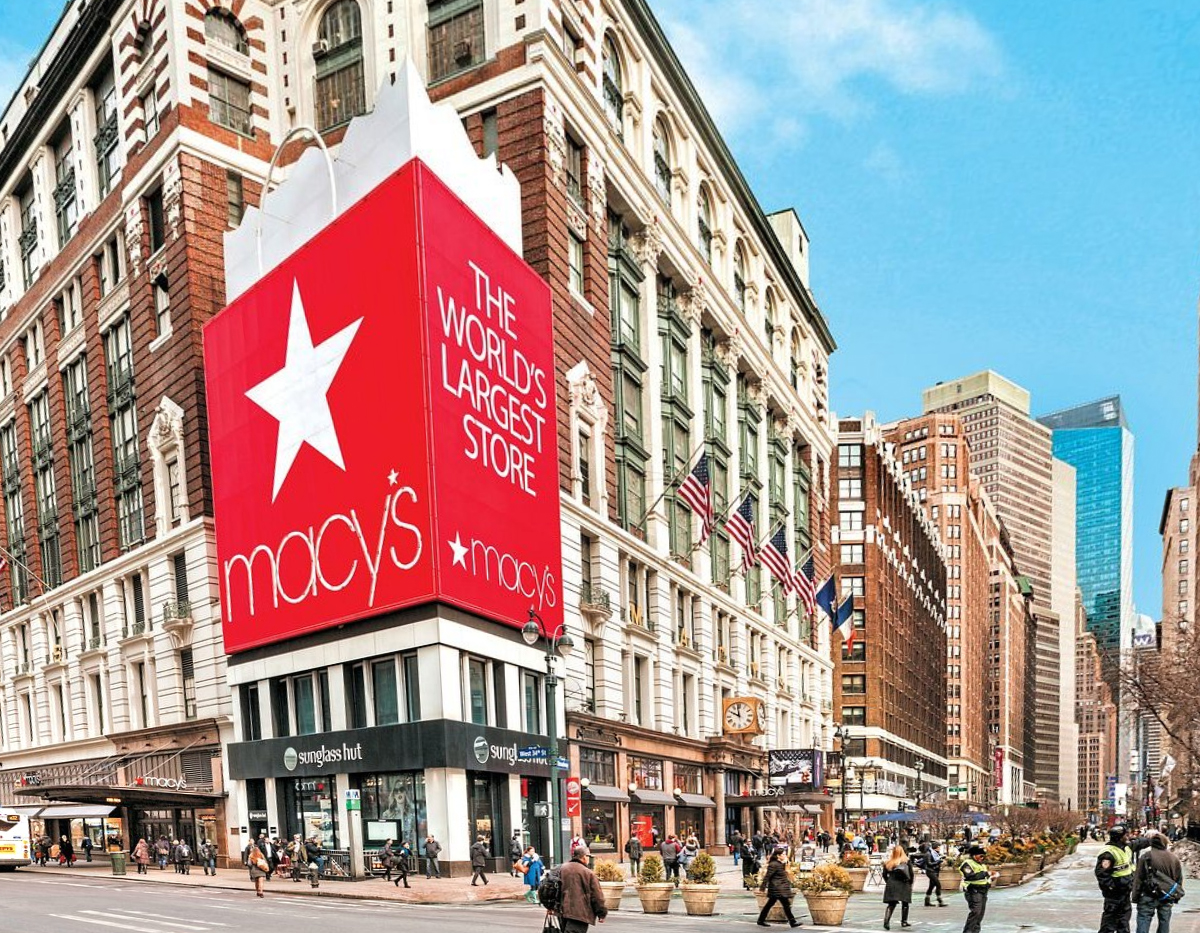
Macy’s has appeared in more than 50 movies and television shows.  The store’s debut was in 1906 in the film The Kleptomaniac.  Since then, it has appeared in many movies like Auntie Mame (1958), Thoroughly Modern Millie (1967), Sweet Charity (1969), and more recently Ocean’s Eleven (2001), Shark Tale (2004) and King Kong (2005).  Finally, it is probably most famous for its role in the holiday classic, Miracle on 34th Street (1947).

Macy’s Harold Square has achieved fame in the TV world as well.  Well known shows like The Wonder Years, Who’s the Boss, SeinfeldFriends, Desperate Housewives, Ugly Betty, The Biggest Loser, and Project Runway.

Macy’s is also featured in Kanye West’s US version of his music video for the song “Heard ‘Em Say.” Nearly the entire video was filmed inside Macy’s Herald Square. It features West and three children playing inside a closed Macy’s at night.

More than just a retail store, Macy’s has truly become an icon of Manhattan, and even of the United States.  This is one shopping spot that cannot be missed during your visit to New York City.

To catch a glimpse of Macy’s hop on our NYC TV & Movie Tour or Holiday Lights & Movie Sites Tour.

What Constitutes a Monopoly?

When is merger of two large competing businesses a restraint of trade? I say that this merger will impact the grocery business in a negative way. Finally I am not alone.

The proposed $25 billion Kroger-Albertsons grocery giant merger is already running into significant opposition from progressive lawmakers and others. It’s no wonder. Most of the grocery stores in Los Angeles are owned by Kroger and Albertsons.

Sen. Elizabeth Warren of Massachusetts on Wednesday called on the Federal Trade Commission to block the deal. “More mergers and less competition would mean even higher prices—and layoffs for employees,” Warren said on Twitter.

Sen. Bernie Sanders of Vermont has also urged the regulators to reject the deal. And the Senate Judiciary’s antitrust subcommittee announced Tuesday that it will hold a hearing next month to scrutinize the merger.

“We have serious concerns about the proposed transaction between Kroger and Albertsons,” Senators Amy Klobuchar of Minnesota and Mike Lee of Utah said in a joint statement. “We will hold a hearing focused on this proposed merger and the consequences consumers may face if this deal moves forward.”

Senators Klobuchar, Richard Blumenthal of Connecticut and Cory Booker of New Jersey urged FTC chair Lina Khan Tuesday to investigate the merger, saying it “raises considerable antitrust concerns.”

The proposed merger, which the companies expect to complete in 2024, would combine two of the largest grocers in the United States. Kroger currently owns nearly two-dozen chains, including Ralphs, Dillons, Food 4 Less, Fred Meyer, Mariano’s and QFC. Albertsons, meanwhile, owns 24, such as Safeway, Vons, Jewel-Osco, Shaw’s and Acme.

The companies contend a combination would help them compete with Walmart (WMT), Amazon (AMZN), Costco (COST) and other giants. The grocers are also facing increased pressure from Aldi, the fast-growing German discount supermarket chain.

The companies said the merger will benefit shoppers, workers and local communities and make the US food system more equitable.

With grocery prices already a concern for many shoppers, the companies said that they would be able to use $500 million in cost savings from the deal to reduce prices for shoppers and tailor promotions and savings. They also said they will invest $1.3 billion in Albertsons, which would include lowering prices.

But the new grocery empire would worsen the problem of grocery access, particularly in low-income areas in cities and rural towns, say some competition experts, small business advocates and researchers.

They believe the merger would drive out rival smaller grocers and independent stores, squeeze suppliers, and set off a vicious cycle of consolidation among supermarkets and suppliers, further entrenching the problem.

To satisfy regulators, Kroger and Albertsons have said they will divest hundreds of stores in areas where they overlap.

But FTC chair Khan has been critical of such divestitures in the past as a remedy for antitrust concerns, saying they were an ineffective remedy to preserve competition., and she has has pointed to Albertsons itself as a prime example.

In 2015, Albertsons merged with Safeway and sold off 146 stores to Haggen, a smaller chain, to appease regulators.

But Haggen struggled to integrate the Safeway stores and soon spiraled into bankruptcy. Albertsons then bought back dozens of the same stores it had previously sold to Haggen in bankruptcy court.

Khan, in a 2017 law review article, called it a “spectacular” failure and said the remedy was “[hard] to fathom.”
Your cost at the supermarket is about to go up

Albertsons in South Los Angeles on Friday afternoon. 

Get ready for higher food prices at your local supermarket!

Kroger Co. said it is buying rival Albertsons Cos Inc. in a deal that values the company at $24.6 billion, one of the biggest deals in the history of the grocery industry in the U.S.

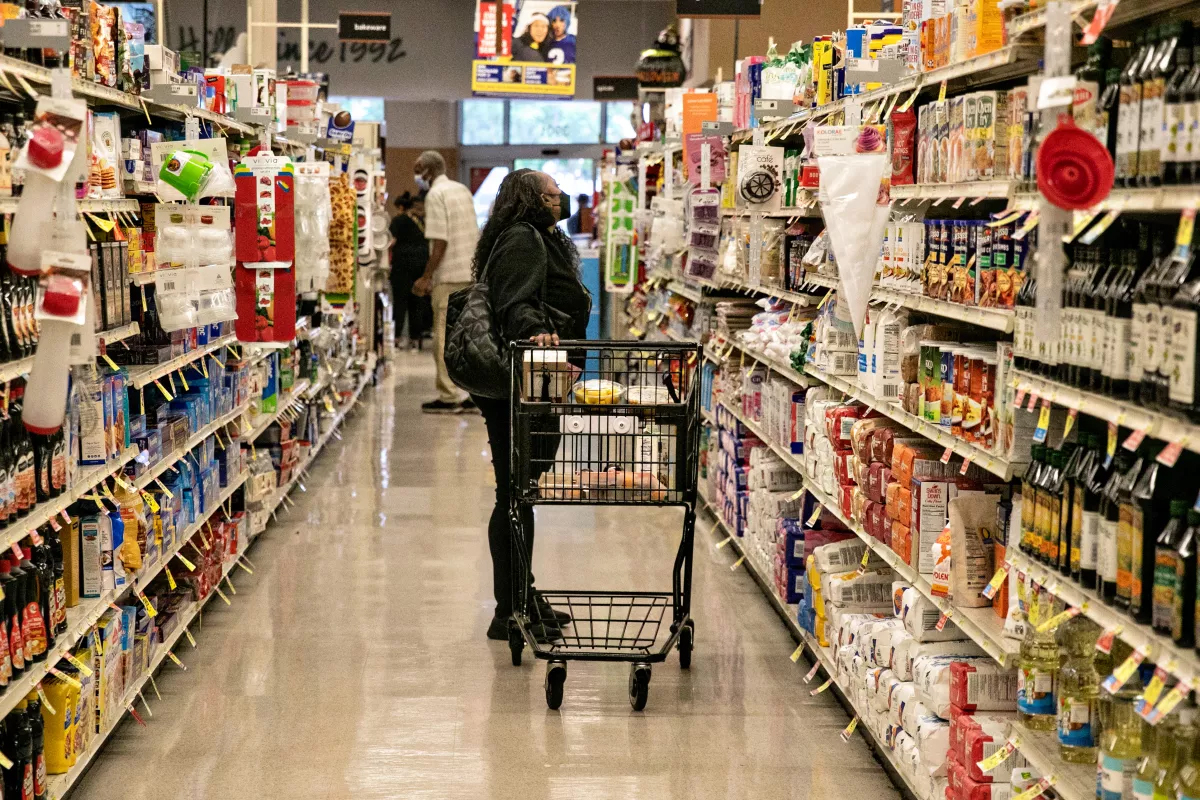
That means that other than Walmart, Costco, and Trader Joe’s almost every food market in Los Angeles will be owned by Kroger. Smaller food chains are usually specialty stores that do not offer a complete choice of foods.

The effect is obvious. Less competition means higher prices. Jamie Court, president of Consumer Watchdog, a Santa Monica-based consumer advocacy group, called the proposed merger “a terrible idea. This would give too much market power to one big giant, especially in California,” Court said. “We would urge the administration to reject this merger.”

To overcome anticipated political and regulatory hurdles, Kroger and Albertsons said they would get rid of stores in markets where they overlap. The companies said they would spin off up to 375 Albertsons stores in a stand-alone public company or just close them. Or in other words less stores means less competition.

The Colorado River is Drying Up

The Colorado River, major river of North America, rising in the Rocky Mountains of Colorado, U.S., and flowing generally west and south for 1,450 miles (2,330 kilometres) into the Gulf of California in northwestern Mexico.

The Colorado River basin is drying up thanks to less snow and rain.   Sadly the seven states are not working together to find an equitable agreement on sharing the shrinking amount of available water.

After Colorado River Basin states failed to meet a deadline for emergency drought reductions, the U.S. Bureau of Reclamation said it would continue to work with affected states and tribes to reach an agreement.

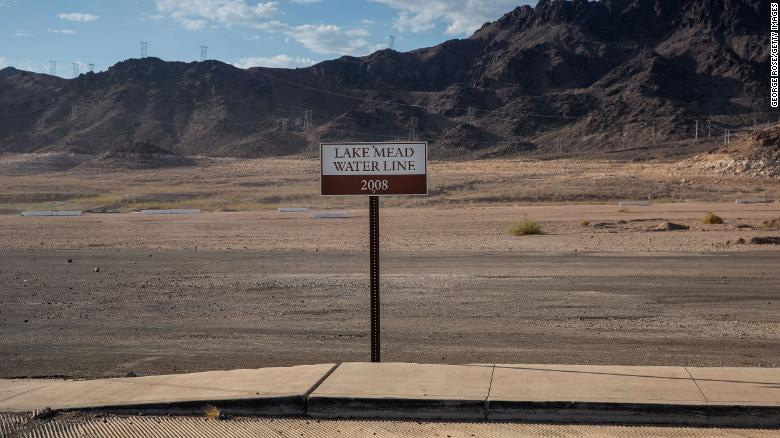
Lake Powell and Lake Mead are at historically low levels and risk falling to “dead pool” status, which would mean there isn’t enough water to generate hydroelectricity for the tens of millions of people that rely on it, according to United Nations Environment Programme

The seven states that benefit from the Colorado basin have been told to develop plans to drastically reduce water use by 2 million to 4 million acre-feet, but talks have grown acrimonious. At a press conference Tuesday, federal officials said that an agreement was urgently needed and that it was also declaring a tier 2 shortage for the next water year.

Under tier 2 shortage conditions, Arizona’s annual water apportionment will be reduce by 21%, Nevada’s by 8% and Mexico’s by 7%. There is no required water savings contribution for California however.

This situation will undoubtedly lead to a court fight over how much water each state must reduce consumption. There have been growing tensions between the states of the river’s Lower Basin — California, Arizona and Nevada — and those of the Upper Basin — Colorado, Wyoming, New Mexico and Utah.

A few calm meetings would be far better than a court fight.

Brace yourselves, spicy-food lovers

Is there no end to the shortages? First it was toilet paper, then computer chips and now this.

Brace yourselves, spicy-food lovers: The world is now facing a sriracha shortage.

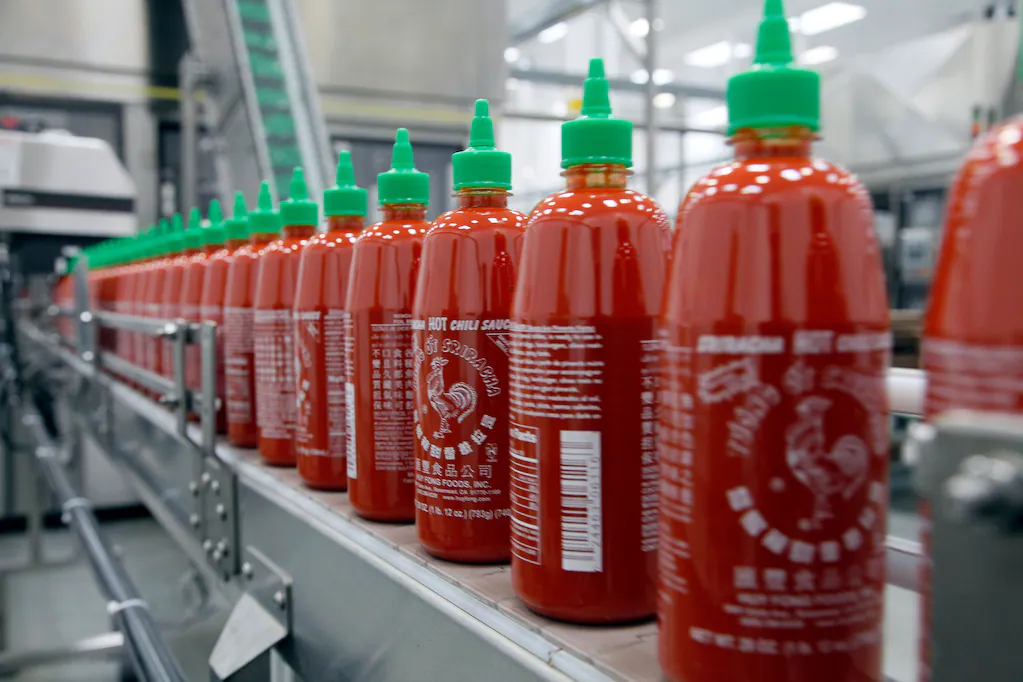
Huy Fong Foods Inc., the maker of one of the nation’s most beloved condiments, has been forced to suspend production of its iconic spicy sauces due to a shortage of chili peppers.

The Irwindale company confirmed Wednesday that a shortage of peppers in its inventory had affected production of Sriracha Hot Chili Sauce, Chili Garlic and Sambal Oelek.

What appears to be a letter from the company to buyers of the products, dated April of this year, recently came to light online.

“Currently, due to weather conditions affecting the quality of chili peppers, we now face a more severe shortage of chili,” the letter reads. “Unfortunately, this is out of our control and without this essential ingredient we are unable to produce any of our products.”

Chili-heads didn’t take the news lightly on social media, with some lamenting the “worst news of the year” and the “end of days.” Others said they were planning to bulk-buy Huy Fong’s sauces in case shelves ran empty.

We Love Guns

You don’t have to be a “red neck” to want lots of guns You don’t have to be a Republican to want lots of guns. As reported by CBS LA

As the 14th gun store opens in Burbank California, a local community has gathered to protest the store’s location — just blocks from an elementary school. 

On Tuesday evening, a large group of those protestors met on the steps of Burbank’s City Hall hoping to catch the attention of their City Council.

They’re fighting to curb the number of stores in the area — now the second highest per capita in the nation, with one gun store per 13,000 residents.

“There’s a gun store in Burbank for every two-and-a-half Starbucks,” said Aimee Powers, one of the many residents in attendance and speaking out against the newest store’s opening. “That’s a lot of gun stores.”

Obviously they love of guns is in my area. This is an area where “progressives” and “liberals” out number those gun loving Republicans in almost every poll. Congressional members of congress in this area are all Democrats. Adam Schiff, Tony Cardenas, and Brad Sherman. None of those congressmen face any consequential challenge by a Republican.

Burbank Ammo & Guns

Gun shop

1313 Magnolia Blvd

Open ⋅ Closes 7PM · (818) 859-7534

“Best service best place to buy a gun”

In-store shopping·In-store pickup

Gun World

Gun shop

2412 Magnolia Blvd B

Open ⋅ Closes 7PM · (818) 238-9071

“I highly recommend Gun World for all your firearm needs!”

In-store shopping

Guns Direct

Gun shop

1521 Magnolia Blvd

Open ⋅ Closes 7PM · (818) 848-4867

“nice place .. nice people .. very very helpful buy my first gun was great .”

In-store shopping

Aston Martin Executive Says Electric Cars Aren’t Viable

Finally at least one auto executive agrees with me!

Aston Martin Creative Officer Marek Reichman had some interesting things to say about electric cars and the future of the auto industry lately. In an interview with Drive, the automotive executive opined that electrification is “not the answer” for a zero-emissions future. Normally, such concerns are just dismissed by EV fanboys as “anti-progress” or “technophobia” but Reichman and his comments aren’t so easily dismissed.

Instead of completely writing off EVs, Reichman views them as a bridge to something that’s actually viable. In the interview he pointed out some of the obvious limits of electrification, such as ridiculously long charge times (anything above 5 minutes counts as too long) and the rare nature of minerals used to manufacture batteries. Considering millions of cars are made every year and EVs constitute a small drop in the bucket, he has a point.

New Vehicles must average 40 mpg by 2026, up from 28 mpg

For the current model year, standards enacted under Trump require the fleet of new vehicles to get just under 28 miles per gallon in real-world driving. The new requirements increase gas mileage by 8% per year for model years 2024 and 2025 and 10% in the 2026 model year.

The Department of Transportation released tailpipe pollution standards Friday that would require average fuel efficiency of new cars and light trucks to reach 49 miles per gallon in less than four years.

The Environmental Protection Agency, which shares responsibility for overseeing the standards and issued its own companion rule in December, estimates its tightened emissions rules would achieve roughly 40 miles per gallon in real-world conditions, up from about 32 miles per gallon under the Trump administration.

Ford, on Friday, noted its history of standing with California on mileage standards during the Trump years. In a statement, Chief Policy Officer and General Counsel Steven Croley said the company “applauds NHTSA’s efforts to strengthen fuel economy standards and create consistent benchmarks to accelerate our national transition toward a zero-emissions transportation future.”

Auto dealers say more stringent requirements drive up prices and push people out of an already expensive new-car market. NHTSA projects that the new rules will raise the price of a new vehicle in the 2029 model year by $1,087.

Automakers are investing billions of dollars to develop and build electric vehicles but say government support is needed to get people to buy them. The companies want government tax credits to reduce prices as well as more money for EV charging stations to ease anxiety over running out of juice.

I just bought a new car with a conventional internal combustion engine. The car has an EPA mileage rating of 31 MPG average city/highway.

Car manufacturers will be pushing hybrids.  Most likely no longer offering internal combustion vehicles. For those of us who can’t afford the high price of all electric cars called EVs, the solution is probably going to be buying a hybrid. These cars typically cost $2,000 to $3,000 more than comparable conventional cars, although the difference in purchase price is often offset by fuel savings.

The 2022 Honda CRV Hybrid can achieve up to an EPA-estimated 40 mpg city / 35 mpg highway.  By 2026 the mpg will most likely be even better.  The current price is about $3,000 more than the combustion engine model.