‘$4 isn’t much’

The Kroger company is the biggest retail grocery company in the United States. As the largest pure grocer in the United States (trailing only Walmart in overall grocery sales and at approximately double the revenue of number-two Albertsons.

Kroger owns many chains other than Kroger stores. Food 4 Less and Ralphs in metropolitan Los Angeles are two of its chains. When you shop in Ralphs, as I do, you see the Kroger name on many of its private label products.

The company has decided to close its stores in Long Beach (one Ralphs and one Food 4 Less) because the city council has ordered food markets to pay a $4-an-hour increase for grocery workers during the pandemic. The city called it hazards pay. This is not a permanent increase.

Kroger, which has enjoyed a big jump in profits during the pandemic, is pushing back. Customers and workers say that’s unfair. Kroger’s decision is most likely based on the fear that once the pay rate is increased it will never go back to the previous level and it will set precedent for the city and county of Los Angeles. That then could spread across the nation.  

Ronald Fong, president of the California Grocers Association trade group, which filed a lawsuit over the Long Beach ordinance, said the group tried to warn the city about “unintended consequences” of the measure.

This is the best example of workers versus employers that we have seen since the last strike of grocery workers. The 2003-04 Southland grocery strike dragged on for 141 days. That work stoppage was estimated by some analysts to have cost the supermarket chains as much as $2 billion, with locked-out workers losing $300 million in wages.

One shopper at the Ralphs store told an LA Times reporter she supports the hero pay, in part because her son works in the retail grocery business. “It’s hard work for him!” she said. “$4 isn’t much.”

With a 2020 Net Income of $1.64 billion it seems the company needs to become a responsible member of a society that is struggling with a pandemic.

Folly of the Buy American Program

President Joe Biden’s Buy American program is a mistake.  It is an assault on our allies.  It is anti-competitive.

iPhones are made in China because the cost of making them in America would make them too expensive for most people.  Actually the newest iPhones are too expensive for most people now.

More than 40 million American jobs depend on trade, and trade is critical to the success of many sectors of the U.S. economy.

98% of the roughly 300,000 U.S. companies that export are small and medium-sized businesses, and they account for one-third of U.S. merchandise exports, according to the U.S. Department of Commerce

American imports totaled $2.614 trillion in goods in 2019.

Here are the top ten items imported items into the United States.  My source in the U.S. Chamber of Commerce.

1. Machinery (including computers and hardware) – $386.4 billion

2. Electrical machinery – $367.1 billion

3. Vehicles and automobiles – $306.7 billion

4. Minerals, fuels, and oil – $241.4 billion

5. Pharmaceuticals – $116.3 billion

6. Medical equipment and supplies – $93.4 billion

7. Furniture, Lighting, and Signs – $72.1 billion

8. Plastics – $61.9 billion

9. Gems and precious metals – $60.8 billion

10. Organic chemicals – $54.6 billion

The total dollar value of every U.S. import translates to about $9,457 for every resident in the country.

The United States’ greatest trading partners are also those who provide the most of the country’s imports. Based solely on the strength of goods (not services), the most powerful nation in the world receives the most imports from China (18.2%), Mexico (14.4%), and Canada (12.7%). Rounding out the list of the top 10 United States imports are Japan, Germany, South Korea, Vietnam, the United Kingdom, Ireland, and France, accounting for approximately 23.9% of the rest of U.S.-bound imports.

Canada, Mexico, the European Union, Chile, and Brazil are also the largest importers of American-made food products, including horticultural goods, sugar, and tropical products unique the North American climate. Nearly $14 billion in food goods go to these countries each year.

The raw material to make those imported items costs the same whether they are purchased in the United State or elsewhere. It is the cost of labor that makes products manufactured in the United States more expensive.  There is no way Americans will work for the low wages that are common so many countries around the world.  Things are going to get even tougher as President Biden pushes for a $15 per hour minimum wage.

Vast productivity gains relating to increased use of automation and information technologies have helped U.S. manufacturers retain and in many areas enhance their global competitiveness in recent years, even as the number of Americans employed in manufacturing has declined since its peak in 1979.

The U.S. Department of Commerce estimates that exports of manufactured goods directly support more than 6 million U.S. manufacturing jobs—roughly half of all manufacturing employment.

Perhaps Biden’s efforts in his Buy American program is not a serious effort but is just saying the right thing politically.  After all we should do everything we can to encourage companies to make their products in the United States.

In the end, we cannot turn our back on international trade. It is an inevitable part of the world in the 21st century. We simply need our elected leaders to prioritize initiatives to open foreign markets so that U.S. companies can sell more of our goods and services overseas. Trade can provide a path to jobs and prosperity if we have the courage to seize it.

Trade can provide a path to jobs and prosperity if we have the courage to seize it.

Another Indoor Mall Bites the Dust

The end of an era.

It was called Crenshaw Center. The first suburban shopping mall in Los Angeles. It was an open-air shopping center that included Broadway and May Company department stores. My mother’s favorite place to shop in the 1950s. Now it is a larger enclosed mall, re-named Baldwin Hills Crenshaw Plaza, that is probably going to close.

It won’t be the first mall to close in the Los Angeles Orange County metropolitan area. The Laguna Hills Mall in southern Orange County closed on December 31, 2018 and is being demolished. The Hawthorne Mall closed in 1999. The Westside Pavilion on Pico Boulevard in West Los Angeles is now being remodeled for Google offices. The Promenade Shopping Mall is Woodland Hills has only four businesses left including an AMC theater is about to be torn down and replaced with housing, offices, and stores and is planned to complete in 2035.

Even after the corona virus has been concurred will we return to the malls? I doubt it.

Companies and People Are Leaving California

Over the past several years, a disturbing trend has been developing in California. Once known as the bastion of commerce, manufacturing, and business growth. The Golden State is saying goodbye to dozens of businesses every year, and the numbers seem to be increasing as companies are leaving California.

California has lost huge players like Toyota, Comcast, and many others is cause for the state to sit up and take note. The exodus is especially dramatic in 15 California counties, with Los Angeles being the worst.

It’s not just businesses. It’s the many rich who are exhausted by the ever higher taxes and the ever increasing cost of living. Elon Musk has decided to move to Austin, Texas. He is the second richest person in the world. His two major companies are still in California but the message is clear. It’s too expensive to live in in this state. I agree.

I know many of the people personally and through social media sites who have moved not only to other states but to other countries.

What I find most disturbing is the shrugs of our elected leaders when they learn of the departure of those big businesses and wealthy people. It seems they have raised taxes to discourage businesses from remaining here.

One can only wonder why our elected leaders are so quiet.

Impact of Legal Immigration on the United States

President Donald Trump has slowed immigration to the United States to a trickle.

Patrick Soon-Shiong

As reported in Forbes magazine. Legal Immigration Cut in Half, Most Categories Blocked: By 2021, Donald Trump will have reduced legal immigration by 49% since becoming president – without any change in U.S. immigration law, according to a National Foundation for American Policy analysis. An April presidential proclamation blocked the entry of legal immigrants to the United States in almost all categories.

Reducing legal immigration most harms refugees, employers and Americans who want to live with their spouses, parents or children, but it also affects the country’s future labor force and economic growth: “Average annual labor force growth, a key component of the nation’s economic growth, will be approximately 59% lower as a result of the administration’s immigration policies, if the policies continue,” according to the National Foundation for American Policy.

Who are some of the immigrants that have made America a success?

Dr. Ugur Sahin and his company, BioNTech, were little known outside the small world of European biotechnology start-ups. BioNTech, which Dr. Sahin founded with his wife, Dr. Özlem Türeci, was mostly focused on cancer treatments. It had never brought a product to market. Dr. Sahin, 55, was born in Iskenderun, Turkey. They along with Albert Bourla, the Greek chief executive of Pfizer brought America a COVID-19 vaccine.

Hamdi Ulukaya – CEO of the Chobani Greek Yoghurt Empire. He is a Turkish billionaire, philantropist and activist of Kurdish ancestry based in the United States.

Sergey Brin – Founder of Google, Inventor and Engineer. Co-founder of Google with Larry Page was born in Moscow, Soviet Union.

Levi Strauss – Creator of Levis Jeans was a German-born, Jewish American businessman, who founded the first company to manufacture blue jeans. His firm of Levi Strauss & Co. began in 1853 in San Francisco, California.

Arianna Huffington – Co-Founder and Editor in Chief at Huffington Post ) is a Greek-American author, syndicated columnist, and businesswoman. She is a co-founder of The Huffington Post, the founder and CEO of Thrive Global, and the author of fifteen books.

David Ho – AIDS Researcher. Ho’s work caused the introduction of the use of a “cocktail” of drugs, including protease inhibitors, to retard the advance of the virus upon the detection of HIV in the patient. David’s discoveries have raised hope that one day the AIDS virus will be eliminated altogether. He was chosen by Time Magazine as its 1996 “Man of the Year” for his discoveries.

Joseph Pulitzer – Journalist and Publisher. Born in Hungary, Joseph Pulitzer emigrated to America in 1864 where he would become the most powerful journalist of his time. He established the Pulitzer Prizes, which recognize excellence and achievement in journalism, literature and the arts. The Pulitzer Prizes are still highly revered today.

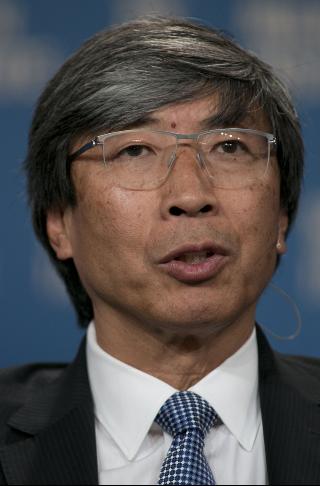
Patrick Soon-Shiong is a South African-American, born in Port Elizabeth, South Africa,  transplant surgeon, billionaire businessman, bioscientist, and media proprietor. He is the inventor of the drug Abraxane, which became known for its efficacy against lung, breast, and pancreatic cancer. Los Angeles Times owner.

President Joe Biden can reverse the impact of Trump’s actions. Will he?

First Day of Reopening – Westfield Topanga Mall

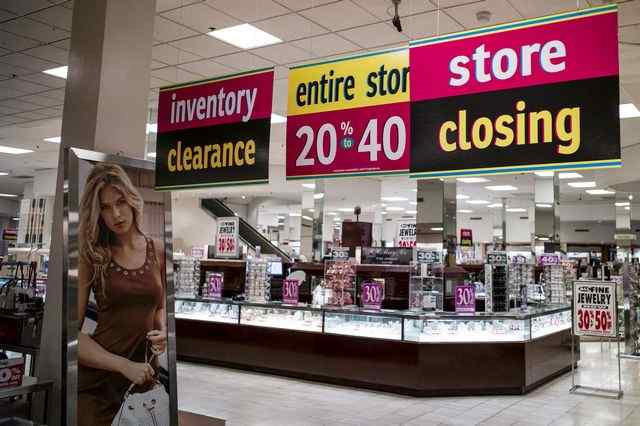
I was surprised to see so many cars parked in the northside Owensmouth garage.  It was a hot day.  I took a walk around the lower level.  At least one half of all the stores were closed.  Target and Macy’s was open but Nordstrom’s was closed.  H&M had all the mannequins undressed and there were stacked boxes of merchandise so I guess they will not be re-opening.  Jimmy Choo’s had no merchandise on the shelves which probably means they too are closing.  Some stores had notification of their planned openings and others posted on the doors they would be opening soon. Of course all the eateries and cholatiers were closed.    

This is not my video but definitely tells the story.

Car Ownership in the Coronavirus World

Let’s be honest. Things will never be the same in our economy until there is a vaccine. Some scientists are saying there may never be a vaccine.

If there is no vaccine how will we safely get to work?

On April 6, the head to the San Francisco Municipal Transportation Agency, Jeffrey Tumlin, tweeted “I never thought I’d say this, Please don’t take Muni if you have other options.”

As people start returning to work they will continue to practice social distancing. That translates into avoiding the use of public transportation and not carpooling. Uber an Lyft are out of the question.  They will need a car, all be it a small one, that offers high mileage for their daily journey to their jobs.

Many are predicting that sales of new and used cars will continue to decline for the rest of 2020. I have a different take.

Cars stored a Dodger Stadium. LA Times photo from a drone

The Los Angeles Times is reporting a glut of imported cars that are not being delivered to dealers as their sales have declined to a trickle. The Times article on  shows cars being stored at the Dodger Stadium parking lot, the Angeles parking lot and many other places that have large parking areas. That glut of unsold cars will quickly evaporate.

14.7% Unemployment But there are Job Openings

It is the highest unemployment since the Great Depression but the cause of this employment situation is totally different than the 1930s. Many economists are predicting that there will be a quick bounce back once most people return to work.

This situation is dependent on science finding a cure for coronavirus. Despite the opening of businesses many people will not be going out any time soon. Concerts, political rallies, sports events and other large events are not likely to happen for many months.

Meanwhile there are some businesses that are hiring. food and delivery services, security services, and food markets are looking for help. Pizza Hut, 7-Eleven, Papa John’s, GoPuff, FedEx, Dollar General, Dollar Tree, Bytedance, Netflix, General Motors, and Fidelity Investments are in the list of companies that are hiring.

For Donald Trump this will be a very difficult time.  The booming economy was going to be his number one reason for re-election.

US GDP turns negative, worst since 2008

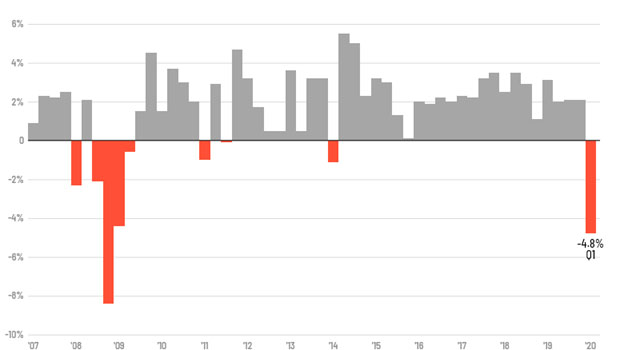
US GDP shrank at a 4.8% annualized rate in Q1 due to the coronavirus pausing the economy.  It is the biggest decline since the Great Recession as depicted in the graph posted here. 

Are we in a recession? Most experts agree that a recession happens when the economy shrinks for at least two fiscal quarters in a row — in other words, six months.  Note that this report is the period ending March 31.  That is a period that does not include all the massive layoffs that has resulted from the coronavirus that started in mid-March.  That leads me to suspect a recession was on the way even before the virus had really impacted the country.  We can all see where this is going.   

Some economists are predicting a rapid turnaround once stay at home orders are lifted.  Personally, I can’t imagine sitting in a restaurant until their is a vaccine for covid 19. I might walk through the mall and I will defintely go places to take picures with my mask in place. The Hollywood Bowl and other theater settings are out of the question.

Source: U.S. Bureau of Economic Analysis

Donald Trump is No Conservative

What happened to the conservative Republican Party?

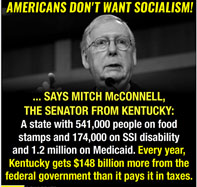
“America vs. Socialism” was the theme of the Conservative Political Action Conference this past February. “One of the most serious challenges our countries face is the specter of socialism. It’s the wrecker of nations and the destroyer of societies,” Trump said during his 35-minute address to the General Assembly on 09/24/19. But times have changed and now Trump is the promoter of give aways and subsides.

Thanks to the coronavirus, the United States is heading into a recession. 26.4 million people have applied for unemployment insurance aid since the country has been shut down. More high unemployment numbers may be on the horizon. Trump’s solution to high unemployment and closed businesses was ask congress to spend enough money to help everyone and every company pay their bills.

$1200 to each adult and $500 to each minor is being given to every legal resident and $600 per week to every person laid off from their job in addition to each states standard unemployment benefit for up to four months.

Businesses are to receive low interest loans. Some with strings attached and some with no strings.

This is the best example of a form of socialism that I can imagine. Democrats are delighted to go along with the big spending. Bernie Sanders, an avowed Democratic Socialist, is seeing his ideas being instituted. Donald Trump said there will never be socialism in America has proven to be the person most responsible for fulfilling Sanders ideas.

For sure it is Keynesian economics. Keynesian economics is an economic theory of total spending in the economy and its effects on output and inflation. John Maynard Keynes advocated for increased government expenditures and lower taxes to stimulate demand and pull the global economy out of the Great Depression. Keynes argued that an interventionist government could help smooth out recessions by using fiscal policy to prop up aggregate demand. Strategic government spending could spur consumption and investment, argued Keynes, and help alleviate unemployment. Keynes’s theories gave rise to a new dominant paradigm in economic thought, which was subsequently dubbed Keynesian economics. While still popular, some have argued that Keynesian economics has provided a pseudo-scientific justification for short-sighted elected politicians to run fiscal deficits and accumulate massive levels of government debt.

Where is Peter Navarro and Larry Kudlow? If they are supporting Donald Trump actions now they have realized that John Keynes was right all along.

Thank goodness Donald Trump never heard of Milton Friedman.