The Homeless in California

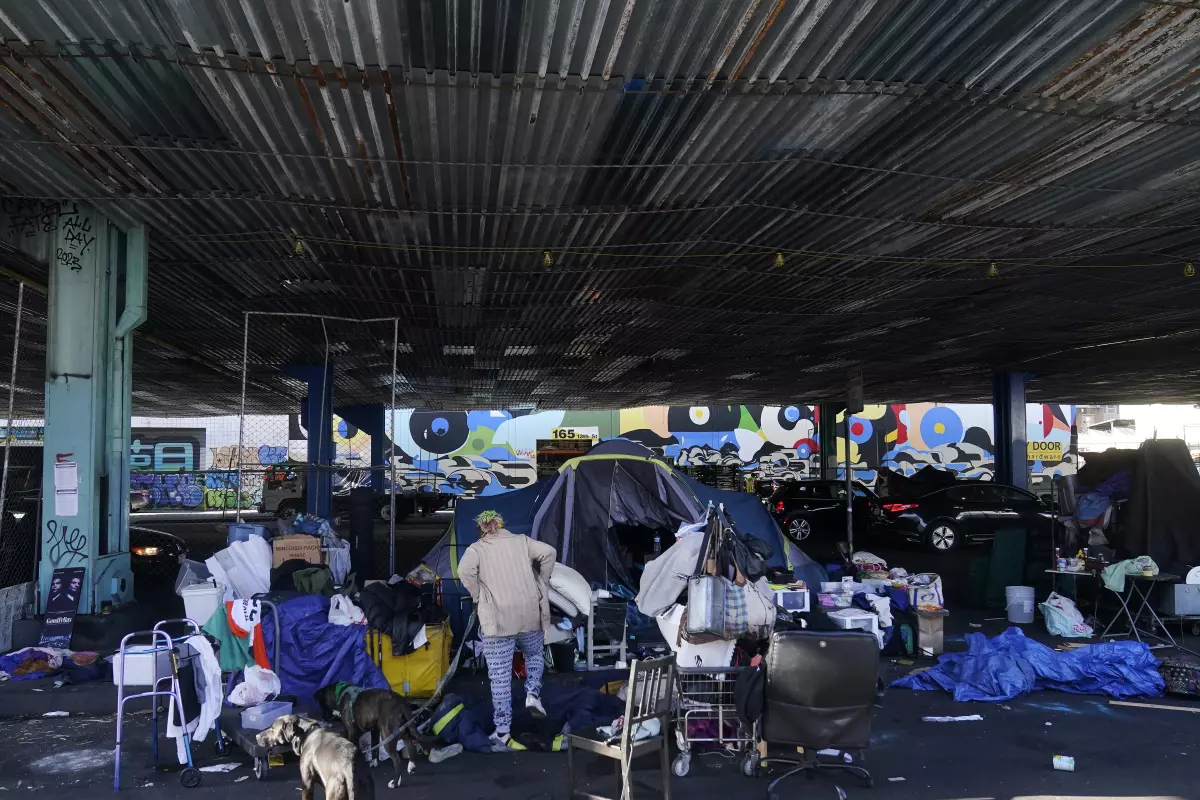
California has failed to adequately monitor the outcomes of its vast spending on homelessness programs, according to a state audit released earlier this month. It was reported that $20 Billion in the past five years have been spent on the homeless. Much of that money was spent on shelters and subsidizing rent. Still, homelessness grew 6% in 2023 from the year prior, to more than 180,000 people. This was reported in the Los Angeles Times on April 9, 2024.

A homeless encampment in San Francisco in 2023. (Jeff Chiu / Associated Press)

Now, Los Angeles Mayor Karen Bass is asking L.A.’s wealthiest Angelenos for help. On Monday in her State of the City address, she unveiled a new campaign that asks business leaders, philanthropic organizations and others to donate millions of dollars to an effort to acquire buildings so they can be used as apartments for the city’s homeless population.

Clearly the programs to help the homeless have failed. More money for programs that have not worked is a waste of money. Who is asking what are the causes of homelessness? Publicly no one. Simply throwing more money at the problem in the same fruitless way will not stop this growing problem.

I do not know the answer. We do not need politicians taxing us for programs that do not work.

California Proposition 1 will probably make homelessness in California worse

Story by The Editorial Board, The Orange County Register

No one disputes that California is struggling to deal with a spiraling homelessness crisis. Our state has more than 181,000 homeless people — a number that has increased a mind-bending 40% since 2019, per a CalMatters report. Whatever the state government is doing, it’s not working.

And what it’s doing, mainly, is throwing money at the problem. Figures from last year peg state homeless spending at $7.2 billion a year, or $42,000 per homeless person. That number accounts only for state spending and not the myriad local costs, including the amount of public-safety and public-works budgets that pay for related costs.

Instead of rethinking the state’s failed approach, Gov. Gavin Newsom wants to throw more money at the problem and give state agencies — rather than local governments, which generally have done a better job — more power to control funding. He wants voters to approve Proposition 1.

Modeled on Los Angeles’ failing Project Roomkey, the March 5 ballot initiative would run up $6.38 billion in debt to fund specific mental-health-related services. The general approach is understandable, given most homeless people suffer from mental-health and addiction issues. As always, details matter.

And Prop. 1’s details can make one’s head spin. As AP reported, it is “one of the most complicated and lengthy measures in recent years” and “takes up 68 pages” of the voter guide. As this editorial board explained, Prop. 1 is a “bureaucratic power grab that robs counties of mental health services funding” and runs up debt — even though a lack of funding isn’t the main problem.

Other news outlets are echoing these concerns. Another AP report quoted local officials who fear the measure “would worsen the problem.” That’s because it empowers the state to meddle in how counties spend nearly $3 billion in annual revenue funded by a 2004 tax on millionaires. If Prop. 1 passes, the state would take 10% of these mental-health funds, leaving less for programs that keep people out of homelessness.

Nearly a third of the Prop. 1 money would fund local-government efforts to build affordable housing via motel conversions and new construction. But that money would have to conform to California’s official — and misguided — “Housing First” policy that prioritizes construction of permanent housing, rather than temporary housing combined with social services.

The bottom line: “Housing First” diverts money from programs that could help the homeless get back on their feet toward a utopian concept that views homelessness mainly as a housing matter. Given the mental-health and addiction issues that are a main reason many people are homeless, it’s unwise to base state policy on the idea that the main solution is just giving them a permanent home. Even if it were a sound approach, the state has shown itself incapable of building affordable housing quickly and cost effectively, with many projects costing $800,000 or more a unit. There’s not enough money in the state budget to make a dent in homeless numbers at that rate.

There is no easy fix for California’s homelessness crisis, but the starting point, as always, is to do no more harm. Proposition 1 is a big-spending blank check that could indeed worsen the situation. By voting no, voters will help prod state officials to embrace programs that might actually work.

Columnist reflects the specter of losing his landline

By DENNIS MCCARTHY, Los Angeles Daily News

PUBLISHED: February 16, 2024 at 4:33 p.m. | UPDATED: February 16, 2024 at 4:34 p.m.

When they came for my typewriter and replaced it with a word processor, I grumbled but said nothing.

When they took away my vinyl LPs and replaced them with CDs, I begrudgingly put my Sinatra albums in storage and bought his discs.

When bookstores began closing, I built more shelves in my home and started my own bookstore.

Now, AT&T wants to take away my landline, and I say enough, already! Keep your hands off Ma Bell.

Her rotary phones were our lifelines — our memories of when you could stay in touch with the world with a phone, a newspaper and Walter Cronkite.

Today, I’m paying AT&T and Verizon nearly $400 a month to stay in touch, and I don’t have a clue of what’s going on.

In case you missed it, AT&T wants out of the old copper wire business that delivers landline access to around 25% of the households in California that still have landlines and a cell phone. It drops to around 15% with landlines only.

With the speed and technology AT&T possesses, you’d think they’d have texted me with the news, but they chose good, old, reliable snail mail to let me know. How’s that for a shot of irony?

It’s asking the California Public Utilities Commission for a release from its obligation to provide landline phone service in a large portion if its service territory in the state. My portion.

If approved, AT&T will give us land liners six months before it cuts the copper wires and we have to move to a private, unregulated carrier to keep our landline. If no alternative voice services are available, it will hang on until there are.

Not so fast, though. I kind of like the government keeping an eye on my phone bills. It keeps an eye on everything else for me.

I still have an old rotary phone I keep at the end of my desk for personal therapy. The number’s University 6-3230.

Whenever I’m feeling down or stressed out, I stick my forefinger in one of the 10 holes — digits 1 through 9, and zero — on the rotary dial, and give her a whirl, cradling the receiver between my chin and shoulder, like I used to.

That familiar clicking noise when you turn the rotary dial is a glass of chocolate milk and Oreo cookies to me. I’m back in the old neighborhood calling my high school buddies and old girlfriends in my mind.

Ma Bell hung from our kitchen wall and sat on a side table in the living room in the 1950s when two-thirds of American households had at least one rotary phone, thanks to that old copper wiring it now wants to cut.

Ma couldn’t fit in our pocket or do all the things smart phones can do now, but somehow we made do.

Calendars told us what day it was and watches told us the time. Newspapers, TV and radio news kept us in the loop.

Ma couldn’t check our messages or text our friends for lunch, but she gave us great reception and that’s all we were asking for. She never died in the middle of a call.

By the 1970s, push buttons began replacing rotary dials, and that therapeutic clicking sound was gone forever. By the 80s, most rotary phones were being phased out as Ma Bell sang her swan song in 1984.

Today, when my cell phone rings in my house, it’s a mad dash to the window in my den where I get the only good reception in the place and don’t lose the call.

When my landline rings, I take my time walking over to answer it. It never loses a call.

Before the California Public Utilities Commission makes a decision in April on AT&T’s request, it’s asking for public comments.

Comments may be posted on a CPUC link: tinyurl.com/yvp6fb7n

Also, the California Public Utilities Commission is holding two in-person public forms — Feb. 22 in Ukiah, and March 14 in Indio.

One virtual meeting to be held at 2 and 6 p.m. March 19. Information about these meetings and other information on the issue on the CPUC page here: tinyurl.com/yx9sv9zw

For more information on the issue of AT&T’s request to be relieved of its “Carrier of Last Resort” obligations in certain areas of California go online to: https://www.cpuc.ca.gov/attcolr

Or, better yet, give them a call on your landline at 866-849-8390.

For Ma Bell.
California energy officials vote to extend Diablo Canyon nuclear plant operations

But is it safe?

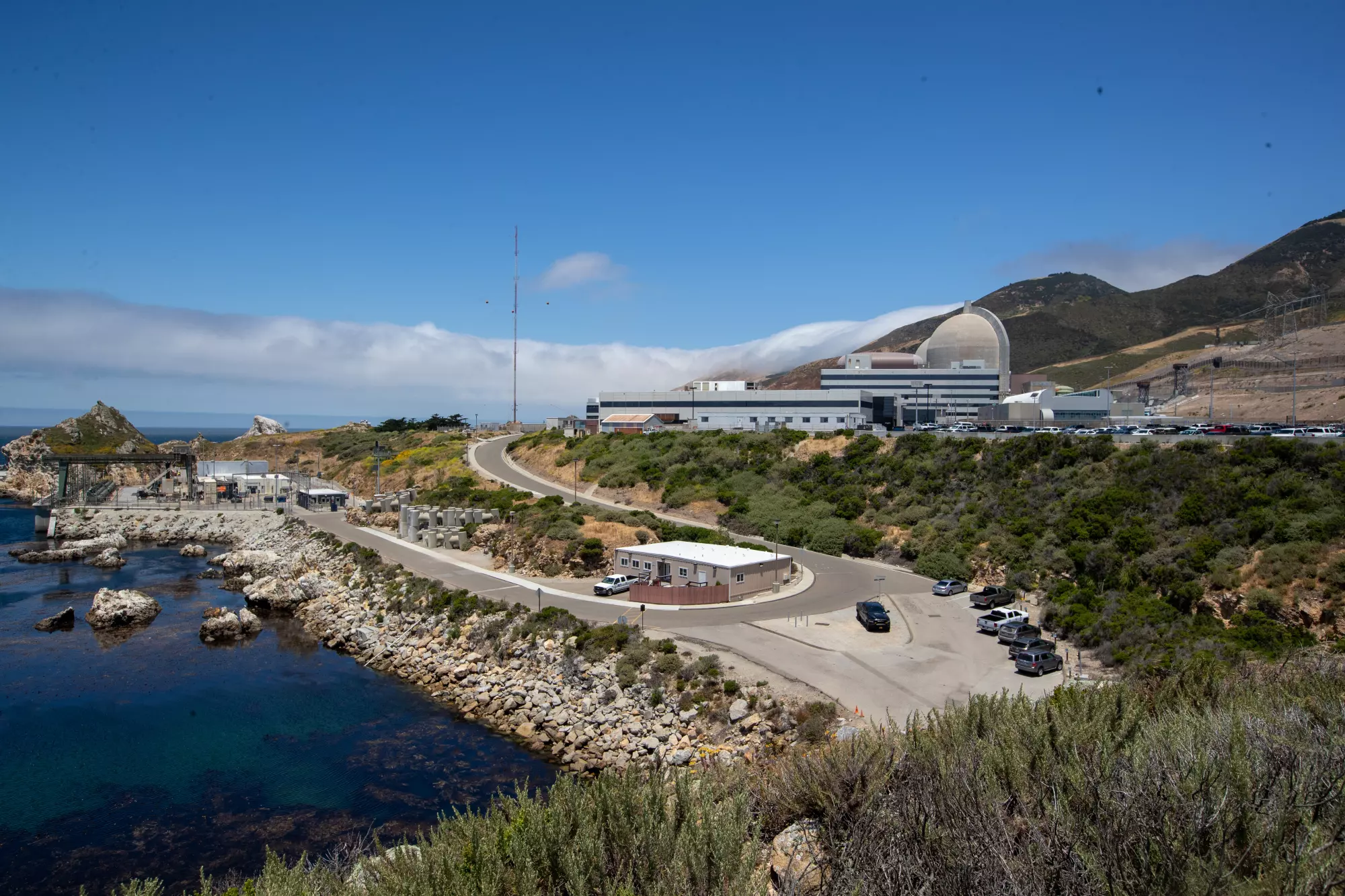
Pacific Gas & Electric’s Diablo Canyon Power Plant is the only operating nuclear plant in California. Gov. Gavin Newsom supports keeping the plant along the coast near San Luis Obispo operating past its planned shutdown date of 2025.

(Brian van der Brug / Los Angeles Times)

BY TONY BRISCOE STAFF WRITER for the Los Angeles Times

California energy officials have voted to extend the operation of the Diablo Canyon Power Plant through 2030, extending the life span of the state’s last nuclear plant an additional five years.

The California Public Utilities Commission approved a proposal to keep Diablo Canyon’s twin reactors online, overturning an earlier agreement to close the plant in 2025.

Three commissioners — Alice Busching Reynolds, John Reynolds and Karen Douglas — voted in favor. Commissioner Darcie Houck abstained and Commissioner Genevieve Shiroma was absent.

Thursday’s decision is expected to preserve a large bloc of the state’s zero-emission power supply. But it also raises concerns over the high cost and potential safety issues associated with operating an aging nuclear power plant.

The state utilities commission acknowledged that the costs associated with the plan were still unknown but were expected to exceed $6 billion. A federal safety review will also be conducted.

State energy commissioners emphasized that the extension should serve as a bridge to renewable energy and that the plant was not expected to operate beyond 2030. The decision, they said, was intended to bolster the reliability of California’s grid, which has narrowly avoided rolling blackouts during heat waves in recent years.

“The short-term extension of the power plant as proposed is a transitional strategy to help California weather the challenges of the energy transition, including the weather and climate extremes that we have experienced … and the cost challenges that we face in scaling up the clean energy transition so quickly,” Douglas said ahead of the vote. “So this is an opportunity for us to help bridge some years.”

Pacific Gas & Electric Co., the plant’s operator, lauded the commission’s decision, saying it will help provide the state with a dependable, emission-free source of energy.

“We’re grateful for the opportunity to answer the state’s call to ensure electrical reliability for Californians,” said Suzanne Hosn, a spokesperson for PG&E.

At a state meeting filled with heated discourse, supporters argued that California needed the power supply from Diablo Canyon to avert outages and meet the state’s climate goals. The plant supplies about 9% of the state’s electricity and 17% of the state’s zero-emission power.

“It was methodically determined that Diablo Canyon is in fact integral to the California electricity reliability,” said Brendan Pittman, a Berkeley resident, who supported the proposal. “It contributes substantially to California’s zero-emission targets and the costs for continued operation are not, quote, too high to justify.”

But a chorus of critics warned that the extension could bring rate hikes from PG&E.

Opponents also argued that the plant’s proximity to several fault lines makes it susceptible to earthquakes, and a significant risk.

The plant, which sits along the Pacific Ocean about 10 miles outside of San Luis Obispo, opened in 1985. A 46-page report by Digby Macdonald, a professor at UC Berkeley’s Department of Nuclear Engineering, suggested one of the plant’s nuclear reactors “poses an unreasonable risk to public health and safety due to serious indications of an unacceptable degree of embrittlement,” or deterioration due to prolonged exposure to radiation.

It is time for Senator Feinstein to Retire with Dignity

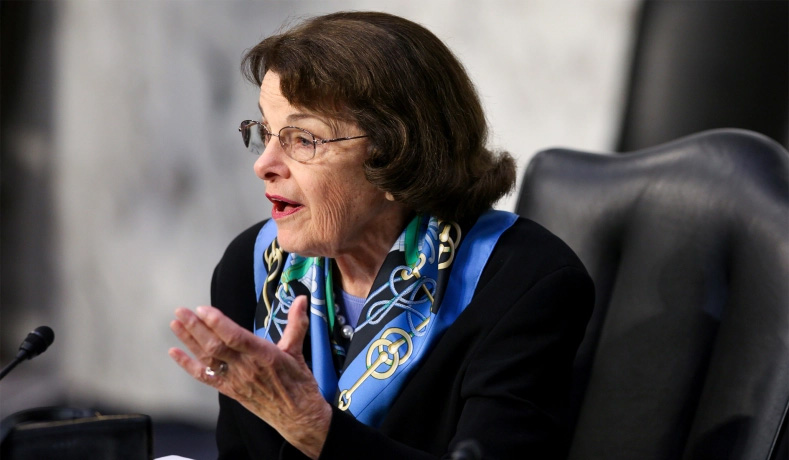
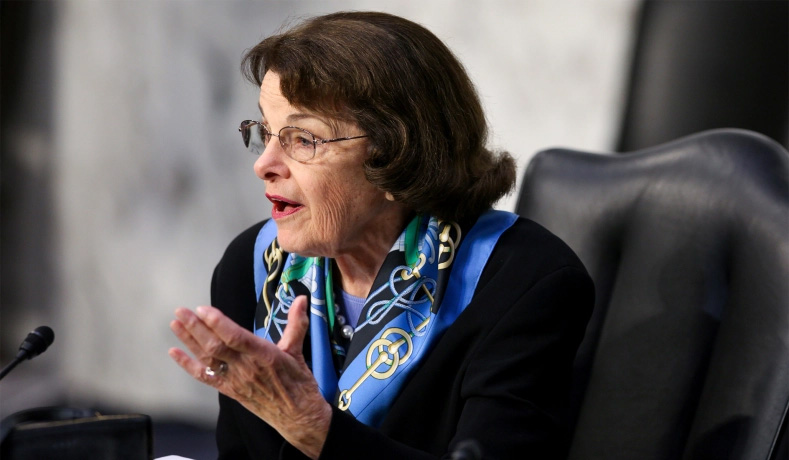
Dianne Feinstein October 14, 2020 questions Supreme Court nominee Judge Amy Coney Barret

Reaching the position of United States senator is a role almost every politician dreams to achieve.  There are no term limits and so once obtained they remain there almost to the day they die.  Eight senators died in office since the year 2000.  The last was John McCain who died August 25, 2018 from uncurable brain cancer.

In 2003, South Carolina’s Strom Thurmond retired at the ripe old age of 100 after 48 years in the Senate. The not-so-hidden secret was that his staff did everything but actually push the vote button during his last term, which ended six months before his death.

The current leader of the Republican caucus in the Senate is Mitch McConnell who is 81. Chuck Schumer, the Democratic leader is a mere 72.

Dianne Feinstein (D-Calif.), the oldest serving member of the Senate, at age 89, has missed 60 of the 82 Senate votes taken so far this year due to illnesses.  After announcing that she was not running for re-election, the following day she has forgotten that she had made the announcement.

With memory problems and the stresses of participation in the Senate it is time for Senator Feinstein to retire with dignity.

Then comes the next issue.  Governor Gavin Newsom will be deciding who will replace Feinstein.

Who wants to be a Senator from California?

California Senator Dianne Feinstein is 89 years old. Her term in office ends in two years. From all appearances she looks frail. The picture above was taken October 14, 2020 when she questioned Supreme Court nominee Judge Amy Coney Barrett. There are multiple reports about her ability to remember who she had just spoken to. The position of Senate president pro tempore is a position almost always given to the senior senator of the majority political party. That person would be Senator Dianne Feinstein. In an opportunity to become Senate president pro tempore, a position laid out by the Constitution to chair the Senate when the vice president is not present Senate Majority Leader Chuck Schumer told Democrats he won’t nominate Sen. Dianne Feinstein due to her mental acuity.

Feinstein has refused to say whether she will run for re-election. As many believe she will not run there is a growing list of well known congressional representatives who have declared their intention to run for the Senate seat. With the overwhelming Democratic registration in California the winner is almost certain to be a Democrat.

As of this date four well known liberal Democrats have announced their intention to run for the Senate seat. All four hold similar positions on most issues. Barbara Lee, Katy Porter, a rising star in the party who has notched close victories in competitive Orange County, Ro Khanna of Fremont, and now Adam Schiff representing Burbank and Glendale. Lee’s reputation is as the lone vote in Congress against the Afghanistan war in 2001.

So the question is how can these people run against each other when they have the same views on most topics? They all hold similar objectives. More gun control, eliminating the use of gas and oil, abortion access wherever you live, immigration reform are some of the topics they most likely will say are important and need new legislation.

They are left with just a few things. Name calling. Sewing petty doubts about their opponent’s loyalty to liberal ideas. The campaign is going to be very nasty.

Los Angeles is the City of Cars!

A state lawmaker from Los Angeles County has introduced legislation that would block freeway expansions in underserved communities across California.

Assemblywoman Cristina Garcia (D-Bell Gardens) said her bill would prohibit the state from funding or permitting highway projects in areas with high rates of pollution and poverty and where residents have suffered negative health effects from living near freeways. With crowded streets and freeways Garcia says people should be using public transportation.

Garcia is wrong.

This proposal to stop highway construction is a utopian dream by environmentalists that will impact the lowest paid workers who will be forced to have longer commutes to work in unsafe public transportation.

Like it or not California’s life blood is the automobile.  Los Angeles is the city of cars. More than our means of transportation to our jobs, cars take us on trips to our favorite destinations on the coast or the mountains.  While the Metropolitan Transit Authority is building new lines to reach more parts of the community the ridership on buses and light rail has declined in the past few years.

Arguments that freeways have impacted minority communities more than other part of Los Angeles just does not hold water.  Examples are the Hollywood Freeway that diagonally goes from Downtown Los Angeles to the San Fernando Valley.  The Golden State Freeway that parallels the railway line and original surface street highway in the San Fernando Valley.  The Harbor Freeway parallels Alameda Street from Downtown Los Angeles to Long Beach.  The Ventura Freeway paralleling the original U.S. 101 was cut through high priced home neighborhoods from Studio City to Woodland Hills.

Public transportation has too many issues.

– Crime on public transportation is a known fact for most people.

– Seating is uncomfortable.

– Bus service is infrequent and unreliable.

Angelinos love their cars.  They take owners directly to their destinations.  The seats are comfortable and the music or talk on their radios is their choice. 

Los Angeles is the city of cars and most of us love it.

LA Auto Show Entrance 2015

California Abortion Law

This will get the attention of those wanting to stop abortions.

California guarantees the right to abortion in statute and the state constitution. It covers the cost of abortion for lower-income Californians on Medi-Cal, and also requires private insurance to cover it. And the state has rejected the idea of requiring waiting periods or parental consent for abortion.

If the fetus cannot survive outside the womb, a pregnant person can seek an abortion for any reason.

After viability, only if continuing the pregnancy threatens the life or health of the pregnant person.

It’s up to a physician’s “good faith medical judgement” — in practicality, most doctors consider a fetus viable at 24 weeks or once a fetus weighs 500 grams.

My source for this information is Cal Matters

Once Roe vs Wade is overturned those seeking an abortion will be coming to California if their state bans abortions.

California is in a Drought

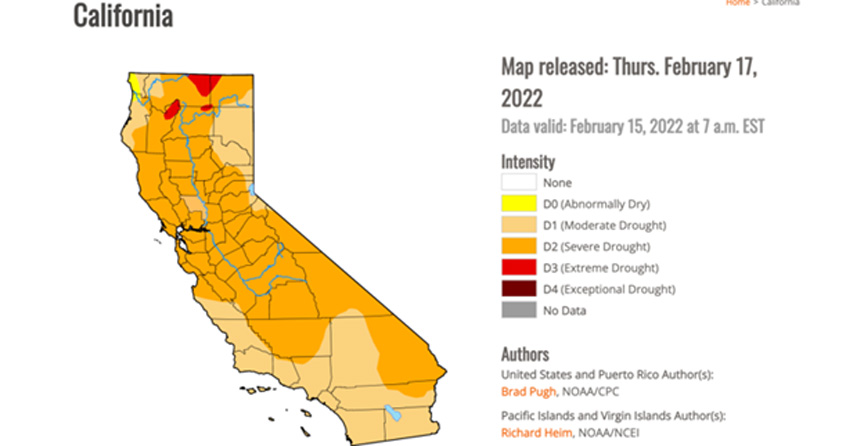
The U.S. Drought Monitor for California shows all of California in moderate to severe drought. January and February are the rainy months but December 2021 was the rainy month this rainy season. So far the rain received almost matches the 2020-2021 season.

Silence of our elected leaders is astonishing. Environmentalist opposition to desalination facilities is absurd. When will Governor Newsom and the legislature take action?

© Provided by NBC Los Angeles U.S. Drought Monitor for California for Feb. 17, 2022.

Where’s California invitation to Biden’s democracy summit?

President Biden, did California’s invitation to your Summit for Democracy get lost by the postal service?

Or did you just forget to put us on your list?

Either way, you snubbed California. The Golden State isn’t just way more democratic than many countries you included, like increasingly authoritarian Poland, India, and the Philippines. California also has more people all but a handful of countries at the summit.

More pointedly, where’s your gratitude, dude? California is considerably more democratic than the United States as a whole. And you wouldn’t be governing the country now, much less holding a democracy summit, without the votes of Californians.

But, maddeningly, instead of asking California to send a delegation, you missed an opportunity to address criticism that the American government shouldn’t be holding such a summit when its own democracy is backsliding.

Perhaps you didn’t invite us because you feared that we’d make you look bad. People might point out that the United States, over 245 years, hasn’t managed to hold a single national election. Instead, all elections in this country are at the state or local levels, even for the nation’s highest office, which is why you don’t even have to win the most votes to be elected president. Congress, as a supposedly representative institution, is a joke, with a gerrymandered House and a Senate that gives two seats each to California and Delaware. And virtually all hard questions in the United States are decided by nine unelected and unaccountable lawyers with life tenure.

And while you tolerate voter suppression in many states, California is busy making it easier for people to vote. Californians also allows its citizens to make the laws and amend the constitution themselves through direct democratic tools that do not exist at the national level. At the local level, California communities are adopting other democratic advances — including ranked choice voting systems and participatory budgeting. 

Meanwhile, we’ve noticed, Mr. President, that you are dumping all the trickiest democratic issues — from voting rights to migrants’ rights — on your Californian vice president, while  allowing your staff to undermine her at every turn.

All that said, we know California isn’t perfect. We only look that way compared to your government.

If you’d invited us, we might have had to answer for our many failings. We have centralized so much fiscal power in state government that our local governments are little more than beggars. We’ve also invested a dangerous amount of authority in our governor, who has extended his own pandemic-era power to rule by decree into March 2022.

And for a place that takes so much pride in its diversity, we are terrible at representation. Indeed, Californians are the least-represented people in America. Because of our failure to expand the state legislature over the past century to keep up with population, our legislative districts are twice as populous as any in America — every state senator represents one million Californians, and every assembly member half-a-million.

Our local governments are similarly small and unrepresentative. If we had been invited to your democracy summit, we would have had to leave Los Angeles at home. It’s embarrassing to explain why the city of Los Angeles has just 15 council members for its 4 million people and L.A. County has just five supervisors for 10.3 million.

Given all these failings, it sure would be helpful if we could join a meeting with some of the world’s most democratic countries. Learning more about summit invitees like Taiwan, which has built a successful democracy in the shadow of an autocratic state, and Switzerland, which does direct democracy better than California, could help us raise our game.

President Biden, we know it’s too late for you to invite a California delegation for this year’s online summit. So, why not invite California to next year’s in-person follow-up right now?

This article originally appeared on Ventura County Star