Companies and People Are Leaving California

Over the past several years, a disturbing trend has been developing in California. Once known as the bastion of commerce, manufacturing, and business growth. The Golden State is saying goodbye to dozens of businesses every year, and the numbers seem to be increasing as companies are leaving California.

California has lost huge players like Toyota, Comcast, and many others is cause for the state to sit up and take note. The exodus is especially dramatic in 15 California counties, with Los Angeles being the worst.

It’s not just businesses. It’s the many rich who are exhausted by the ever higher taxes and the ever increasing cost of living. Elon Musk has decided to move to Austin, Texas. He is the second richest person in the world. His two major companies are still in California but the message is clear. It’s too expensive to live in in this state. I agree.

I know many of the people personally and through social media sites who have moved not only to other states but to other countries.

What I find most disturbing is the shrugs of our elected leaders when they learn of the departure of those big businesses and wealthy people. It seems they have raised taxes to discourage businesses from remaining here.

One can only wonder why our elected leaders are so quiet.

West San Fernando Valley Isn’t a Suburb Anymore

The Promenade 2035 project will include a new sports arena, two hotels, a 28-story office tower and more than 1,400 new apartments. This development, that will take 15 years to complete, will impact the West San Fernando Valley bringing more residents, businesses, and traffic. The idea of the suburban life style will be gone.  It is the price citizens of this city will pay for having an area that so many want to enjoy. L.A. approves $1B ‘mini-city’ in west San Fernando Valley with sports arena, hotels, office and apartment units | KTLA

L.A. approves $1B ‘mini-city’ in west San Fernando Valley with sports arena, hotels, office and apartment units

California’s NIMBYs are the biggest impediment to dealing with homelessness

A letter to the editor of the Los Angeles Times. Well written and says what I have been saying for the last two or three years.

To the editor: While columnist George Skelton focuses on the possibility of higher taxes in order to address the homelessness problem in California, he does not discuss what makes any policy solution next to impossible: NIMBYism.

There are more than 150,000 people out on the streets in California, but few people are willing to accept any kind of housing for these people in their neighborhoods, where it may affect the value of their homes, businesses and so on. Yes, it’s tough dealing with people who have mental health issues, problems with addiction and little (if any) access to help.

Tell that to business owners and residents in places where homeless encampments are part of everyday life. Someone is sleeping in front of your storefront in Sacramento or defecating in an alleyway in San Diego, and you’ve got to deal with it. But for the rest of us, for the most part, it’s out of sight, out of mind.

Gov. Gavin Newsom cannot help people find their moral compass. That is on us. Until then, there will be no solution. The money involved and where it will come from is really a secondary issue.

Edgar Kaskla, Garden Grove
The writer is a lecturer in the political science department at Cal State Long Beach and the author of the book, “California Politics: The Fault Lines of Power, Wealth and Diversity.”

Housing for the Homeless – Just not in My Neighborhood

We start with the message that homelessness is a sad situation and an issue that faces all cities across the United States. Even the president has said that it is a disgrace.

The city of Los Angeles has over 90 neighborhood councils that are advisory groups that recommend actions to the city council. Everyone of them has a committee trying to devise plans to help the homeless. Beyond those neighborhood councils there are many other groups working to help the homeless.

The public voted for taxes to help build homeless 34 facilities around the city. $230 Million would be raised through the property tax. The mayor has said he wants at least one homeless shelter in every city council district.

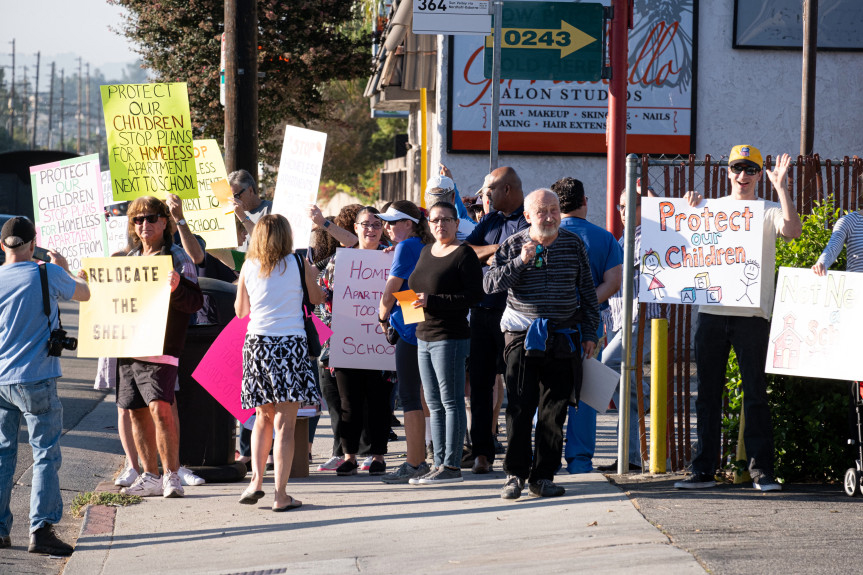
A majority of voters may have wanted to provide housing for the homeless but not in the community of Chatsworth. Chatsworth residents and parents of students at Chatsworth Park Elementary school protest the planned homeless housing project near the school on Topanga Blvd near Devonshire Street. Their signs told it all reading “Protect our children.” There is the issue. Fear that homeless people are child molesters.

In my nearby community I have heard the same argument and more. They are all dangerous drug users.

Sure. Help the homeless. Just not in my neighborhood.

Now this is a Natonal Emergency

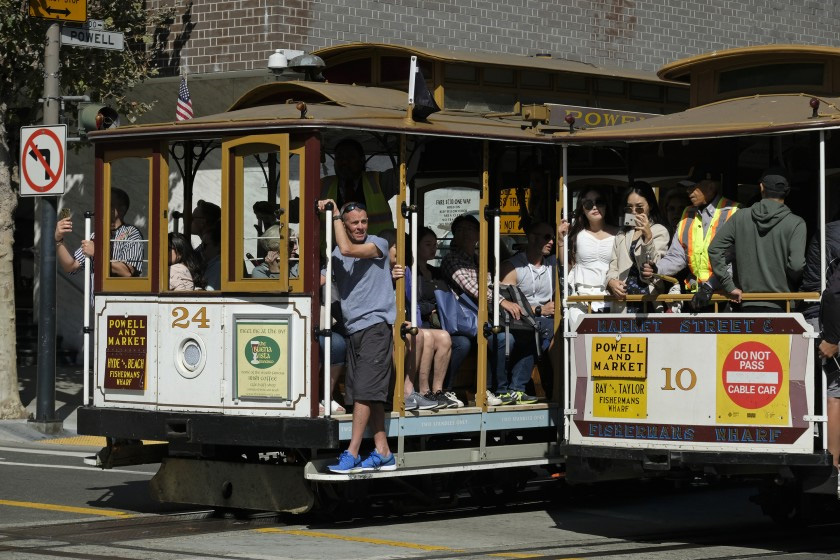
San Francisco’s cable cars will stop running for 10 days starting Friday for repairs. San Francisco Municipal Transportation Agency will be refurbishing gear boxes, braking systems, and everything else to ensure that everything is “running safely and reliably.”  If you haven’t been to that city you should know that it is at least as exciting and interesting as Manhattan (NYC).  The cable cars are more fun than anything at Disneyland.  They connect downtown with Chinatown and Fisherman’s Wharf.

The cars will be back on service September 23.


Market and Powell in downtown

At Fisherman’s Wharf before the car is crowded


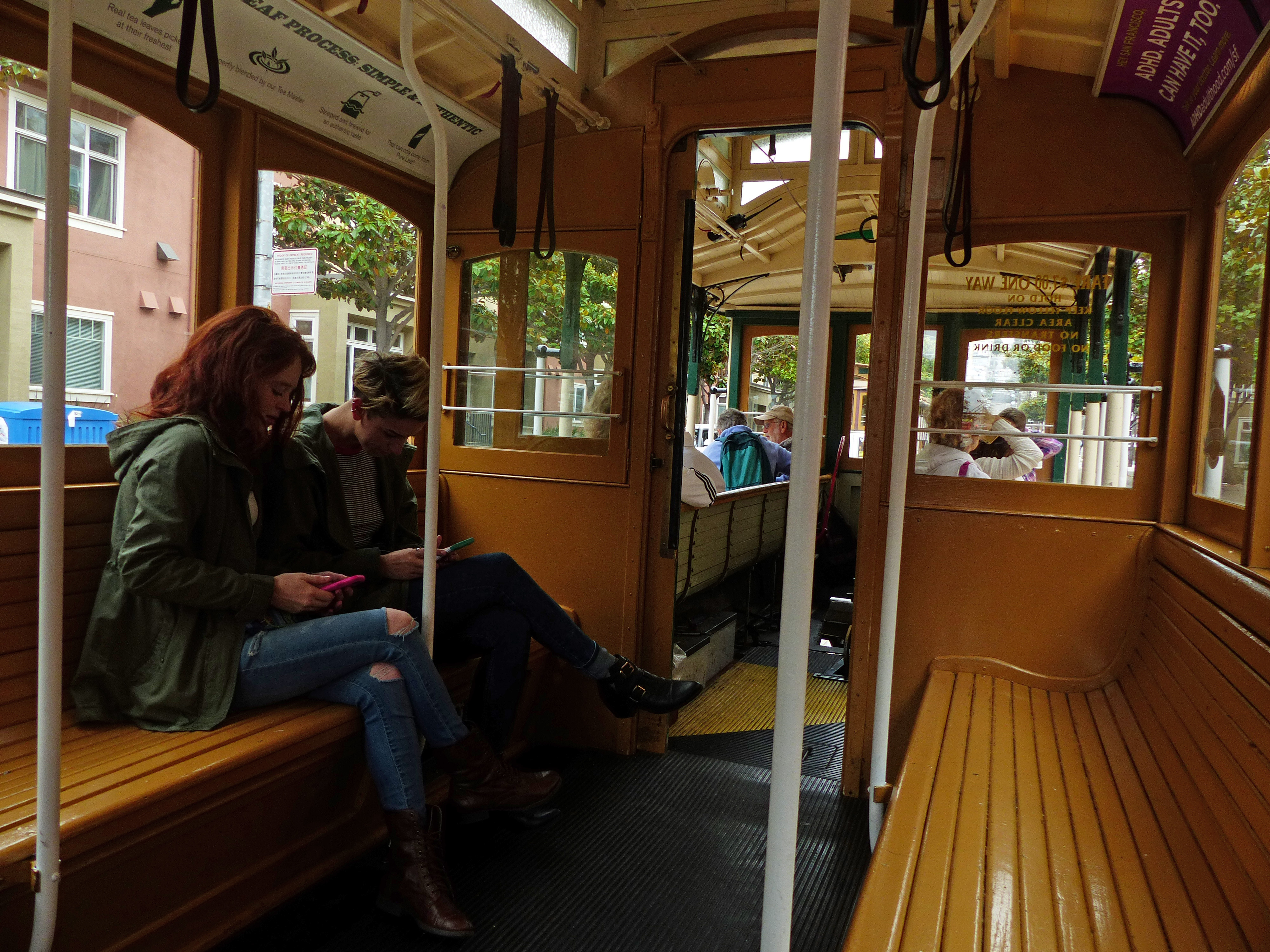
View of the bay while riding on a cable car

Summary of the past week in the News

  1. Free tuition at community colleges


KCRA Channel 3 Sacramento and CNN: California will provide free tuition for two years of community college to first-time, full-time California students. Full time students are those taking at least 12 units per semester. It does not include the cost of books, housing, or any other expenses. This is the same program that existed in the 1950s.


  1. Is this an invasion of privacy? Is this big brother?


Business Insider: American Airlines has started using facial recognition technology to let passengers board planes without their boarding pass.

LA Times: Delta Air Lines began using facial recognition technology at Los Angeles International Airport on Friday, installing cameras to identify passengers at one boarding gate, with plans to add more. Critics of the technology say the images collected by the cameras can be stored and used to violate the privacy of innocent people, and that the technology is more likely to misidentify women and people of color than white men.

 Washington Post: The doorbell-camera company Ring has quietly forged video-sharing partnerships with more than 400 police forces across the United States, granting them access to homeowners’ camera footage and a powerful role in what the company calls the nation’s “new neighborhood watch.”


  1. Trump has repeatedly promised to complete 500 miles of fencing by the time voters go to the polls in November 2020

 

Washington Post: The president has told senior aides that a failure to deliver on the signature promise of his 2016 campaign would be a letdown to his supporters and an embarrassing defeat. When aides have suggested that some orders are illegal or unworkable, Trump has suggested he would pardon the officials if they would just go ahead, aides said. He has waved off worries about contracting procedures and the use of eminent domain, saying “take the land,” according to officials who attended the meetings.


  1. A mom with a license plate that reads ‘PB4WEGO’ wins a battle with the state to keep it


If you’re a parent, heading out the door before a car ride with the kids probably goes a little like this:

Parent: “Did you go to the bathroom?”

Child: “No, I don’t have to go.”

Parent: “Go now, you may not get the chance later.”

Wendy Augur has had this license plate for 15 years. New Hampshire’s DMV demanded she turn in the plate because it had a phrase relating to “sexual or excretory acts of functions”. In a hearing it took the governor’s intervention to allow her to keep the plate.


  1. No homeless housing in Chatsworth (a “middle class” community in Los Angeles)


LA City Councilman John Lee opposes a proposed homeless housing site on Topanga Canyon Blvd. “I don’t think the site was really well thought out. It was thrown at the community, and I don’t believe the site is going to work” he told the LA Daily News. The location is along a stretch of the boulevard that is all commercial buildings. He implied he had another location in mind. The neighborhood council has been on record opposing any homeless shelter in the community.


  1. UCLA study on homelessness

1 – Homelessness has surged 75 percent in six years. An estimated 57,000 people will be without a home in Los Angeles tonight. Many of these people are families and children; veterans and friends.

2 – 26 percent of homeless individuals in California are severely mentally ill, 18 percent chronically abuse drugs and 24 percent are victims of domestic abuse.


  1. Latest round of Trump’s tariffs on China takes effect on many consumer goods


New tariff took effect Sunday Sept. 1 (Labor Day). The tariff list includes 90 types of boots, slippers, leather shoes and other footwear; more than 125 kinds of watches and clocks; various color TV sets video monitors; computer printers, all Apple products (except the iPhone that will be impacted on December 15), and hundreds of clothing items. In all, about $110 billion worth of imported products from China are newly subject to 15% tariffs.


  1. Williamson deletes tweet suggesting ‘power of the mind’ can deter Hurricane Dorian

Democratic presidential candidate Marianne Williamson posted and then deleted a tweet Wednesday morning that suggested the “power of mind” could deter Hurricane Dorian from slamming into the US.

“The Bahamas, Florida, Georgia and the Carolinas…may all be in our prayers now. Millions of us seeing Dorian turn away from land is not a wacky idea; it is a creative use of the power of the mind. Two minutes of prayer, visualization, meditation for those in the way of the storm,” her now-deleted post read.

Williamson did not qualify for the next debate scheduled for September 12.


  1. A scary warning: Don’t do a thorough job: A Threat?

LA Times: As a high-level government auditor, Beth Kennedy has investigated or reviewed the spending of many city of Los Angeles departments without serious incident, she says. But now, Kennedy, a chief internal auditor for City Controller Ron Galperin, is alleging that she was warned not to delve too deeply into controversial contracts awarded by the Department of Water of Power, according to a legal claim she filed against the city last month.

Kennedy claims that a superior in her office told her in May that, for personal safety reasons, she should “not be as thorough” with her audit. Then in June, someone smashed a glass patio door at Kennedy’s home in Orange County, according to La Habra police.


  1. Squirrels listen in on bird chatter to decide if they’re safe, and that’s scientifically significant


A new study published in the journal PLOS One (a scientific journal) concludes grey squirrels use the sounds of nearby birds to infer the absence or presence of predators. According to the researchers, bird sounds are “likely to indicate safety because such sounds are generally given when imminent threat has not been detected.”

So after the indicated presence of a threat in the red-tailed hawk, the squirrels were more likely to relax if they thought other species around them were relaxing too.


  1. California’s new plan to cap rent


California lawmakers are on the verge of approving one of the only state laws in the nation to limit rent increases after Gov. Gavin Newsom announced a deal with legislative leaders last week on a bill to cap annual rent hikes.

Why do this?

In Boyle Heights (a low income community in Los Angeles), apartments without rent controls saw rents increase from a median $1,200 a month to $1,700 between 2016 and 2017. Such rent hikes would no longer be allowed under the proposed legislation.


  1. Donald Trump the weatherman


He falsely claimed that Hurricane Dorian was likely to hit Alabama. Then he repeated the claim after the National Weather Service debunked it. Then he insisted that the media, not him, was in the wrong. Then, to try to prove his point, he showed the media an outdated map that had clearly been altered with a Sharpie marking pen. Then, trying again, he tweeted out an unaltered map that was too old to prove his point. Then, trying again he tweeted out some more old maps. Finally, Trump got his homeland security adviser to issue a statement vouching for him.

Even today there have been threats that NOAA employees would be fired for contradicting the president.

The object was obvious. He did put himself in the forefront of the hurricane threat and that was his purpose.


And that’s the way it was!

Voting motivated by fear

There are 12 propositions on California’s November 6 ballot. California’s secretary of state mailed a 71 page Voter Information Guide to every household where there are registered voters. That is a good thing. The bad thing is that only the most diligent readers are likely to read the analyst reports and the arguments that are provided.

The actual laws themselves are not part of the mailed information. The major sponsors of the proposals are also not included. Instead readers are provided with website addresses for more information.

Most of us will not avail ourselves of that on line data. Instead we will be seeing the non-stop television commercials that will be coming with even more ferocity for the last two weeks before election day. Already I have seen commercials for propositions that I support that are obvious lies.

Proposition 6 that would repeal a recently raised gas tax for road improvements is a perfect example. I support the tax. But one commercial contended that repealing the tax would endanger fire fighters and police due to poorly paved roads. Many of the roads in my neighborhood are in need of repair but I have not seen even one situation where road conditions have impacted those services. Clearly that television ad was meant to create fear.

Other ads on topics related to subjects from taxes to dialysis may have similar fear mongering.

Honesty in providing accurate information is only in that 71 page circular. How many will read it?

I am quite certain that this situation is going on in every state and municipality.

Venice Skatepark in Venice Beach, California


Not far from my home the boardwalk at Venice Beach was known more for bodybuilding than skateboarding, but since 2009 the thrashers have been giving the weightlifters some real competition. People-watchers looking for a little high-speed drama congregate at the Venice Skatepark, a large concrete plaza set right into the beach. Skateboarders maneuver through two swimming pool-like bowls, a twisting and turning snake run, and a section replicating an urban street with steps, platforms, and metal railings. The city-owned property is free to use, but mastering the skills to tackle this flow takes time, practice, and a lot of nerve.

Yes that mountain horizon is on the masthead of this blog.

California Alone is the Fifth Largest Economy in the World

It is accurate to say that California is a challenging place to live if you are not a millionaire. It is very difficult for median income families.  Median household income for California was $67,739 in 2016. Housing costs are among the highest in the nation. Gasoline is currently averaging $3.63 a gallon for regular. That gasoline price is matched only by Hawaii.

Despite those challenges California’s gross domestic product is only surpassed by the entire United States, China, Japan, and Germany.

The reason for this situation is the multiple economic engines.

-Silicon Valley: the area south of San Francisco is the home of Facebook, Alphabet previously known as Google, Hewlett-Packard, Oracle, Intel, Cisco Systems, Nvidia, Netflix, Tesla, and many less known tech companies.

-Hollywood: Really all of Los Angeles is the television and movie entertainment capital of the world. CBS, NBC Universal, Disney, Paramount, Sony, and Warner Brothers are all in metropolitan Los Angeles.

-Tourism: According to the Los Angeles Tourism & Convention Board, 48.3 million tourists visited L.A. in 2017, an increase of more than 2 percent over 2016 and the seventh consecutive year of record-breaking results. The total number of visitors to San Francisco last year rose 2.3 percent to 16.9 million.

-Import and Distribution: The two largest ports in the United States are Long Beach and Los Angeles. 40% of all goods imported enter through those two ports. They are then moved to distribution warehouses in Los Angeles, Riverside, and San Bernardino.

-Agriculture: California produces a sizable majority of many American fruits, vegetables, and nuts: 99 percent of artichokes, 99 percent of walnuts, 97 percent of kiwis, 97 percent of plums, 95 percent of celery, 95 percent of garlic, 89 percent of cauliflower, 71 percent of spinach, and 69 percent of carrots (and the list goes on. California is the leading US state for cash farm receipts. I have seen California strawberries in Toronto Canada.

-Manufacturing: Manufacturers help to drive California’s economy, with $142.39 billion in manufactured goods exports in 2016.

These are the reasons that nearly 40 million people see the state as the heart of economic opportunity.

Capital punishment – Is it worth retaining?

A driver plowed a rental van through a crowd of pedestrians on a busy Toronto sidewalk Monday, killing 10 and injuring 15, in Canada’s worst mass killing in almost three decades.

Capital punishment was removed from the Canadian Criminal Code in 1976. It was replaced with a mandatory life sentence without possibility of parole for 25 years for all first-degree murders.

After the killing spree on Yonge Street will there be a change in attitude about capital punishment in Canada?  I have no idea.  Canadians are peace loving people.

California does have a capital punishment law.  Killers are sentenced to death.  As of Aug 24, 2017 there were 747 people in their “death row.” Due to delays and legal challenges, the state hasn’t executed a prisoner more than a decade. Only 13 men have been put to death since capital punishment was restored in 1978.

Clearly California really does not put killers to death.  Giving those killers a death sentence probably gives satisfaction to the families that lost loved ones to killers.  Is that a good enough reason to keep the law in place?  It has been said that Death row inmates have a greater likelihood of dying of old age than actually facing their death through a lethal injection.

A total of 57 countries retain the death penalty law, according to Amnesty, while executions were recorded in 23 nations in their statistics for 2016.

My belief is that if death penalties were actually carried out in a timely manner (trial – found guilty – limited delay for trial errors – limited delay for claims of innocents) then there would be less killing.