40 million and counting

I admit to being a numbers wonk.

Twelve percent of the United States population lives in California. It was that way in the last national census. So we are not growing faster than the national population. California’s major cities have run out of space so they must either build taller apartment houses or simply resign to the fact that they have reached to maximum population limit. The consequence is the ever increasing price for rental apartments and individual homes.

California is within earshot now of 40 million residents — 39,256,000 — based on analysis of housing data and other measures. The way these surveys rely on slightly old data, in reality California is possibly already over 40 million.

The state Department of Finance’s estimate also pegs the city of Los Angeles at over four million population for the first time since the state has done this report. Or not quite triple the population of California’s second-largest city, San Diego. Here is the top 10:

  1. Los Angeles   4,030,904
  2. San Diego     1,391,676
  3. San Jose       1,042,094
  4. San Francisco  866,583
  5. Fresno             520,453
  6. Sacramento     485,683
  7. Long Beach     484,958
  8. Oakland          422,856
  9. Bakersfield      379,110
  10. Anaheim          358,136

Here is the full report if you like to peruse the stats.

California’s population was 10.7 million people in 1950. In 1960 at 15.8 million people it was behind Canada that had a population approaching 18 million. Today Canada’s population is lagging behind at 36 million and NYC has grown by about 1 million people since 1990.

We all ought to understand the reasons. They are the weather, arts and entertainment, high technology, outstanding colleges and universities.

$15 Minimum Wage: Booby Prize for American Workers

By Joel Kotkin

(Joel Kotkin is R.C. Hobbs Presidential Fellow in Urban Studies at Chapman University. He is executive editor of New Geography … where this piece originated and executive director of the Center for Opportunity Urbanism.)

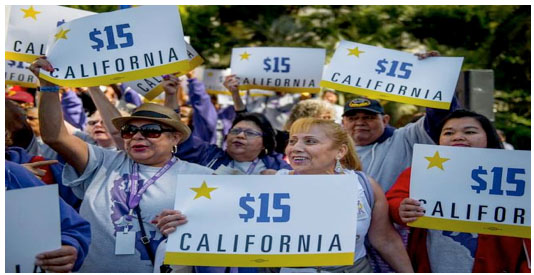
Almost everything that Mr. Kotkin has written is accurate. It is something those who pushed the $15 minimum wage law in Sacramento knows. The question Mr. Kotkin and everyone objecting to the new minimum wage fails to answer is: How does this society contend with a population that “has seen a rapid decline in traditional blue-collar jobs?” Those blue-collar citizens are the driving force behind the crowds drawn by Donald Trump and Bernie Sanders. They may not have the answers but they understand that the masses are in dire straits. Or perhaps there is no solution and Mr. Kotkin is correct in concluding that we are going to return to a feudal society.

This article has been abridged.
$15 California

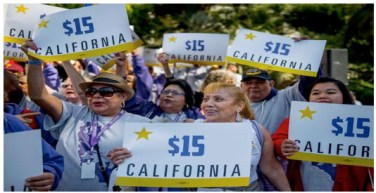
NEW GEOGRAPHY–In principle, there is solid moral ground for the recent drive to boost the minimum wage to $15, with California and New York State taking dramatic steps Monday toward that goal. Low-wage workers have been losing ground for decades, as stagnant incomes have been eroded by higher living costs.

Yet if the campaign to boost the minimum wage reflects progressive ideals, the underlying rationale also exposes the failure of these high-priced cities to serve as launching pads for upward mobility for the vast majority of their residents. In effect, the fight for $15 is a by-product of giving up – capitulating on the idea that better opportunities can be created than the menial service jobs that increasingly are the only opportunities for the urban poor. Higher wages will make these jobs moderately more tolerable, while further cementing the wide gulf between the haves and have knots.

New York, San Francisco, LA and Seattle are at the forefront of a new urban economy, based on industries such as finance, technology and media, that generally creates jobs for the highly educated only. Virtually every region at the cutting edge of the minimum wage movement has seen a rapid decline in traditional blue-collar jobs — notably in manufacturing — which often paid well above the minimum wage, and offered potential for further individual advancement.

In these and other core cities, we are seeing something reminiscent of the Victorian era, where a larger proportion of workers are earning their living serving the wealthy and their needs as nannies, restaurant workers, dog-walkers and the like. In New York City, as of 2012, over a third of workers were employed in low-wage service jobs, a percentage that rose through the recovery from the Great Recession, according to a study by the Center for an Urban Future.

Given shrinking opportunities for middle and working class people, it’s not surprising that many seek a more direct redress from the government.

Essentially the minimum wage campaign rests on the notion that traditional middle class uplift cannot be achieved. The problem is, a $15 an hour income represents hardly enough to pay the rent for a small apartment anywhere near the blue cities where the new minimum will hit first.

The  impact in California will, if anything be larger, as the wage hike will be imposed in a wider fashion on a hugely diverse state.

To be sure, higher wages could be a blip in wealthy and thoroughly de-industrialized places like San Francisco – if higher labor costs boost the price of beet-filled ravioli, it doesn’t undermine the market in a place where hipsters and elite workers still have dollars to spend.

Perhaps the greatest beneficiaries of the minimum wage hike will not be the bulk of lower wage workers in blue states, but the people who increasingly dominate their economies.

And as the American Interest recently predicted, those most likely to benefit down the line from the higher wages will be the tech companies that will come up with the software and automated systems that replace the service jobs now made less economically competitive by the wage hikes. It’s not a loony fringe concept: the President’s Council of Economic Advisers recently estimated that lower-wage service jobs have an 80% probability of being automated.

So in the end, a $15 minimum wage, set in the low growth economy of our times, may end up boosting the very class-based hierarchies that are already increasingly evident. Ultimately it may represent a case of a well-intentioned measure that, while sounding radical, only accelerates our road back to feudalism: a society dominated by the few where many depend on the generosity of their betters and the middle class, already shrinking, fades into the dustbin of history.
Another Day in Hell?

  Nope. It’s just winter in Los Angeles.

Summer weather, beautiful views, everyone out in shorts.

We are in the midst of one of the warmest summers, oops I mean winters, in history. Some parts of the metro area seeing 90°F temperatures. San Fernando Valley 87°F. This will continue for at least another week.

Entrance Road to Observatory

Entrance Road to Griffith Park Observatory in Los Angeles

Observatory from park entrance

Observatory seen from Griffith Park Entrance

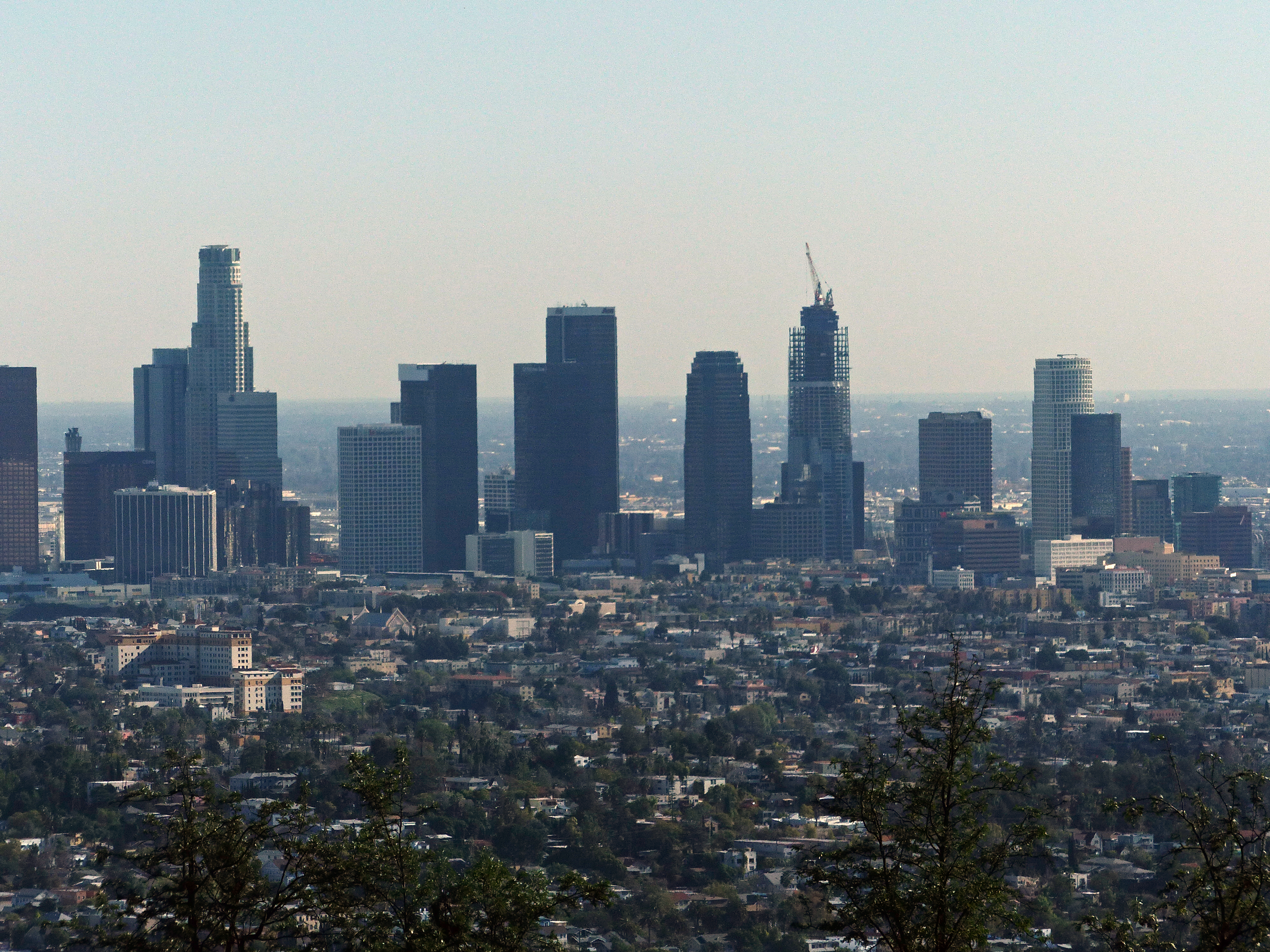
Downtown LA with New tallest bldg under construction

Downtown Los Angeles tallest building is US Bank on the left, Wilshire Grand under construction will be the tallest in 2018. From the Observatory parking lot.

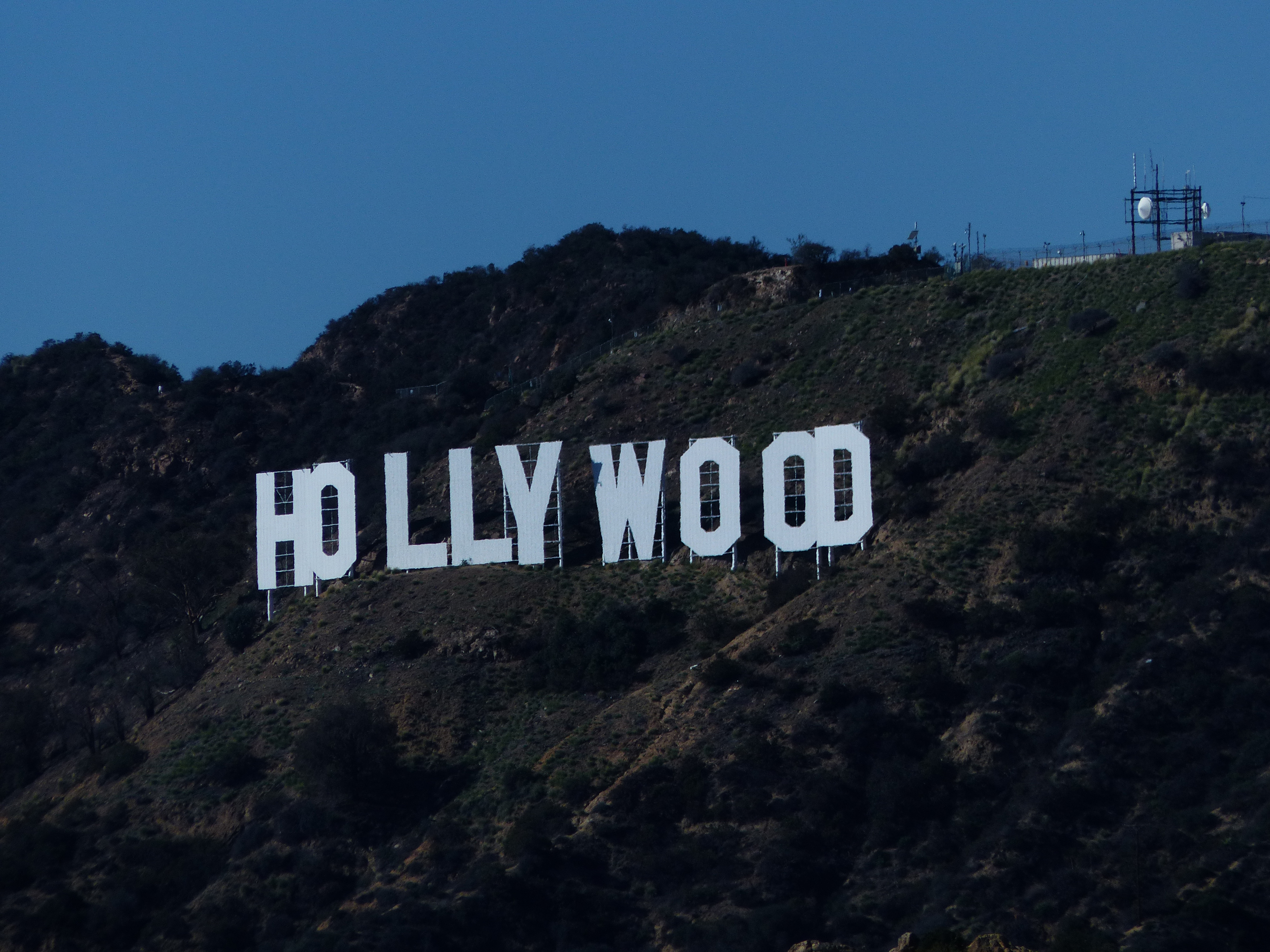
Hollywood Sign and Broadcast tower. From the Observatory parking lot.

The City and the Sea The city and the sea 20 miles in the distance, look carefully and you will see the ocean on the horizon. From the Observatory parking lot.

All photos taken on February 8, 2016 with Panasonic FZ200.

Ridiculously Resilient Ridge means No El Niño Rains

The “Ridiculously Resilient Ridge,” sometimes shortened to “Triple R” or “RRR,” is the nickname given to a persistent region of atmospheric high pressure that occurred over Southern California. Finally today there is an article about this condition in the Los Angeles Times. The well-known weather forecasters are all in agreement that as long as this condition continues there is a likelihood that the predicted El Niño rains for this part of the nation will not occur. Apparently they cannot predict when the high pressure ridge will dissipate sufficiently to permit consequential rain in the Los Angeles-San Diego region.

Yesterday the temperature was in the high 70s and low 80s in the Los Angeles area. Other than an expectation of 1 to 2 inches of rain on Sunday January 31 there is a forecast of moderately warm dry temperatures for the coming week. The condition will be caused by that RRR.

Local KABC-TV chief meteorologist Dallas Raines, certified by the American Meteorological Society, has been voicing doubts about El Niño for the last month. He does an excellent job of explaining air circulation and high pressure.

As an amateur rain collector since the last El Niño I can report that to date my rain gauge has collected just of 6.5 inches of rain compared to last year’s 8.4 inches of rain. Obviously 1 to 2 inches of rain this weekend won’t change the current trajectory of a very dry year.

Happily the storms in the Sierra Nevada Mountains are significant and that will ease the drought. Meanwhile Southern Californians will continue to lounge by their pools and spend their free time in the parks.

The Downside of Minimum Wage Laws

OPI InfiniteShine nail polish OPI is a nail polish manufacturer in North Hollywood California. They employ about 400 people at that facility. The company is owned by Coty Inc. That company has ten brands of cosmetics. They have announced their decision to move the manufacturing facility to North Carolina.

The North Hollywood facility includes marketing and sales offices. You can be fairly certain that no more than 10% of that 400 employees are involved in the marketing and sales. Those jobs are relatively high paying office functions. In other words about 360 jobs will be leaving the North Hollywood facility.

Cosmetics manufacturing consists of many low paid jobs. The minimum pay in California is now $10 an hour. That minimum in North Carolina is $7.25 an hour. It doesn’t take a genius to understand why the manufacturing is moving out of California.

The idea of raising the minimum pay is commendable but how much consideration was taken on the impact. There will now be 360 low paid factory workers without jobs.

Toyota moved most of its operations from a Los Angeles area suburb just two or three years ago. They moved to a Dallas Texas suburb. No doubt the cost of labor played into that decision.

There is the question. Have we really helped the poorest paid in California when jobs are driven from the state by higher minimum wage laws?

Visiting Yosemite National Park

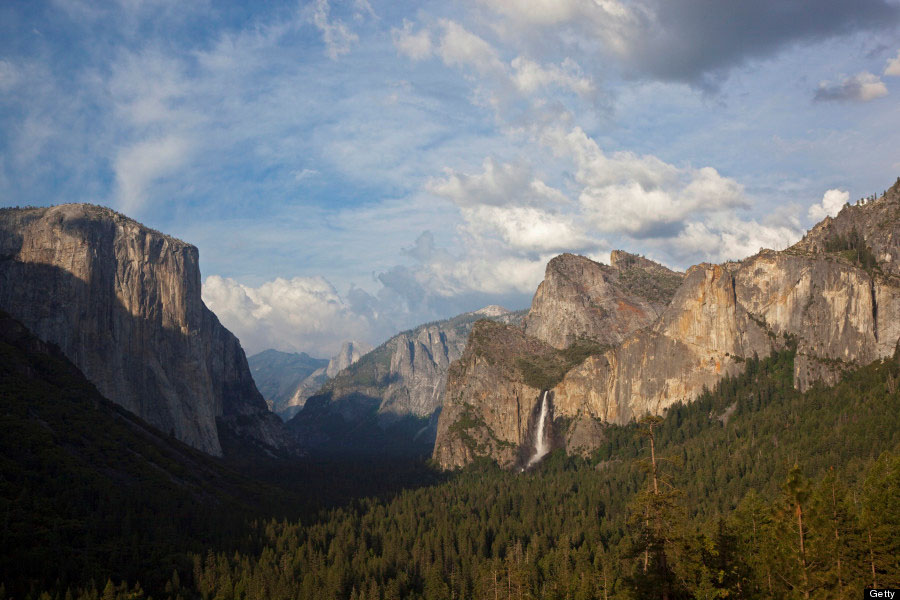
View of Yosemite Valley at tunnel entrance Highway 41

It’s time I spent more effort on some good times rather than focusing on the bad.

When my children were small we traveled to Yosemite National Park or Sequoia National Park for nine years in succession. The first time when our first child, a baby boy, was about 1½ years old. We may have skipped a year after our baby girl was born.

It was an opportunity to get away from the city. Camping with small children is work. Still we enjoyed the change of environment.

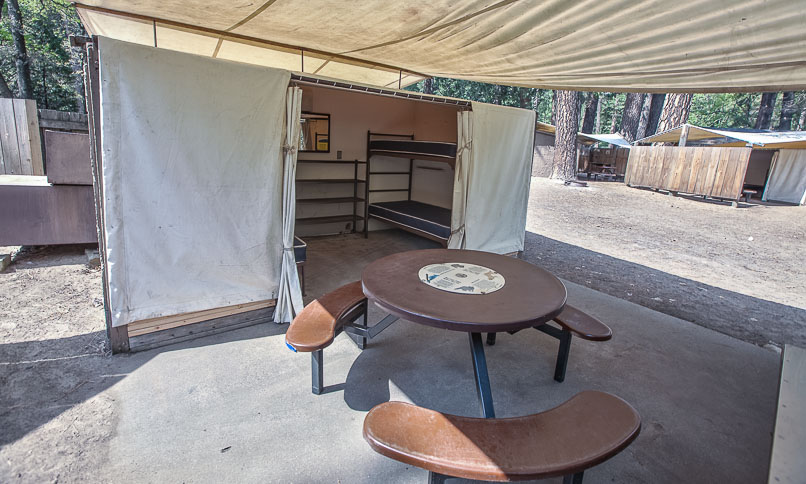
Our favorite camp site were the Housekeeping tents in Yosemite Valley. Housekeeping Camp units consist of three concrete walls, a concrete floor, double canvas roof and a fourth curtained wall. The curtain separates the sleeping area from a covered patio area with a privacy fence that’s furnished with picnic table and bear-proof food storage containers. Each unit also includes a campfire ring with grill grate. There are public restrooms with toilet stalls and sinks. Showers are available for a fee. Electric lighting is limited to a single box near the bed racks and there is limited access to phones. You must provide your own linens and so most people bring sleeping bags. The tents are an upgrade from a conventional tent. A nearby general does have basic food supplies.

The Merced River adjoined the Housekeeping Camp area and in 6 minutes and .2 of a mile you could walk to Curry Village. Besides stores and a restaurant that is the heart of daytime activities and nighttime campfire events provided by park rangers.

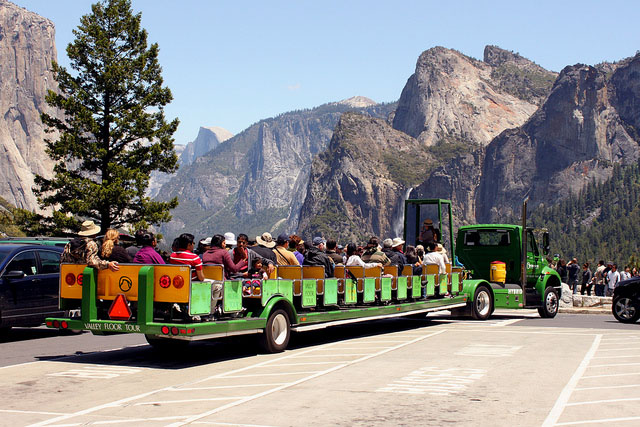
There are tram tours of Yosemite Valley, bikes for rent, horseback riding, and hiking trails that even your grandmother can handle.

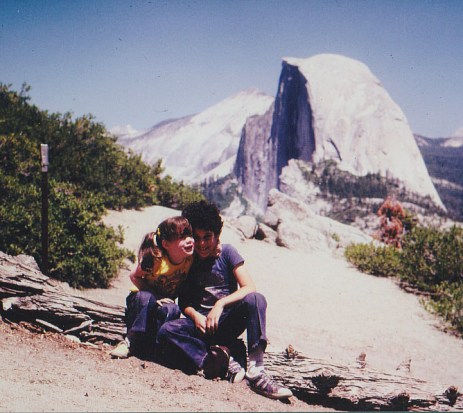
There is always the possibility you will see a bear or some deer. You will never forget the scenery. As you enter the park from Los Angeles through Fresno there is a grove of Redwood trees. A tram ride through that grove is worth your time. The ride to Glacier Point overlooking Yosemite Valley is equally exciting  with a view that is spectacular of the valley below and Half Dome.

Housekeeping Cabin
Housekeeping Cabin
Housekeeping Cabin in the evening


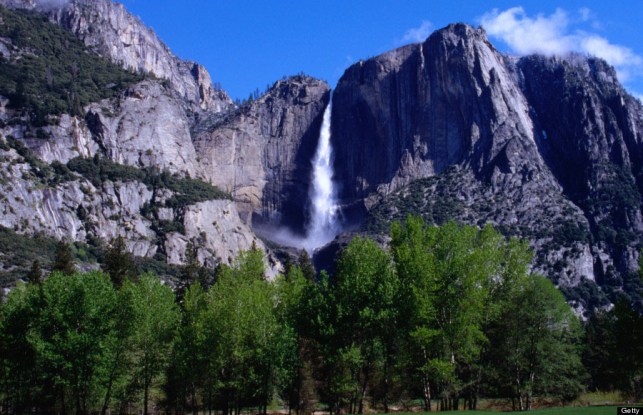
Upper Yosemite Falls

Upper Yosemite Falls

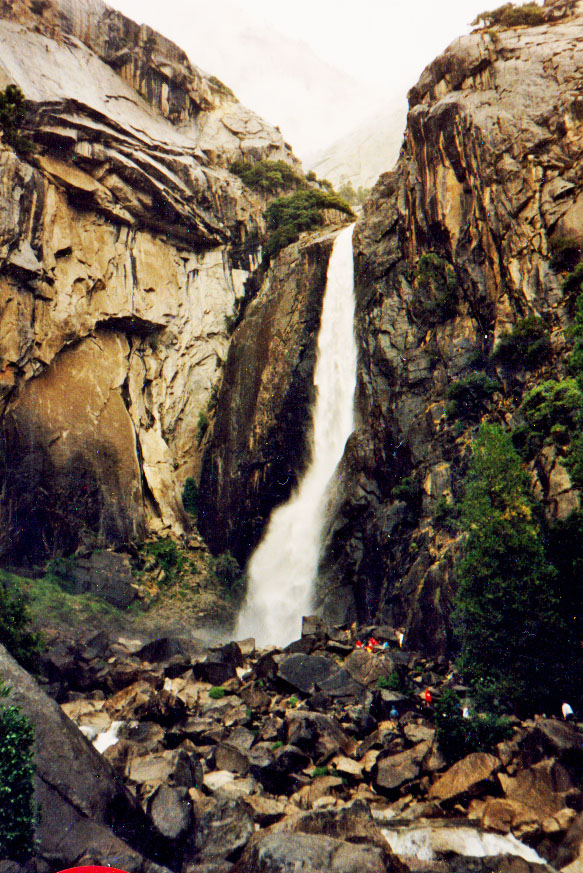
Lower Yosemite Falls in a dry year
Half Dome from Glacier Point
Open top Tram
Open top Tram


You Yellow Bellied Snake and Other El Niño Issues

Yellow Bellied Sea Snake “Go ahead, make my day, you yellow-bellied varmint!” Yellow bellied varmint was an expression frequently used in American Western Movies. Or at least that is what I remember. It was meant to call someone as being afraid to confront or fight for their beliefs.

Now it turn out there is a yellow-bellied sea snake with highly poisonous venom that has washed ashore north of Los Angeles. The Pacific Ocean in Los Angeles is not known for its warm sea water. That snake’s arrival here definitely tell us we have a major dose of warm water. This species of sea snake is found in tropical oceanic waters around the world. That should put to rest the “yellow-bellied varmint” expression.

Rain Storm ins desert & mtns 10-15-2015

This photo taken in the Antelope Valley which is part of the Mojave Desert.  Happily I don’t live in the mountain or desert areas of Southern California.  4.99 inches of rain on December 6, 1997 on my rain gauge during the last El Niño did not flood the house but the backyard lawn was a wading pool and water did flow into the garage through a back door. Sand bags should stop that this time. I had the roof inspected last year and it is in excellent condition said the inspector.

We are not going to the beach searching for those yellow-bellied varmints. I believe we are ready.

The Right to Spread Disease

Measles is a highly contagious viral disease. It is widespread in many parts of the world, including Europe, Africa, and Asia. Measles begins with a fever that lasts for a couple of days, followed by a cough, runny nose, conjunctivitis (pink eye), and a rash. The rash typically appears first on the face, along the hairline, and behind the ears and then affects the rest of the body. Infected people are usually contagious from about 4 days before their rash starts to 4 days afterwards. Children routinely get their first dose of the MMR (measles, mumps, rubella) vaccine at 12 months old or later. The second dose of MMR is usually administered before the child begins kindergarten but may be given one month or more after the first dose. For anyone planning to travel internationally, the California Department of Public Health (CDPH) strongly encourages all Californians to make sure they are protected against measles and other dangerous diseases before they go abroad.

In December 2014, a large outbreak of measles started in California when at least 40 people who visited or worked at Disneyland theme park in Orange County contracted measles; the outbreak also spread to at least half a dozen other states. On April 17, 2015, the outbreak was declared over, since at least two 21-day incubation periods (42 days) have elapsed from the end of the infectious period of the last known outbreak-related measles case.

Pneumonia is one of several serious common complications of measles and the most common cause of death from the virus, said William Schaffner, a professor at Vanderbilt University School of Medicine in Nashville. Measles kills one or two children out of every 1,000 infected, according to the CDC.  At least one person was reported dead from this disease in July 2015.

At the end of June 2015 California passed a law requiring all children be vaccinated before they will be admitted to public schools. Three days after Gov. Jerry Brown signed one of the nation’s strictest mandatory vaccination bills, several hundred opponents rallied in Santa Monica on Friday and vowed to repeal it.  Opponents of California’s tough new vaccine law filed petitions this past Monday seeking to put a referendum on the issue on the November 2016 ballot, but it may be a month before elections officials determine whether the ballot measure qualifies.

People have called California’s governor a fascist and other names for signing the law. The mystery is why would you not want to protect your children?

‘Godzilla El Nino’ May Be Coming to California – a Big Maybe

There have been a total of eight seasons beginning in years (1952, 1953, 1958, 1969, 1976, 1977, 2004, 2006, 2013) classified as “weak” El Niños, eight years (1951, 1963, 1968, 1986, 1991, 1994, 2002, 2009) as “moderate”, four years (1957, 1965, 1972, 1987) as “strong” and two years (1982, 1997) as “very strong” El Niños.

Of the 10 costliest flood years in California since 1950, only four happened during a season when there was an El Niño. Two others occurred during seasons with La Niña, and the final four were when the temperature of the tropical Pacific was near normal.

I have been collecting rain measurement in my backyard since the beginning of the 1997 El Niño year. That year the rain accumulation was 48.3 inches in my backyard. That was the highest annual total since I started collecting data. However the highest single 24 hour period was March 11, 2011. In that year rainfall amounted to 26.2 inches of rain.  Heavy rain that previous December, 2010 totaled more than 9.6 inches and the news media called the heavy rain a “pineapple express.” That was not declared an El Niño year.

The annual rain fall in southern California is so erratic that averages are worthless. They predict nothing. The year following the 26.2 inches only 13.6 inches fell.

Let’s not hold our breath. We should plan for the worst. In other words plan for drought and hope for more rain.

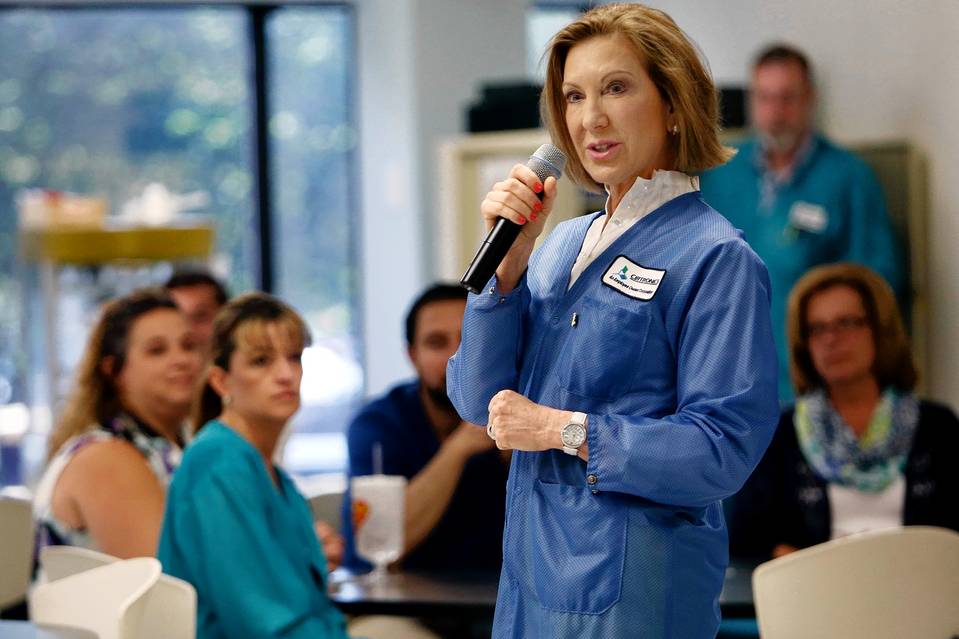
What non-Californians don’t know about Carly Fiorina — but should

Occasionally I post an article appearing in a local newspaper or a magazine article that I view significant.  This is one of those times.  Michael Hiltzik is a regular columnist in the Los Angeles Times.  Although this is a long column it will be worth your while to read.

The most surprising takeaway from last week’s Republican presidential debate — next to the difficulty of puncturing Donald Trump’s helium-powered candidacy — was the mass anointing of Carly Fiorina as the Candidate to Watch.

Carly FiorinaPraise for the former Hewlett-Packard CEO’s performance at the introductory undercard debate spanned the full range of news outlets. The conservative National Review remarked on her “poise and her well-crafted answers,” and CNN paid homage to her “sharp knowledge of the issues.”

Fiorina told the latter that she went into the debate aware that “only 40% of Republicans even know who I am.”

She must be talking about people outside the state of California. Here in the Golden State, we know Carly Fiorina very well. We know her as the under-performing CEO of one of Silicon Valley’s marquee corporations, and even better for her losing campaign against Sen. Barbara Boxer in 2010.

So as a public service, let’s share with the rest of the country what we’ve learned about Carly Fiorina. We’ll start with her dismal political record.

Even before her 2010 campaign against Boxer could get off the ground, it was poleaxed by the revelation that she had failed to cast a ballot in 75% of the California elections for which she was an eligible voter. She missed presidential primaries in 2000 and 2004, and the primary and general elections in 2006, including a Senate reelection run by Democrat Dianne Feinstein. She skipped the primary and general elections in 2002, a gubernatorial election year, as well as the historic recall vote that brought Arnold Schwarzenegger to the governor’s seat.

In an Orange County Register op-ed announcing her Senate candidacy in 2009, she explained lamely: “I felt disconnected from the decisions made in Washington and, to be honest, really didn’t think my vote mattered because I didn’t have a direct line of sight from my vote to a result.”