Cities Grow or Die

Updated May 22, 2015 because of data reported in the Los Angeles Daily News.

Chicago, Detroit, Philadelphia, and Baltimore are examples of large cities that are dying.  They all have one common issue. A lack of jobs.  Cities that are thriving are growing and they all have one common reason.  New jobs.  Los Angeles grew in population by 136,243 people since the last census says the U.S. Census Bureau.  That is a growth of just the city and does not include surrounding towns such as Long Beach which have all seen similar or greater population increases.

I live near the very end of the northwest part of Los Angeles. The nearby boulevard ends about 2 miles west of my home. Despite that fact the traffic is busy all of the time. It is obviously crowded during rush hours. Simply put, we have run out of space. The land beyond the end of the city has been set aside as protected land to preserve open space with the idea of establishing a wildlife park to protect both animals and native habitat.

The question is how do we provide housing for the growing population? The answer is more apartments and condominiums. With that conclusion in mind the city has decided to permit that kind of construction. Cities do not remain static. They either grow or shrink. The growth is into the suburbs, more high rise buildings, or a combination. Spread of the Los Angeles area is a fact and is probably known throughout the world. The travel times has become nightmares for some people driving as long as two hours to get to work. Finally the city has become wiser and now has started permitting the dreaded high rise housing. Many in our city are continuing to fight this kind of construction.

Thus we have arrived at a time when many new proposals are being submitted to neighborhood councils and the city council for approval. In my area:

  •  Two part with phase 1 for the construction of a 7-story, 193,000 sqft building to house 170 apartments including 13 live-work units and 5,700 sqft restaurant. There will also be parking for 258 cars and 196 bikes.  The 2nd phase is for the construction of 166,000 sqft commercial office building with 10,000 sqft for restaurant and retail space. There will also be parking for 490 cars and 254 bikes. The office buildings being replaced are modern two story structures.
  •  A 707 unit apartment complex that was the home of Panavision manufacturing consisting of a one story building and parking lot.
  •  A 300 unit apartment complex most likely replacing one or two story office buildings.
  •  A 4,000 multifamily unit development on the former Rocketdyne facility that is expected take 10 years to complete. That project is in the design phase and has not been released for public scrutiny. The information released to date says that the buildings will vary in height from 6 to 18 stories high.
  • The former Catalina Yachts manufacturing site will be converted into 600 units.

That is a total of 5,777 housing units which more than likely means an additional 11,000 people and their cars added to already congested boulevards. To make the additional housing more palatable new nearby shopping centers and business offices will provide jobs.

Westfield Village #3

You don’t like it? Some alternative places to live are Fresno, California and Medford, Oregon. Those are two nice communities that are not faced with large growth but do offer a pleasant climate and many of the benefits of larger cities. 

American Madness – Right Wing Style

Following is PBS listing of the top 10 positions of Senator Ted Cruz who announced his candidacy for president today.

The Budget and debt: Mandate a balanced budget.

Cruz supports a Constitutional amendment mandating that Congress pass a balanced budget. He argues that this is the best way to cut down deficits and the debt.

Corporations: Slash corporate tax rates to 15 percent. End some programs like the Export-Import bank and federal subsidies for renewable fuels.

Common Core: End it.

Immigration: Block any current effort that lets undocumented immigrants legally remain in the U.S.

The Internet: Do not tax access to the Internet and block “net neutrality.”

Obamacare: Repeal it.

Social Issues: States should be allowed to define “marriage” and set strict abortion limits.

Taxes and the IRS: Move toward a flat tax and abolish the IRS.

Iran: Increase and toughen sanctions. End current nuclear talks until Congress approves the outlines of a deal.

Islamic State: Don’t send U.S. ground troops, yet.

Meanwhile there is an initiative proposal being circulated for signature in California that calls for the state to secede from the United States.  it will take just 365,880 signatures for an initiative to be placed on the ballet in 2016.

Mountain Lions Just Outside of Los Angeles

mountain-lions-santa-monica-mountains-006

Female Mountain Lion looking into a camera

New photographs of a mountain lion and her offspring are giving park rangers a closer and more intimate look at how the animals are surviving in the Santa Monica Mountains.  The report in the Los Angeles Times does not detail the location of the camera that caught these pictures.  The Santa Monica Mountains start just north of Hollywood and extend west and north bisecting the city and ending in Ventura County.  The famous Mulholland Drive and Highway starts near the Hollywood Bowl traverses the ridge of the mountain range.

http://www.latimes.com/local/lanow/la-me-ln-mountain-lion-photos-20150305-story.html

Uh oh: Yosemite. 8,100 feet. February. No snow

The Los Angeles station of the weather service tweeted that the hamlet of Sandberg, in the Tehachapi Mountains of LA County on the old Ridge Route, is sixteen degrees above normal for February. While Los Angeles receives its water from the Eastern Sierra, San Francisco receives its water from the Hetch Hetchy system that has its source in Yosemite National Park.

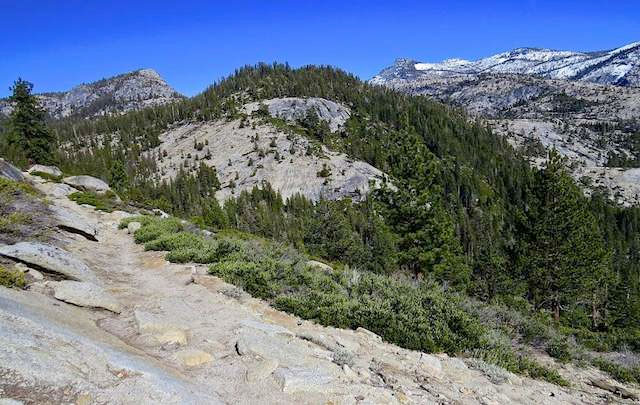
Yosemite at 8,000 feet

The National Weather Service station up in Hanford, CA posted this photo on February 19.

The Los Angles DWP has not put the city on water rationing but perhaps they should start that now.

Snow Pack

California Bullet Train is a Path to the Future

Driving from San Francisco to Los Angeles is a dreary six hour experience. Most people travel inland to use Interstate 5. It is a straight and boring ride. In the summer the heat in the Central Valley and the drive to the top of the Tehachapi Mountains (called the Grape Vine) causes many cars to overheat. The drive from Los Angeles does not include the steep climb but isn’t any fun either.

Today the flight from Los Angeles International Airport (LAX) to San Francisco International Airport takes about 1½ hours.  Airplane seats are narrow, poorly padded, and there is no leg room.  The time for check in and clearance through security is about 1½ hours. American Airlines recommends check in “At least 90 minutes prior to departure when checking bags.” Travel to LAX is about 1½ hours. Thus a 1½ hour flight requires 4½ hours. The flight costs $124.00 round trip. Currently the travel time by rail is about 12 3/4 hours.   Obviously train travel is not acceptable to most people as the train does not actually go into San Francisco. The last leg of the trip is a bus ride from Emeryville across San Francisco Bay.

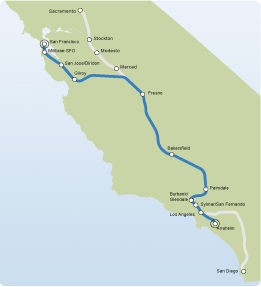
The Bullet Train project plans that by 2029 the system will run from San Francisco to the Los Angeles basin in under three hours at speeds capable of over 200 miles per hour. If the train cost is competitive with air travel we will see a new era for travel. We will be able to reach the center of each city without a special effort. The airlines will cut their fares to continue drawing patrons.

Despite the naysayers, I believe Governor Jerry Brown is correct in perusing this project.

CA Bullet Train Map

A voter guide to California’s boring but important ballot propositions

Someone I respect.

George Skelton

Los Angeles Times

Six state propositions are on the ballot and none are sexy. All are snoozers. But each is significant.

Some, in fact, are game-changers.

Why else would the medical profession and insurance companies be spending well over $100 million to beat back Propositions 45 and 46?

Prop. 47 would punish handgun thieves with a figurative slap on the wrist.

Prop. 48 would set a precedent by allowing an Indian tribe to build a Vegas-style casino off the reservation in an urban area.

Props. 1 and 2 have nothing in common except a simple word: “save.” One measure is about saving water, the other tax money. And the weak link is saving Gov. Jerry Brown from having to talk about the fourth term he is seeking while conveniently stumping instead for these props as if they were twins.

Here’s my voter guide:

  • Prop. 1 would authorize $7.5 billion in bonds for badly needed water projects. It wouldn’t help during the current drought, but would prepare for future dry spells.

The money would be spent for the kinds of community projects that California should have been heavily engaged in long ago, rather than relying on massive, super-expensive facilities to transfer water from one region to another. Call it stealing.

There would be state matching money for capturing storm water, recharging aquifers, decontaminating groundwater and recycling wastewater.

More controversial is $2.7 billion for dam building. But critics ignore the fact that dams also provide flood control and recreation.

Prop. 1 is an easy yes.

  • Prop. 2 would force Sacramento politicians to save tax money for an economic rainy day.

To be precise, 1.5% of general fund revenue and all capital gains receipts exceeding 8% of the general fund would be salted away.

The purpose is to reduce the roller-coaster effect of revenue flow during booms and busts. A more effective solution would be to reform California’s tax system. But that would require too much courage for these timid politicians.

Meanwhile, Prop. 2 is another no-brainer yes.

Prop. 45 would allow the state insurance commissioner to regulate premium rates for certain medical plans: those covering individuals and companies with fewer than 50 employees.

Since 1988, the commissioner has been approving home and auto insurance rates. And that has worked out well for consumers.

Opponents have raised more than $56 million, mainly from four big insurance companies. Their TV pitch is that Prop. 45 entrusts too much power in one politician. But at least he is elected and accountable to voters. The insurance companies are accountable mainly to their bottom lines.

Also opposed are unelected government appointees who administer Obamacare in California and worry that the commissioner would interfere in their negotiations with insurers.

But if an elected official can control rising premium rates, he should be allowed to. A close call, but a yes.

Prop. 46 would return the limit on medical malpractice pain-and-suffering payouts to the same dollar value it was in 1975. Inflation has greatly eroded it.

Doctors, hospitals and insurers have raised more than $55 million to kill the measure. They claim it would cause healthcare costs to skyrocket. The nonpartisan Legislative Analyst’s Office, however, calculates the increased cost as practically infinitesimal: less than 0.5%.

Back in 1975, then-Gov. Brown and the Legislature set the cap on noneconomic damage awards at $250,000. If that had been adjusted annually for inflation, it would be $1.1 million today. That’s where Prop. 46 would reset it.

Opposition ads are demonizing trial lawyers, contending Prop. 46 is all about enriching them. But it’s really about securing justice for malpractice victims, who now have difficulty hiring lawyers because the potential awards are so low.

The measure also does two other things. It would require drug and alcohol testing of hospital doctors. And to fight pain pill addiction, it would force doctors to use a state database that tracks patients’ prescription histories.

It’s long past time to bring the medical malpractice cap into the 21st century. And there’s nothing wrong with requiring hospital doctors to undergo drug testing, as pilots and bus drivers do. Controlling pain pill addiction through modern technology also makes sense.

Prop. 47 would reduce the penalty for personal use of most hard drugs — like cocaine and heroin — from a possible felony to always a misdemeanor. OK, perhaps.

More significantly, however, the measure would lower to a misdemeanor other crimes deemed nonviolent and nonserious, such as petty theft, shoplifting, receiving stolen property, writing bad checks and forgery. If the value were less than $950, it would always be a misdemeanor.

Any savings from less incarceration would be earmarked for improved mental health and drug treatment programs.

But most handguns are worth less than $950. Steal one and it’s only a hand slap? That’s too big a flaw. No way on this Prop.

Prop. 48 would ratify a compact negotiated by Brown allowing the North Fork tribe in the Sierra foothills to build a casino down in the San Joaquin Valley on busy Highway 99 near Madera.

When Californians voted to allow Indian casinos 14 years ago, we were promised the gambling halls would be kept on reservations.

If Vegas-type casinos are now going to be permitted in California cities, we should take away the Indians’ monopoly and allow all interests and ethnicities to own them.

Prop. 48 would set a bad precedent.

Cactus Garden and Mystery Home

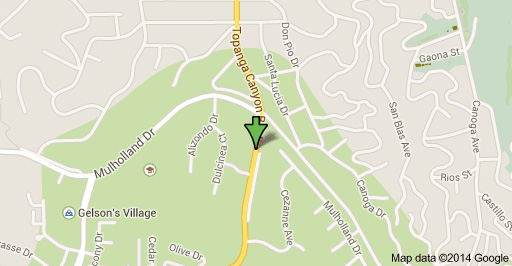
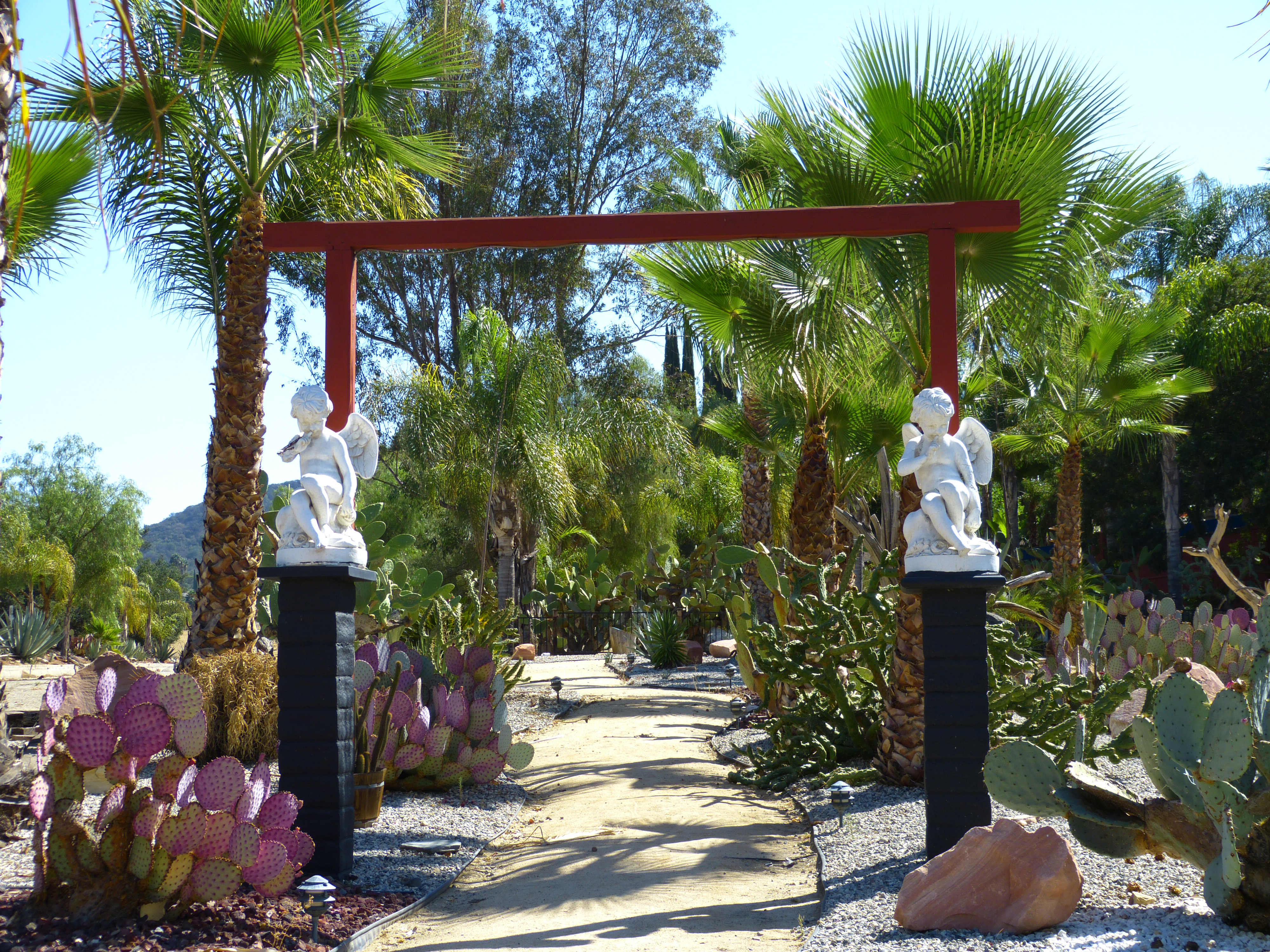
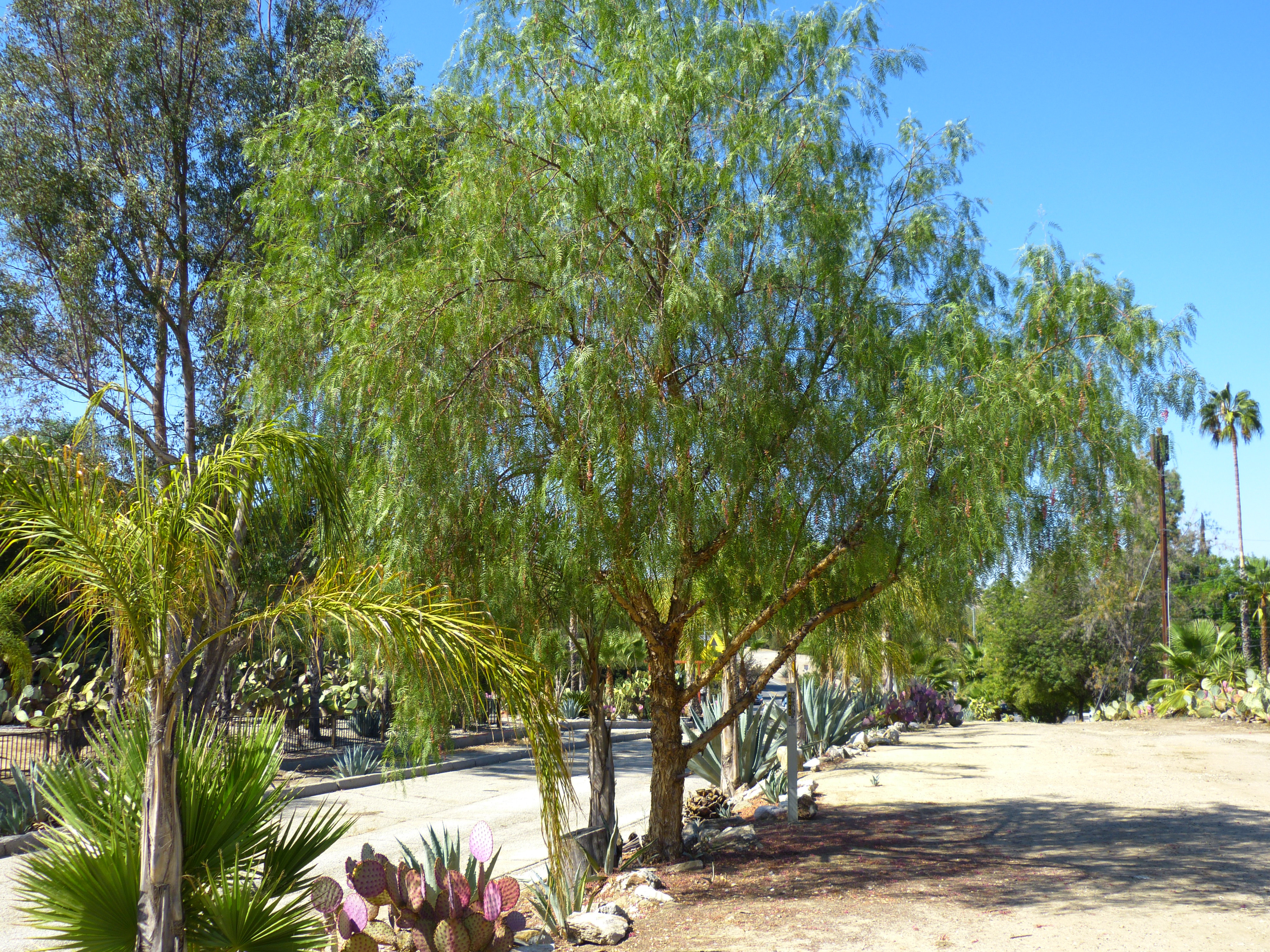
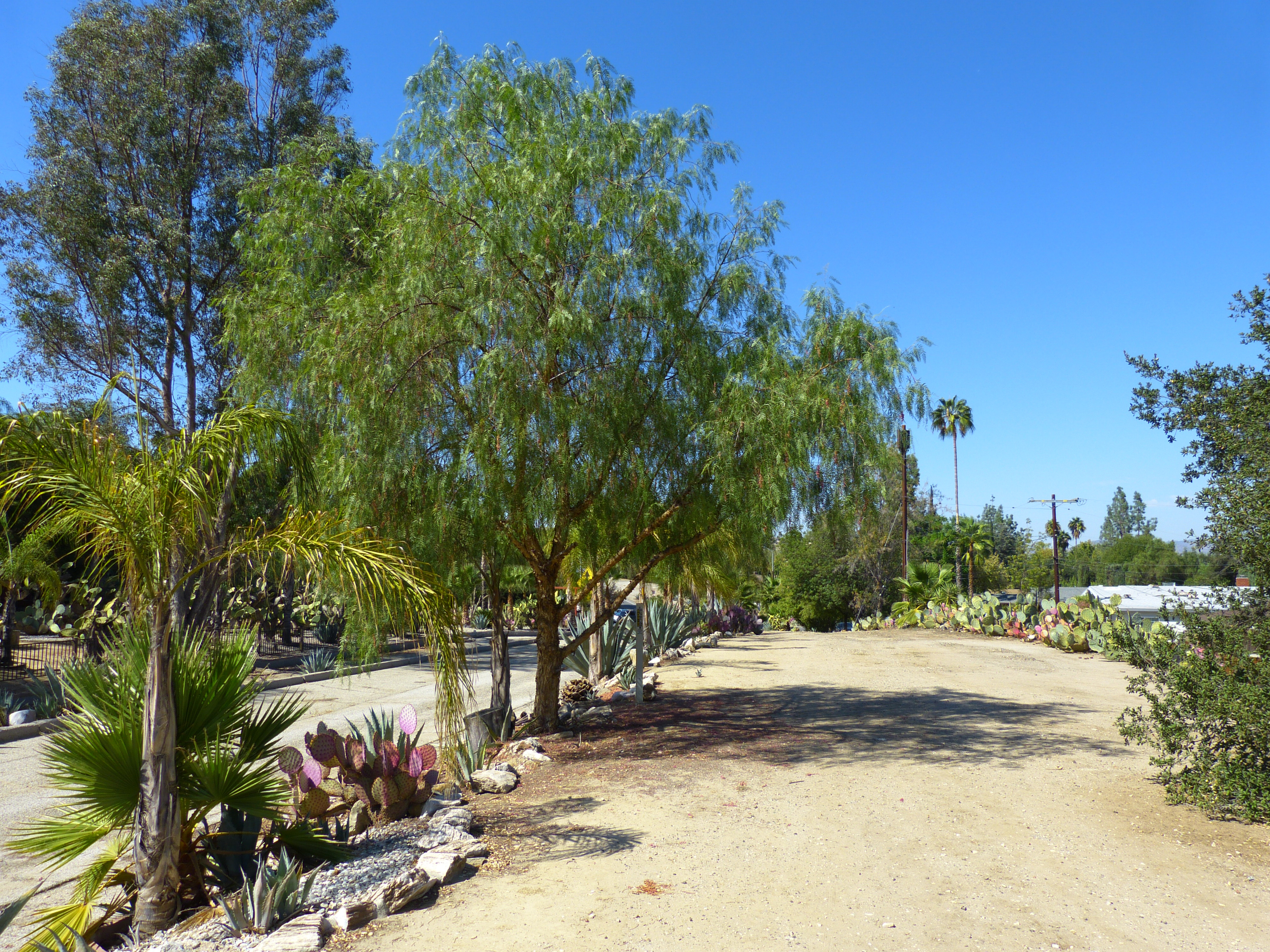
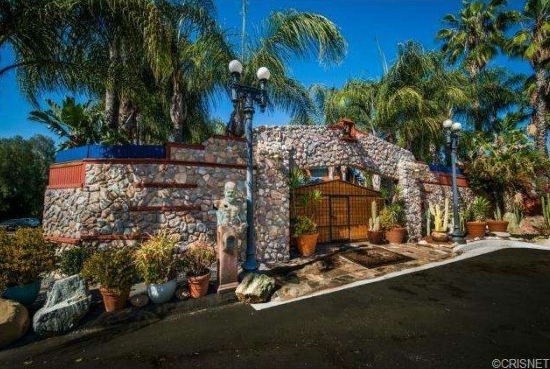
I have been driving by this unique garden and home for decades. It is on the road to Malibu. I use Topanga Canyon Boulevard as an alternate route from West Los Angeles when the freeways are shut down due to fires or serious car accidents.

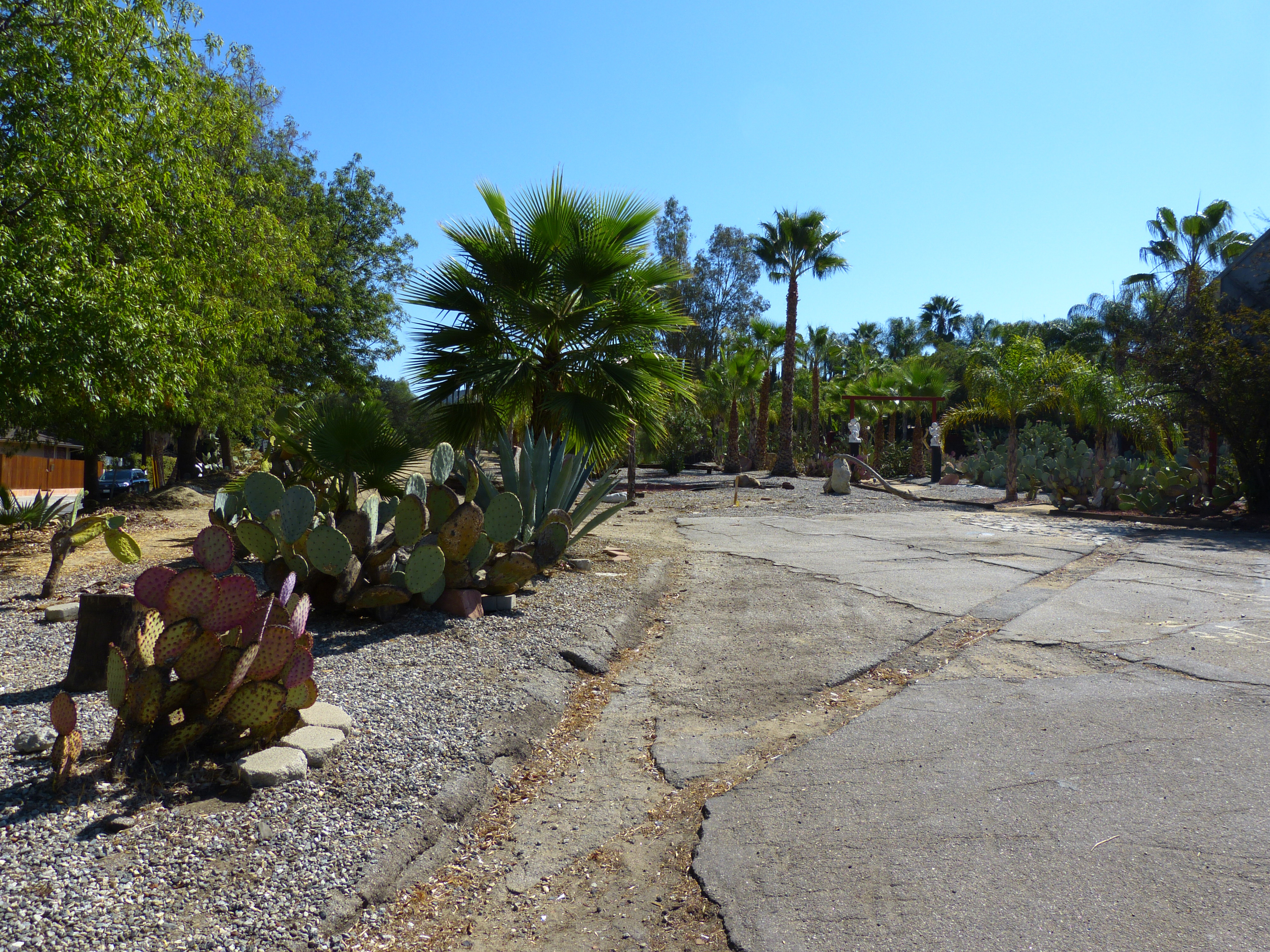
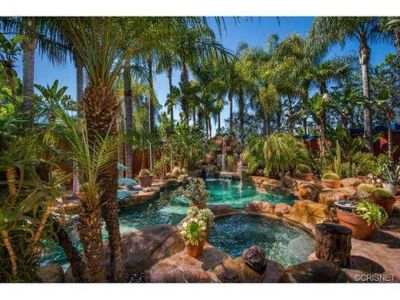
Finally I decided to stop a take some photos. The garden is listed on Yelp and Yahoo. As it happens the adjoining house is For Sale. Thus there are real estate photos on line. Asking price for this 4700 square foot home is $1.2 Million. Four bedrooms and four full baths on a .44 acre lot. The house was built in 1931.

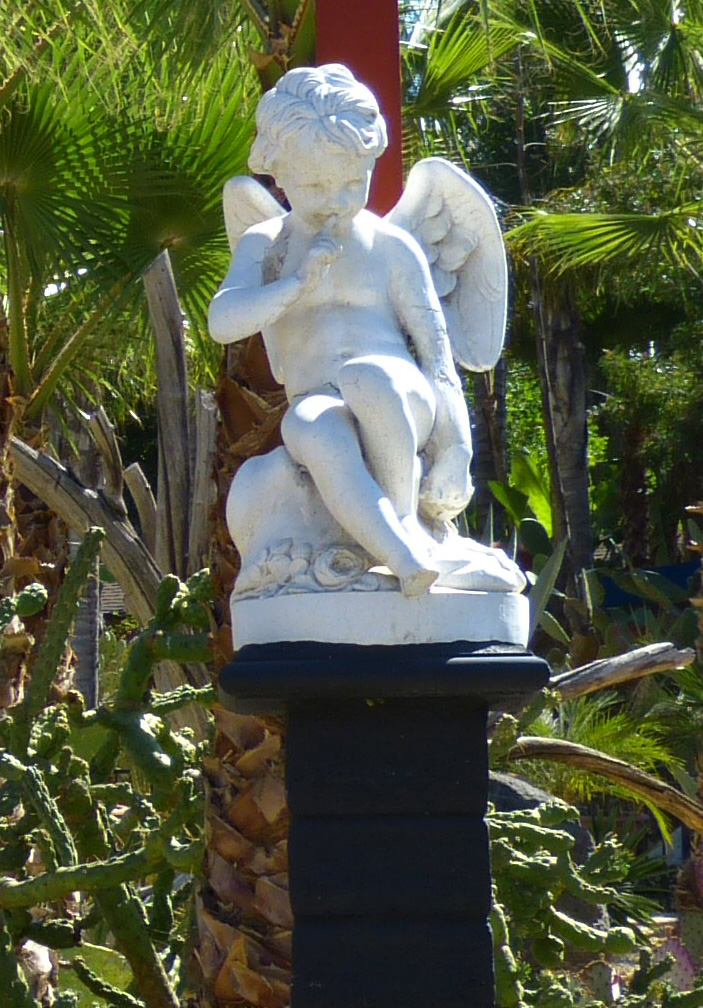
There appears to be an abandoned road next to the corner as shown in the first picture.   Notice the flirtatious Cupid.  Clicking on the pictures gives you a better view.

Location map

4562 Map

My photos all taken with my Panasonic DMC-FZ150:

Heading south as you leave the San Fernando Valley:


P1030506P1030512P1030512 closeupP1030511P1030510P1030508

Heading north entering the San Fernando Valley from Topanga Canyon:

P1030501


Real Estate listing photos of the house. Repaved the street and glossed the photos all thanks to Photoshop

4562 Topanga Blvd #1_edited-2

woodland hills #1 woodland hills #3 woodland hills #4

California Propositions for November 4, 2014

This is all about the money spent on state propositions.  Does more money spent translate to an outcome that is contrary to the public interest?

To see the updated revised list that indicates current total contributions you can go to California Fair Political Practices Commission.

I have posted my position on each.


Proposition 1 – AB1471 Water Quality, Supply and Infrastructure Improvement Act of 2014

Supporting

Corrected

California Hospitals Committee on Issues, Sponsored by California Association of Hospitals and Health Systems* $250,000
Northern California Carpenters Regional Council Issues PAC*
$250,000
Reed Hastings*
$250,000
California American Council of Engineering Companies Issues Fund* $250,000
Southwest Regional Council of Carpenters Issues Committee* $250,000
Members’ Voice of the State Building and Construction Trades Council of California* $150,000
International Union of Painters and Allied Trades Political Committee* $100,000
District Council of Iron Workers Political Issues Committee* $100,000
George M. Marcus and affiliated entities* $50,000
Southwest Regional Council of Carpenters Legislative Improvement Committee* $50,000
Hilmar Cheese Company* $25,000
Leprino Foods* $25,000
Total from top contributors $1,750,000


Opposing

No committee opposing this ballot measure raised enough money to reach the reporting threshold for this list.

Notice who is supporting this bond issue. It’s the engineers, carpenters, iron workers, and construction trade groups. Why? This bond issue will provide lots of money for the construction industry. Will any of the money spent create one more drop of water? NO!

Over $13 Billion has been spent on water bonds since the year 2000. How was that money spent? This is more money that will be wasted.

Vote NO.


Proposition 2 – State Reserve Policy

No data posted by California Fair Political Practices Commission.

The argument against this proposal is that it may deny schools the support they need.

I am voting YES.


Proposition 45 – Approval of Healthcare Insurance Rate Changes. Initiative Statute

Supporting

Consumer Watchdog Campaign – Yes on 45 and 46, a coalition of consumer advocates, attorneys and nurses $1,243,529
California Nurses Association $1,000,000
Consumer Watchdog $235,000
Wylie A. Aitken and Affliliated Entity Wylie A. Aitken Law Corporation $100,000
Strumwasser & Woocher $50,000
Lieff, Cabraser, Heimann & Bernstein, LLP $50,000
Milstein, Adelman, Kreger LLP $25,000
Adler Law a Professional Corporation $25,000
Cotchett, Pitre & McCarthy, LLP $25,000
Paul Goldenberg $25,000
CA Federation of Teachers COPE/Prop Ballot Measure Committee $25,000
Shernoff Bidart Echeverria Bentley, LLP $25,000
Yes on Prop. 46, Your Neighbors for Patient Safety, a coalition of consumer attorneys and patient safety advocates $25,000
Total from top contributors $2,853,529


 Opposing

Kaiser Foundation Health Plan, Inc. $14,716,574
Wellpoint, Inc. and affiliated entities $12,896,224
Blue Shield of California $9,819,424
Health Net, Inc. $261,224
UnitedHealthCare Insurance Company $156,224
California Association of Health Plans $60,000
California Association of Health Plans PAC $10,000
California Hospitals Committee on Issues $10,000
Total from top contributors $37,929,670

Every other type of insurance has regulated rates in California. Thirty five other states also regulate health insurance rates.

Vote YES.

Proposition 46 – Drug and Alcohol Testing of Doctors. Medical Negligence Lawsuits. Initiative Statute

Supporting

Consumer Attorneys of California and its sponsored committees: Consumer Attorneys Issues PAC, ID 842149; Consumer Attorneys Initiative Defense PAC, ID 1275672 $1,183,000
Robinson Calcagnie Robinson Davis, Inc. $250,000
Cotchett, Pitre & McCarthy, LLP $150,000
Bisnar/Chase Personal Injury Attorneys, LLP $125,000
Panish, Shea & Boyle, LLP $125,000
Casey, Gerry, Schenk, Francavilla, Blatt & Penfield, LLP $115,000
Shernoff, Bidart, Echeverria, Bentley, LLP $115,000
Bruce G. Fagel, A Law Corporation $110,000
Law Offices of Walkup, Melodia, Kelly & Schoenberger $100,000
Kazan, McClain, Satterley, Lyons, Greenwood & Oberman $100,000
Lieff Cabraser Heimann & Berstein, LLP $100,000
Total from top contributors $2,473,000


 Opposing

Cooperative of American Physicians IE Committee $10,161,489
The Doctors Company $10,001,200
Norcal Mutual Insurance Company $10,000,000
California Medical Association Physicians’ Issues Committee $5,212,026
Kaiser Foundation Health Plan, Inc., and The Hospitals $5,000,000
Medical Insurance Exchange of California, Including Aggregated Contributions $5,000,000
California Association of Hospitals & Health Systems $2,500,000
California Hospitals Committee on Issues $2,500,000
California Dental Association $2,052,709
The Dentists Insurance Company $1,620,000
Total from top contributors $54,047,424

Wow! $2 Million being spent to support this proposition. $54 Million being spent to oppose this proposition.   I had no idea that drug and alcohol abuse is a major issue among doctors. As to medical negligence, incompetence is prevalent. As I understand the current law the limit to reimbursements is $250,000.  I once went to a dentist who seemed to be drunk. He was part of a dental group. I requested another dentist. There must be a problem if so much money is being spent.

Vote YES.


Proposition 47 – Criminal Sentences. Misdemeanor Penalties. Initiative Statute

Supporting

Open Society Policy Center $1,210,112
Hughes, B. Wayne $750,000
Atlantic Advocacy Fund $600,000
Munger, Molly $325,448
Hastings, Reed $246,664
Phillips, Steven C. $125,000
Parker, Sean $100,000
Drug Policy Action $100,000
Delaney, M. Quinn $100,000
California Federation of Teachers, AFT, AFL-CIO COPE Prop/Ballot $50,000
Total from top contributors $3,607,224


 Opposing

No committee opposing this ballot measure raised enough money to reach the reporting threshold for this list.

United States Senator and member of the Democratic party, Dianne Feinstein, came out against Proposition 47 in a column featured in the Los Angeles Daily News.  Feinstein said she found the proposition to be dangerous, especially the way it classifies at-risk individuals.

I have been a supporter of eliminating laws that penalize people who use drugs. Petty theft should not be a felony because we are short jail space.

 I respect  the senator’s opinion.  I was going to vote yes but now am on the fence.


Proposition 48 – Referendum to Overturn Indian Gaming Compacts

 Supporting

No committee opposing this ballot measure raised enough money to reach the reporting threshold for this list.

 Opposing

Table Mountain Rancheria $3,528,099
Brigade Capital Management, LLC through affiliated entities $2,666,780
Riva Ridge Recovery Fund LLC $226,232
DG Capital Management, LLC and affiliated entites $113,258
United Auburn Indian Community of the Auburn Rancheria $100,000
Chukchansi Economic Development Authority $25,000
Club One Casino, Inc. $15,000
Total from top contributors $6,674,369

This is something that I do not have enough knowledge to accurately judge.

The governor supports this change in the law. The argument is that this law will create jobs. Casinos are closing in Atlantic City. Isn’t it mostly the poor who waste their money in casinos? Over $6 Million to oppose this proposition should be a message. Probably those in this business don’t want any more competition. Indian tribes have benefited from their casinos.

 I am voting NO because the idea was to provide Indians with an income source.  More competition will harm that source.

Home to Presidents and President Want-to-Bes

Southern California is the home of everyone who wants to elude the extreme weather that is so prevalent in the rest of this country. Summers may be hot but the humidity is mild. It only snows in the nearby mountains. Movie stars, entertainers (like Justin Bieber) and so many politicians. It is called a Mediterranean climate.  Yes it’s true, you could surf board in the morning and ski in the afternoon all in the same day.

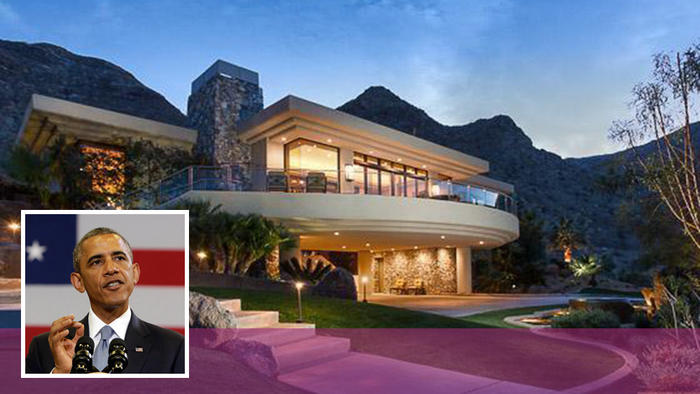
Richard Nixon to San Clemente at the south end of Orange County. Mitt Romney bought a home in La Jolla, a suburb of San Diego, President Gerald R. Ford moved to Rancho Mirage, and now the Los Angeles Times says that Barack and Michelle Obama are rumored to be buying a house in Rancho Mirage. 

“The First Family is believed to be in escrow on a contemporary home in a gated community where entertainers Frank Sinatra, Bob Hope and Bing Crosby once maintained estates,” Says the Times.

Barack Obama's Rancho Mirage Home

For those of you not familiar with the area, Rancho Mirage is the upscale Palm Springs where gated communities and golf courses are everywhere. Yes there is a Dinah Shore Drive, Frank Sinatra Drive, and a Bob Hope Drive in that town. Median family income in Rancho Mirage in 2009 was $92,831. 21.2% (976) had income > $200k. My source city-data.com. Read more: http://www.city-data.com/income/income-Rancho-Mirage-California.html#ixzz38ANKIkhs

NO to more California Water Bonds


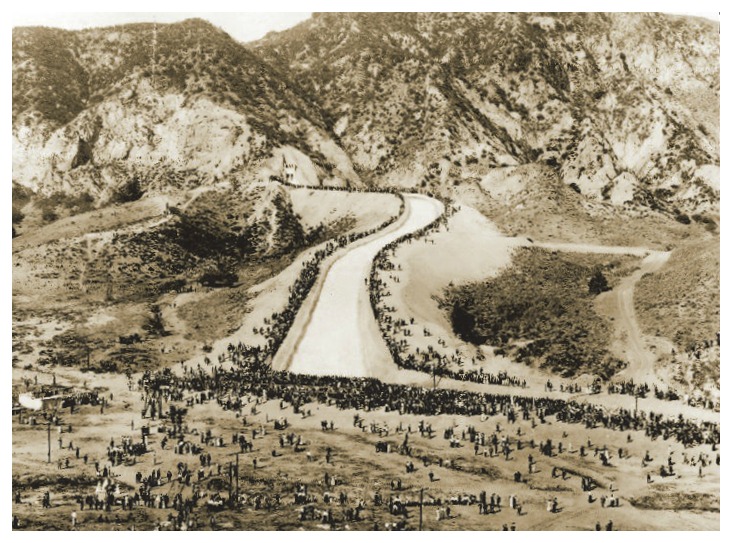
40,000 people watch water spilling into the San Fernando Valley
LA Aqueduct opens Nov 5, 1913

40,000 people observed the opening of the aqueduct into the San Fernando Valley

The latest water bond proposal calls for $7.5 billion that would allocate $2 billion for surface and groundwater storage projects, $850 million for Delta levees and habitat restoration, and $1 billion for groundwater cleanup. If this sounds familiar you are not mistaken. We have spent billions of dollars doing the very same thing. None of those projects has resulted in more available water.

On December 9, 2012 George Skelton, Los Angeles Times commentator/reporter, wrote “The truth is that no matter what the size of the bond issue no additional water will come to Los Angeles nor will there be any additional water for agriculture. The reality is that Californians will have to face water rationing. However, construction companies will benefit from this giant expenditure. I wonder how much money will be donated to campaign re-elections.”

I conducted my own on line research on California water bonds and found the following bonds approved.

Proposition 13. In March 2000, California voters approved Proposition 13 (2000 Water Bond), which authorizes the State of California to sell $1.97 billion in general obligation bonds to support safe drinking, water quality, flood protection and water reliability projects throughout the State.

Proposition 40.In March 2002, California voters approved Proposition 40, a $2.6 billion state bond measure for conservation, neighbourhood parks, and coastline and watershed protection. Proposition 40 was the largest conservation bond measure ever approved in California.

Proposition 50.In November 2002, the $3.4 billion water bond measure, the largest in California history, was approved by voters. It provides $825 million in funding for CALFED for a variety of programs, including surface water storage studies, water conveyance facilities, levee improvements, water supply reliability projects, ecosystem restoration, watershed programs, conservation and water recycling. More on Proposition 50 is available at http://www.water.ca.gov/grants- loans.

Proposition 84. In November 2006 California voters approved this measure that will fund water, flood control, natural resources, park and conservation projects by authorizing $5,388,000,000 in general obligation bonds. The bonds will be used to fund various projects aimed at (1) improving drinking and agricultural water quality and management; (2) preserving, restoring and increasing public access to rivers and beaches; (3) improving flood control. See details of the law at http://www.parks.ca.gov/pages/1008/files/prop 84 text.pdf.

My calculator says these propositions spent more than $13 billion. The cost to pay back those bonds with interest will most likely be double that amount.

California is up to its neck in commitments and needs. The recent claims that the state government has a surplus is incorrect. The surplus is only in terms of money needed to pay this year’s bills. We are drowning in future debt owed to retired teachers, retired state employees, and other bond commitments. Our infrastructure is falling apart.

Unless I hear some startling reason for this waste of tax dollars we should all vote NO to this give away.