California set for more exports, strong manufacturing


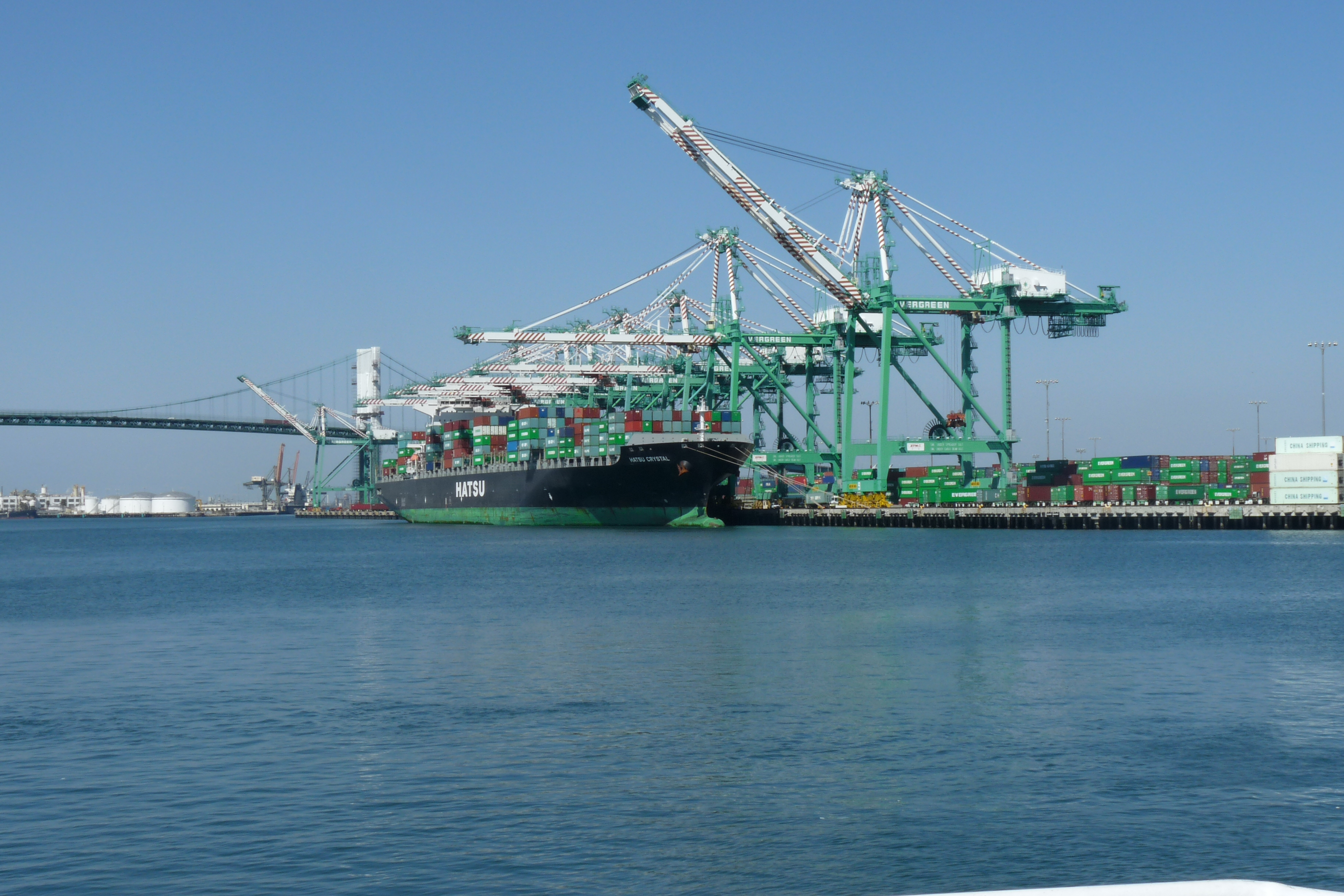
Los Angeles Harbor
Los Angeles Harbor

Click on above photo to see a full screen view of ship unloading operations

The outlook for growth in California is optimistic, according to a Beacon Economics report predicting expansion in manufacturing and exports and a job market recovery driven by more than low-wage work.

The report, conducted for City National Bank, notes that 56% of new jobs created in the state in the last year are in industries with average annual wages above $50,000. Most of those positions, according to the report, are full-time.

The findings seem to challenge other economists’ assertions that wages aren’t keeping pace with the job recovery. More low-wage positions will be created or opened by 2020 in Southern California than will mid-level or high-paying jobs, according to the Center for Continuing Study of the California Economy.

But according to Beacon, employers in the professional and business services field added 24,300 new jobs statewide since the fourth quarter. That’s more than half of the 44,200 net nonfarm job gains made in the state in the same period.

That’s more than half of the 44,200 net nonfarm job gains made in the state in the same period. The industry pays $29.11 an hour on average as of May, according to the Bureau of Labor Statistics.

The Beacon report also said that California’s 1.2% job growth in the first quarter trailed the 1.5% nationwide rate.

But Los Angeles and Orange counties each created 12,200 new jobs in the first quarter, helping pull the statewide unemployment rate down 0.3 percentage point from the fourth quarter to 8.1%.

And the Central Valley, often maligned as an economic dead zone, is showing surprising strength, according to Beacon.
The south San Joaquin Valley, which includes Fresno, Tulare and Kern counties, has boosted nonfarm employment by more than 50% in the last 25 years. The population has also swelled at nearly double the overall state rate.

The workforce participation rate in the state ticked up to 62.6% from 62.4% the previous quarter and the proportion of people working part-time due to economic reasons fell 0.6 percentage point to 6.8%, according to the report.

Beacon added that California’s growth slowed slightly in the first quarter due to the frigid, stormy weather bedeviling the rest of the country earlier this year.

Real gross state product, a metric of economic output, grew just 2.8% after surging 4.2% during the fourth quarter, according to the report. But manufacturing, thought by many experts to be a shriveling industry, continues to support a generous portion of the California economy.

The state is responsible for producing a quarter of the computers and electronics made in the country, according to the report. The products, which constitute nearly half of all California manufacturing output, are centered in Silicon Valley and, to a lesser degree, in the Los Angeles metropolitan area.

Beacon estimates that exports leaving California rose 2.8% in the first quarter from the fourth. The effects of a weak dollar, slower growth in China, Europe shaking off its recession and Japan emerging from a decade-long stagnancy will likely propel increasing outbound trade for the rest of the year.

Copyright © 2014, Los Angeles Times

Los Angeles Harbor


The Drought of 2014

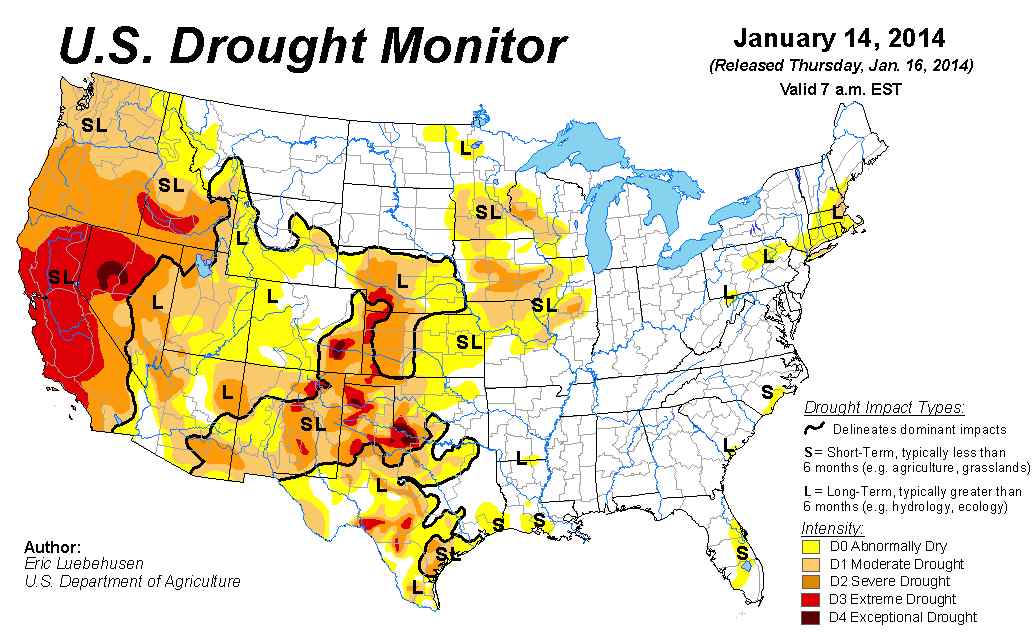
Drought MonitorMost Californians already knew that there is a drought covering most of the state. California Governor Jerry Brown has named this rainless winter an official drought. The real purpose of the declaration is to obtain federal aid, reduce enforcement of some environmental regulations, and most importantly convince voters to approve an $11.1 Billion water bond proposal.

More than $13 Billion has been spent on California water projects since the year 2000. The newest bond proposal is not new. It has been bandied around for at least four years. The only reason there has not been a proposal on the ballot has been the serious economic conditions of this state.

This ballot measure, if it does appear, will not add one additional drop of water to the state’s water supply. There will be no more water for urban areas and no additional water for farming or live stock. This proposal will provide profits for construction companies.

Sacramento Bee reporter and columnist Dan Walters says this bond issue doesn’t address the issues. Traci Sheehan on the California Progress Report web site has identified all the newspapers that oppose this waste of money.

Fear of water rationing will be the tool of choice to convince passage of this boondoggle.

Do Gooders Folly

California’s governor, Jerry Brown, has followed at least 11 other states approving a law that will issue driving privileges to illegal aliens.  The theory is that those people will now be able to legally drive and that means passing a driving test and obtaining auto insurance.  Everyone will be safer.  What could be wrong with that?  If those aliens did all that the streets and highways would be safer.

The Los Angeles Times says “An estimated 1.4 million immigrants are expected to apply for the special permits, to be available in late 2014 or early 2015.”

The flaw in this plan is that I, as an illegal alien, fear being apprehended and deported and will not willingly give my real address to anyone except my closest friends and relatives.  Thus I am not willing to divulge my address to the Department of Motor Vehicles.  I would rather drive my car carefully but illegally.

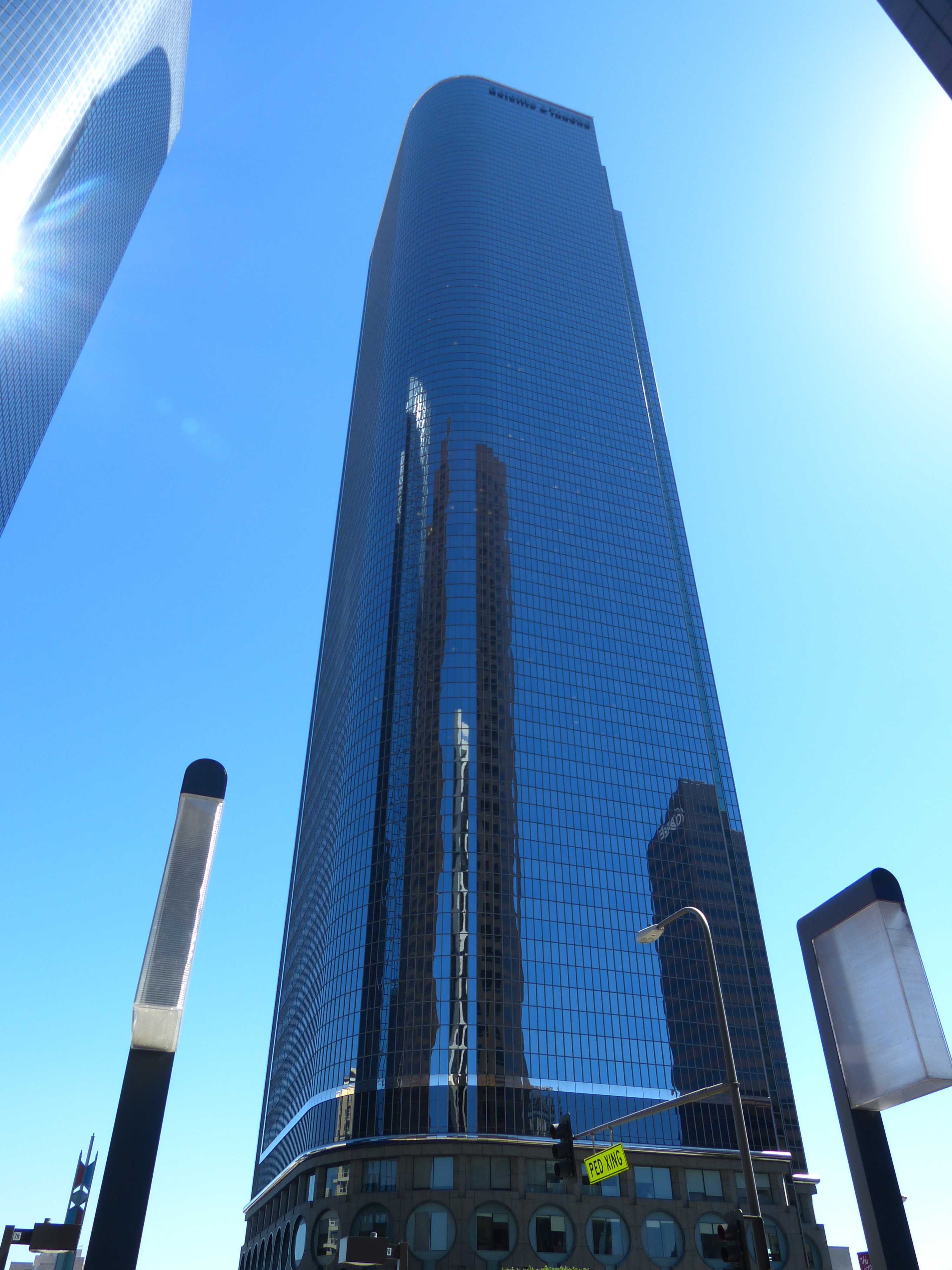
Tallest Buildings in Downtown Los Angeles

The Thursday August 22, 2013 edition of the Los Angeles Times listed the five tallest buildings in the city.  All are in the downtown area.  They are surrounded by many others slightly shorter versions.

 #13 Next door to Water Court is on of the 5 tallest bldgsThe walk around started at the Red Line Subway Metro Station at Figueroa Street at the corner of 7th Street.  It ended at the Pershing Square Subway station.

Click on Flickr above and then click Sets.  All pictures taken with the Panasonic DMC FZ150.

Or this link http://www.flickr.com/photos/48969186@N04/sets/72157635989279605/

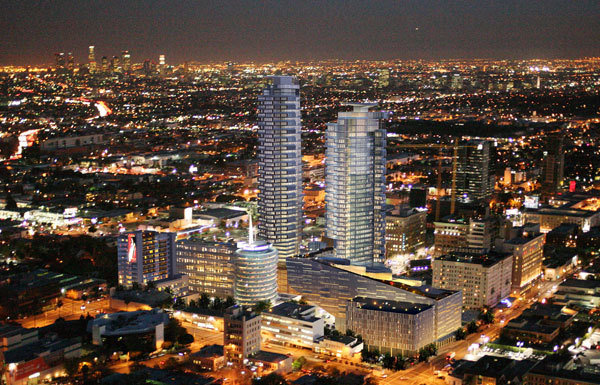
Los   Angeles is seeing a resurgence of new construction.  The new high rise center may be moving to Hollywood.

LA Observed

Los Angeles, California #2Los Angeles is a busy city.  Not only does 40 % of all imports to the USA enter the country through the Los Angeles-Long Beach ports but this is the city that brings entertainment to the world.  This is the place where all the stars shine.  LA Observed offers links and information in a concise package.  The link is on the right.  For now just click here.

Clean Tap Water Fails to Reach Faucets Nationwide

June 17, 2013:  The Los Angeles Times has caught up with KPCC and the New York Times in today’s from page article titled “Funding to improve drinking water has come at a slow drip.”  What will it take to motivate California government?

KPCC, an NPR station in Los Angeles,  had an item this past Friday about Springfield California that does not have drinkable water.  Nitrates from fertilizer have poisoned the well that is the source of their piped water.  The residences of the community must drive five miles to buy bottled water.  The people are all too poor to move from the community.  The community is unincorporated and does not qualify for any grant programs.

Springfield lies along a single dusty road near Watsonville in Monterey County. Strawberry fields surround the road. The town is so small you cannot find it on a map. In the middle of one of those fields is the source of the community’s frustration.

Upon research I have learned that this situation is not at all uncommon throughout the nation.

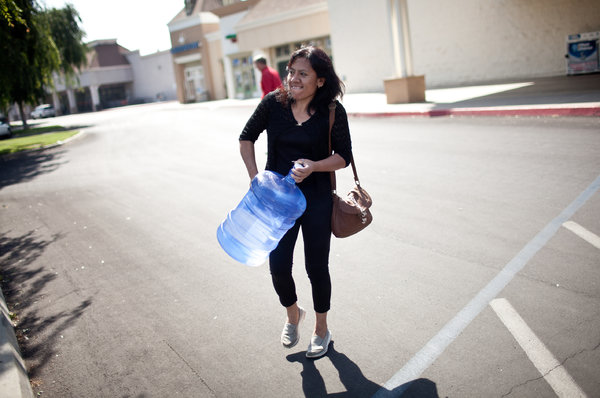
Laura Garcia in Monson CA carries a water bottle

Laura Garcia, whose well water is laced with excessive nitrates, had to use bottled water until the recent installation of a filtration system in her sink.

MONSON, Calif. — I did find it on the map north of Visalia California.  Laura Garcia was halfway through the breakfast dishes when the spigot went dry. The small white tank beneath the sink that purified her undrinkable water had run out. Still, as annoying as that was, it was an improvement over the days before Ms. Garcia got her water filter, when she had to do her dishes using water from five-gallon containers she bought at a local store.

Environmental Protection Agency distributes funds to state agencies that are supposed to identify problems and underwrite solutions. By the E.P.A.’s calculations, no state has been as inept in distributing the money as California.

According to Jared Blumenfeld, the regional administrator of the E.P.A., nearly a quarter of all small water systems in California are in the Central Valley.  To fix the problems, however, requires access to engineering and financial management resources beyond the reach of the needy communities, Mr. Blumenfeld said. “We require the state to be sure the people they fund have managerial, financial and administrative capacity to deal” with their water issues.

Meanwhile there are people retiring in California from government jobs with annual pensions of more than $100K.

Additional source for this article from the New York Times.

Los Angeles on the Verge of Collapse

Boneventure Hotel from 5th & Fig -#2

I grew up in this city.  Nothing speaks more to Los Angeles than the beautiful architecture of many of our buildings.  Above is a photo of the Bonaventure Hotel in the downtown area.  I have lived in many communities from Westchester to Canoga Park.  Los Angeles has been decimated by poor governance.

From the Los Angeles Times:

Average (DWP) employee pay rose 15% over the last five years to $101,237 in 2012, according to records obtained by The Times.

The median household income for Los Angeles residents – the public utility’s customers – fell over roughly the same period, from $48,882 in 2008 to $46,148 in 2011, the latest year for which U.S. Census numbers are available.

The conundrum in voting for the next city mayor is that both candidates, Wendy Gruel and Eric Garcetti, are liberal Democrats that have voted for every DWP labor union contract and every city employee union contract.

Worse is that in their TV debates neither has addressed the question of labor contracts, high pension costs, high medical insurance costs, or the gross revenue tax that is imposed on every business in the city.

In my view the gross revenue tax is the most harmful of these issues to the city.  After all adjoining cities do not have that kind of tax.  So Pasadena, Glendale, and Burbank are all in the central part of the metropolitan area but provide far lower costs of doing business.

Garcetti and Gruel’s unwillingness to address those big issues sends me one message.  They are not prepared to confront the city’s major problems.  Instead they talk about improving the schools (they do not have any direct authority over the schools), transportation (limited authority), and street paving (they have authority but there is no money available).  Are we heading down the Detroit path to bankruptcy and desolation?  We may not be near there now but the road signs are obvious.

Links

http://www.dailynews.com/ci_21366902/editorial-easing-gross-receipts-tax-will-improve-business

http://www.scpr.org/blogs/politics/2012/09/18/10032/las-business-tax-holiday-extended-2015/

photo taken from 5th Street and Figueroa Street using a Panasonic DMC-FZ150

Los Angeles Needs to Grow Up

Major cities throughout the world are noted for their skyscrapers.  Los Angeles lacks that distinctive architectural image.

The tallest building in Los Angeles today is the 73-story U.S. Bank Tower, which rises 1,018 feet (310 m) in Downtown Los Angeles and was completed in 1989.  Among the next nine tallest buildings none are more than 858 feet (262m) tall.  They are 52 to 55 stories high.  Among that group of ten the last one was completed in 1992.  Among the 34 buildings that are at least 400 feet (122 m) tall two were completed in this century and the rest were primarily completed in the 60’s, 70, and 80’s.

LA-tallest-building-in-the-west-to-be-built-in-downtown

Korean Air’s $1-billion hotel skyscraper. Rendering of the 73-story Wilshire Grand hotel and office building to be constructed in downtown Los Angeles. (AC Martin Partners)

Cities either grow or shrink. Los Angeles has filled its land space with low rise structures. If we are to grow it must be up. When you add the new Korean Air 73 story building to new high rise developments in Hollywood and elsewhere you know the city is in growth mode. These new structures will be magnets for more new business. Most of us want to be part of a growing economy.

LA-millennium-hollywood-2 tower project

A proposal for two skyscrapers that would flank the Capitol Records tower in Hollywood gained the approval of the city’s planning department Tuesday despite push-back from dozens of disgruntled residents.

An artist’s rendering of the project near the Capitol Records building in Hollywood. (Handel Architects)

Those who continuously fight against tall buildings, public transportation and other elements of large metropolises are dreaming of another time when land was plentiful and the idea of big city life was something that only those east of the Mississippi could appreciate.  Los Angeles has the second highest population in the nation.  Metropolitan Los Angeles encompasses more than 10 million people.  It’s time we started acting like a very big city.

Top 25 U.S. Cities by Household Income

The following data was extracted from a MarketWatch news item and modified to indicate city population.  Detroit at the bottom of the list was no surprise but Philadelphia and Memphis coming in at 23rd and 24th place is a surprise.  The vlaue of this information is the indicator of where you don’t want to live.  You might not be able to live in San Francisco or San Jose but living nearby will provide the benefits that come with a wealthier community such as hopitals, doctors, arts, and entertainment.

I personally know there are lower cost housing opportunities in San Jose as well as Los Angeles.

CITY INCOME 2011 Estimated   Population
(IN $)
1 San Jose 76,593
967,487
2 San Francisco 69,894
812,826
3 District of Columbia 63,124
617,996
4 Seattle 61,037
620,778
5 San Diego 60, 797
1,326,179
6 Charlotte 50, 177
751,087
7 Austin 49,987
820,611
8 New York City 49,461
8,244,910
9 Boston 49,081
625,087
10 Fort Worth 47,399
758,738
11 Denver 47,371
619,968
12 Los Angeles 46,148
3,819,702
13 Jacksonville 44,802
827,908
14 Phoenix 43,960
1,469,471
15 Chicago 43,628
2,707,120
16 Houston 42,877
2,145,146
17 San Antonio 42,613
1,359,758
18 El Paso 40,702
665,568
19 Dallas 40,585
1,223,229
20 Columbus 40,463
797,434
21 Indianapolis 39,015
827,609
22 Baltimore 38,721
619,493
23 Memphis 34,960
652,050
24 Philadelphia 34,207
1,536,471
25 Detroit 25,193
706,585
Source: Census   Bureau