Local Congressional Race is Nasty

California’s new congressional district #30

Candidates are fighting for their political lives.  Both of them ought to move on to another life!

When I was young I lived in West Los Angeles (Palms district).  I was a member of the Beverly Hills Young Democrats.  It wasn’t because I was a dedicated supporter.  The group was made up of singles and it was a great meeting place (women).  I actually met my wife at a Democratic Party BBQ.

Howard Berman and Henry Waxman were both in that group too.  That young democrat group provided the impetus for their political careers.  Frankly I did not like Berman because his goal from high school days was to become a politician.  My view then, and now, is that professional politicians do not really represent the people.  They represent themselves.  The downside of their profession is having to return to the public for re-election.

Is Brad Sherman any different than Howard Berman?  Probably not.  However, it appears he had some other goals in life before entering politics.

Reports in the Los Angeles Times, Los Angles Daily News and Roll Call at the Races today tell of the near physical fight between Howard Berman and Brad Sherman in a debate at Pierce College.

With Berman already standing, Sherman stood up and shouted into the microphone that Rep. Luis Gutierrez (D-Ill.) sponsored the bill. Berman stepped toward Sherman so they were nearly nose to nose and said Sherman was wrong.

Things bounced down this rocky path when Sherman took exception to Berman calling him a liar.

“Don’t you dare stand up here .. .and get in my face,” Sherman said. He then wrapped his arm around Berman’s shoulder, looked him in the eye and — still holding the microphone to his mouth — said: “You want to get into this? Get out of my face.”

I wish I had been there.
Vote Yes on California Proposition 30

Californians are spoiled and selfish.  They cry about their high taxes without considering the consequences.  Two significant results of the no additional taxes is the condition of our schools and highways.  California is rated 47th in the country in quality of schools and highways are mediocre at best.  Consider the general property tax rate in New Jersey.  Their rate is .03758 according to that state’s web site.  The result is that taxes on a home with an assessed value of $150,000 are $5,637.  There is no Proposition 13 control on increasing the appraised value.  Thus my home has an increased value of just over 50% in the past 33 years.  The actual market value of the home increased by 6 times before the 2008 crash.

You might argue that we have higher sales tax rates but here are the rates in various major cities throughout the country

Birmingham, AL      10.0%

Chicago, IL              9.75%

Seattle, WA             9.5%

Los Angeles            8.75%

San Francisco         8.5%

NYC                        8.5%

Las Vegas, NV        8.1%

Philadelphia            8.0%

San Diego               7.75%

Boston                    6.25%

A loaf of Bread cost 9 cents in 1938. My parents bought their first home in 1949 for $12,500.  Today Zillow values the house at about $375,000.  We simply can’t get our heads wrapped around the fact that everything costs more today.  That includes the cost of government.

Cuts to Higher Education Impact California’s Economic Future

Reported today in the news is that high school Chemistry classes will be cut to one year.  However, both UC and CSU schools require two years of high school chemistry to meet minimum entry requirements.

The following article was distributed from San Jose State University today.

“California, once a leader in higher education, is falling behind other states and nations in developing the highly skilled workforce necessary for our future prosperity.” This finding from a recent Public Policy Institute of California (PPIC) report advises state leaders to set priorities and fund them accordingly. The CSU couldn’t agree more.

The report goes on to state that “Declines in enrollment rates [at public higher education institutions] mean that California’s future workforce will be less skilled and less able to meet the demands of an economy that increasingly rewards more highly educated workers.” Although more students are qualified for college, state budget cuts have forced colleges and universities to enroll fewer students. According to the PPIC, the number of high school graduates entering college over the last three years has dropped 12 percent despite higher demand and more students being college-ready. This translates into a loss of about 12,000 college graduates per year, representing “a significant loss of human capital to California—one that the state can ill afford.”

The PPIC also reported in an earlier study that unless enrollment and graduation rates substantially improve, by 2025 the state will fall short of the amount of graduates it needs to meet economic demand by about one million individuals.

This spring, the CSU will graduate almost 100,000 job-ready students. That picture may change dramatically given the continuing drop in state support for the CSU. Each of these graduates will enter our workforce with the education and hands-on experience they need to be contributors to the state’s economic well-being. With further budget reductions on the table, however, we are in danger of graduating fewer students. As reported by the PPIC, the state spent $1.6 billion less on higher education than it did ten years ago, even as demand for college graduates has increased.

The state and legislature need to re-prioritize higher education as a necessity for California’s ongoing and future prosperity.
The legislature has until June 15 to write a final budget. Tell your local representatives that the state must prioritize higher education and that they should reject any cuts to the CSU budget. Making your voice heard is critical for the state’s decision-makers to commit to improving higher education.

For more information and a copy of the full study, visit the PPIC’s website.   (http://www.ppic.org/content/pubs/report/R_512HJR.pdf)

Higher Taxes for Californians

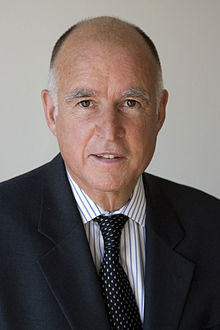
The Los Angeles Daily News (primary distribution in the San Fernando Valley) printed an editorial today that essentially reflects my opinion about raising California state taxes.  Governor Jerry Brown wants to increase state sales tax by a ¼% for the next four years and raise income taxes on the wealthiest Californians for the next seven years.  The result will be an added income to the state of $7 billion annually.

However, there is no guarantee in the plan on how the new revenues would be spent.  California has one of the most generous retirement plans for its state employees but other than some proposed changes in the retirement system for current and new employees there has been no actual changes made to date.

Interestingly the Republicans in the state legislature are in agreement with the governor’s plan for modifying the retirement plans.  The Democrats are “studying” his proposal.  It’s no surprise that the Democrats are likely to fight the governor’s proposal.  After all, the labor unions support the Democrats.

Unless there is a fix to the retirement plans and there are specific detailed procedures for allocating the additional revenue I will not be supporting the governor’s proposal.

Is California Governor Jerry Brown a Liberal?

California Governor Jerry Brown is known as a “liberal.”  Is that an accurate appraisal of his views?

He was California’s governor from 1975 to 1983. After taking office, Brown gained a reputation as a fiscal conservative. The American Conservative later noted he was “much more of a fiscal conservative than Governor Reagan . His fiscal restraint resulted in one of the biggest budget surpluses in state history, roughly $5 billion. For his personal life, Brown refused many of the privileges and perks of the office, forgoing the newly constructed governor’s residence and instead renting a modest apartment at the corner of 14th and N Streets, adjacent to Capitol Park in downtown Sacramento. Instead of riding as a passenger in a chauffeured limousine as previous governors had done, Brown drove to work in a Plymouth Satellite sedan.

So it is no surpise that he still has that conservative streak.  Look at what he has done or wants to do in the current and subsequent years.

1. Stopped funding of community redevelopment agencies throughout the state to provide more funding for public schools.

2. The governor wants the federal government to let him make more cuts in the Medi-Cal program that serves the poorest people and exempt state schools from new sanctions that could cost hundreds of millions of dollars.

3. The governor wants higher sales tax and increased income tax rates for the wealthiest in the state.

It is a wonder to me that he has not proposed reductions in retirement benefits that are obviously unaffordable.  This man doe not follow a logical path.  Perhaps that is what makes him the right man for the job.

A Reliable Source for Oil

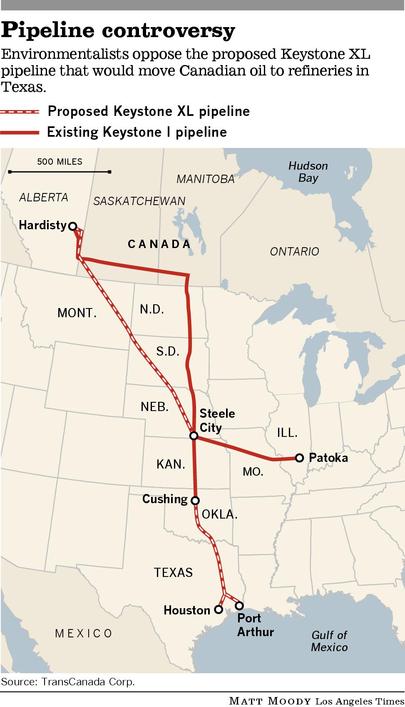
The proposed Keystone XL oil pipeline from Canada to the Texas Gulf Coast would not have “significant impacts” on the environment, the State Department has concluded, removing a major barrier to construction of the $7-billion project.

The problem is that environmentalists and others oppose the idea on the grounds that tar sand extraction (usually called fracking) because water tables will be impacted in the mining area.  There have been reports on American television of enough gas in water pipes to ignite them at their outlets.  This is obviously a serious issue.

The question of a new pipeline from Alberta to Texas should be what will the Canadians do if the United States says no to the project?  It appears Canadian are determined to extract oil from their soil in Alberta despite the opposition.  The answer is they will sell the crude oil to another country.  That would most likely be South Korea, China, or Japan.  There are already plans to build the Northern Gateway pipeline from Alberta through to British Columbia’s northern coast.  Some say this is a fake play by the Canadian government.  No matter, a greater reliance on oil from Canada will benefit the United States with more jobs and a dependable source of supply.

President Obama may be caught in this controversy because if his decision is a “no,” Republicans will say the decision is anti-business and is a job killer.  They would be correct.

Source for this article is the Los Angeles Times and Scientific American.

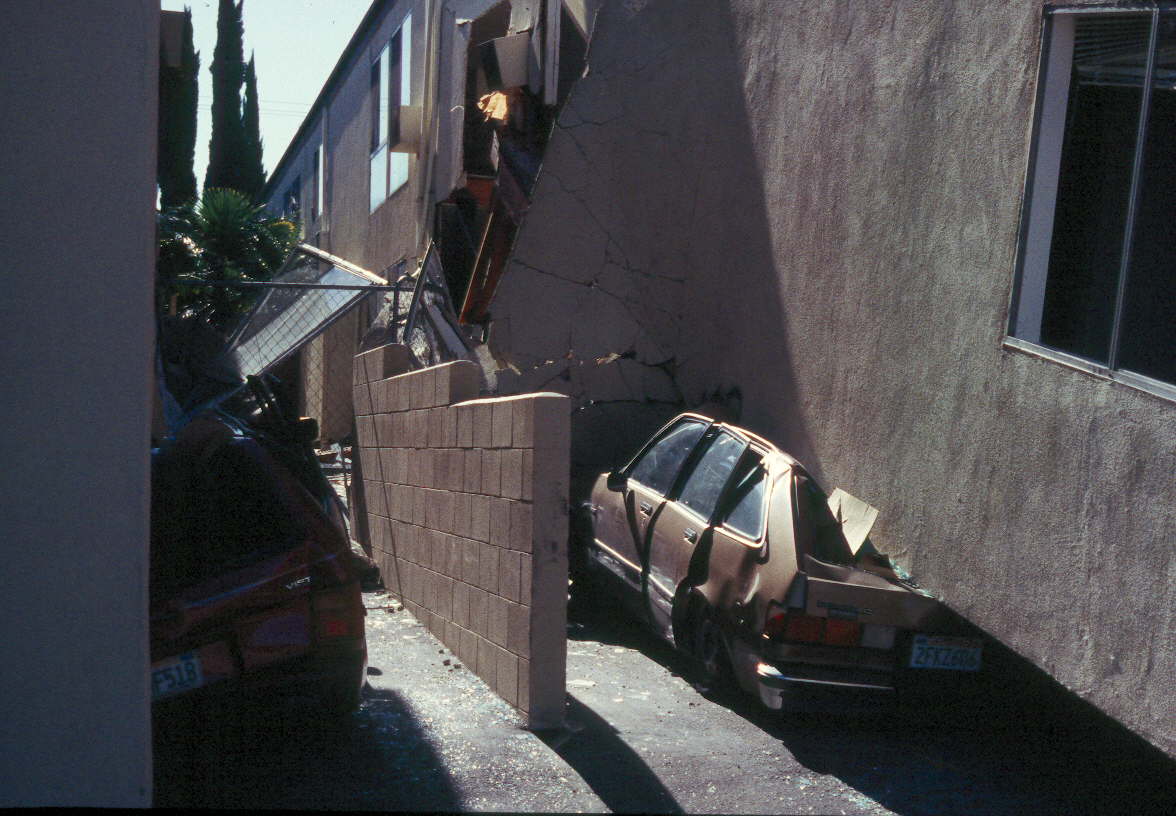
Earthquake – Northridge 1994 Magnitude 6.7

Northridge Earthquake Apartment Building

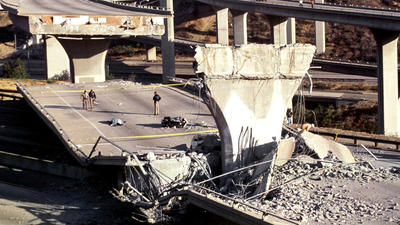
Aerial photo of Santa Monica Freeway

Aerial photo of Santa Monica Freeway

Freeway Collapse Northridge Earthquake 1994

It was 4:30 a.m. on January 17, 1994 when the house rumbled and swayed.  “Everybody into the hall”, I yelled.  With the doors closed to the bedrooms we sat there on the floor until the swaying had stopped.  Our neighbor was pounding on the front door.  He yelled, “Is everybody OK?”  That is when we left the hall and I opened the front door.

We were all OK and the damage was minor.  I missed two days of work because the freeways had collapsed.

New York City, Washington – what you experienced was a minor shake.  Here in Los Angeles we just go back to work.  Around the Pacific Ocean we are not alone.  Earthquakes on the San Andreas Fault are here.

First to Worst

Smug Californians thought they were so smart when they passed Proposition 13 (officially named the People’s Initiative to Limit Property Taxation) by 65%. The law set the initial property tax at 1.25% of the purchase price and restricts annual increases of assessed value of real property to an inflation factor, not to exceed 2% per year. I was one of those who voted for the law.

“We’ve chosen mediocre public service, and more private money. We’ve decided not to tax ourselves as much. We’ve basically turned our back on schools. It’s a choice we made within our state.” John Mockler, First to Worst

We were warned that there would be a price to pay for the imposition of the regulaton but we ignored the politicians.

This year many of us supported the anticipated 1% reduction in sales tax and a reduction in auto licensing fees.

Now we have to face the consequences of our choices. State parks are being closed, the highways are falling apart, and the schools lack funds to employ all the needed teachers. The final blow is our famed higher education system is now too expensive for the middle class. Even community college are asking students to pay $26.00 per unit in Los Angeles.

I earned by four year college degree by attending a junior college for two years at a cost of $6.50 per semester and two years at a state university at $42 a semester. The books cost more than the enrollment fees. I graduated in 1962.

In 1960, UCLA tuition fees were practically non-existent. However, by 1985 they had reached $722. Today University of California 2011-12, systemwide tuition and fees for California residents will be $11,124.

All students enrolling at California State University pay the systemwide State University Fee which is currently $4230 per academic year for undergraduate students enrolling in more than 6 units per term.

The consequence of our selfish decision to control property taxes is the 11.9% unemployment rate, the growing number of poorly educated citizens that lack the skills to compete in a more technologically demanding society, the deteriorating highway system, the closing of state parks, etc.

By the way California is not alone. Massachusetts, Oregon, Colorado and Florida all went on to copy key provisions of the Proposition 13, while voters in 18 other states passed nearly 40 statewide tax-limiting measures.

It should come as no surprise that Programme for International Student Assessment (PISA) report, which compares the knowledge and skills of 15-year-olds in 70 countries around the world, ranked the United States 14th out of 34 Organisation for Economic Co-operation and Development (OECD) countries for reading skills, 17th for science and a below-average 25th for mathematics.

Like Congestion? California is the Place for You

Newsweek published this Daily Beast survey that was no surprise to me.  The list of the top 10 cities with the most congested roads.  I live in Los Angeles so none of this is news.  Actually between U.S. 101 and the I 5 the congestion extends from Tijuana, Mexico to Vancouver, British Columbia. California led the list holding three of the top ten positions.

1.   Los Angeles, California

2.   Honolulu, Hawaii (now this is a surprise)

3.   San Francisco, California

4.   Washington, D.C.

5.   New York, New York

6.   Austin-Round Rock, Texas

7.   Bridgeport, Connecticut

8.   Seattle, Washington

9.   San Jose, California

10. Chicago, Illinois

Insanity in California Budgeting

This is an astonishing abridged version of a report from the Los Angeles Times in italics.  I have bolded some extraordinary facts.


After a 10-year borrowing binge, the upcoming budget is expected to spend more on debt than public universities or state parks. Next year’s repayments — $7.65 billion — could make up a quarter of the deficit.

Voters have approved borrowing in the last 10 years for such causes as stem-cell research ($3 billion), high-speed rail ($10 billion), and parks, water and the environment ($14 billion). They even took on $15 billion in debt to paper over a deficit that Gov. Arnold Schwarzenegger said would never reemerge — something economists have scolded the state for doing. California pays a premium for its loans. Taxpayers must fork over roughly $2 for every $1 borrowed — about 20% more than top-rated states, said Matt Fabian, an analyst at Municipal Market Advisors, a bond research firm.

Because of its rock-bottom credit rating, California pays a premium for its loans. Taxpayers must fork over roughly $2 for every $1 borrowed — about 20% more than top-rated states, said Matt Fabian, an analyst at Municipal Market Advisors, a bond research firm.

Amazingly Legislators have already placed an $11-billion water bond on the 2012 ballot. Nearly $1 billion in earmarks for such items as bike paths, museums, visitor centers and tree planting in key legislators’ districts were inserted to grease its passage.

Back in 2000 — in the heady days of surpluses — lawmakers placed a then-record $2.1-billion parks bond on the ballot rather than spend from the general fund to acquire undeveloped land and spruce up existing parks.Among the projects the borrowing funded were a bowling alley in Stockton, a bee colony and otter pond in San Mateo, and a dinosaur plaza in Santa Ana, complete with a giant replica Tyrannosaurus rex. About $1.2 million went to buff up a bear exhibit at the Folsom City Zoo Sanctuary near Sacramento. Caves were retrofitted with heated concrete because the cold “gets a little tough on the bones of the animals as they age,” said Robert Goss, the city’s parks and recreation director.

The shock is that we keep re-electing the same people to our legislature.