Jeb Bush and Multiculturalism

Most nations in the world reject multiculturalism.  Even in Canada they have decided to define Quebec as the French speaking, French oriented province while the rest of the country speaks English and is oriented towards the UK.

CNN reported that Jeb Bush argued today that the United States is “creeping toward multiculturalism” and described it as “the wrong approach.”

But Bush, who’s fluent in Spanish and lives in Miami, has made cultural diversity a key staple in his campaign. He routinely talks about his wife, who’s from Mexico, and the “bicultural” children that they’ve raised together. On Monday, while addressing the Hispanic Chamber of Commerce in Houston, Bush lauded the country’s mixture of cultural backgrounds, saying the immigrant experience adds a “vitality that is different and unique and extraordinary for our country.”

So what is Jeb Bush’s real opinion? At this point in the race to win the GOP nomination I am guessing that his words today, Tuesday, are meant to win the Conservative vote in Iowa.

His real problem is that his desire to win the nomination has made him turn and twist as Mitt Romney did in 2012. We all know how that worked out. No one believed him in the race against Obama and the loss that year was overwhelming.

No matter who the Democratic nominee is; Jeb as the GOP candidate, will face the argument that he does not have a clear reliable opinion and cannot be trusted on any issue.   The Democrats are collecting the words of every GOP candidate and will be using them after the conventions in 2016. Hillary couldn’t be happier.

Canada’s birthright citizenship

It turns out that Donald Trump’s commentary is not new.  Canada and the United States are the only countries in the world that offer birthright citizenship.  Birth tourism is a thriving business in southern California.    I was born in Canada.  If Donald Trump is elected president of the United States will Canada take me back? From Toronto Life on May 20, 2014.

Jan Wong: Canada’s birthright citizenship policy makes us a nation of suckers

Pregnant women are travelling to Toronto from all over—China, Iran, India, Dubai, Jamaica—to have their babies on Canadian soil, and who can blame them? We’re a nation of suckers

Jan Wong: Motherlode

I don’t know about you, but I constantly congratulate myself on winning the jackpot in the lottery of life. Thank you, revered ancestor, for your wisdom in choosing Canada. My grandfather, Hooie Chong, came here as a coolie in the 1880s to build the Canadian Pacific Railway. Once it was complete, he paid a special tax to stay on and continue working, as a laundryman. Later, he paid triple head taxes to bring over my grandmother, their son and his wife. Family lore has it ­that Grandfather Chong was the 10th Chinese person to become a naturalized Canadian (albeit without any right to vote).

Now there’s a much easier path to ­citizenship: birth tourism. Foreign companies are helping pregnant women take advantage of our breathtakingly generous birthright policy, which grants automatic citizenship—and all the rights and ­benefits it entails—to any baby born on Canadian soil. You don’t even have to touch the soil: in 2008, a girl born to a Ugandan mother aboard a Northwest Airlines flight from Amsterdam to Boston was deemed ­Canadian because the plane happened to be in our airspace at the moment of delivery. Currently, Canada and the U.S. are the only two developed countries bestowing birthright citizenship.

For pregnant women actively seeking to jump the immigration queue, birth tourism agencies offer comprehensive package deals. One such agency is the Canada-U.S. Childbirth Counselling ­Services Company, based in Nanjing, China. According to their website, “the best gift you can give your newborn is a Canadian passport.” The company’s $36,200 package includes airfare, assistance with visas and paperwork, coaching on how to get through the border, private accommodation with Wi-Fi and “a special person to cook and look after your personal needs.” Among the advantages that come with Canadian citizenship, the company lists “great educational resources” and social benefits, including welfare payments of “$500 to $700 a month for a single person,” plus a Canadian passport that provides visa-free entry to more than 200 countries, including the U.S., Japan and western Europe.

Birth tourism consultants recommend that clients apply for tourist visas early and fly before they start to show. Otherwise they are advised to wear loose clothing to the airport. While some airlines such as Air Canada require a doctor’s note to fly after 36 weeks of pregnancy, in this age of political correctness, a woman is unlikely to be questioned about girth. Once at the border, birth-tourism agencies advise expectant mothers to say they’re visiting Canada to sightsee.

From there, the visitor’s experience is fairly straightforward. When she goes into labour, she’s automatically admitted into one of the many local hospitals offering high-quality obstetric care. Wendy Lawrence, in-house legal counsel at Mount Sinai, says the hospital considers every labour a medical emergency. “No matter what, we help them deliver the baby.”

Once the baby is born, the hospital opens a file and assigns a number. Hospital staff aren’t required to check the ­mother’s citizenship, and they don’t. The province (which is responsible for birth registration) doesn’t ask about the ­mother’s citizenship either—a lapse Ottawa says it will address. When mother and baby leave the hospital, they move into a short-term rental. Thanks to Canada’s streamlined application process, the parental paperwork is a breeze. It takes just 25 minutes online to register a birth, apply for a birth certificate and acquire a social insurance number. Official documents arrive in the mail a few weeks later; a passport takes another month.

Owning a Home in North America

Vancouver Skyline from the bay in Stanley Park

Just this past July 22 we returned from a trip that included five days in Vancouver, British Columbia, Canada. While there we rode one of the Hop On Hop Off city tours. The guide was obviously quite knowledgeable about the city. It is a city of many very attractive 20 to 30 story high buildings. She informed us that the cost of the apartments in those buildings started at $1 million (Canadian). Although the Canadian dollar is currently about 30 cents lower in value than the American dollar it has been almost identical during the past few years. So the cost of living in Vancouver is high.

Meanwhile here in California the cost of homes has been equally as high.  The median home price value in San Francisco is over $1 million reports Zillow. They say it’s a 12.7% increase during the past year and predicts even higher prices in the coming five years.

Down here in Los Angeles Home sales reached a nine-year high in July, prices climbed 5.5% from a year earlier, according a report out Tuesday from CoreLogic a company that tracks home prices throughout southern California. The Los Angeles Times reports that Zillow says “Los Angeles and Orange County are the least affordable housing market in the country.”

Interestingly Portland, Oregon is the city that has experienced the least impact of the inflated home prices with median home prices of about $327,000. However not to be out done their prices have also risen over 10% in the past year.

However as the price of homes has risen the average family income has not risen by comparable amounts. In Portland, Oregon median family income was $55,571 in 2013. In Los Angeles that number was $48,466. Using the old standard of qualifying to buy a home 2½ to 3 to times your family annual income that calculates to a home costing $150,000. No wonder so many young adults are still living with their parents.

What is causing inflated home prices? Googling that question shows lots of analysis but no answers. Here is my take.

Most cities have run out of space for new building. That translates into more high rise housing. Those kinds of structures are expensive to build. Those buildings are townhouse/condominiums translate into expensive homes. Even Los Angeles, a city known for single family homes, has turned to more apartment housing because travel times have become too long (a 1½ hour drive to the airport or to work has become the norm). Average families simply cannot afford that style of housing so they move to the outer edge of the city. That’s where I live.

Thousands of people from other nations have been buying homes in the United States and Canada because it is a safe place to invest their money. That demand has driven up the price of American and Canadian homes. There have been a series of news items and opinion pieces in the Los Angeles Times that have pointed to this growing trend. 47% of Vancouver is now populated by Asians. The San Gabriel Valley area of metropolitan Los Angeles has experienced a growing Asian population to the point that many long time residents have voiced their concern about the changing demographics. Those voices made their way into the newspaper.

http://www.bankrate.com says, “International homebuyers have been pouring billions of dollars into the U.S. housing market as they take advantage of lower home prices and a weaker dollar.” “When buying a home in the United States, foreign buyers often pay cash because it’s a much easier, quicker process, says real estate agent Baro Shalizi of Shalizi Real Estate, in Santa Fe, N.M.” When an elderly acquaintance of mine sold his home for more than $700,000 the buyer paid for it in cash. That all cash offer made the sale easy and eliminated all other offers.

Now cities are confronted with the question of providing decent housing for young families that have median incomes. Without the needed homes there is an impact on the buying habits of those families. They will live with their families. That translates to reduced purchases of refrigerators, lawn mowers, and everything else that homeowners buy.

There will be one of three consequences or perhaps some combination. 1) Government does nothing and young families double up to buy a home or continuing living with parents. 2) There will be subsidized housing for the median income families. 3) More people living farther from the big cities in order to buy a home and that results in more commuters.

Which 100 global fashion brands signed the accord to beef up safety in Bangladesh?

From the Toronto Star

There are two shocks from this article.

1) A nine year old working in a garment factory.

2) Where is Hudson’s Bay, Wal-Mart and Target?

Meem, 9, at work in a Bangladesh garment factory

Meem, 9, at work in a Bangladesh garment factory. (Raveena Aulakh/Toronto Star)

Six months after the devastating Rana Plaza collapse in Dhaka, Bangladesh, 100 of the world’s leading garment brands and retailers have signed a binding, 5-year legal agreement aimed to drastically improve safety conditions for workers.

The Bangladesh Fire and Safety Accord now covers 2 million workers in 1,600 factories used by 100 brands, the Swiss-based union IndustriALL announced on Thursday along with the UNI Global Union.

Both unions are working with the brands and other non-governmental organizations to implement the accord, which will bring inspections to all the 1,600 factories within 9 months. If factories are found to have fire, electrical or structural problems, the brands must work with the factory owners to pay for the needed upgrades. All inspections will eventually be posted on the accord’s website.

“We are delighted to reach this  landmark figure. With this support we can make a difference on the ground. We  are sending a strong message to all the companies that stand outside of the  Accord: sign up and get engaged,” said UNI general secretary Philip Jennings in a release.

The Star sent reporters Raveena Aulakh and Rick Westhead to Bangladesh to chronicle the state of the garment industry in the series the Clothes on Your Back.

Who has signed the Accord? Check out the list below:

Abercrombie & Fitch
Ahlens
Aldi South
Aldi North
American Eagle Outfitters
Arcadia Group
Auchan
Belotex
Benetton
Bestseller (CHB)
Bonmarche
Brands Fashion
C&A
Camaieu
Carrefour
Casion Global
Charles Vogele
Chicca
Comtex
Colombus Textilvertrieb GmbH
Coop Danmark
Cotton On
Dansk Supermarked
Datex
Debenhams
Distra
DK Company
El  Corte Ingles
Ernsting’s Family
Esprit
Fashion Linq
Fat Face
Forever New
GEBRA
Groupe Casino
G-Star
H&M
Helly  Hansen
Hema
Hemtex
Hess Natur-Textilien GMBH
Horizonte
IC  Companys A/S
ICA Sverige
Inditex
JBC
Jogilo
John Lewis
Jolo Fashion
Juritex
K-Mart (Australia)
KappAhl
Karstadt
Kik
Klaus Herding GmbH
LC Waikiki
Leclerc
Lidl
Loblaw
Mango
Marks and Spencer
Matalan
Metro Group
Mothercare
Multiline Group
N Brown
New Look
Next
O’Neill Europe BV
Otto Group
Primark
Puma
PVH
PWT Group A/s (Texman)
REWE  Group
River Island
s.Oliver
Sainsbury’s
Schmidt Group
Scoop  NYC/Zac Posen
Sean John Apparel
Shop Direct Group
Speciality  Fashions (Aust)
Stockmann Switcher
Target (Australia)
Tchibo
Tesco
Topgrade International Uncle Sam GmbH
UNIQLO
Van Der  Erve
Vaner Group
Voice Norge AS
We Europe BV
Woolworths
Wünsche Group
Zeeman

What will happen when Medicare runs out of money?

This news item in the Toronto Star, a large daily newspaper in Toronto, Canada poses a question that could easily be faced in the United States.  The questions:

  • Will America let people die who have little chance of recovery? 
  • Who will pay the bill?  Medicare? Medicaide? Private funds?
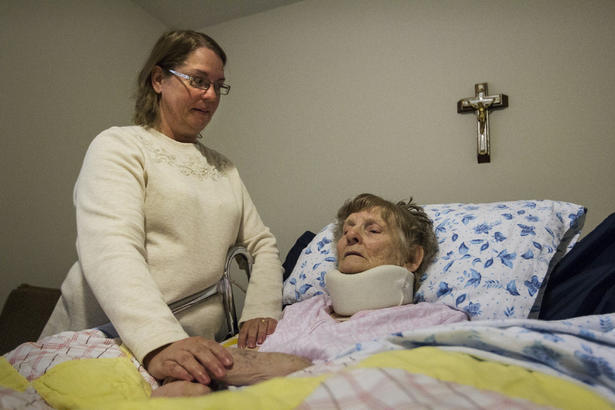
      Dying woman outlives her 90 days of home care so CCAC cuts her services

Published on Saturday September 29, 2012

When Doris Landry was discharged from hospital with a life expectancy of one to two months, she entered the “Home First” program.

Offered by the Central Community Care Access Centre, the program provided a caseworker, personal support workers for eight hours every day, and medical equipment including a special bed, an oxygen machine, a wheelchair and a lift, so Landry could live her final days in the comfort of her niece’s home.

Her niece Charlene Dunlevy took care of her the other 16 hours of the day. “She’s good to me,” Landry says.

The only problem is a bittersweet one: Because Landry survived beyond the program’s 90 day funding period, she now faces reductions in care and uncertainty about the medical equipment.

Landry has cervical spinal stenosis and extensive nerve damage and lives with her niece in Lisle, Ontario, outside of Alliston. Lying in bed, she can manage a small squeeze of her hands, and with effort, a little movement in her arm.

Because of her condition, the bones in Landry’s neck are getting tighter, pinching her nerves. She is losing the power and sensation in her extremities, her voice is becoming weaker. She has difficulty swallowing, chokes often, and has problems breathing. She can’t move her limbs.

“I want to get out of bed,” she says as the air hums on its way through the special mattress. “The doctors tell me, ‘You’ll never get up again.’”

Home First is meant to divert elderly patients from long term care facilities after they are discharged from the hospital following an “acute episode.” The idea is that at-home support can eventually be lessened after the patient improves, or, it will give families 90 days to decide to transition into another form of care, like a long-term care home, which Landry does not want to do. Central CCAC has offered the program since 2009, and 1,713 clients have gone through it. The average 60-day stay (many transition out before 90 days) costs the ministry $10,500.

Born the fourth youngest in a family of seventeen children on Christmas Eve 1927 in New Brunswick, Landry is the last of her siblings. She is lucid, and on her good days, spunky and bright, with nails painted pink by a caring personal service worker. She wants to sit in the gliding rocking chair at the bedside, but she can’t get there. Her condition is terminal — but it is difficult to predict how much longer she will live. Her doctor says there is a prognosis of death in the next few months.

When the 90-day deadline was looming in August, Dunlevy says she was told that the bed would not be removed, but later she was informed all the equipment would have to go, and support would be reduced to three hours a day.

Dunlevy was told she could rent equipment and hire personal support workers. But the family can’t afford either option.

“I’m glad she didn’t die in three months. I hope she has many years to come,” Dunlevy said.

When reached by the Star on Friday, Cathy Szabo, the chief executive officer of Central CCAC, said that after 90 days, clients can stay at home, but the government does not fund the same level of service — legislation and regulations dictate that the CCAC can only provide up to 21 hours of care a week.

She said Landry could remain in the home with reduced care supplemented by hospice and other community organizations. She said equipment from volunteer services has been offered to the family, but if the needs exceed that, Landry could choose a long term care facility. She also noted that if Landry deteriorates, “we will restore service levels.”

Szabo said there was no intent to remove the hospital bed although “we did have conversations with them about how to secure additional equipment going forward in the future.”

She said to remove a hospital bed from a person who came into the program in her final stages of life but has now stabilized would be “cruel and mean.”

“We’re not about that. We aren’t going to take out the bed until there is another plan, if there is another plan for that bed,” she said.

Szabo said her staff had reported that certain equipment wasn’t in use, and that was the equipment that was going to be removed so other patients could use it.

“That is what we offered to take out of the home.”

The family says that isn’t the case — sure, they are not able to put Landry in the wheelchair on some days if she isn’t feeling well, but they try to get her out of her bed as much as they can and need the equipment to do that.

“I would give it to someone if we weren’t using it,” Dunlevy said.

They say the only equipment that has been offered is a medical bed from a local resident. While they are grateful, the mattress does not have air circulation like the CCAC bed and Dunlevy is worried Landry will have bedsores from “head to toe” because of her extremely limited movement.

When asked if the additional equipment was scheduled to be removed, Szabo said, “Not as far as I know.”

“We do need the family to work with us to help us get the right plan and care for the patient, if this lady stays at this same level for two years — and someone else does need the bed, and they just say, ‘No we’re not going to work with you guys we’re not going to make any plans with you,’ that is a very difficult situation. We only have a certain amount of money every year for medical supplies and equipment and that means somebody is on a wait-list for the bed,” Szabo said.

Landry’s palliative care doctor Monique Moreau, sent a request for “ongoing services” to the CCAC in August, and wrote a letter to local health authorities and health minister Deb Matthews on September 13, stressing that staying at home was the best option for Landry and the province’s finances.

Moreau did not get any response — and an email she sent on Monday to the CCAC went unacknowledged. On Friday, after the Star contacted the CCAC about the situation, Moreau received a phone call.

Moreau was told that Landry and her niece misunderstood about the removal of the equipment.

“I don’t think two people can misunderstand that much,” she said.

Moreau was told a case manager was going to visit the family on Monday to review the situation. Moreau believes that supplementary care from volunteers from a hospice will not be enough because those services only offer companionship.

Dunlevy, who works through a temp agency, has stopped working to care for her aunt. Now that service is being reduced further, she cannot return to work.

“I won’t have a choice, I can’t leave her alone. They’re putting us in a predicament,” she said. “I don’t know how we’re going to survive, but we will.”

Moreau, a former board member of the Central LHIN, understands the financial strain on the province.

“It’s not like we’re going to save the health care system a whole lot of money, unless the niece keeps her at home and quits her job and pays for everything,” she said.

Dunlevy says she understands that the CCAC’s hands are “probably tied because they don’t have the money,” but feels that the ministry needs to consider this problem.

Dunlevy and Landry are worried about the uncertainty ahead. For now, Landry can only lie in bed and wait, looking at the small Virgin Mary statue atop the television set.

“Pray for me,” she says. “I’m praying, but she doesn’t do too much.”

China is Invading North America

Will the presidential candidates talk about this?  Probably not!

China does not have an army off the coast of North America deciding what date an invasion will occur.  They do have the financial ability to impact the United States in a most unfavorable way.

The Chinese are in a search for needed natural resources and they will go almost anywhere to obtain access.  On  of their most recent foray has been in Australia where they are mining iron ore. Many Australians  aren’t happy about this situation.  Money talks louder than feelings.

Now China sees an opportunity to obtain oil from North America.  Not in the United States, rather in Canada. Canada is Not Part of the U.S.A.  Canada has significant tar sands oil in Alberta and has wanted to ship their oil to Louisiana for processing and sale.  Since the United States has been saying No to building the Keystone XL pipeline the Canadian government is looking for another path.

As reported in Businessweek and the Washingon Times, CNOOC (a Chinese government controlled oil producer has agreed to pay $15.1 billion for Canada’s Nexen.  Chinese companies hasve spent over $53 billion in Canada over the past decade. This new deal gives CNOOC access to oil and gas fields in the North Sea, the Gulf of Mexico, and Nigeria, as well as the oil reserves in Alberta.

The likelihood of building the Keystone XL pipeline has been diminished.  This new deal with  CNOOC will make Canada even less dependent on the U.S. as a primary customer for its oil and gas.

The War of 1812

I am glad the Canadians won the fight.

According to History.com The War of 1812 produced a new generation of great American generals, including Andrew Jackson, Jacob Brown and Winfield Scott, and helped propel no fewer than four men to the presidency: Jackson, John Quincy Adams, James Monroe and William Henry Harrison.” 

This was a war between England and the U.S.   Canada was a colony.  The U.S. did not see itself at war with Canada.  It was a war with the British Empire.  Americans learn in school that the war was about British attempts to restrict U.S. trade and to a lesser extent a continuation of the American Revolution.  For us Americans the fight settled the question of America’s independence from Great Britain.

Canadians in Ontario seem to want to celebrate their victory over American forces.  Johns Hopkins University professor Eliot Cohen supports this view. He writes in his just-published book Conquered Into Liberty that, “ultimately, Canada and Canadians won the War of 1812.”

 Americans don’t want to be bothered celebrating that war.  The only thing Americans gained was the “Star Spangled Banner.”  It is a terrible song that celebrates the flag.  “America the Beautiful” or “God Bless America” are far better songs that celebrate everything that is good about this country.

Interestingly it is Canada that has shown more openness than the United States on the subject of accepting all people equally.  Read the Toronto Star newspaper and you learn more about the world than reading many American newspapers.  Walk down the streets of Toronto and you have the feeling you are in the United Nations.  Or is it my imagination?  No, I don’t think so.  There really is a feeling of acceptance that is difficult to find elsewhere.

Happiest Country in the World is Denmark

According to the World Happiness Report, released this week, Canada ranks as the fifth happiest country, trailing only Denmark, Finland, Norway and the Netherlands.

Trust also was cited as a key factor in overall happiness in the report, which was tabled at the United Nations.

A more recent reduction in trust was noted in countries such as the United States — which placed 11th overall — and the United Kingdom, which ranked 18th on the global happiness list.

http://www.vancouversun.com/…th+global+happiness+ranking/6406456/story.html

10 happiest countries:

Denmark

Finland

Norway

Netherlands

Canada

Switzerland

Sweden

New Zealand

Australia

Ireland