On this day, December 27, 2008 hail and snow on my street. Barbara, my wife, took this picture with my 3.1 megapixel Canon camera. I was at work. Kodak was still selling lots of film.
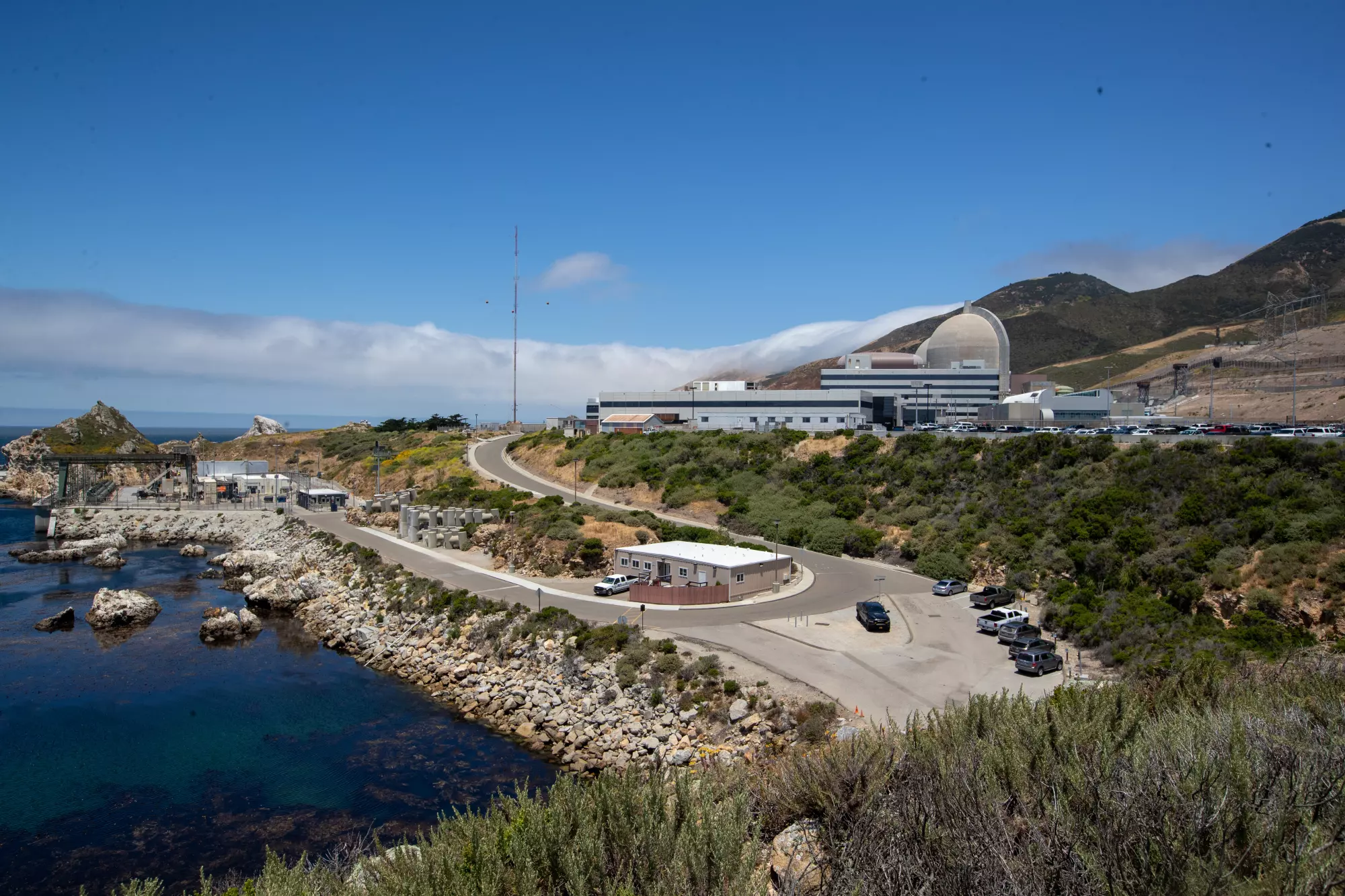
Pacific Gas & Electric’s Diablo Canyon Power Plant is the only operating nuclear plant in California. Gov. Gavin Newsom supports keeping the plant along the coast near San Luis Obispo operating past its planned shutdown date of 2025.
(Brian van der Brug / Los Angeles Times)
BY TONY BRISCOE STAFF WRITER for the Los Angeles Times
California energy officials have voted to extend the operation of the Diablo Canyon Power Plant through 2030, extending the life span of the state’s last nuclear plant an additional five years.
The California Public Utilities Commission approved a proposal to keep Diablo Canyon’s twin reactors online, overturning an earlier agreement to close the plant in 2025.
Three commissioners — Alice Busching Reynolds, John Reynolds and Karen Douglas — voted in favor. Commissioner Darcie Houck abstained and Commissioner Genevieve Shiroma was absent.
Thursday’s decision is expected to preserve a large bloc of the state’s zero-emission power supply. But it also raises concerns over the high cost and potential safety issues associated with operating an aging nuclear power plant.
The state utilities commission acknowledged that the costs associated with the plan were still unknown but were expected to exceed $6 billion. A federal safety review will also be conducted.
State energy commissioners emphasized that the extension should serve as a bridge to renewable energy and that the plant was not expected to operate beyond 2030. The decision, they said, was intended to bolster the reliability of California’s grid, which has narrowly avoided rolling blackouts during heat waves in recent years.
“The short-term extension of the power plant as proposed is a transitional strategy to help California weather the challenges of the energy transition, including the weather and climate extremes that we have experienced … and the cost challenges that we face in scaling up the clean energy transition so quickly,” Douglas said ahead of the vote. “So this is an opportunity for us to help bridge some years.”
Pacific Gas & Electric Co., the plant’s operator, lauded the commission’s decision, saying it will help provide the state with a dependable, emission-free source of energy.
“We’re grateful for the opportunity to answer the state’s call to ensure electrical reliability for Californians,” said Suzanne Hosn, a spokesperson for PG&E.
At a state meeting filled with heated discourse, supporters argued that California needed the power supply from Diablo Canyon to avert outages and meet the state’s climate goals. The plant supplies about 9% of the state’s electricity and 17% of the state’s zero-emission power.
“It was methodically determined that Diablo Canyon is in fact integral to the California electricity reliability,” said Brendan Pittman, a Berkeley resident, who supported the proposal. “It contributes substantially to California’s zero-emission targets and the costs for continued operation are not, quote, too high to justify.”
But a chorus of critics warned that the extension could bring rate hikes from PG&E.
Opponents also argued that the plant’s proximity to several fault lines makes it susceptible to earthquakes, and a significant risk.
The plant, which sits along the Pacific Ocean about 10 miles outside of San Luis Obispo, opened in 1985. A 46-page report by Digby Macdonald, a professor at UC Berkeley’s Department of Nuclear Engineering, suggested one of the plant’s nuclear reactors “poses an unreasonable risk to public health and safety due to serious indications of an unacceptable degree of embrittlement,” or deterioration due to prolonged exposure to radiation.


 Coast Contact