The Ostrich Wins – America Looses!

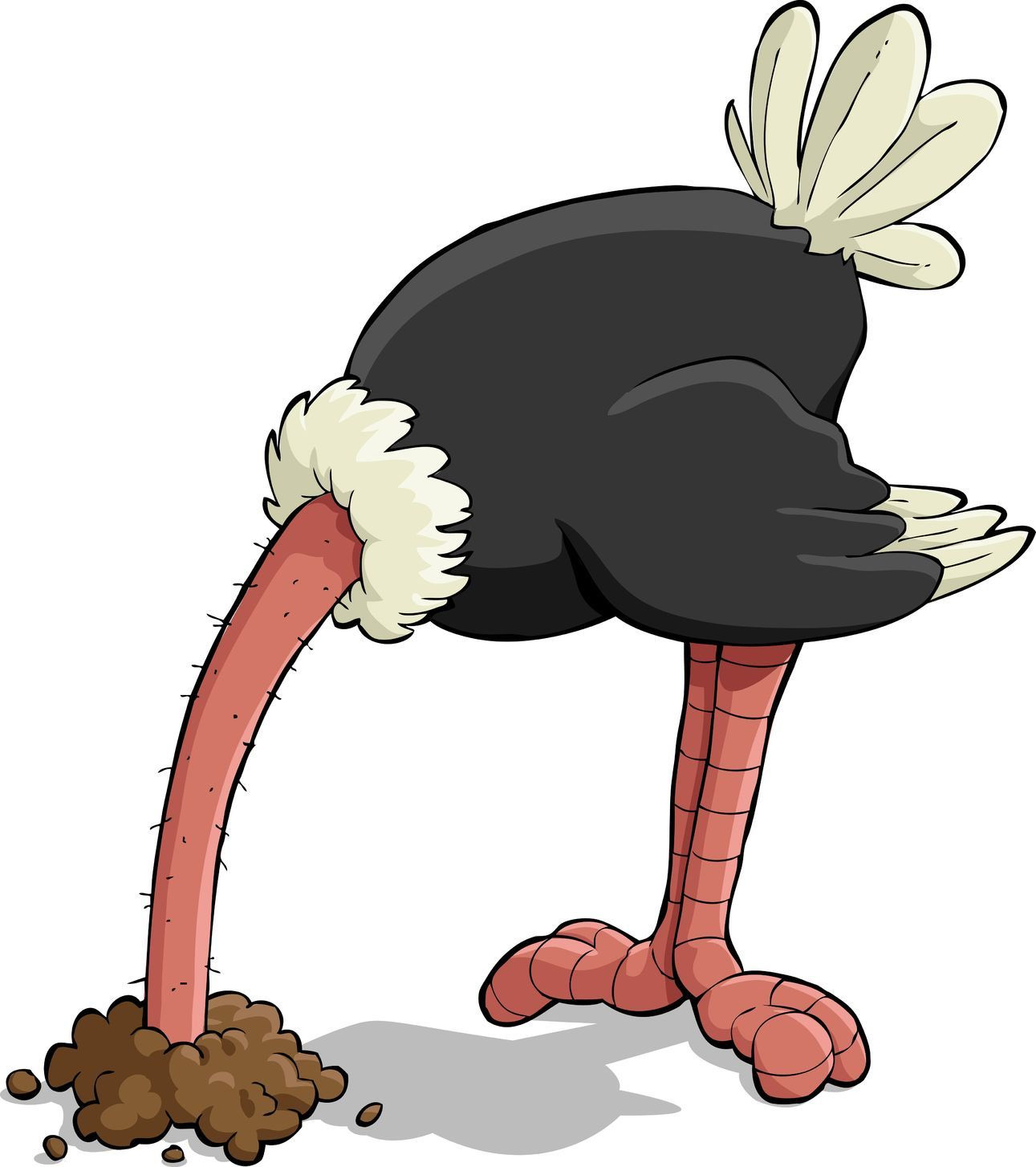
Is this the end of the American Republic? Too many Americans have chosen to hide their heads in the sand. Too many have chosen to cover their ears. The very last thing they want to hear is testimony from John Bolton, Mick Mulvaney, Mike Pompeo or anyone else. Like any ostrich, the truth might hurt.

Donald Trump faced charges of abuse of power and obstruction of Congress. Sadly the Senate has decided that while his actions were inappropriate they do not rise to removal from office.

Donald Trump contends that the second article to the Constitution gives him power to do whatever he wants. The Republican controlled Senate agrees. They choose to ignore his high crimes and misdemeanors. This leaves us with a toothless congress.

If he wins a second term as president will he attempt to overturn the constitution? Could he run for a third term as president? Who would stop him?

Text of the 22nd Amendment. “No person shall be elected to the office of the President more than twice, and no person who has held the office of President, or acted as President, for more than two years of a term to which some other person was elected President shall be elected to the office of President more than once.”

I am really frightened. We appear to be following the gullible in places like 1930 Germany, today’s Russia, Philippines, Venezuela, and Turkey.

The Impeachment Trial of Donald J. Trump

Senators have a duty to conduct a fair and full trial. The Republican leader, Mitch McConnell, is trying to make sure they don’t. The strategy is obvious. Let’s get through this impeachment trial as quickly as possible. The senate finds the president not guilty and he will have another reason for re-election. Trump will point to his exoneration as proof of the great job he is doing as president.

Are the American people likely to buy this strategy? Of course I don’t know the answer but if we look at history we all can see that Americans know when the country is on a wrong path.

The best example is the presidency of Jimmy Carter. Two situations denied him a second term. The inflation rate rose from 6% to 12% rates while unemployment remained at 7.5% and 52 hostages were taken from the U.S. embassy in Tehran, Iran and held for over a year before the 1980 election. Those nightly updates on ABC’s Nightline about the hostages only reinforced public opinion that Carter was ineffective.

There is also a remote possibility that Republican senators will take a hard look at the constitution and realize that Mr. Trump is a threat to this American democracy.

Extra Extra Read All About It! – President Impeached!

Speaker Nancy Pelosi: It’s a “great day for the Constitution” but “a sad day for America.”

For just the third time in America’s history a president of the United States has been impeached. Even as a conservative Democrat I would have to voted for the impeachment of Donald Trump.

The two charges against the president are abuse of power and obstruction of Congress. I would have included a charge of obstruction of justice to the charges against him. Despite an invitation to participate in the House impeachment investigation the president refused to provide any pertinent documents and blocked all of his administration personnel from appearing before the House Intelligence Committee and the House Judiciary Committee.

Just in case any Americans did not know his defense, Trump wrote in a letter to speaker Nancy Pelosi saying “This impeachment represents an unprecedented and unconstitutional abuse of power by Democrat Lawmakers, unequaled in nearly two and a half centuries of American legislative history.” That letter tells me the president has not read the constitution. Or perhaps he has but chooses to ignore the constitution.

This impeachment is a fact but now comes the politics of a trial in the senate. The Democrats will be doing every trick they can to have Trump removed from office. At the very least the impeachment will hang over Donald Trump forever.

Trump is just 67 votes away from being an ex-President

There were Republicans support for Richard Nixon almost to the day he resigned. That could be the same situation for Donald Trump.

Trump is being impeached on two charges of misbehavior during his dealings with Ukraine. The Judiciary Committee in the House has deliberately kept the charges within the narrow range of the Ukraine fiasco.

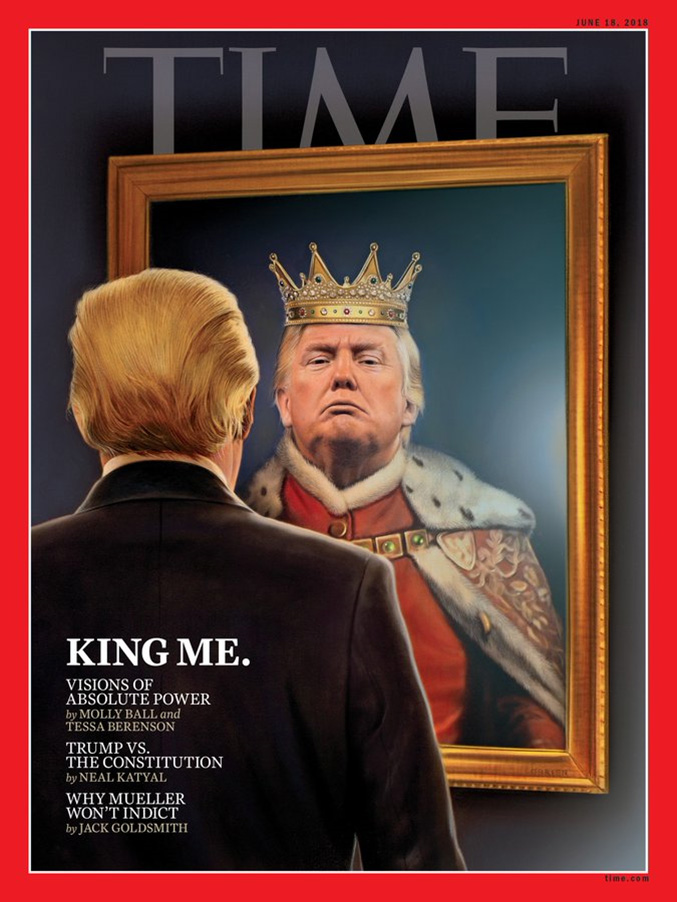
The real charge against Trump is that his entire presidency has been conducted on the belief that he stands above the law, is an elected monarch. At issue is nothing less than preservation of the republican framework of the Constitution.

Trump is just 67 votes away from being an ex-President. Yes, it’s a huge long shot but two of the three articles of impeachment against Richard Nixon are the same in the impeachment charges against Donald Trump.

A powerful prosecutor, who is known for political impartiality, might present the Democratic Party arguments for removal of Trump’s from office in a manner that Republican senators will be unable to ignore. Jurys have been known to bring unexpected verdicts. Some of those GOP senators may be reviewing the arguments given Trump’s efforts to scuttle the constitution.

Perhaps an overwhelming indication that the senate will vote in favor of his removal he will follow Nixon’s example.

Is Judaism a religion or a nationality-or is it both?


This question is debated by both Jews and non-Jews.  Everyone is entitled to an opinion.  The last thing we need is the United States government defining any religion.  In fact the first words of the first amendment to the constitution are “Congress shall make no law respecting an establishment of religion, or prohibiting the free exercise thereof.”

President Donald Trump reportedly plans to sign an executive order that would classify Judaism as a race or nationality instead of just a religion.

His action will put a target on every Jews in America. Hitler would be delighted.

Three administration officials told The New York Times that the order would threaten to withhold federal funding for colleges and universities that fail to combat discrimination on their campuses.

The loudest critics of the measure are Jews themselves, many of whom said that referring to Judaism as a nationality would only further fuel anti-Semitism.

The move appears to be targeting the Boycott, Divestment and Sanctions movement, or BDS, which encourages various forms of boycott against Israel for what it deems violations of international law. The group, which has become popular on college campuses, holds annual events like “Israeli Apartheid Week” to push for Palestinian rights.

Many American Jews are worried Trump’s reported decision to define Judaism as a nationality and not just a religion would do far more harm than good. I’m one of them.

I have known a few people who are converts to Judaism. One comes to mind who is proud of her Scottish heritage. Based upon her last name I suspect she converted when she married a Jew. I’m guessing she will resent this action.

Trump probably believes he will win more Jewish support in the November election by issuing this order. I doubt that will be the case. 

I hope the ACLU files a suit against this action.

Constitutional Grounds For Presidential Impeachment

You don’t have to be a lawyer to understand this report.  If you read articles on the internet, on this blog or on Facebook you will understand this report.


REPORT BY THE MAJORITY STAFF OF THE HOUSE COMMITTEE ON THE JUDICIARY

This report was issued on December 7, 2019

The House Judiciary Committee released a report on Saturday that aims to define what the framers of the Constitution meant by an impeachable offense, issuing the document just days before the Democratic-led committee is expected to approve articles of impeachment against President Trump.

Following is the primary paragraphs of the report.

Conclusions regarding the nature of impeachable offenses. In sum, history teaches that “high Crimes and Misdemeanors” referred mainly to acts committed by public officials, using their power or privileges, that inflicted grave harm on our political order. Such great and dangerous offenses included treason, bribery, serious abuse of power, betrayal of the national interest through foreign entanglements, and corruption of office and elections. They were unified by a clear theme: officials who abused, abandoned, or sought personal benefit from their public trust — and who threatened the rule of law if left in power faced impeachment. Each of these acts, moreover, should be plainly wrong to reasonable officials and persons of honor. When a political official uses political power in ways that substantially harm our political system, Congress can strip them of that power.

Within these parameters, and guided by fidelity to the Constitution, the House must judge whether the President’s misconduct is grave enough to require impeachment. That step must never be taken lightly. It is a momentous act, justified only when the President’s full course of conduct, assessed without favor or prejudice, is seriously incompatible with either the constitutional form and principles of our government or the proper performance of constitutional duties of the presidential office. But when that high standard is met, the Constitution calls the House to action — and the House, in turn, must rise to the occasion. In such cases, a decision not to impeach can harm democracy and set an ominous precedent.

Sorry, Mr. President, the House is giving you far more due process than the Constitution requires

By Erwin Chemerinsky, dean of the UC Berkeley School of Law and a contributing writer to Opinion section of the Los Angeles Times

President Trump and his supporters continue to complain that the House of Representatives is denying him due process. But in fact, every part of the inquiry to date has been in line with constitutional mandates, and the impeachment procedures adopted by the House of Representatives on Thursday go well beyond what the Constitution requires.

The Constitution says very little about how impeachment proceedings are to be conducted. The document specifies that the president, as well as federal judges and other officers of the United States, can be impeached for “treason, bribery, or other high crimes and misdemeanors” and gives the House of Representatives sole power to impeach. If a majority of the House votes for impeachment, there is then a trial in the Senate, which is presided over by the Chief Justice of the United States. It takes a two-thirds vote of the Senate to remove the president from office.

That’s it; that’s all the Constitution tells us about the procedures that must be followed. So long as these few rules are followed, it cannot be said that Congress is violating the Constitution. Trump and White House Counsel Pat Cipollone have said that the Constitution required a House resolution to authorize an impeachment inquiry, but they’re wrong.

Even now that Congress has passed such a resolution, Trump still insists he is being denied due process. But there is no basis for that claim either. Due process applies only if a person is being deprived of life, liberty or property. House impeachment hearings certainly don’t deprive the president of any of those interests.

Even though there was no requirement that the House do so, the resolution it passed sets out procedures that meet the requirements for due process. The proceedings will be in public. Both Democrats and Republicans will ask questions of every witness. Both sides can call witnesses. The procedures to be followed are much like those used in the Clinton and Nixon impeachment proceedings, though there was less fact-finding in the Clinton impeachment because of the detailed report of Whitewater Special Counsel Kenneth Starr.

In many ways, the House of Representatives functions likes a grand jury in a criminal case, and an impeachment often has been likened to an indictment. As with the grand jury, the House decides whether there should be a trial. But the usual requirements of due process never have been found to apply at the grand jury stage precisely because there is no deprivation at that point. In fact, grand jury proceedings in many ways are the antithesis of due process: only the prosecution is present; the defendant is not allowed to call witnesses or present evidence; everything is done in secret.

In the Trump investigation, unlike the Nixon impeachment, there is much less uncertainty about what happened. The constant question in that inquiry was what did the president know and when did he know it. There was a clear answer only once the Supreme Court ordered the release of the White House tapes, which occurred after the House Judiciary Committee had voted articles of impeachment against Nixon.

With regard to President Trump there is little dispute over what occurred in at least one key instance. In a conversation with Ukrainian President Volodymyr Zelensky about the United States giving Ukraine $400 million in military aid, Trump said, “I would like you to do us a favor though.” Although he later tried to back away from his statement, White House Chief of Staff Mick Mulvaney publicly acknowledged that this was a quid pro quo, linking assistance for Ukraine to its willingness to investigate Joe Biden and his son.

Ultimately, this impeachment inquiry is not really about what happened, but rather whether such presidential conduct is a sufficient abuse of power to constitute “high crimes and misdemeanors.” With so little dispute about the underlying facts, the president and his supporters have taken to attacking the process.
L’état c’est moi – I am the state

What happened to America first?

Louis XIV brought France to its peak of absolute power and his words ‘L’etat c’est moi’ (‘I am the state‘) express the spirit of a rule in which the king held all political authority. His absolutism brought him into conflict with the Huguenots and the papacy, with damaging repercussions.

This belief easily helps us to recall President Richard Nixon who said on camera in the David Frost – Nixon interviews “but when the President does it, that means it is not illegal…”

Donald Trump’s hunger for authoritarian power plays out in many ways but can be distilled into a generality: If he wants to do something, he cares not what the law, precedent or basic human decency might dictate. He just forges ahead and asks, who wants to try to stop me?

The answer is the American people through their elected representatives. The House of Representatives has the constitutional authority to investigate whether the president has committed “high crimes and misdemeanors” justifying impeachment. To resist legitimate inquiries related to that responsibility is obstruction.

At the heart of the impeachment case against President Donald Trump lies a potential dagger for his re-election campaign: He’s accused of putting himself first — and American interests second.

This Tweet Trump sent out last Tuesday supports that accusation. “As I learn more and more each day, I am coming to the conclusion that what is taking place is not an impeachment, it is a COUP, intended to take away the Power of the People, their VOTE, their Freedoms, their Second Amendment, Religion, Military, Border Wall, and their God-given rights as a Citizen of The United States of America!”

Too bad Trump has not read the constitution. If he had, he would know that impeachment is a process is included in the constitution just as the second amendment is part of that same basic law. 

Update: Columnist Doyle McManus in the Sunday October 6, 2019 Los Angeles Times wrote an article titled “Trump should read the Constitution.”

Past impeachment proceedings: 2 acquittals, 1 resignation

Despite a whistle blower letter suggesting that Donald Trump has broken the law, even if the accusations proved to be accurate, it is unlikely he will be removed from office by an impeachment.

There have only been three efforts to remove a sitting president from office in the entire history of the United States. None of them were successful.

The first was Andrew Johnson. He was the Vice President under Abraham Lincoln and so obviously become president after Lincoln’s assassination. Johnson’s impeachment in 1868 was the culmination of a bitter dispute between the president and the Republican-controlled House over Reconstruction following the Civil War.

Richard Nixon was going to be impeached but resigned when he learned of the charges from the House Judiciary Committee. The charge was obstruction of justice. 

Bill Clinton was impeached for lying in front of a grand jury about his affair with Monica Lewinsky, a White House intern.

The only way an impeachment of Trump will be successful would be by winning support of large parts of the population. Most Americans are against removing President Trump from office, according to a Quinnipiac University poll released Tuesday September 25, 2019.

Given the fact that a guilty verdict requires a two thirds in favor vote in the Senate it is highly unlikely Donald Trump would be removed from office. The reason? At this time most Republican senators are strong supporters of Trump. If Trump is vindicated before the November 2020 election it would give Trump an opportunity to claim evil forces were fighting to destroy his presidency and the United States.