The Value of Blockerbuster Mergers

There is a value to mergers.  They make companies larger and more powerful.  The likely outcome is more revenue and higher net income.  It is a share holders dream.

Historically the United States has taken the position that large mega companies that control an industry are not in the best interest of America.  The Sherman Antitrust Act was passed into law July 2, 1890.  The purpose was to prohibit monopolies.  The most infamous of the trusts was the Standard Oil Trust, which was formed in January, 1882. At that time, Standard Oil and its affiliates controlled more than 90 percent of the oil refining capacity and most of the oil marketing facilities in the U.S.  The trusts came to dominate a number of major industries, and were, in effect, monopolies.

This ground breaking piece of legislation was the result of intense public opposition to the concentration of economic power in large corporations and in combinations of business concerns (i.e., trusts) that had been taking place in the U.S. in the decades following the Civil War. Opposition to the trusts was particularly strong among farmers, who protested the high charges for transporting their products to the cities by railroad.

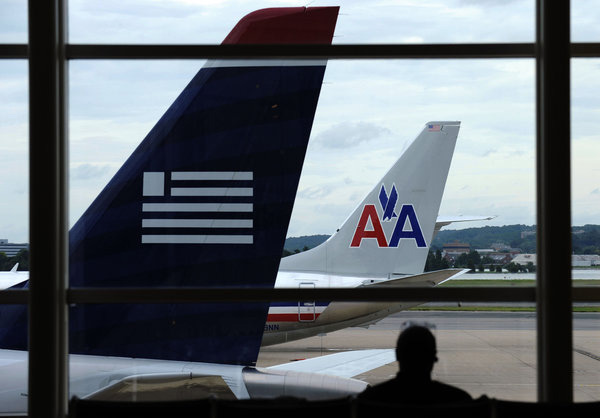
American Airlines & US Airways planes at Washington's Ronald Reagan National Airport
american airlines-us-airways-planes-at-washington’s-ronald-reagan-national-airport

So what do you suppose would happen if most of the airlines were consolidated into one carrier?  There would be no reason to control the charges that the airline could impose.  Even now the number of airlines has declined in the United States. There were nine major national airlines as recently as 2005, but only five remain today. American Airlines has acquired four other air carriers since 1971.  The largest was TWA in 2001.

Continental Airlines merged with United Airlines 2010 to 2012.  They retained the United Airlines name.

Between 2008 and 2010 Delta Airlines absorbed Northwest Airlines.

See a more complete list here.

What has happened to the cost of flying?  The airlines have added numerous fees to hide the increased cost of air travel.  Now there is a fee to check a bag.  A fee for food (even chips or soft drink).  Want to watch a movie?  There is a fee.  Some airlines are even charging extra for aisle seats.

 So what do you expect the fares to be once this merger is completed? The average cost of a roundtrip domestic ticket — including baggage and reservation change fees — grew to $378.62 last year, up from $351.48 in 2008, when adjusted for inflation according to a report from the Associated Press.

Just imagine the cost of other items if there was little or no competition.  Bank fees have increased simply because there is less competition.  AT&T and Verizon dominate the telecommunications industry just as Time Warner and Comcast dominate the television service industry.

The justice department is finally stepping forward to protect consumers.  Let’s hope this is the first of many more actions to protect consumer interests.

Manning and Snowden are Not Alone

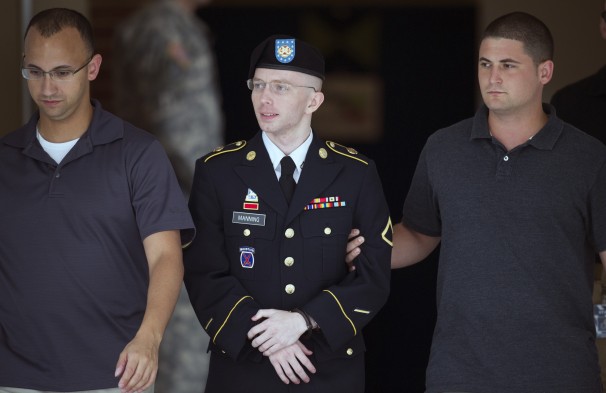
Bradley Manning Bradley Manning and Edward Snowden are not the first people to release government secrets and they won’t be the last.  Historically Daniel Ellsberg’s release of “The Pentagon Papers” is one of the most famous cases of a military analyst divulging government secrets.  Ellsberg, working for the Rand Corporation, worked on a top-secret report ordered by Defense Secretary Robert McNamara entitled U.S. Decision-making in Vietnam, 1945-1968 (The Pentagon Papers) copied the entire 7,000-page report and released it to the New York Times and Washington Post.

Aaron Swartz, another geeky computer type/hacker, recently committed suicide (January 11, 2013) while facing charges for downloading academic papers from MIT and digital library JSTOR.

Time Magazine (June 24, 2013), says the internet calls these geeks heroes.  They must not have read the conservative commentaries on these self appointed “heroes” who prefer the possibility of harm to Americans than protecting Americans. 

TIME Poll question:

What do you think of the government’s collecting phone records, e-mails, and internet search records?

48% approve

44% disapprove 

We just went to the Hollywood Bowl this past Saturday.  It is an outdoor amphitheater that holds 18,000 people.  The security when entering? A cursory check of our picnic baskets.  We did not have to remove all items before the checker said “OK.”

Millions of phone calls and e-mails are made daily in the USA.  What is the likelihood they are listening to your conversations?  Why would they want to listen?  Could the program be a review of where people are sending emails and phone calls?  Obsession with intruding into your business seems to be the objection to the NSA’s efforts to stop terrorists.  Let’s hope no someone, undetected, does not carry a bomb into an amphitheater on ball stadium.

Manning and Snowden may not have meant to help terrorists but they have harmed our efforts to stop them.

They should be jailed for decades.

Zimmerman and the Jury Trial System

Martin -Zimmerman

Demonstrators held a peaceful rally in Beverly Hills against the George Zimmerman trial verdict, but 17 people were arrested during a rally that turned rowdy in Victorville, California, authorities said Wednesday night.

The block immediately west of Highland Avenue in Hollywood is a tourist Mecca.  The Famed Grauman’s Chinese Theater is there.  Almost immediately next door is the Dolby (Former Kodak) Theater that is home of the Academy Awards show.  Across the street is the El Capitan Theater.  See pictures in the Los Angeles Photo Gallery.

I have visited this area dozens of times.  But since the Zimmerman trial the area has become a center for demonstrations against the verdict.  That has led to criminals storming the streets to steal whatever they can.  It’s just an excuse for criminal behavior that some believe will not result in punishment.  They are wrong.  The police have made arrests.

I have served on many juries both civil and criminal.  Once in the deliberation room all of those jurors struggled to reach the correct decision.

The O.J. Simpson murder trial resulted in a not guilty verdict.  There were no demonstrations even though many believed him to be guilty.  Both the prosecutors and the defense attorneys did their best to convince the jury.

I know of no better system to determine guilt or innocence.  Highly capable lawyers do have a bearing on the outcome.  O.J. Simpson’s lawyers were among the best.  If Zimmerman was Black and Martin was White would the verdict been different?  I believe the answer is Yes.  There is racial bias/bigotry in this country and I hear some of it almost every week.  Still this is the system.  The law must prevail.

Demonstrations are permitted. Vandalism is not.

Money Wasted on Border Security

Forgiving someone after breaking a law is amnesty.  Both Republicans and Democrats are interested in Hispanic votes for their party.  Neither cares about the well being of the country.  The Los Angeles Times reports that The $46-billion security package in the immigration bill would benefit aerospace, technology and security companies, as well as border   states.  This is an unnecessary expenditure.

We can obtain substantially reduced illegal entry into the United States by denying undocumented workers employment.

Emphasis is on Hispanics because they are the largest group of illegal aliens.  It has been reported that 40% of those in the country illegally are not from Latin America.  Under current federal law, it is illegal for any employer to hire, recruit or refer for a fee any alien not authorized to work in the United States.  For first offenders, there is a $250-$2,000 fine per illegal employee.  For a second offense, the fine is $2,000-$5,000 per illegal employee.  If the administration simply enforced the law there would be no problem and amnesty would not be an issue.

So why haven’t we simply enforced existing laws?  My guess is that leading members of both political parties do not have the stomach to deny anyone a job.  In addition companies that hire illegal aliens have a lobby that is successfully impeding government action against employers.

We need a new immigration law that provides for both migrant workers and high tech workers. The Senate bill would encourage more illegal immigration.

The Meaning of the Fourth of July

FlagThe meaning of the Fourth of July is clearly enunciated when we watch the news from Egypt.  A democratically elected president was removed from office by a military force.

The Associated Press reports that Egyptian authorities shut down four Islamist TV stations, banned the Muslim Brotherhood’s newspaper and raided the office of Al-Jazeera’s Egypt affiliate in crackdown on media considered sympathetic to ousted President Mohammed Morsi. Of course this action brought an outcry from rights groups.

Even when Americans don’t agree with the government’s actions we use the ballot box to remove the unwanted official.  There is no military action.  There are no riots in the streets.

It is my understanding that Mohammed Morsi was an assistant professor at California State University Northridge.  He obviously understands how democracy functions.  Others in Egypt may not understand the democratic process.

Even when we disagree in the United States, we know there is a process.

Status of Same Sex Marriage in the United States

My opinion: If two people love each other they should be permitted to marry.  There should not be any exceptions no matter where they live.

The U.S. 9th Circuit Court of Appeals today cleared the way for gay marriages to resume in California.  CNN reports that Kamala Harris, California’s State Attorney General, is attending two same sex marriage ceremonies in San   Francisco this afternoon.

What is the status of the states on same-sex marriage?  This is a summary posted today by the Associated Press.  The AP calls the laws a hodgepodge of laws.  The Supreme Court is to blame.

CALIFORNIA: The Supreme Court cleared the way for gay marriages to resume in California for the first time since 2008, ruling that sponsors of the state’s voter-approved same-sex marriage ban lack authority to defend it in court. State officials say counties will start issuing marriage licenses once the court finalizes its decision.

 CONNECTICUT: The state Supreme Court legalized same-sex marriage in October 2008; marriages started the next month.

 DELAWARE: A same-sex marriage bill was signed into law in May. A Democratic state senator and her partner will be the first couple in the state to have their civil union converted to marriage when the bill takes effect July 1.

 DISTRICT   OF  COLUMBIA: The D.C. Council approved same-sex marriage in 2009; marriages began in March 2010.

 IOWA: The state Supreme Court legalized same-sex marriage in 2009. Conservative lawmakers have sought to change state law to define marriage as between a man and a woman. Those efforts have failed so far because Democrats controlling the state Senate have blocked any legislation from coming up for a vote. That’s unlikely to change unless the GOP takes control of both chambers in 2014.

MAINE: Voters approved same-sex marriage last November, reversing results of a 2009 referendum that quashed a gay-marriage bill.

 MARYLAND: The Legislature approved same-sex marriage in February 2012; the issue then won voter approval in a referendum last November.

 MASSACHUSETTS: It was the first state to allow same-sex marriage. The state’s Supreme   Judicial Court ordered it legalized in 2003; marriages started in May 2004.

 MINNESOTA: A same-sex marriage bill was signed into law in May. It takes effect Aug. 1.

 NEW   HAMPSHIRE: The Legislature approved same-sex marriage June 2009.

NEW YORK: The Legislature approved same-sex marriage in June 2011.

 RHODE ISLAND: A same-sex marriage bill was signed into law in May. It takes effect Aug. 1.

 VERMONT: The Legislature legalized same-sex marriage in 2009. Earlier, Vermont was the first state to offer civil unions to gay and lesbian couples.

WASHINGTON: The Legislature approved same-sex marriage in February 2012. It then won voter approval in referendum on Nov. 6, 2012.

___

CIVIL UNION STATES:

 COLORADO: Gay-rights advocates were pleased that Colorado lawmakers approved a civil-union law this year that extends marriage-like rights to same-sex couples. But they still plan to push for the full status of marriage. That would entail either a lawsuit or a voter initiative to overturn a gay-marriage ban approved by voters in 2006.

 HAWAII: Lawmakers passed a civil union law in 2011. It’s being challenged in the 9th U.S. Circuit Court of Appeals by two women who want to marry rather than enter into a civil union. Democratic Gov. Neil Abercrombie supports same-sex marriage and says the U.S. Supreme Court rulings bolster his argument that the Constitution requires it.

 ILLNOIS: Lawmakers approved civil unions in 2011, but an effort this year to legalize gay marriage fell short despite a push from Gov. Pat Quinn and Chicago Mayor Rahm Emanuel. The bill’s sponsor, Democratic Rep. Greg Harris, says the Supreme Court rulings improve the chances in the next legislative session. Meanwhile, a right-to-marry lawsuit filed by more than two dozen gay couples is pending.

NEW  JERSEY: Acting under an order from the state Supreme Court, the Legislature legalized civil unions in 2006. However, a pending lawsuit contends that civil unions do not fulfill the court’s mandate that gay couples receive equal treatment. A hearing is scheduled for August. The Democratic-led Legislature passed a bill last to recognize gay marriage, but it was vetoed by Republican Gov. Chris Christie.

___

STATES WITH CONSTITUTIONAL BANS:

 ALABAMA: Voters overwhelming approved a constitutional amendment in 2006 limiting marriage to one-man, one-woman unions. Democratic Rep. Patricia Todd, the only openly gay member of the Legislature, says she and her partner plan to file suit challenging the ban. “The state only moves forward on civil rights issues when forced by the federal courts,” she says.

 ALASKA: Voters approved a ban in 1998. Changing the constitution would require that voters approve a constitutional convention — but they opted not to do so in 2012. The Legislature also could propose a constitutional amendment, but Republicans control both chambers, and there is no apparent rush to act. Alaska’s U.S. senators, Democrat Mark Begich and Republican Lisa Murkowski, support same-sex marriage. But the state’s lone U.S. House member, Republican Don Young, and its GOP governor, Sean Parnell, do not.

 ARIZONA: Gay-rights activists are gathering signatures in hopes of placing a measure on next year’s ballot that would overturn a 2008 ban. Republican Gov. Jan Brewer predicts voters will reject any such effort. One city, Bisbee, recently legalized local-level civil unions for same-sex couples. Tempe and several other cities are considering similar ordinances.

 ARKANSAS: The gay-rights group Arkansans for Equality is asking the state attorney general’s office to approve language for a ballot measure next year that would repeal the 2004 ban on gay marriage. The attorney general must certify the language before the group can begin collecting the 78,133 signatures from registered voters needed to place it on the 2014 ballot.

 COLORADO: As noted above, gay marriage is banned under a constitutional amendment approved by voters in 2006. But Democrats now control the Legislature and passed the bill this year establishing civil unions. Gay-rights supporters are deliberating on how to challenge the ban — it could be through a lawsuit or a voter initiative.

FLORIDA: Voters approved a constitutional amendment banning same-sex marriages in 2008. It would take approval from 60 percent of voters to overturn it if the issue gets on the ballot again. That would require either action by the Legislature — which seems unlikely anytime soon — or a petition drive that would require the signatures of more than 683,000 registered voters.

 GEORGIA: A gay-marriage ban was approved in 2004 with support from 76 percent of the voters. No group has mounted a serious attempt to overturn that prohibition. Most politicians in Georgia publicly embrace positions opposing gay-rights measures, although Atlanta Mayor Kasim Reed announced in December that he supports gay marriage.

 IDAHO: Voters approved a ban in 2006 with 63 percent support. The Republican dominated Legislature is not expected to make any changes in the near future. GOP lawmakers have resisted appeals from gays to amend the Idaho Human Rights Act to include discrimination protections for gays and lesbians in regard to employment and housing.

 KANSAS: Voters overwhelmingly approved a gay-marriage ban in 2005. With conservative Republicans in charge of both the House and Senate, no move to modify or repeal the amendment is expected.

 KENTUCKY: Voters approved a ban in 2004; there’s no serious talk of any imminent challenge. Chris Hartman, director of the Louisville-based Fairness Campaign, said the Supreme Court rulings may add momentum to the push for a state law protecting gays from discrimination in employment, housing and public accommodations.

 LOUISIANA: A ban was approved by voters in 2004 with 78 percent support. Gay rights leaders say they will study the possibility of a challenge, but none is currently foreseen. Meanwhile, they will continue to lobby the Legislature for adoption rights and job protections.

 MICHIGAN: A lawsuit to overturn a 2004 ban on same-sex marriage is pending in federal court. Detroit-area nurses April DeBoer and Jayne Rowse are suing to try to win the right to jointly adopt each other’s children, and a judge suggested the case be stretched to include a challenge to the ban on gay marriage. Separately, gay-rights activists say they will try to get a measure on the ballot in 2016 to overturn the ban.

 MISSISSIPPI: A ban was approved in 2004 with support from 86 percent of the voters, the highest percent among all the voter-approved bans in the U.S. There’s no expectation it will be repealed except under a mandate from Congress or the U.S. Supreme Court.

 MISSOURI: A ban was approved in 2004 with more than 70 percent support; there’s been no effort to repeal it. The state Supreme Court is currently considering a legal challenge to a law that limits survivor benefits for deceased public safety officers to spouses who were in a “marriage between a man and a woman.” The case was brought by the same-sex partner of a former Highway Patrol officer killed by a vehicle while investigating an accident.

MONTANA: Voters approved a ban in 2004; it’s not under immediate threat. But gay-rights advocates believe that parts of the Supreme Court rulings could bolster their arguments in a case seeking domestic partnership recognition. In that lawsuit, gay couples are seeking inheritance, joint tax and other legal benefits.

 NEBRASKA: Voters approved a constitutional gay-marriage ban in 2000. In light of the Supreme Court rulings, gay-rights activists are now looking at ways to challenge it. Doing so would likely require a citizen initiative and another statewide vote, though supporters aren’t ruling out a lawsuit to challenge the amendment in federal court.

NEVADA: Although Nevada is among the 29 states with a constitutional ban, it also has a domestic partnership law providing extensive rights to same-sex couples. Legislators approved a resolution this year aimed at changing the constitution to allow same-sex marriage; it will need a second round of legislative approval in two years before going to a popular vote. Meanwhile, there’s a case pending in federal court challenging the constitutionality of the ban.

NORTH   CAROLINA: The most recent of the nation’s gay-marriage bans was approved by North Carolina voters in May 2012. Gay-rights activists are looking at whether the Supreme Court rulings provide an opening to challenge it.

 NORTH   DAKOTA: A ban was approved by voters in 2004 with 73 percent support. The GOP-dominated Legislature also has voted repeatedly against gay-rights measures, including a bill in the last session to prohibit discrimination based on sexual orientation in housing, public services and the workplace.

 OHIO: Voters approved a ban in November 2004 after an expensive ballot campaign that some analysts say boosted turnout among supporters of Republican President George W. Bush’s re-election in the battleground state. The new Supreme Court rulings fueled the hopes of FreedomOhio, a coalition of gay marriage supporters that’s working to overturn the ban in 2014.

 OKLAHOMA: More than 75 percent of voters approved a gay-marriage ban in 2004. Repealing it would almost certainly have to be done through court challenges, since there appears to be little appetite in the Republican-led Legislature to embrace gay rights. Last session, the House voted 84-0 for a resolution to reaffirm marriage as a union between a man and a woman,

 OREGON: Voters in this relatively liberal state approved a constitutional ban on same-sex marriage in 2004 with 57 percent support. It’s now viewed as perhaps the most likely state to overturn such a ban; gay-rights activists and Democratic politicians are gearing up to place a repeal measure on the 2014 ballot.

SOUTH   CAROLINA: In 2006, 78 percent of voters approved a constitutional ban. Little has changed since then. There were no bills introduced in the Legislature dealing with gay rights in 2013, and legislative leaders don’t expect it to be an issue any time soon.

 SOUTH   DAKOTA: Gay marriage has been banned since the Legislature passed a law in 1996, and the prohibition was strengthened with a constitutional ban approved by voters in 2006. Activists say there are no current plans to ask voters to overturn it.

 TENNESSEE: Voters approved a ban in 2006 with 81 percent support. It appears under no immediate threat.

TEXAS: Voters overwhelmingly approved a ban in 2005; there’s been no organized drive to repeal it. However, gay-rights activism has increased in Texas in recent years, and Houston last year re-elected its openly lesbian mayor.

 UTAH: Three same-sex couples have filed a legal challenge against Utah’s gay-marriage ban, which was approved by voters in 2004. The case had been put on hold pending the Supreme Court rulings.

 VIRGINIA: Voters approved a ban in 2006; it’s unlikely that the Legislature dominated by conservative Republicans would take steps to repeal the ban. Gay-rights supporters haven’t ruled out a lawsuit.

 WISCONSIN: Voters approved a Republican-backed ban in 2006; repealing it would require votes in two consecutive legislative sessions, followed by a statewide referendum. In 2009, with Democrats in control, lawmakers passed statutes creating a domestic partner registry for same-sex couples. That registry is now under legal attack by a conservative group which argues that it violates the gay-marriage ban.

___

OTHER STATES:

 INDIANA: There’s a state law prohibiting same-sex marriage but as yet no constitutional ban. Leaders of the Republican majority in the Legislature hope the Supreme Court rulings will provide motivation to get the ban passed so it can be put before voters in 2014. GOP Gov. Mike Pence says he supports a stronger ban.

 PENNSYLVANIA: It’s the only state in the Northeast that doesn’t extend legal recognition to same-sex couples. An openly gay Democrat, state Rep. Brian Sims, plans to introduce a bill that would legalize same-sex marriage. It may not get far in the GOP-controlled Legislature, but it could be an issue in the 2014 gubernatorial campaign. Incumbent GOP Gov. Tom Corbett opposes gay marriage; the three Democratic challengers support it.

NEW   MEXICO: Its statutes contain no law that specifically prohibits or legalizes same-sex marriage. Democratic Attorney General Gary King’s office released a legal analysis in early June concluding that same-sex marriage is not authorized at this point. But lawyers for two gay men from Santa Fe are trying to expedite a lawsuit seeking a ruling that gay marriage is legal.
George Zimmerman has a Jury of Six

July 13, 2013

George Zimmerman found innocent!

Six women were selected yesterday to serve on the Florida jury that will decide if George Zimmerman is guilty of second-degree murder in the shooting death of Trayvon Martin.

I was surprised to learn that the Zimmerman murder trial in Florida consists of only six people on the jury.  I had always believed a jury must consist of 12 people.

From Exploring Constitutional Conflicts I have learned the following:

The Court (Supreme Court) had long taken the position that a jury in a criminal case must have 12 members. In 1898, the Court said, “a jury comprised of 12 persons, neither more or less” was a constitutional requirement. In 1970, in Williams v Florida, they Court reconsidered its earlier statements on jury size in a case that affirmed the conviction of a robber convicted by a six-member Florida jury. The Court noted that the Sixth Amendment says nothing at all about jury size, even though 12 person-juries had been traditionally used in America. The expectation that a jury consists of 12 members dated back to the 1300s, but the Court found that to be a “historical accident.” Concluding that a six-person jury could fulfill the framers’ expectations concerning a jury’s functions just as well as a 12-person jury, the Court rejected its prior words on the subject and held that six-person juries satisfy the requirements of the Sixth and Fourteenth Amendments. Justice Harlan harshly criticized the majority’s reasoning, asking where and how the Court might draw the line on jury size. Would a three-person jury be okay, he wondered?

California does use the 12 person jury.  Criminal cases must have a unanimous verdict.  Civil cases require a nine person majority.  Nowhere does the United States Constitution say that a jury has to consist of 12 people.

For thousands of years, though, civilizations have given great mystical prominence to an even dozen. The 12 days of Christmas. The 12 hours on the clock. The 12 tribes of Israel. Twelve months of the year, 12 houses of an astrological chart. A baker’s dozen.

And 12 jurors. That’s the tradition and the law in most states. An ancient Welsh king, Morgan of Gla-Morgan, who established trial by jury in A.D. 725, is said to have declared, “For as Christ and his 12 apostles were finally to judge the world, so human tribunals should be composed of the king and 12 wise men.”

Convincing six people of anything is defintiely easier than convincing twelve.  It seems to me that erring on the side of a person is innocent until proven guilty the Supreme Court would have upheld the 12 person requirement.

Does the Federal Government know too much about you?

June 10, 2013 news report:

“Orwell’s ‘1984’ Soars on Amazon After NSA Surveillance Reports”

The 4th Amendment to the Constitution says:

“The right of the people to be secure in their persons, houses, papers, and effects, against unreasonable searches and seizures, shall not be violated, and no warrants shall issue, but upon probable cause, supported by oath or affirmation, and particularly describing the place to be searched, and the persons or things to be seized.”

Despite those words the NSA (National Security Agency) has  programs that monitors who is talking, texting and e-mailing  to whom.  The programs are both domestic and international.  The NSA has used FISA court approvals that give their investigations legitimacy.

Senate Intelligence Committee lead members Dianne Feinstein and Mike Rogers both say that the NSA is acting legally and both contend that their have been real benefits to the agency’s actions.

CNN pointed out one example. This was also reported in the New York Magazine and on CBS News.  The email monitoring program called PRISM stopped Najibullah Zazi from blowing up backpacks in the New York City subway.  The CNN report showed the email where Zazi sent an email asking for instructions on bomb building.  He included his phone number in the email.

When I applied for Social Security my monthly payout was increased by $100 because I am married.  The Social Security worker not only named my wife, she gave me her birth date.  I merely confirmed the information.

Writing me a check for $10,000 or more?  The banks are required to report those transactions to the Treasury Department.

Try not filing your income tax form one year and see if anyone notices.

It’s all in the name of security.  To put it another way, has Orwell’s “1984” finally arrived?

Security vs. Liberty

IN TIMES OF WAR, WASHINGTON HAS OFTEN RESTRICTED PERSONAL FREEDOMS IN THE NAME OF NATIONAL SECURITY

You probably thought that the U.S. government always honors and defends the constitution.

1798

The Alien and Sedition Acts are passed by Congress as war with France appears imminent. The acts allow deportation and detention of aliens and prohibit malicious writings against the government.  The act was signed into law by President John Adams.  No one was prosecuted under the law.

1861

After a series of riots in Maryland, President Lincoln suspends habeas corpus and arrests dissidents. This suspension is also used to detain influential citizens and lawmakers sympathetic to the South to prevent the state from seceding.

1863

The Habeas Corpus Act permits suspension of habeas corpus by order of the President for the duration of the Civil War, allowing Lincoln to free or detain prisoners without trial and with impunity.

1917-18

The Espionage and Sedition Acts impose severe penalties for any speech, statement or article written against or interfering with the government in wartime. As a result, union leader Eugene V. Debs is sentenced to 10 years in prison for giving an antiwar speech.

1942

In the wake of Pearl Harbor and amid growing anti-Japanese sentiment, FDR authorizes the relocation and internment of more than 120,000 people of Japanese descent.

1947

Unnerved by the possibility of Soviet infiltration, President Truman establishes the Federal Employee Loyalty Program, requiring all government employees to sign loyalty oaths and submit to loyalty investigations.

2001

Congress passes the USA Patriot Act by a near unanimous vote in response to 9/11. Law­ enforcement officials gain sweeping powers to search without warrants, eavesdrop, and detain and deport terrorism suspects.

2011

President Obama gives federal agents new powers to data-mine terrorism suspect’s devices and communications and delay reading of Miranda rights to suspects under arrest as well as new surveillance powers and the right to interview witnesses without identifying themselves as FBI agents. But Obama also backs off closer surveillance of mosques in the U.S.