And No One Cares!
And No One Cares!
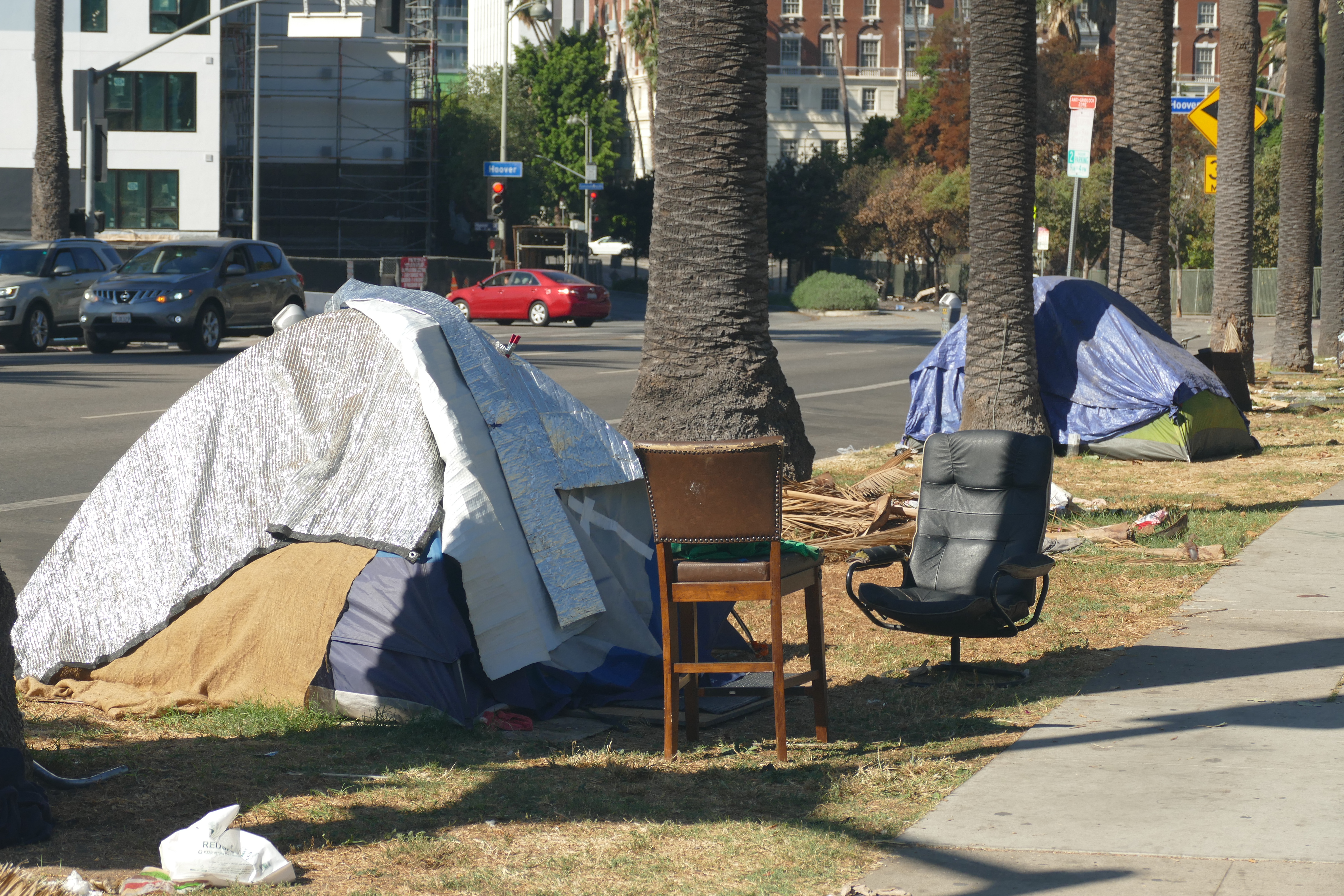
Homelessness in Los Angeles has reached epidemic proportions. The sad reality is that our politicians refuse to address the issue for fear of not being re-elected. Last year’s homeless count showed a jump of 12% in L.A. County and 16% in the city.
The annual point-in-time count, delivered to the Board of Supervisors, put the number of homeless people just shy of 59,000 countywide. Within the city of Los Angeles, the number soared to more than 36,000, a 16% increase. The survey found 8,000 homeless in San Fernando and Santa Clarita valleys.
The rising impacts of automation and the flood of low cost products from other countries that deny us jobs. Walmart, Target, Costco all buy the cheap products we crave. We are all to blame.
Just keep putting your head in the sand and hope this will all work out. But will it and how?
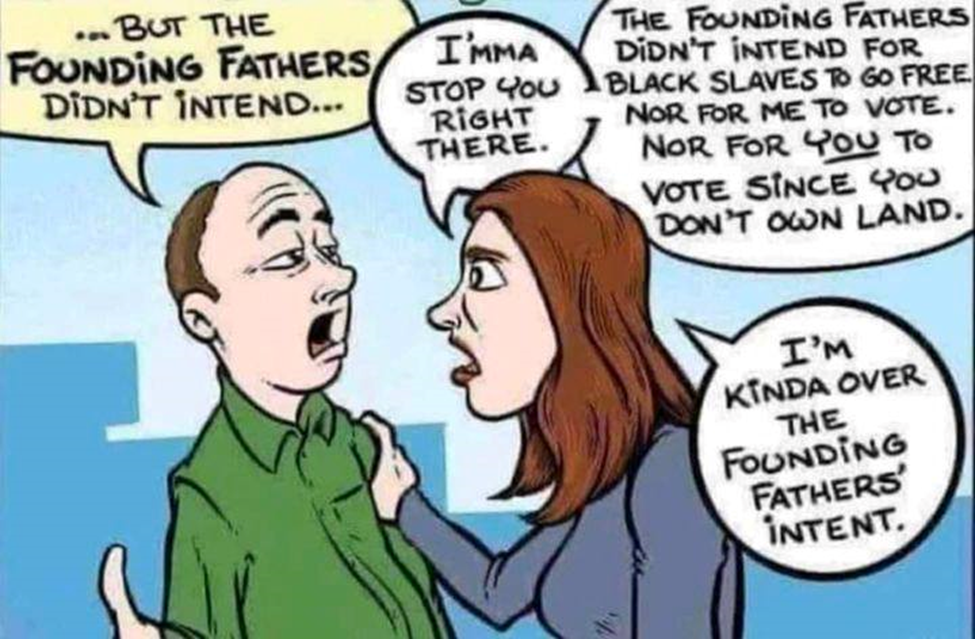
The American Constitution does have a clause that provides for amendments. Article Five of the United States Constitution details the two-step process for amending the nation’s frame of government. Amendments must be properly proposed and ratified before becoming operative. There have been 33. We banned alcohol and then reversed that amendment.

All 19 children shot at a Texas elementary school had a heartbeat. Where’s the righteous Republican “pro-life” outrage?
California Governor Newsom calls inaction on gun violence a ‘choice’ after Texas school shooting. He is correct. The United States congress has made the choice to sacrifice lives in order to ensure that everyone can own any firearm they want.
So while President Biden called on the US to turn its collective pain into political action following Tuesday’s shooting. “Where in God’s name is our backbone, to have the courage to deal with and stand up to the lobbies? It’s time to turn this pain into action,” he said. That won’t happen.
If it was going to happen it would have happened after the killing if 27 adults and elementary school children in Sandy Hook elementary school in Newtown, Connecticut December 14, 2012.
If we can’t go to a food market, a church or a park without fear of being killed is this a country to live in? Death rate from firearms in Canada is about 2 per 100,000 people but in the United States the number is 12.
Why has this killing happened? Because we love guns more than we love lives.
What does it mean to be a conservative in the United States? Does it mean hate of everyone who is not a White Christian?
Liz Cheney Tweet May 16, 2022, “The House GOP leadership has enabled white nationalism, white supremacy, and anti-Semitism,” Cheney tweeted. “History has taught us that what begins with words ends in far worse. @GOP leaders must renounce and reject these views and those who hold them.”
Will Cheney’s Tweet have any impact on the GOP? Doubtful.
‘White supremacy is a poison’: President Biden condemns those who push ‘perverse’ replacement theory. Who will listen to his words?
If I am not a White Christian I must be hated and killed is the message. This was the Nazi vision of the world. The neo-Nazis of today are selling their views to Americans and it is working. The proof of this is the shootings at the super market in Buffalo New York and Tree of Life Synagogue in Pittsburgh.
Charlottesville “Unite the Right” rally was the best example of hate in the past ten years. Marchers attending actually chanted as they marched yelling “We will not be replaced.”
The troubling part of this is that many White Christians are buying into the argument that they are being replaced by Jews, Blacks, Asians, and others. Demographics predict that even if no additional non- White Christians are admitted to the United States 32 percent of the population—is projected to be a race other than White by 2060. That is a prediction of the census bureau.
The House GOP is out of touch with reality.
BY MARK Z. BARABAK, Los Angeles Times Columnist
MAY 16, 2022 12:46 PM PT
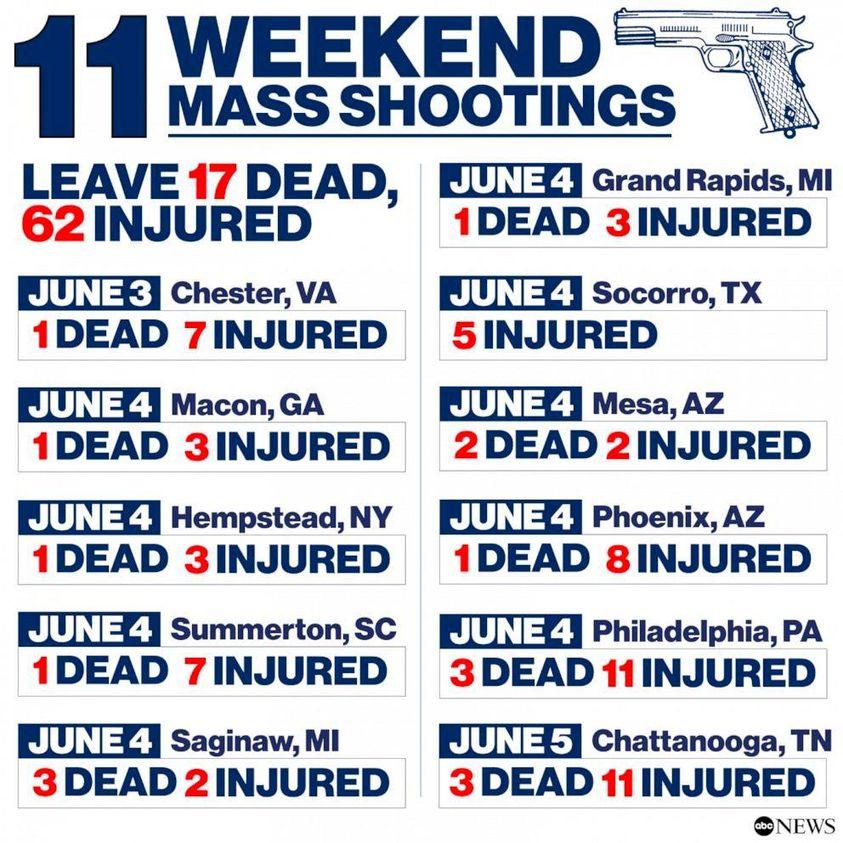
Nothing changed after moviegoers were slaughtered in Aurora. Nothing changed after children were massacred in Newtown, after worshipers were killed inside a church in Charleston, after office workers were mowed down at a holiday party in San Bernardino.
I wrote those words in June 2017, after Republican members of Congress were attacked by a gunman on a softball field just outside the nation’s capital.
Nothing changed.
Except, of course, there have been a great many more mass shootings, adding Atlanta; Orlando, Fla.; Las Vegas; El Paso; Pittsburgh; Boulder, Colo.; Parkland, Fla.; and many other cities, large and small, to the sanguinary toll.
The latest violent spasms came this past weekend in Buffalo and Orange County, where 11 people were killed and seven were wounded while, respectively, shopping at the supermarket and enjoying an after-church lunch. Mondays used to be the day to recount the big sports news from the weekend. Now we tote up gun carnage.
Nothing has changed, except a loosening of gun laws throughout much of the country, where promiscuity is a celebrated virtue when it comes to the availability of firearms.
In San Francisco last week a federal appeals court ruled that California’s ban on selling semiautomatic rifles to anyone under 21 violates the constitutional right to bear arms for self-defense. It’s impermissible to buy a six-pack, but OK to wield a knockoff AK-47.
The shooter in Buffalo was 18.
For days now, the airwaves and social media have been filled with the voices of young people, thick with righteousness and anger, vowing never again.
I wrote those words in February 2018, days after a gunman slaughtered 17 people at Marjory Stoneman Douglas High School in Parkland.
I posed a question then: Will the student-led protests against gun violence dramatically change politics and lead the president and Congress to act in a way that other explosions of fury and grief — after Virginia Tech, Aurora, Newtown, Charleston, San Bernardino, Orlando and Las Vegas did not?
The answer is no.
There have been many attempts to pass national gun control laws since 1994, when Democratic lawmakers led by California Sen. Dianne Feinstein pushed through a ban on the possession, manufacture, use and importation of 19 types of semiautomatic firearms. Many Democrats paid by losing their seats that November. The ban was allowed to lapse 10 years later.
The debate over guns and gun control in many ways distills the very essence of politics today, where opposing sides don’t simply differ on philosophical or ideological grounds but fail to agree on even the basic facts.
It also underscores the power of one of the country’s mightiest special-interest groups, the National Rifle Assn., and its hold over Republican lawmakers whose greatest fear is not losing an election to a Democrat but, given gerrymandering, a Republican primary opponent with an even harder-line view on guns.
That is one reason Congress has failed to pass a law requiring universal background checks, even though the overwhelming majority of Americans express their support. Notwithstanding that fact, the overwhelming majority of Americans don’t vote in individual GOP primaries.
I wrote those words back in 2017. Though the NRA has struggled with internal scandal, the fundamental politics surrounding gun control remain the same.
The sway of the NRA and other groups opposing tougher gun laws is also a function of one of the most fundamental tenets of politics: intensity and persistent engagement matters far more than raw numbers.
Supporters of unfettered gun rights may be “a minority of the population but they have a degree of loyalty and emotional attachment to their movement that isn’t reflected on the opposing side,” said Robert Spitzer, a professor of political science at State University of New York at Cortland.
“It’s only when the mass shooting occurs that the public pays real attention,” said Spitzer, who has written five books on gun policy. “But the sentiment doesn’t last long. Most people turn their attention back to other things, as does the media, and soon it’s back to business as usual.”
I wrote those words in 2018.
Nothing has changed.
This is the last column on gun violence I intend to write for some time, maybe ever. What’s the point? It’s all repetition, and that repetition is maddening and sickening.
People die, horribly and needlessly, and the status quo abides.
You can be sure a great many more mass shootings will follow and the toll will keep growing ever higher. Barring a fundamental shift, Congress will fail to pass meaningful gun control legislation.
Nothing changes.
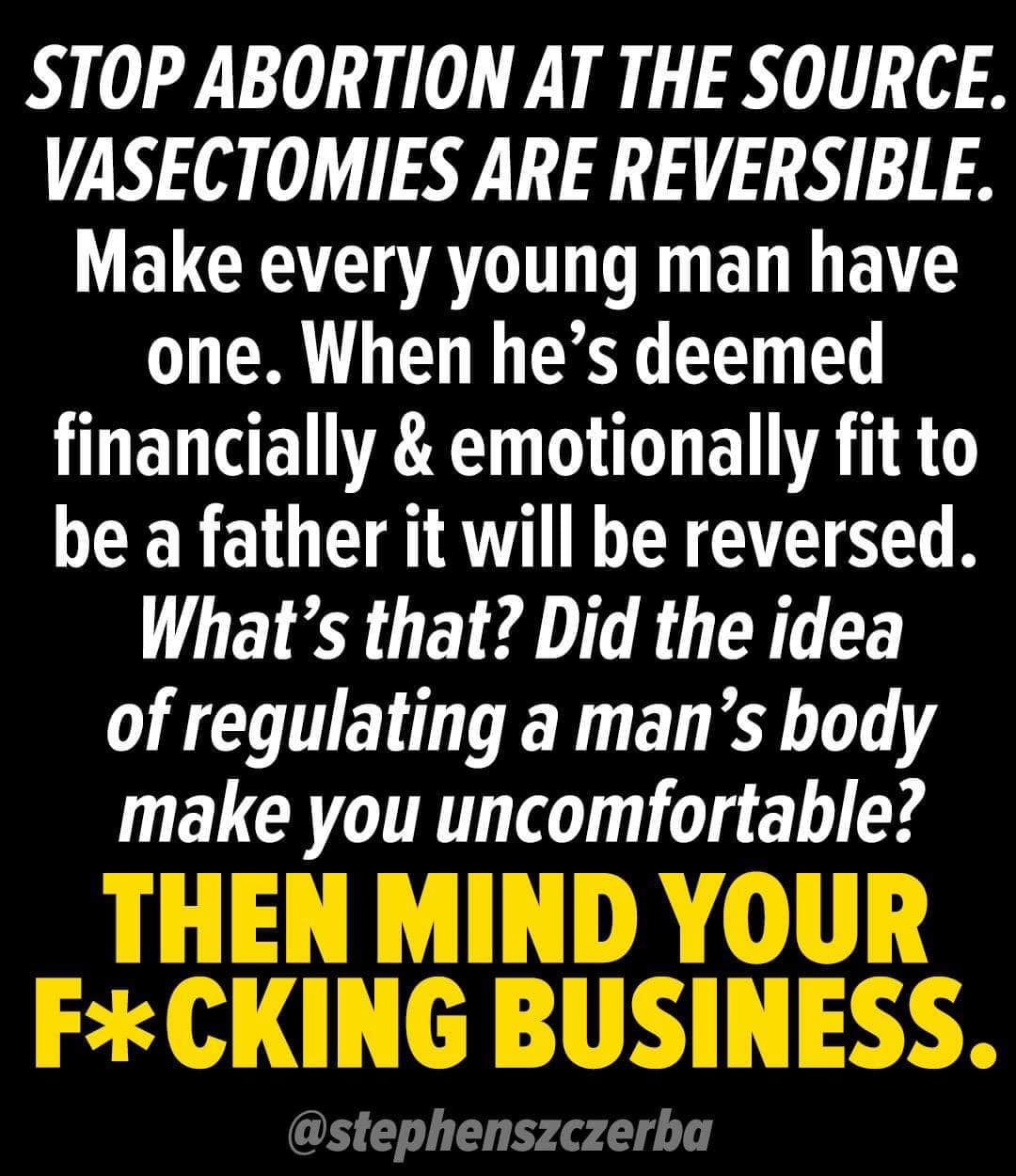
This will get the attention of those wanting to stop abortions.
California guarantees the right to abortion in statute and the state constitution. It covers the cost of abortion for lower-income Californians on Medi-Cal, and also requires private insurance to cover it. And the state has rejected the idea of requiring waiting periods or parental consent for abortion.
If the fetus cannot survive outside the womb, a pregnant person can seek an abortion for any reason.
After viability, only if continuing the pregnancy threatens the life or health of the pregnant person.
It’s up to a physician’s “good faith medical judgement” — in practicality, most doctors consider a fetus viable at 24 weeks or once a fetus weighs 500 grams.
My source for this information is Cal Matters.
Once Roe vs Wade is overturned those seeking an abortion will be coming to California if their state bans abortions.

For the current model year, standards enacted under Trump require the fleet of new vehicles to get just under 28 miles per gallon in real-world driving. The new requirements increase gas mileage by 8% per year for model years 2024 and 2025 and 10% in the 2026 model year.
The Department of Transportation released tailpipe pollution standards Friday that would require average fuel efficiency of new cars and light trucks to reach 49 miles per gallon in less than four years.
The Environmental Protection Agency, which shares responsibility for overseeing the standards and issued its own companion rule in December, estimates its tightened emissions rules would achieve roughly 40 miles per gallon in real-world conditions, up from about 32 miles per gallon under the Trump administration.
Ford, on Friday, noted its history of standing with California on mileage standards during the Trump years. In a statement, Chief Policy Officer and General Counsel Steven Croley said the company “applauds NHTSA’s efforts to strengthen fuel economy standards and create consistent benchmarks to accelerate our national transition toward a zero-emissions transportation future.”
Auto dealers say more stringent requirements drive up prices and push people out of an already expensive new-car market. NHTSA projects that the new rules will raise the price of a new vehicle in the 2029 model year by $1,087.
Automakers are investing billions of dollars to develop and build electric vehicles but say government support is needed to get people to buy them. The companies want government tax credits to reduce prices as well as more money for EV charging stations to ease anxiety over running out of juice.
I just bought a new car with a conventional internal combustion engine. The car has an EPA mileage rating of 31 MPG average city/highway.
Car manufacturers will be pushing hybrids. Most likely no longer offering internal combustion vehicles. For those of us who can’t afford the high price of all electric cars called EVs, the solution is probably going to be buying a hybrid. These cars typically cost $2,000 to $3,000 more than comparable conventional cars, although the difference in purchase price is often offset by fuel savings.
The 2022 Honda CR–V Hybrid can achieve up to an EPA-estimated 40 mpg city / 35 mpg highway. By 2026 the mpg will most likely be even better. The current price is about $3,000 more than the combustion engine model.
 Coast Contact