Los Angeles Times owner Patrick Soon-Shiong, who blocked the newspaper’s endorsement of Kamala Harris and plans to overhaul its editorial board, says he will implement an artificial intelligence-powered “bias meter” on the paper’s news articles to provide readers with “both sides” of a story.
Soon-Shiong, the biotech billionaire who acquired the Times in 2018, told CNN political commentator Scott Jennings – who will join the Times’ editorial board – that he’s been “quietly building” an AI meter “behind the scenes.” The meter, slated to be released in January, is powered by the same augmented intelligence technology that he’s been building since 2010 for health care purposes, Soon-Shiong said.
“Somebody could understand as they read it that the source of the article has some level of bias,” he said on Jennings’ “Flyover Country,” podcast. “And what we need to do is not have what we call confirmation bias and then that story automatically, the reader can press a button and get both sides of that exact same story based on that story and then give comments.”
Soon-Shiong said major publishers have so far failed to adequately separate news and opinion, which he suggested “could be the downfall of what now people call mainstream media.”
The comments prompted a rebuke from the union representing hundreds of the Times’ newsroom staffers, which said Soon-Shiong had “publicly suggested his staff harbors bias, without offering evidence or examples.”
“Our members – and all Times staffers – abide by a strict set of ethics guidelines, which call for fairness, precision, transparency, vigilance against bias, and an earnest search to understand all sides of an issue,” the Los Angeles Times Guild said in a statement Thursday. “Those longstanding principles will continue guiding our work.”
The contentious moves from the paper’s owner also led to the resignation of Harry Litman, a senior legal affairs columnist for the Times’ Opinion page.
“My resignation is a protest and visceral reaction against the conduct of the paper’s owner, Dr. Patrick Soon-Shiong. Soon-Shiong has made several moves to force the paper, over the forceful objections of his staff, into a posture more sympathetic to Donald Trump,” Litman wrote Thursday. “Given the existential stakes for our democracy that I believe Trump’s second term poses, and the evidence that Soon-Shiong is currying favor with the President-elect, they are repugnant and dangerous.”
Litman’s resignation comes days after Kerry Cavanaugh, the Times’ assistant editorial page editor, also announced her exit, Status first reported. In addition to his sweeping changes to the editorial board, a person familiar with the matter said Soon-Shiong has begun reviewing the headlines of all opinion pieces before publication. A spokesperson for the Times did not respond to CNN’s request for comment.
The moves come as Soon-Shiong looks to restructure the newspaper’s editorial board, telling CNN last month that he plans to balance the paper’s opinion section with more conservative and centrist voices in the wake of President-elect Donald Trump’s victory.
“If we were honest with ourselves, our current board of opinion writers veered very left, which is fine, but I think in order to have balance, you also need to have somebody who would trend right, and more importantly, somebody that would trend in the middle,” Soon-Shiong told CNN in November.
The restructuring follows Soon-Shiong’s divisive decision to block a drafted endorsement of Vice President Harris two weeks before Election Day, which resulted in the resignation of several members of the paper’s editorial board, staff protests, and thousands of readers canceling their subscriptions. Just three of the editorial board’s eight members now remain, according to the Times website. On Wednesday, Soon-Shiong told Jennings that when the editorial board shared it had “pre-packaged” a presidential endorsement “without having met with any of the candidates,” he was “outraged.”
“I did not want our paper to be part of that method of providing information or misinformation or disinformation,” he said.
“Everybody has a right to an opinion, that’s fair,” Soon-Shiong said, underscoring that the paper needs to “actually create some level of balance when it comes to opinion and columnist, and then we need to actually let the reader know this is opinion.”
In his resignation Thursday, Litman called the owner’s decision to spike the presidential endorsement a “deep insult to the paper’s readership.”
“Trump has made it clear that he will make trouble for media outlets that cross him,” Litman wrote. “Rather than reacting with indignation at this challenge to his paper’s critical function in a democracy, Soon-Shiong threw the paper to the wolves. That was cowardly.”
I have been a contributor to the Los Angeles Times op-ed page in some fashion for more than 15 years. For the last three years, I have been the Senior Legal Columnist, writing regular weekly columns about Trump’s legal troubles, the Supreme Court, and a wide range of other topics. The Times also permitted me to cover Trump’s trial in New York and the 2024 Democratic convention.
My editors have been skilled, quick, and fair. I have been able to write whatever I like, including blistering criticism of Donald Trump.
I’ve been proud of my work and proud to be part of the Times, the most prominent and storied newspaper west of the Mississippi. It’s got gravitas—and 45 Pulitzers to show for it—combined with a California flair that complements the constant variety and zaniness of my adopted state.
But I have written my last op-ed for the Times. Yesterday, I resigned my position. I don’t want to continue to work for a paper that is appeasing Trump and facilitating his assault on democratic rule for craven reasons.
My resignation is a protest and visceral reaction against the conduct of the paper’s owner, Dr. Patrick Soon-Shiong. Soon-Shiong has made several moves to force the paper, over the forceful objections of his staff, into a posture more sympathetic to Donald Trump. Those moves can’t be defended as the sort of policy adjustment papers undergo from time to time, and that an owner, within limits, is entitled to influence. Given the existential stakes for our democracy that I believe Trump’s second term poses, and the evidence that Soon-Shiong is currying favor with the President-elect, they are repugnant and dangerous.
Soon-Shiong’s most notorious action received national attention. The paper’s editorial department had drafted an endorsement of Democratic presidential candidate Kamala Harris. Soon-Shiong ordered them to spike it and make no endorsement in the election. (Soon-Shiong later implied he had just ordered up a factual analysis of both candidates’ policies, but that’s at best a distortion: he plainly blocked an already drafted Harris endorsement.) It is hard to imagine a more brutal, humiliating, and unprofessional treatment of a paper’s professional staff. Three members of the editorial page resigned in protest and 2,000 readers canceled their subscriptions.
Owners participate in setting overall editorial direction. But it’s a grave insult to the independence and integrity of an editorial department for an owner to force it to withdraw a considered and drafted opinion. And of course, this was no ordinary opinion. The endorsement of a presidential candidate is an editorial department’s most important decision, so the slight was deep.
It was also a deep insult to the paper’s readership. Like any major paper, the Times has a coherent and consistent line of reasoning to its editorial decisions. That can include idiosyncratic departures on particular issues. Where Trump was concerned, the paper had presented to its readers a long series of opinions that set out, with force and nuance, the great dangers of his return to office. That line of analysis culminated logically in the endorsement of Harris. For the Times to lead its readers to the finish line only to step off the track was bizarre and disrespectful.
By far the most important problem with Soon-Shiong’s scrapping of the editorial was the apparent motivation. It is untenable to suggest that Soon-Shiong woke up with sudden misgivings over Harris’s criminal justice record or with newfound affection for Trump’s immigration proposals. The plain inference, and the one that readers and national observers have adopted, is that he wanted to hedge his bets in case Trump won—not even to protect the paper’s fortunes but rather his multi-billion-dollar holdings in other fields. It seems evident that he was currying favor with Trump and capitulating to the President-elect’s well-known pettiness and vengefulness.
Trump has made it clear that he will make trouble for media outlets that cross him. Rather than reacting with indignation at this challenge to his paper’s critical function in a democracy, Soon-Shiong threw the paper to the wolves. That was cowardly.
And his decision had a sort of force multiplier effect with the similar conduct by Washington Post owner Jeff Bezos, who rammed a similar non-endorsement decision down the throat of his editorial staff. There as well, there was no argument that the intervention was based on sensible policy contrast between Trump and Harris. History will record it as a self-serving protection of other holdings, which, as in the case of Soon-Shiong’s, dwarf the newspaper itself.
Before joining the Times, I was a contributing commentator for the Post. We used to say there, tongue-in-cheek, that our billionaire was better than their billionaire, meaning Bezos was more aware of his public responsibility and more hands-off in his oversight. As it turns out, both billionaires flinched when the chips were down, choosing to appease, not oppose, a criminal President with patent authoritarian ambitions.
Before he has even taken office, Trump has faced down two of the country’s most prominent newspapers, inducing them to back off longstanding, well-reasoned editorial opposition. That is terrifying.
As a commentator, especially one dedicated to constitutional norms and the rule of law, I have spent much of the last couple of years arguing that Trump is a genuine menace to our constitutional system. November 5 showed that a narrow majority of Americans who voted disagree or don’t care.
Yet here in Southern California and in Washington, D.C., we have evidence of tangible erosion of social guardrails in real time. Trump is in the process of commandeering and corrupting institutions of government and civil society that we have always counted on to nurture our democracy.
Look closely at this already deeply eroded landscape: all the electoral branches are not only Republican but firmly within Trump’s fist and dedicated to loyalty to him over any principle of governance. The Supreme Court has assisted his authoritarian initiatives in ways that the legal profession and society as a whole have condemned. His current nomination process is seeking openly to cut the Senate, even its Republican members, out of their constitutional advice-and-consent role.
For the moment, the best hopes for desperately needed pushback lie with federal law enforcement, the lower federal courts, the military, and (an economically weakened) mainstream media. All this is material for another Substack, but Trump has taken dead aim at imposing loyalty to him as the defining feature of the first three, including a proposal to permit him to discharge generals who are not, as he put it, sufficiently like “Hitler’s generals.”
So the role and responsibility of the media have never been greater. And if major outlets can be bought off and made to cower, the impact on our liberty—and freedom of thought—is in grave jeopardy.
Thus far, I have analyzed only Soon-Shiong’s most notorious and visible action of scuttling the endorsement. That put him in lock step with Bezos. But he has combined it with a general program of cozying up to Trump, especially since the election. Soon-Shiong ordered the shelving of a multi-part series, intended to run with the endorsement but broader and of a piece with the editorial page’s opinion over the last several years, which had been entitled, “The Case Against Trump.” His spiking of the series was part of the explanation given by the editorial board members who resigned.
There is more: Soon-Shiong went on Fox News after the election to talk about the paper’s editorial direction. He advocated “diverse perspectives” in the editorial pages and voices from across the political spectrum to avoid creating an “echo chamber.” Most alarmingly, and escaping the notice of no one, he pandered to Fox and Trump by saying he wanted to make the Times more “fair and balanced.”
Soon-Shiong followed up by hiring a noted pro-Trump commentator, Scott Jennings, for some as yet ill-defined role of “balancing out” the views on the editorial page. Then most recently, during an interview on CNN in which he was asked about the Jennings hire, the normally mild-mannered Soon-Shiong went full Trump, labeling the CNN correspondent a “so-called reporter” before abruptly ending the interview.
Soon-Shiong’s argument for all these moves is to create “balance” on the editorial page, which still remains unstaffed and in chaos, and a neutral, “just the facts” approach to news. It sounds banal, but in fact, it is pernicious; and it goes to the heart of my reasons for leaving.
First, the idea of balance is fundamentally misplaced when on one side of the balance is a sociopathic liar like Donald Trump. The media has struggled for years to figure out how to call out Trump’s incessant lies while still covering the contentious issues of the day. There’s good reason to think that the propagation of those lies, some of which Trump simply picks up from fringe social media sites and Fox News, influenced the results of the election. The people who voted for Trump were fed a relentless false account of issue after issue, including Trump’s signature distortions about immigrants (eating pets, committing a disproportionate number of violent crimes), which Fox News and right-wing social media parroted relentlessly.
In that context, the bromide of just being balanced is a terrible dereliction of journalists’ first defining responsibility of reporting the truth. Soon-Shiong apparently would have the Times deliver an on-the-one-hand, on-the-other-hand presentation to readers. But there is no “other hand.” Trump is an inveterate liar, and journalists have a defining responsibility to call that out.
These are not normal times. Look around. We are in the political, cultural, and legal fight of our lifetimes. Trump’s conduct since winning the election only reinforces his determination to replace constitutional rule with some form of authoritarian rule. That needn’t be 1933 Germany, an analogy that typically draws counter-charges of excessive drama (though the existence of certain overlapping features is inescapable). There are other models of democratic demise, ones that Trump obviously wants to emulate, such as Hungary’s slide toward authoritarianism over the last 20 years.
So the neutral posture that Soon-Shiong uses to justify his violence to the paper is exactly, fundamentally wrong. This is no time for neutrality and disinterest. It’s rather a time for choosing. And a choice for true facts and American values is necessarily a vigorous choice against Donald Trump.
I don’t pretend that my resignation is any kind of serious counter-blow to the damage of Soon-Shiong’s cozying up to Trump. And I see, and I thought about, the argument that my most constructive role would be to stay on and continue to use my one voice as forcefully as I could to explain to Times readers the grave dangers on the horizon.
But the cost of alliance with an important national institution that has such an important role to play in pushing back against authoritarian rule, but declines to do so for spurious and selfish reasons, feels too great. And Soon-Shiong’s conscious pattern of détente with Trump has in fact recast the paper’s core identity to one of appeasement with an authoritarian madman. I am loath to affiliate with that identity in any way.
My growing misgivings about the Times are one of the reasons I started this Substack two weeks ago. I’ve been blown away by the response and the number of followers and subscribers in just the first two weeks: thank you to everyone. Having this outlet for my thoughts about where Trump 2.0 is taking us makes it easier to leave.
I’m not going anywhere. I will continue to do my best to identify and analyze the dangers that might be hard to see, but for now, here on Substack. I may surface elsewhere, too. Stay tuned! I hope you will follow me here and think about becoming a subscriber.
I’ll close by quoting admiringly my former colleague and the former editorial editor at the Times, Mariel Garza: “I want to make it clear that I am not OK with us being silent. In dangerous times, honest people need to stand up. This is how I’m standing up.”
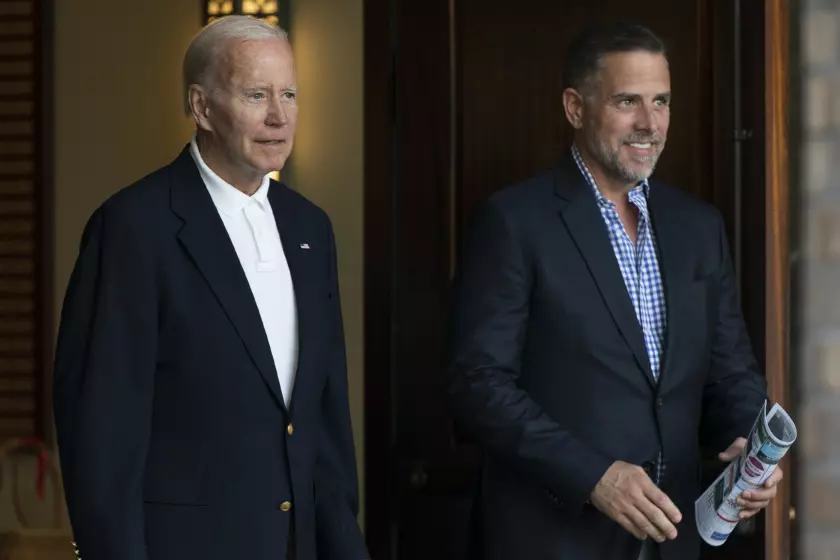
You thought Joe Biden would uphold the law. Protecting his family was number one in his mind. Democrats left fuming over Biden’s decision to pardon his son — after he repeatedly said he wouldn’t. Obviously Hunter Biden looks like a happy man.
Multiple officials who recently worked for Joe Biden said they never believed the president or White House aides speaking on his behalf when they insisted in recent months that a pardon for Hunter Biden was off the table.
“Anyone who was even close to the top knew that he was probably going to do this. Why did we pretend otherwise?” a former senior West Wing aide said.
As reported on CNBC Google Trends showed that searches related to “leaving the country” and “how to move to …” spiked following the news that Donald Trump would be returning to the White House.
Searches for “how to move to Canada” peaked on Nov. 6, with Google Trends showing interest in the phrase highest among Democratic strongholds, like Vermont, Maine, Oregon and Washington.
Even as Californian where it seldom snows except in the mountains I have been looking at possible locations to move to in Canada.
I have made no decision to move but that could change if Trump implements a GASTOPO. The German secret police under Nazi rule ruthlessly suppressed opposition to the Nazis in Germany and occupied Europe, and sent Jewish people and others to concentration camps. From 1936 it was headed by Heinrich Himmler.
You don’t have to be Jewish to decide to leave. The von Trapp family left Austria. Just like in the movie, the von Trapp family was made up of a widower, his large brood, and a would-be nun named Maria. Like in the movie, the family began to sing together and eventually decided to leave their native Austria for the United States as Adolf Hitler gained power in Europe. The family fled in 1938 from Nazi-dominated Austria to Italy (Switzerland in the play) and emigrated to the United States.
The owners of the Washington Post and the Los Angeles Times fear the retribution of a Trump presidency and refuse to endorse Kamala Harris. The NYT has no fear as it has been owned by the same family for more than 100 years.
Democratic nominee Kamala Harris will be the next president of the United States and beat Republican rival Donald Trump on Election Day, or so historian and election forecaster Allan Lichtman still predicts.
Known for correctly predicted the results of the last nine out of 10 presidential elections, Lichtman said on his YouTube channel Tuesday night that his prediction has not changed, despite Democratic nominee Harris’ leads in battleground states shrinking and polls being nail-bitingly close.
Lichtman has come under fire for his predictions, notably with political pollster Nate Silver last month calling the American University modern history professor’s keys “totally arbitrary” in a post on X.
He emphasized Tuesday the 13 keys he uses to make his predictions have not changed and criticized the prevalence of polling in the media, saying that governing, rather than campaigning, is indicative of who will win the 2024 race for the White House.
“I don’t have a crystal ball, I’m not Speaker Mike Johnson who thinks he has a pipeline to the Almighty, my system is based on history, it’s very robust, but it’s always possible, you can’t know it in advance that that there’d be something so cataclysmic and so unprecedented to break the pattern of history,” Lichtman said, but that “doesn’t mean my prediction is invalidated.”
Lichtman’s son Sam interviewed his father during the 90-minute live video, where the election prognosticator argued that democracy itself is at stake in this year’s White House race.
Before every election, Lichtman said he gets butterflies, but this year is different.
Then-President Donald Trump holds a roundtable with tech executives at the White House in 2017. From left, Apple CEO Tim Cook; Trump; Microsoft CEO Satya Nadella; and then-Amazon CEO Jeff Bezos, who also owns The Washington Post. (Jabin Botsford/The Washington Post)
Many billionaires watching the polls fear that Donald Trump, if elected to a second term as President, will identify them as the “enemy within.”
In a conversation with CNN‘s Jake Tapper on Sunday morning before the Madison Square Garden rally, Trump’s VP running mate J.D. Vance denied that Trump’s “enemy within” rhetoric was referring to the Democratic Party. “He did not say that, Jake,” Vance responded when Tapper asked about Trump’s words. “He said that he was going to send the military after the American people? Show me the quote where he said that.” (During a Fox News town hall earlier this month, Trump specifically pledged to use either the National Guard or the military against “the enemy within,” whom he described as “radical left lunatics.”)
The Democratic Party is not the only “enemy” for Trump. As he’s said many times previously, he also places the press in that camp — a profession whose freedom is protected by the Constitution’s First Amendment, in case Trump needs reminding. While in the midst of calling Harris a liar, saying she lied about working at McDonald’s, without any evidence, and claiming she’s said he doesn’t want fracking, without evidence, he went after the press.
Is it any wonder that Patrick Soon-Shiong, owner of the Los Angeles Times, and Jeff Bezos, owner of the Washington Post, stopped endorsements of Kamala Harris?
While I am sad to read of the landslides in Palos Verdes apparently the people living there want the government to fight mother nature. The On January 10, 2005, a landslide struck the community of La Conchita in Ventura County, California, destroying or seriously damaging 36 houses and killing 10 people. This was not the first destructive landslide to damage this community, nor is it likely to be the last reported the U.S. Geological Survey. From a landslide in Sonoma County to intense floods in San Diego the cliffs and hills near the beach communities are common. Amtrak announced the tracks are unexpectedly closed due to debris on the rails in the San Clemente area. A landslide caused by recent weather events was identified as the culprit, as reported by the L.A. Times. Anger will not solve this problem. If there was a solution to the landslides in Palos Verdes the government would have already taken that action.
I noticed that one news outlet called Palos Verdes the richest area in the country so money to fight the landslides is not an issue.



 Coast Contact