A Growing Welfare Class in the United States

I hear the constant drum beat that 47 million Americans pay no taxes.  That those people are on the dole.  All those people don’t really want to work.  The argument goes they are happy sitting in their homes doing nothing.

Is this all really true? If so, how did this happen?

A Google search [percentage of Americans paying income taxes] confirms that about one half of all Americans do not pay income taxes.  The sites How Stuff Works, Fox News, The Washington Post, Reuters, and others all offer their take on why this is fact and some offer arguments about changing the taxing system.  All the postings do affirm that everyone pays Social Security and Medicare taxes.

From How Stuff Works: So who are the 49 percent of Americans who don’t pay income taxes? The vast majority are the lowest income households, the elderly and young working families with children.

The reason this situation exists and is becoming worse was clearly defined in a Market Watch article posted on April 24, 2012.

Manufacturing employment as a fraction of total employment has been declining for the past half century in the United States and the great majority of other developed countries. A 1968 book about developments in the American economy by Victor Fuchs was already entitled “The Service Economy.”

Although the absolute number of jobs in American manufacturing was rather constant at about 17 million from 1969 to 2002, manufacturing’s share of jobs continued to decline from about 28% in 1962 to only 9% in 2011.

From CNN: A very large portion of U.S. apparel imports comes from Bangladesh. Many companies have been shifting orders there, because labor costs in the country are so low. Bangladesh is on track to surpass China within the next seven years as the largest apparel manufacturer in the world.

It is already the third biggest exporter of apparel to the U.S., behind China and Vietnam. The value of clothing imported from Bangladesh into the U.S. has quadrupled over the last decade to $4.5 billion annually, according to the apparel group.

Go into any store in the United States and you will find most products have been made in another country.  Talking to a lady at Trader Joe’s just yesterday and she complained that the fresh produce is primarily from Mexico.

Back in 2007 the total unemployed that included part time workers and those who have given up searching for a job was below 8.5% of the likely working population.  Today that number is 13.9%.  That is the BLS number referred to as U6 on the monthly reports.  It’s an improvement from the maximum number of 17.1% reached in October 2009.

I can’t prove it but I believe no one wants to live poorly when they see the things they can have with an income.  Unfortunately the poor are also the least educated.  That condition of poor education is partially lack of opportunity and partially lack of capability.  Not all of us are capable of working in Silicon Valley or performing surgery at the Mayo Clinic.  Those less technical jobs have been sent to the places where labor costs less.  Every company has the right to lower their costs.  Middle class and blue collar America has paid the price for those off shored jobs.

So the wealthy of America (they pay most of the taxes) have concluded that welfare is a cheap price to pay to keep peace in the United States.  It’s the thing the royalty of France and Russia did not understand.  We all know how that worked out.  There is no royalty in the United States but there is a wealthy class that is the equivalent of royalty.  Once again the U.S. leads the list with 442 billionaires the most of any nation in the world says Forbes magazine.  The New York Daily News reports that there are 9 million members of the millionaires club in the U.S.

My prediction is that the welfare class will continue to exist in the United States and is likely to grow throughout the 21st century. This is not negative. It is reality.

America’s Dying Industries

Shoe Manufacturing

This comes as no surprise.  Still it hurts to see these numbers.  As you read each of these items you know the reason for the decline in business.  This was published on Huffington Post.  The reasons are as follows:

  1. The photofinishing decline was the result of the digital camera era and the sharing of photos on internet web sites.
  2. The high cost of labor now makes appliance repair more expensive than buying a new item.
  3. Advertising revenue has declined at most newspaper and magazine publications thanks to the internet and smartphones.
  4. Manufacturing of consumer products is now cheaper in most other nations of the world.

Photofinishing

Revenue decline 2002 to 2012  -70%.  $15.509 million to $897 million

Recordable Media Manufacturing

Revenue decline 2002 to 2012  -53.6%.  $4.144 billion to $3.311 billion

Money Market and Other Banking

Revenue decline 2002 to 2012  -51.2%.  Industry revenue in 2012 $834 million

DVD, Game and Video Rentals

Revenue decline 2002 to 2012  -49.6%.  Industry revenue in 2012 $5.894 billion

Newspaper Publishing

Revenue decline 2002 to 2012  -48.1%.  Industry revenue in 2012 $29.302 billion

– Women’s/Girls’ Apparel Manufacturing

Revenue decline 2002 to 2012  -57.7%.  Industry revenue in 2012 $8.603 billion

Costume/Team Uniform Manufacturing

Revenue decline 2002 to 2012  -49.9%.  Industry revenue in 2012 $986 million

Appliance Repair

Revenue decline 2002 to 2012  -44.5%.  Industry revenue in 2012 $3.684 billion

Hardware Manufacturing

Revenue decline 2002 to 2012  -44.5%.  Industry revenue in 2012 $7.484 billion

Shoe/Footwear Manufacturing

Revenue decline 2002 to 2012  -39.6%.  Industry revenue in 2012 $1.712 billion

Too Big to Fail, Too Big to Exist

When the Federal government rescued the banking industry in 2008 there were 734 banks involved according to CNN.  The list is here.  You may recall that the idea of bailing out the banks was based upon a proposal submitted by then Treasury Secretary Henry Paulson near the end of the Bush administration.  Initially the proposal was rejected by the congress.  After the stock market took a significant drop the proposal was passed.  Many people, primarily Republicans, opposed the bail out.  Many condemned the idea of “too big to fail.”

This past April 9 Congressman Brad Sherman (CA – D) and Senator Bernie Sanders (VT – I) introduced bills in both houses to define too big to fail financial institutions with the purpose of breaking them into smaller units that could fail without impacting the country.

There are no cosponsors to these bills.  According to govtrack.us there is a 2% chance the proposal will get past a committee review and a 0% chance of enactment.

So where are all the indignant people who voiced their dismay in government bailouts?

I am not a reporter and I do not have the resources to walk through the offices of senators and congressional members.

This lack of concern does tell us that on camera pronouncements mean nothing.

What will happen when the next bank failure occurs?

Manufacturing Megatrends That Will Change Your World

How fast is the world changing?  This interesting article points out the rapidity. 

By Paul Tate on the http://www.manufacturing-executive.com web site on March 19, 2013.

 A quick snapshot of the companies listed in the Fortune 500 ten years ago is a sobering exercise. Over half of those organizations have now either disappeared off the list, or no longer exist, at least in their original form, notes Frost and Sullivan (A business consulting firm that offers market analysis, market research, and reports) vice president and Megatrends analyst Richard Sear.

So how do you avoid becoming one of the world’s lost companies over the next ten years?

The most critical role any business leader must perform is to identify and plan a successful path forward for the future of the enterprise. That means identifying and understanding the trends that are going to transform your business in the years ahead.

The problem is that anticipating the future in today’s world, where the speed of change is so rapid and sudden, innovative disruptions are so common, may seem like an impossible task.

There are essentially two approaches to grappling with this difficult task. The first is simply to sit back and allow new technology and business models to converge into your business and then react as best as you can. The second is a proactive stance to understand and embrace change, and therefore be in a position to capture growth opportunities faster and more fully. What’s your risk profile?

 Frost and Sullivan’s Sear has identified a series of global megatrends that he believes are set to fundamentally transform the world we live in over the next decade or so — and which will have a major impact on the future of manufacturing and its growth prospects.

They are:

 * The City as a Customer: The emergence of new megacities around the world, especially in Asia and Latin America, linked by highly urbanized corridors of development. These will become the world’s key centers of economic growth, creating new and different markets for manufactured products and creating significant logistics challenges for delivery to customers.

* Social Change: The combination of an aging workforce in many western economies, with the growth of demanding, impatient and tech-savvy Generation Y consumers who expect higher degrees of personalization in both products and services.

* Technology: The increasing development of virtual worlds, augmented realities, big data, and pervasive robotics will change the way both manufacturing companies and consumer markets operate and develop new ideas.

* Smart: Extensive embedded intelligence in physical assets and products – often call The Internet of Everything – will see a significant shift towards smarter, more connected products with vast supporting networks and real-time applications.

* New Business Models: These fundamental global shifts will require companies to re-assess how they do business, and how they deliver value in the future – resulting in more collaborative operating models with a greater emphasis on delivering ‘Value for Many’ and frugal engineering approaches.

 * Infrastructure: How will you be affected by a greater focus on how the world harnesses its energy resources, and creates new, more sustainable and lower cost ways to store and utilize future energy?

 * Beyond BRIC: The rapid rise in new markets and fast-growing emerging economies around the world in the decade ahead will create new markets, new global competitors, and new manufacturing opportunities that will force companies to re-asses their global production strategies and footprints. Where will the hot spots be and how will they change your future plans?

 Manufacturing seems destined to play a key role in both reshaping existing industries and enabling others to emerge as these megatrends push the world beyond the end of this decade.

The companies that make the effort to understand and plan effectively for this future, change the way they make decisions, redefine the value they create, and restructure how they deliver that value, are likely to be the ones that will survive and thrive.

So how are you now seeking to better understand the disruptive long-term trends that could determine the future of your business?

Are you adopting internal strategies that will make your enterprise more adaptable to the fundamental economic, social, technological and industrial changes ahead?

 What other megatrends do you think will impact your business future?

Economic Facts

I have waited to write about this until this weekend hoping that economists and responsible government officials could offer reasonable explanations.  They have not!

The United States economy is in trouble and no one wants to talk about it!

The U.S. economy shrank by .1% in the last quarter of 2012.  That number would not be too bad if it weren’t for the fact that the economy grew by 3.1% in the third quarter of the year.  That is a change in direction of 3.2%.  No one wants to admit the economy is in trouble. Instead all the talking heads and all the government leaders are talking up positive data.  The reasoning appears to be “if we ignore the situation maybe it will go away. Let’s be positive.”

Some worthwhile points:

  • Every wage earner saw his take home pay decrease by 2% thanks to the expired payroll tax holiday.
  • Companies don’t expand and don’t hire when there is no demand for their products.
  • The real unemployment rate is not publicized because it is too frightening for most people (especially those in government) to confront.  It is the “Total unemployed…” from a monthly labor report in Table A-15 called U-6.  The rate was 14.4% for January.  The number has been unchanged for the past three months.  This real unemployment rate peaked at 17.1% in October 2009.  The historical typical rate has been between 7% and 8.5%.
  • The United States must add more than 200,000 jobs a month to reduce the unemployment rate.  150,000 new jobs simply meets the requirements of the growing work force.  This fact has been repeated on newscast after newscast.  Thus 157,000 new jobs in January are not satisfactory.
  • Housing prices may have leveled off but they are far from those that existed in 2007.
  • Corporate profits are for the most part up and that has been great for those who have significant stock ownership.  Most Americans consider themselves well off if they have a $200,000 in retirement savings.  Government statistics indicate most families have $50,000 in savings.  Most people are not major beneficiaries of the past year’s increased S&P 500.
  • The coming sequestration or budget cuts will result in contractor and federal government employee layoffs.  Both political parties seem to have settled on this event starting March 2013.  There will be a cut of $85.4 billion of both defense and non-defense spending.  That is the law that congress passed.

Our Congress needs to start developing solutions rather than arguing.  Politics are destroying this nation.

Los Angeles – Long Beach Harbors Resume Operations

Work resumed today, Wednesday, at the nation’s busiest port complex after a crippling strike was settled, ending an eight-day walk-off that affected thousands of jobs and billions of dollars in cargo.

Is everybody Happy?  Today the answer is YES but the future is looking bleak for these import facilities.  This is a serious situation for the 10,000 dock workers.

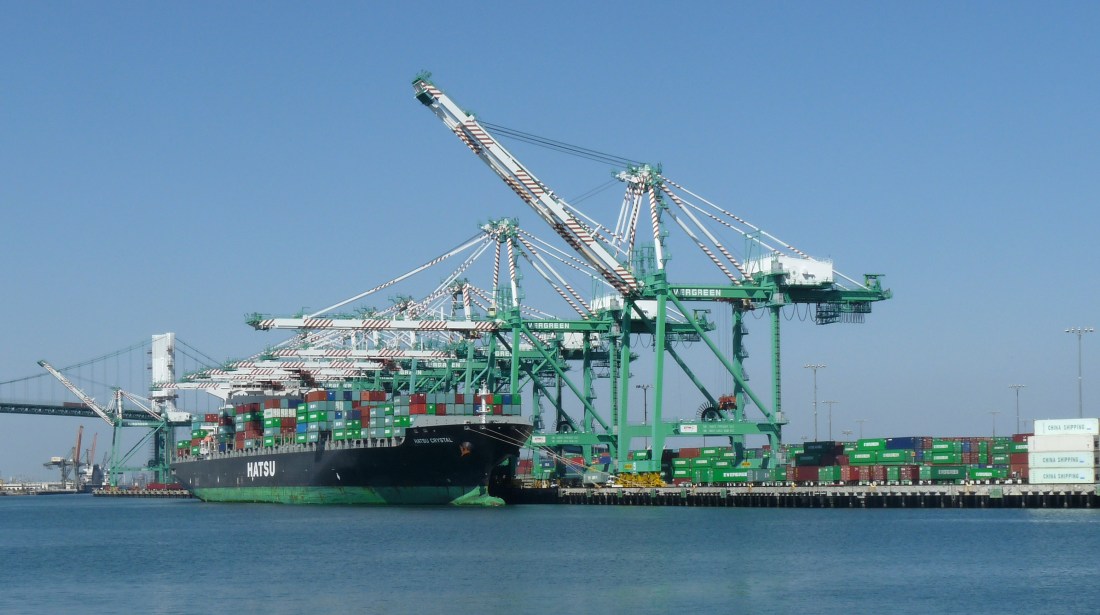
Los Angeles Cargo Terminal

Los Angles cargo terminal, photo taken on April 29, 2011 at 2:30PM . 1/50 second at f7.1 using Panasonic DMC FZ28 camera.  The sky was that blue and cloud free.  The sea was that blue.  Hey, It’s Los Angeles! 

The immediate effect was the redirection of ships to other ports.  One of those ports is Ensenada, Mexico. Ensenada is in Baja California lying 125 kilometers (78 mi) south of San Diego on the Baja   California Peninsula.  With a population of more than 279,000 people a major part of its economy depends upon tourism.  It also has a deep water port for commercial shipping that received more than 3 million metric tons of freight in 2010.  When cargo is unloaded in Ensenada it is not done using unionized workers.  Truckers are not unionized. When the goods are transported into the USA there are no tariffs thanks to NAFTA.  So why won’t some shipping companies continue to use Ensenada rather than the Los Angeles area ports now that the ships have been diverted?

Currently Hyundai makes shipboard cargo containers and truck trailers at its nearby Tijuana plant, and two other Korean conglomerates–Samsung and Daewoo–make TVs and other electronic products at plants in Tijuana and San Luis Rio Colorado near Yuma, Arizona.  Daewoo and Samsung have announced plans to expand their manufacturing operations in Baja California, and Hyundai has told the Mexican delegation that it is mulling the possibility of building a steel plant in Mexico.

I am guessing that ever more business will not be returning to the California ports.

There is another more serious threat to the Los Angeles-Long Beach port facilities. The Panama Canal Overhaul.  When completed some of the largest ships in the world will be able to traverse the canal.  The canal’s new set of locks will allow a ship with a 160-foot beam to pass with ease.  The current canal can accommodate only ships that are no more than 106 feet wide and 965 fee long.  Some of the largest ships in this category, with containers stacked seven-deep on their decks, look like they’re barely able to squeeze through today’s locks.  Currently vessels traversing the canal can carry a maximum of 5,000 20-foot containers.  With the new locks completed the canal will be able to handle ships three football fields long that hold 13,000 containers.

The result of the enlarged canal locks will mean ships from China, Japan and other Asian nations can more easily set their destination on the Atlantic and Gulf costs of the United States.  When those Panama Canal improvements have been completed who will be shipping their cargo to California?

If All Else Fails Use Fear

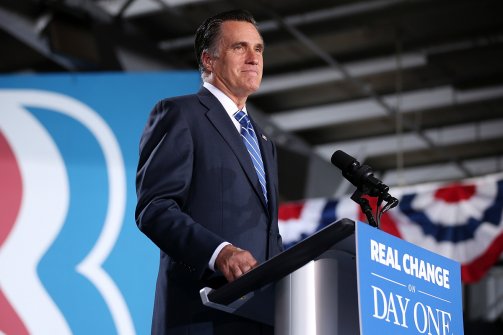
Sorry Mitt, the electoral map shows it’s all over but the shouting.  I hope!

I find this truly depressing.  Mitt Romney has resorted to fear to obtain a win.  It’s not a new idea.

The NRA has successfully used fear to promote a high level of gun sales during the past four years.  That organization has warned its members that Obama has plans to stop all gun sales and confiscate your guns.  The reality is there has not been any gun legislation suggested by the administration.  No new controls were suggested after the Gabrielle Giffords shooting nor any other shooting.

The Huffington Post reported “Mitt Romney’s campaign, in a last-minute robocall, warns voters that “President Barack Obama is hostile to the Christian faith.”

If that isn’t enough AP reports tonight “Mitt Romney warned Friday that re-electing his Democratic opponent would threaten another government shutdown and national default.”  This was part of his presentation in front of more than 18,000 people in suburban Cincinnati.

So my question is if elected president will he use fear to obtain congressional support for the things he wants?  You know, things like war with Iran, an extra $2 trillion dollars for the defense budget, the tax cuts he wants, and the reason we should not give any attention to global warming.

I guess I won’t have to hold my nose.  Romney has made it easier for me to cast my ballot for Barack Obama.

Joseph Stiglitz: “Romney’s plan is based on magic”

Joseph Stiglitz has a decent résumé. He won the Nobel Prize in economics and served as chairman of Bill Clinton’s Council of Economic Advisers before being named chief economist of the World Bank.

Since the election of Barack Obama, Stiglitz has also been something of a thorn in the side of the current administration, consistently critiquing the White House for falling short.

Stiglitz gave an interview to salon.com on his appraisal of the Romney economic plan. Here is a summary of that interview.  It’s somewhat long but worth your time.

What’s at stake in this election for the U.S. economy?

Quite a lot. First, there’s what we call the macro-economy. The budget cuts that Romney/Ryan propose will certainly slow growth. If the European downturn continues that could tip us into a recession. The cuts certainly won’t provide the kind of stimulus that Obama’s jobs bill, for instance, pushes. Romney’s plan is based on magic: Just because he gets elected, the economy is supposed to take off. There is no evidence that anything like that would happen. Quite the contrary — I think the opposite would happen. The business community would see the cutbacks coming and that would itself cause a slowdown in the economy.

You’ve made the negative case for how the economy will suffer if Romney is elected. Is there a positive case to be made for Obama? You’ve been one of the people on the left most critical of Obama’s efforts on the economy. Why should progressives vote for him now?

I think the main reason, quite honestly, to vote for him is that if he loses there could be a major step backward in every aspect. Not the least important of which is the importance of the Supreme Court, which would affect inequality of political power, as with the Citizens United case. The Court will also rule on basic human rights, gender rights, discrimination, things I think progressives should care a lot about.

But in terms of the economy, while I’ve been critical, there still has been progress in an awful lot of areas. Less progress than there should have been, less progress than was promised, but progress all the same.

Where do you see that progress?

Healthcare. Access to healthcare for everybody is an important step.

I was about to ask, what have been your biggest disappointments?

Housing policy has been a big disappointment. But compared to Bush, who didn’t do anything, and the Republicans, who haven’t proposed anything — Romney has been totally silent on the issue — at least Obama did something. So I am disappointed …

Looking ahead, are there things Obama could do that would represent a real step forward, rather than just consolidate what has already been achieved, or simply prevent going backward?

There aren’t many magic bullets, but let me talk about a couple things. Obviously, more progressive taxation — getting rid of the distortionary provisions in corporate welfare, special treatment of capital gains, carried interest — would make our economy more efficient and less unequal.

One of the biggest areas of progressive disappointment with respect to Obama has to do with banking policy. Do you see any chance of improvement there?

We face a choice between someone who is viewed as being too close to the financial industry and somebody who is in the financial industry. Of the two I’d rather have someone who is close but not init. So to me, there’s just not much choice.

Top 25 U.S. Cities by Household Income

The following data was extracted from a MarketWatch news item and modified to indicate city population.  Detroit at the bottom of the list was no surprise but Philadelphia and Memphis coming in at 23rd and 24th place is a surprise.  The vlaue of this information is the indicator of where you don’t want to live.  You might not be able to live in San Francisco or San Jose but living nearby will provide the benefits that come with a wealthier community such as hopitals, doctors, arts, and entertainment.

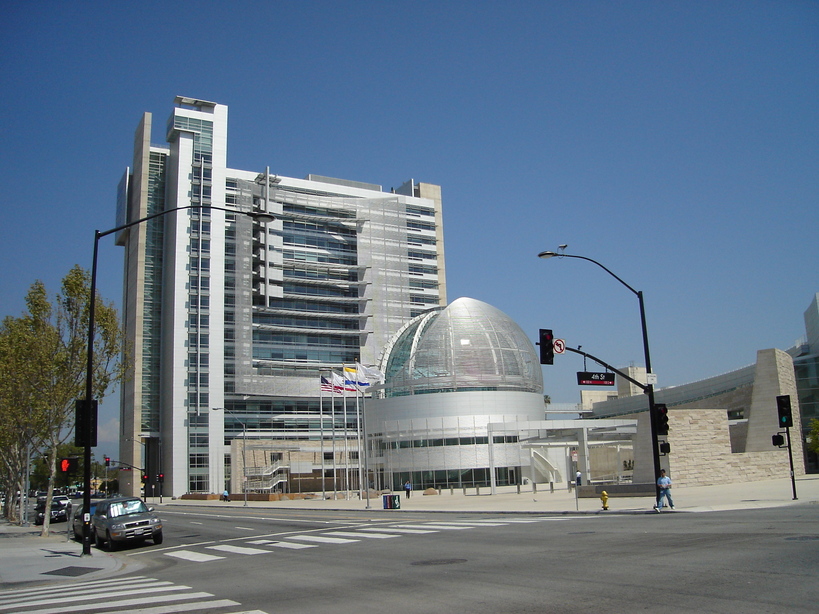
I personally know there are lower cost housing opportunities in San Jose as well as Los Angeles.

CITY INCOME 2011 Estimated   Population
(IN $)
1 San Jose 76,593
967,487
2 San Francisco 69,894
812,826
3 District of Columbia 63,124
617,996
4 Seattle 61,037
620,778
5 San Diego 60, 797
1,326,179
6 Charlotte 50, 177
751,087
7 Austin 49,987
820,611
8 New York City 49,461
8,244,910
9 Boston 49,081
625,087
10 Fort Worth 47,399
758,738
11 Denver 47,371
619,968
12 Los Angeles 46,148
3,819,702
13 Jacksonville 44,802
827,908
14 Phoenix 43,960
1,469,471
15 Chicago 43,628
2,707,120
16 Houston 42,877
2,145,146
17 San Antonio 42,613
1,359,758
18 El Paso 40,702
665,568
19 Dallas 40,585
1,223,229
20 Columbus 40,463
797,434
21 Indianapolis 39,015
827,609
22 Baltimore 38,721
619,493
23 Memphis 34,960
652,050
24 Philadelphia 34,207
1,536,471
25 Detroit 25,193
706,585
Source: Census   Bureau

Another Tied Debate

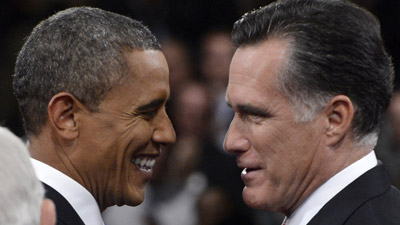
Both Democrats and Republicans will come away from tonight’s debate saying their man won.  The president’s knowledge of the finite details of foreign policy and the military capabilities of our nation gave him a leg up.  But Mr. Romney looked presidential.  I did notice one mannerism of Mr. Romney’s that was apparent in all three debates.  He talks like the boss in a staff meeting (I know because I have been a participant in such meetings).

Some have said that the president was combative or defensive in his presentation.  Let’s be clear.  He has four years to defend.  He did a good job in his defense. 

Obama’s reference to underwater ships was definitely sarcastic.

It is unlikely that anything said tonight will change anyone’s vote.  The last two weeks of this campaign will probably be very nasty.  Each side will paint the other as the worst things that can happen to the country.  Negative campaigning works.  Since I live in California I won’t be hearing any of it.  Now if us Californians can just decide which initiatives are worthy of a yes vote.