California energy officials vote to extend Diablo Canyon nuclear plant operations

But is it safe?

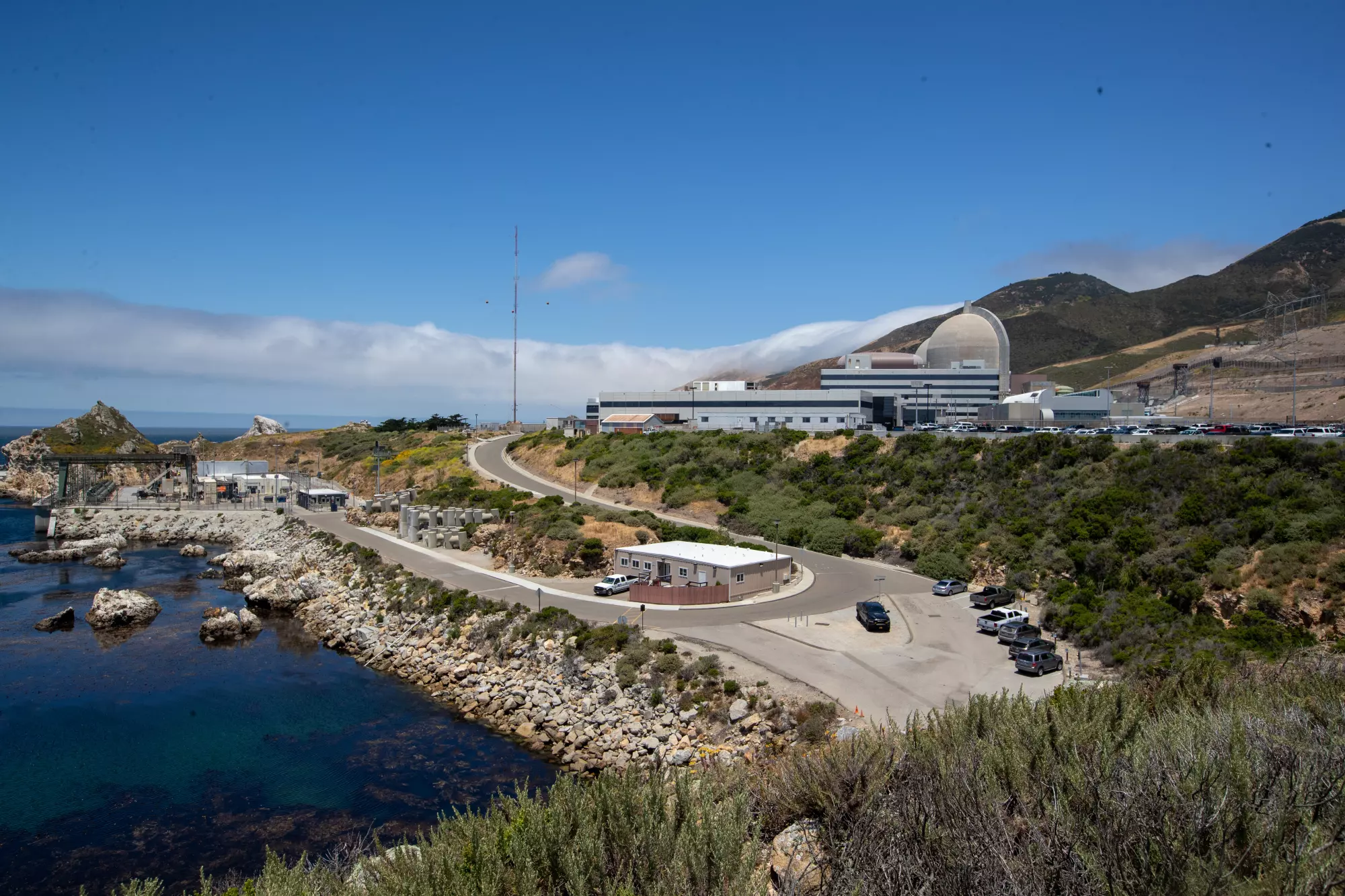
Pacific Gas & Electric’s Diablo Canyon Power Plant is the only operating nuclear plant in California. Gov. Gavin Newsom supports keeping the plant along the coast near San Luis Obispo operating past its planned shutdown date of 2025.

(Brian van der Brug / Los Angeles Times)

BY TONY BRISCOE STAFF WRITER for the Los Angeles Times

California energy officials have voted to extend the operation of the Diablo Canyon Power Plant through 2030, extending the life span of the state’s last nuclear plant an additional five years.

The California Public Utilities Commission approved a proposal to keep Diablo Canyon’s twin reactors online, overturning an earlier agreement to close the plant in 2025.

Three commissioners — Alice Busching Reynolds, John Reynolds and Karen Douglas — voted in favor. Commissioner Darcie Houck abstained and Commissioner Genevieve Shiroma was absent.

Thursday’s decision is expected to preserve a large bloc of the state’s zero-emission power supply. But it also raises concerns over the high cost and potential safety issues associated with operating an aging nuclear power plant.

The state utilities commission acknowledged that the costs associated with the plan were still unknown but were expected to exceed $6 billion. A federal safety review will also be conducted.

State energy commissioners emphasized that the extension should serve as a bridge to renewable energy and that the plant was not expected to operate beyond 2030. The decision, they said, was intended to bolster the reliability of California’s grid, which has narrowly avoided rolling blackouts during heat waves in recent years.

“The short-term extension of the power plant as proposed is a transitional strategy to help California weather the challenges of the energy transition, including the weather and climate extremes that we have experienced … and the cost challenges that we face in scaling up the clean energy transition so quickly,” Douglas said ahead of the vote. “So this is an opportunity for us to help bridge some years.”

Pacific Gas & Electric Co., the plant’s operator, lauded the commission’s decision, saying it will help provide the state with a dependable, emission-free source of energy.

“We’re grateful for the opportunity to answer the state’s call to ensure electrical reliability for Californians,” said Suzanne Hosn, a spokesperson for PG&E.

At a state meeting filled with heated discourse, supporters argued that California needed the power supply from Diablo Canyon to avert outages and meet the state’s climate goals. The plant supplies about 9% of the state’s electricity and 17% of the state’s zero-emission power.

“It was methodically determined that Diablo Canyon is in fact integral to the California electricity reliability,” said Brendan Pittman, a Berkeley resident, who supported the proposal. “It contributes substantially to California’s zero-emission targets and the costs for continued operation are not, quote, too high to justify.”

But a chorus of critics warned that the extension could bring rate hikes from PG&E.

Opponents also argued that the plant’s proximity to several fault lines makes it susceptible to earthquakes, and a significant risk.

The plant, which sits along the Pacific Ocean about 10 miles outside of San Luis Obispo, opened in 1985. A 46-page report by Digby Macdonald, a professor at UC Berkeley’s Department of Nuclear Engineering, suggested one of the plant’s nuclear reactors “poses an unreasonable risk to public health and safety due to serious indications of an unacceptable degree of embrittlement,” or deterioration due to prolonged exposure to radiation.
The Electric Reliability Council of Texas

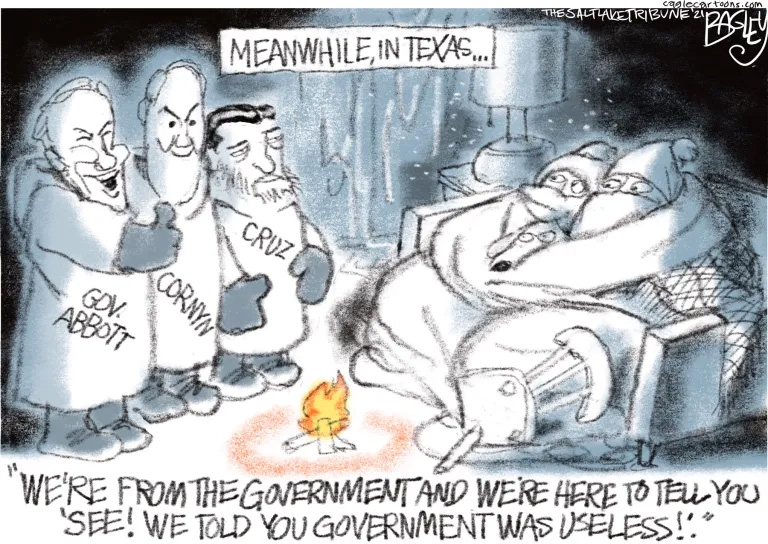
The board that governs the flow of power for more than 26 million people in Texas has been blamed for the widespread outages, prompting the governor, lawmakers and federal officials to begin inquiries into the system’s failures, particularly in preparation for cold weather.

The five board members, who intend to resign at the conclusion of a meeting scheduled for Wednesday morning, were all from outside of Texas, a point of contention for critics who questioned the wisdom of outsiders playing such an influential role in the state’s infrastructure.

The board became the target of blame and scrutiny after the winter storm last week brought the state’s electric grid precariously close to a complete blackout that could have taken months to recover from. In a last-minute effort to avert that, the council, known as ERCOT, ordered rolling outages that plunged much of the state into darkness and caused electricity prices to skyrocket. Some customers had bills well over $10,000.

One of the striking things about the crisis was not just that Texas was hit worse than neighboring states, but that some parts of the state did much better than others. On Tuesday, at the height of the power disruptions, only .04% of households tracked in El Paso County were without power, while the comparable number was 29% in Dallas County, 44% in Travis County (Austin), 41% in Tarrant County (Fort Worth), and 18% in Harris County (Houston).

Texas is the only state that has its own grid, which it maintains in order to avoid federal regulation. The rest of the US is on either the Western power grid (like El Paso) or the Eastern Power grid, like the panhandle and a few counties on the state’s eastern border. (In Bowie County, home of Texarkana, 10% of households lost power.) So when Texas’ supply/demand situation went bad, the rest of the country couldn’t bail them out.

The result was a laissez-faire market design that rewards those who can sell power inexpensively and still recover their capital costs. That keeps prices low when demand is steady. When demand spikes, however, so do prices, which can climb as high as $9,000 per megawatt-hour to incentivize power plants of all kinds to fire up.

Texas lawmakers are trying to find someone to blame.  Republicans are trying to blame Democrats but that will be hard to do in a state that is run by the GOP.  More likely those five board members from outside Texas will be the fall guys for mismanagement.

Canada is Not Part of the U.S.A.

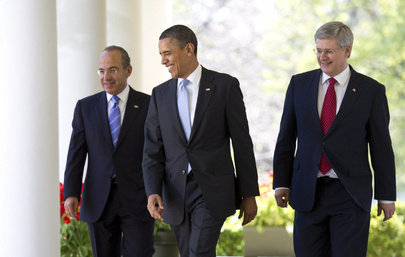
Mexican Pres. Calderon, Obama, Canadian P.M. Harper at the White House          Mexican Pres. Calderon, Obama, Canadian P.M. Harper at the White House

Reported in the Toronto Star, “Ottawa has no choice but to aggressively pursue other export markets to safeguard Canada’s economy in case Keystone is rejected, PM says in Washington.”

Let’s be honest. The Keystone oil was not destined for consumption in the United States. The benefit to the USA is that there will be construction jobs for laying the pipeline, maintenance jobs for keeping the oil flowing without any leaks, and refinery jobs on the Gulf of Mexico.

The additional major benefit is that if there was an oil embargo the United States would have access to the supply.

Canada has the benefit of many natural resources. The Canadian government’s first interest is in the well being of its own people. As it should. Exporting their resources has enabled that country to thrive. For some reason Americans think that Canada owes its total existence to them and should respond to American wishes and desires at Canadian peril. Despite that belief, Canada is not part of the U.S.A.

Crude Oil $123.07 per Barrel

Crude Oil (petroleum); Dated Brent, US$ per barrel As of: Wednesday, February 22, 2012 was $123.07.  Source: US Energy Information Administration

So while the price of crude oil increased by 6% since this time last year, the cost of gasoline increased by 10%.  Why the difference? 

It’s the speculators!

An excess profits tax is appropriate but it won’t be implemented.

Source for gasoline prices is the AAA. 

A Reliable Source for Oil

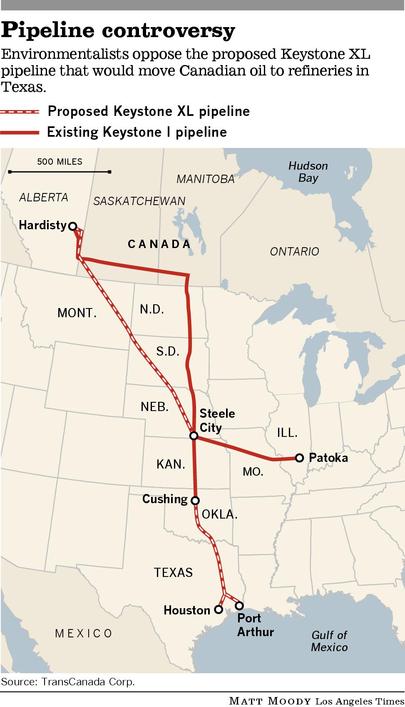
The proposed Keystone XL oil pipeline from Canada to the Texas Gulf Coast would not have “significant impacts” on the environment, the State Department has concluded, removing a major barrier to construction of the $7-billion project.

The problem is that environmentalists and others oppose the idea on the grounds that tar sand extraction (usually called fracking) because water tables will be impacted in the mining area.  There have been reports on American television of enough gas in water pipes to ignite them at their outlets.  This is obviously a serious issue.

The question of a new pipeline from Alberta to Texas should be what will the Canadians do if the United States says no to the project?  It appears Canadian are determined to extract oil from their soil in Alberta despite the opposition.  The answer is they will sell the crude oil to another country.  That would most likely be South Korea, China, or Japan.  There are already plans to build the Northern Gateway pipeline from Alberta through to British Columbia’s northern coast.  Some say this is a fake play by the Canadian government.  No matter, a greater reliance on oil from Canada will benefit the United States with more jobs and a dependable source of supply.

President Obama may be caught in this controversy because if his decision is a “no,” Republicans will say the decision is anti-business and is a job killer.  They would be correct.

Source for this article is the Los Angeles Times and Scientific American.

Only 74 Miles Of Pipeline needed !!! THE MEDIA DIDN’T TELL US THIS …

This icon is definitely a real eye opener – Representative Don Young-Alaska is talking about the oil in Alaska.  He has a bill #6107
up for vote…………and as usual Congress will probably sleep right through it.  Of course the environmentalists oppose additional drilling in Alaska even though it has been accomplished without harming anything.  Please watch this.

Obama’s Gas Price Migraine

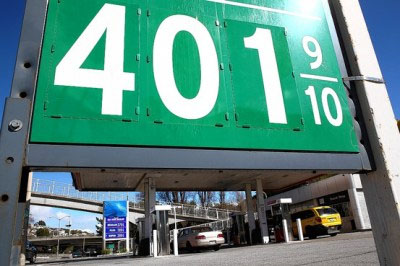
The price for gasoline in Los Angeles is almost exactly the same as pictured below.  This Wall Street Journal columnist is simply stating the facts.  Today’s report of the White House considering releasing oil from America’s emergency strategic oil reserve is a futile effort.  Past releases have had little impact on pricing.  There is no shortage of oil.  The real problem is that America has no plan for energy independence.


Posted price for a gallon of gasoline, San Francisco, Calif., Feb. 25

Obama’s Gas Price Migraine

By: Kimberley Strassel

The Obama administration has its share of headaches: a possible government shutdown, Arab unrest, the union uprising. The real migraine may be a firestorm over gasoline prices.

Oil last week topped $100 a barrel, and gas has hit $4 a gallon in pockets of the country. The price is expected to keep heading up. This pain is being felt by a public still dazed by recession.

An immutable fact of expensive gasoline: Americans will find someone to blame. We can expect in coming months to hear many sober analysts attempt to explain the complex reasons for rising oil prices: inflation, Middle East tremors, growing demand. Expect, too, for all those reasons to vanish behind what most Americans will see as the far more obvious (and graspable) cause: President Obama’s regulatory assault on domestic oil and gas production.

This is, after all, a White House that has put at the center of its domestic agenda its goal of a “green economy,” which hinges on making fossil fuels too expensive for Americans to purchase. In January 2008, candidate Obama told the San Francisco Chronicle that under his cap-and-trade plan, “electricity rates would necessarily skyrocket.” Steven Chu, now Secretary of Energy, told this newspaper in the same year: “Somehow, we have to figure out how to boost the price of gasoline to the levels in Europe.” That would be, oh, $10 a gallon.

In March of last year, Mr. Obama reversed or scaled back nearly every major offshore oil opportunity that has come about since the price spike of 2008—effectively reimposing a moratorium on drilling off the coasts. His administration has killed leases in developmentally crucial areas of Alaska. His EPA has refused to issue permits. The White House used the BP oil spill as an excuse to also shut down the deep-water Gulf.

Onshore? Interior Secretary Ken Salazar has revoked oil-and-gas leases. The EPA is suffocating the coal industry with regulation. One of the president’s only clear State of the Union proposals was to raise taxes on oil and gas. The White House’s energy policy, says Dan Kish of the Institute for Energy Research, is “embargoing our own energy supplies to drive up their costs.”

Democrats are already desperately spinning the press on why none of this will matter politically. Yes, the party took heat for its antidrilling policies in 2008, but it won’t be the same this time. Americans, they say, just witnessed an oil spill; they are okay with a drilling ban. And so long as economic recovery stays on track, no one will sweat an extra buck a gallon. And so on.

The Democrats are right about one thing: It won’t be the same as 2008. It will be politically worse. Nobody should forget the extraordinary public fury over $4 gas in 2008. The rage was enough to take Mr. Obama’s flailing presidential opponent, John McCain, and propel him ahead in the polls, where he stayed until the financial crisis. Remember also that when oil prices peaked in July 2008, the unemployment rate was 5.7%.

President Bush largely escaped public blame. How could anyone lay high oil prices on a guy the left had spent eight years slamming as an “oil man”? But President Obama’s anti-oil record is evident, and Republicans (who, unlike in 2008, run the House), will use their bully pulpit to directly connect prices to the Obama energy freeze.

This week we’ve seen the first rumblings of the oil-price political freight train that’s coming. Senate Minority Leader Mitch McConnell highlighted a Democratic proposal to raise gas prices with new levies on oil and gas, deeming it the “minivan tax.” Washington state Rep. Doc Hastings, chairman of the House Natural Resources Committee, grilled Interior Secretary Ken Salazar Wednesday about the administration’s de facto moratorium on deep-water drilling permits. Behind the scenes, GOP members are touching up energy bills, to provide a further contrast with the administration.

The White House sniffs trouble and this week rushed to issue its first Gulf deep-water permit since the spill. Yet the administration has so much wrapped up in its green-energy agenda—stimulus grants, subsidies, programs in every department—it seems unwilling to do more. The EPA has refused to budge on controversial carbon-emissions regulations. The president is now pushing for a “clean energy” mandate, the ugly stepchild of cap and trade. The White House is trying to recruit gullible Republicans to a “comprehensive” energy bill, though its goal appears to be to cloak a further renewable agenda behind the few bones it would toss to natural gas or nuclear.

The administration took a midterm election beating because the public saw it move to the left of reality on spending and health care. Rising gas prices now threaten to catch it out the same way on energy. If it wants to recapture public favor, it will have to make a major shift.

Gasoline Going to $5 a Gallon

For the record regular gasoline throughout the nation now averages above $3.00 a gallon.  In Los Angeles the price is ranging from $3.20 to $3.25 a gallon.

John Hofmeister, former president of Shell Oil, is a recurring contributor on CNN.  He offered his expert opinion during the BP Gulf Oil Spill incident.  He says in this Youtube copy of an appearance on Parker-Spitzer that the cost of gasoline could reach $5 a gallon by 2012.  (December 30, 2010: part of this clip appeared on ABC World News this evening).  The cause will be world-wide demand that will exceed supply by 5 million barrels per day.  Furthermore the United States now drills about 3 million barrels daily less than were drilled in 1970 due to prohibitions on drilling off the coast of California and Florida.  Mr. Hofmeister is a proponent of clean coal technology.

After you watch this video you will have another reason to wonder if Barack Obama will be elected in 2012.  Maybe the real question should be: Can America’s system of government survive in the 21st century?     

Who is Joe Barton?

“I think it’s a tragedy of the first proportion that a private corporation would be subjected to what I would characterize as a ‘shakedown,’ – in this case, a $20 billion shakedown.” – Joe Barton, R-Texas.  What a great way to obtain national media exposure!

His apology for those words was weak at best.  After all it was taking back the words he really believed.  I have not heard about any subsequent interviews with him.  The conundrum is that the Gulf coast relies on oil drilling and extraction as much as fishing and tourism for its economic well being.

I am far removed from the Gulf coast but I do appreciate the ecological impact of the continuing oil spill.  After all if both James Carville and Mary Matalin are upset about the impact of the spill, this situation really does rise above politics.  (Digression: How did those two ever get married?)

NPR reports that Joe Barton has received $100,470 in campaign donations from oil and gas interests since the beginning of 2009, according to the Center for Responsive Politics. The same group reported that since 1990, political action committees of the oil and gas industry and people who worked for it have given more than $1.4 million to Barton’s campaigns, the most of any House member during that period.