Palos Verdes landslide keeps getting worse. Residents’ anger boils

While I am sad to read of the landslides in Palos Verdes apparently the people living there want the government to fight mother nature. The On January 10, 2005, a landslide struck the community of La Conchita in Ventura County, California, destroying or seriously damaging 36 houses and killing 10 people. This was not the first destructive landslide to damage this community, nor is it likely to be the last reported the U.S. Geological Survey. From a landslide in Sonoma County to intense floods in San Diego the cliffs and hills near the beach communities are common. Amtrak announced the tracks are unexpectedly closed due to debris on the rails in the San Clemente area. A landslide caused by recent weather events was identified as the culprit, as reported by the L.A. Times. Anger will not solve this problem. If there was a solution to the landslides in Palos Verdes the government would have already taken that action.

I noticed that one news outlet called Palos Verdes the richest area in the country so money to fight the landslides is not an issue.  

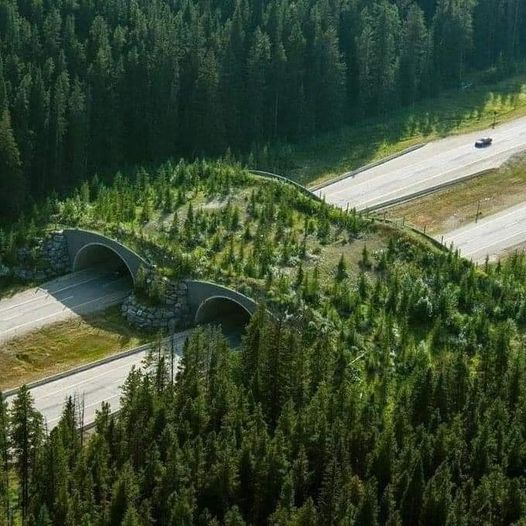
Protecting Animals

This is how the Agoura California overcrossing on US101 should look after it is completed

The Banff Wildlife Crossings Project was implemented in Banff, Alberta.

Combined with fencing to keep the animals off the road, the structures have reduced animal-vehicle collisions in the area by more than 80% (>96% for elk and deer alone).

Homes Encased in Ice

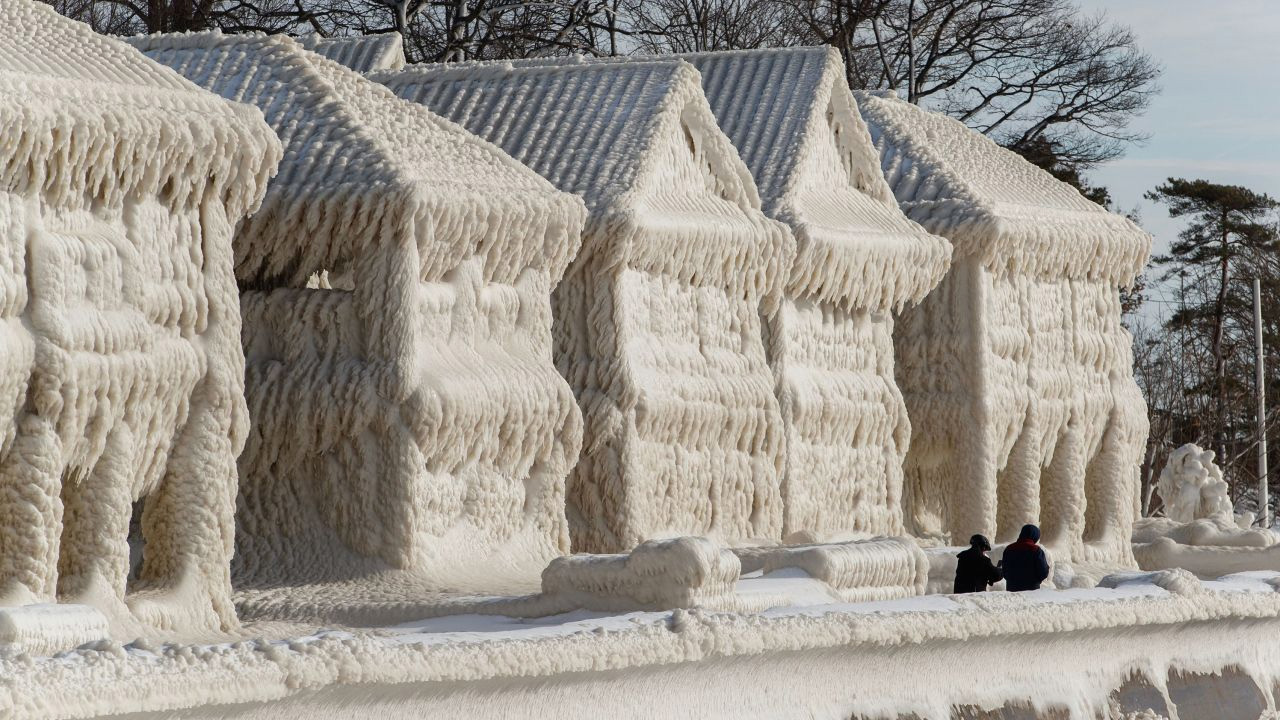
Homes on Lake Erie were encased in ice as blizzard whipped frigid waves onshore.

Crystal Beach, Ontario, Canada after last weekend’s blizzard whipped the frigid waves on shore.

Residents of the Fort Erie community, coincidentally named Crystal Beach, said the waves were crashing over their Lake Erie break wall during the storm.

“Then the water has frozen up the backsides of the houses, so from the tops of the houses all the way down,” Derek Tupling told CNN news partner CTV. “So, you can just imagine the sheer volume and strength of water coming up over the wall to hit it and then freeze – flash freeze – immediately. It’s absolutely incredible.”

The community is west of Erie County, New York, where the death toll from the historic blizzard has climbed to over three dozen, most of them in the city of Buffalo.

The temperature has risen to 44F this afternoon.

The Colorado River is Drying Up

The Colorado River, major river of North America, rising in the Rocky Mountains of Colorado, U.S., and flowing generally west and south for 1,450 miles (2,330 kilometres) into the Gulf of California in northwestern Mexico.

The Colorado River basin is drying up thanks to less snow and rain.   Sadly the seven states are not working together to find an equitable agreement on sharing the shrinking amount of available water.

After Colorado River Basin states failed to meet a deadline for emergency drought reductions, the U.S. Bureau of Reclamation said it would continue to work with affected states and tribes to reach an agreement.

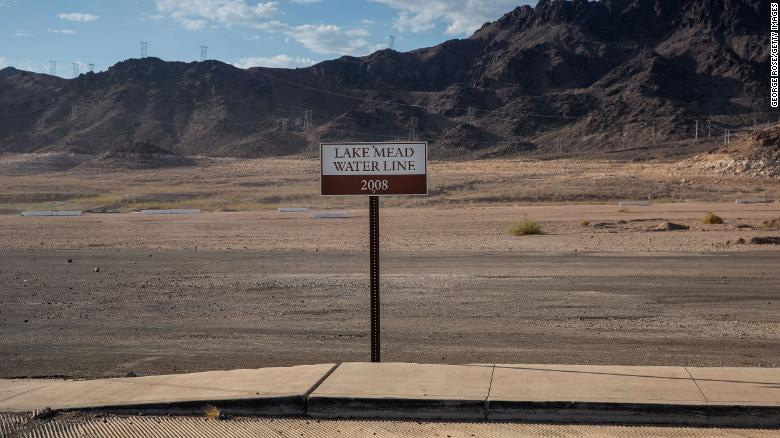
Lake Powell and Lake Mead are at historically low levels and risk falling to “dead pool” status, which would mean there isn’t enough water to generate hydroelectricity for the tens of millions of people that rely on it, according to United Nations Environment Programme

The seven states that benefit from the Colorado basin have been told to develop plans to drastically reduce water use by 2 million to 4 million acre-feet, but talks have grown acrimonious. At a press conference Tuesday, federal officials said that an agreement was urgently needed and that it was also declaring a tier 2 shortage for the next water year.

Under tier 2 shortage conditions, Arizona’s annual water apportionment will be reduce by 21%, Nevada’s by 8% and Mexico’s by 7%. There is no required water savings contribution for California however.

This situation will undoubtedly lead to a court fight over how much water each state must reduce consumption. There have been growing tensions between the states of the river’s Lower Basin — California, Arizona and Nevada — and those of the Upper Basin — Colorado, Wyoming, New Mexico and Utah.

A few calm meetings would be far better than a court fight.

The West is Facing a Drought

It appears I was ahead of the curve in anticipating a major water shortage in Los Angeles.  I cut watering my lawns to one day a week over the past two months. MWD wants a 35% reduction in consumption. My reduced watering resulted in a 30% reduction.  The lawns are now half brown.  Hot summers will likely mean a dead or very brown grass during the hot summer months.

While MWD brings water from northern California to Southern California the other project brining water here is from the Colorado River.  That river is running dry too.  The water is so low there that the intake valves below Hoover Dam can now be seen.  Lake Powell on that river, the country’s second-largest reservoir, is drying up.  If water levels at the lake were to drop another 32 feet, all hydroelectricity production would be halted at the reservoir’s Glen Canyon Dam.

Interestingly a desalination facility in Orange County California is being opposed by environmentalists.  

New Vehicles must average 40 mpg by 2026, up from 28 mpg

For the current model year, standards enacted under Trump require the fleet of new vehicles to get just under 28 miles per gallon in real-world driving. The new requirements increase gas mileage by 8% per year for model years 2024 and 2025 and 10% in the 2026 model year.

The Department of Transportation released tailpipe pollution standards Friday that would require average fuel efficiency of new cars and light trucks to reach 49 miles per gallon in less than four years.

The Environmental Protection Agency, which shares responsibility for overseeing the standards and issued its own companion rule in December, estimates its tightened emissions rules would achieve roughly 40 miles per gallon in real-world conditions, up from about 32 miles per gallon under the Trump administration.

Ford, on Friday, noted its history of standing with California on mileage standards during the Trump years. In a statement, Chief Policy Officer and General Counsel Steven Croley said the company “applauds NHTSA’s efforts to strengthen fuel economy standards and create consistent benchmarks to accelerate our national transition toward a zero-emissions transportation future.”

Auto dealers say more stringent requirements drive up prices and push people out of an already expensive new-car market. NHTSA projects that the new rules will raise the price of a new vehicle in the 2029 model year by $1,087.

Automakers are investing billions of dollars to develop and build electric vehicles but say government support is needed to get people to buy them. The companies want government tax credits to reduce prices as well as more money for EV charging stations to ease anxiety over running out of juice.

I just bought a new car with a conventional internal combustion engine. The car has an EPA mileage rating of 31 MPG average city/highway.

Car manufacturers will be pushing hybrids.  Most likely no longer offering internal combustion vehicles. For those of us who can’t afford the high price of all electric cars called EVs, the solution is probably going to be buying a hybrid. These cars typically cost $2,000 to $3,000 more than comparable conventional cars, although the difference in purchase price is often offset by fuel savings.

The 2022 Honda CRV Hybrid can achieve up to an EPA-estimated 40 mpg city / 35 mpg highway.  By 2026 the mpg will most likely be even better.  The current price is about $3,000 more than the combustion engine model.  
California is in a Drought

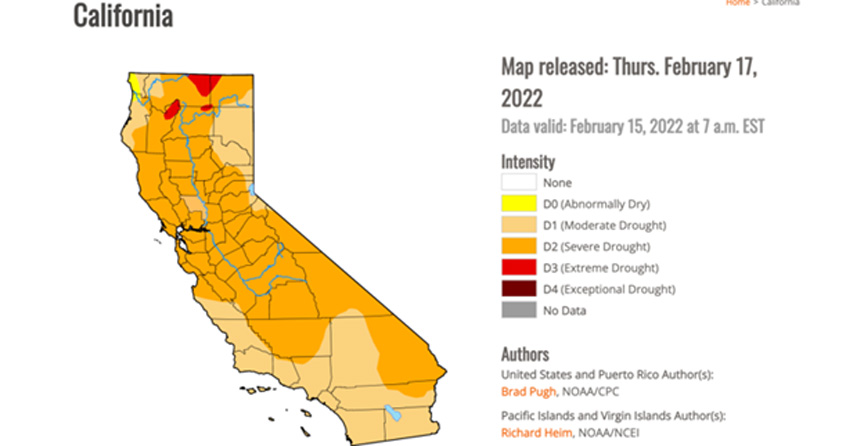
The U.S. Drought Monitor for California shows all of California in moderate to severe drought. January and February are the rainy months but December 2021 was the rainy month this rainy season. So far the rain received almost matches the 2020-2021 season.

Silence of our elected leaders is astonishing. Environmentalist opposition to desalination facilities is absurd. When will Governor Newsom and the legislature take action?

© Provided by NBC Los Angeles U.S. Drought Monitor for California for Feb. 17, 2022.