Dwindling Water in Western United States

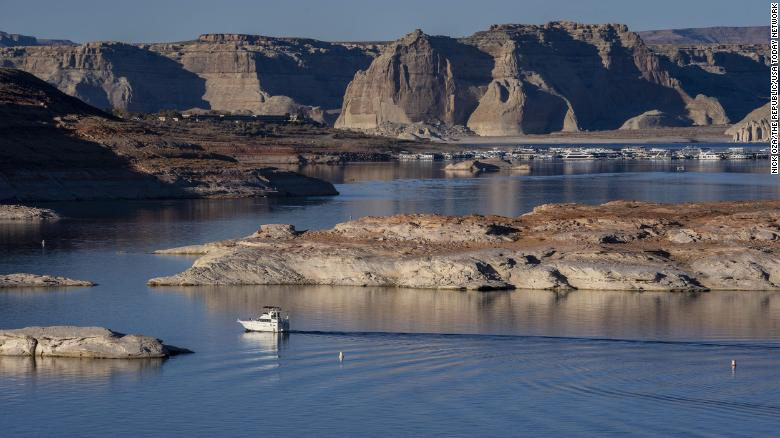
As of Sunday, Lake Powell had fallen to roughly 3,554 feet in elevation — just 33% of capacity — according to the US Bureau of Reclamation, below the previous all-time low set in 2005.

Lake Powell and nearby Lake Mead, the nation’s largest reservoir, have drained at an alarming rate this year. The two reservoirs fed by the Colorado River watershed provide a critical supply of drinking water and irrigation for many across the region, including rural farms, ranches and native communities.

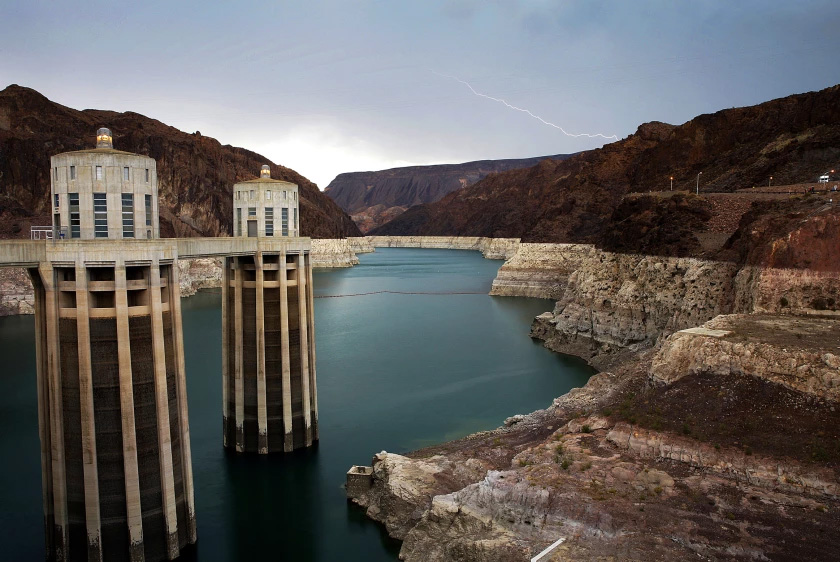
Much like Lake Mead and Hoover Dam, Lake Powell’s plunging water level threatens Glen Canyon Dam’s capacity to produce hydropower for many states including Wyoming, Utah, Colorado, New Mexico, Arizona, Nevada, and Nebraska.

At this time there are no solutions that have been reported.

Lake Powell, the second largest reservoir on the Colorado River, hit the lowest water level since it was filled in 1963.

Global Warming – ‘An Inconvenient Truth’

Brommelen Netherlands July 16, 2021

Vice President Al Gore warned us in 2006 and while his timing may have been off global warning is an obvious reality.

Excerpt from Gore’s book ‘An Inconvenient Truth’

“The climate crisis is, indeed, extremely dangerous. In fact it is a true planetary emergency. Two thousand scientists, in a hundred countries, working for more than twenty years in the most elaborate and well-organized scientific collaboration in the history of humankind, have forged an exceptionally strong consensus that all the nations on Earth must work together to solve the crisis of global warming.

The voluminous evidence now strongly suggests that unless we act boldly and quickly to deal with the underlying causes of global warming, our world will undergo a string of terrible catastrophes, including more and stronger storms like Hurricane Katrina, in both the Atlantic and the Pacific.

We are melting the North Polar ice cap and virtually all of the mountain glaciers in the world. We are destabilizing the massive mound of ice on Greenland and the equally enormous mass of ice propped up on top of islands in West Antarctica, threatening a worldwide increase in sea levels of as much as twenty feet.”

Today’s Los Angeles Times provided current catastrophic conditions around the world. In Beijing torrents of murky brown water gushed past train windows in a subway tunnel. Severe flooding in western Germany turned streets into rivers that swept away cars and toppled houses. A fire in Oregon so big that the skies of New York city are hazy with smoke.  A downpour over London on July 12, when about a month’s worth of rain fell on parts of the British capital, leading to flash floods that paralyzed some streets and forced the partial closure of its Underground rail system.

The LA Times reports “Experts predict that the frequency of floods like those seen this summer are likely to increase in severity and frequency as the planet warms.”

Perhaps all the nations in the world will take action to protect the planet in unison.

Dramatic photos from NASA highlight severity of California’s drought

Satellite imagery shows Shasta Lake in July 2019, left, and June 2021. The state’s largest reservoir is at about 35% of its capacity, officials said. The white ring is the receded shore line.

As the West descends deeper into drought, climate and water experts are growing increasingly alarmed by California’s severely shriveling reservoirs.

On Monday, Shasta Lake — the largest reservoir in the state — held a scant 1.57 million acre-feet of water, according to the U.S. Bureau of Reclamation, or about 35% of its capacity.

A series of satellite images captured by NASA show just how dramatically the water level has fallen.

The idea of piping water from the rain drenched east to the west coast doesn’t seem so far fetched if there is a pipe line (Colonial Pipeline) that carries 3 million barrels of fuel per day 5,500 miles from Texas and New York.

A Long Hot Summer in California

It’s already started and summer isn’t here until officially until June 20. “May Gray” wasn’t gray other than overnight clouds that dissipated by 10 a.m. June has started with sunny days that are summer hot rather than “June Gloom.” Those expressions describing May and June weather are the words of local weather reporters.

A heat wave swept through California’s Central and Sacramento valleys this week, setting temperature records and prompting heat advisories, even as coastal regions remained temperate. Triple-digit temperatures in the San Joaquin Valley for the past three days have prompted a heat advisory through at least 8 p.m.

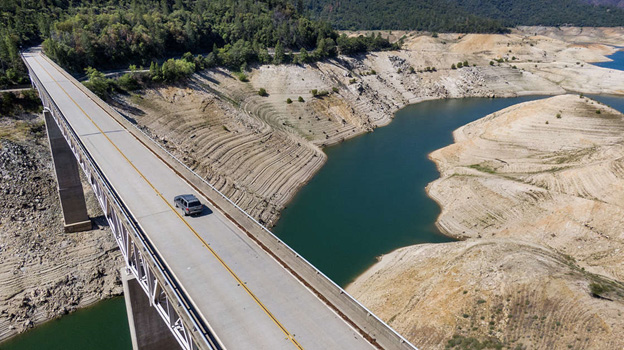
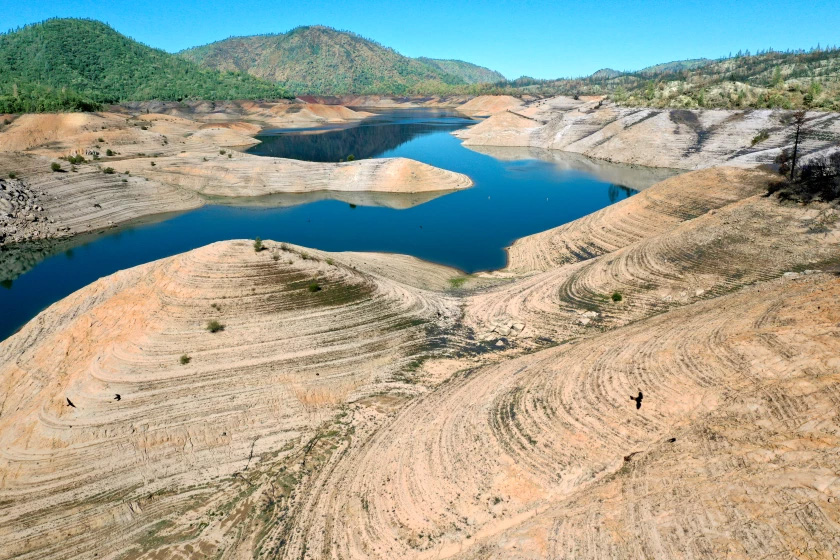
Each year Lake Oroville in northern California helps water a quarter of the nation’s crops. This is how the lake looks now.

Countries like Israel have designed irrigation and water projects that enable that country to provide water to the West Bank and Jordan as well as training to the Chinese on water management.

It is obvious that California government has chosen to ignore the water shortage issue.

Looking for a reason to recall Gavin Newsom? Water management is a real issue.     

America is Running out of Water

The western United States is facing a an ever growing drought.  This should not be news because the facts have been with us for decades. First-ever Colorado River water shortage is now almost certain, new projections show.

On July 28, 2020, California Governor Gavin Newsom released a final version of the Water Resilience Portfolio, the Administration’s blueprint for equipping California to cope with more extreme droughts and floods, rising temperatures, declining fish populations, over-reliance on groundwater and other challenges.

The rings around the Colorado River at Hoover Dam tells us how high the water reached below the dam.  That was a long time ago.

Decreasing precipitation and rising populations could bring a perfect storm of water shortages for the United States. Where is our water going?

Along with decreasing rainfall comes rising temperatures. By 2050 the U.S. could be as much as 5.7°F warmer, and extreme weather events, such as heatwaves and drought, could be more intense and occur more frequently. As temperatures warm, evaporation increases, further decreasing water in lakes, reservoirs, and rivers. For example, every degree of warming in the Salt Lake City region could drop the annual water flow of surrounding streams by as much as 6.5 percent—for cities in the western U.S. that rely on cool temperatures to generate snow and rain, warmer weather is bad news.

When Sierra snow seeps into the ground or evaporates before it can flow downstream into reservoirs, you know California is facing a severe drought.

It’s happening this spring up and down the mountain range that is a primary water source for the state.

As if the declining water supply was enough of a challenge the Metropolitan Water District, that acts as the agency bringing water to Southern California, is having a fight among board members as to who should head the agency.

In addition to the Middle East and North Africa, desalination has made inroads in water-stressed parts of the United States, notably California, and other countries including Spain, and Australia. The biggest plant in North America, able to purify tens of millions of gallons each day, is now pumping water near San Diego.  Environmentalists may have some objections but the need for fresh water takes priority.

Water Quality

The issue of dirty water is not new. Texas may be feeling the impact of the Big Freeze but other cities have faced similar issues. Flint Michigan comes to mind as a good example of mismanagement.

I live in Los Angeles. When the city was hit with an earthquake in 1994 we were told to boil our water during the following week. Instead we started buying bottled water. We bought the 2 ½ gallon Arrowhead containers at Costco. We have continued buying bottled water since that time. We consume 5 to 7 gallons a week. I keep six to eight containers in the garage and an additional five gallons in a storage shed.

The city Department of Water and Power (DWP) sends out an annual water quality report. Of course it reports that that the water is safe to drink. I just don’t trust the report. When we re-piped our house in the year 2000 the old pipes were filthy and clogged. Am I to believe that the city’s pipes are cleaner than the 60 year old pipe that lead to my house?

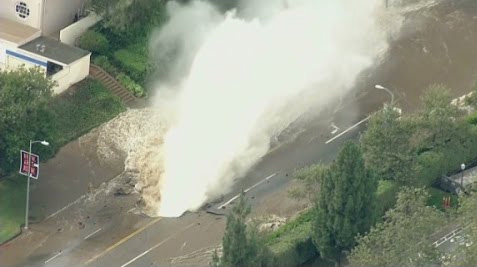
In July 2014 the massive Sunset Boulevard water main break brought geysers of water, a sinkhole, flooding on the UCLA campus — the risks that come with expansive water line systems installed decades ago. The main line trunk that burst and turned UCLA into a swimming pool was 93 years old.

The failure also led to a familiar “Band-Aid approach” that experts say is common when pipes in an aging system fail.

Water main breaks continue in the city every month. That those breaks are a continuing problem says that we have a serious problem that the city DWP has yet to confront. One of the latest was near my home on Topanga Canyon Boulevard. After posting this item another break on Ventura Boulevard in Sherman Oaks reported on February 24. These breaks tell me that the pipes are deteriorating everywhere. Anything breaking off inside those pipes that ends up at my house? Oh no they say. Everything is OK.

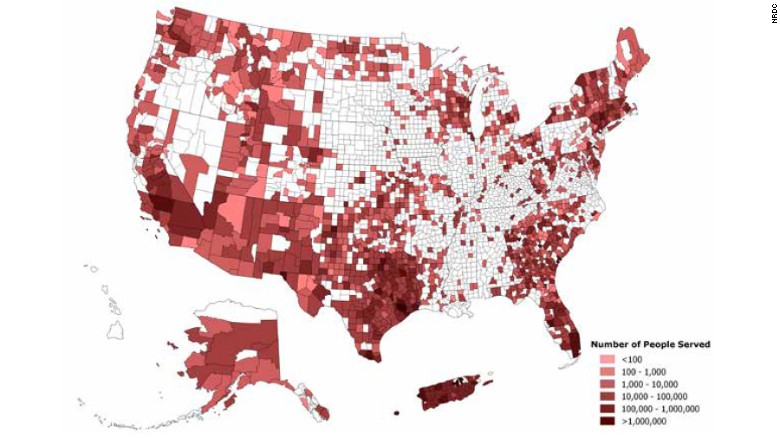
Contaminated pipes are everywhere. Lead pipes are everywhere.  This map shows where it is most prevalent.

Once again money is the issue.


The six hottest years on record include 2014, 2015, 2016, 2017, 2018 and 2019


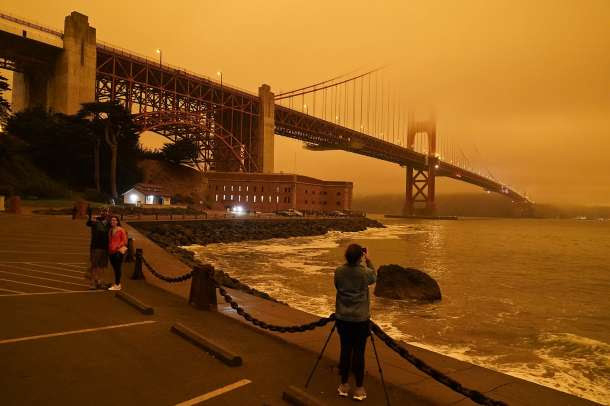
The above photo was shown on sfgate.com on September 9.  The smoke from the fires has obliterated the sun for the past week in Los Angeles.  My eyes sting. So what is the problem?

An Inconvenient Truth presents in film form an illustrated talk on climate by by former Vice President Al Gore, aimed at alerting the public to an increasing “planetary emergency” due to global warming.  He may have had the dates wrong but we are having another once in a life time crises almost every year.  Available on Amazon.

The temperature in Los Angeles suburb Woodland Hills set a new record on September 6, 2020. 121°F (49.444°C).

Consider an exchange that took place in California at an event focused on the fires. Wade Crowfoot, head of the state’s Natural Resources Agency, called on Trump to recognize the role of climate change in the historic conflagrations.

“We’ve had temperatures explode this summer,” Crowfoot said. “You may have learned that we broke a world record in the Death Valley: 130 degrees. But even in greater L.A., 120-plus degrees. And we’re seeing this warming trend make our summers warmer, but also our winters warmer as well.”

He acknowledged Trump’s that ground cover and fallen trees contribute to fires.

“But I think we want to work with you to really recognize the changing climate and what it means to our forest — and actually work together with that science,” he continued. “That science is going to be key, because if we ignore that science and sort of put our head in the sand and think it’s all about vegetation management, we’re not going to succeed together in protecting Californians.”

“It’ll start getting cooler,” Trump replied. “You just — you just watch.”

“I wish science agreed with you,” Crowfoot said.

“I don’t think science knows, actually,” Trump responded.

As it turns out, science knows quite well. For more than 100 years, it’s been speculated that burning fossil fuels (in particular coal) emits gas that can trap heat in the Earth’s atmosphere. By now, that effect is well documented and obviously manifested, with atmospheric carbon dioxide hitting levels never before measured and the effects of that saturation felt everywhere from increased droughts to increased severe precipitation events (since warmer air can hold more moisture) to higher temperatures to things such as dissolving shells on marine life.
Bees Love my Fruitless Mulberry Tree

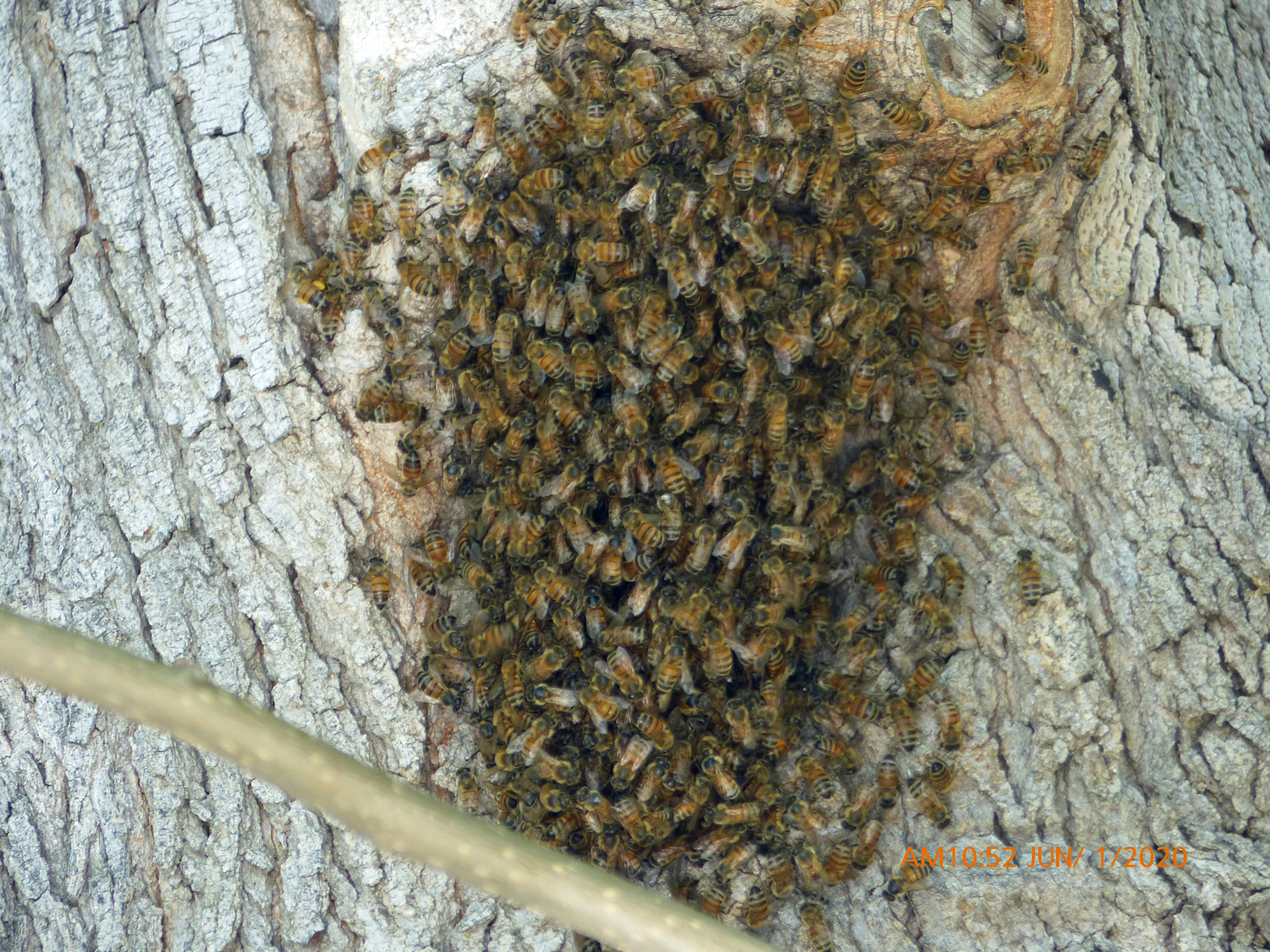
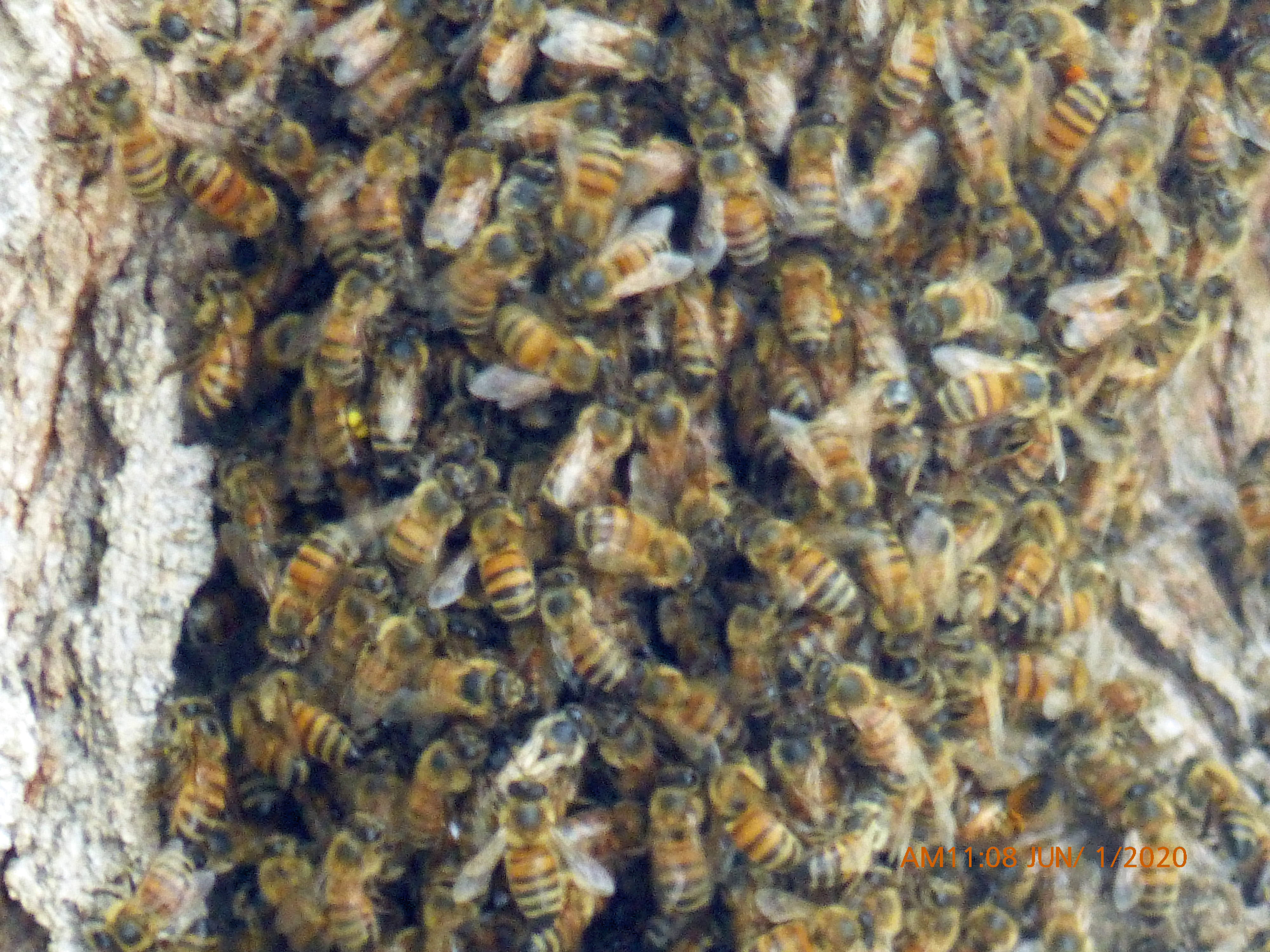
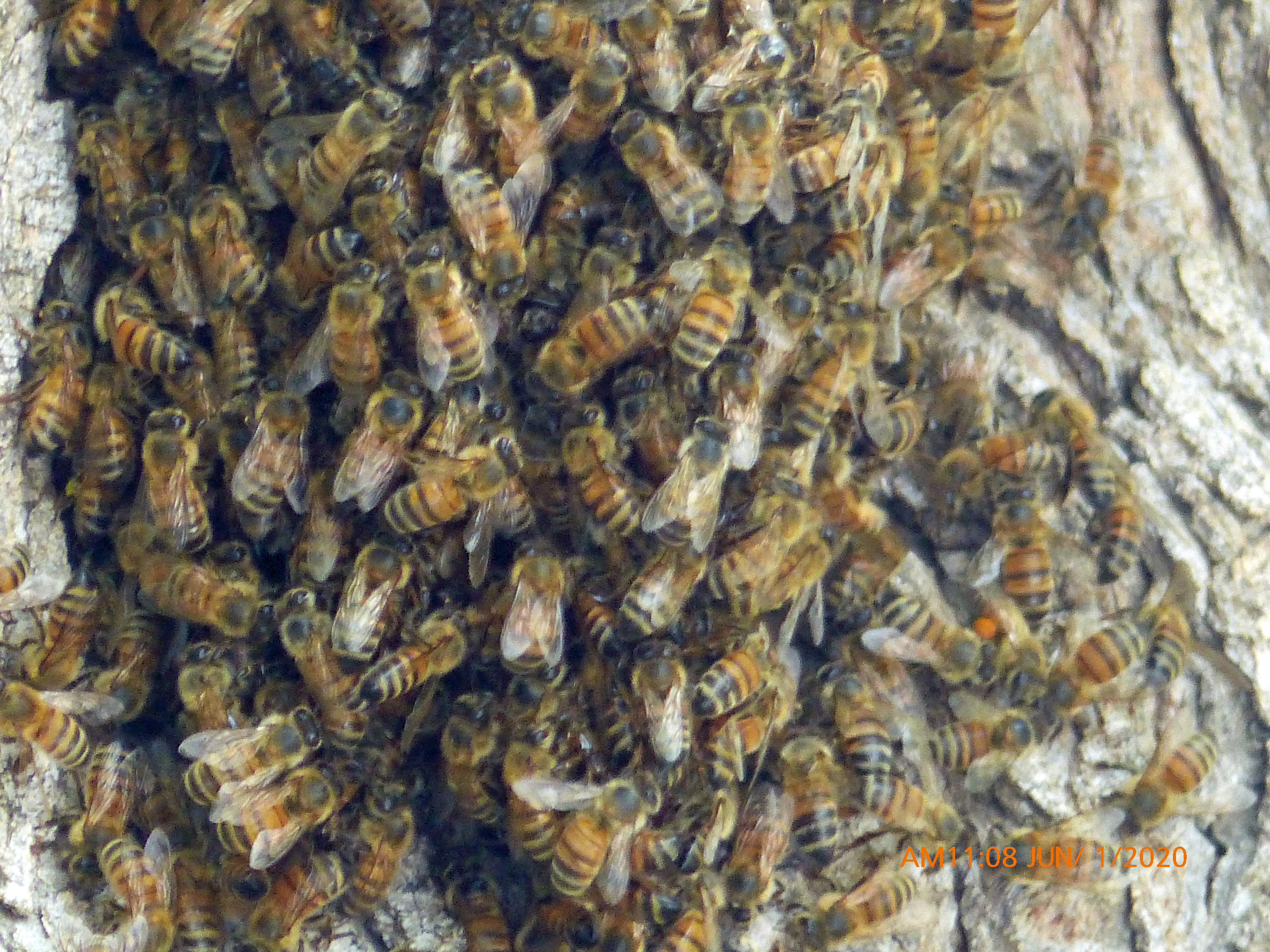
Last year bees created a hive on my mulberry tree.  The city sent out a specialist who sprayed a solution of sand and chemical. It worked but the bees are back. Just above the previous location they are trying to crate another hive.  I have called city services but that was days ago.  If they aren’t gone in the next few days I will call again.  The hive they are trying to build is about ten feet above the street.

You can see the sand covering the first bee hive and the new hive above.


Pictures taken about 15 feet from the swarm.  The camera provided excellent scary pictures.  The bees did not come near me.

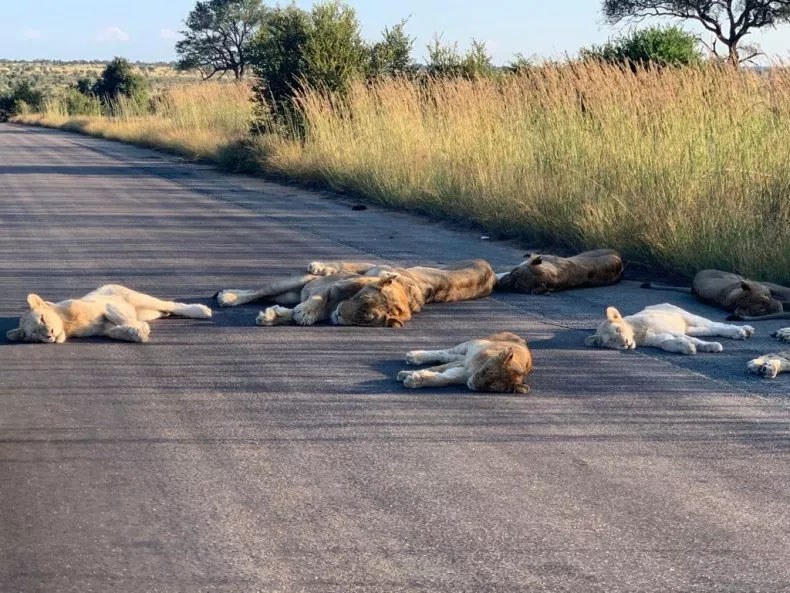
Lions Nap in the middle of a Road

In Kruger National Park, South Africa, lions have been photographed sleeping on roads and wild dogs have been filmed playing on golf courses while the country is in lockdown.

Richard Sowry, a park ranger, spotted a group of sleeping lions in the middle of the road during a patrol on Wednesday. The park explained the lions are normally found in Kempiana Contractual Park, which is closed to tourists, but appear to be making the most of the quiet streets, taking a nap near one of the park’s entrance gates, near a camp that can accommodate dozens of visitors.

Source for this is Newsweek magazine.

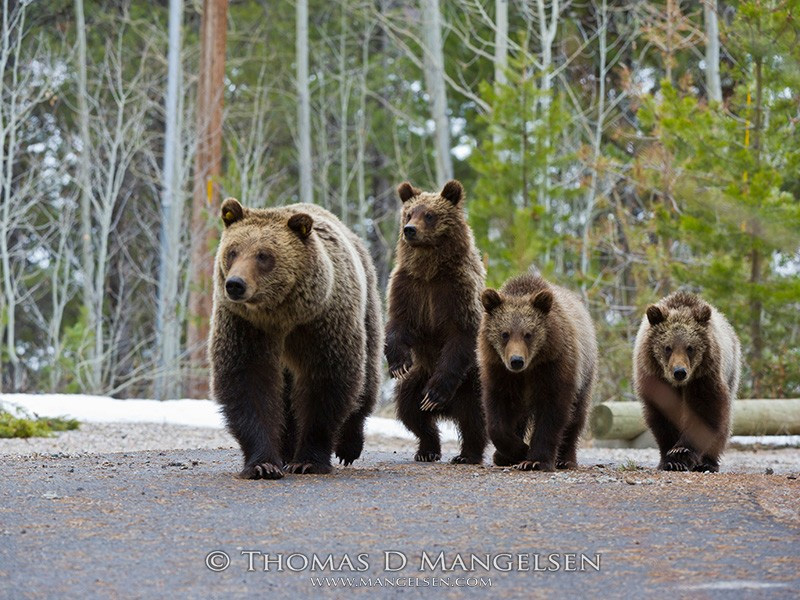
Grizzlies Saved

Court Stops Trophy Hunt of Yellowstone’s Iconic Bears

Judge rules Trump administration unlawfully removed federal protections

It has been 35 years since I visited the park. It is a fabulous place and the bears have thrived.  I was there three times.  First I worked one summer in the park while attending college.  I took my wife and children there twice.

The bears blocked the roads begging for food and people would feed then through slightly lowered windows.