Should You Invest in Facebook on Day 1?

General Motors has announced that it will stop advertising on Facebook after determining that the ads on the social-media site are ineffective.

The hype over Facebook’s IPO really is extraordinary. While many younger people are fans of the social media giant, there really is no indication of the actual earning power of the company. I saw Your Money on CNN this past weekend and two of the three guests were totally positive that making an investment in this company would be a wise move. The third, Ned Riley (Riley Asset Management) said the shares will likely start at about $60 a share and go lower by this time next year.

Apple struggled for years before finding its strength. Google just kept building its strength from the start. Other social media web sites have struggled. Which retail web site comes in third place behind Amazon and E-Bay? I don’t know the answer.

For those people who are willing to gamble the investment is a wonderful opportunity. For those of us who want some real performance numbers this investment seems very suspect.

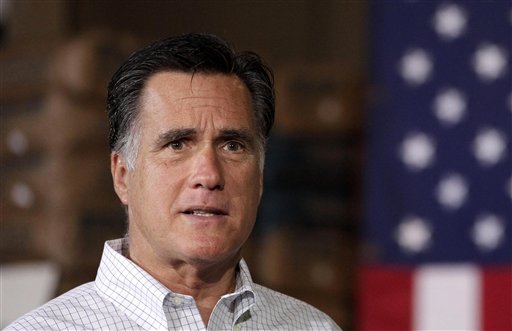
Mitt Romney Does Not Understand American Life

If you grew up in a poor neighborhood that is the environment you understand.  Likewise if you grew up in a neighborhood of the well to do that is also the world you understand.  I grew up in a very middle class neighborhood and my perceptions are based upon that environment.  I never missed meal and I never went without shoes in that 1250 square foot three bedroom home.

The Associated Press reports: “Mitt Romney says he learns about what it’s like to struggle in a difficult economy by sitting down to chat with regular people. But the Republican presidential candidate doesn’t want anybody to see it — and his campaign won’t say who he meets with or when the meetings occur.”

“Before I begin an event like this, I typically am able to sit down with a few people on an off-the-record kinda basis,” Romney said as he delivered his standard campaign speech Friday in Pittsburgh.

 Mitt Romney’s annual yearly income is over $20 million.  He has off shore accounts to minimize his income tax.  I doubt anyone reading this column has any accounts outside the United States(Unless you live outside the United States).  The Census Bureau says the median household income in the USA from 2006-2010 was $51,914.  Arithmetic Median Definition: Median is the middle value of the given numbers or distribution in their ascending order.

Mitt Romney can hear about the issues of the average American for the rest of his life but he has never had to say “we can’t afford that” or heard your spouse asking if there is enough in the budget to pay for some new curtains or new shoes this month.

Yesterday’s issue for me was getting the lights turned on after an electrical malfunction.  The initial price to do the job right was over $4,000.  The final cost just to get the lights working was $352.  Mr. Romney would have done the $4,000 job.

Mr. Romney’s problem is that he really doesn’t have to face the life of a typical American citizen.  There is no way he can understand. Isn’t he lucky?

Citigroup Stock Holders had Their Say

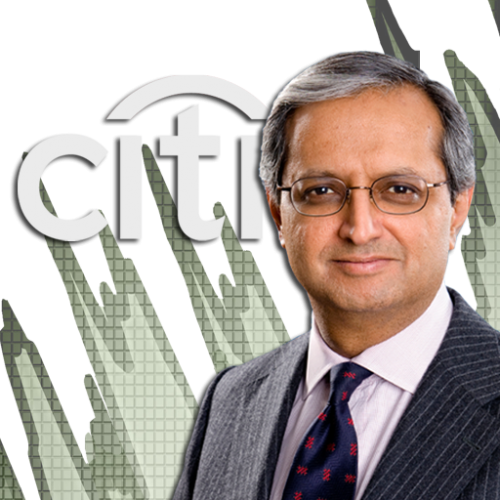
At Citigroup’s annual meeting, owners of the stock voted 55 to 45 against a $50 million executive pay package, including $15 million for CEO Vikram Pandit.

This is all thanks to the Dodd-Frank financial overhaul law.

Buried in its 2,300 pages is a requirement for public companies to hold “say on pay” votes for executive compensation.

Unfortunately the vote is non-binding (Democrats wanted it to be binding), but the chairman of Citigroup Dick Parsons said he took it seriously, and promised the board would consider it carefully.

Shareholders have every right to be upset with Vikram.

Over the last decade, Citigroup has had the worst stock price performance of the big banks, but consistently had some of the highest executive compensation.

Citi shares are down more than 80% since the financial crisis hit.
They’re down 93% from 2006.

Last year, Pandit got a $1.7 million salary, plus a $5.3 million cash bonus, and he got a $40 million retention package that pays out through 2015.

Getting a bonus should be a piece of cake for these execs, too, since the standard for the payout is an earnings track record half of what it was in 2009 and 2010 when the economy was in the tank.

Whoa! Don’t get too ambitious!

Look, to be fair to Pandit, for 2009 and 2010, he accepted just a buck in salary.

But to be fair to shareholders, Citi’s quarterly dividend is one penny.
Citigroup has announced its first-quarter profit had fallen two percent from a year earlier on a paltry one percent rise in revenue.

The Federal Reserve turned the company down on its request for a share buyback or dividend after Citi flunked the central bank’s stress test in March. And don’t forget the bank was one of many bailed out during the financial crisis.

Some people bridle at anyone earning millions of dollars a year. I am one of them.

If you can grow sales, boost the bottom line, raise the share price, then by all means you’ve earned a fat paycheck.

But what we can’t do is reward mediocrity and failure.

Last year shareholders voted down just two percent of executive pay plans. Maybe this is the start of a new trend.

Read more: http://www.foxbusiness.com/on-air/willis-report/blog/2012/04/18/shareholders-strike-back?link=mktw#ixzz1sXtwnCTx
When You Retire Will the Money be There?

No one cares more about your savings and investments more than you.  You need to become an expert on the kinds of investments that you are comfortable with holding.  Don’t let a financial adviser take control of your funds.  No matter what he/she says, they do not understand your true wishes and needs.  They will not be the one in pain if those savings are lost.

The unpleasant reality is that most of us do not save enough money for our retirement years.  The reason is obvious.  The cost of living takes our paychecks.  It’s not a new situation.  This has been a fact for all of history.  It is the reason that Social Security was created in the 1930s.  That insurance provides sufficient income in retirement years to prevent starvation.  It is only enough to pay for food, housing, and other basic necessities.

The problem is that Social Security has become the only income resource for many retired Americans.  (401(k) plans have not become the outstanding resource that many believed would occur.  The reason is they are not a mandatory savings plan.  It is a voluntary program.  The average balance in all 50 million (401(k) accounts is just over $60,000 according to the Employee Benefit Institute.  Even people within 10 years of retirement have saved an average of only $78,000, and more than a third have less than $25,000.

I still hear financial gurus saying that you should be receiving 10% or more on your savings.  I know such investments do exist but they are not well known.  Those that do pay that level of return are high risk securities that most people are not prepared to take.  Even Vanguard’s High Yield Corporate Bond Fund pays 6.75%.

Even if you savings are small there are magazines you can view in the library and sites that do not charge anything.  My favorite is Morningstar.  You do not have to subscribe to obtain much of their information.

Start today thinking about where your income will come from when that day comes when you want to say “It’s time for me to retire.”

The Social Security Time Bomb

Rather than focusing on our broken political system this article is focusing on a solution to the Social Security time bomb. Only yesterday the Social Security Trustees said that the system will not have sufficient funds for the promised payouts in 2033.

Regular ongoing monthly Social Security benefits started in January 1940. Despite what some will claim we are experiencing longer lives. The system was counting on almost everyone dying within ten years of retirement. The problem for the program is that too many are living into their 80s and 90s.

The Democrats have not faced the reality of longer lives. The Republicans have but their solutions are unacceptable to most of us. Interestingly it was George W. Bush who tried to resolve the issue but the two parties seem bent upon disagreement even when they know there is a solution.

We all know that many people are relying on the system as their only source of income. Cutting benefits for the poorest is not a reasonable solution.

There are a few things we can do:
1. Establish a “means test” that would deny benefits to those with higher retirement income.
2. Raise the maximum taxable contributions from the current level.
3. Raise the retirement age.

To do these things will require courage. That is lacking in our representatives.

The Stockholders Strike Back!

At Citigroup’s annual meeting, owners of the stock voted 55 to 45 against a $50 million executive pay package, including $15 million for CEO Vikram Pandit.

This is all thanks to the Dodd-Frank financial overhaul law.

Buried in its 2,300 pages is a requirement for public companies to hold “say on pay” votes for executive compensation.

Now, the vote is non-binding, but the chairman of Citigroup Dick Parsons said he took it seriously, and promised the board would consider it carefully.

Shareholders have every right to be upset with Vikram.

Over the last decade, Citigroup has had the worst stock price performance of the big banks, but consistently had some of the highest executive compensation.

 Citi shares up slightly today, but they’re down more than 80% since the financial crisis hit.

They’re down 93% from 2006.

Last year, Pandit got a $1.7 million salary, plus a $5.3 million cash bonus, and he got a $40 million retention package that pays out through 2015.

Getting a bonus should be a piece of cake for these execs, too, since the standard for the payout is an earnings track record half of what it was in 2009 and 2010 when the economy was in the tank.

Whoa! Don’t get too ambitious!

Look, to be fair to Pandit, for 2009 and 2010, he accepted just a buck in salary.

 But to be fair to shareholders, Citi’s quarterly dividend is one penny.

 At the start of this week, Citigroup announced its first-quarter profit had fallen two percent from a year earlier on a paltry one percent rise in revenue.

 The Federal Reserve turned the company down on its request for a share buyback or dividend after Citi flunked the central bank’s stress test in March. And don’t forget the bank was one of many bailed out during the financial crisis.

Some people bridle at anyone earning millions of dollars a year, but not me.

If you can grow sales, boost the bottom line, raise the share price, then by all means you’ve earned a fat paycheck.

But what we can’t do is reward mediocrity and failure.

There’s a lot not to like about Dodd-Frank – about 2,299 pages’ worth if you ask me – but shareholder “say on pay”? That’s OK with me.

Last year shareholders voted down just two percent of executive pay plans. Maybe this is the start of a new trend.

Read more: http://www.foxbusiness.com/on-air/willis-report/blog/2012/04/18/shareholders-strike-back?link=mktw#ixzz1sXtwnCTx

Bank Savings are for Fools

I must be blunt.  If you have most of your saving deposited in a bank or a credit union you are a fool.  The interest you earn is most likely less than one percent (1%) a year.  Your response is that the FDIC insurance guarantees the money’s safety.  So while the S&P 500 has grown by well over 10% this year, you are sitting on the same amount of savings that you have had for the past two or three years.

OK, you aren’t comfortable with the stock market because it can easily go down in the next three months by 10% or more.  There are alternatives.

The US government issues treasury bonds (notes) that are currently paying substantially more.  Just yesterday this report, that appeared on Morningstar, from AllianceBernstein, lists their top holdings that include U.S. Treasury bonds paying as much as 8%.  If the U.S. Treasury is not a reliable guarantor than neither is the FDIC.

OK you are still not satisfied.  How about Vanguard GNMA fund?  Again U.S.guaranteed bonds that are currently earning over 3%.

You don’t believe me. Check it out for yourself.

Still Too Big To Fail!

Despite what was said at the last GOP debate, no one wants to see America’s biggest businesses fail.  We will do what ever it takes to prevent that kind of event.  Both political parties have decided that when the day is done this United States government cannot permit its largest business enterprises to collapse.
Ten Largest Banks in the U.S.

So which are the ten largest banks by deposits? This according to bargaineering.com.

  1. Bank of America: $907.3b in deposits, TARP participant.
  2. Wells Fargo: $759.7b in deposits, TARP participant.
  3. JPMorgan Chase: $639.7b in deposits, TARP participant.
  4. Citibank: $320.8b in deposits, TARP participant.
  5. PNC Bank: $188.1b in deposits, TARP participant.
  6. US Bancorp: $151.9b in deposits, TARP participant.
  7. Sun Trust: $118.5b in deposits, TARP participant.
  8. Capital One Financial: $114.3b in deposits, TARP
    participant.
  9. Toronto-Dominion (TD) Bank: $104.8b in deposits, as a Canadian bank it was not eligible for TARP funds.
  10. BB&T: $95.0b in deposits, 2.12% market share, TARP participant.

Infoplease.com provided a list of the banks by assets.

1. Bank of America Corporation (Charlotte,NC) $2,340,667,014

2. J.P. Morgan Chase & Co. (New York,NY) $2,135,796,000

3. Citigroup Inc.(New York,NY) $2,002,213,000

4. Wells Fargo & Company (San Francisco,CA) $1,223,630,000

5. Goldman Sachs Group, Inc., The (New York,NY) $880,677,000

6. Morgan Stanley (New York,NY) $819,719,000

7. Metlife, Inc. (New York,NY) $565,566,452

8. Barclays Group US Inc. (Wilmington,DE) $427,837,000

9. Taunus Corporation (New York,NY) $364,079,000

10. HSBC North America Holdings Inc. (New York, NY) $345,382,871

Read more: United States’ Largest Banks — Infoplease.com http://www.infoplease.com/ipa/A0763206.html#ixzz1dHZLBUD5

S&P Downgrades U.S. Debt for First Time in History

A Prediction for the 2012 Election

The Tea Party had it’s say in the debt ceiling negotiations.  The president pleaded with the Republican controlled House of Representatives to raise the ceiling and do a grand bargain to cut the debt by $4 trillion.  Instead we saw a delay to the last day before default and an inconsequential debt reduction law.

Now the country will most likely have to pay higher interest on treasury notes and bonds.  Of course the Tea Party will deny responsibility for this situation.

It is a good bet the president knew that this would be the outcome if there was no $4 trillion agreement.  Being the mild-mannered man that he is, Barack Obama did not spell out the consequences.  As a leader he too has failed.

There is no indication that the next president, a Republican, will manage this nation any better than Obama.  We will hear broad generalities that will be as meaningless as Obama’s “Change you can believe in.”  The nation will be fed up with Obama and will elect the GOP nominee with fingers crossed and lots of prayer.

8 signs you’re flirting with financial ruin

I am totally sympathetic with the plight of financial distress.  I have been there.  The pain is ongoing and follows you day and night.  This situation is particularly difficult if you are retired and living on a fixed income.

1. Paying late fees and juggling bills

A serious symptom of financial distress is juggling monthly bills by making payments big enough and frequently enough to keep services flowing, but never paying balances on time and in full.

2. Counting on a future windfall

Basing your plans for financial stability on a future payoff, such as an inheritance, a run-up in the value of your home or a big tax refund

3. Multiple credit card hocus-pocus

If your credit card debt is consistently rising and you’re unable to make more than the minimum payments, your balance will continue to rise.

4. Fighting with your partner over finances

Most couples have occasional fights about debt, but if you regularly fight with your spouse about money, it can be a sign there’s not enough disposable income to finance the family’s spending.

5. Regularly paying overdraft fees

If you’re constantly incurring fees for overdrawing your checking account, you could be on the brink of financial disaster.

6. You have a savings rate of zero

If you’re unable to set aside a small amount of money for savings in your budget, your finances are on unstable footing.

7. Covering expenses with retirement savings

Borrowing or withdrawing retirement funds from your 401(k) is a common thread in many of the cases of financial distress.

8. Treating your home like a piggy bank

Such moves are especially ominous if they’re not due to a serious financial need but to a desire for “wants” like a vacation or a new car.

Read more: 8 signs youre flirting with financial ruin | Bankrate.com http://www.bankrate.com/finance/debt/8-signs-you-re-flirting-with-financial-ruin-1.aspx#ixzz1T8qjU5CZ