Donald Trump wants to annex Canada and Greenland. To accomplish that goal without an invasion he is using tariffs. Trump doesn’t want to use the military to obtain his objectives. Vladimir Putin’s effort to annex Ukraine using his military is a message that Trump should not use military force to reach his objectives.
Mr. Trump followed through on a threat at midnight Wednesday to slap 25-per-cent tariffs on aluminum and steel from all countries including Canada, Mexico, South Korea, Australia and Europe. The 27-nation European block joined Canada with retaliatory tariffs of US$28-billion on American goods.
“These tariffs are completely unjustified, unfair and unreasonable,” Canada Finance Minister Dominic LeBlanc told a news conference on Wednesday, warning U.S. protectionist measures will hurt American and Canadian consumers.
U.S. Commerce Secretary Howard Lutnick said the tariffs put in place Wednesday will stay in effect until there is a strong U.S. aluminum and steel industry. That is not a likely scenario.
Ontario premier Mr. Ford on Monday announced a 25-per-cent surcharge on electricity exports to three U.S. states, but suspended it Tuesday after a call with the Commerce Secretary. The Premier said Mr. Lutnick “extended an olive branch” to start a conversation about the future of the United States-Mexico-Canada Agreement.
Canadian Foreign Affairs Minister Mélanie Joly said she’ll once again told Mr. Rubio that Canadians are fed up with Mr. Trump’s call for the annexation of Canada. “Everything that has to do with the 51st state rhetoric is unacceptable,” she said.
The President also defended his whipsaw approach to tariffs, after weeks of threats followed by retreats – and then new rounds of levies.
“It’s called flexibility,” he said. “It’s not called inconsistency.”
Will the American congress assert itself? The authoritarian has control for now.
“Canadians are preparing to create a retail blackout on Feb 28 of all U.S retailers doing business here 9 (in Canada). For one day, show them we have the power when provoked. Absolutely no purchases from Walmart, Home Depot, Best Buy, Amazon, McDonald’s, Staples, Gap, Toys r Us , Costco or any other US retailers. For one day, support only small or large CANADIAN or MEXICAN producers and companies. It’s time to STAND UP for ourselves. BE STRONG AND BE PROUD. Spread the word!”
Imagine if, for just one day, Canadians chose not to spend a single dollar at U.S.-owned retailers operating in the country. What kind of impact would that have? Would it send a strong message, shake up the economy, or fizzle out as a symbolic gesture?
If so, there is a possibility of a sellout similar to what took place in 1938, when Great Britain and France approved of Adolf Hitler’s demand that the large German-speaking parts of Czechoslovakia be annexed by Nazi Germany. The Czech government was not present at negotiations.
Upon his return to Britain, Prime Minister Neville Chamberlain proclaimed that he had secured “peace in our time.” Winston Churchill, then a member of the House of Commons, harshly condemned this agreement as appeasement, as have historians since then.
In March 1939, Hitler seized all of Czechoslovakia. It was then that Chamberlain recognized the unlimited imperial greed of the German tyrant. What followed was the British and French guarantee of Poland’s security. In September 1939, when Hitler invaded Poland, Britain and France declared war on Germany, and World War II began.
In 2014, Putin occupied Crimea and backed separatists in the eastern provinces of Ukraine, areas in which Russian speakers make up a large proportion of the population. After the 2022 invasion of Ukraine, he annexed these provinces.
The U.S. government stance has been highly ambiguous. The current secretary of Defense has declared that those parts of Ukraine annexed by Russia would probably not be returned to Ukraine.
At the peace talks, will the U.S. appease Russia in the name of “peace”?
Thomas P. Bernstein, Irvine, California
The writer is a professor emeritus of political science at Columbia University. This was posted in the Los Angeles Times on February 19, 2025.
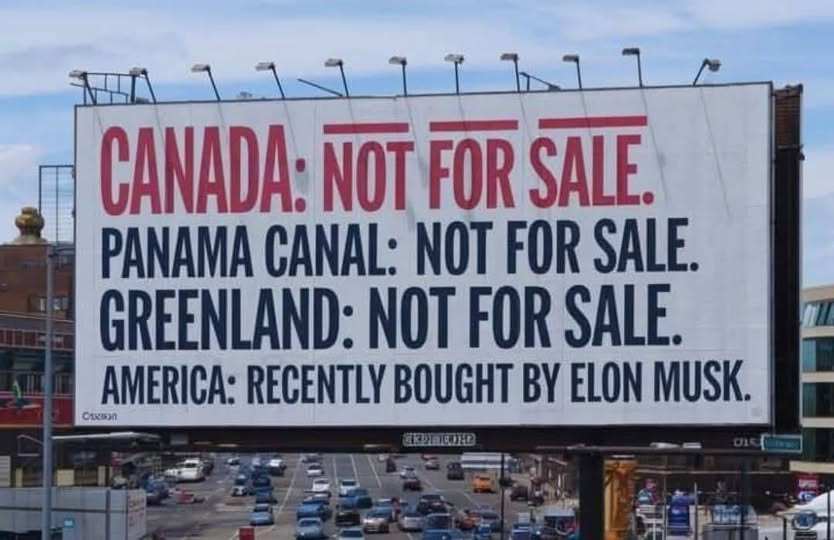
Since entering office, President Donald Trump has been ambitious about territorial expansion. Sounding more like Donald the Conqueror, he’s insisted the United States take ownership of the Gaza Strip and the Panama Canal, he’s proposed buying Greenland from Denmark and he’s pitched Canada on joining our union as the 51st state. At his inauguration, Trump took America’s original expansionist slogan and blasted it skyward, “We will pursue our manifest destiny into the stars, launching American astronauts to plant the Stars and Stripes on the planet Mars.”
American history has seen the country grow in size and Betsy Ross’ flag grow in stars but Trump’s ideas ebb between delusions of grandeur and old-fashioned gunboat diplomacy.
There was Trump’s announcement that the United States would “own” Gaza, sending Palestinians to neighboring countries and establishing a “Middle East riviera.” With literally zero specifics laid out by the White House as to how exactly this would happen, this idea has received bipartisan and international condemnation as logistically impossible.
Trump has also set his sights on “seizing back” the Panama Canal, which was signed over to Panama by the late President Jimmy Carter in 1977. Trump has erroneously claimed that China is running the canal, which is actually operated by an independent authority in Panama. A subsidiary of a Hong Kong company runs two of the canal’s ports but doesn’t control access to the canal.
Then there’s Canada, the second-largest country by land mass on the planet. It’s also my home country. While I can’t speak for Panamanians or Greenlanders, I do have a suggestion for my fellow Canucks on this:
Trump has offered Canada the chance to become the 51st state, but I say, why stop there? Canada has 41 million people, spread throughout 10 provinces and three territories. So, if Canada were to become part of America, some changes would be in order.
First of all, Congress would have to grow. That would mean Canada, as part of the new America, would net at least 54 seats in the House. For context, the 20 states with the smallest populations have just 46 House seats among them all.
But here’s problem No. 1: This little thing called the Permanent Apportionment Act of 1929. That act mandates that the House is no bigger than 435 members. So, if you did the math, combining Canada’s population with America’s and dividing it by 435, Canada would net 47 seats. Those seats would be taken away from states all over the country. Who’s going to tell voters that Trump gave their congressional representation to a guy in Saskatchewan?
That’s just the House of Representatives. What about the Senate? Trump is only offering for Canada to become one state with two senators. But Canadian provinces, like American states, compete with one another. They aren’t going to be interested in all snuggling up into one state.
Each province would have to be its own U.S. state. So Canada wouldn’t be the 51st state; it would be states 51 through 60, at the very least, meaning Canada would have 20 senators. It would be the largest reorientation of political power in America since women were given the right to vote in 1920.
Trump is specifically asking Canada to join as just one state for that reason. Statehood for Canada would likely swing power away from Republicans. That’s one of the reasons most Republicans have long opposed statehood for Puerto Rico and Washington, D.C. They assume both would become Democratic strongholds, increasing the Democrats’ control in Congress.
If the thought of a couple of senators from Puerto Rico representing people who are already American citizens scares Republicans, I wonder how 20 from the land of maple syrup, Mounties and “Anne of Green Gables” would go over?
While it’s difficult to compare American and Canadian politics directly, we have some sense of how Canadians, or what might come to be known as “Camericans,” might vote:
Canada has a multiparty parliamentary system but in 2003, the conservative parties united under one banner. Since then, the conservatives have received, on average, about 35% of the popular vote in each election. On average, the left-of-conservative parties have received a combined 63% of the popular vote.
Expansion from Canada to the Gulf of America might be a fun idea for Trump … until our nice neighbors up north kick his party oot of office and install a liberal supermajority. And we haven’t even talked about what this would do to the Supreme Court.
Of course, in typical Canadian politeness, Prime Minister Justin Trudeau said there’s “not a snowball’s chance in hell” that Canada joins America. But, Canada, if I were you, maybe the chance to take over your noisy neighbor from the inside isn’t the worst idea in the world.
This column and introductory commentary was forwarded to me. Mike Greenberg of Texas wrote the opening comments. This is exhausting.
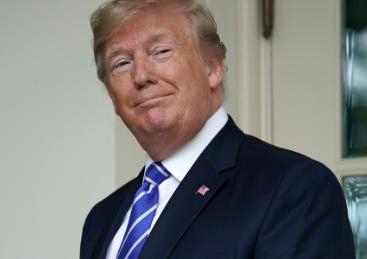
I don’t think any US journalist has written as tough (and spot-on) a portrayal of the threat facing us as this Canadian, Andrew Coyne of the Toronto Globe and Mail. If you read to the end, you will be rewarded with the most flattering photograph yet of the convicted-felon-in-chief:
“Nothing mattered, in the end. Not the probable dementia, the unfathomable ignorance, the emotional incontinence; not, certainly, the shambling, hate-filled campaign, or the ludicrously unworkable anti-policies.
The candidate out on bail in four jurisdictions, the convicted fraud artist, the adjudicated rapist and serial sexual predator, the habitual bankrupt, the stooge of Vladimir Putin, the man who tried to overturn the last election and all of his creepy retinue of crooks, ideologues and lunatics: Americans took a long look at all this and said, yes please.
There is no sense in understating the depth of the disaster. This is a crisis like no other in our lifetimes. The government of the United States has been delivered into the hands of a gangster, whose sole purpose in running, besides staying out of jail, is to seek revenge on his enemies. The damage Donald Trump and his nihilist cronies can do – to America, but also to its democratic allies, and to the peace and security of the world – is incalculable. We are living in the time of Nero.
The first six months will be a time of maximum peril. NATO must from this moment be considered effectively obsolete, without the American security guarantee that has always been its bedrock. We may see new incursions by Russia into Europe – the poor Ukrainians are probably done for, but now it is the Baltics and the Poles who must worry – before the Europeans have time to organize an alternative. China may also accelerate its Taiwanese ambitions.
At home, Mr. Trump will be moving swiftly to consolidate his power. Some of this will be institutional – the replacement of tens of thousands of career civil servants with Trumpian loyalists. But some of it will be … atmospheric.
At some point someone – a company whose chief executive has displeased him, a media critic who has gotten under his skin – will find themselves the subject of unwanted attention from the Trump administration. It might not be so crude as a police arrest. It might just be a little regulatory matter, a tax audit, something like that. They will seek the protection of the courts, and find it is not there.
The judges are also Trump loyalists, perhaps, or too scared to confront him. Or they might issue a ruling, and find it has no effect – that the administration has called the basic bluff of liberal democracy: the idea that, in the crunch, people in power agree to be bound by the law, and by its instruments the courts, the same as everyone else. Then everyone will take their cue. Executives will line up to court him. Media organizations, the large ones anyway, will find reasons to be cheerful.
Of course, in reality things will start to fall apart fairly quickly. The huge across-the-board tariffs he imposes will tank the world economy. The massive deficits, fueled by his ill-judged tax policies – he won’t replace the income tax, as he promised, but will fill it with holes – and monetized, at his direction, by the Federal Reserve, will ignite a new round of inflation.
Most of all, the insane project of deporting 12 million undocumented immigrants – finding them, rounding them up and detaining them in hundreds of internment camps around the country, probably for years, before doing so – will consume his administration. But by then it will be too late.
We should not count upon the majority of Americans coming to their senses in any event. They were not able to see Mr. Trump for what he was before: why should that change? Would they not, rather, be further coarsened by the experience of seeing their neighbours dragged off by the police, or the military, further steeled to the necessity of doing “tough things” to “restore order?”
Some won’t, of course. But they will find in time that the democratic levers they might once have pulled to demand change are no longer attached to anything. There are still elections, but the rules have been altered: there are certain obstacles, certain disadvantages if you are not with the party of power. It will seem easier at first to try to change things from within. Then it will be easier not to change things.
All of this will wash over Canada in various ways – some predictable, like the flood of refugees seeking escape from the camps; some less so, like the coarsening of our own politics, the debasement of morals and norms by politicians who have discovered there is no political price to be paid for it. And who will have the backing of their patron in Washington.
All my life I have been an admirer of the United States and its people. But I am frightened of it now, and I am even more frightened of them.”
The idiom used to say that a desired result is so good or important that any method, even a morally bad one, may be used to achieve it.
It appears that Donald Trump will win the election on November 5. And it won’t be close. Real Clear Politics says with No Toss Up States Trump will win 312 electoral votes. That number has held for the past week. Previously Trump also lead with 296 votes.
We need to prevent a Trump presidency at all cost. That means rigging the results if that can be done.
My reasons are many but here are a few.
1. Aliens both legal and illegal do the jobs most Americans won’t do from cleaning houses to gardening to picking fruits and vegetables to low paid factory jobs. I know because I was a supervisor in at least 3 factories that hired those people.
2. Trump would withdraw the US from NATO and Russia will invade all of Europe.
3. Trump promises to arrest all people who opposed him using the military. He calls them the enemy within.
4. Trump admires the dictators of the world including Adolph Hitler, Vladimir Putin, Kim Jong Un and wants to become one too.
5. Trump has no intention of surrendering the presidency at the end of his second term as president.
Trump must be stopped if we love the United States. The end justifies the means.
Do you really want to elect Mr. Donald J. Trump and Senator JD Vance to the positions of president and vice president of the United States?
This is too sickening to even talk about or write about but I must.
Senator JD Vance, the running mate of former President Donald J. Trump, has declined to denounce the right-wing talk-show host Tucker Carlson for praising and airing the views of a Holocaust revisionist who falsely claimed that the Nazis’ destruction of European Jewry was not an intentional act of premeditated genocide.
Mr. Carlson is no stranger to controversy, but his recent interview with Darryl Cooper, whom he described as “the best and most honest popular historian in the United States,” has faced particularly fierce blowback.
The Nazis’ killing of almost six million Jews was meticulously planned, documented and pursued even after the tide of World War II had turned and Germany’s defeat was assured.
The German penal code prohibits publicly denying the Holocaust and disseminating Nazi propaganda, both off- and online. This includes sharing images such as swastikas, wearing an SS uniform and making statements in support of Hitler.
White House spokesman Andrew Bates said in a statement: “Giving a microphone to a Holocaust denier who spreads Nazi propaganda is a disgusting and sadistic insult to all Americans, to the memory of the over six million Jews who were genocidally murdered by Adolf Hitler, to the service of the millions of Americans who fought to defeat Nazism and to every subsequent victim of antisemitism.”
 Coast Contact