Letter From Istanbul

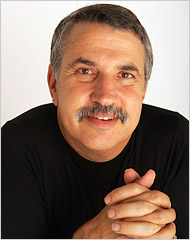
One of my favorite writer/authors is Thomas Friedman.  This column of his appeared in the New York Times on June 15, 2010.
Turkey is a country that had me at hello. I like the people, the culture, the food and, most of all, the idea of modern Turkey — the idea of a country at the hinge of Europe and the Middle East that manages to be at once modern, secular, Muslim, democratic, and has good relations with the Arabs, Israel and the West. After 9/11, I was among those hailing the Turkish model as the antidote to “Bin Ladenism.” Indeed, the last time I visited Turkey in 2005, my discussions with officials were all about Turkey’s efforts to join the European Union. That is why it is quite shocking to come back today and find Turkey’s Islamist government seemingly focused not on joining the European Union but the Arab League — no, scratch that, on joining the Hamas-Hezbollah-Iran resistance front against Israel.

Now how did that happen?

Wait one minute, Friedman. That is a gross exaggeration, say Turkish officials.

You’re right. I exaggerate, but not that much. A series of vacuums that emerged in and around Turkey in the last few years have drawn Turkey’s Islamist government — led by Prime Minister Recep Tayyip Erdogan’s Justice and Development Party — away from its balance point between East and West. This could have enormous implications. Turkey’s balancing role has been one of the most important, quiet, stabilizers in world politics. You only notice it when it is gone. Being in Istanbul convinces me that we could be on our way to losing it if all these vacuums get filled in the wrong ways.

The first vacuum comes courtesy of the European Union. After a decade of telling the Turks that if they wanted E.U. membership they had to reform their laws, economy, minority rights and civilian-military relations — which the Erdogan government systematically did — the E.U. leadership has now said to Turkey: “Oh, you mean nobody told you? We’re a Christian club. No Muslims allowed.” The E.U.’s rejection of Turkey, a hugely bad move, has been a key factor prompting Turkey to move closer to Iran and the Arab world.

But as Turkey started looking more South, it found another vacuum — no leadership in the Arab-Muslim world. Egypt is adrift. Saudi Arabia is asleep. Syria is too small. And Iraq is too fragile. Erdogan discovered that by taking a very hard line against Israel’s partial blockade of Hamas-led Gaza — and quietly supporting the Turkish-led flotilla to break that blockade, during which eight Turks were killed by Israel — Turkey could vastly increase its influence on the Arab street and in the Arab markets.

Indeed, Erdogan today is the most popular leader in the Arab world. Unfortunately, it is not because he is promoting a synthesis of democracy, modernity and Islam, but because he is loudly bashing Israel over its occupation and praising Hamas instead of the more responsible Palestinian Authority in the West Bank, which is actually building the foundations of a Palestinian state.

There is nothing wrong with criticizing Israel’s human rights abuses in the territories. Israel’s failure to apply its creativity to solving the Palestinian problem is another dangerous vacuum. But it is very troubling when Erdogan decries Israelis as killers and, at the same time, warmly receives in Ankara Sudan’s president, Omar Hassan al-Bashir, who has been indicted by the International Criminal Court on charges of war crimes and crimes against humanity for his role in the bloodshed in Darfur, and while politely hosting Iran’s president, Mahmoud Ahmadinejad, whose government killed and jailed thousands of Iranians demanding that their votes be counted. Erdogan defended his reception of Bashir by saying: “It’s not possible for a Muslim to commit genocide.”

As one Turkish foreign policy analyst said to me: “We are not mediating between East and West anymore. We’ve become spokesmen for the most regressive elements in the East.”

Finally, there is a vacuum inside Turkey. The secular opposition parties have been in disarray most of the decade, the army has been cowed by wiretaps and the press has been increasingly intimidated into self-censorship because of government pressures. In September, the Erdogan government levied a tax fine of $2.5 billion on the largest, most influential — and most critical — media conglomerate, Dogan Holdings, to bring it to heel. At the same time, Erdogan lately has spoken with increasing vitriol about Israel in his public speeches — describing Israelis as killers — to build up his domestic support. He regularly labels his critics as “Israel’s contractors” and “Tel Aviv’s lawyers.”

Sad. Erdogan is smart, charismatic and can be very pragmatic. He’s no dictator. I’d love to see him be the most popular leader on the Arab street, but not by being more radical than the Arab radicals and by catering to Hamas, but by being more of a democracy advocate than the undemocratic Arab leaders and mediating in a balanced way between all Palestinians and Israel. That is not where Erdogan is at, though, and it’s troubling. Maybe President Obama should invite him for a weekend at Camp David to clear the air before U.S.-Turkey relations get where they’re going — over a cliff.

Afghanistan as Wealthy Nation

As I have written before, the unknown events of the future will write the fate of President Barack Obama, the United States, and the world.  Good luck and good fortune play a big part in the future.

In an article in today’s New York Times about the findings of Vast Riches of Minerals in Afghanistan could be the game changer that will enable that nation to stand on its own two feet and bring America’s troops home even faster than anyone could imagine.

Briefly, there is believed to be $1 trillion in untapped mineral deposits in Afghanistan.  “The previously unknown deposits — including huge veins of iron, copper, cobalt, gold and critical industrial metals like lithium — are so big and include so many minerals that are essential to modern industry that Afghanistan could eventually be transformed into one of the most important mining centers in the world, the United States officials believe.”

If all this plays out as reported perhaps the fight will be over land and resource ownership.

White House Rejected Israeli Intelligence

It has been reported that President Barack Obama stopped Israel from using anti-riot gear to prevent a Turkish-sponsored flotilla from breaking the siege on the Gaza Strip.  The report is not from the Associated Press or other major news gathering service.  That makes the report suspect.  However, most of us realize that major news services do not like to report negative facts about the administration.  How reliable is worldtribune.com?  The article is at this site.

The essence of the report is as follows:

1. Diplomatic sources said the White House rejected Israeli intelligence assessments that the six-ship flotilla contained weapons and Islamist fighters trained to resist any boarding operation.

2. “The White House demanded that Israel exercise extreme caution and restraint in any scenario,” a diplomatic source said.

3. The sources said the Israeli intelligence community had informed the White House that the flotilla contained scores of Turks trained in weapons and hand-to-hand combat.

4. In the end, Netanyahu approved a plan for the Israel Navy to board Marmara with commandos armed with paintball guns.

5. “Obama told Erdogan ‘Don’t rock the boat too much. We’ll take care of business,'” another diplomatic source said. “It was a very friendly message.”

If this report is confirmed fact then how much proof does anyone need to understand that President Barack Obama does not stand with Israel and its fight for survival?

David  

A Message to Iran

Everything points to American and Israeli preparation for a possible attack on Iran before that nation obtains the capability to produce nuclear bomb.  David Ignatius, of The Washington Post, stated on the Chris Matthews Show that the United States is on a fast track to the development a super bomb that could penetrate underground facilities.  Israel has unveiled a new drone fleet that can reach Iran.

Just a few days ago the New York Times published an editorial titled “Time’s up for talking with Iran.”  An edited version of that editorial was printed in the Toronto Star.  Clearly the U.S. government is making every effort to send a message to Iran.  That edited editorial appears below.  

Over the last four years, the United Nations Security Council has repeatedly demanded that Iran stop producing nuclear fuel. Iran is still churning out enriched uranium and has now told United Nations inspectors that it is raising the level of enrichment – moving slightly closer to bomb-grade quality.

Enough is enough. Iran needs to understand that its nuclear ambition comes with a very high cost.

President Barack Obama said on Tuesday that the United States and its allies are “moving along fairly quickly” on a new sanctions resolution. He also said it would take several weeks to draft a proposal. That is not reassuring. Once a resolution is written, the negotiating process typically drags on for weeks, if not months.

Iran is in such economic and political turmoil that its government may be more vulnerable to outside pressure. Security forces have expanded a crackdown on the political opposition, arresting hundreds of people ahead of Thursday’s anniversary of the Iranian revolution.

American officials say they are eager to impose sanctions that would inflict maximum damage on the Islamic Revolutionary Guards Corps, which runs the nuclear program and a large chunk of the Iranian economy.

The plan, as we understand it, is to block their banking, their shipping, their insurance. American officials also say they want to minimize the additional suffering of the Iranian people. That makes sense to us, although squaring the circle won’t be easy.

If the Security Council is to move ahead with sanctions that bite, Washington and its allies are going to have to step up the pressure on Russia and China – Iran’s two enablers, both with a veto – to go along.

Russia has signaled support for another resolution. If history is any guide, we fear Russia will sharply whittle down the impact. China, eager to buy ever more oil from Iran, is an even bigger obstacle. China needs to understand that ensuring reliable oil supplies would become a lot harder if the Middle East is roiled by a nuclear-armed Iran.

The more the Security Council temporizes, compromises and weakens these resolutions, the more defiant and ambitious Iran becomes. If the Security Council can’t act swiftly, or decisively, the United States and its allies will have to come up with their own tough sanctions. They should be making a backup plan right now.

This is an edited version of an editorial that appeared this week in the New York Times and was printed in the Toronto Star

Isn’t this all about sending a message to Iran?

America Needs to Strengthen Manufacturing

When China can make wind turbines and ship them to the United States for less than the cost of manufacturing here we have a serious problem that remains unaddressed. It was reported on ABC News that there will be thousands of manufacturing jobs in China and hundreds of jobs in the United States confirming Rob Atkinson’s column in BusinessWeek. Unfortunately it’s not just wind turbines made in China. American manufacturers cannot compete with many foreign nations due to the high pay rates in this country.

I know many will say its America’s high taxes but that is not the primary issue. Labor rates in China, India, and other developing nations are 50% to 75% less than those in the United States. Reported on CNN last week was the T shirt factory that is now back in operation in Haiti, where the pay rate is $1.50 per hour. Those Haitians are happy to have that level of income.  What do baby sitters earn in America?  From babble.com “This useful post on babyslumber.com recommends paying between $15 and $20 an hour.” If I had small children there would be no baby sitters at my house.

Congress did not write the law requiring those manufacturing jobs must be here. The reason is that the administration fears such a regulation will start a trade war. Trade wars were part of the problem during the Great Depression (Smoot Hawley Tariffs).

Unless we negotiate understandings with other nations about our needs to retain manufacturing jobs in the United States, we are in for a long recessionary period in the U.S.A.

Haiti – Now What?

Watching the reports on television from Haiti makes me realize that the United States is now involved with a situation that will impact our nation in ways we cannot yet imagine.  I did not know that the U.S. had occupied Haiti from 1915 to 1934 until there was mention of this on a few network broadcasts.  A search on the internet confirmed this fact.  There are various explanations about why and how this occupation occurred.  This link is at least thorough.  San Jose State University in California has an updated history that is probably unbiased.

Everything that has been told and shown about Haiti since the earthquake says years of work to make that country a functioning nation.   Larry King’s drive to collect donations for helping the people there is admirable but falls far short of their needs.

Rebuilding that nation so that it can function on its on feet will take Billions of dollars.  Where will that money come from?

Enough to Quiet Holocaust Deniers

It is now more than 60 years since the end of the Second World War in Europe.  This blog entry is in memory of the six million Jews, 20 million Russians, 10 million Christians and 1,900 Catholic priests who were murdered, massacred, raped, burned, starved and humiliated while the German and Russia peoples were looking the other way! Now, more than ever, with Iran among others, claiming the Holocaust to be “a myth,” it is imperative to make sure the world never forgets.

This linked story  was originally aired  on Sunday, June 24, 2007 on “60 MINUTES” about a long-secret German archive that houses a treasure trove of information on 17.5 million victims of the Holocaust. The archive, located in the German town of Bad Arolsen, is massive (there are 16 miles of shelving containing 50 million pages of documents) and until recently, was off-limits to the public. But after the German government agreed earlier this year to open the archives, CBS News’ Scott Pelley traveled there with three Jewish survivors who were able to see their own Holocaust records. It’s an incredibly moving piece, all the more poignant in the wake of this week’s meeting of Holocaust deniers in Iran.

Hitler’s  Secret Archive

CLICK on This Link–   

http://www.cbsnews.com/video/watch/?id=2274705n

Saying No to Mexican Violence

I have been continuing to comment about the violent situation in Mexico.  I do so because many people are still vacationing or day tripping into that country.  It’s just not safe. 

While crime is low in El Paso the killing in Juarez, just across the river is the worst of any city in Mexico.  Reports are on the internet, CNN and in the newspapers.  The Auto Club of Southern California has always promoted cruises down the coast from California cities.  They no longer offer those trips in their Westways magazine.  Their latest issue has not one single reference to anything in Mexico and that includes advertising.

The U.S. State Department has put Mexico on its travel alert list.  I have commented about this before and hope that everyone will take this situation seriously.

American concern should be the possibility of terrorists and drug smugglers bringing violence across the border.  Those opposed to walls fences and other U.S. government efforts to stop illicit traffic into this country should look at the case of the Nigerian who almost brought down a commercial airplane near Detroit.

Latin America’s Opportunity to Shine

Brazil has started its campaign of desired respect that will lead to the 2016 Olympics.  This conduct will benefit the country and that is a good thing even if the Olympics are a financial disaster.

This October 2, 2009 BusinessWeek article succinctly highlights the challenges for Brazil.  Lack of infrastructure, serious poverty, and gang violence are the same issues facing many countries in South America.  If Brazil can successfully address these issues then so can most other Latin American nations.

To counter the BusinessWeek article Brazil has followed up with the magazine by placing a seven page “special advertising section” in the middle of the December 21, 2009 edition. The presentation looks like part of the editorial comment along with advertisements.  It is very impressive.

Preparation for the Olympics will help to improve the quality of life and image for all of Latin America.  Between President Calderón of Mexico and Lula of Brazil perhaps the drug trade can be replaced with quality trade.  That could be the start of a new Latin America.  It’s a very hopeful sign.