Day 7 of Ukraine War

On the seventh day of a war marked by fierce Ukrainian resistance against advancing Russian firepower, Moscow faced growing international denunciations. The United Nations General Assembly overwhelmingly approved a resolution condemning the invasion, and President Biden said it was “clear” that Russia was deliberately targeting civilians.

In an act of defiance Vice President Kamala Harris reiterated on TODAY, on NBC, that the Biden administration is “not going to put U.S. troops on the ground to fight Russians in Ukraine,” as Russia stepped up its assault of key Ukrainian cities on Wednesday.

When would the United States go to war with Russia?

Putin Accidentally Revitalized the West’s Liberal Order

The Russian president thought he sensed an opportunity to take advantage of a disunited West. He has been proved wrong.

By Kori Schake of The Atlantic

Russia’s invasion of Ukraine has unleashed a chorus of despair—beyond the cost in Ukrainian lives, the international order that the U.S. and its allies built after World War II is, we are told, crumbling. The writer Paul Kingsnorth has declared that the liberal order is already dead. The Indian journalist Rahul Shivshankar has argued that “in the ruins across Ukraine you will find the remains of Western arrogance.” Even the brilliant historian Margaret MacMillan has written that “the world will never be the same. We have moved already into a new and unstable era.”

The reverse is true. Vladimir Putin has attempted to crush Ukraine’s independence and “Westernness” while also demonstrating NATO’s fecklessness and free countries’ unwillingness to shoulder economic burdens in defense of our values. He has achieved the opposite of each. Endeavoring to destroy the liberal international order, he has been the architect of its revitalization.

Germany has long soft-pedaled policies targeting Russia, but its chancellor, Olaf Scholz, made a moving and extraordinary change, committing an additional $100 billion to defense spending immediately, shipping weapons to Ukraine, and ending the Nord Stream 2 pipeline, which was constructed to bring gas to Germany from Russia. Hungary, thought to be the weakest link in the Western chain, has supported without question moves by the European Union and NATO to punish Moscow. Turkey, arguably the most Russia-friendly NATO country, having bought missile defense systems from Moscow, has invoked its responsibilities in the 1936 Montreux Convention and closed the Bosporus strait to Russian warships. NATO deployed its rapid-reaction force for the first time, and allies are rushing to send troops to reinforce frontline states. A cascade of places have closed their airspace to Russian craft. The United States has orchestrated action and gracefully let others have the stage, strengthening allies and institutions both.

We are a long way from the ultimate outcome of Russia’s invasion, but even if Ukrainian military forces cannot prevail or President Volodymyr Zelensky and his government are killed or captured, it’s difficult to see how Putin’s broader gamble succeeds. If Zelensky falls, another leader will step forward. Even Russian-speaking Ukrainians have become anti-Russian. The scene depicted in Picasso’s Guernica, one of wanton and barbaric violence, is the best Putin can hope for: Conquering Ukraine will require unspeakable brutality, and even if Moscow succeeds on this count, foreign legions are flowing to Ukraine to assist an insurgency in bleeding Russia’s occupation. If Ukraine fends off Russia’s assault, it will be welcomed into NATO and the EU.

The Ukrainian government that so recently seemed mired in corruption and division has been outstanding: President Zelensky has refused to flee and inspired resistance; outgunned and outmanned Ukrainian military forces seem to have held their own. They understand that they’re in a battle of ideas, establishing, for example, a hotline for Russian prisoners of war to call their families.

Civil activism is the lifeblood of free societies, and Ukrainians have been excelling, including the sunflower lady, who cursed Russian soldiers; civilians lining up to collect arms and make Molotov cocktails, or change out street signs to confuse the invaders; and breweries retooling to produce weaponry.

Ukraine’s tenacity and creativity have ignited civil-society energy, corporate strength, and humanitarian assistance. The hacker group Anonymous has declared war on Russia, disrupting state TV and making public the defense ministry’s personnel rosters. Elon Musk’s SpaceX has promised to help keep Ukraine online. The chipmakers Intel and AMD have stopped sending supplies to Russia; BP is divesting from its stake in the Russian energy giant Rosneft; FedEx and UPS have suspended service to Russia. Norway’s sovereign wealth fund is cutting all its investments in Russia. YouTube and Meta have demonetized Russian state media.* Belarusian hackers disrupted their country’s rail network to prevent their government from sending troops to support the Russian war. Polish citizens collected 100 tons of food for Ukraine in two days. Bars are pouring out Russian vodka. Iconic architecture in cities all over the free world is lit up with the colors of the Ukrainian flag to show solidarity. Sports teams are refusing to play Russia in international tournaments. The London Philharmonic opened its Saturday concert by playing the Ukrainian national anthem, and the Simpsons modeled Ukrainian flags. This is what free societies converging on an idea looks like. And the idea is this: Resist Putin’s evil.

Although we in the West sometimes lose faith that our values are universal, Putin certainly believes they are. Otherwise, why attempt to conquer a country to prevent it from succeeding? And why threaten prison sentences for Russians giving aid to Ukraine? Plenty of Russians seem to share our perspective: Protests took place in scores of Russian cities over the weekend, and thousands of people were arrested. The Russian tennis star Andrey Rublev wrote no war please on the lens of a TV camera during an interview. Russian soldiers are allowing civilian protesters to halt their tanks. Rumors abound that Putin has fired the chief of his military’s general staff. Reports have emerged that oligarchs such as Oleg Deripaska are calling for an end to the war.

Nor is the liberal international order just a project of the transatlantic alliance. The UN may not have been able to prevent Russian aggression, but it served its purpose of forcing accountability onto governments for their positions. Kenya’s ambassador to the UN reminded us all that smaller powers, countries that suffered imperial conquest, are some of the biggest beneficiaries of a system that affirms “the sovereign equality of states, and states’ inviolable rights to territorial integrity and political independence.” Japan has joined many of the Western sanctions against Russia, while Southeast Asian nations such as Singapore and Indonesia have condemned the invasion.

China has squirmed at having its longtime support for an individual state’s sovereignty conflict with its just-christened friendship treaty with Russia, and is balancing its political position of not enforcing sanctions by having to limit financing by Chinese banks for Russian goods because of the risk of exclusion from the global financial order. Russia’s argument that Ukraine isn’t really a state may seem consonant with China’s position toward Taiwan, but worldwide reaction to Russian aggression ought certainly to give Beijing pause before it considers an attempt to subjugate Taiwan.

Those of us already living in free societies owe Ukrainians a great debt of gratitude. Their courage has reminded us of the nobility of sacrifice for just causes. As Ronald Reagan memorably said, “There is a profound difference between the use of force for liberation and the use of force for conquest.” What Ukrainians have done is inspire Americans and others to shake ourselves out of our torpor and create policies of assistance to them, in the hopes that we might one day prove worthy of becoming their ally.
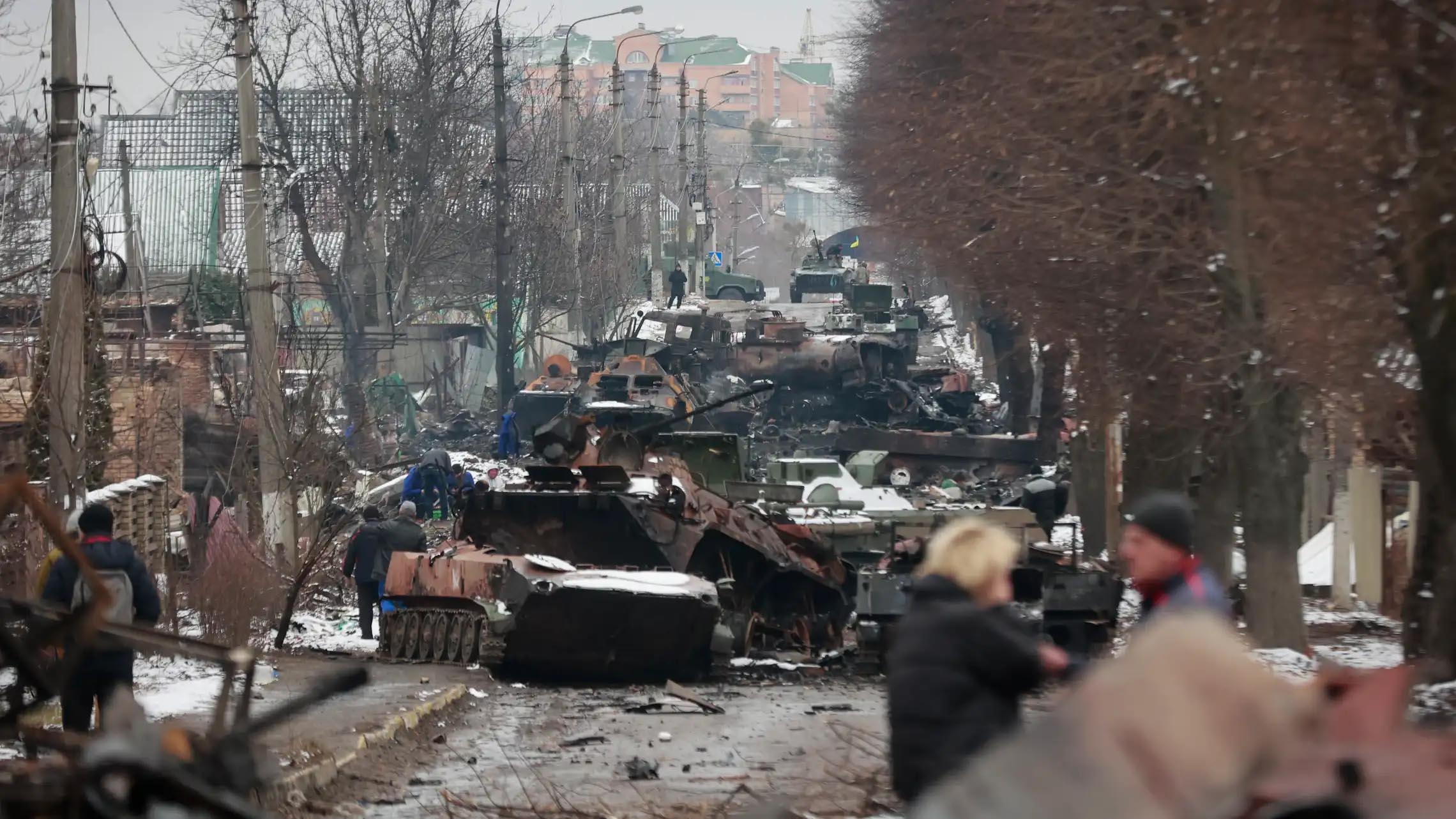
Russia’s Invasion of Ukraine

A Russian soldier was heard saying on a radio call saying, “We don’t know who to shoot, they all look like us.” Reports ABC News

Blocked road

Day 1 (24 February 2022)

Day 2 (25 February 2022)

Russian forces enter outskirts of Kyiv and – according to the US – launch amphibious assault from Sea of Azov

Day 3 (26 February 2022)

Western intelligence reports indicated that the Russian advance had been slowed, if only for the moment. The Russian priority remained the capture of Kyiv.

Day 4 (27 February 2022)

  • EU’s Borrell (High Representative of the European Union for Foreign Affairs and Security Policy) pledges to work with allies to ‘cripple the Russian financial market’ following other sanctions announced earlier in the day
  • EU moves follow Putin’s order for nuclear forces to be on alert in response to ‘unfriendly economic actions against our country’

Day 5 (28 February 2022)

The bombardment of a residential area of Kharkiv signaled a potentially intensifying turn on the fifth day of Russia’s invasion, which has sparked a nationwide resistance in Ukraine, forced half a million refugees to flee the country and left Moscow increasingly isolated from the world. President Volodymyr Zelensky of Ukraine called for an international tribunal to investigate Russia for war crimes. Delegations from Kyiv and Moscow failed to make progress in Belarus.

Day 6 (1 March 2022)

The President of the United States says, “The United States of America stands with the Ukrainian people.” However, we won’t stand too close. You do the fighting and we will watch. How brave!

When will the United States Stand Up to Tyrants?

Russian President is a dictator. His parliament is a rubber stamp. There is no freedom of press or thought in Russia. China’s premier is another dictator who also denies human rights.

Russian Pres. Putin has no plans to call off his invasion of Ukraine, a U.S. official warned ABC News on Thursday. It is obvious to me that his objective is more than Ukraine. His fear is that there are free democracies immediately adjoining his country and that success of those nations demonstrates to Russians that democracy works.

The European Union has added Russian President Vladimir Putin and Foreign Minister Sergey Lavrov to its sanction list, High Representative of the Union for Foreign Affairs and Security Policy Josep Borrell said in a press conference on Friday following the EU Foreign Affairs Council in Brussels. Wow! That will really upset Putin and Lavrov and make Russia backoff.

For the first time ever, the NATO Response Force has been activated as a defensive measure in response to Russia’s ongoing invasion of Ukraine. The activation of the response troops does not mean that any US or NATO troops will go into Ukraine, which is not a member of the alliance. US President Joe Biden has been clear that US troops are deploying to eastern Europe to help bolster NATO countries nervous about Russia’s aggressive actions, but they will not be fighting in Ukraine.

This entire scenario is proving that there is no NATO that will stand up to Putin. As Latvia, Lithuania, and Estonia are targeted which NATO nations will come to their aid when Putin threatens the use of nuclear weapons?

Many of our less than courageous members of the U. S. congress will be saying that war in Europe is their problem not ours.

When all the rest are under Russian domination what then?

First they came …” is the poetic form of a 1946 post-war confessional prose by the German Lutheran pastor Martin Niemöller (1892–1984).
It is about the cowardice of
German intellectuals and
certain clergy—including, by his own admission, Niemöller himself—following
the Nazis‘ rise to
power
 and subsequent incremental purging of their chosen
targets, group after group.

First they came for the socialists, and I did not speak out—
     Because I was not a socialist.

Then they came for the trade unionists, and I did not speak out—
     Because I was not a trade unionist.

Then they came for the Jews, and I did not speak out—
     Because I was not a Jew.

Then they came for me—and there was no one left to speak for me.

Are We heading towards World War Three?

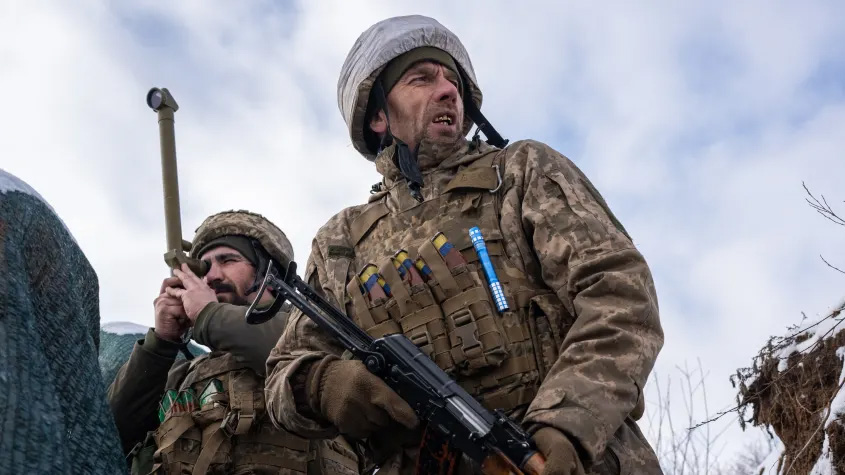
Ukrainian soldiers patrol on the frontline in Zolote, Ukraine

An unprovoked attack on Ukraine by Russia and no country is sending in any of its forces to provide aid. NATO nations are sending military arms but no army to help defend them. If Russian president Vladimir Putin can subdue Ukraine without any interference from other nations he will be motivated to send his troops into other countries. When has sanctions ever changed a country’s behavior?

Hitler was determined to gain control of Poland in 1939. A UK-Poland mutual defense treaty did not deter Hitler. Putin is not likely to be deterred by NATO.

This isn’t 1939 nor December 7, 1941 but we appear to be on a path to a very serious war that could easily involve the entire world.

Intimidation

Cambridge Dictionary definition. The action of frightening or threatening someone, usually in order to persuade them to do something that you want them to do.

The United States has a definition in the US code (18 USC § 1514(d)(1).  It is long and complicated but does provide a legal situations.

This brings us to Russian President Vladimir Putin who is probably a great fan of “Godfather.”  He wants control of Ukraine.  We don’t know all of his demands.  His threat is obvious.   

Putin denies there is any plan to invade Ukraine.  The war games Russia is conducting near the Ukrainian border is the threat and he know that.  Will there be a Neville Chamberlin moment as we watch from afar?

It’s too soon to say but Putin knows that Hitler did have his way in annexing Sudetenland (a major part of the former Czechoslovakia). It was appeasement instituted in the hope of avoiding war, appeasement was the name given to Britain’s policy in the 1930s of allowing Hitler to expand German territory unchecked.  Obviously it did note work.  Hitler took took British surrender to Hitler’s demand to annex and expanded his control over all of Europe.

The similarities should not be ignored.

Five foreign policy challenges that will test President Joe Biden

The United States is now confronted with five challenges.  Any one of them or possibly all of them could take this country into war. Most Americans do not want this country to enter any new wars. For President Joe Biden the question is how can the United States negotiate peaceful resolutions without wars?

  1. Ukraine was part of the Russian empire and the Soviet Union.  Now as an independent democratic country it is threatened by Russia.  Will the United States and NATO come to Ukraine’s aid?  Will the United States honor its commitment under the NATO treaty?  Will sanctions of any kind discourage an  invasion or a “minor incursion?” My guess it will be based on what is said to Russia behind closed doors.
  2. Taiwan is the democratic island that China claims is part of their nation has been nurtured by the United States.  The U.S. has implied that it would come to Taiwan’s defense if China were to invade.
  3. North Korea on Tuesday test-fired two suspected cruise missiles in its fifth round of weapons launches this month. On January 11 North Korea fired a suspected ballistic missile into the sea.  It is obvious that the country’s leader, Kim Jong-Un, wants to build nuclear missiles that can reach the United States. Cruise missiles are designed to deliver a large warhead over long distances with high precision. Modern cruise missiles are capable of travelling at supersonic, high subsonic or hypersonic speeds, are self-navigating, and are able to fly on a non-ballistic, extremely low-altitude trajectory.  Negotiations conducted by former President Donald Trump while hopeful were a failure.
  4. With the attack on United Arab Emirates (UAE) there is a growing war between Iran and Saudi Arabia.  The United States has a long history of friendship with Saudi Arabia.  If Iran were to attack Saudi Arabia would the United States be obligated to send in troops to protect that kingdom?
  5. The battle between Israel and terrorist Hamas and Hezbollah has been going on since Israel was founded in 1948.  Will the United States come to Israel’s defense if it found itself overwhelmed?
Opinions on TV talk shows by respected experts and the words of government guests provide no clues to answer the question what will motivate the United States to enter a war to help America’s “friends and allies.” Is the United States a paper tiger?

Walking in the Path of UK Prime Minster Neville Chamberlain

Washington Post headline: “Biden says ground troops ‘not on the table’ but Putin would face ‘severe’ economic sanctions for Ukraine invasion”

Vladimir Putin is taking a page from the 1938 invasion of Czechoslovakia.  Adolph Hitler gave a speech in Berlin on 26 September 1938 and declared that the Sudetenland (part of was Czechoslovakia) “the last territorial demand I have to make in Europe”. He also stated that he had “assured” UK Prime Minster Neville Chamberlain “that, and this I repeat here before you, once this issue has been resolved, there will no longer be any further territorial problems for Germany in Europe!” That led to the Munich Agreement and UK Prime Minster Neville Chamberlain’s speech declaring “Peace_for our_time.” World War II began in Europe on September 1, 1939 when Germany invaded Poland. Great Britain and France responded by declaring war on Germany on September 3.

American president Joe Biden said the United States will deter Russia if it invades Ukraine using sanctions. What possible sanctions can stop Russia from invading and taking control of Ukraine? The sanctions imposed by the United States in 2014 had no effect on Russia’s occupation of Crimea.

Have sanctions deterred Iran in its efforts to develop nuclear weapons?  For that matter has North Korea changed its behavior?  And of course there is Cuba that has endured US trade and travel embargo for more than five decades and none of Washington’s policy objectives have been achieved.

It appears the President of the United States is walking in the path of Chamberlain.

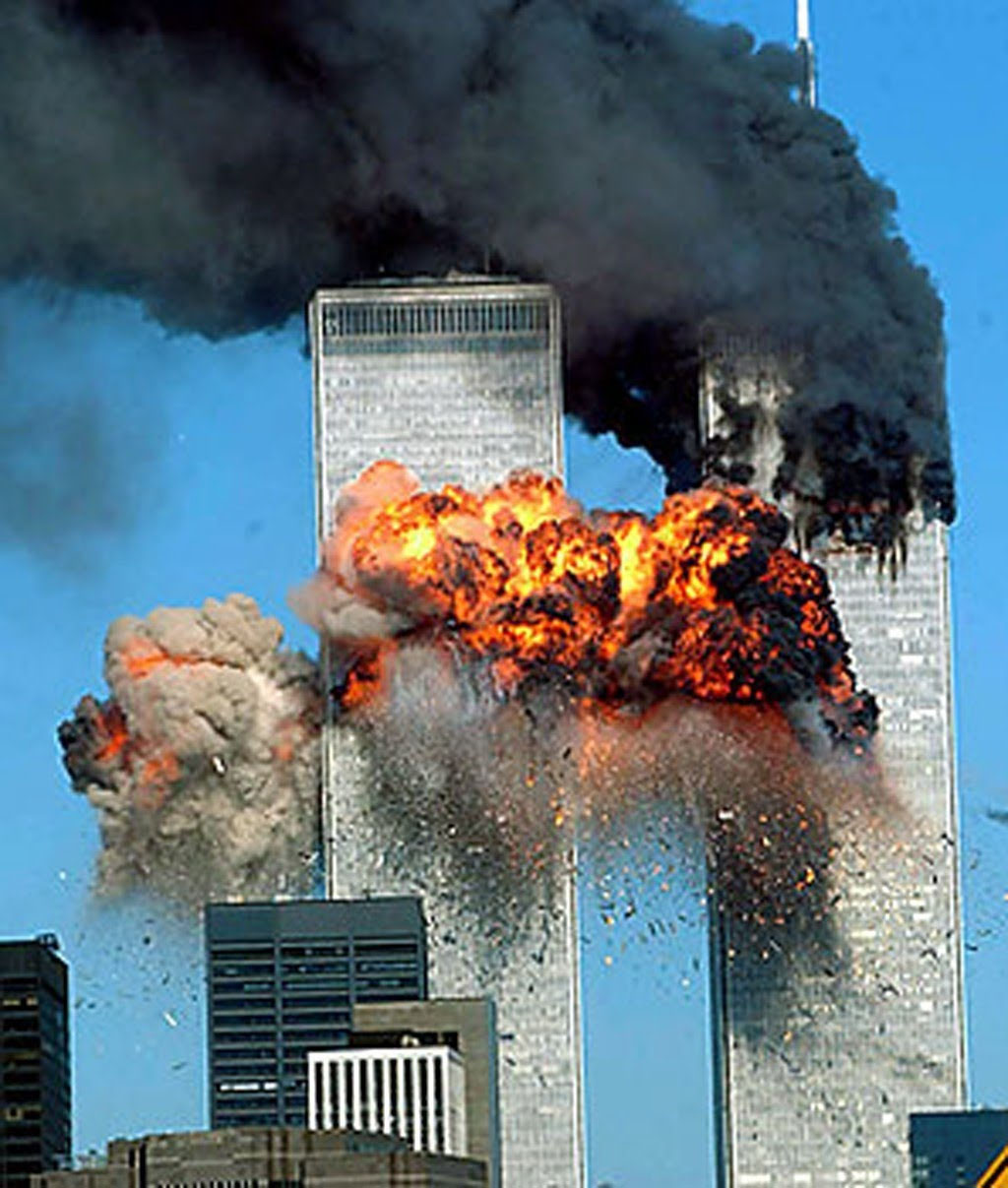
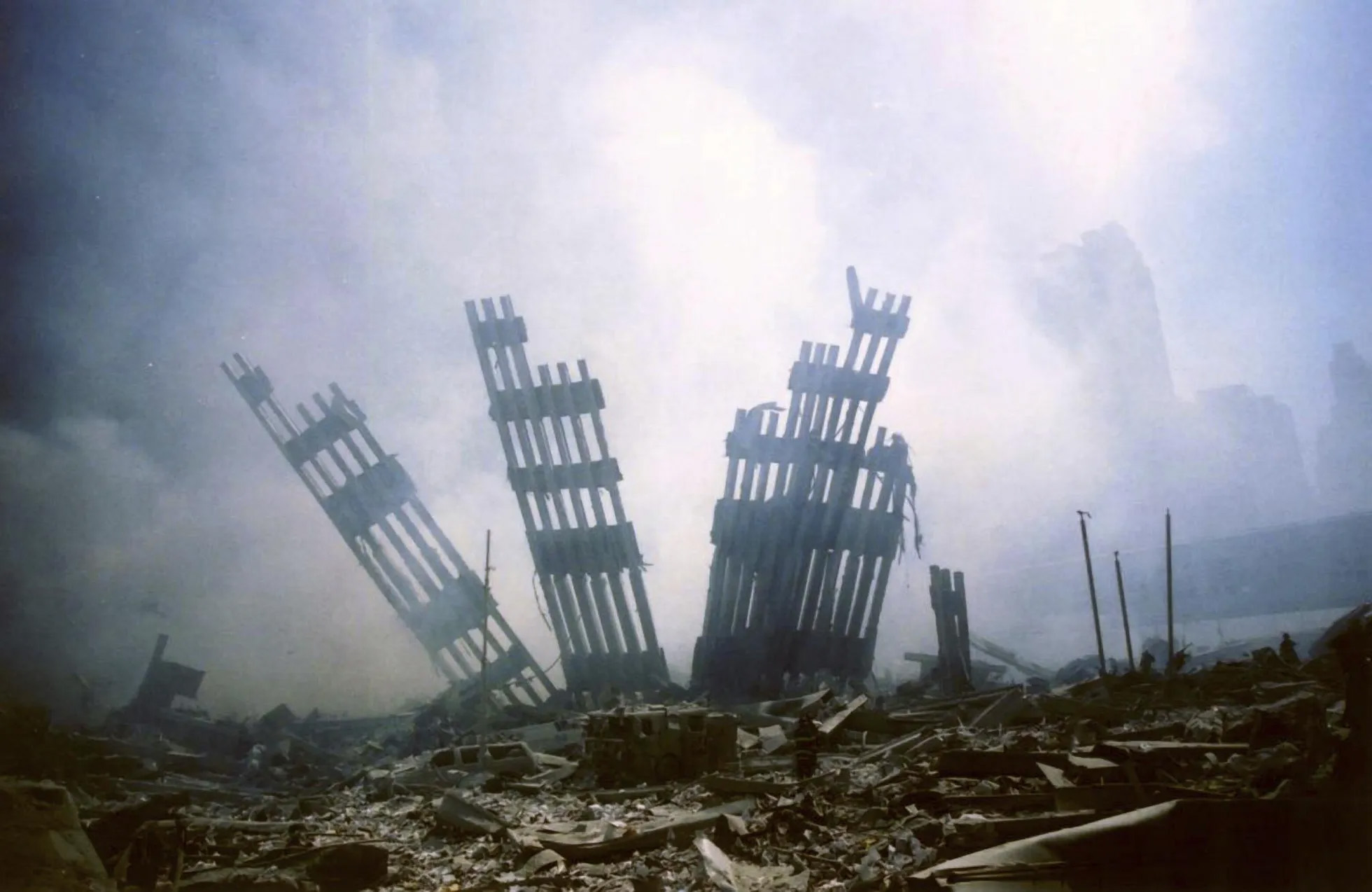
Twentieth Anniversary of 9-11

Ten years ago on the anniversary of 9-11 I wrote:

Television, news magazines, and newspapers have beaten us over the head with non-stop discussions, ceremonies and interviews.  It has been ad nauseam repetition.  It’s as if no one is aware of what had happened and the media needs to keep retelling the same thing over and over.    

Unfortunately the cost to all Americans is great.  We have spent lives and money chasing an enemy that will not be easily stopped.  Our government has done a mediocre job of preventing another attack.  Travel to NYC, San Francisco, Los Angeles or any other city and you will see that ports are unprotected, bridges poorly guarded, and large entertainment media facilities unprepared for another attack.  Just the other day, I read in the Los Angeles Times that fire and police agencies still do not communicate on the same air frequencies.

Overseas, rather than chasing al-Qaeda we have focused on nation building in Iraq and Afghanistan.  Arab terrorists must be happy to watch us waste our resources in battles we cannot win.

There seems to be a light in the tunnel as conservative Republicans have questioned our purpose in other nations.  It appears we are starting to learn we cannot steer world affairs.  There is hope!

What changed in the past ten years? Nothing.

President Biden finally ended a war that the past two presidents tried to end but politics got in the way.  Sadly our military and embassy led our government to believe Afghanistan was being built into a western style democracy that could survive and stand on its own.

Have we learned anything? I doubt it!