Top 25 U.S. Cities by Household Income

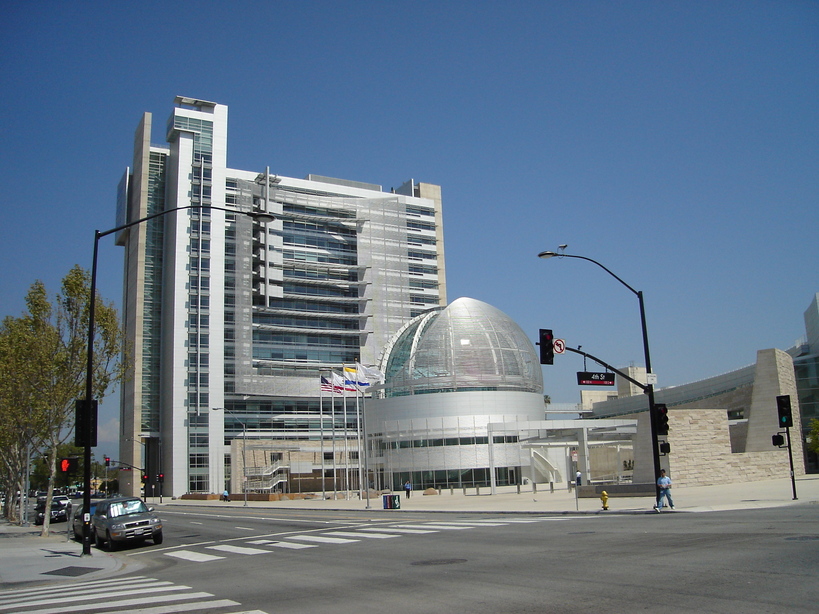
The following data was extracted from a MarketWatch news item and modified to indicate city population.  Detroit at the bottom of the list was no surprise but Philadelphia and Memphis coming in at 23rd and 24th place is a surprise.  The vlaue of this information is the indicator of where you don’t want to live.  You might not be able to live in San Francisco or San Jose but living nearby will provide the benefits that come with a wealthier community such as hopitals, doctors, arts, and entertainment.

I personally know there are lower cost housing opportunities in San Jose as well as Los Angeles.

CITY INCOME 2011 Estimated   Population
(IN $)
1 San Jose 76,593
967,487
2 San Francisco 69,894
812,826
3 District of Columbia 63,124
617,996
4 Seattle 61,037
620,778
5 San Diego 60, 797
1,326,179
6 Charlotte 50, 177
751,087
7 Austin 49,987
820,611
8 New York City 49,461
8,244,910
9 Boston 49,081
625,087
10 Fort Worth 47,399
758,738
11 Denver 47,371
619,968
12 Los Angeles 46,148
3,819,702
13 Jacksonville 44,802
827,908
14 Phoenix 43,960
1,469,471
15 Chicago 43,628
2,707,120
16 Houston 42,877
2,145,146
17 San Antonio 42,613
1,359,758
18 El Paso 40,702
665,568
19 Dallas 40,585
1,223,229
20 Columbus 40,463
797,434
21 Indianapolis 39,015
827,609
22 Baltimore 38,721
619,493
23 Memphis 34,960
652,050
24 Philadelphia 34,207
1,536,471
25 Detroit 25,193
706,585
Source: Census   Bureau

Brisket is not the same as Corned Beef!

If you are not Jewish, I cannot even begin to explain it to you.

This goes back 2 generations, 3 if you are over 50. It also explains why many Jewish men died in their early 60’s with a non-functional cardiovascular system and looked like today’s men at 89.

Before we start, there are some variations in ingredients because of the various types of Jewish taste (Polack, Litvack, Deutch and Gallicianer). Sephardic is for another time.

Just as we Jews have six seasons of the year (winter, spring, summer, autumn, the slack season, and the busy season), we all focus on a main ingredient which, unfortunately and undeservedly, has disappeared from our diet. I’m talking, of course, about SCHMALTZ (chicken fat).


SCHMALTZ has, for centuries, been the prime ingredient in almost every Jewish dish, and I feel it’s time to revive it to its rightful place in our homes. (I have plans to distribute it in a green glass Gucci bottle with a label clearly saying: “low fat, no cholesterol, Newman’s Choice, extra virgin SCHMALTZ.” (It can’t miss!) Then there are grebenes – pieces of chicken skin, deep fried in SCHMALTZ, onions and salt until crispy brown (Jewish bacon). This makes a great appetizer for the next cardiologist’s convention.

There’s also a nice chicken fricassee (stew) using the heart, gorgle (neck) pipick (gizzard – a great delicacy, given to the favorite child), a fleegle (wing) or two, some ayelech (little premature eggs) and other various chicken innards, in a broth of SCHMALTZ, water, paprika, etc. We also have knishes (filled dough) and the eternal question, “Will that be liver, beef or potatoes, or all three?”

Other time-tested favorites are kishkeh, and its poor cousin, helzel (chicken or goose neck). Kishkeh is the gut of the cow, bought by the foot at the Kosher butcher. It is turned inside out, scalded and scraped. One end is sewn up and a mixture of flour, SCHMALTZ, onions, eggs, salt, pepper, etc., is spooned into the open end and squished down until it is full. The other end is sewn and the whole thing is boiled. Often, after boiling, it is browned in the oven so the skin becomes crispy. Yummy!

My personal all-time favorite is watching my Zaida (grandpa) munch on boiled chicken feet.

For our next course we always had chicken soup with pieces of yellow-white, rubbery chicken skin floating in a greasy sea of lokshen (noodles), farfel (broken bits of matzah), tzibbeles (onions), mondlech (soup nuts), kneidlach (dumplings), kasha (groats), kliskelech and marech (marrow bones) . The main course, as I recall, was either boiled chicken, flanken, kackletten, hockfleish (chopped meat), and sometimes rib steaks, which were served either well done, burned or cremated. Occasionally we had barbecued liver done to a burned and hardened perfection in our own coal furnace.

Since we couldn’t have milk with our meat meals, beverages consisted of cheap soda (Kik, Dominion Dry, seltzer in the spritz bottles). In Philadelphia it was usually Franks Black Cherry Wishniak (vishnik).

Growing up Jewish

If you are Jewish, and grew up in city with a large Jewish population, the following will invoke heartfelt memories.

The Yiddish word for today is PULKES (PUHL-kees). Translation: THIGHS.
Please note: this word has been traced back to the language of one of the original Tribes of Israel, the Cellulites.

The only good advice that your Jewish mother gave you was: “Go! You might meet somebody!”

You grew up thinking it was normal for someone to shout “Are you okay?” through the bathroom door when you were in there longer than 3 minutes.

Your family dog responded to commands in Yiddish.

Every Saturday morning your father went to the neighbourhood deli (called an “appetitizing store”) for whitefish salad, whitefish “chubs”, lox (nova if you were rich!), herring, corned beef, roast beef, cole slaw, potato salad, a 1/2-dozen huge barrel pickles which you reached into the brine for, a dozen assorted bagels, cream cheese and rye bread (sliced while he waited). All of which would be strictly off-limits until Sunday morning.

Every Sunday afternoon was spent visiting your grandparents and/or other relatives.

You experienced the phenomenon of 50 people fitting into a 10-foot-wide dining room hitting each other with plastic plates trying to get to a deli tray.

You had at least one female relative who penciled on eyebrows which were always asymmetrical.


You thought pasta was stuff used exclusively for Kugel and kasha with bowties.

You were as tall as your grandmother by the age of seven.

You were as tall as your grandfather by age seven and a half.

You never knew anyone whose last name didn’t end in one of 5 standard suffixes (berg, baum, man, stein and witz).

You were surprised to discover that wine doesn’t always taste like cranberry sauce.

You can look at gefilte fish and not turn green.

When your mother smacked you really hard, she continued to make you feel bad for hurting her hand.

You can understand Yiddish but you can’t speak it.

You know how to pronounce numerous Yiddish words and use them
correctly in context, yet you don’t know exactly what they mean.
Kaynahurra.

You’re still angry at your parents for not speaking both Yiddish and English to you when you were a baby.

You have at least one ancestor who is somehow related to your spouse’s ancestor.

You thought speaking loud was normal.

You considered your Bar or Bat Mitzvah a “Get Out of Hebrew School Free” card.

You think eating half a jar of dill pickles is a wholesome snack.

You’re compelled to mention your grandmother’s “steel cannonballs” upon seeing fluffy matzo balls served at restaurants.

You buy 3 shopping bags worth of hot bagels on every trip to Stamford Hill or Edgware and carefully shlep them home like glassware. (Or, if you live near Chigwell, Manchester or another Jewish city hub, you drive 2 or 3 hours just to buy a dozen “real” bagels.)  Western Bagel and Brent’s in the San Fernando Valley. Factor’s  or Canter’s deli in West L.A.

Your mother or grandmother took personal pride when a Jew was noted for some accomplishment (showbiz, medicine, politics, etc.) and was ashamed and embarrassed when a Jew was accused of a crime as if they were relatives.

You thought only non-Jews went to sleep away colleges. Jews went to city schools… unless they had scholarships or made an Ivy League school.

And finally, you knew that Sunday night and the night after any Jewish holiday was designated for Chinese food.

Zei gezunt!!

Original author unknown.

P.S. Corned beef is a salt-cured beef product. In the United States and Canada, corned beef typically comes in two forms, a cut of beef (usually brisket, but sometimes round or silverside) cured or pickled in a seasoned brine, and canned (or ‘tinned,’ in British English) (cooked).  It’s not an exclusively Jewish dish.  As an example Corned beef and Cabbage is an Irish favorite. 

Stay Well, David Bancroft
No Real change in the Unemployment Rate

Try Crunching these numbers!

President Obama received some good news last night.  The unemployment rate has dropped to 7.8%.  As Chris Mathews and others have said repeatedly, no president has been re-elected when the rate was over 8% since FDR.  Market Watch has questioned whether the books have been cooked.  I prefer to believe the data is accurate.  After all, the government could have provided false data over the past year and apparently did not.  How could the unemployment rate decline?  More people stopped looking for jobs than those obtaining new jobs.

The problem is the focus of the data.  The BLS trumpets the unemployment rate rather than the number of unemployed.  It’s only after extensive reading did I learn about another piece of data that tells the real story.  Table A-15 (Alternative measures of labor underutilization) of the BLS monthly report on Line U-6 provides a more accurate reflection of the true unemployment situation.  That line provides “Total unemployed, plus all persons marginally attached to the labor force, plus total employed part time for economic reasons, as a percent of the civilian labor force plus all persons marginally attached to the labor force.”

That number is 14.7% for this past month.  At its peak in December 2010 the percentage had reached 16.6%.

The president is silent on his plans and Mitt Romney has said he will create 12 million jobs in four years.  There are no details on the plans.  No wonder!  No one employs more help without demand.  Lower taxes are wonderful for the pocket book but will that make a difference in hiring?

I don’t think so!

‘The Girl from Ipanema’ turns 50

Remember the words from the song: “Tall and tan and young and lovely…”  The story is that the composer was inspired by the sight of Heloisa “Helo” Pinheiro.  Perhaps she was too in love with the sea.  I remember the couple next door to my parent’s home.   They went water skiing every weekend for years with their children.  She was a tall good looking woman of Scandinavian decent.  Yes a very attractive blond.

They were much younger than my parents.  I grew up and moved away.  One day at a visit I saw Jill.  At the age of 50 her skin looked like leather.

Do you see the similarities in this photo?

Marrying Attractive Young Women

Men who are old but famous and rich can marry anyone they want.

Hilaria Thomas
Hilaria Thomas

The latest is Alec Baldwin.  He is 54 and his new bride is his attractive 28 year old yoga instructor, Hilaria Thomas.

He is not the first star to marry someone half his age or close to that number.  Consider Michael Douglas, age 68.  His wife is Catherine Zeta-Jones, age 42.

This desire to marry attractive younger women is not only those in the entertainment community.  Consider Alan Greenspan born in 1926.  His lovely wife is Andrea Mitchell (American television journalist, anchor, reporter, commentator, for NBC News) born in 1946.

From futurescopes.com

Australian media mogul Rupert Murdoch, born 1931, split from his wife Anna after a marriage of 32 years and three children  together.  Barely seventeen days after his divorce, Murdoch tied the knot with the Chinese-born Wendy Deng, born 1968, who had been newly appointed as the Vice President of Murdoch’s Star TV network and is almost 38 years his junior.

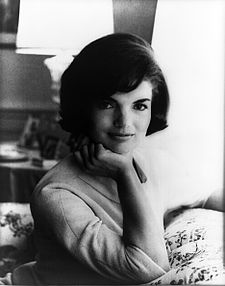
Greek shipping magnate, Aristotle Onassis married Jacqueline Kennedy, widow of U.S. President John F. Kennedy, on October 20, 1968. This was a second marriage for both and at the time Onassis was almost sixty while Jacqueline was thirty-nine.

My thing is attractive young red-heads.  However, limited funds and loving my wife limits my options. My wife knows this but she will be dark brown until the day she dies.  It’s worth her visit to the hair dresser every six weeks.

Being Green

Checking out at the store, the young cashier suggested to the older woman, that she should bring her own grocery bags because plastic bags weren’t good for the environment.

The woman apologized and explained, “We didn’t have this green thing back in my earlier days.”

The young clerk responded, “That’s our problem today. Your generation did not care enough to save our environment for future generations.”
She was right — our generation didn’t have the green thing in its day.

Back then, we returned milk bottles, soda bottles and beer bottles to the store. The store sent them back to the plant to be washed and sterilized and refilled, so it could use the same bottles over and over. So they really were recycled.

But we didn’t have the green thing back in our day.

Grocery stores bagged our groceries in brown paper bags, that we reused for numerous things, most memorable besides household garbage bags, was the use of brown paper bags as book covers for our schoolbooks. This was to ensure that public property, (the books provided for our use by the school) was not defaced by our scribblings. Then we were able to personalize our books on the brown paper bags.

But too bad we didn’t do the green thing back then.

We walked up stairs, because we didn’t have an escalator in every store and office building. We walked to the grocery store and didn’t climb into a 300-horsepower machine every time we had to go two blocks.

But she was right. We didn’t have the green thing in our day.

Back then, we washed the baby’s diapers because we didn’t have the throwaway kind. We dried clothes on a line, not in an energy-gobbling machine burning up 220 volts — wind and solar power really did dry our clothes back in our early days. Kids got hand-me-down clothes from their brothers or sisters, not always brand-new clothing.

But that young lady is right; we didn’t have the green thing back in our day.


Back then, we had one TV, or radio, in the house — not a TV in every room. And the TV had a small screen the size of a handkerchief (remember them?), not a screen the size of the state of Montana . In the kitchen, we blended and stirred by hand because we didn’t have electric machines to do everything for us. When we packaged a fragile item to send in the mail, we used wadded up old newspapers to cushion it, not Styrofoam or plastic bubble wrap. Back then, we didn’t fire up an engine and burn gasoline just to cut the lawn. We used a push mower that ran on human power. We exercised by working so we didn’t need to go to a health club to run on treadmills that operate on electricity.

But she’s right; we didn’t have the green thing back then.

We drank from a fountain when we were thirsty instead of using a cup or a plastic bottle every time we had a drink of water. We refilled writing pens with ink instead of buying a new pen, and we replaced the razor blades in a razor instead of throwing away the whole razor just because the blade got dull.

But we didn’t have the green thing back then.

Back then, people took the streetcar or a bus and kids rode their bikes to school or walked instead of turning their moms into a 24-hour taxi service. We had one electrical outlet in a room, not an entire bank of sockets to power a dozen appliances. And we didn’t need a computerized gadget to receive a signal beamed from satellites 23,000 miles out in space in order to find the nearest burger joint.

But isn’t it sad the current generation laments how wasteful we old folks were just because we didn’t have the green thing back then?

Have you ever felt like doing this? I have.

You know how irritating mobile phone users are when they fail to exercise discretion and think the world needs to know their business? When you have enjoyed as much as you can stand you can now get you own back!!!
Enjoy!!!

After a busy day he settled down in his train from Waterloo for a nap as far as his destination at Winchester when the chap sitting near him hauled out his mobile and started up:- “Hi darling it’s Peter, I’m on the train – yes, I know it’s the 6.30 not the 4.30 but I had a long meeting – no, not with that floozie from the typing pool, with the boss – no darling you’re the only one in my life – yes, I’m sure, cross my heart” etc., etc. This was still going on at Wimbledon, when the young woman opposite, driven beyond endurance, yelled at the top of her voice,
“Hey, Peter, turn that bloody phone off and come back to bed!!”

A Few Good Things Happen and Now a Positive Attitude Takes Over

Weekly initial unemployment claims have dropped to their lowest level since 2008 at 348,000.  Apparently few people had forecast this low number.  Added to that General Motors earnings for 2011 were $7.6 billion. US home construction rises 1.5% in January.  Politicians are now talking about social issues rather than the state of the economy.

All of these positive news items are beginning to affect American behavior.  Instead of gloom there is a renewed positive attitude.

Positive attitude helps to cope more easily with the daily affairs of life. It brings optimism into your life, and makes it easier to avoid worry and negative thinking. If you adopt it as a way of life, it will bring constructive changes into your life, and makes them happier, brighter and more successful. With a positive attitude you see the bright side of life, become optimistic and expect the best to happen. It is certainly a state of mind that is well worth developing and strengthening.

Positive attitude manifests in the following ways:

Positive thinking.

Constructive thinking.

Creative thinking.

Expecting success.

Optimism.

Motivation to accomplish your goals.

Being inspired.

Choosing happiness.

Not giving up.

Looking at failure and problems as blessings in disguise.

Believing in yourself and in your abilities.

Displaying self-esteem and confidence.

Looking for solutions.

Seeing opportunities.

A positive attitude leads to happiness and success and can change your whole life. If you look at the bright side of life, your whole life becomes filled with light. This light affects not only you and the way you look at the world, but also your whole environment and the people around you. If it is strong enough, it becomes contagious.

The benefits of a positive attitude:

Helps achieving goals and attaining success.

Success achieved faster and more easily.

More happiness.

More energy.

Greater inner power and strength.

The ability to inspire and motivate yourself and others.

Fewer difficulties encountered along the way.

The ability to surmount any difficulty.

Life smiles at you.

People respect you.

Negative attitude says: you cannot achieve success.
Positive attitude says: You can achieve success.

If you have been exhibiting a negative attitude and expecting failure and difficulties, it is now the time to change the way you think. It is time to get rid of negative thoughts and behavior and lead a happy and successful life. Why not start today? If you have tried and failed, it only means that you have not tried enough.

Developing a positive attitude that will lead you to happiness and success:

– Choose to be happy.

– Look at the bright side of life.

– Choose to be and stay optimistic.

– Find reasons to smile more often.

– Have faith in yourself and in the Power of the Universe.

– Contemplate upon the futility of negative thinking and worries.

– Associate yourself with happy people.

– Read inspiring stories.

– Read inspiring quotes.

– Repeat affirmations that inspire and motivate you.

– Visualize only what you want to happen.

– Learn to master your thoughts.

– Learn concentration and meditation.