Arsenic, Lead Found in Popular Protein Supplements

This article is on the current Consumer Reports web site.  After an expose on Frontline a few years ago we stopped taking all food supplements except Vitamin C.

Whether for weight loss, muscle building, or simply as a convenient quick meal on the go, many Americans turn to protein powders and drinks.

But a new study shows that many of the top-selling powders and drinks may contain concerning levels of heavy metals such as arsenic, cadmium, mercury, and lead, and toxins like bisphenol A (BPA), a chemical found in some plastic containers and food can liners.

These substances have been linked to cancer, brain damage, and reproductive issues.

The new study from the Clean Label Project, (a nonprofit organization that examines labeling safety issues) found that virtually all of the 134 products tested contained detectable levels of at least one heavy metal and 55 percent tested positive for BPA.

“These toxins accumulate in your body and can stay there for years,” says Tunde Akinleye, a test program leader in Consumer Reports’ Food Safety Division. “Frequent consumption of foods that contain them can have adverse health effects over the long run.”

This is not the first research that has shown high contaminant levels in such products: A 2010 Consumer Reports’ study detected arsenic, cadmium, lead and/or mercury in samples of all the 15 powders tested.

What the Study Showed

The Clean Label Project measured the levels of heavy metals, BPA, pesticides, and other contaminants (more than 150 in all) in protein powders and drinks.

The contaminant levels were measured in a single serving of the products. Those amounts varied, so the lab used the serving size listed on each product’s label (e.g., “two rounded scoops”). However, Jaclyn Bowen, executive director of Clean Label Project, points out that many consumers use protein products multiple times per day.

Overall, the products made from sources of plant protein such as soy or hemp fared worse than those made from whey (milk) or egg, containing on average twice as much lead and measurably higher amounts of other contaminants.

Plant-based proteins may have higher contamination levels because the plants are especially prone to absorbing heavy metals from soil, says Sean Callan, Ph.D., a neuroscientist and director of operations at Ellipse Analytics, the lab that tested the protein products.

Whey and egg proteins may have lower levels of heavy metals because the source of the contamination would likely be the feed given to the animals. Callan suspects the animals’ digestive systems diffuse some of the toxins.

Also important: Buying a product with an “organic” label did not reduce the chances of getting a less-contaminated product. In fact, organic protein supplements had higher levels of heavy metals, on average, than nonorganic.

“That probably has more to do with these products being plant-based than being organic,” says Callan. 

The Worst and the Best

In its analysis, the Clean Label Project assigned each product a score for four individual elements: heavy metals, pesticides, contaminants like BPA, and nutrition. Then it calculated an overall score. The heavy metal levels accounted for 60 percent of the overall score because their effects have been shown in studies to pose greater harm to health.

The five products that received the poorest overall scores in this test were:

·        Garden of Life Organic Shake & Meal Replacement Chocolate Cacao Raw Organic Meal

·        Nature’s Best Isopure Creamy Vanilla Zero Carb

·        Quest Chocolate Milkshake Protein Powder

·        360Cut Performance Supplements 360PRO Whey Chocolate Silk Premium Whey Protein

·        Vega Sport Plant-Based Vanilla Performance Protein

Consumer Reports asked each of the five to comment on the study. Only Garden of Life responded and it declined to comment.

The five products that got the best overall scores were:

·        Pure Protein Vanilla Cream 100% Whey

·        Performix Pro Whey Sabor Vanilla Protein with Amino Beads

·        BodyFortress Super Advanced Vanilla 100% Whey Protein

·        BioChem Vanilla 100% Whey Protein

·        Puori PW1 Vanilla Pure Whey Protein

The fact that the higher-scoring products are made with whey makes sense, in keeping with Callan’s theories on plant-based vs. whey-based proteins and their differing absorption of toxins.

However, the vanilla aspect is more curious, and possibly coincidental. Bowen has one possible theory, though: The cacao plants used to make the chocolate in some flavored supplements are susceptible to absorbing heavy metals.

CR’s Akinleye says it would be very difficult to create a system where protein powders contained absolutely no trace of any heavy metals.  Given this goal, he says, you have to measure how each product stacks up against the others.
Canadian Health Care

This is real personal for me. I have a daughter with a very serious gastro intestinal disease.  She has a Blue Cross independent medical plan that currently costs about $5,000 per year.  The deductible is $4,000 annually.  Until that deductible is paid Blue Cross pays about 50% of each doctor’s visit.  The plan DOES NOT cover all medications.  Consequently the medication for her disease IS NOT covered despite a doctors presentation explaining her need for a special medicine that has no generic substitute.  The consequence is that the medication is bought from a Canadian pharmacy at 1/3 the cost in the United States.  The cost of the medication is $250 for a 90 day supply from Canada or a 30 day supply in the USA.

GOP Healthcare

Los Angeles Times Editorial

By The Times Editorial Board

May 4, 2017

The GOP insists its healthcare bill will protect people with    pre-existing conditions. It won’t.

About half of American adults under age 65 have at least one pre-existing medical condition, by the federal government’s count. According to a Kaiser Family Foundation analysis, more than half of those adults could have been denied coverage by health insurers in the days before Obamacare if they weren’t included in a large employer’s plan.

That’s why one of the most popular and humane features of the 2010 Affordable Care Act is the provision barring insurers from discriminating against Americans with pre-existing conditions. This provision not only saved many Americans from being bankrupted by medical bills, it relieved the anxiety that trapped people in jobs they would not leave for fear of losing coverage.

But now, House Republicans are proposing to let states punch a gaping hole in that safeguard as part of a bill to partially repeal and replace the ACA.

GOP leaders insist that their bill would continue to bar insurers from denying coverage to anyone, and that it would prevent them from jacking up the premiums for anyone who’d maintained continuous coverage even in states that waived the ACA’s protections for those with pre-existing conditions. Consumers using those states’ insurance exchanges who did not maintain coverage would be eligible for subsidized state “high risk pools,” where high premiums would be offset by billions of dollars in federal aid.

But far more people would be likely to face huge premium increases than the bill’s supporters acknowledge. Millions of people enter and leave the state insurance exchanges annually — the turnover at Covered California is 40% to 50% — which means there may be millions of people going briefly uninsured and then facing enormous premium surcharges, if enough states dumped the ACA’s protection for pre-existing conditions. According to one estimate, those surcharges could range from $4,000 per year for asthmatics to $17,000 for women seeking maternity coverage to $143,000 for those with a history of metastatic cancer.

The bill’s sponsors ponied up more aid Wednesday in an effort to make insurance affordable for all those Americans, but the measure’s funding would fall far short of the amount needed to do so — almost $200 billion short over 10 years, even if only 5% of those in the state exchanges fell into the high risk pool, the Center for American Progress has projected. No surprise there — exorbitant costs sunk the high-risk pools that states used before the ACA, even though they excluded many applicants and denied coverage for some costly conditions.

This is the history that we left behind when the ACA was adopted, and rightly so. It would be foolish to go back now.

No Mr. Trump you are not all powerful. This is a democratic republic.

   The failure of Trumpcare was good news for some.  Doctors didn’t like it.  Nurses didn’t like it.  The AARP was one of the biggest critics.

If nothing else Mr. Trump has learned that being president of the United States is nothing like owning your own company.  You cannot make demands of the people and expect they will follow your orders merely because you are president.  As the owner of your own company you can give directions to your employees and know they will be carried out.

So promising to repeal and replace Obamacare was a winning promise on the campaign trail.  As president Trump has learned that making promises is easy but fulfilling them takes another set of capabilities.  Donald Trump has not yet learned that he is confronted with a set of circumstances that are entirely different than those he faced as the head of his company.

It’s not just his health care proposal that did not pass the House of Representatives that has been a challenge.  He has seen his immigration executive orders stopped by the courts, faced questions about his proposal to defund domestic programs in order to raise defense spending, and learned that foreign affairs are far more complicated than he imagined.

It seems that when things don’t go his way he finds someone else to blame.  The Democrats are to blame for the health care defeat. “So called judges” are to blame for the hold on his immigration ban.  There are leakers who are to blame for information going to the press who only deal in fake news.

As Charles Krauthammer pointed out in his latest column the country’s checks and balances really do work.  This is a feature of government that Donald Trump either does not understand or hopes will go away.  It won’t go away.

Mr. Krauthammer listed these checks on the usurping of power.

1.     The courts.

2.     The states.

3.     Congress.

4.    The media.

Affordable Health Care is an Oxymoron

The words “Affordable Health Care” are a contradiction.  By its very nature health care is unaffordable.  That is the reason so many countries have embraced universal health care as a national responsibility. 

The rhetorical term oxymoron, made up of two Greek words meaning “sharp” and “dull,” is itself oxymoronic.

As you probably remember from school, an oxymoron is a compressed paradox: a figure of speech in which seemingly contradictory terms appear side by side. British writer Thomas Gibbons characterized the figure as “sense in the masquerade of folly.”  This explanation comes from http://grammar.about.com/od/rhetoricstyle/a/100-Awfully-Good-Examples-Of-Oxymorons.htm.

In my opinion the most outrageous oxymoron statement was “Peace for our time.”  It was said by  Neville Chamberlain on September 30, 1938.

My good friends, for the second time in our history, a British Prime Minister has returned from Germany bringing peace with honor. I believe it is “peace for our time.” Go home and get a nice quiet sleep.

On September 3, 1939 in response to Hitler’s invasion of Poland, Britain and France, both allies of the overrun nation declared war on Germany.


While health care is hardly in the same category as a war, the Affordable Health Care Act is not affordable.

Obamacare rates are going way up. The latest estimate from the federal government is that the average midlevel Obamacare plan, the most popular choice, will cost about 22 percent more in 2017 than it did in 2016.  This is based on data from 39 states where people sign up through the HealthCare.gov website and some preliminary data from four other states and the District of Columbia.

The health care industry is a “for profit” system that hides under the IRS category of “non-profit” but pays its management high rewards.  Kaiser Permanente CEO Bernard J. Tyson  earned $2.3 million in salary and other compensation in 2010, according to Kaiser’s federal tax filing.

For profit companies Aetna CEO Mark Bertolini and Cigna CEO David Cordani both saw their total pay surge to $17.3 million in 2015 after earning $15 million and $14.5 million, respectively, in 2014.

Over the past six months, Mylan, which is one of the world’s largest purveyors of generic medicines, raised prices more than 20 percent on two dozen products. And Mylan also boosted prices by more that 100 percent on seven other products, according to Wells Fargo analyst David Maris, who called some of the price hikes “exceptionally large.”

So where is the affordability?  The idea of controlled costs is a myth.  There are no laws limiting the profits that hospitals earn, pharmaceutical companies earn, or insurance companies earn.

For reasons that evade me the GOP’s war on Obamacare offers no reasonable alternative.  Of course if their intent is to protect health care profits by returning health care to the way it was before Obamacare was enacted, they are on the right path.

Universal Health Care is the Solution to the High Cost of Medical Care

Obamacare premiums are set to skyrocket an average of 22% for the benchmark silver plan in 2017, according to a government report released Monday.

Health care insurance is too expensive.

The stated goals of health care reform in 2009 (Obamacare) in the USA were

  1. lower costs
  2. cover all Americans
  3. drive quality
  4. and be paid for (without impacting the federal budget)

Premiums for Californians’ Obamacare health coverage will rise by an average of 13.2% next year, according to the Los Angeles Times, more than three times the increase of the last two years. Premiums in the insurance program rose just 4% in 2016, after rising 4.2% in 2015 – the first year that exchange officials negotiated with insurers. In Arizona, the benchmark plan’s average premium will increase 116% in 2017.

An analysis by the nonpartisan Kaiser Family Foundation of 14 metro areas that have already announced their 2017 premiums found an average jump of 11%. The changes ranged from a decrease of 14% in Providence, R.I., to an increase of 26% in Portland, Oregon.

Ouch! What happened to objective 1 – lower costs?

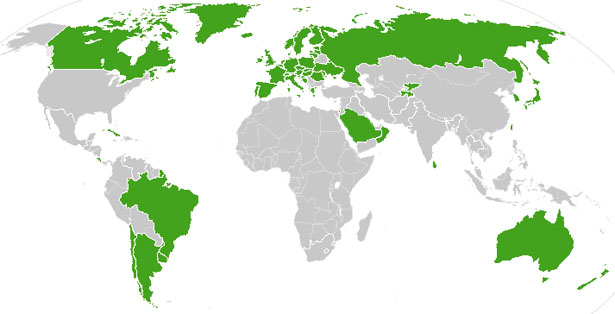
Opponents cry “socialized medicine” as if that means the end of the world. Look at the map below and you will see all of the countries (in green) that are in collapse thanks to universal health care where there are no for profit insurance companies. Although you are free to buy supplemental insurance in many of those countries.

Is there another solution?

universal-health-care-countries

Why We Need Universal Health Care

Health care insurance is too expensive.

The stated goals of health care reform in 2009 (Obamacare) in the USA were

  1. lower costs
  2. cover all Americans
  3. drive quality
  4. and be paid for (without impacting the federal budget)

Premiums for Californians’ Obamacare health coverage will rise by an average of 13.2% next year, according to the Los Angeles Times, more than three times the increase of the last two years. Premiums in the insurance program rose just 4% in 2016, after rising 4.2% in 2015 – the first year that exchange officials negotiated with insurers.

An analysis by the nonpartisan Kaiser Family Foundation of 14 metro areas that have already announced their 2017 premiums found an average jump of 11%. The changes ranged from a decrease of 14% in Providence, R.I., to an increase of 26% in Portland, Oregon.

Ouch! What happened to objective 1 – lower costs?

While Obama Care has provided insurance coverage to 11.7 million people there are still 12.9 million people without any coverage as reported in a Gallup Poll. In other words about 4% of the population is uninsured.

 Obama’s intentions were good but his goal have not been met. Single payer health care like Medicare would cover everyone without exception. That would put for profit insurance companies out of business. Putting companies out of business is the stumbling block to genuine health care reform.

Despite Senator Bernie Sanders this is not likely to happen in the U.S. A. that considers free enterprise one of its basic tenants.

What Price Will You Pay to See?

Geordi La Forge, Star Trek Commander

A Science Fiction Idea is Becoming Reality

Lieutenant Commander Geordi La Forge was the blind man character in Star Trek: The Next Generation. The story line was that due to a birth defect, he was born blind. He uses technological devices that enables him to see.

If only such a device could exist in the real world.

Now such progress in the real world has actually happened. Innovator Mark Greget has invented a combination of custom software and smart glasses that is designed to restore sight to people with serious vision loss. A camera on the front of the blacked-out glasses acts as eyes. Captured images are projected on the lenses.


NuEyes Glasses

People with significant loss of vision from macular degeneration, glaucoma, and retinitis pigmentosa can benefit from the glasses. The product became available this past April at a cost of $6,000. Called NuEyes they have been making patients “very happy.” Veterans Affairs have been placing orders for the device.

NuEyes Glasses #2

I am Drinking Bottled Water

We started using bottled water immediately after the 1994 Northridge Earthquake. An article in a local newspaper warned that there was a concern about contaminated drinking water in the San Fernando Valley.

To this day we are still buying Arrowhead bottled water in 2½ gallon containers. Friends and acquaintances believe I am wasting money.

Then came the Flint Michigan lead polluted water. There have been articles in newspapers about other towns that may also have lead polluted water. Now Des Moines, Iowa’s water utility is suing to stop nitrate pollution from upstate.

 Nitrogen (it’s part of fertilizer) pollution of waterways is a problem that extends well beyond Iowa. In Lake Erie in 2014, a toxic algae bloom—caused by runoff from farms and septic systems plus warmer temperatures, among other factors—contaminated Toledo’s water supply.

The main line pipes in my neighborhood are over 50 years old and many pipes in my city are almost 100 years old. Many pipes have burst due to corrosion. Still the Los Angeles Department of Water and Power (DWP) insists that the water is safe to drink. They issue semi-annual reports on water quality to reassure the residents.

From WebMD:
Occasionally, your tap water can become contaminated as a result of breaks in the water line, although one of the biggest problems is lead getting into the water from pipes. Even ”lead-free” pipes can contain as much as 8% lead.

The best way to avoid consuming lead from tap water is to only use water from the cold tap for drinking, cooking, and making baby formula and to let the water run for a minute before using it.

This is not reassuring. I will continue using bottled water.

And Then There Were Five

GOP Candidates 2-21-16Jeb Bush finally dropped out of the race for the presidency. It was no loss for the Republicans or the nation. I always thought he looked awkward at the rallies he held. He offered no new ideas that anyone cared about. He was the establishment candidate that was backed by what was reported to be a $100 million super-pac. The very thing that most Americans despise – a group of wealthy contributors who would expect something in return if he was elected.

Donald Trump and Bernie Sanders have one thing in common. They abhor super-pacs. Both of them a drawing the largest crowds at their campaign events. Both of them are scary alternatives to the establishment candidates. Still the pubic seems to love them for their extreme views.

Still I do not believe the GOP race is not over. Marco Rubio is likely to be the new establishment candidate and when John Kasich and Ben Carson drop out his position might easily bring him to at least 50% in the polls.

Sadly if Rubio wins the nomination I will have to support the Democratic candidate. Rubio clearly stated in one of the debates that under no circumstance would he support an abortion even if the mother’s life was at stake. That horrible situation might leave a family with no mother and the loss of someone’s dearly loved wife.

I view Hillary Clinton as someone in the same category as Jeb Bush. A super-pac backed traditionalist who does not care about anyone but herself. She happens to favor abortions to preserve the life of the mother.  Donald Trump’s abortion views are unknown to me and apparently everyone else as he has avoided offering his view on debate stages, town hall forums and other venues.