Cancer Research, Cures, and Making Money

AbigailNabbyAdams Smith (July 14, 1765 – August 15, 1813) was the firstborn of Abigail and John Adams, founding father and second President of the United States.

In 1810, Nabby was diagnosed with breast cancer, followed by a mastectomy in 1811. … The cancer continued to spread throughout her body, and she died, aged 48. That was 200 years ago.

ABCNews.com says that $415 Million is spent annually by Medicare for the treatment of breast cancer.

Total average Medicare spending per patient for initial phase care of breast cancer (2 months prediagnosis–365 days postdiagnosis) was $21,000 (2002 US$) in 2002 (Figure 2).4 Surgery and radiation cost little on a per-patient basis: $5700 and $4500 (2002 US$), respectively, and were used in 91% and 51% of patients, respectively. In contrast, chemotherapy and other inpatient services were used in about 25% of patients, but at a higher per patient cost ($12,800 [2002 US$]). If the data used for this analysis were expanded to include continuing care and end-of-life care, there would be a marked difference in spending patterns. The United States spent an estimated $62,900 to $94,300 per person for end-of-life breast cancer care during 2010 – See more at: http://www.ajmc.com/publications/evidence-based-oncology/2012/2012-2-vol18-n1/the-economics-of-cancer-care-in-the-united-states-how-much-do-we-spend-and-how-can-we-spend-it-better#sthash.BSrLsaip.dpuf.

So millions of dollars are spent treating people with this horrible disease. Billions more are spent on research for a cure. The National Cancer Institute’s (NCI) budget for FY 2013 was approximately $4.8 billion. Overall, NCI’s budget has been relatively flat in recent years. During the period from 2005 through 2013, the NCI budget averaged $4.9 billion per year.

Lots of people making lots of money.   

How dare I suggest this thought? Isn’t cancer cures and cancer research an industry that makes large amounts of money? Lesley Stahl on 60 Minutes discovers the shock and anxiety of a cancer diagnosis can be followed by a second jolt: the astronomical price of cancer drugs.


If you had a cure for just one of those cancers, breast cancer, how many people would need to find another job?  How many companies would be earning less money?

Bleak reality of Alzheimer’s

Bleak reality of Alzheimer’s may be brighter in the future

Caution: If this is too painful for you, do not read anything beyond this sentence.

This was the title of an article appearing in last week’s Los Angeles Daily News. My mother died from Alzheimer’s disease three years ago. I have seen all five stages. Stage five is devastating. Still, you should know what is likely to happen if you or a loved one develops this horrible disease. I am changing my Medical Power of Attorney by adding instructions pertaining to the disease.

DEAR DOCTOR K »
My mother has Alzheimer’s disease. What should I expect in the coming years?

DEAR READER»
It’s impossible to predict exactly how Alzheimer’s disease will affect someone. Symptoms of the disease, and how quickly they progress, can vary widely from person to person. In some people, for reasons we don’t understand; the disease progresses very slowly.

However rapidly Alzheimer’s disease progresses, it generally un-folds in five stages:

• Stage 1. Memory problems begin. The person may misplace valuable objects. Their performance at work or in social situations begins to suffer. They may have more trouble expressing their thoughts.

Personality changes also begin. A person may become withdrawn, apathetic, moody, depressed, irritable or anxious.

• Stage 2. Memory problems are more obvious. It may be difficult for someone with Alzheimer’s to follow conversations. The person may have difficulty recalling current events or even bits of information from their own lives. Depression of-ten becomes prominent. Reasoning and judgment skills are impaired.

• Stage 3. Memory can fluctuate daily or even hourly. People sometimes forget major events in their lives. Often they are unaware of the date or the time of .year. Their conversations may become disjointed and veer off track.

You may see episodes of paranoia or anger. Stressful situations can trigger shouting, cursing or hitting.

At this stage, people with Alzheimer’s can still manage many basic activities of daily living. But they can no longer live independently.

• Stage 4. In this stage, you’ll see dramatic changes. Language skills drop sharply. Memory impairment becomes profound. A person remembers only bits and pieces of his or her past.

People become less withdrawn, but they often develop behavior and emotional problems, including delusions and hallucinations. Sleep disturbances and wandering are also common.

By this stage, the person will likely require help to bathe, toilet, dress and eat.

• Stage 5. This stage has been called “the long goodbye.” There seems to be very little left of the person’s “self.” Motor skills decline until the person can no longer walk, sit up, chew and swallow food, or control bladder and bowel movements. As the brain shuts down, the person becomes unresponsive, lapses into a coma and finally dies.

I am sorry to paint such a bleak picture, but unfortunately today we have no way of preventing or treating this terrible disease. However, there is reason to hope that the picture will become brighter in the future. In the past 20 years, scientists have begun to unravel what goes wrong with the chemistry of the brain in Alzheimer’s. I am cautiously optimistic that this knowledge will lead to true breakthroughs.

But like the pace of the disease itself, the pace of our growing knowledge is hard to predict. It may take decades, but I think medical research will make major advances. I know that gives little comfort to people who must deal with this terrible illness today.

Dr. Komaroff is a physician and professor at Harvard Medical School.
To send questions, go to AskDoctorK.com, or write:
Ask Doctor K, 10 Shattuck St., Second Floor, Boston, MA 02115.

Toluca Lake – Home of Fame and Fun!

Beverly Hills 90210 star, Brian Austin Green, and his wife of Transformers fame, Megan Fox, purchased the Bing Crosby Carriage house in Toluca Lake for $3,350,000 on June 10, 2014.

Bing Crosby's Toluca Lake home #1 Bing Crosby's Toluca Lake home #2

Toluca Lake was the hometown for Crosby’s pal Bob Hope. Toluca Lake is easily ignored as the boulevards in that community do not confirm that this area is the home to many entertainment community favorites including Steve Allen.

Toluca Lake is also famous for Bob’s Big Boy Drive-in. It was a favorite hangout along with the Van Nuys twin when I was a teenager. Remember Cruise nights from the high school football game to Bob’s?

Bob's Big Boy in Toluca Lake

An Incompetent President

I have always voted for the Democratic Party presidential candidate so this commentary was an unpleasant task.

It is not unusual to believe the current president of the United States is incompetent. I cannot recall one that received my appreciation while he held office. Presidents usually receive their lowest approval numbers in the last two or three years of their second term. So perhaps it is not unexpected that I too do not approve of Barack Obama’s presidency.

The difference is that I believe he will be listed as one of America’s worst presidents. The honor for worst, in my opinion, is Jimmy Carter. The reasons Barack Obama #3 be addressed in another column.

President Obama came to office when the country was in economic collapse. It was not his fault. We have the Bush administration to thank for that horror. Banks were on the verge of bankruptcy, many large companies were experiencing rapid declines in sales that were jeopardizing their very existence, unemployment was at 7.2% and falling, home foreclosures were massive, etc.

What did the president do? He proposed the American Recovery and Reinvestment Act, his $800 billion stimulus bill for a $14.57 trillion economy. Was that enough? I don’t think so. Many economists said the stimulus should have been twice his proposal. The money was to be spent on “shovel ready projects.” There just weren’t very many of those projects immediately available. Although the administration claims that law created jobs the reality is the unemployment rate continued dropping through October 2009 to a rate of 10.1%. That rate did not decline to 9.5% until June 2010.

In the meantime the administration pushed his health care law (Affordable Care Act: AKA Obama Care) that has yet to prove its value in any significant way. That was the wrong focus. The introduction of that new program was a disaster. It is his signature program and yet it was not given the attention needed to accomplish a near perfect launch.

In other domestic issues he has been late to the table. Veteran’s Administration, gun regulation, domestic spying, immigration, and massive outsourcing of jobs are the issues that come to mind.

In foreign affairs the president has pulled back from every situation in the world. From drawing a red line in Syria, to a too fast draw down of troops in Iraq the president has not considered the unintended consequences of his decisions. Today Islamic terrorists are threatening Iraq, Syria, and many African nations. Now we are faced with thousands of children entering our country from Central America. He didn’t see the issue of thousands of children entering the country until the situation has become overwhelming? How can that be?

What we have here is a reactive presidency rather than a proactive presidency . The president reacts to situations. CNN and FOX seem to know what is happening before the president. He does not initiate attention to an issue.

Americans want their president to initiate the steps to resolve issues even before the public is aware. This is not a characteristic that can be evaluated until a person is holding the office of POTUS.

Barack Obama was the wrong choice for president. Sadly the Republicans did not offer Americans a good alternative. Perhaps this column should have been titled “America’s Broken Political System.”

Republican Party Stands Opposed to Social Welfare

Social Welfare is the various social services provided by a state for the benefit of its citizens.

In the United States the range of services includes Social Security (a program that guarantees a stipend to all senior citizens), Medicare (a program that provides health care to all senior citizens), minimal support for those unable to earn a living (usually referred to as welfare), and unemployment benefits (for those who lost their jobs through no fault of their own). Those are the primary programs that American residents are entitled to when there is a need.

In every instance those programs have been opposed by the G.O.P. In every instance those programs were instituted when a Democrat held the office of President of the United States.

The current chairman of the House Budget Committee, Republican Congressman Paul Ryan has sustained the Republican view on social welfare programs with the following words copied from his web site.

The current Medicare program attempts to do two things to make sure that all seniors have secure, affordable health insurance that works. First, recognizing that seniors need extra protection when it comes to health coverage, it pools risk among all seniors to ensure that they enjoy secure access to care.

Second, Medicare subsidizes coverage for seniors to ensure that coverage is affordable. Affordability is a critical goal, but the subsidy structure of Medicare is fundamentally broken and drives costs in the wrong direction. The open-ended, blank-check nature of the Medicare subsidy drives health-care inflation at an astonishing pace, threatens the solvency of this critical program, and creates inexcusable levels of waste in the system.

Ryan’s solution:
Beginning in 2024, for those workers born in 1959 or later, Medicare would offer them a choice of private plans competing alongside the traditional fee-for-service option on a new Medicare Exchange. Medicare would provide a premium-support payment either to pay for or to offset the premium of the plan chosen by the senior.

The Medicare Exchange would provide seniors a competitive marketplace in which they could choose a plan the same way members of Congress and federal employees do. Every plan, including the traditional fee-for-service option, would participate in an annual bidding process to determine the federal contribution seniors would receive to purchase coverage. Health-care plans would compete for the right to serve Medicare beneficiaries.

What Ryan calls “the president’s partisan health-care law” is an appointed government board like the FCC, the FDA, the FAA, and dozens of other appointed boards. He favors the unelected bureaucrats in privately owned insurance companies that answer to private enterprise. His view is those government bureaucrats aren’t as reliable to private company bureaucrats.

Ryan goes on to say The President’s partisan health-care law creates an unaccountable board of 15 unelected bureaucrats—the Independent Payment Advisory Board—empowered to cut Medicare in ways that will result in denied care and restricted access for seniors. The bureaucrat imposed cuts threaten critical care for current seniors and fail to strengthen Medicare for future generations.

So is it the blank-check nature of Medicare or 15 unelected bureaucrats that will be threatening current seniors? Ryan has covered both possibilities in his contradictory analysis.

The point is that Republicans are trying their very best to end Medicare, Social Security, and all other social welfare programs. They offer no substitutes. Their obsession with free market principles is the view of the rich who say they have no responsibility for the less well off.

There are many other reasons to oppose Republicans but that will be addressed on another day.

Unsinkable Cruise Ship Industry

Most of us know about the original cruise ship disaster, the “unsinkable ship” struck an iceberg in the North Atlantic on its maiden voyage in 1912 and sank into the icy water, killing more than 1,500 of its 2,200 passengers and crew.  That was the Titanic.  Despite that event cruise ship travel has been a booming business.  Statistics show the annual number of cruise ship passengers exceeds 20 million people.

Here is a list of the worst cruise events.  The latest is a Princess ship with almost 200 ill passengers.

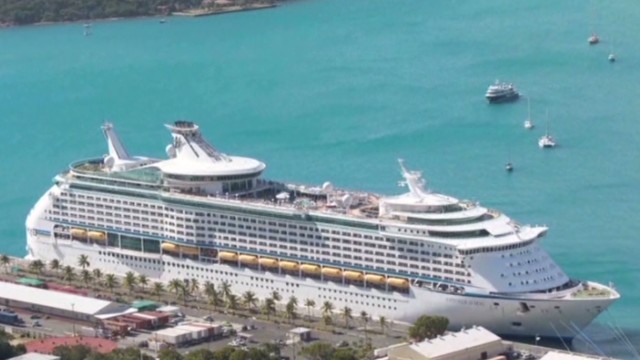
Royal Caribbean Explorer of the SeasRoyal Caribbean Explorer of the Seas: The ill-fated Royal Caribbean cruise ship returned home Wednesday with an ignoble mark. Nearly 700 crew and passengers fell ill. This is the highest number of sick people reported on any cruise ship in two decades, Centers for Disease Control and Prevention data show.

Carnival Triumph: What was supposed to be a four-day jaunt to the Caribbean became an eight-day nightmare when an engine fire left the ship floating in the Gulf of Mexico without power, air-conditioning, or a working septic system.

Carnival Splendor: Carnival’s Splendor suffered a similar fate as Carnival’s Triumph in November 2011. Both were stranded by engine fires, though the Splendor was left floating in the Pacific Ocean. After three days the Splendor and its 4,500 passengers were towed back to the San Diego Bay.

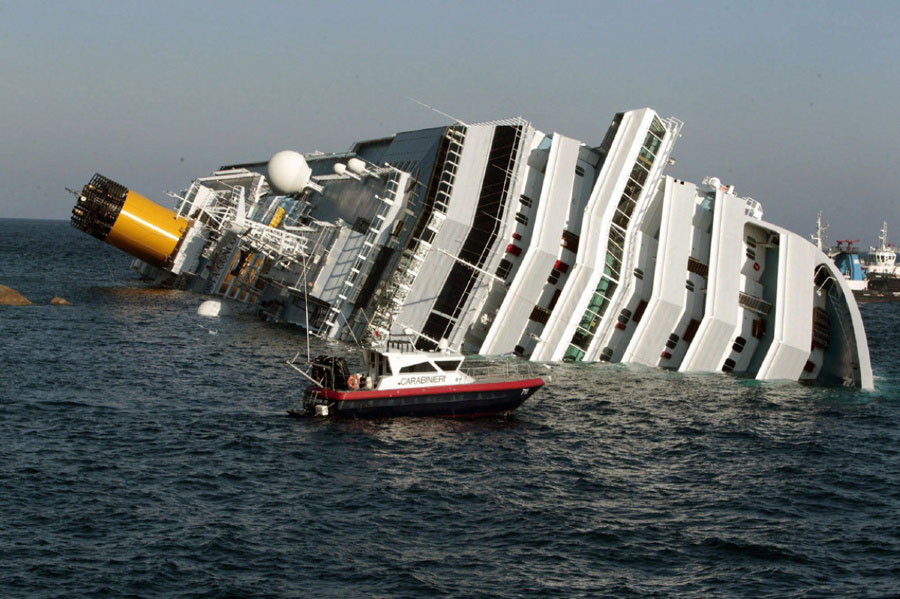
Costa Concordia #1Costa Concordia: This Italian cruise ship ran aground on a reef off the coast of Tuscany, Italy, in January 2012 and toppled onto its side. Of the 4,200 aboard, 32 died and 64 were injured, according to the Associated Press. The half-submerged ship is still being removed.

Seabourn Spirits: In 2005, while 100 miles off the coast of Somalia, pirates in speedboats attacked the small cruise ship. The pirates fired on it with machine guns and rocket-propelled grenades before the captain changed course and got away. None of the ship’s 300 passengers were hurt, and the ship made it to the Seychelles where the rocket damage was repaired.

Celebrity Mercury: More than 400 of the 2,600 passengers and crew onboard the Mercury were stricken ill in 2010 in what the Centers for Disease control deemed a norovirus outbreak. The virus caused widespread vomiting and other gastrointestinal ills on the ship, which left from Charleston, S.C.

Norwegian Dawn: At least 62 cabins were flooded when a 70-foot wave smashed into the Dawn, in 2005. About 300 of the ship’s passengers disembarked early, in Charleston, after the storm had passed.

S.S. Eastland: In 1915, just three years after the Titanic sank, the S.S. Eastland passenger tour ship rolled over while in port in downtown Chicago. More than 840 of its 2,500 passengers died in the accident.

Organic Food – It’s all about the Money

From the USDA National Agricultural Library

“Organic farming entails:
• Use of cover crops, green manures, animal manures and crop rotations to fertilize the soil, maximize biological activity and maintain long-term soil health.
• Use of biological control, crop rotations and other techniques to manage weeds, insects and diseases.
• An emphasis on biodiversity of the agricultural system and the surrounding environment.
• Using rotational grazing and mixed forage pastures for livestock operations and alternative health care for animal wellbeing.
• Reduction of external and off-farm inputs and elimination of synthetic pesticides and fertilizers and other materials, such as hormones and antibiotics.
• A focus on renewable resources, soil and water conservation, and management practices that restore, maintain and enhance ecological balance.”

I am sure you understood the meaning of this double talk. I am especially fascinated with the meaning of “Use of biological control, crop rotations and other techniques to manage weeds, insects and diseases.”

costco-organic-price-list-863x1024

COSTCO has jumped on the band wagon of organic foods. On my last visit they handed me their special offer valid from Jan 13 to Feb 9. It was a catalog of 26 items. All items are marked USDA ORGANIC.

Huffington Post has this headline Organic Food Is Not Healthier Than Conventional Produce: Study.” The report said “Stanford University doctors dug through reams of research to find out – and concluded there’s little evidence that going organic is much healthier, citing only a few differences involving pesticides and antibiotics.”

“Consumers can pay a lot more for some organic products but demand is rising: Organic foods accounted for $31.4 billion sales last year, according to a recent Obama administration report. That’s up from $3.6 billion in 1997.”

No wonder COSTCO has decided to offer organic foods. It’s the money!

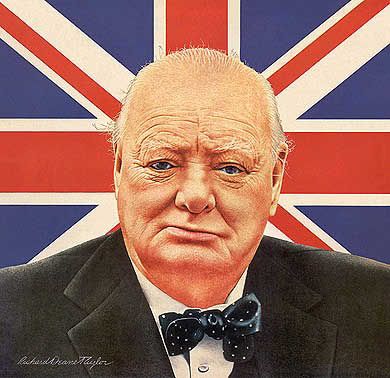
Winston Churchill 1899

“Individual Muslims may show splendid qualities, but the influence of the religion paralyses the social development of those who follow it. No stronger retrograde force exists in the world.”

Winston Churchill - 1899

This is amazing. Even more amazing is that this hasn’t been published long before now.


CHURCHILL ON ISLAM

Unbelievable, but the speech below was written in 1899… (check Wikipedia – The River War).

The attached short speech from Winston Churchill, was delivered by him in 1899 when he was a young soldier and journalist. It probably sets out the current views of many, but expresses in the wonderful Churchillian turn of phrase and use of the English language, of which he was a past master. Sir Winston Churchill was, without doubt, one of the greatest men of the late 19th and 20th centuries.

He was a brave young soldier, a brilliant journalist, an extraordinary politician and statesman, a great war leader and British Prime Minister, to whom the Western world must be forever in his debt. He was a prophet in his own time. He died on 24th January 1965, at the grand old age of 90 and, after a lifetime of service to his country, was accorded a State funeral.

HERE IS THE SPEECH:
“How dreadful are the curses which Mohammedanism lays on its votaries! Besides the fanatical frenzy, which is as dangerous in a man as hydrophobia in a dog, there is this fearful fatalistic apathy. The effects are apparent in many countries, improvident habits, slovenly systems of agriculture, sluggish methods of commerce, and insecurity of property exist wherever the followers of the Prophet rule or live.

“A degraded sensualism deprives this life of its grace and refinement, the next of its dignity and sanctity. The fact that in Mohammedan law every woman must belong to some man as his absolute property, either as a child, a wife, or a concubine, must delay the final extinction of slavery until the faith of Islam has ceased to be a great power among men.

“Individual Muslims may show splendid qualities, but the influence of the religion paralyses the social development of those who follow it. No stronger retrograde force exists in the world. Far from being moribund, Mohammedanism is a militant and proselytizing faith. It has already spread throughout Central Africa, raising fearless warriors at every step; and were it not that Christianity is sheltered in the strong arms of science, the science against which it had vainly struggled, the civilization of modern Europe might fall, as fell the civilization of ancient Rome …”

 Sir Winston Churchill; (Source: The River War, first edition, Vol II, pages 248-250 London).

Churchill saw it coming……

Winston Churchill

The Fight to Remain Alive

We all want to live a long time. Our families want us to live for a long time. Killers do everything they can to avoid a death penalty. Families do every thing they can to sustain the life of a loved one.

Jahi McMath

Jahi McMath’s death at the age of 13 is a shock that would send any parent into denial. If her heart is beating she must be alive is a reasonable conclusion. Can she somehow recover? Let’s pray. G-d will answer.

Jahi McMath

When someone in your family is ill and faces the possibility of death, hospitals will ask on their medical questionnaire for you to choose:

______ (a) Choice NOT to Prolong Life

I do not want my life to be prolonged if (1) I have an incurable, and irreversible condition that will result in my death within a relatively short time, (2) I become unconscious and, to a reasonable degree of medical certainty, I will not regain consciousness, or (3) the likely risks and burdens of treatment would outweigh the expected benefits, OR

  ______ (b) Choice to Prolong Life
I want my life to be prolonged as long as possible within the limits of generally accepted health-care standards.
Most people want to live if there is any reasonable hope of recovery.

I have notarized this document hundreds of times.

Terri Schiavo

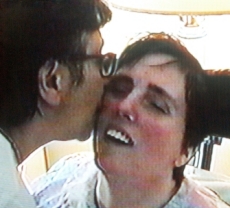
Terri Schiavo with her mother, in 2001

In February of 1990 at the age of 26, Terri Schiavo collapsed at home and oxygen was cut off to her brain for several minutes. The cause of the collapse is disputed. Michael Schiavo, Terri’s husband, blames a cardiac arrest induced by a potassium imbalance associated with bulimia.
Though severely brain-damaged, Terri Schiavo breathed and maintained a heart beat and blood pressure on her own. While her vision is impaired, she could not see or move her limbs. But she needed a feeding tube connected to her stomach to sustain her life.
Read more at http://www.wnd.com/2005/03/29516/#3rZ8xD0bIyJuJHQI.99

Her parents, Bob and Mary Schindler, went to court to keep her “alive” using the feeding tube.

 In 1991, Michael Schiavo flew his wife out to California for experimental therapy involving electrodes. He returned discouraged with the outcome, however. Therapy was discontinued and Terri Schiavo was relocated by her husband to one nursing home and then another before ultimately being moved to a hospice in 2000.

The Terri Schiavo case was a legal struggle involving prolonged life support in the United States that lasted from 1990 to 2005. The issue was whether to carry out the decision of the husband of Teresa Marie “Terri” Schiavo to terminate life support for her. Terri was diagnosed by doctors as being in a persistent vegetative state. The highly publicized and prolonged series of legal challenges presented by her parents and by state and federal legislative intervention effected a seven-year delay before life support finally was terminated.

Nailah Winkfield, Jahi McMath’s mother, has every right to pray for a wonderful outcome. It’s just not likely.