Today in History: August 6, the atomic bombing of Hiroshima

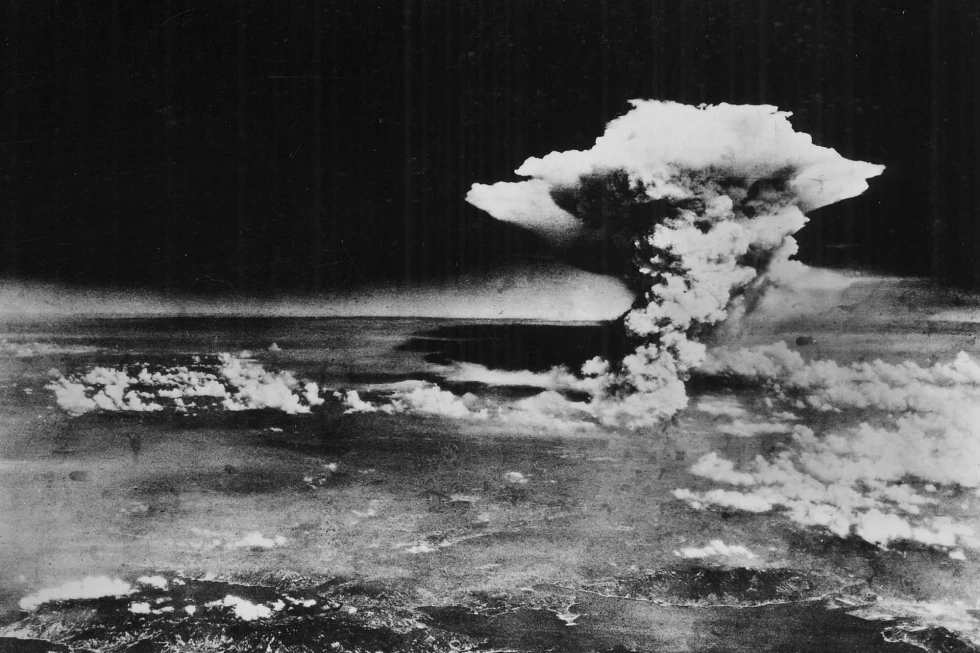
On 6 and 9 August 1945, the United States detonated two atomic bombs over the Japanese cities of Hiroshima and Nagasaki, respectively, during World War II. 140,000 people were killed by the first bomb. The atomic bombing of Nagasaki resulted in an estimated 40,000 to 70,000 deaths, according to the U.S. National Archives.

The United States is the only country to use atomic weapons in a war.

“Monkey Trial”

ON THIS DAY: One hundred years ago, the so-called “Monkey Trial” ended in Dayton, Tennessee, with John T. Scopes found guilty of violating state law for teaching Darwin’s Theory of Evolution.

The conviction was later overturned. https://abcnews.visitlink.me/xS5yvM

The movie “Inherit the Wind” does an outstanding job of telling what happened. The names of the characters were changed but the story is factually correct. Who knows who the lawyers were in the actual trial? I do!

Today in History: April 11, the liberation of Buchenwald

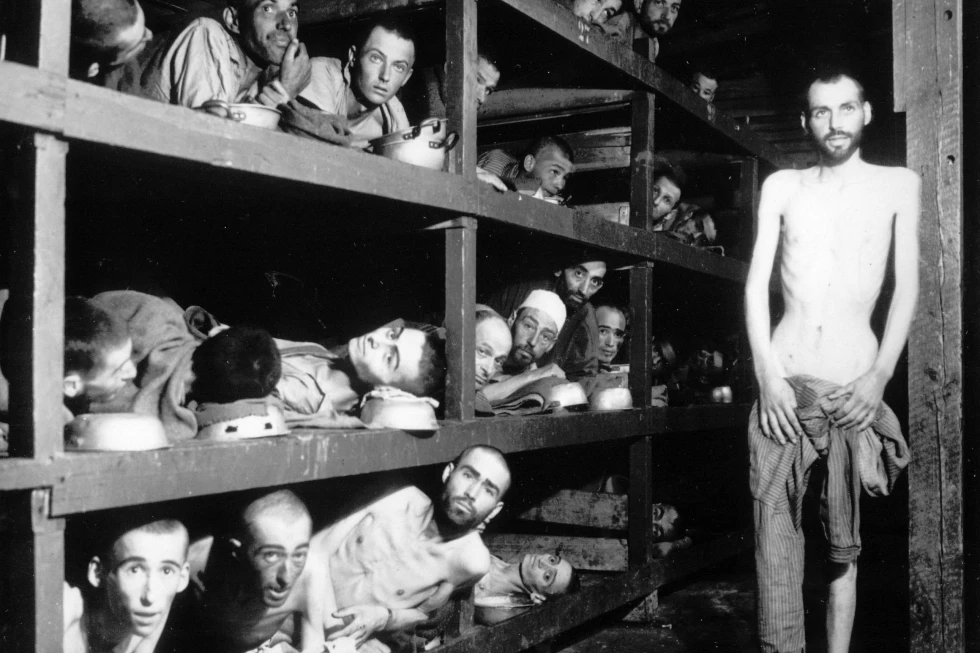
On April 11, 1945, during World War II, U.S. Army troops liberated the Nazi concentration camp Buchenwald near Weimar, Germany.

This April 16, 1945 photo shows inmates of the German KZ Buchenwald inside their barrack, a few days after U.S troops liberated this concentration camp near Weimar. The young man seventh from left in the middle row bunk is Elie Wiesel, who would later become an author and Nobel Peace Prize laureate. (AP Photo)

Khazaria the Thirteenth Tribe

The question is why are there so many Jews in Ukraine, today’s southern Russia, Poland, and Germany?

The Thirteenth Tribe is a 1976 book by Arthur Koestler[1] advocating the Khazar hypothesis of Ashkenazi ancestry, the thesis that Ashkenazi Jews are not descended from the historical Israelites of antiquity, but from Khazars, a Turkic people. Koestler hypothesized that the Khazars (who converted to Judaism in the 8th century) migrated westwards into Eastern Europe in the 12th and 13th centuries when the Khazar Empire was collapsing.

Koestler used previous works by Douglas Morton DunlopRaphael Patai and Abraham Polak as sources. His stated intent was to make antisemitism disappear by disproving its racial basis.

Popular reviews of the book were mixed, academic critiques of its research were generally negative, and Koestler biographers David Cesarani and Michael Scammell panned it. In 2018, the New York Times described the book as “widely discredited.”[2] Neither was it effective in disproving antisemitism, as antisemites merely adapted it — like prior work on the hypothesis — to argue the illegitimacy of present-day Jews.

The Khazar Khaganate was a powerful and influential Turkic state that existed between the 7th and 10th centuries. Located primarily in the northern Caucasus and western steppes of modern-day southern Russia, the Khazar Khaganate controlled vast territories, including parts of the Volga River, the Crimea, and the Caspian Sea region.


Key Points about the Khazar Khaganate:
1. Origins: The Khazars were a semi-nomadic Turkic people who emerged as a political force following the collapse of the Western Turkic Khaganate in the mid-600s. They eventually established their own state, with a ruling class known as the Khaganate.
2. Religion: One of the most unique aspects of the Khazar Khaganate was the ruling elite’s conversion to Judaism sometime in the 8th or 9th century. The exact reasons for this conversion remain debated, but it set the Khazars apart from their Christian and Muslim neighbors, such as the Byzantine Empire and the Caliphates.
3. Trade and Economy: The Khazars were known for their significant role in the Silk Road trade network, controlling key trade routes between Europe, the Middle East, and Central Asia. Their capital, Atil, on the Volga River, was a major commercial hub.
4. Diplomatic Relations: The Khazar Khaganate maintained a strategic diplomatic balance between the Byzantine Empire and the Muslim Caliphates, often serving as a buffer state between the two. They also had interactions with the emerging Kievan Rus and other Slavic states.
5. Military Power: The Khazars had a strong military and often engaged in warfare with their neighbors. They were known for employing a mix of cavalry and mercenary forces, and their military might helped them maintain control over their vast territory.
6. Decline and Fall: The Khazar Khaganate began to weaken in the 10th century due to internal strife, economic pressure, and attacks from external forces. One key factor in their decline was the rise of the Kievan Rus, which defeated the Khazars in a series of campaigns, culminating in the destruction of Atil around 965 AD. By the early 11th century, the Khazar state had largely disintegrated.
7. Legacy: The Khazars are often remembered for their unique religious identity and their role in medieval trade and diplomacy. Their influence extended over a wide area, and they are considered a key player in the history of the Eurasian steppes.
The Khazar Khaganate holds a special place in history for its blend of Turkic nomadic culture, religious diversity, and strategic political positioning.