Today, we honor the brave Americans who perished at Pearl Harbor 83 years ago, and the service members who defended democracy and freedom in the days and years that followed.
In their memory, let us carry forward their mission of forging a better future for humankind.
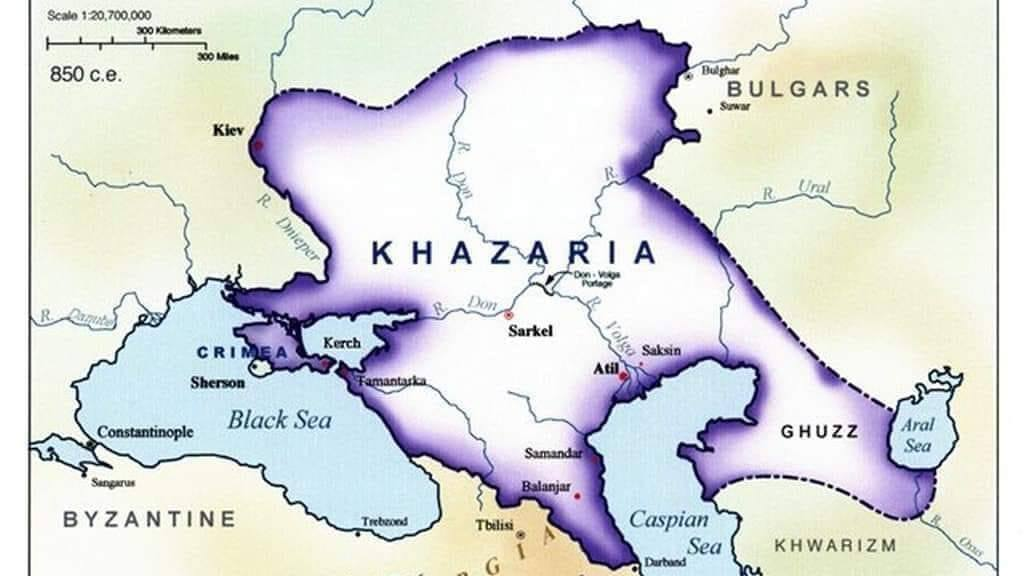
The question is why are there so many Jews in Ukraine, today’s southern Russia, Poland, and Germany?
The Thirteenth Tribe is a 1976 book by Arthur Koestler[1] advocating the Khazar hypothesis of Ashkenazi ancestry, the thesis that Ashkenazi Jews are not descended from the historical Israelites of antiquity, but from Khazars, a Turkic people. Koestler hypothesized that the Khazars (who converted to Judaism in the 8th century) migrated westwards into Eastern Europe in the 12th and 13th centuries when the Khazar Empire was collapsing.
Popular reviews of the book were mixed, academic critiques of its research were generally negative, and Koestler biographers David Cesarani and Michael Scammell panned it. In 2018, the New York Times described the book as “widely discredited.”[2] Neither was it effective in disproving antisemitism, as antisemites merely adapted it — like prior work on the hypothesis — to argue the illegitimacy of present-day Jews.
The Khazar Khaganate was a powerful and influential Turkic state that existed between the 7th and 10th centuries. Located primarily in the northern Caucasus and western steppes of modern-day southern Russia, the Khazar Khaganate controlled vast territories, including parts of the Volga River, the Crimea, and the Caspian Sea region.
Key Points about the Khazar Khaganate: 1. Origins: The Khazars were a semi-nomadic Turkic people who emerged as a political force following the collapse of the Western Turkic Khaganate in the mid-600s. They eventually established their own state, with a ruling class known as the Khaganate. 2. Religion: One of the most unique aspects of the Khazar Khaganate was the ruling elite’s conversion to Judaism sometime in the 8th or 9th century. The exact reasons for this conversion remain debated, but it set the Khazars apart from their Christian and Muslim neighbors, such as the Byzantine Empire and the Caliphates. 3. Trade and Economy: The Khazars were known for their significant role in the Silk Road trade network, controlling key trade routes between Europe, the Middle East, and Central Asia. Their capital, Atil, on the Volga River, was a major commercial hub. 4. Diplomatic Relations: The Khazar Khaganate maintained a strategic diplomatic balance between the Byzantine Empire and the Muslim Caliphates, often serving as a buffer state between the two. They also had interactions with the emerging Kievan Rus and other Slavic states. 5. Military Power: The Khazars had a strong military and often engaged in warfare with their neighbors. They were known for employing a mix of cavalry and mercenary forces, and their military might helped them maintain control over their vast territory. 6. Decline and Fall: The Khazar Khaganate began to weaken in the 10th century due to internal strife, economic pressure, and attacks from external forces. One key factor in their decline was the rise of the Kievan Rus, which defeated the Khazars in a series of campaigns, culminating in the destruction of Atil around 965 AD. By the early 11th century, the Khazar state had largely disintegrated. 7. Legacy: The Khazars are often remembered for their unique religious identity and their role in medieval trade and diplomacy. Their influence extended over a wide area, and they are considered a key player in the history of the Eurasian steppes. The Khazar Khaganate holds a special place in history for its blend of Turkic nomadic culture, religious diversity, and strategic political positioning.
Do you really want to elect Mr. Donald J. Trump and Senator JD Vance to the positions of president and vice president of the United States?
This is too sickening to even talk about or write about but I must.
Senator JD Vance, the running mate of former President Donald J. Trump, has declined to denounce the right-wing talk-show host Tucker Carlson for praising and airing the views of a Holocaust revisionist who falsely claimed that the Nazis’ destruction of European Jewry was not an intentional act of premeditated genocide.
Mr. Carlson is no stranger to controversy, but his recent interview with Darryl Cooper, whom he described as “the best and most honest popular historian in the United States,” has faced particularly fierce blowback.
The Nazis’ killing of almost six million Jews was meticulously planned, documented and pursued even after the tide of World War II had turned and Germany’s defeat was assured.
The German penal code prohibits publicly denying the Holocaust and disseminating Nazi propaganda, both off- and online. This includes sharing images such as swastikas, wearing an SS uniform and making statements in support of Hitler.
White House spokesman Andrew Bates said in a statement: “Giving a microphone to a Holocaust denier who spreads Nazi propaganda is a disgusting and sadistic insult to all Americans, to the memory of the over six million Jews who were genocidally murdered by Adolf Hitler, to the service of the millions of Americans who fought to defeat Nazism and to every subsequent victim of antisemitism.”
On Sept. 3, 1783, representatives of the United States and Britain signed the Treaty of Paris, which officially ended the Revolutionary War and recognized U.S. sovereignty.
In 1939, Britain, France, Australia and New Zealand declared war on Germany, two days after the Nazi invasion of Poland; in a radio address, Britain’s King George VI said, “With God’s help, we shall prevail.”
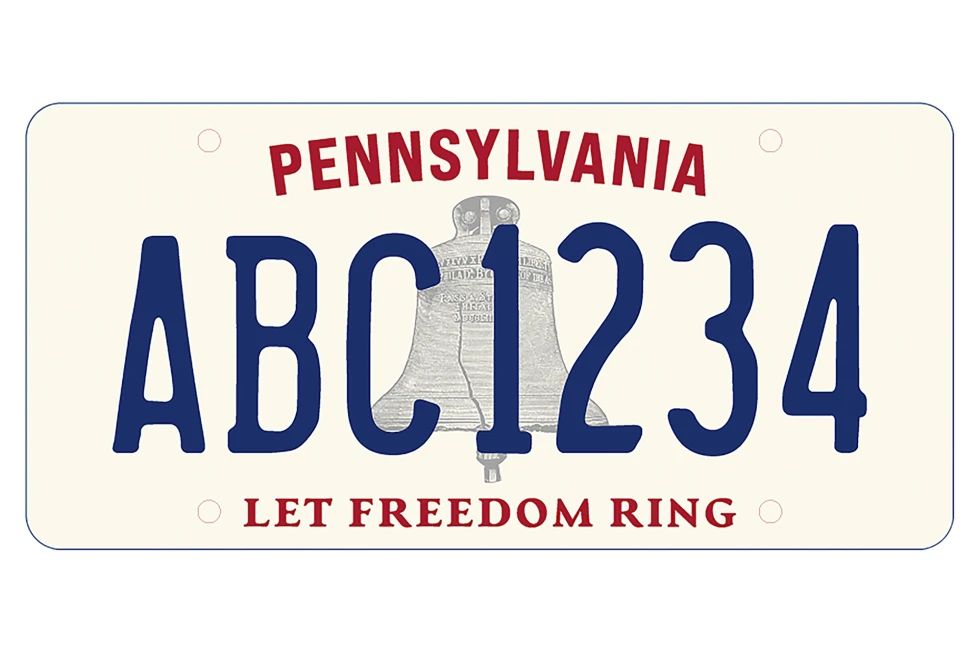
PHILADELPHIA (AP) — A new state license plate design refers to Pennsylvania’s critical role in establishing the United States’ independence from England and features the phrase “Let Freedom Ring.”
The red, white, and blue plate design announced this week includes an image of Philadelphia’s Liberty Bell. The design already appears on eight signs that welcome motorists where highways cross various state lines — with 29 more planned for the coming months.
“Let Freedom Ring” is a phrase in the early 19th century song “My Country, ’Tis of Thee.”
The Liberty Bell, inscribed with a Bible verse exhorting people to “Proclaim Liberty Throughout All the Land Unto all the Inhabitants thereof,” was in use in Philadelphia before the American Revolution. It became a rallying point for those fighting to abolish slavery in the United States and for supporters of giving women the right to vote and of civil rights.
Democratic Gov. Josh Shapiro, whose name is on the highway signs, said the license plates and welcome signs are being introduced ahead of the country’s 250th birthday celebration in 2026.
The welcome signs are at borders with Maryland on U.S. Route 15 near Gettysburg and Interstate 70 in Fulton County; with New Jersey on Interstate 295 in Bucks County and Interstate 80 in Monroe County; with Ohio on Interstate 90 in Erie County; and with New York on Route 449 in Potter County, Interstate 81 in Susquehanna County and Route 1015 in Tioga County.
Those interested in the new plates can sign up to be notified when they will available early next year.
I did not write this. As a child I visited Winnipeg every summer as baby and until the age of 10 in 1948. My family stayed at my grandparent’s house at 136 Cathedral Avenue. I Remember visiting Eaton’s numerous times.
—
WHEN I WAS growing up in Winnipeg in the 1960s, there were essentially two places to shop: Eaton’s and the Bay. Eaton’s was the store my grandmother frequented, checking for bargains in its basement every week, eating lunch in the sedate Grill Room. The Bay was vaguely hipper. I remember it still had elevator operators then as well as its own library and post office, though the in-house orchestra was gone. Both stores had a kind of majesty to them, unaware they had peaked as retail ideas.
The decline of the downtown Winnipeg Bay store resembled Hemingway’s description of bankruptcy—gradual, then sudden. It was the company’s national flagship store until 1974, but with the advent of malls in that decade, it began to lose its currency. By 2019, the downtown core of Winnipeg had largely hollowed out, and some of the Bay floors were closing. What remained felt like a dismal Soviet-era shopping experience under gloomy lights. The store was built in 1926 at a cost of around $5 million; at the time of its closing, in November 2020, Cushman & Wakefield, a commercial real estate firm, valued the building at $0.
Here in Los Angeles shopping malls have closed and many chains of stores have gone into bankruptcy. Eaton’s is gone in Canada and May Company in the United States is gone. Local California chains are now all gone.
Hudson’s Bay owns Sak’s Fifth Avenue they are now consolidating with Neiman Marcus.
Macy’s net income for the quarter ending April 30, 2024 was $0.062B, a 60% decline year-over-year.
So where did I buy my new sneakers (tennis shoes)? Amazon. It seems everyone is buying on line.
On June 19, 1964, the Civil Rights Act of 1964 was approved by the U.S. Senate, 73-27, after surviving a lengthy filibuster.
The act banned discrimination in employment and public accommodations based on race, color, religion, sex, or national origin. This included prohibiting discrimination in hiring, promoting, and firing.
The Civil Rights Act of 1964 sought to undo the damage of Jim Crow policies.
This act, signed into law by President Lyndon Johnson on July 2, 1964.
On April 3, 1968, civil rights leader Martin Luther King Jr. delivered what turned out to be his final speech, telling a rally of striking sanitation workers in Memphis, Tennessee, that “I’ve been to the mountaintop” and “seen the Promised Land. I may not get there with you. But I want you to know tonight that we, as a people, will get to the Promised Land!” (About 20 hours later, King was felled by an assassin’s bullet at the Lorraine Motel.)
The United States may have been founded on the idea that all men are created equal, but during the late 18th and early 19th centuries, slaveholding was common among the statesmen who served as president.
Slavery was legal in the United States from its beginning as a nation. During the late 18th and early 19th centuries, slaveholding was common among the statesmen who served as president. In all, 12 chief executives enslaved people during their lifetime; of these, eight owned slaves while in office. The Thirteenth Amendment to the United States Constitution formally abolished slavery in 1865, but the history of the American presidency’s relationship to slavery remains an uncomfortable one. So, who are these White House incumbents that were also enslavers?
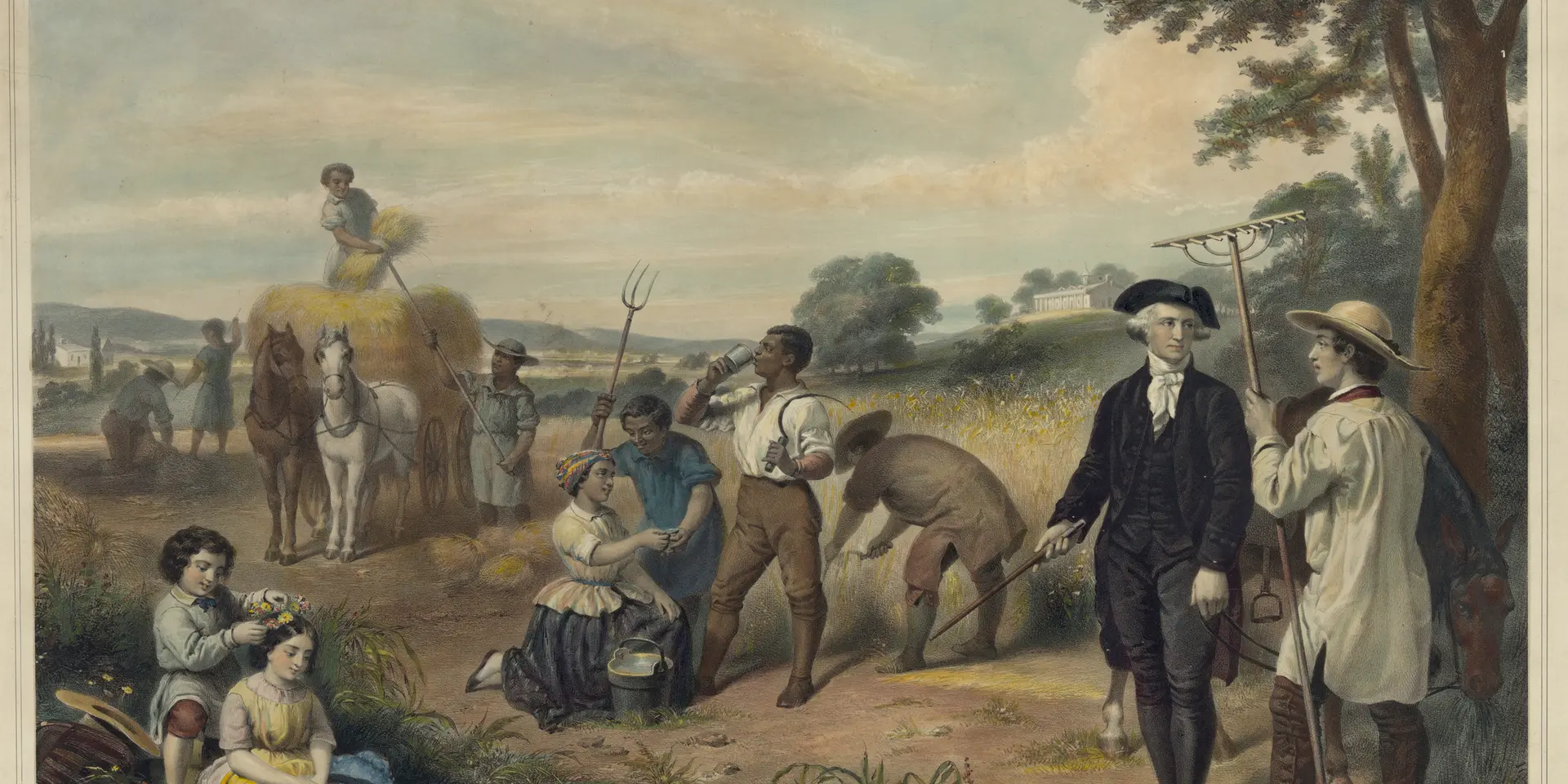
Picture from history.com
President George Washington
A Founding Father of the United States and the country’s first president, George Washington kept over 300 enslaved people at his Mount Vernon plantation.
As president of the United States, Washington oversaw the implementation of the 1787 Northwest Ordinance, which banned slavery north of the Ohio River. But in 1793 he signed the Fugitive Slave Law, which empowered a slaveowner or his agent to seize or arrest any enslaved person on the run. His views on slavery took another turn the following year, when he wrote into law the Slave Trade Act of 1794, which prohibited the export of slaves from the United States to any foreign place or country.
President Thomas Jefferson
Thomas Jefferson, the third president of the United States, owned more than 600 slaves during his adult life. Jefferson’s slaves were held captive at his main residence, Monticello, near Charlottesville, Virginia. It was here that he fathered several children with an enslaved woman called Sally Hemmings.
President James Madison
James Madison kept several enslaved people—he came from a large slaveholding family. By 1801, Madison’s slave population at Montpelier, his plantation estate, was slightly over 100. That figure eventually numbered over 300.
Like Thomas Jefferson, James Monroe outwardly condemned the institution of slavery as evil, and advocated its gradual end. But he, too, still owned many slaves.
President Andrew Jackson
Like most planters in the South, Andrew Jackson used forced labor. Over his lifetime, he owned a total of 300 slaves, most of whom were put to work in the cotton fields of his plantation, The Hermitage, near Nashville, Tennessee.
President Martin Van Buren
Martin Van Buren was ensconced in the White House during the Amistad Case, a freedom suit that resulted from the successful rebellion of African slaves on board the Spanish schooner La Amistad in 1839. Van Buren viewed abolitionism as the greatest threat to the nation’s unity, and he resisted the slightest interference with slavery in the states where it existed. Later in life, Van Buren belonged to the Free Soil Party, which opposed the expansion of slavery into the Western territories, but not immediate abolition.
President John Tyler
William Henry Harrison owned several inherited enslaved people before becoming president in 1841.
John Tyler owned as many as 50 slaves throughout his lifetime, including during his tenure as White House incumbent. In 1845, Tyler oversaw the annexation of Texas as a slave state.
President James K. Polk
President James K. Polk was generally tolerant of slavery. He owned several plantations and even purchased enslaved people during his term in office. His will provided for the freeing of his slaves after the passing of his wife, Sarah Childress, though the Emancipation Proclamation and the Thirteenth Amendment to the United States Constitution ended up freeing them long before her death in 1891.
President Zachary Taylor
Zachary Taylor owned slaves throughout his life. In fact, of the other presidents who owned slaves, Taylor benefited the most from slave labor.
Taylor had enslaved servants in the White House, and it was in Washington where he also supervised his Mississippi plantation’s operations. As president, however, he generally resisted attempts to expand slavery in the territories, and he vowed to veto the Compromise of 1850, which granted enslavers greater authority to seize supposed fugitive slaves in Northern states, as well as other extremely controversial measures.
President Andrew Johnson
Assuming the presidency following the assassination of Abraham Lincoln, Andrew Johnson was one of the last US presidents to personally own slaves. Despite being an enslaver, Johnson had been chosen as vice president by Lincoln as a gesture of unification, with Johnson supporting many of Lincoln’s policies, although he did lobby for Lincoln to exclude Tennessee from the Emancipation Proclamation. But as President Johnson, his Reconstruction goals were to reunify the Union by readmitting former Confederates as citizens of the United States and to limit emancipated people’s civil rights.
President Ulysses S. Grant
The last president to personally own enslaved people was Ulysses S. Grant. As the former commanding general of the Union Army, Grant had kept one enslaved black man named William Jones. He was freed in 1859.




 Coast Contact