We will not forget!
We will not forget!
Next week, on Tuesday, January 27, we will mark International Holocaust Remembrance Day to honour the six million Jewish lives taken during the Holocaust.
This was posted by a Canadian web site. I wonder what Americans will be posting.
Say it loud, say it proud. And never back down.
By PETER SMITH Associated Press Updated 4:08 AM PST, December 12, 2025
Hanukkah — also spelled Chanukah or other transliterations from Hebrew — is Judaism’s “festival of lights.” On eight consecutive nightfalls, Jews gather with family and friends to light one additional candle in the menorah — a multibranched candelabra.
In Hebrew, Hanukkah means “dedication.” The holiday marks the rededication of the Temple in Jerusalem nearly 2,200 years ago after a small group of Jewish fighters liberated it from occupying foreign forces.
With the tiny supply of ritually pure oil that they found in the temple, they lit the menorah. According to the Talmud, it miraculously remained lit for eight days. The ritual of lighting a nightly candle and the emphasis on cooking foods in oil, such as potato pancakes called latkes, memorialize this holiday.
Hanukkah always begins on the 25th day of the Jewish month of Kislev.
But the Jewish calendar, which is based on lunar cycles, is not in sync with the commonly used Gregorian calendar. Depending on the year, Hanukkah falls at various times between late November and late December.
This year, Hanukkah starts at sundown on Sunday, Dec. 14, and lasts through Dec. 22.
Traditionally, Hanukkah has not been a major holiday on the Jewish calendar, but it has taken on cultural prominence because it occurs at a time when many other people are preparing for Christmas.
Jews across the religious observance spectrum — from Reform to Conservative to Orthodox — focus on the same theme of bringing light into the darkness and emphasizing that even a small, against-the-odds effort can have a transforming effect.
The Talmud, an ancient compendium of commentary and teachings on Jewish law, customs and Scripture, reflects a dispute over the order of lighting. But most people start with one candle and increase the lighting by an additional candle each night while reciting or chanting special blessings.
The candles are added from right to left, but lit from left to right on the menorah, thus always starting with the newest light. The special menorah used for Hanukkah has eight branches, with a ninth place for the candle called shamash from which all others are lit.
The tradition calls for candles with a real flame, although some also use electric ones in public displays, such as in hospitals, for safety reasons.
A menorah is lit in each household and traditionally is placed where it can be seen from the outside, such as a doorway or windowsill, to symbolize the spreading of God’s light to all nations.
The lighting of menorahs in city streets and parks has become more prominent in recent years in countries around the world, including in front of public landmarks.
In addition to menorah lightings, giving to charity and social works are also part of the celebration for many, reflecting the belief that the Jewish people are called by God to help make the world better for all.

Yom Kippur 2025 begins at sundown on Wednesday, October 1, and ends at nightfall on Thursday, October 2. But it is not just a date. It is the climax of the Jewish spiritual calendar. It’s the final chance to change your judgment for the coming year.
If Rosh Hashanah is the day we are “written” in the Book of Life or Death, Yom Kippur is the day the ink dries.
Jews all over the world will fill synagogues, yes, even the secular ones who only show up once a year. Something deep in the Jewish heart knows that Yom Kippur matters. It is the only 25-hour period when the entire nation of Israel, religious, secular, rich, poor, Mizrahi, Ashkenazi – all stand together in front of God.
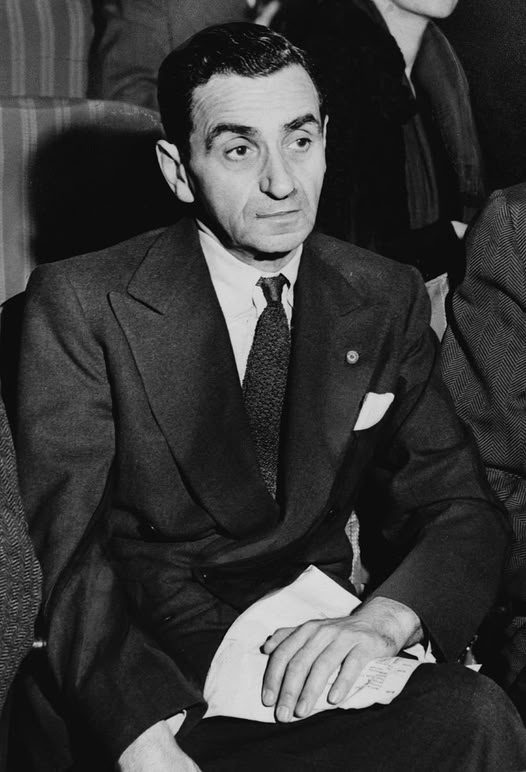
On this day in 1989, September 22, the world bid farewell to Irving Berlin, the self-taught musical titan born Israel Isidore Baline on May 11, 1888, in the Siberian town of Tyumen, Russia. As the youngest of eight children in a poor Jewish family, Berlin’s early life was upended by pogroms. At age 4, his family fled to New York City in 1893, seeking refuge in the tenements of the Lower East Side. Tragedy struck young. His mother died soon after arrival, and by 13, after his father, a cantor, passed away, Berlin dropped out of school to sing on street corners and hustle as a singing waiter in Chinatown dives. He never learned to read or write music, composing instead on a custom piano that transposed keys to fit his ear, but that didn’t stop him from penning over 1,500 songs, revolutionizing American popular music for more than seven decades.
Berlin’s genius lay in his uncanny ability to capture the American spirit: the grit of ragtime in “Alexander’s Ragtime Band” (1911), the romance of the Jazz Age in “Blue Skies” (1926), the showbiz dazzle of “There’s No Business Like Show Business” (1946 from Annie Get Your Gun), and the unyielding patriotism that defined his era. During World War I, he served in the Army and wrote the cheeky hit “Oh! How I Hate to Get Up in the Morning.” In the lead-up to World War II, he crafted “God Bless America” (1938) as a peace prayer, donating all royalties forever to the Boy and Girl Scouts, a gesture that continues to pour millions into youth programs today. His Broadway triumphs included Top Hat (1935 with Fred Astaire’s “Cheek to Cheek”), Call Me Madam (1950), and the Easter Parade film score. By his death at 101 in his Manhattan townhouse, Berlin had earned four Oscars, a Grammy Lifetime Achievement Award, and the Congressional Gold Medal, yet he remained humble, once quipping, “I’m a simple man. The only thing I know how to do is write songs.”
Perhaps Berlin’s most enduring gift is “White Christmas,” the wistful 1942 ballad from the film Holiday Inn that Bing Crosby made the best-selling single of all time, over 50 million copies. Inspired by his homesick troops during a 1942 USO tour and his own longing for the snowy holidays of his adopted home, Berlin stipulated it couldn’t be performed in color films to preserve its black-and-white nostalgia. It’s a song that tugs at the heartstrings of longing amid joy, profoundly American and profoundly ironic given its creator’s Jewish roots and aversion to schmaltz.
In a delicious twist of cultural assimilation, Jewish songwriters like Berlin dominated Tin Pan Alley’s holiday output, crafting the soundtrack to a Christian celebration they observed from afar. Of the top 25 most-performed Christmas songs tracked by ASCAP, at least 18 were penned by Jews, a testament to their outsized role in shaping American pop during the mid-20th century’s “Great American Songbook” era. Berlin kicked it off with “White Christmas,” but join him on the list: Johnny Marks gave us “Rudolph the Red-Nosed Reindeer” (1949) and “Rockin’ Around the Christmas Tree” (1958); Mel Tormé and Robert Wells dreamed up “The Christmas Song (Chestnuts Roasting on an Open Fire)” (1945); Sammy Cahn and Jule Styne delivered “Let It Snow! Let It Snow! Let It Snow!” (1945) and “The Christmas Waltz” (1954); Jay Livingston and Ray Evans teamed for “Silver Bells” (1951); and don’t forget “Santa Baby” (1953) by Joan Javits and Philip Springer or Felix Bernard’s music for “Winter Wonderland” (1934). These weren’t just tunes, they were bridges, born from immigrants’ ingenuity, turning December’s chill into evergreen warmth for everyone.
Berlin lived to 101, outlasting two world wars, the Depression, and his own hits. As he once said, “The song is ended, but the melody lingers on.” What’s your favorite Irving Berlin gem or Jewish-penned holiday banger that sneaks onto your playlist? Drop it below.
#IrvingBerlin#JewishSongwriters#WhiteChristmas#AmericanSongbook#OnThisDay#HolidayMusic#MusicHistory#TinPanAlley

Ganja Granny sez How did the Nazis use censorship?
When the Nazis came to power in 1933, the German constitution guaranteed freedom of speech and freedom of the press. Through decrees and laws, the Nazis abolished these civil rights and destroyed German democracy. Starting in 1934, it was illegal to criticize the Nazi government. Even telling a joke about Hitler was considered treachery. People in Nazi Germany could not say or write whatever they wanted.
Examples of censorship under the Nazis included:
Closing down or taking over anti-Nazi newspapers;
Controlling what news appeared in newspapers, on the radio, and in newsreels;
Banning and burning books that the Nazis categorized as un-German;
Controlling what soldiers wrote home during World War II.
How did the Nazis use propaganda?
The Nazis used propaganda to promote their ideas and beliefs. Beginning in March 1933, the regime tried to centralize its propaganda efforts in a new ministry led by Joseph Goebbels. This ministry was called the Reich Ministry of Enlightenment and Propaganda.
The Nazis used a variety of propaganda tools to spread Nazi ideas. Examples of propaganda under the Nazis included:
Glorifying Adolf Hitler by using his image on postcards, posters, and in the press;
Spreading negative images and ideas about Jews in magazines, films, cartoons, and other media;
Making radios more affordable so that more Germans could listen to Nazi ideas and news;
Broadcasting Nazi speeches on the radio and public loudspeakers;
Organizing large and celebratory Nazi Party rallies;
Creating groups, like the Hitler Youth and League of German Girls, that fostered Nazi ideals….
Photo of Joseph Goebbels speaking at a Book Burning….

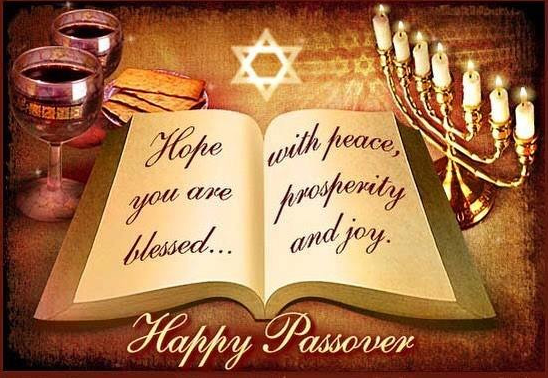
Passover, or Pesach (PEH-sach) in Hebrew, commemorates the slavery of the Israelites in Egypt and their ultimate exodus to freedom. This story of redemption from slavery is the “master-story” of the Jewish People – a story that has shaped Jewish consciousness and values.
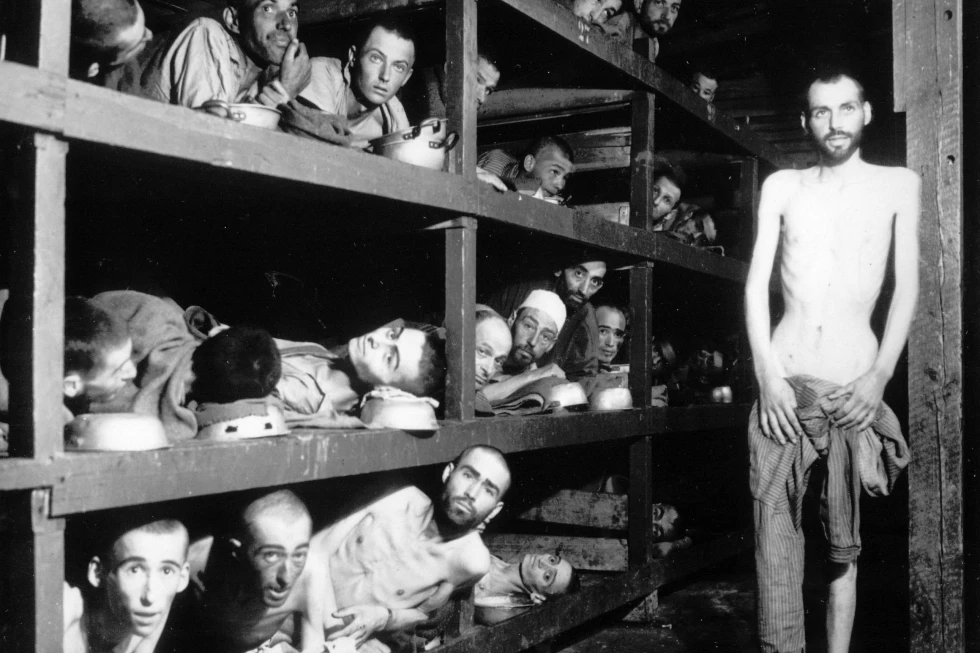
On April 11, 1945, during World War II, U.S. Army troops liberated the Nazi concentration camp Buchenwald near Weimar, Germany.
This April 16, 1945 photo shows inmates of the German KZ Buchenwald inside their barrack, a few days after U.S troops liberated this concentration camp near Weimar. The young man seventh from left in the middle row bunk is Elie Wiesel, who would later become an author and Nobel Peace Prize laureate. (AP Photo)
 Coast Contact