Genocide

Genocide is the deliberate and systematic destruction, in whole or in part, of an ethnic, racial, religious or national group.

Just yesterday a former SS sergeant, Oskar Groening, described in chilling detail Wednesday how cattle cars full of Jews were brought to the Auschwitz death camp, the people stripped of their belongings and then most led directly into gas chambers. Groening is being tried on 300,000 counts of accessory to murder, related to a period between May and July 1944 when around 425,000 Jews from Hungary were brought to the Auschwitz-Birkenau complex in Nazi-occupied Poland and most immediately gassed to death.  The Holocaust was the largest killing of any group in the world.  This man should be put to death in a gas chamber.

The Hamidian massacres also referred to as the Armenian Massacres of 1894–1896 occurred in the Ottoman Empire. The genocide began on April 24, 1915, when Ottoman authorities arrested some 250 Armenian intellectuals and community leaders in Constantinople. Thereafter, the Ottoman military uprooted Armenians from their homes and forced them to march for hundreds of miles, without food and water, to the desert of what is now Syria. Massacres ignored age and gender, with rape and other acts of sexual abuse being commonplace. The majority of Armenian diaspora communities were founded as a result of these events. Mass killings continued under the Republic of Turkey during the Turkish–Armenian War phase of Turkish War of Independence.

Turkey, the successor state of the Ottoman Empire, denies the word genocide is an accurate term for the mass killings of Armenians that began under Ottoman rule in 1915. It has in recent years been faced with repeated calls to recognize them as genocide. To date, twenty-three countries have officially recognized the mass killings as genocide,[19] a view which is shared by most genocide scholars and historians.

President Barack Obama promised he would declare the killing of Armenians a genocide in 2008. His refusal to do so now is another blunder that continues to make the United States appear weak. Turkey has not been a friend of the United States. The loss of their cooperation with America in the Middle East has already occurred. America gains nothing by refusing to define a crime against humanity.

Obama versus Netanyahu

Obama versus Netanyahu

“If there is one lesson American Jews will learn from Israel’s election, it’s this:  they’re not us.

Israel is not New York. Or LA. Or Chicago or Boston or Miami or Philadelphia. It is a Jewish “community” unlike any in America.”

Those are the opening words by Rob Eshman in today’s Jewish Journal.

We just don’t appreciate the perceptions of Israelis. They live under the constant threat of war with their neighbors. They live in fear of their lives. No one in the United States lives with those kinds of fears. Many American Zionists will evolve in their view of Israel. The reason is that Americans favor the idea of a two state solution to the Israel-Palestinian problem.

I suspect that the ongoing enmity between President Obama and Prime Minister Netanyahu is the result of the prime minister’s refusal to negotiate a two state solution. In other words Netanyahu told Obama his one state position years ago. He only just told the world two days ago.

Netanyahu and his American supporters may still change the course of the Iran nuclear negotiations. Those Americans who favor supporting Israel in all situations no matter what that country does will work their will through Congress. There is no doubt that Israel’s path will be unpleasant over the next two years.

Israelis are a resourceful people. They will find a way to have their way.

David Bancroft

Benjamin Netenyahu Speaks to the United States Congress

My theory is that Speaker of the House John Boehner invited Benjamin Netenyahu to speak to Congress is an effort on the part of the GOP to prove to Jewish voters that the Republican Party is the party that supports Israel.  It’s not that their votes will change an election.  The GOP would like to attract more Jewish donors.

I believe Benjamin Netenyahu really does fear for the existence of Israel.  His intention is to go where ever he must to obtain the support for what he believes are Israel’s needs.

Leonard Nimoy, ‘Star Trek’s’ Spock, dead at 83, Was From Another Society Not Another World

Leonard Nimoy - Mr. Spock

Leonard Nimoy was from another world in Star Trek and in real life. His captain (William Shatner) on Star Trek is also from that other world/society. You see both are Jewish.  Nimoy’s famous salute was a gesture he saw given at an orthodox synagogue when he was a boy. 

In the story Mr. Spoke was a half human and half Vulcan. His pointed ears immediately differentiated him from every human. I have heard that there are places in this world where people believe that Jews also have pointed ears and are bred from the devil. The parable couldn’t be more obvious to me.

First understand that the total number of Jews in the entire world is about 13 million people. By any measure that would define us as a group that might soon no longer exist in another hundred years. Six million were killed by the Nazis before and during World War 2.

Jews are different from the rest of the world’s peoples. Perhaps that is the reason they are hated almost everywhere. Why are they hated? They, as a group, are smarter and more creative than any group you can define.

Of course you are asking for proof. Here it is.

Bob Simon of 60 Minutes was a Jew. He died in a car crash just two weeks ago. He was a Fulbright scholar.

Alan Greenspan, the much respected former Chairman of the Federal Reserve of the United States from 1987 to 2006.

– Three current members of the United States Supreme Court are Jews.

Henry Kissinger, Richard Nixon’s famous Secretary of State.

Jonas Edward Salk was an American medical researcher and virologist. He discovered and developed the first successful inactivated polio vaccine.

Richard Rodgers (1902–1979) and Oscar Hammerstein II (1895–1960) were one of the most prolific teams that brought numerous musicals to Broadway and the world. Carousel – ‎South Pacific – ‎Flower Drum Song – Oklahoma were all part of their creativity.

Elsewhere in this blog is a more thorough list of famous Jews posted by David Bancroft. The article contends that it is all about education. I am sure you get the point. So is there a Jew gene? Genetic studies of Jewish origins is a topic in Wikipedia.

I personally am a marginal Jew. Both of my parents were brilliant in school and received scholarships and honors. I flunked Algebra 1 and barely passed Spanish 1. So you see there are no guarantees in life even for Jews.

Rabbi Harold Schulweis

VBSLogo_Header_BLUE

Schulweis-retouched

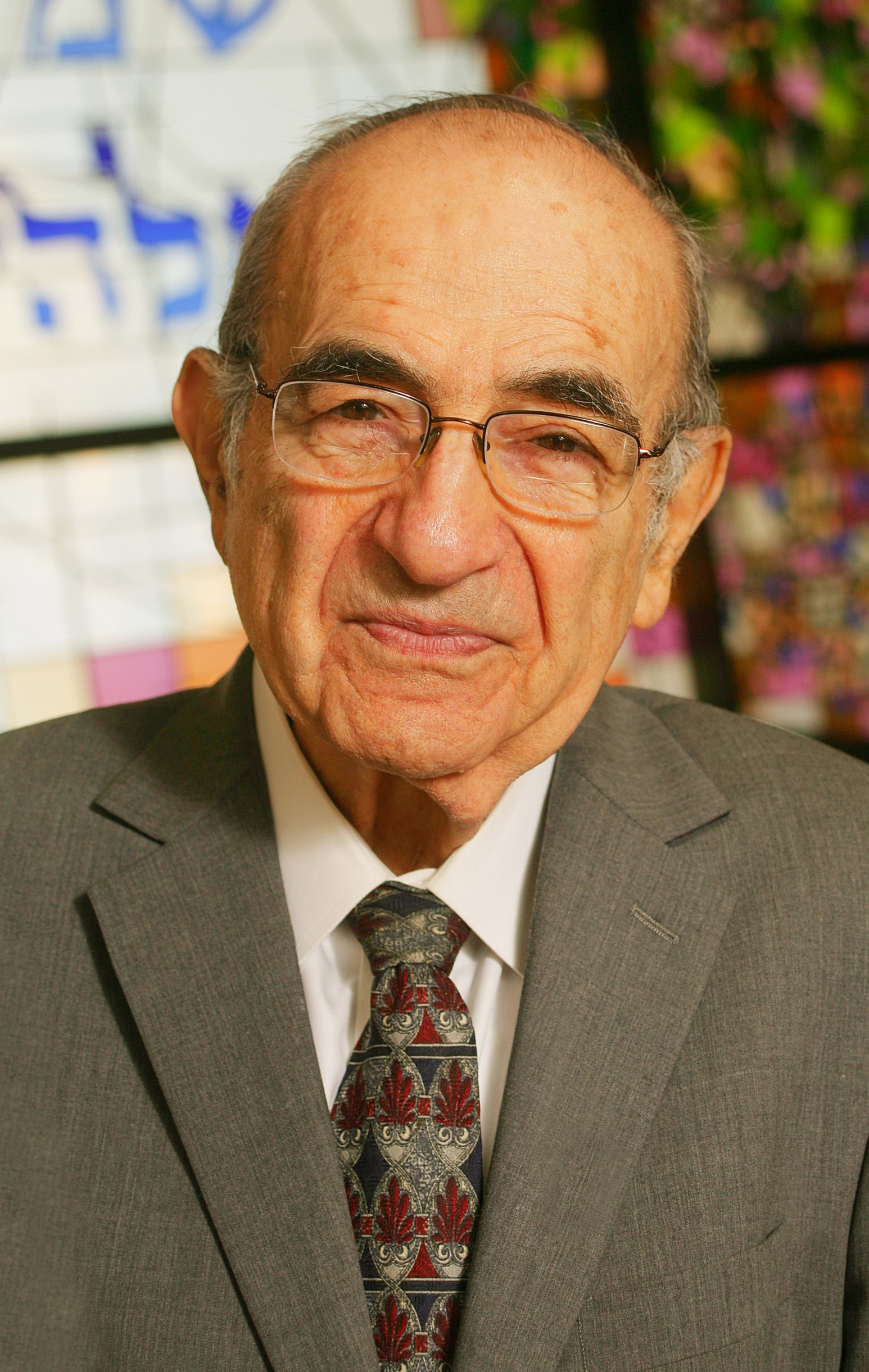
Rabbi Harold M. Schulweis Passes Away at 89

Rabbi Harold Schulweis, regarded as the most influential synagogue leader of his generation, died at his home after a long struggle with heart disease. He was 89 years old.

Rabbi Uri Herscher, founding president and CEO of the Skirball Cultural Center, was a freshman at UC Berkeley when he first heard Schulweis speak at a Rosh Hashanah service, and became a friend and admirer for life. On a later occasion, Herscher introduced Schulweis to an audience, saying in part, “Harold Schulweis is a rabbi. This is a little like saying, a Rembrandt is a painting. Or a Stradivarius is a violin…He is a rabbi of rabbis…He has, as much as any rabbi in our time, given Judaism meaning, relevance and renewed purpose.”

Schulweis recognized the power of congregations to shape the lives of a generation of Jews isolated from community and alienated from their traditions by the rhythms of American life and the spiritually corrosive elements of American culture. In 1970, he was invited to the pulpit of Valley Beth Shalom in the burgeoning San Fernando Valley community of Encino. Under his leadership, the synagogue grew to become the largest Conservative congregation in the Western United States, and became a living laboratory of social activism and creative spiritual life introducing innovations that became staples for Jewish congregations across North America.

Responding to the loneliness and isolation of suburban life, Schulweis introduced synagogue-based “Havurot,” in 1971, gathering small groups of families to share religious life and family celebrations. His “Para-Rabbinic” initiative offered a revolutionary model of lay-professional synagogue leadership. Schulweis launched a para-professional Counseling Center within the synagogue, offering psychological and family support to the synagogue members and the wider communities. Each of these innovations has been replicated in congregations nationwide.

Schulweis opened the doors of his synagogue to all. He pioneered initiatives welcoming children and young adults with special needs into the synagogue’s educational and religious programs. He reached out to Jews-by-choice and unchurched Christians seeking a spiritual home. In 1992, Schulweis was among the first rabbis in the Conservative Movement of American Judaism to openly welcome gay and lesbian Jews into the synagogue.

Schulweis’ pulpit became a launching pad for his efforts to push contemporary Judaism beyond its narrow ethnic preoccupation. Judaism, he frequently preached, is a global religion, with concerns that embrace the world. “Our greatness as a religion,” he wrote, “is that we Jews conceived of ourselves as God’s allies, partners, and friends. We gave the world conscience. We gave to the world a sacred universalism that remains at the foundation of our relationship with the world.”

In 1966, Schulweis met a young math instructor at Berkeley who shared the story of his family’s rescue from the Nazis by a German Christian family. The family had never been recognized or thanked by the Jewish community. Thousands of rescuers, Schulweis learned, lived in poverty, receiving neither recognition nor aid. In response, he founded the Institute for Righteous Acts, which would become, in 1986, the Jewish Foundation for the Righteous (jfr.org), recognizing, celebrating and supporting thousands of Christians who rescued Jews during the Holocaust. Schulweis was profiled on “60 Minutes” for his unique vision, locating moral heroism in the darkest of historical moments.

With activist Leonard Fein, he founded Mazon (Mazon.org), in 1985 as a Jewish community response to hunger and poverty in America. Mazon ask Jewish families celebrating life moments to dedicate 3% of the cost to the hungry who live among us.

In 2004, Schulweis delivered a sermon on the Jewish high holidays calling for a Jewish response to genocide. He challenged the congregation:

“We took an oath, “Never again!” Was this vow to protect only Jews from the curse of genocide? God forbid that our children and grandchildren ask of us, ‘Where was the synagogue during Rwanda, when genocide took place and eight hundred thousand people were slaughtered in one hundred days?’”

According to Rabbi Ed Feinstein, Schulweis’ successor at Valley Beth Shalom, “Rabbi Schulweis found the presence of God in acts of moral courage, compassion, and human decency. He constantly reminded us that we are the hands of God in this world.”

Among those moved to answer the rabbi’s challenge was attorney Janice Kamenir-Reznik, who assumed the role of founding president of the Jewish World Watch (JewishWorldWatch.org), now a coalition of Jewish organizations dedicated to raising awareness and mobilizing resources in response to the on-going genocide in Darfur, Congo, and around the world. JWW has grown into the largest anti-genocide grassroots organization in the world, with some 30,000 to 40,000 donors. Schulweis’ challenge, and her friendship with the rabbi, “has transformed my life and has changed my philosophy of what it means to be a Jew,” said Kamenir-Reznik. “Nothing I have done in my life has been more meaningful and has had a larger impact.”

Schulweis’ concern for genocide around the world, led him to reach out to the large Armenian population in his San Fernando Valley neighborhood. In 2005, Schulweis officiated with Archbishop Hovnan Derderian of the Armenian Church of North America at the first joint commemoration of the Jewish and Armenian Holocausts. He joined band members of the rock band, System of a Down, all of them children of survivors of the Armenian Holocaust, in an educational program affirming the common responsibilities of Jewish and Armenian youth to remember their collective experiences of genocide, and to act to prevent its reoccurrence.

Schulweis was born in the Bronx, in 1925, the son of a ferociously anti-religious editor of the Yiddish daily “Forverts.” As a child, Schulweis never set foot in a synagogue, but grew up surrounded by Yiddish poets, nationalists, revolutionaries, and artists. At the age of 12, he happened upon a synagogue on Rosh Hashanah. Attracted by the music he heard from the street, he slipped in and was enraptured. He began studying Talmud with his pious, Hasidic grandfather, eventually enrolling at Yeshiva College where he graduated in 1945. An ardent student of philosophy, he became a disciple of Mordecai Kaplan at the Jewish Theological Seminary where he was ordained in 1950. At the same time he studied philosophy under Sidney Hook at New York University, receiving a masters degree in 1950 with the first English language thesis on Martin Buber’s philosophy. He subsequently completed a doctorate in theology at the Pacific School of Religion. Schulweis taught philosophy at City College of New York, and served pulpits in Parkchester, New York, and Oakland, California, before coming to Valley Beth Shalom.

As much public intellectual as pulpit rabbi, Schulweis authored nine books and hundreds of articles in which he offered a unique interpretation of post-Holocaust Jewish theology. Schulweis’ “Theological humanism” is rooted in the Biblical conviction that the human being bears the divine image, and in philosopher Martin Buber’s concept of God revealed in deep human relationships. Schulweis imagined God not above us, but within and between human beings. Prayer and religious observance, Schulweis instructed, are not directed above as a plea for supernatural intervention, but within – as an inspiration to individual and communal reflection, commitment and moral action. Building on the theology developed in his doctoral writing, Schulweis advocated “predicate theology,” identifying those aspects of human activity which are “Godly.” “God,” he frequently argued, “is not believed, but behaved.” Conscience is the living nexus between the divine and the human in everyday life. The cultivation of conscience is the central function of religious life and religious education.

Among Rabbi Schulweis’ greatest legacy is his vast library of publications that will live on and serve for generations to come in his memory. Just a few of note are: Evil and the Morality of God (Jersey City, N.J: Ktav Pub. House, 2010.); For Those Who Can’t Believe, Overcoming the Obstacles to Faith (1995, New York: Harper Perennial; Finding Each Other in Judaism: Meditations on the Rites of Passage from Birth to Immortality (2001, New York: URJ Press); In God’s Mirror, Reflections and Essays (2003, Jersey City, NJ: KTAV); Conscience: The Duty to Obey and the Duty to Disobey. (2010, Woodstock, VT: Jewish Lights); Embracing the Seeker (2010, Halperin, M., (Ed.) Jersey City, NJ: KTAV). The Schulweis Institute online library, www.hmsi.info, offers a collection serving as the living repository for over 750 audio, video and document copies of the Rabbi’s writings, sermons and teachings.

Among his numerous awards and honors are the Israel Prime Minister’s Medal, United Synagogue Social Action Award, and Los Angeles County’s John Allen Buggs Humanitarian Award, as well as honorary doctorate degrees from the Hebrew Union College and the Reconstructionist Rabbinical College.

Schulweis is survived by his wife of 64 years, Malkah, his children Seth Schulweis of West Los Angeles, Ethan (Cindy) Schulweis of Beit Hashita, Israel, and Alyssa (Peter) Reich of West Los Angeles, and eleven grandchildren. Contributions in Rabbi Schulweis’ memory can be sent to Valley Beth Shalom, Jewish World Watch and the Jewish Foundation for the Righteous.

Contributions can be made online via the following web sites:

Valley Beth Shalom: www.vbs.org/donations

Jewish World Watch: www.jewishworldwatch.org

Jewish Foundation for the Righteous: www.jfr.org

Jews Wrote the Most Beloved Christmas Songs

Lauren Markoe wrote this piece for the Religion News Service.  PBS also had a program on the contribution of Jewish composers to favorite Christian music.

Christians don’t seem to mind that so many beloved Christmas songs were written by Jews, and Jews tend to reel off the list with pride.

“White Christmas”; “Let It Snow”; “Santa Baby”; “I’ll Be Home for Christmas”; “Silver Bells”; “Rudolph the Red Nosed Reindeer”; “Chestnuts Roasting on an Open Fire” (popular line from “The Christmas Song”).

Those not mentioned here could fill an album.

But why didn’t the Jews write any similarly iconic songs for their holiday that falls around Christmas time: Hanukkah, the Jewish Festival of Lights?

“I Have a Little Dreidl”? Great song … if you’re 4.

There are reasons that Jews are good at Christmas songs and why so many of these songs became so popular. And there are reasons why Jews didn’t write similarly catchy tunes for Hanukkah – or any other Jewish holiday.

In the first half of the 20th century, Jews flocked the music industry.
It was one business here they didn’t face overwhelming anti-Semitism, said Michael Feinstein, the Emmy Award-winning interpreter of American musical standards.

“White Christmas,” written by Jewish lyricist Irving Berlin, topped the charts in 1942 and launched popular Christmas music, encouraging many others – Jews and non-Jews – to write more odes to the holiday.

And although celebrating the birth of Christ was not something these Jewish songwriters would want to do, they could feel comfortable composing more secular Christmas singles.

“The Christmas songs that are popular are not about Jesus, but they’re about sleigh bells and Santa and the trappings of Christmas,” Feinstein said. “They’re not religious songs.”

In their music and lyrics, Jews captured Christmas not only as a wonderful, wintry time for family gatherings, but also as an American Holiday.

What they drew on, said Rabbi Kenneth Kanter, an expert on Jews and popular culture at Hebrew Union College-Jewish Institute of Religion in Cincinnati, was their background as the children of European-born Jews, or as immigrants themselves, in the case of Russian-born Berlin and others.

Jewish songwriters’ own successful assimilation and gratitude to America pervades their mid-century Christmas and other songs, and appealed to a country that wanted to feel brave and united as it fought World War II.

“These songs made Christmas a kind of national celebration, almost a patriotic celebration,” Kanter said.

The nonreligious nature of these Christmas songs may not sit well with pious Christians, said Feinstein, who is Jewish and who cut “Michael Feinstein Christmas,” among many other albums.

But they are now part of the fabric of our larger culture, he said, and “any singer who is a singer of the American song book will sing Christmas songs,” said Feinstein.

“We all sing them.”

Have a Merry Christmas/Hanukkah

Irony

At the 2014 Oscars, they celebrated the 75th anniversary of the release of the “Wizard of Oz” by having Pink sing “Somewhere Over the Rainbow”, with highlights from the film in the background. But what few people realized, while listening to that incredible performer singing that unforgettable song, is that the music is deeply embedded in the Jewish experience.

It is no accident, for example, that the greatest Christmas songs of all time were written by Jews. For example, “Rudolph, the Red-Nosed Reindeer” was written by Johnny Marks and “White Christmas” was penned by a Jewish liturgical singer’s (cantor) son, Irving Berlin.

But perhaps the most poignant song emerging out of the mass exodus from Europe was “Somewhere Over the Rainbow”. The lyrics were written by Yip Harburg. He was the youngest of four children born to Russian Jewish immigrants. His real name was Isidore Hochberg and he grew up in a Yiddish speaking, Orthodox Jewish home in New York. The music was written by Harold Arlen, a cantor’s son. His real name was Hyman Arluck and his parents were from Lithuania.

Together, Hochberg and Arluck wrote “Somewhere Over the Rainbow”, which was voted the 20th century’s number one song by the Recording Industry Association of America (RIAA) and the National Endowment for the Arts (NEA).

In writing it, the two men reached deep into their immigrant Jewish consciousness – framed by the pogroms of the past and the Holocaust about to happen – and wrote an unforgettable melody set to near prophetic words.

Read the lyrics in their Jewish context and suddenly the words are no longer about wizards and Oz, but about Jewish survival:

Somewhere over the rainbow

Way up high,

There’s a land that I heard of

Once in a lullaby.

Somewhere over the rainbow

Skies are blue,

And the dreams that you dare to dream

Really do come true.

Someday I’ll wish upon a star

And wake up where the clouds are far behind me.

Where troubles melt like lemon drops

Away above the chimney tops

That’s where you’ll find me.

Somewhere over the rainbow

Bluebirds fly.

Birds fly over the rainbow.

Why then, oh why can’t I?

If happy little bluebirds fly

Beyond the rainbow

Why, oh why can’t I?

The Jews of Europe could not fly. They could not escape beyond the rainbow. Harburg was almost prescient when he talked about wanting to fly like a bluebird away from the “chimney tops”. In the post-Auschwitz era, chimney tops have taken on a whole different meaning than the one they had at the beginning of 1939.

Pink’s mom is Judith Kugel. She’s Jewish of Lithuanian background. As Pink was belting the Harburg/Arlen song from the stage at the Academy Awards, I wasn’t thinking about the movie. I was thinking about Europe’s lost Jews and the immigrants to America.

I was then struck by the irony that for two thousand years the land that the Jews heard of “once in a lullaby” was not America, but Israel. The remarkable thing would be that less than ten years after “Somewhere Over the Rainbow” was first published, the exile was over and the State of Israel was reborn. Perhaps the “dreams that you dare to dream really do come true”.

This article was sent to me.  Author is unknown.

David Bancroft

HELP ME PLEASE – I AM CONFUSED!

When it comes to Israel, the world seems to be upside down.

I always said that the true Palestinians are the Jews, always remembering in my youth that the Jerusalem Post was originally called the Palestine Post and we would always refer to Palestine when collecting funds for the Jews living in Palestine to defend themselves against the Arabs.  נושא:הועבר: HELP ME PLEASE – I AM CONFUSED!

ISRAELI LEADERS:

BENJAMIN NETANYAHU,

Born 21 October 1949 in Tel Aviv, Israel (formerly Mandate of Palestine)

EHUD BARAK, Born 12 February 1942 in Mishmar HaSharon , British Mandate of Palestine

ARIEL SHARON, Born 26 February 1928 in Kfar Malal , British Mandate of Palestine

EHUD OLMERT, Born 30 September 1945 in Binyamina-Giv ‘ at Ada , British Mandate of Palestine

ITZHAK RABIN, Born 1 March 1922 in Jerusalem , British Mandate of Palestine

ITZHAK NAVON, Israeli President in 1977-1982. Born 9 April 1921 in Jerusalem, British Mandate of Palestine.

EZER WEIZMAN, Israeli President in 1993-2000. Born 15 June 1924 in Tel Aviv, British Mandate of Palestine


ARAB “PALESTINIAN” LEADERS :

YASSER ARAFAT, Born 24 August 1929 in Cairo, Egypt

SAEB EREKAT, Born April 28, 1955, in Jordan. He has Jordanian citizenship.

FAISAL ABDEL QADER AL-HUSSEINI, Born in1948 in Bagdad, Iraq.

SARI NUSSEIBEH, Born in 1949 in Damascus, Syria 

MAHMOUD AL-ZAHAR, Born in 1945, in Cairo, Egypt.

So, if I understand this correctly, the Israeli leaders, who were born in Palestine, are called/considered “Settlers” or  more accurately, “Occupiers.”   While Palestinian Arab leaders who were born in Egypt, Jordan, Syria, Iraq and Tunisia are called “Native Palestinians”?

THAT makes perfect sense.


DAVID BANCROFT

Another Holocaust

Ron Rosenbaum wrote this piece in Slate.com. His point is the consequence of victory by Hamas. My question is who would come to the aid of Jews being slaughtered in Israel?

Israel’s most vehement critics like to accuse it of Nazi-like “genocide” in Gaza, said Ron Rosenbaum. Now, there’s a legitimate debate about whether Israel could have caused fewer civilian deaths in defending itself against Hamas’s rocket attacks and tunnel building. But genocide has a specific meaning, which is the deliberate, total annihilation of a people. “Where do we find actual genocide in Gaza”? In Hamas’s “Covenant”-its statement of its sacred mission. “Israel will exist and will continue to exist until Islam will obliterate it,” the Covenant states, adding, “The Day of Judgment will not come about until Muslims fight the Jews (killing the Jews).” When Hamas fired thousands of rockets into Israeli towns and cities, its leaders meant to kill as many Jews as possible and failed only because of the Iron Dome defense system. If these terrorists were to acquire more-sophisticated missiles or tactical nuclear weapons, they’d happily kill millions of Jews in a Second Holocaust. All critics of Israel are not anti-Semitic. But those who ignore Hamas’s genocidal intent and then hurl the word “genocide” at its intended victims “give themselves away.”

DAVID BANCROFT