Trancoso’s Hidden Jews

More than five centuries after Portugal’s Jews were compelled to convert to Catholicism, the Torah has finally returned to Trancoso.  Today visitportugal.com recognizes the history of the Jewish population of the town.

by Michael Freund

Slowly but energetically, the festive procession made its way through the narrow and winding alleyways of the ancient Portuguese town.

The sounds of buoyant Hebrew song cascaded off the cool stone walls, prompting residents to open their windows and stare inquisitively at the unfamiliar sight, as dozens of people from across the country danced and clapped in a rousing surge of emotion.

Among the participants, who were all swept away in the moment, many a moist eye could be seen glistening in the midday sun at this remarkable and most unexpected turn of events.

More than five centuries after Portugal’s Jews were compelled to convert to Catholicism, the Torah has finally returned to Trancoso.

In a moving ceremony organized with the local municipality this past Sunday, Shavei Israel, the organization I founded and chair, arranged for the dedication of a Torah scroll to inaugurate the village’s new Jewish cultural and religious center.

It will serve the large numbers of B’nai Anusim (people whose Iberian Jewish ancestors were forcibly converted to Catholicism in the 14th and 15th centuries and whom historians refer to by the derogatory term “Marranos”) who reside in the area.

The facility, named the Isaac Cardoso Center for Jewish Interpretation, is named after a 17th-century Trancoso-born physician and philosopher who came from a family of B’nai Anusim. Cardoso later moved to Spain with his family and then fled to Venice to escape the Inquisition, where he and his brother Miguel publicly embraced Judaism.

He went on to publish a number of important works on philosophy, medicine and theology, including a daring treatise in 1679 titled The Excellence of the Hebrews, which defended Judaism and the Jewish people from various medieval stereotypes such as ritual murder accusations and the blood libel.

The initiative for the center came from Trancoso’s mayor, Julio Sarmento, who invested more than $1.5 million in erecting the modern structure, which will include an exhibition about the Jewish history of Portugal and the renewal of Jewish life in the region in recent years.

At Sarmento’s insistence, the building also contains a new synagogue, Beit Mayim Hayim, “the House of Living Waters,” whose name was suggested by Rabbi Raphael Weinberg of Jerusalem, the first rabbi to visit Trancoso.

Near the entrance to the synagogue is a memorial wall filled with the names of B’nai Anusim who were tried and punished by the Inquisition for secretly practicing Judaism, including some who were publicly burned at the stake in the 18th century, nearly three centuries after their ancestors had been dragged to the baptismal font.

Located in the Guarda district in Portugal’s northeastern interior, the charming village of Trancoso was home to a flourishing Jewish community prior to the expulsion and forced conversion of Portugal’s Jews in 1497.

A local journalist and historian, Jose Levy Domingos, who has spent decades lovingly recording and preserving the town’s Jewish past, has discovered well over one hundred stone etchings and other physical traces of that bygone era in Trancoso’s old Jewish quarter, some of which are poignant and emotive.

On typical Jewish homes, for example, the windows were laid out in a decidedly asymmetrical fashion, at varying heights and lengths, creating a sense of architectural imperfection and inadequacy.

Domingos explains that this was done intentionally because the Jews wanted to underline that only the Temple which once stood in Jerusalem embodied perfection.

Many of the medieval homes have crosses engraved adjacent to the entrance as an ostensible statement of piety. Fearful of running afoul of the watchful eyes of the inquisition, Trancoso’s B’nai Anusim also engaged in this practice, albeit with a twist.

Domingos points out that at the bottom of the etching, they added what appear to be three prongs, as if holding up the cross. But to Jewish eyes, it is clear what their real intention was as the three spokes clearly form an inverted “Shin,” the Hebrew letter that is often used to denote one of the Divine names.

This was how Trancoso’s hidden Jews sought to cling to their heritage, subtly indicating that they had not forgotten, nor abandoned, the faith of their forefathers.

The Jewish spark cannot be extinguished. We truly are the immortal nation.

It is in memory of their tenacity that we gathered dozens of their descendants, all of them Portuguese B’nai Anusim, to take part in the ceremony this past Sunday. Symbolically, we began the procession with the Torah facing a large and imposing cathedral in the very same public square where the Inquisition had once tormented Trancoso’s hidden Jews.

Speaking to the assembled crowd, my voice cracked with emotion as I pointed at the basilica and told the B’nai Anusim, “we are here today because your forefathers did not surrender to those who sought to force them to abandon their faith. They bravely and stubbornly clung to their Jewishness in secret, risking everything. Let us all take inspiration from their example.”

As we neared the synagogue, I noticed a young man, one of the B’nai Anusim from a nearby village, looking longingly at the Torah, but seemingly shying away from it at the same time. Taking the scroll, I went over to him and offered it to him to hold. He hesitated for a moment, the surprise on his face giving way to joy as he lovingly embraced it and danced it towards its destination.

It was, I later discovered, the first time since his ancestors had converted to Catholicism in 1497 that he or anyone else in his family had ever held a Torah in their arms, as far as he knew.

And then I understood as clearly as I have ever felt before: the Jewish spark cannot be extinguished.

We truly are the immortal nation.

David Bancroft
Leica and the Jews

This article came to me via an e-mail.  I do not know the original origin or author.  There is a Wikipedia entry titled Leica Freedom Train.

David Bancroft

The Leica is the pioneer 35mm camera. It is a German product – precise, minimalist, and utterly efficient.

Behind its worldwide acceptance as a creative tool was a family-owned, socially oriented firm that, during the Nazi era, acted with uncommon grace, generosity and modesty. E. Leitz Inc., designer and manufacturer of Germany ‘s most famous photographic product, saved its Jews.

And Ernst Leitz II, the steely-eyed Protestant patriarch who headed the closely held firm as the Holocaust loomed across Europe, acted in such a way as to earn the title, “the photography industry’s Schindler.”

As soon as Adolf Hitler was named chancellor of Germany in 1933, Ernst Leitz II began receiving frantic calls from Jewish associates, asking for his help in getting them and their families out of the country. As Christians, Leitz and his family were immune to Nazi Germany’s Nuremberg laws, which restricted the movement of Jews and limited their professional activities.

To help his Jewish workers and colleagues, Leitz quietly established what has become known among historians of the Holocaust as “the Leica Freedom Train,” a covert means of allowing Jews to leave Germany in the guise of Leitz employees being assigned overseas.

Employees, retailers, family members, even friends of family members were “assigned” to Leitz sales offices in France, Britain, Hong Kong and the United States, Leitz’s activities intensified after the Kristallnacht of November 1938, during which synagogues and Jewish shops were burned across Germany.

Before long, German “employees” were disembarking from the ocean liner Bremen at a New York pier and making their way to the Manhattan office of Leitz Inc., where executives quickly found them jobs in the photographic industry.

Each new arrival had around his or her neck the symbol of freedom – a new Leica camera.

The refugees were paid a stipend until they could find work. Out of this migration came designers, repair technicians, salespeople, marketers and writers for the photographic press.

Keeping the story quiet The “Leica Freedom Train” was at its height in 1938 and early 1939,delivering groups of refugees to New York every few weeks. Then, with the invasion of Poland on Sept. 1, 1939, Germany closed its borders.

By that time, hundreds of endangered Jews had escaped to America, thanks to the Leitzes’ efforts. How did Ernst Leitz II and his staff get away with it?

Leitz, Inc. was an internationally recognized brand that reflected credit on the newly resurgent Reich. The company produced cameras, range-finders and other optical systems for the German military. Also, the Nazi government desperately needed hard currency from abroad, and Leitz’s single biggest market for optical goods was the United States.

Even so, members of the Leitz family and firm suffered for their good works. A top executive, Alfred Turk, was jailed for working to help Jews and freed only after the payment of a large bribe.

Leitz’s daughter, Elsie Kuhn-Leitz, was imprisoned by the Gestapo after she was caught at the border, helping Jewish women cross into Switzerland . She eventually was freed but endured rough treatment in the course of questioning. She also fell under suspicion when she attempted to improve the living conditions of 700 to 800 Ukrainian slave laborers, all of them women, who had been assigned to work in the plant during the 1940s. (After the war, Kuhn-Leitz received numerous honors for her humanitarian efforts, among them the Officer d’honneur des Palms Academic from France in 1965 and the Aristide Briand Medal from the European Academy in the 1970s.)

Why has no one told this story until now? According to the late Norman Lipton, a freelance writer and editor, the Leitz family wanted no publicity for its heroic efforts. Only after the last member of the Leitz family was dead did the “Leica
Freedom Train” finally come to light.

It is now the subject of a book, “The Greatest Invention of the Leitz Family: The Leica Freedom Train,” by Frank Dabba Smith, a California-born Rabbi currently living in England .

Thank you for reading the above, and if you feel inclined as I did to pass it along to others, please do so. It only takes a few minutes.

Memories of the righteous should live on.

Heart of Hollywood – Temple Israel Of Hollywood

Warner Brothers, Metro Goldwyn Mayer, 20th Century Fox, Universal Studios and other long forgotten movie studios all had one thing in common.  They were the all the creation of Jews.  To this day Jews are a prominent part of the Hollywood scene.  Geffen, Katzenberg, Iger, Spielberg are all Jews.  There are others too who do not have common Jewish surnames.

David Bancroft

Click here!
http://youtu.be/VDp_KZvyXNo

You don’t have to be Jewish!

You don’t have to be Jewish to appreciate this video but it helps.  There are great Jewish delicatessens wherever there is a large Jewish population.  So it’s not just NYC.  Think Chicago, Philadelphia, Seattle, Los Angeles, Vancouver, Winnipeg, Toronto, and Montreal.

Here in Los Angeles we have Langer’s, Canter’s, Jerry’s Famous, Brent’s, Junior’s, Factor’s, etc.  etc.  etc.   My favorite is Brent’s.

You don’t have to be Jewish to love the food!

Deli Man Trailer from Erik Anjou on Vimeo.

Brisket is not the same as Corned Beef!

If you are not Jewish, I cannot even begin to explain it to you.

This goes back 2 generations, 3 if you are over 50. It also explains why many Jewish men died in their early 60’s with a non-functional cardiovascular system and looked like today’s men at 89.

Before we start, there are some variations in ingredients because of the various types of Jewish taste (Polack, Litvack, Deutch and Gallicianer). Sephardic is for another time.

Just as we Jews have six seasons of the year (winter, spring, summer, autumn, the slack season, and the busy season), we all focus on a main ingredient which, unfortunately and undeservedly, has disappeared from our diet. I’m talking, of course, about SCHMALTZ (chicken fat).


SCHMALTZ has, for centuries, been the prime ingredient in almost every Jewish dish, and I feel it’s time to revive it to its rightful place in our homes. (I have plans to distribute it in a green glass Gucci bottle with a label clearly saying: “low fat, no cholesterol, Newman’s Choice, extra virgin SCHMALTZ.” (It can’t miss!) Then there are grebenes – pieces of chicken skin, deep fried in SCHMALTZ, onions and salt until crispy brown (Jewish bacon). This makes a great appetizer for the next cardiologist’s convention.

There’s also a nice chicken fricassee (stew) using the heart, gorgle (neck) pipick (gizzard – a great delicacy, given to the favorite child), a fleegle (wing) or two, some ayelech (little premature eggs) and other various chicken innards, in a broth of SCHMALTZ, water, paprika, etc. We also have knishes (filled dough) and the eternal question, “Will that be liver, beef or potatoes, or all three?”

Other time-tested favorites are kishkeh, and its poor cousin, helzel (chicken or goose neck). Kishkeh is the gut of the cow, bought by the foot at the Kosher butcher. It is turned inside out, scalded and scraped. One end is sewn up and a mixture of flour, SCHMALTZ, onions, eggs, salt, pepper, etc., is spooned into the open end and squished down until it is full. The other end is sewn and the whole thing is boiled. Often, after boiling, it is browned in the oven so the skin becomes crispy. Yummy!

My personal all-time favorite is watching my Zaida (grandpa) munch on boiled chicken feet.

For our next course we always had chicken soup with pieces of yellow-white, rubbery chicken skin floating in a greasy sea of lokshen (noodles), farfel (broken bits of matzah), tzibbeles (onions), mondlech (soup nuts), kneidlach (dumplings), kasha (groats), kliskelech and marech (marrow bones) . The main course, as I recall, was either boiled chicken, flanken, kackletten, hockfleish (chopped meat), and sometimes rib steaks, which were served either well done, burned or cremated. Occasionally we had barbecued liver done to a burned and hardened perfection in our own coal furnace.

Since we couldn’t have milk with our meat meals, beverages consisted of cheap soda (Kik, Dominion Dry, seltzer in the spritz bottles). In Philadelphia it was usually Franks Black Cherry Wishniak (vishnik).

Growing up Jewish

If you are Jewish, and grew up in city with a large Jewish population, the following will invoke heartfelt memories.

The Yiddish word for today is PULKES (PUHL-kees). Translation: THIGHS.
Please note: this word has been traced back to the language of one of the original Tribes of Israel, the Cellulites.

The only good advice that your Jewish mother gave you was: “Go! You might meet somebody!”

You grew up thinking it was normal for someone to shout “Are you okay?” through the bathroom door when you were in there longer than 3 minutes.

Your family dog responded to commands in Yiddish.

Every Saturday morning your father went to the neighbourhood deli (called an “appetitizing store”) for whitefish salad, whitefish “chubs”, lox (nova if you were rich!), herring, corned beef, roast beef, cole slaw, potato salad, a 1/2-dozen huge barrel pickles which you reached into the brine for, a dozen assorted bagels, cream cheese and rye bread (sliced while he waited). All of which would be strictly off-limits until Sunday morning.

Every Sunday afternoon was spent visiting your grandparents and/or other relatives.

You experienced the phenomenon of 50 people fitting into a 10-foot-wide dining room hitting each other with plastic plates trying to get to a deli tray.

You had at least one female relative who penciled on eyebrows which were always asymmetrical.


You thought pasta was stuff used exclusively for Kugel and kasha with bowties.

You were as tall as your grandmother by the age of seven.

You were as tall as your grandfather by age seven and a half.

You never knew anyone whose last name didn’t end in one of 5 standard suffixes (berg, baum, man, stein and witz).

You were surprised to discover that wine doesn’t always taste like cranberry sauce.

You can look at gefilte fish and not turn green.

When your mother smacked you really hard, she continued to make you feel bad for hurting her hand.

You can understand Yiddish but you can’t speak it.

You know how to pronounce numerous Yiddish words and use them
correctly in context, yet you don’t know exactly what they mean.
Kaynahurra.

You’re still angry at your parents for not speaking both Yiddish and English to you when you were a baby.

You have at least one ancestor who is somehow related to your spouse’s ancestor.

You thought speaking loud was normal.

You considered your Bar or Bat Mitzvah a “Get Out of Hebrew School Free” card.

You think eating half a jar of dill pickles is a wholesome snack.

You’re compelled to mention your grandmother’s “steel cannonballs” upon seeing fluffy matzo balls served at restaurants.

You buy 3 shopping bags worth of hot bagels on every trip to Stamford Hill or Edgware and carefully shlep them home like glassware. (Or, if you live near Chigwell, Manchester or another Jewish city hub, you drive 2 or 3 hours just to buy a dozen “real” bagels.)  Western Bagel and Brent’s in the San Fernando Valley. Factor’s  or Canter’s deli in West L.A.

Your mother or grandmother took personal pride when a Jew was noted for some accomplishment (showbiz, medicine, politics, etc.) and was ashamed and embarrassed when a Jew was accused of a crime as if they were relatives.

You thought only non-Jews went to sleep away colleges. Jews went to city schools… unless they had scholarships or made an Ivy League school.

And finally, you knew that Sunday night and the night after any Jewish holiday was designated for Chinese food.

Zei gezunt!!

Original author unknown.

P.S. Corned beef is a salt-cured beef product. In the United States and Canada, corned beef typically comes in two forms, a cut of beef (usually brisket, but sometimes round or silverside) cured or pickled in a seasoned brine, and canned (or ‘tinned,’ in British English) (cooked).  It’s not an exclusively Jewish dish.  As an example Corned beef and Cabbage is an Irish favorite. 

Stay Well, David Bancroft

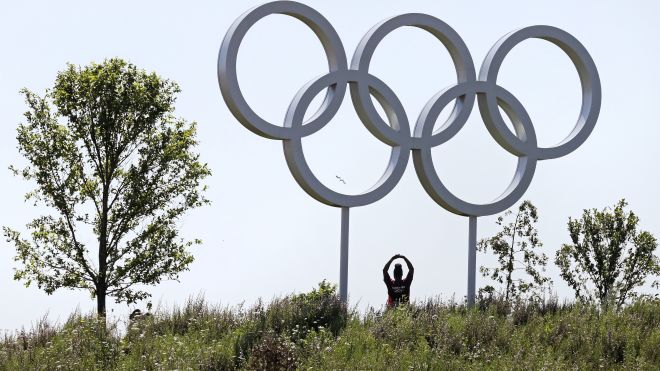
Why the IOC will never memorialize the ’72 Munich massacre

Posted by David Bancroft

Why the IOC will never memorialize the ’72 Munich massacre

By Guri Weinberg

Published July 27, 2012

FoxNews.com

Recently, new information about the Munich Massacre at the 1972 Olympic Games was released by German police as a result of pressure from German investigative reporters. It was reported that the “Black September” terrorists were helped by a Nazi group in Germany to get fake IDs, weapons and access to the Olympic Village.

This was not too shocking, as the head of the IOC in 1972 was Avery Brundage, a Nazi sympathizer and anti-Semite. His protege, Juan Samaranch, eventually served the second longest IOC term as president, but his support of Nazis and the Spanish dictator Francisco Franco was kept a dirty secret. Most IOC members knew the truth but stayed silent because he organized a regal lifestyle for them — with money diverted from sport.

‘I want all of you to lose your jobs and be replaced by real Olympians who care about the athletes and believe in the Olympic charter.’

Another interesting fact is that Abu Iyad, one of the co-founders of the PLO, has said publicly that the reason “Black September” chose the 1972 Olympics as the stage for their hostage plot was because the PLO’s request to the IOC for inclusion of the Palestinian delegation at the Olympic Games was completely ignored. This snub from the IOC came at a time when tension was at a boiling point in the Middle East. Yet, having incited the PLO, the IOC denied the Israeli government’s request for security for the athletes.

In 1996, I, along with other Munich orphans and three of the widows, were invited for the first time to the Olympic Games in Atlanta. Before the Opening Ceremony, we met with Alex Gilady. Gilady has been a member of the IOC’s Radio and Television Commission since 1984 and has been the senior vice president of NBC Sports since 1996.

I have known Mr. Gilady since I was a kid; in fact, I grew up with his daughter. He had been supportive in the past regarding our plea for a moment of silence during the Opening Ceremonies, so we arrived with high hopes. Gilady informed us that a moment of silence was not possible because if the IOC had a moment of silence for the Israeli athletes, they would also have to do the same for the Palestinians who died at the Olympics in 1972.

My mother said, “But no Palestinian athletes died.”

Gilady responded, “Well, there were Palestinians who died at the 1972 Olympics.”

I heard one of the widows say to Gilady, “Are you equating the murder of my husband to the terrorists that killed him?”

Silence.

 Then Ilana Romano burst out with a cry that has haunted me to this day. She screamed at Gilady, “How DARE you! You KNOW what they did to my husband! They let him lay there for hours, dying slowly, and then finished him off by castrating him and shoving it in his mouth, ALEX!”

I looked at Gilady’s face as he sat there, stone cold with no emotion. This man knew these athletes personally. This man led the Israeli media delegation at the 1972 Olympics and saw this atrocity first hand. This man saw my father’s dead, naked body thrown out front of the Olympic Village for all the world to see. Without a hint of empathy, Gilady excused himself from our meeting.

That’s when I understood that the IOC wasn’t turning us down because of their resistance to :politics.” Rather, it was due to the specific politics the IOC apparently still embraces. Based on its history of Nazi support, greed and the blood on their own hands for inciting the PLO, they would never support Israeli athletes.

Now, I have a message to all the members of the IOC. The torture inflicted by “Black September” on the 11 Israeli athletes and their families took 48 hours. Your torture of the families and the memories of those esteemed athletes has lasted 40 years. I am not satisfied with a moment of silence in every Opening Ceremony of the Summer Games. Now I want all of you to lose your jobs and be replaced by real Olympians who care about the athletes and believe in the Olympic charter.

The threat of the IOC coming after me does not scare me anymore. When you have no more dignity, you have nothing to lose. So, members of the IOC — my name is Guri Weinberg and I am the son of Moshe Weinberg, the wrestling coach murdered at the 1972 Olympics. And I am not going away.

Read more: http://www.foxnews.com/opinion/2012/07/27/why-ioc-will-never-memorialize-72-munich-massacre/#ixzz21xCRYCKN

Mormons in Israel

For those of you who do not read the Los Angeles Times this article will be of interest.  I do not trust Mitt Romney because he has been a serial flip-flopper.  There is hardly a position he took as governor of Massachusetts that he has not changed. If you can believe him, Romney says he would never criticize Israel and would be a steadfast ally to the Jewish state. You could call it politics but there does not appear to be any issue that is core to his beliefs.  Still this article may give you pause to at least listen to his campaign.

Mormons in Israel

By Rafael Medoff

Mitt Romney’s trail to the Holy Land was blazed by a Utah missionary a century ago.

Mitt Romney at the Western (Wailing) Wall in JerusalemMITT ROMNEY’S visit to Israel will gener­ate much specula­tion on the role Jew­ish voters will play in the U.S. presidential election. His visit may also spark discussion about Mormon-Jewish relations in the wake of the recent controversy over a Mormon temple that con­ducted posthumous baptism cere­monies for some Holocaust vic­tims.

But another Mormon’s visit to Jerusalem, 99 years ago, deserves some of the spotlight too. Because that little-known visit ultimately had a decisive impact on Jewish history and America’s response to the Holocaust.

In 1913, 29-year-old Elbert Thomas and his wife, Edna, wrapped up their five-year stint in charge of a Mormon mission in J a­pan and prepared to return to their native utah. They decided to pay a short visit to Turkish-occupied Palestine on the way home.

The Holy Land figures promi­nently in Mormon theological tracts. Thomas was keenly aware of Mormon prophecies about an in- . gathering of the Jewish exiles and the rebirth of the Jewish home­land.

“We sat one evening on the Mount of Olives and overlooked Je­rusalem,” he later recalled. “We read the poetry and the prophecy, the forebodings and the prayers, with hearts that reached up to God.” Under “stars the likes of which you see nowhere else in the world but on our own American desert, out where I grew up,” Thomas read the lengthy “Prayer of Dedication on the Mount of Ol­ives” by Orson Hyde, an early Mor­mon leader and fervent Christian Zionist.

“Consecrate this land … for the gathering together of Judah’s scat­tered remnants … for the building up of Jerusalem again after it has been trodden down by the Gentiles so long,” Hyde had written in 1841. “Restore the kingdom unto Israel, raise up Jerusalem as its capital…. Let that nation or people who shall take an active part in behalf of Abraham’s children, and in the raising of Jerusalem, find favor in Thy sight. Let not their enemies prevail against them … but let the glory oflsrael overshadow them.”

The moment, the mood and the words moved Thomas to feel a deep spiritual connection to the Jewish people and to commit him­self to becoming one of those who would “take an active part in behalf of Abraham’s children.” And three decades later, he was presented with an opportunity to do so.

In the 1940s, as a U.S. senator from utah, Thomas became deeply concerned about the plight of the Jews in Nazi Europe. He joined the Emergency Committee to Save the Jewish People of Europe, a lobby­ing group led by Jewish activist Pe­ter Bergson. Thomas signed on to its full-page newspaper ads criti­cizing the Allies for abandoning European Jewry. He also co­chaired Bergson’s 1943 conference on the rescue of Jews, which chal­lenged the Roosevelt administra­tion’s claim that nothing could be done to help the Jews except win­ning the war. Although a loyal Democrat and New Dealer, the Utah senator boldly broke ranks with President Franklin D. Roose­velt over the refugee issue.

Thomas played a key role in ad­vancing a Bergson-initiated con­gressional resolution calling for creation of a government agency to rescue Jews from the Nazis. Sen. Tom Connally CD-Texas), chair­man of the Senate Foreign Rela­tions Committee, initially blocked consideration of the resolution. But when Connally took ill one day, Thomas, as acting chair, quickly in­troduced the measure. It passed unanimously.

Meanwhile, senior aides to Treasury Secretary Henry Mor­genthau Jr. had discovered that State Department officials had
been obstructing opportunities to rescue Jewish refugees. Morgen­thau realized, as he told his staff, that the time had come to say to the president, “You have either got to move very fast, or the Congress of the United States will do it for you.” Armed with a devastating re­port prepared by his staff, and with congressional pressure mounting, Morgenthau went to FDR in Janu­aryI944.

Roosevelt could read the writ­ing on the wall. With just days to go before the full Senate would act on the resolution, Roosevelt pre­empted Thomas and the other congressional advocates of rescue by imilaterally creating the agency they were demanding: the War Refugee Board.

Although understaffed and underfunded, the board played a major role in saving more than 200,000 Jews during the final 15 months of the war. Among other things, the board’s agents per­suaded a young Swede, Raoul Wal­lenberg, to go to German-occupied Budapest in 1944. There, with the board’s financial backing, he undertook his now-famous rescue mission. Thomas’ action in the Senate was an indispensable part of the chain of events that led to Wallenberg’s mission.

The Swedish government, to­gether with Holocaust institutions and Jewish communities around the world, recently launched a yearlong series of events com­memorating this summer’s 100th anniversary of Wallenberg’s birth. One hopes these celebrations will include appropriate mention ofthe role played by Americans such as Thomas in making Wallenberg’s work possible.

And as Romney retraces some of Thomas’ steps in Jerusalem, he will have special reason to feel proud of the role played by a fellow Mormon in helping to save Jewish lives.

RAFAEL MEDOFF is director of the David S. Wyman Institute for Holocaust Studies and the coauthor with Sonja Schoepf Wentling of the new book “Herbert Hoover and the Jews: The Origins of the ‘Jewish Vote’ and Bipartisan Support for Israel.”

Israeli Draft Pits Secular Jews vs. Ultra-Orthodox

A central problem for the State of Israel is that it is a theocratic democracy.  People can elect representatives, but religious leaders have a lot of power over what the government can do.  How can Israel, a country that holds itself out as the one true democracy in the Middle East, allow a minority religious sect to dictate its rights and the rule of law for the entire nation?

This article was posted by the Associated Press on my home page.  It has been abridged due to its length.

ARON HELLER
From Associated Press

July 07, 2012 3:09 PM EDT

JERUSALEM (AP) — Deep in the heart of Mea Shearim, a Jerusalem bastion of hardline ultra-Orthodox Jews, hundreds of bearded young men in black suits have their noses burrowed into books, immersed in biblical study and oblivious to their surroundings.

They are the creme de la creme of a cloistered community, the Harvard of the ultra-Orthodox world, who are expected neither to work for a living nor serve in the military with other Israelis.

The fight centers on whether ultra-Orthodox males should be drafted into the military along with other Jews, but it really is about a much deeper issue: the place of Judaism in the Jewish state.

The question has come to the fore as the government races to meet a Supreme Court-ordered deadline to revamp the nation’s draft law. In its current form, secular males must perform three years of compulsory service when they turn 18. Ultra-Orthodox men, like the young scholars at the Mir Yeshiva, have special exemptions that allow them to continue studying in their isolated enclaves while collecting government subsidies.

For their supporters, seminary students are preserving a tradition that has served as the very bedrock of Judaism for thousands of years.

“Jews need to study the Bible. That is what makes us unique as a people,” Yerach Tucker, a 30-year-old spokesman for the ultra-Orthodox community, said proudly as he guided a visitor through the Mir Yeshiva. “It is the essence of our lives.”

But polls show the vast majority of Israelis, who risk their lives and put their careers on hold while serving in the military, object strongly to the arrangement, and many see it as the essence of everything that is wrong with their country.

This resentment has fueled a broader high-decibel culture war.

“It is something so ethical, so basic, that we have all grown up upon: service, giving to the state. Everyone here has to give something to society because we are one society,” said Boaz Nol, a reserve officer who was among those planning a massive protest in Tel Aviv against the continued exemptions.

More than 10,000 reservists and their supporters turned out for the rally Saturday night, many of them carrying placards reading “everybody serves.”

The Supreme Court earlier this year ruled the draft exemptions illegal and gave the government until Aug. 1 to figure out a new, fairer system. That is proving far more difficult than expected.

Benjamin Netanyahu’s largest governing partner, the centrist Kadima Party, is now threatening to quit the government, just two months after joining the coalition with the goal of reforming the draft. Netanyahu has vowed to find a compromise.

Dan Halutz, a former Israeli military chief turned Kadima politician, visited the reservists’ protest tent in Tel Aviv Saturday and announced that he was leaving the party.

A glimpse into the world of the ultra-Orthodox shows just how intractable the issue has become. The draft exemptions date back to the time of Israel’s independence in 1948, when founding father David Ben-Gurion exempted 400 exemplary seminary students to help rebuild great schools of Jewish learning destroyed in the Holocaust, when 6 million Jews were murdered.

As ultra-Orthodox parties became power brokers, the numbers mounted. Ultra-Orthodox officials now estimate there are about 100,000 full-time Torah learners of draft age. The heavy emphasis on religious study, begun early on in a separate system of elementary schools, has pushed many ultra-Orthodox men to shun the work world, relying on welfare as they spend their days immersed in holy texts. The ultra-Orthodox make up about 10 percent of Israel’s 8 million citizens.

Steep unemployment, believed to hover around 50 percent, coupled with a high birthrate has fueled deep poverty in the ultra-Orthodox sector. Experts say if these trends continue, Israel’s long-term economic prospects are in danger.

Leaders speak proudly of centuries-old traditions of prayer and learning that they believe has allowed the Jewish people to survive such tragedies as the Spanish Inquisition, European pogroms and the Holocaust.

Ultra-Orthodox leaders insist they will never be forced to serve in the military.

For decades, a string of secular-led Israeli governments have maintained the status quo, either because of their dependence on ultra-Orthodox political kingmakers or out of fear of an angry backlash from a sector that hasn’t hesitated to block roads, clash with police or mobilize tens of thousands of activists into the streets when ordered by their rabbis.

With the clock ticking, Netanyahu now faces a near-impossible task as he tries to satisfy the demands of the secular masses, the Supreme Court and various coalition partners all while preventing sectarian unrest.

Before the parliamentary committee collapse, ultra-Orthodox parties boycotted the panel.

A day after Netanyahu disbanded the committee, its chairman nonetheless released his recommendations. Among the proposals: that no more than 20 percent of ultra-Orthodox males, roughly 1,500 people a year, be granted exemptions, while others be permitted to defer service for no more than five years. A national service option was also introduced for those who didn’t fit into the military.

The details of the debate have dominated political discussion in Israel, handing Netanyahu his biggest challenge yet since he formed a 94-member coalition in early May. His office says he will meet quietly with political leaders in the coming days in order to formulate a fair draft law.

Unlike other Israelis, who mark graduations, military promotions, and professional accomplishments, the ultra-Orthodox only celebrate study. Later this month, for instance, thousands of believers are scheduled to pack a basketball arena to mark the completion of a full study of the Talmud — a seven-year odyssey in which 2,700 pages of rabbinical debates over Jewish law are meticulously dissected at a pace of one page a day.

Many ultra-Orthodox sects aren’t even Zionist and refuse to recognize Israel as a Jewish state until the coming of the Messiah. Some tiny extreme sects even side with the Palestinians and Israel’s archenemy Iran.

Most object to change on much simpler grounds. In Hebrew, the ultra-Orthodox are known as “Haredim,” or “those who fear” God. But it’s not death they fear in the military — it’s immersion in what they see as a secular and hedonistic society.

“The main reason that we can’t serve is that the military simply doesn’t suit us. The military is a secular melting pot,” said Chaim Walder, a well-known ultra-Orthodox author and activist.

It’s not clear how much the military even wants Haredi conscripts. While it formally calls for everyone to serve, military officials acknowledge it will be extremely difficult to incorporate them into the army.

Many Haredi men lack basic skills, like rudimentary math, because their independent school systems barely teach them. Their aversion to direct contact with women would require segregation and could undercut the military’s record of giving female soldiers equal opportunities.

Insubordination could also grow if ultra-Orthodox men found themselves forced to choose between religious beliefs and commanders’ orders.

The costs would also be high: Drafting this community would require special arrangements, such as kitchens conforming to the strictest interpretation of Jewish dietary law and a large chunk of the day set aside for bible study. And as those who are married and with children are entitled to higher salaries — the military would face another financial burden.

Inclusion has been successful in some areas however. The army has designed a number of roles specifically for the needs of ultra-Orthodox soldiers, including a segregated infantry unit as well as computer, technology and intelligence units.

A military official involved in the effort said 85 percent of discharged ultra-Orthodox soldiers went on to find jobs in civilian life.

But altogether, the numbers remain small. Fewer than 1,300 conscripts participated in these programs over the past year, military figures show.

Some leading rabbis have ruled that those not cut out for intensive seminary life or those who were already married — and perhaps less susceptible to the lure of the secular world — could be eligible to serve or take part in a range of civil service options being considered.

“The only thing that is truly keeping us safe here is bible study,” Chaim Walder said. “We are protecting the country with our prayer. We are making sure that there is something here to protect.”
____

Follow Aron Heller at http://www.twitter.com/aronhellerap

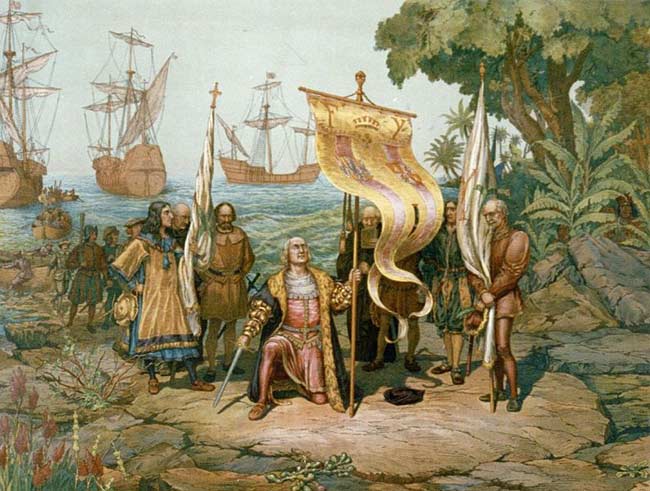
Was Christopher Columbus a Jew?

Hypothèse très intéressante et instrutive!……

The question: Was Columbus secretly a   Jew?

Today marks the 508th anniversary of the death of   Christopher Columbus.

Everybody knows the story of Columbus, right?  He was an Italian explorer from Genoa who set sail in 1492 to enrich the Spanish monarchs with gold and spices from the orient.  Not quite.

For too long, scholars have ignored Columbus’ grand passion: the quest to liberate Jerusalem from the Muslims.

During Columbus’ lifetime, Jews became the target of   fanatical religious persecution.  On March 31, 1492, King Ferdinand and Queen   Isabella  proclaimed that all Jews were to be expelled from Spain.  The edict especially targeted the 800,000 Jews who had never converted, and gave them   four months to pack up and get out.

The Jews who were forced to renounce Judaism and embrace Catholicism were known as “Conversos,” or   converts.  There were also those who feigned conversion, practicing Catholicism   outwardly while covertly practicing Judaism, the so-called “Marranos,” or swine.

Tens of thousands of Marranos were tortured by the Spanish   Inquisition. They were pressured to offer names of friends and family members,   who were ultimately paraded in front of crowds, tied to stakes and burned   alive. Their land and personal possessions were then divvied up by the church and crown.

Recently, a number of Spanish scholars, such as Jose Erugo,   Celso Garcia de la Riega, Otero Sanchez and Nicholas Dias Perez, have   concluded that Columbus was a Marrano, whose survival depended upon the   suppression of all evidence of his Jewish background in face of the brutal,   systematic ethnic cleansing.

Columbus, who was known in Spain as Crist   bal Col n and didn’t speak Italian, signed his last will and testament on May   19, 1506, and made five curious — and revealing — provisions.

Two of   his wishes — tithe one-tenth of his income to the poor and provide an   anonymous dowry for poor girls — are part of Jewish customs. He also decreed to give money to a Jew who lived at the entrance of the Lisbon Jewish Quarter.

On those documents, Columbus used a triangular signature of   dots and letters that resembled inscriptions found on gravestones of Jewish cemeteries in Spain. He ordered his heirs to use the signature in perpetuity.

According to British historian Cecil Roth’s “The History of   the Marranos,” the anagram was a cryptic substitute for the Kaddish, a prayer   recited in the synagogue by mourners after the death of a close relative.   Thus, Columbus’ subterfuge allowed his sons to say Kaddish for their crypto-Jewish father when he died. Finally, Columbus left money to support the   crusade he hoped his successors would take up to liberate the Holy Land.

Estelle Irizarry, a linguistics professor at Georgetown   University, has analyzed the language and syntax of hundreds of handwritten   letters, diaries and documents of Columbus and concluded that the explorer’s   primary written and spoken language was Castilian Spanish. Irizarry   explains that 15th-century Castilian Spanish was the “Yiddish” of Spanish Jewry, known as “Ladino.” At the top left-hand corner of all but one of the 13   letters written by Columbus to his son Diego contained the handwritten Hebrew   letters bet-hei, meaning b’ezrat Hashem (with God’s help). Observant Jews have   for centuries customarily added this blessing to their letters.  No letters to   outsiders bear this mark, and the one letter to Diego in which this was   omitted was one meant for King Ferdinand.

In Simon Weisenthal’s book,   “Sails of Hope,” he argues that Columbus’ voyage was motivated by a desire   to find a safe haven for the Jews in light of their expulsion from Spain.   Likewise, Carol Delaney, a cultural anthropologist at Stanford University,   concludes that Columbus was a deeply religious man whose purpose was to sail   to Asia to obtain gold in order to finance a crusade to take back Jerusalem and rebuild the Jews’ holy Temple.

In Columbus’ day, Jews widely believed that Jerusalem had to be liberated and the Temple rebuilt for the   Messiah to come.

Scholars point to the date on which Columbus set sail as further evidence of his true motives. He was originally going to sail on   August 2, 1492, a day that happened to coincide with the Jewish holiday of   Tisha B’Av, marking the destruction of the First and Second Holy Temples of   Jerusalem. Columbus postponed this original sail date by one day to avoid   embarking on the holiday, which would have been considered by Jews to be an   unlucky day to set sail. (Coincidentally or significantly, the day he set   forth was the very day that Jews were, by law, given the choice of converting,   leaving Spain, or being killed.)

Columbus’ voyage was not, as is   commonly believed, funded by the deep pockets of Queen Isabella, but rather by   two Jewish Conversos and another prominent Jew.  Louis de Santangel and Gabriel  Sanchez advanced an interest free loan of 17,000 ducats from their own pockets   to help pay for the voyage, as did Don Isaac Abrabanel, rabbi and Jewish  statesman.

Indeed, the first two letters Columbus sent back from his   journey were not to Ferdinand and Isabella, but to Santangel and Sanchez,   thanking them for their support and telling them what he had found.

The   evidence seem to bear out a far more complicated picture of the man for whom   our nation now celebrates a national holiday and has named its capital.

As we witness bloodshed the world over in the name of   religious freedom, it is valuable to take another look at the man who sailed the seas in search of such freedoms — landing in a place that would   eventually come to hold such an ideal at its very core.

This entire discussion was on CNN Opinion.  I thought others would find it interesting

David Bancroft

Minute of Silence for the Munich 11 Petition

The International Olympic Committee and Jacques Rogge, President of the IOC, offered a resounding “NO” last week to Israel’s Deputy Foreign Minister Danny Ayalon’s formal request for a minute of silence. Regardless, in little over a month, due to your support, The Minute of Silence petition is close to 50,000 signatures. The IOC is paying attention.

JCC Rockland on behalf of the Munich 11 families will not take “NO” for an answer. Fast and forward is the direction that JCC Rockland; Danny Ayalon; Ankie Spitzer/the Munich 11 families and all our dedicated supporters are taking.

Please continue to spread the word about our petition: https://www.change.org/petitions/jacques-rogge-minute-of-silence-at-the-2012-london-olympics.

Regardless of their Religious or political affiliations, these men deserve to be honored, respected and remembered in the Olympic Stadium. Signatures are flowing in from all over the world, recently large numbers from London as we get closer to the Olympic Games, and a blogger for The New York Post wrote today, May 23, 2012 “William and Kate, just one minute, please” asking Prince William and Kate, The Duchess of Cambridge to sign.

In response to the “NO” Danny Ayalon’s office has started a facebook page called Just One Minute and a created a new YouTube video. http://youtu.be/fQcMR0rojQs and https://www.facebook.com/#!/justoneminute.org.uk

We are asking the IOC to reconsider their decision. They have 65 days to change their minds. Please continue to forward the petition.

Thank you for your support.

David Bancroft